
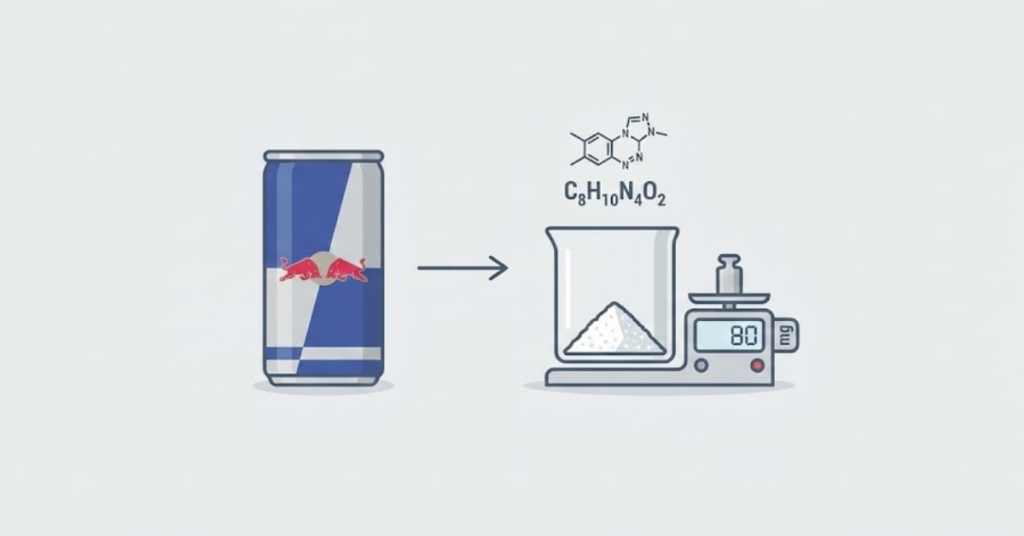
One small 8.4 fl oz (250 ml) Red Bull contains 80 mg of caffeine, roughly the same as a small cup of home-brewed coffee.
Red Bull is one of the best known energy drinks on the planet, and the small can is often the size people grab on a busy day. When you ask “How Many MG Of Caffeine In A Small Red Bull?”, you are actually asking how that quick hit compares with coffee, tea, or another drink and how it fits into your total caffeine for the day.
This guide walks through the caffeine number for the small can, how it compares with other drinks, how different can sizes change the dose, and what health agencies say about daily limits.
Small Red Bull Caffeine Compared With Other Drinks
Before digging into the small Red Bull can in detail, it helps to line it up against common drinks you might already know. That way the caffeine figure becomes more than just a number on the side of the can.
| Beverage | Typical Serving | Caffeine (mg) |
|---|---|---|
| Red Bull Small Can | 250 ml (8.4 fl oz) | 80 |
| Espresso Shot | 60 ml | 80 |
| Filter Coffee | 200 ml | 90 |
| Black Tea | 220 ml | 50 |
| Standard Cola | 355 ml | 40 |
| Dark Chocolate | 50 g bar | 25 |
| Milk Chocolate | 50 g bar | 10 |
The small can of Red Bull sits in the same range as a strong espresso or small cup of coffee. It does not top the caffeine charts, yet it still packs a clear boost.
Quick Answer: How Many MG Of Caffeine In A Small Red Bull?
According to Red Bull’s own nutrition data, a regular 8.4 fl oz (250 ml) Red Bull Energy Drink contains 80 mg of caffeine. Sugarfree and Zero versions use the same caffeine level, so a small can of classic, Sugarfree, or Zero all give that 80 mg dose.
If you prefer to think in terms of concentration instead of per can, that small Red Bull works out to around 32 mg of caffeine per 100 ml. That means a few long sips already deliver the same hit you would get from a small shot of coffee.
How Red Bull Arrived At The 80 Mg Number
Red Bull builds the small can to sit in line with many other energy drinks. Authorities in the European Union and elsewhere often talk about a standard energy drink portion that delivers around 80 mg of caffeine in 250 ml. That range keeps a single can well below the 200 mg single dose level that the European Food Safety Authority views as a safe one time intake for healthy adults.
On its information pages, Red Bull lists 80 mg of caffeine for the 8.4 fl oz can and 114 mg for the 12 fl oz can, with larger sizes climbing from there. That consistency makes it easier to stack up how many cans fit into your own daily limit.
How Many MG Of Caffeine In A Small Red Bull Per 100 Ml And Per Sip
When labels talk in milligrams per 100 ml, the small Red Bull can sits at around 32 mg per 100 ml. A quick rule of thumb is that every quarter of the can gives around 20 mg of caffeine, while half the can gives around 40 mg.
If you drink the can slowly over an hour, the caffeine still adds up to the same 80 mg total, but your body absorbs it over a longer window. That slower pace may feel smoother compared with two or three big gulps in a few minutes.
Small Red Bull Caffeine Content By Can Size
The question about how much caffeine sits in a small Red Bull often pops up because shelves hold several can sizes. While the small 8.4 fl oz can holds 80 mg, bigger cans ramp up the dose.
Standard Red Bull Can Sizes And Caffeine
Based on Red Bull’s published data, the caffeine content looks like this across the main sizes:
- 8.4 fl oz (250 ml) can: 80 mg caffeine
- 12 fl oz (355 ml) can: 114 mg caffeine
- 16 fl oz (473 ml) can: 151 mg caffeine
- 20 fl oz (591 ml) can: 198 mg caffeine
The caffeine per ounce stays in roughly the same range, so larger cans simply add more liquid and more total caffeine. Two small cans land in the same ballpark as one 16 fl oz can.
Regular Vs Sugarfree Small Red Bull Cans
From a caffeine angle, regular, Sugarfree, and Zero small Red Bull cans all match at 80 mg. The big difference lies in the sugar and calorie content. Regular Red Bull supplies sugar from sucrose and glucose, while Sugarfree and Zero use sweeteners and keep calories nearly at zero.
If you are mainly tracking caffeine, you can pick any small version and count the same 80 mg. If you also care about sugar intake or total calories, then the Sugarfree or Zero lines shave down the rest of the nutrition panel without changing the stimulant level.
How Small Red Bull Caffeine Fits Into Daily Intake
To figure out whether a small Red Bull fits your day, it helps to line that single 80 mg hit up against broader intake guidance. Health bodies assess total caffeine from coffee, tea, energy drinks, chocolate, and supplements combined.
The European Food Safety Authority states that single doses up to 200 mg and daily intake up to 400 mg from all sources do not raise safety concerns for healthy adults. That means one small Red Bull uses up one fifth of a 400 mg daily budget, while two cans use around 40 percent.
EFSA summarises this in an easy read factsheet on caffeine, where a standard 250 ml energy drink portion is listed at around 80 mg of caffeine, right in line with the small Red Bull can.
For pregnant or breastfeeding adults, health agencies generally advise a lower cap near 200 mg per day from all sources. In that case, a single small Red Bull would take up around 40 percent of that daily level, so stacking it with multiple coffees in the same day can push intake over recommended ranges.
Guidance for teenagers is even tighter. EFSA and other groups often suggest keeping daily caffeine near 3 mg per kilogram of body weight. For a 50 kg teenager, that comes to about 150 mg per day. One small Red Bull already carries just over half of that amount, which is why many paediatric and nutrition groups caution against routine energy drink intake in younger age groups.
Health Agency Views On Caffeine Safety
EFSA’s opinion sits alongside advice from other health and food bodies across the globe. The European authority’s caffeine topic page points to 400 mg per day from all sources as a reasonable upper level for most healthy adults.
Practical Tips For Drinking A Small Red Bull
Knowing the number on the label is handy, yet daily habits matter just as much. A small Red Bull can slot into many routines as long as you treat it as one piece of your whole day’s intake, not a harmless extra on top of everything else.
Time Of Day And Sleep
Caffeine lingers in the body for several hours. Many people still feel some effect six hours after a drink. If sleep tends to be light or broken, a small Red Bull late in the afternoon or evening can make that worse even if the total mg count stays under general guidance.
A simple habit is to keep your last energy drink, coffee, or strong tea to the earlier half of the day. That gives your body time to clear most of the stimulant before bedtime.
Stacking Small Red Bull With Coffee And Tea
Because the small Red Bull carries about the same caffeine as a small coffee, it is easy to slide above your personal sweet spot without noticing. A morning coffee, a second mid morning, then an energy drink later in the day can already push many adults beyond half of a 400 mg daily level, even before tea, cola, or chocolate enter the picture.
Who Should Skip Or Limit Energy Drinks
Children, teenagers, anyone with underlying heart rhythm issues or diagnosed anxiety, and adults whose medicines interact with caffeine should be cautious with energy drinks. Labels often list caffeine among the substances to limit, and in those cases even one small Red Bull might not be a wise pick.
Takeaways On Small Red Bull Caffeine
When you ask “How Many MG Of Caffeine In A Small Red Bull?”, the straight answer is that one standard 8.4 fl oz (250 ml) can delivers 80 mg of caffeine across both regular and Sugarfree lines.
That puts a small Red Bull on par with a modest cup of coffee and well under widely used 200 mg and 400 mg thresholds for single doses and daily intake in healthy adults. At the same time, the can still packs enough punch to disturb sleep or create jitters for people who are more sensitive or already stacked up caffeine from other drinks.
The more you pay attention to that 80 mg number, the easier it becomes to slot a small Red Bull into your day in a way that helps with alertness without tipping over into side effects. Treat the small can as one counted caffeine source among many, sip it at a time that suits your sleep schedule, and keep an eye on how your body responds over the rest of the day.
| Scenario | Cans Of Small Red Bull | Approximate Total Caffeine (mg) |
|---|---|---|
| Single Small Can | 1 | 80 |
| Two Small Cans Spread Through Day | 2 | 160 |
| One Small Can Plus One Small Coffee | 2 drinks | About 160 |
| Three Small Cans | 3 | 240 |
| One Small Can For A Teenager (50 kg) | 1 | 80 |
| Daily Adult Upper Level (Guide) | Up to 5 small cans | About 400 |
| Daily Limit Often Suggested In Pregnancy | Up to 2 small cans | About 200 |