
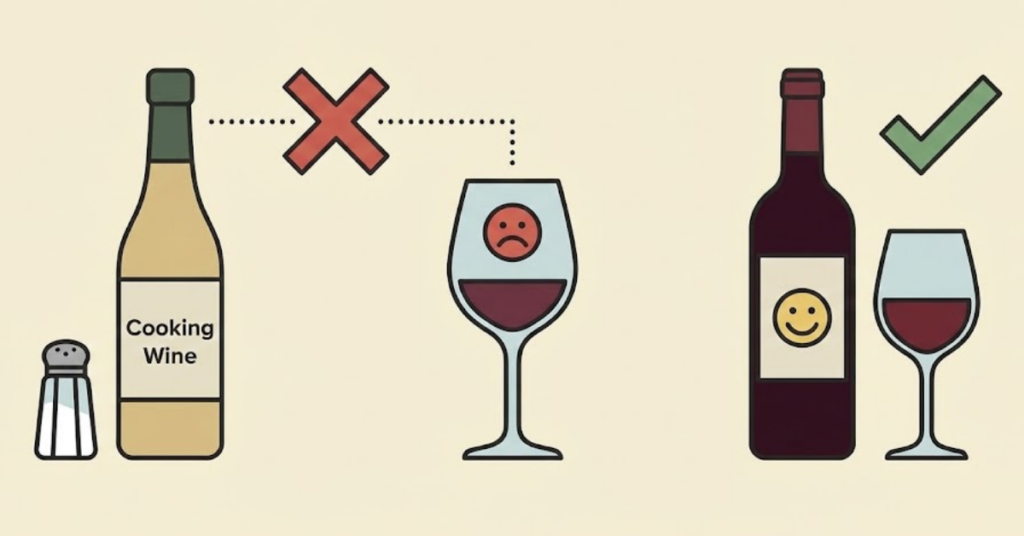
Yes, you can drink cooking wine, but its alcohol, salt, and additives make drinking cooking wine a poor and sometimes risky choice.
Many people ask can i drink cooking wine? after spotting a dusty bottle near the stove. The label says it is for cooking, yet the alcohol level looks like regular wine, so it is easy to treat it like a drink instead of a salty kitchen ingredient.
Can I Drink Cooking Wine? Health And Safety Basics
The direct answer to the question is that adults can physically drink cooking wine, yet it is not made or regulated as a pleasant table drink. Cooking wine is sold as a food ingredient. Extra salt and stabilizers keep it usable for months after opening, which is handy for recipes but rough on your body if you pour it into a glass.
Most brands of cooking wine land around sixteen percent alcohol by volume, a level closer to fortified wine than light table wine. That means a small glass can deliver more alcohol than many people expect, especially if someone drinks it quickly or on an empty stomach.
On top of that, cooking wine can contain hundreds of milligrams of sodium in just a few tablespoons. Regular wine usually has only trace amounts. That sodium load matters if you live with high blood pressure, kidney disease, or heart issues, and it adds up fast if someone drinks cooking wine habitually instead of using it sparingly in recipes.
Cooking Wine Versus Regular Wine At A Glance
Before deciding whether cooking wine belongs in a glass, it helps to line it up next to the bottle you would usually pour with dinner.
| Feature | Typical Cooking Wine | Regular Table Wine |
|---|---|---|
| Alcohol Content | Around 16% ABV | Often 11–14% ABV |
| Sodium Per Serving | High; about 180–400 mg per 2–3 tbsp | Very low; only a few milligrams |
| Added Ingredients | Salt, sugar, and preservatives | Grapes, yeast, and sulfites |
| Flavor Profile | Harsh and very salty | Balanced for sipping |
| Label And Marketing | Sold as a cooking ingredient | Sold as a beverage |
| Shelf Life After Opening | Can sit in the pantry for months | Best within a few days once opened |
| Typical Use | Deglazing pans, sauces, stews | Sipping and pairing with meals |
That heavy salt load is one reason many cooking teachers recommend regular wine for recipes and leave cooking wine on the shelf.
What Is Cooking Wine Made For?
Cooking wine is built as a salty pantry item. The maker wants a bottle that keeps for months, adds wine flavor to sauces and braises, and survives on a warm kitchen shelf.
That is why the ingredient list often shows salt, a little sugar, and preservatives such as potassium sorbate. Those extras are normal in shelf stable foods, yet they make cooking wine harsh to sip and harder on your body when you drink it like regular wine.
Drinking Cooking Wine Versus Regular Table Wine
Drinking cooking wine brings together two separate issues. One is the same concern that applies to any alcoholic drink: how much alcohol you take in, how quickly you drink it, and what that does to your brain, liver, and other organs over time. The other is the extra salt and additives that ride along with each sip.
For the alcohol side, cooking wine often lands near fortified wine in strength. A five ounce pour of a sixteen percent product contains more pure alcohol than the same glass of a twelve percent table wine. Public health agencies define a standard drink as a serving that holds about fourteen grams of pure alcohol, and that standard sits behind many drinking guidelines.
To give that some context, the CDC standard drink chart lists five ounces of twelve percent wine as one standard drink. A five ounce glass of stronger cooking wine brings in closer to one and one third of those standard drinks in a single pour, even before you factor in the salt and other ingredients.
On the sodium side, repeated drinking of cooking wine can push daily intake far beyond what heart associations recommend for most adults. Many people already get plenty of sodium from bread, snacks, restaurant meals, and processed foods, so adding a salty beverage on top of that pushes the needle in the wrong direction.
Who Should Never Drink Cooking Wine
Some people should never treat cooking wine as a drink. Anyone under the legal drinking age, and anyone who is pregnant, trying to conceive, or breastfeeding, needs to avoid the alcohol it contains, no matter where the bottle sits in the kitchen.
Those in recovery from alcohol use disorder face a different risk. A bottle of cooking wine can look harmless, yet the alcohol reaches the brain and body in the same way as other drinks and can pull someone back toward old habits.
People with high blood pressure, kidney problems, heart disease, or liver disease also sit in a high risk group. For them, the mix of alcohol and sodium in cooking wine can quietly aggravate conditions that doctors already work hard to manage.
How Much Alcohol Stays When You Cook With Wine?
Another layer to the can i drink cooking wine? question shows up when you use it in recipes. Many home cooks have heard that alcohol burns off during cooking, which leads to the belief that any dish made with wine is alcohol free by the time it reaches the table.
Careful lab work from researchers working with the United States Department of Agriculture paints a different picture. Tests that simmered, baked, and flamed wine in real recipes found that a noticeable share of the original alcohol stayed in the finished dish, even after long cooking times at a rolling boil.
| Cooking Method | Typical Use | Approximate Alcohol Left From Original Amount |
|---|---|---|
| Wine Stirred Into Hot Sauce, Short Simmer | Quick pan sauces | About 75% of the original alcohol can remain |
| Flambéed Dishes | Pan sauces briefly ignited | About 75% of the original alcohol can remain |
| Baked Or Simmered Fifteen Minutes | Casseroles or stews | Around 40% of the alcohol can remain |
| Baked Or Simmered Thirty Minutes | Stews, braises, baked pasta | Around 35% of the alcohol can remain |
| Long Simmer Or Bake Two To Three Hours | Slow braises and sauces | Around 5% of the alcohol can remain |
| No Heat, Wine Added Then Chilled | Desserts, marinades, fruit compotes | Up to 95% of the original alcohol can remain |
These numbers are estimates, yet they show that dishes made with cooking wine still hold measurable alcohol. For adults who follow moderate drinking advice, that might be acceptable in a meal. For children, people who avoid alcohol entirely, or anyone with medical reasons to say no, recipes that use stock, vinegar, citrus, or alcohol free wine are safer options.
A university nutrition column on cooking with alcohol points out a practical kitchen solution. Rather than buying salty cooking wine, choose an inexpensive bottle of wine that you would not mind tasting from a glass, then season the dish with salt on your own terms. That way you control both flavor and sodium intake while keeping alcohol decisions out in the open.
Safer Ways To Use Or Replace Cooking Wine
If you already have cooking wine in the pantry, the safest approach is to treat it as an ingredient, not a drink. Use it sparingly in recipes where a splash of acidity and grape flavor lifts a sauce or stew, and skip pouring it straight into a glass.
Swap Cooking Wine For Regular Wine
For many recipes, a modestly priced table wine makes a better choice than cooking wine. Pick a dry white or red that suits the dish, let it cook long enough to soften the sharp alcohol bite, and add salt based on taste instead of relying on a pre salted bottle.
Use Alcohol Free Alternatives
Plenty of dishes can handle a swap from cooking wine to alcohol free ingredients. Stock plus a spoonful of vinegar, diluted lemon juice, alcohol free wine, or even diluted apple juice can bring acidity and sweetness without extra alcohol or sodium.
Store And Dispose Of Cooking Wine Responsibly
Because cooking wine is still an alcoholic product, keep it out of reach of kids and teens and avoid treating it as a casual drink. If you decide it does not belong in your kitchen at all, pour small amounts down the drain with plenty of water, recycle the bottle where allowed, and cook with stock, vinegar, and regular wine instead.
So, Should You Drink Cooking Wine?
For a healthy adult who drinks alcohol in moderation, a small taste of cooking wine will not usually create an emergency. That said, using it as a go to drink is hard on your body and does not make sense from a flavor point of view. The extra salt, preservatives, and higher alcohol content deliver all the downsides of wine with none of the balance you expect from a drink meant for the table.
Viewed that way, the honest answer is that you could drink it, yet you probably should not. Treat cooking wine as a pantry ingredient, store it safely, and reach for regular wine or alcohol free alternatives when you want something to pour into a glass. Plain water or a nonalcoholic drink will always make a steadier everyday choice.