
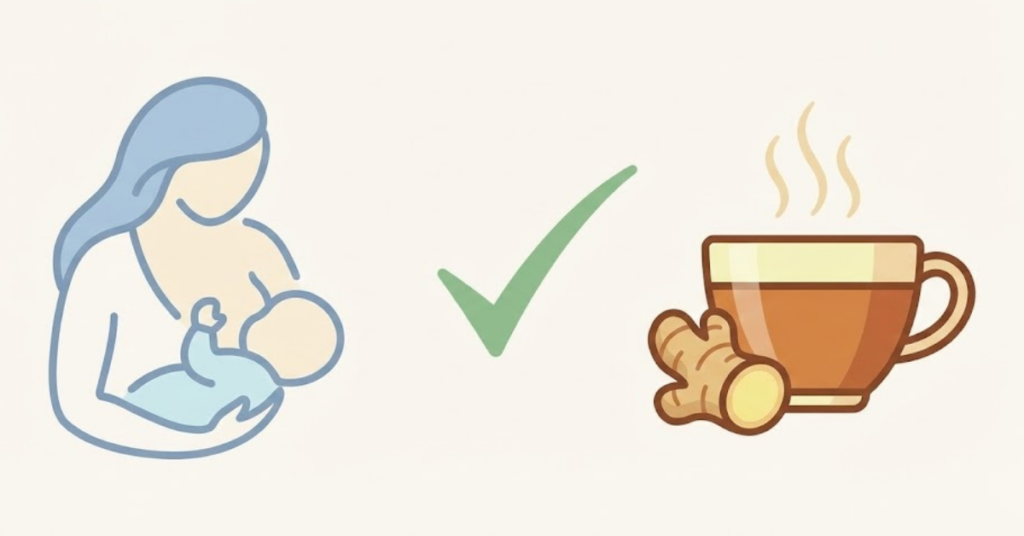
Yes, you can drink ginger tea while breastfeeding in small daily amounts, but talk with your health care provider about any medical problems.
This article shares general information about ginger tea and breastfeeding. It does not replace personal medical advice, diagnosis, or treatment.
New parents often want simple comforts: a hot drink, calmer digestion, and fewer aches. A warm mug of ginger tea can feel friendly and familiar, yet questions come up quickly when a baby is nursing. If you have ever typed “Can I Drink Ginger Tea While Breastfeeding?” into a search bar, you are in very common company.
Ginger has a long history in cooking and traditional medicine. Research on ginger in pregnancy and early postpartum focuses on nausea, digestion, and possible effects on milk volume. Data in breastfeeding outside the early hospital period is more limited, so the safest plan is usually modest intake, attention to side effects, and open conversation with your own doctor or midwife.
Can I Drink Ginger Tea While Breastfeeding? Safety Basics
Most medical and lactation references describe ginger as compatible with breastfeeding when it stays in food-level amounts. That means the kind of ginger you would add to meals or a few mild cups of tea across the day, not large medicinal doses, shots, or concentrated capsules.
Fact sheets and drug-in-lactation resources note that ginger used in normal dietary quantities has not been linked with clear problems in nursing babies. At the same time, they point out that studies in breastfeeding parents and infants are still fairly small, so regular high-dose use is not well studied. In short, the everyday kitchen spice version looks low-risk for most healthy parents and babies; strong supplements sit in a different category.
| Common Question | Short Answer | What That Means In Daily Life |
|---|---|---|
| Is moderate ginger tea usually compatible with breastfeeding? | Yes, in food-level amounts for most healthy parents. | One to two mild cups spread through the day is a typical pattern, unless your own clinician advises otherwise. |
| Are there strict studies on long-term ginger tea in nursing parents? | Data is limited. | Guidance leans on pregnancy studies, early postpartum trials, and long-standing dietary use rather than large breastfeeding trials. |
| Can ginger reach breast milk? | Likely yes in small amounts. | The flavor and active compounds can pass into milk, which some babies accept and others may dislike. |
| Does ginger always increase milk supply? | Evidence is mixed. | Some early postpartum studies show higher volumes, while others do not; everyday tea at home is not the same as controlled trial dosing. |
| Are high-dose ginger products safe while breastfeeding? | Unclear and more cautious. | Concentrated extracts and capsules can deliver far more ginger than food and may raise side-effect or drug-interaction risks. |
| Can ginger tea replace help with latch or pumping issues? | No. | Herbs cannot fix poor latch, low removal of milk, tongue-tie, or pumping setting problems; those need hands-on help. |
| Should you talk with a clinician before heavy daily use? | Yes. | Any plan that involves large daily amounts, longer than a short stretch, or existing health conditions needs personal medical guidance. |
If you live with chronic illness, take prescription medicines, or your baby was premature or has health issues, the safety picture can change. In those situations, even mild herbal tea plans deserve a quick review with your doctor, midwife, or a lactation specialist who can look at your full health record.
Ginger Tea While Breastfeeding: Possible Benefits
Comfort For Digestion And Nausea
Ginger is best known for easing nausea and queasy stomachs. Studies in pregnancy and general adult care show that ginger can ease mild nausea for some people. Many breastfeeding parents still feel waves of motion sickness, car sickness, or hormone-linked queasiness, and a small mug of ginger tea can feel like a gentle tool in that toolkit.
As a warm drink, ginger tea also adds fluid to your day. Nursing uses a lot of water, and many parents notice headaches or light-headed spells when intake drops. Reaching for a flavored hot drink can make it easier to meet your fluid needs than plain water alone, especially on cold days or during late-night feeds.
Traditional Use For Milk Supply
In some regions, ginger shows up in recipes and herbal mixtures that families prepare for early postpartum recovery. A few small trials suggest that specific ginger preparations in the first days after a vaginal birth may raise measured milk volume compared with a placebo drink. At the same time, other trials show less clear results, and research has rarely followed parents past the hospital stage.
Modern lactation medicine treats ginger as a possible helper at best, not a stand-alone fix for milk production. Specialist resources such as the Drugs and Lactation Database (LactMed) describe ginger as a traditional galactagogue with weak evidence and limited safety data in nursing parents and infants. In practice, any herb that seems to help milk output usually works alongside frequent feeds, effective latch, and adequate calories, not in place of them.
How Much Ginger Tea Is Reasonable While Nursing
Health agencies and hospital fact sheets often base ginger safety guidance on total grams per day. Research in pregnancy commonly uses about one gram of dried ginger per day, sometimes up to four grams in short stretches, with a safety margin set by side effects such as heartburn or loose stools. For breastfeeding, written advice usually suggests staying within food-level amounts and avoiding stronger extracts unless your own clinician suggests a plan.
You do not need to weigh every slice of ginger root, but it helps to have rough pictures in mind. A teaspoon of grated fresh ginger comes out to around two grams. Many commercial ginger tea bags contain a blend of herbs where ginger is one component, while homemade ginger tea can easily climb higher per cup if you steep large chunks for a long time.
Typical Food-Level Portions
Many breastfeeding parents land in a range of one to two mild cups of ginger tea per day. That might look like a tea bag steeped for five minutes, or a few thin slices of fresh ginger simmered briefly and then topped up with hot water. You still eat other sources of ginger in meals, so total intake across drinks and food matters.
Signs that the amount is too high for your body include burning in the chest, stomach cramps, loose stools, or a strong spicy aftertaste that lingers for hours. In those cases, easing back the strength of the brew or skipping ginger for a day or two can offer quick feedback about whether the drink is the trigger.
Why Supplements And Extracts Are Different
Ginger capsules, liquid extracts, or shots from juice bars can hold far more active compounds than a kitchen-style cup of tea. A single capsule might equal several teaspoons of dried ginger. That level of intake can interact with blood-thinning medicines, raise bleeding risk before or after surgery, and bring on stronger side effects in the gut.
Several breastfeeding education leaflets now advise against ginger supplements for nursing parents, while still treating food-level use as acceptable. A practical approach is to keep ginger in the cooking and simple tea category unless a doctor who knows your medical history suggests a specific product and dose for a short period.
For a broader look at herbs and lactation, many families read resources like the MotherToBaby ginger fact sheet, then bring questions from those pages to their next clinic visit.
When Ginger Tea May Not Be A Good Idea
Medical Conditions And Medicines
Even a gentle kitchen herb can cause trouble in certain settings. Ginger can thin the blood slightly. That matters more if you take prescribed blood thinners, high-dose aspirin, or other medicines that shift clotting. People with bleeding disorders, recent heavy postpartum bleeding, or planned surgery often receive special advice about ginger intake.
High blood pressure, gallstones, and some heart or thyroid conditions also call for caution with concentrated ginger. The exact line varies from person to person, which is why a short chat with your own doctor or midwife makes far more sense than guessing based on general articles.
Signs Your Baby Might React To Ginger
Most babies tolerate small amounts of ginger flavor in milk. Still, a few infants seem more fussy when a parent drinks strong ginger tea or eats very spicy meals. There is no perfect test, so you rely on patterns. If your baby fusses or refuses feeds after a few days of strong ginger intake and settles when you stop, that pattern might guide your choices.
Watch for extra gassiness, unusual rashes, or changes in stool, and mention these to your pediatric clinician. Many times, the cause lies elsewhere, but tracking intake and symptoms in a small notebook can help your health care team sort through the picture in a calm way.
Situations That Deserve Extra Caution
Certain life stages or events raise the bar for care. Large amounts of ginger tea are often discouraged if you:
- Have a history of postpartum hemorrhage or serious bleeding during birth.
- Take daily blood-thinning medicines or high-dose anti-inflammatory drugs.
- Live with clotting disorders or liver disease.
- Carry twins or higher-order multiples and are still in a fragile recovery phase.
- Have a baby in the neonatal intensive care unit or with low birth weight.
In these cases, any herbal product, even mild tea, should pass through your medical team first so that they can weigh total risks and benefits in context.
Simple Ginger Tea Intake Examples For Breastfeeding Parents
Table plans can give structure without turning tea into homework. The ideas below stay on the light side and assume no health issues or interacting medicines. Your own plan can be tighter or looser after a visit with your clinician.
| Daily Pattern | Approximate Amount | Notes |
|---|---|---|
| Light tasting day | One weak cup (half tea bag or 2–3 thin fresh slices) | Good starting point if you are new to ginger tea or unsure how you and your baby will respond. |
| Split across the day | Two mild cups, morning and afternoon | Spreads flavor and intake across feeds; give extra attention to baby’s mood and stools. |
| Post-meal comfort | One cup after a heavier meal | Common pattern for parents who notice bloating or queasiness after certain dishes. |
| Short-term higher intake | Two to three cups for a few days only | Only with direct guidance from a clinician if you want to mimic study doses or handle strong nausea. |
| Pause period | No ginger tea for several days | Useful if you suspect ginger contributes to your own heartburn or your baby’s fussiness. |
| Food-only ginger | Ginger in meals but no tea | Allows flavor without extra fluid volume or constant sipping; handy if you love stir-fries and soups. |
| No ginger approach | Skip ginger entirely | Right for parents with bleeding risks, specific medicines, or advice from their medical team to avoid ginger. |
Practical Tips For Enjoying Ginger Tea While Breastfeeding
Safer Ways To Brew Ginger Tea
At home, a simple approach works well. Use thin slices of fresh ginger or a commercial tea bag from a trusted brand. Steep in hot water for five to ten minutes, then taste before you decide whether to let it sit longer. The goal is a warm, pleasant drink, not a fiery tonic.
If you like stronger ginger flavor, adjust one part at a time: either add an extra slice or steep a bit longer, rather than doubling everything at once. That way, you can notice the point where side effects like heartburn start to appear and step back from that level.
Step-By-Step Mild Ginger Tea
- Wash a thumb-sized knob of fresh ginger and slice three or four thin rounds.
- Add the slices to a mug and pour freshly boiled water over them.
- Let the tea sit for five minutes, then taste and remove some slices if the flavor feels too sharp.
- Sweeten lightly with honey or sugar if you wish, once the tea cools a little.
Many parents also enjoy blending ginger with other nursing-friendly herbs, such as chamomile or rooibos, in small amounts. Read ingredient lists closely, since some mixed teas include herbs that are not well studied in breastfeeding.
Other Soothing Drinks To Rotate In
If you worry about drinking ginger tea every single day, build a small rotation. Plain water, sparkling water, fruit-infused water, chamomile tea, and warm milk with a little cocoa powder can all sit beside ginger tea in your routine. Rotating drinks keeps overall ginger intake modest while still giving you something warm to hold during feeds.
Some parents find that a mug of ginger tea before nursing feels nicer, while others prefer it right after. There is no strict rule here; you can experiment with timing and notice what fits your stomach, your sleep pattern, and your baby’s rhythm.
Key Takeaways About Ginger Tea And Breastfeeding
When you ask yourself “Can I Drink Ginger Tea While Breastfeeding?”, picture your cup as a food, not a medicine bottle. A light brew once or twice a day, made with kitchen-style amounts of ginger, fits well with current evidence for most healthy nursing parents and babies.
The safest plan stays simple: use ginger mainly as a flavor in meals and mild tea, avoid strong extracts and capsules unless a clinician who knows your history recommends them, watch your own body and your baby’s cues, and raise questions early at checkups. That way, you can enjoy the comfort of a warm mug while keeping health decisions rooted in clear, shared information.