
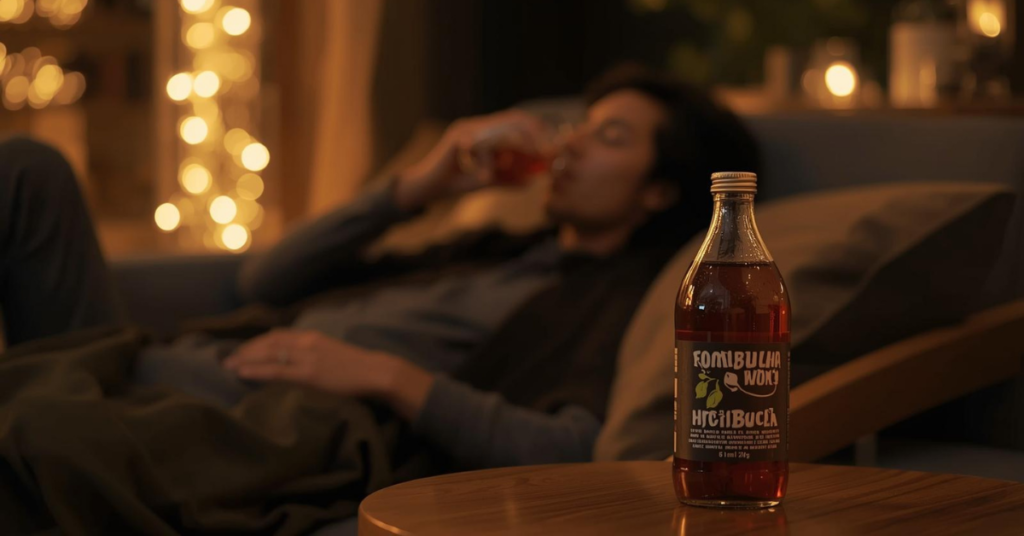
Yes, you can drink kombucha at night, but the caffeine and acidity may disrupt sleep or cause heartburn if you have a sensitive stomach.
Reaching for a cold bottle of fermented tea might seem like a healthy nightcap. It feels lighter than a dessert and offers that satisfying fizz without the heavy sugar load of soda. But before you crack open that bottle right before bed, you need to understand what is actually inside that glass.
Kombucha contains caffeine, acid, sugar, and trace amounts of alcohol. For some people, this combination acts as a mild stimulant or a digestive irritant. For others, the probiotics settle the stomach for a restful night. The answer lies in your personal tolerance and the specific brew you choose.
Can I Drink Kombucha At Night Without Ruining Sleep?
You can drink it without ruining your sleep if you pick the right type and limit the portion size. The main concern with evening consumption centers on three specific components: caffeine, pH levels, and sugar content. Each of these affects your body differently once you lie down.
Kombucha starts as sweet tea. The fermentation process transforms much of that tea and sugar into organic acids and probiotics, but it does not eliminate the original ingredients entirely. If you are highly sensitive to stimulants, even a small amount of leftover tea compounds can keep your brain active.
Timing also matters. Drinking any large beverage immediately before bed increases the likelihood of middle-of-the-night bathroom trips. To protect your sleep quality, try to finish your glass at least two hours before your head hits the pillow.
Understanding The Caffeine Levels
Many people ask, can I drink kombucha at night without waking up jittery? To answer that, you have to look at the base ingredient. Most kombucha is brewed from black or green tea. Fermentation reduces the caffeine content by about one-third to one-half compared to the original tea, but it rarely removes it completely.
A typical 8-ounce serving of kombucha might hold anywhere from 10 to 25 milligrams of caffeine. This is much less than a cup of coffee, which averages 95 milligrams, but it is comparable to a cup of decaf coffee or a weak cup of green tea. If you avoid chocolate or soda in the evening, you should treat kombucha with the same caution.
The table below compares the caffeine and acidity profile of kombucha against other common beverages to help you gauge the impact.
Beverage Comparison Data
| Beverage Type (8 oz) | Avg. Caffeine Content | Acidity Level (pH) |
|---|---|---|
| Kombucha (Black Tea Base) | 15–25 mg | 2.5–3.5 |
| Kombucha (Green Tea Base) | 10–15 mg | 2.5–3.5 |
| Brewed Coffee | 80–100 mg | 4.5–5.0 |
| Green Tea | 25–35 mg | 7.0 (Neutral) |
| Black Tea | 40–60 mg | 4.9–5.5 |
| Cola Soda | 22 mg | 2.5 |
| Water | 0 mg | 7.0 |
Acid Reflux And Digestion Risks
The sharp, tangy flavor of kombucha comes from acetic acid and other organic acids produced during fermentation. While these acids possess antimicrobial properties, they are potent. The pH level of kombucha typically falls between 2.5 and 3.5. This makes it almost as acidic as soda or orange juice.
Lying down shortly after consuming acidic drinks can trigger acid reflux or GERD (Gastroesophageal Reflux Disease) symptoms. When you are upright, gravity helps keep stomach acid down. When you are horizontal, highly acidic liquids can creep back up the esophagus, causing heartburn.
If you have a history of heartburn, drinking kombucha at night is risky. You might wake up with a burning sensation in your chest or a sour taste in your mouth. Diluting the drink with a little water or ice can raise the pH slightly, but avoiding it right before bed is the safer strategy.
Sugar Content And Blood Sugar Spikes
The “scoby” (Symbiotic Culture Of Bacteria and Yeast) feeds on sugar to create kombucha. While the scoby eats most of the sugar during the first fermentation, a second fermentation often occurs to add carbonation and flavor. This second step usually involves adding fruit juice, fruit puree, or more sugar.
Commercial brands vary wildly in sugar content. Some “dry” varieties have as little as 2 grams of sugar per serving, while others pack up to 20 grams. Consuming high-sugar drinks late at night can spike your blood sugar. This burst of energy might delay sleep onset.
Later in the night, as your blood sugar drops, your body might release cortisol (the stress hormone) to stabilize glucose levels. This hormonal shift can wake you up or reduce the quality of your deep sleep phases. Always check the nutrition label for “Total Sugars” if you plan to drink it after dinner.
Alcohol Traces In Fermented Tea
Kombucha is a fermented product, which means it naturally contains trace amounts of alcohol. By law, non-alcoholic beverages must contain less than 0.5% alcohol by volume (ABV). This is a tiny amount—roughly comparable to a very ripe banana or orange juice that has sat for a while.
For most adults, this amount is metabolically insignificant and will not cause intoxication. However, if you are highly sensitive to alcohol, pregnant, or avoiding alcohol for personal reasons, you should be aware of this trace content. Even micro-doses of alcohol can affect sleep architecture, specifically REM cycles, in extremely sensitive individuals.
Home-brewed kombucha poses a different variable. Without precise lab testing, homemade batches can sometimes reach 1% to 3% ABV depending on fermentation time and temperature. If you brew your own, be cautious about drinking your supply right before bed until you know its strength.
Potential Gut Health Benefits At Night
Despite the risks of caffeine and acid, some people swear by a nightcap of kombucha. The primary reason is probiotics. These beneficial bacteria and yeasts may help balance the gut microbiome. Since your body enters a rest and repair state during sleep, providing your gut with healthy bacteria might support overnight digestion.
Additionally, some brewed varieties contain L-theanine, an amino acid found in tea leaves. L-theanine promotes relaxation and can counteract the jittery effects of caffeine. If your specific bottle is made from green tea and has a low caffeine profile, the L-theanine might actually help you unwind.
If you wonder, can I drink kombucha at night to help digestion, the answer depends on your acid tolerance. If you have a “cast iron” stomach that handles acidity well, the probiotics could reduce bloating from a heavy dinner, making you feel more comfortable before sleeping.
Choosing The Right Time To Drink
Timing your intake is the best way to get the benefits without the sleep disruption. Drinking it with your dinner is a smart middle ground. The food in your stomach helps buffer the acidity, reducing the risk of reflux. The gap between dinner and bedtime also allows your body to process the small amount of caffeine.
Drinking it mid-afternoon is another solid option. It provides a gentle pick-me-up during the post-lunch slump without introducing caffeine too late in the day. This timing ensures the probiotics reach your gut while you are active, and the hydration helps you finish the workday strong.
Can I Drink Kombucha At Night If It Is Decaf?
Yes, finding a brand made from rooibos, hibiscus, or decaffeinated black tea changes the equation significantly. These versions eliminate the stimulant risk almost entirely. However, the acidity and sugar issues remain, so you still need to watch your portion size.
Manufacturers are starting to cater to the evening crowd with specific “calm” blends. These might use lavender, chamomile, or hops as flavoring agents. These herbs have natural sedative properties that align better with sleep hygiene than the typical ginger-lemon energy blends.
Use the checklist below to decide if your current bottle is safe for your bedside table.
Evening Safety Checklist
| Factor to Check | Safe For Night? | What To Look For |
|---|---|---|
| Base Tea | Yes (with caution) | Green or White tea has less caffeine than Black tea. |
| Sugar Content | Yes | Look for <5g sugar per serving to prevent spikes. |
| Flavor Additives | Yes | Choose calming herbs; avoid “Energy” labels. |
| Pasteurization | Yes | Raw has more active bacteria; pasteurized is stable. |
| Container Size | Maybe | Stick to 4–6 oz instead of a full 16 oz bottle. |
| Sensitivity | No | Avoid if you have active acid reflux/GERD. |
Better Alternatives For Sleep
If you decide the caffeine or acid is too much for your system, you have plenty of other gut-friendly options. Kefir is a fermented milk drink that is rich in probiotics but generally lower in acidity and free of caffeine. It contains tryptophan, which can actually aid sleep.
Herbal teas are the classic choice. Ginger tea offers the same digestive soothing effect as ginger kombucha but without the caffeine or sugar. Peppermint tea relaxes the stomach muscles, though it can worsen reflux for some, so chamomile remains the gold standard for sleep safety.
Water with a splash of apple cider vinegar (ACV) is another substitute. ACV has the same acetic acid profile and probiotic benefits (if you buy the version with “the mother”) but you can control the concentration. A single teaspoon in a large glass of water is far less acidic than a full bottle of kombucha.
Strategies For Sensitive Stomachs
If you are determined to keep kombucha in your evening routine, take small steps to mitigate the risks. Start by pouring a shot-glass-sized amount (about 2 to 4 ounces). This gives you the flavor and some probiotic exposure without overloading your stomach with acid.
You can also create a “mocktail” by mixing a small amount of kombucha with sparkling water. This reduces the concentration of sugar and caffeine per sip while extending the drink. It mimics the mouthfeel of a soda or beer, which can help satisfy the craving for a cold evening beverage.
Pay attention to temperature. Ice-cold drinks can sometimes shock digestion. Letting your glass sit out for ten minutes to reach a cool room temperature might make it easier on your system.
Dental Health Considerations
Acidity does not just hurt your stomach; it affects your teeth. The acid in kombucha can soften tooth enamel. If you drink it right before bed and then brush your teeth immediately, you risk scrubbing away that softened enamel. This causes long-term sensitivity and damage.
The American Dental Association notes that acidic foods and drinks contribute to erosion. To protect your smile, finish your drink, swish your mouth with plain water to neutralize the pH, and wait about 30 minutes before brushing. This simple habit preserves your enamel while letting you enjoy your drink.
The Impact of Tyramine
Fermented and aged foods contain an amino acid called tyramine. While healthy for most, tyramine triggers the release of norepinephrine, a brain chemical that increases alertness and heart rate. For a small percentage of the population, high tyramine intake can cause headaches or prevent sleep.
If you find yourself wide awake with a pounding head after a late kombucha, tyramine sensitivity might be the culprit. This is rare compared to caffeine sensitivity, but it is a factor worth tracking if you struggle with unexplained insomnia.
Final Thoughts On Evening Fermented Drinks
Kombucha sits in a gray area for night consumption. It is healthier than a soda but riskier than herbal tea. For the average person, a small glass two hours before bed is unlikely to cause major issues. The probiotics might even help you wake up with a happier gut.
However, if you suffer from insomnia, acid reflux, or caffeine sensitivity, move your consumption to earlier in the day. The benefits of probiotics do not rely on timing. You get the same gut-health boost drinking it at noon as you do at midnight, minus the risk of staring at the ceiling.
Listen to your body. If you drink it and sleep like a baby, carry on. If you toss and turn, switch to water or tea and save the fizz for lunch.