
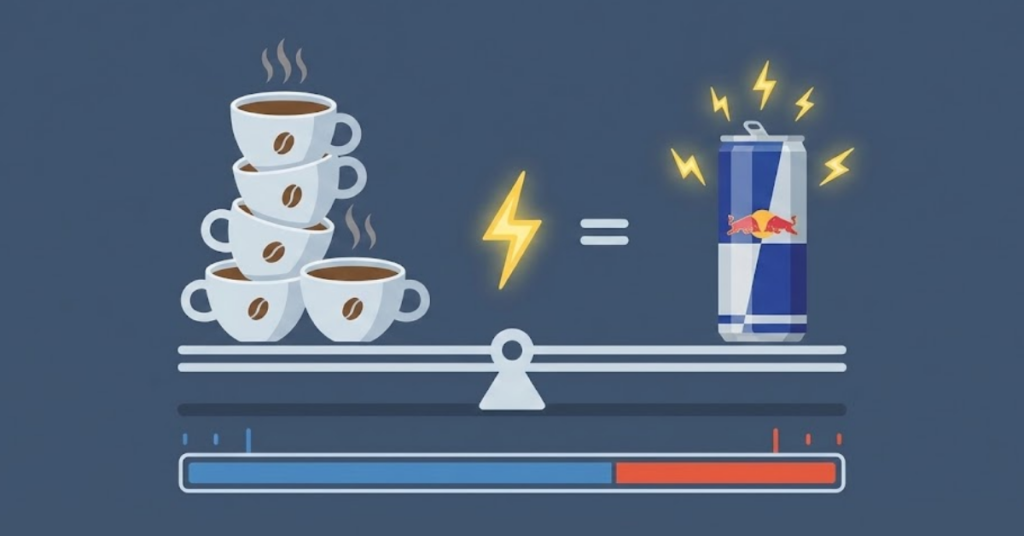
One small cup of brewed coffee has about the same caffeine as a standard 8.4 ounce Red Bull, so think in terms of roughly one cup.
Many people mix coffee and energy drinks during the same day. If you know how their caffeine levels compare, it becomes easier to plan your intake, avoid jitters, and still get the alert feeling you want daily.
Caffeine In Red Bull Versus Coffee At A Glance
Before looking at brew methods and mug sizes, it helps to line up the basic caffeine numbers for Red Bull and regular coffee. These figures come from brand data and reviews of caffeine content.
| Drink | Typical Serving | Caffeine (mg) |
|---|---|---|
| Red Bull Original | 8.4 fl oz can | 80 |
| Red Bull Original | 12 fl oz can | 114 |
| Brewed Coffee | 8 fl oz cup | 95 (average) |
| Brewed Coffee | 12 fl oz mug | 140 (average) |
| Espresso | 1 fl oz shot | 60–75 |
| Instant Coffee | 8 fl oz cup | 60 |
| Decaf Coffee | 8 fl oz cup | 2–15 |
Red Bull states that each 8.4 ounce can contains 80 milligrams of caffeine in its ingredient information, which is close to the amount in a small home brewed cup of coffee. Large reviews of coffee show that an 8 ounce cup of brewed coffee tends to fall near 95 milligrams on average, though the range is wide because beans, roast, grind, and brew time all change the final number.
How Many Cups Of Coffee Equal The Caffeine In A Red Bull?
When people ask how coffee cups stack up against the caffeine in a Red Bull, they usually picture the classic 8.4 ounce can. If you compare that can to an 8 ounce cup of standard brewed coffee at roughly 95 milligrams, one cup of coffee actually contains a little more caffeine than one can of Red Bull.
So in simple terms, the caffeine in one 8.4 ounce Red Bull lines up with just under one small cup of brewed coffee. If your usual coffee mug holds 12 ounces, you get closer to 140 milligrams in that pour, which is in the same range as drinking almost two 8.4 ounce cans of Red Bull.
The answer changes a bit for other Red Bull sizes:
- One 12 ounce Red Bull (about 114 milligrams) is similar to a slightly strong 8 ounce coffee or a light 12 ounce coffee.
- One 16 ounce Red Bull (about 151 milligrams) lands near a large mug of strong brewed coffee.
Cups Of Coffee Equal To The Caffeine In A Red Bull By Size
To make the comparison easier, picture coffee in simple blocks of caffeine. An 8 ounce brewed coffee at home sits close to 95 milligrams. With that as a baseline, you can think of one small coffee as roughly equal to one 8.4 ounce Red Bull, and use that to balance your daily intake across drinks.
Here is a way to think about typical trade offs:
- One 8.4 ounce Red Bull ≈ one 8 ounce brewed coffee.
- Two 8.4 ounce Red Bulls ≈ a strong 16 ounce travel mug of coffee.
- One 12 ounce Red Bull ≈ between a small and medium cup of coffee, depending on brew strength.
Because coffee strength can swing from mellow diner drip to intense specialty pour over, these are ballpark matches, not lab exact conversions. For day to day planning, treating one can of Red Bull as roughly one regular small coffee keeps your math simple.
Why Coffee Caffeine Numbers Vary So Much
Red Bull cans list caffeine right on the label, and the brand also publishes those figures on its ingredient pages. Coffee is trickier. Two cups that look the same can carry very different caffeine loads. That is why this comparison never has one single number.
Bean Type And Roast
Different beans contain different natural caffeine levels. Robusta beans carry more caffeine than arabica beans. Dark roasts taste bold but lose a little mass during roasting, so a scoop of dark roast can land slightly lower in caffeine than a scoop of light roast, even though the flavor feels stronger.
Grind Size And Brew Time
Finer grinds and longer brew times pull more caffeine out of the grounds. Espresso uses a fine grind but a very short brew time under pressure. Drip brewers and pour over methods use medium grinds with longer contact time. Cold brew usually steeps for many hours, which raises total caffeine content even if each sip feels smooth.
Serving Size And Mug Shape
Many people pour coffee into mugs that hold 10 to 16 ounces or more, even when the nutrition label on a bag of coffee uses 8 ounces as the standard serving. That means one “cup” at home can quietly deliver as much caffeine as one and a half or two labeled servings. When you compare coffee to Red Bull, always start by asking how many fluid ounces you actually pour.
Instant And Decaf Choices
Instant coffee usually carries less caffeine per cup than brewed coffee. Decaf coffee still contains a small amount of caffeine, though it is far below both Red Bull and regular coffee. If you mix decaf with regular or swap in instant coffee, the match between coffee cups and Red Bull cans shifts again.
How Many Red Bulls Or Coffees Fit Into A Safe Daily Limit?
Most healthy adults can safely handle up to about 400 milligrams of caffeine per day, according to guidance from the United States Food and Drug Administration and large health organizations. That level lines up with roughly four small cups of brewed coffee or around five standard 8.4 ounce cans of Red Bull, though tolerance varies widely.
Here is a breakdown to show how many Red Bulls and coffee servings fit under that general daily limit:
| Drink Type | Servings Near 400 mg | Notes |
|---|---|---|
| Red Bull 8.4 fl oz | Up to 5 cans | Each at 80 mg caffeine |
| Brewed Coffee 8 fl oz | About 4 cups | Each at 95 mg on average |
| Brewed Coffee 12 fl oz | About 3 mugs | Each around 140 mg |
| Espresso Shots | 5 to 6 shots | At 60–75 mg per shot |
| Instant Coffee 8 fl oz | 6 to 7 cups | Near 60 mg per cup |
These are rough planning numbers, not personal medical advice. If you are pregnant, managing heart conditions, dealing with anxiety, or taking medicines that interact with caffeine, your safe range may be lower. Many health groups suggest a daily cap closer to 200 milligrams during pregnancy.
Tips For Balancing Coffee And Red Bull In Daily Life
Knowing how many cups of coffee equal the caffeine in a Red Bull is helpful only if it changes how you drink through the day. A few simple habits make it easier to stay under a level that feels comfortable while still enjoying both drinks when you want them. Small adjustments often feel easier than big sudden changes for your body overall.
Count Drinks In Caffeine Blocks
Instead of tracking every milligram, think in blocks. Picture one 8 ounce brewed coffee, one 8.4 ounce Red Bull, or one and a half cups of instant coffee as one “block” of around 80 to 100 milligrams. Decide how many blocks you want in a day based on your sleep, schedule, and how your body reacts, and stick to that number.
Watch Hidden Caffeine Sources
Energy drinks and coffee are not the only sources in most diets. Tea, cola, chocolate, pre workout supplements, and some pain relievers all add to the total. On days when you drink several coffees and a Red Bull, it helps to steer away from other caffeine sources where you can.
Leave Space Before Bed
Caffeine can sit in your system for many hours. A good rule for many people is to stop caffeine intake at least six hours before planned sleep. If you drink a Red Bull in the late afternoon and follow it with coffee at dinner, the combined caffeine can still be active when you try to fall asleep.
Adjust Slowly If You Cut Back
If you decide that the mix of Red Bull and coffee in your routine feels too high, cut back in steps. Drop one drink every few days, swap a full coffee for half decaf, or switch one can of Red Bull for water or herbal tea. Easing down tends to limit headaches, fatigue, and irritability linked with abrupt caffeine changes.
So, How Should You Think About Coffee Cups Versus Red Bull?
For everyday use, you can treat one 8.4 ounce Red Bull and one small 8 ounce brewed coffee as roughly equal in caffeine. A large coffee often lines up with one and a half to two cans. The exact match will always depend on brew strength and serving size, but this simple rule puts you in the right range.
If you keep that rough match in mind, the phrase how many cups of coffee equal the caffeine in a Red Bull turns into a useful mental tool instead of a confusing nutrition puzzle. Use it to count caffeine blocks, stay near a safe daily limit, and choose whether coffee or an energy drink fits better at each point in your day.
1. Caffeine figures for Red Bull from brand ingredient information and can labels.
2. Average coffee caffeine ranges from large nutrition reviews of brewed coffee.
3. Daily caffeine guidance for healthy adults from national health authorities such as the U.S. Food and Drug Administration.
4. Pregnancy caffeine limits from major medical groups that advise a lower daily range.