
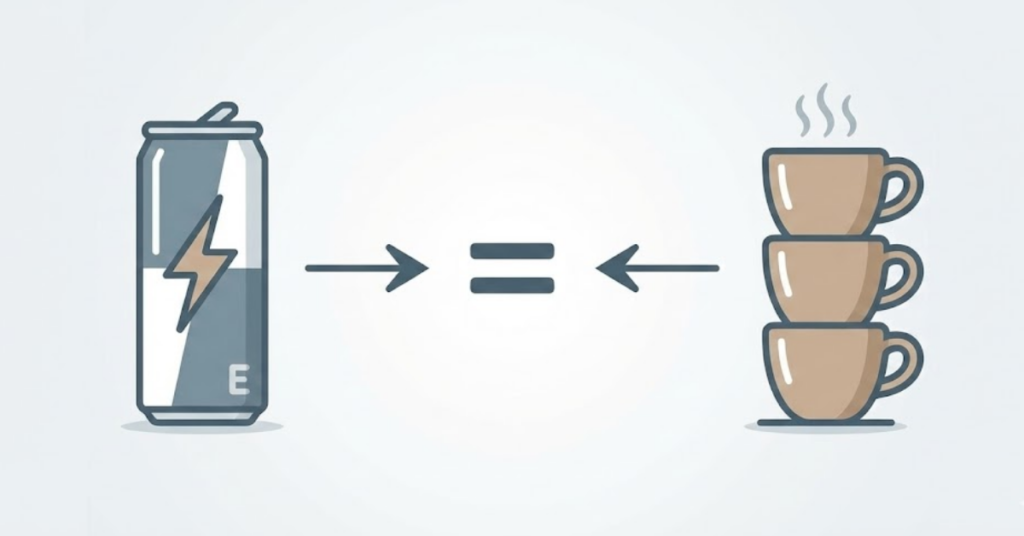
One small energy drink usually matches about one 8 to 12 ounce cup of coffee in caffeine, depending on brand and brew strength.
Why People Compare Coffee To Energy Drinks
When you reach for a boost, it often comes down to a mug of coffee or a can of something fizzy. Both deliver caffeine, both can sharpen focus, and both can keep you awake longer than planned. The question is how they stack up against each other, sip for sip.
The phrase How Many Cups Of Coffee Equal One Energy Drink? shows up because labels are confusing. Coffee rarely lists caffeine on the bag or cup, while energy drinks usually print a number right on the can. To make sense of the swap, you need to compare typical serving sizes and average caffeine ranges side by side.
Caffeine In Coffee Vs Energy Drinks At A Glance
There is no single answer for every brand, yet some solid averages help. Lab tests and large nutrition databases place an 8 ounce cup of brewed coffee around 80 to 100 milligrams of caffeine, while a small 8.4 ounce energy drink often sits right near 80 milligrams, in line with the ranges shown in the Mayo Clinic caffeine chart. Many larger 16 ounce cans double that amount.
| Beverage | Typical Serving | Average Caffeine (mg) |
|---|---|---|
| Brewed Coffee, Drip | 8 fl oz (237 ml) | 80–100 |
| Brewed Coffee, Drip | 12 fl oz (355 ml) | 120–150 |
| Espresso Shot | 1 fl oz (30 ml) | 60–75 |
| Instant Coffee | 8 fl oz (237 ml) | 60–80 |
| Decaf Coffee | 8 fl oz (237 ml) | 2–5 |
| Standard Energy Drink | 8.4 fl oz (250 ml) | 80 |
| Large Energy Drink | 16 fl oz (473 ml) | 150–160 |
| Energy Shot | 2 fl oz (60 ml) | 200 |
These ranges line up with figures from large health systems and industry groups that track caffeine content in common drinks. That is why you often hear that a small can of energy drink lines up with roughly one small cup of coffee, while a tall can lands closer to one and a half or two cups.
How Many Cups Of Coffee Equal One Energy Drink?
For a typical small can, one standard cup of coffee is a solid match. If your mug holds 8 to 12 ounces of brewed coffee in the normal strength range, the caffeine load is close to an 8.4 ounce can that lists around 80 milligrams. In practice, the swap is not perfect, yet one cup for one small can keeps you in the same ballpark.
A big can tells a different story. A 16 ounce energy drink that contains around 150 to 160 milligrams of caffeine feels closer to one and a half normal cups of drip coffee. Brands with extra caffeine can match two modest cups even when the can still looks like a single serving.
Factors That Change The Coffee Side Of The Equation
Before you swap cans for cups, you need to look at what is in your coffee. Two mugs that look the same can differ a lot in caffeine. Beans, roast level, grind, and brew method all play a role, so the same volume does not always deliver the same hit.
Brew Method And Strength
Drip coffee, pour over, French press, cold brew, and espresso all pull caffeine from the grounds in different ways. Long contact time and a high coffee to water ratio pull more caffeine. That is why cold brew concentrate and some coffee shop drinks carry numbers that rival strong energy drinks even in a single serving.
If you make coffee at home and scoop heaping tablespoons into the filter, your mug may contain more caffeine than a label based average. A level scoop, a medium grind, and a standard brew time place your drink closer to the mid range values that nutrition tables use.
Bean Type And Roast Level
Arabica beans tend to contain less caffeine per gram than robusta beans. Many instant coffees and lower cost blends rely on robusta, which nudges caffeine higher for the same scoop. Dark roast beans lose a little mass during roasting, so a scoop of dark roast weighs less than a scoop of light roast. When you measure by scoop rather than by weight, light roast can land higher in caffeine per cup.
Serving Size And Mug Shape
The word “cup” can mislead because many mugs are larger than 8 ounces. A travel tumbler can hold 16 to 20 ounces, which means one “cup” on your desk might already match or exceed a large can of energy drink. When you compare cups and cans, think in fluid ounces, not just in the number of times you refill your mug.
What Changes On The Energy Drink Side
Energy drinks may look more precise because the can lists caffeine, yet numbers still vary. A classic can of about 8.4 ounces often carries 80 milligrams of caffeine, while a large 16 ounce can shows 150 to 160 milligrams. Some specialty brands go even higher for the same volume and add extra stimulant ingredients on top.
Sugar, Sweeteners, And Extra Stimulants
Coffee starts with water and roasted beans. Energy drinks stack ingredients like sugar, taurine, B vitamins, guarana, and various herbal extracts. The caffeine number might match coffee, yet a heavy sugar load can push blood sugar up fast and drop it later. Added stimulants may also make the same caffeine level feel stronger.
Because formulas differ, two cans with the same caffeine line on the label might feel different in your body. That is one reason many health professionals urge children, teens, and people with heart conditions to skip energy drinks even if they still drink small amounts of coffee.
Labeling And Serving Tricks
Some cans list caffeine per serving rather than per container, and most people finish the entire can in one go. A tall can might show 80 milligrams per serving and two servings per can, which means 160 milligrams in real life. When you read caffeine numbers, scan for serving size notes near the nutrition panel.
Safe Daily Caffeine Limits And What They Mean In Cups And Cans
Most healthy adults can handle up to 400 milligrams of caffeine per day according to large health agencies, including guidance from the U.S. Food and Drug Administration. That level links to lower risk of side effects like jittery hands, racing heart, and poor sleep in people who are not pregnant and do not have heart rhythm problems.
On that scale, 400 milligrams equals about four small cups of brewed coffee, two large 16 ounce energy drinks, or a mix of both. Pregnant people often receive advice to stay under 200 milligrams of caffeine per day, which would align with about two small cups of coffee or one large can at most.
| Daily Caffeine Limit | Approximate Coffee | Approximate Energy Drinks |
|---|---|---|
| 200 mg (pregnancy guidance) | About two 8 oz cups | One small can |
| 400 mg (general adult guidance) | About four 8 oz cups | Two large cans |
| 600 mg | About six 8 oz cups | Three large cans |
| 800 mg | About eight 8 oz cups | Four large cans |
| 1,000 mg or more | Ten or more 8 oz cups | More than five large cans |
| Energy Shot Focused Day | Two 8 oz cups plus one shot | Two 2 oz shots |
| Low Intake Day | One 8 oz cup | Half of a small can |
These rough conversions show how fast you can reach higher levels when you stack sources. A large coffee in the morning, an energy drink at lunch, and iced tea in the afternoon can push you over 400 milligrams without much thought.
How To Swap Coffee And Energy Drinks Without Overdoing It
If you want to replace a can with coffee or the other way around, start by matching caffeine, not volume. For a small 8.4 ounce energy drink, aim for one modest cup of brewed coffee or a single double shot latte. For a tall can, match it with a 12 to 16 ounce mug brewed at normal strength.
Simple Step By Step Swap
- Check the caffeine line on your energy drink can and note the serving size.
- Estimate your coffee strength: light, medium, or strong brew.
- Use 80 to 100 milligrams per 8 ounce cup as a middle range for home brewed coffee.
- Divide the can’s caffeine by that range to find the number of cups.
- Round to a simple target, such as one or one and a half cups.
- Watch how you feel for an hour or two and adjust next time if you feel wired or sluggish.
Signs You May Need Less Caffeine
Some people feel side effects at levels well below the general guidance. Signs that your swap may be too strong include a racing heart, trouble falling asleep, shakiness, nervous thoughts, or stomach upset. If you spot patterns like these, cut back on both coffee and energy drinks and talk with a health professional if you have concerns.
People with heart disease, anxiety disorders, or a history of irregular heartbeat may receive lower personal limits. Children and teens are often told to avoid energy drinks altogether and keep caffeine intake low from all sources.
Practical Takeaways For Daily Habits
When you look at averages, one small energy drink equals about one small cup of coffee, and one large can equals about one and a half to two modest cups. Real life intake depends on how you brew, pour, and sip through the day, so it helps to think in caffeine milligrams rather than only in cups or cans.
If you like the taste and ritual of coffee, staying with coffee lets you control strength through grind and brew time. If you prefer cold flavored drinks, picking smaller cans or lower caffeine formulas and spacing them through the day keeps your total closer to the range you want. Once you know the rough math for How Many Cups Of Coffee Equal One Energy Drink? the choice between mugs and cans feels much clearer.