
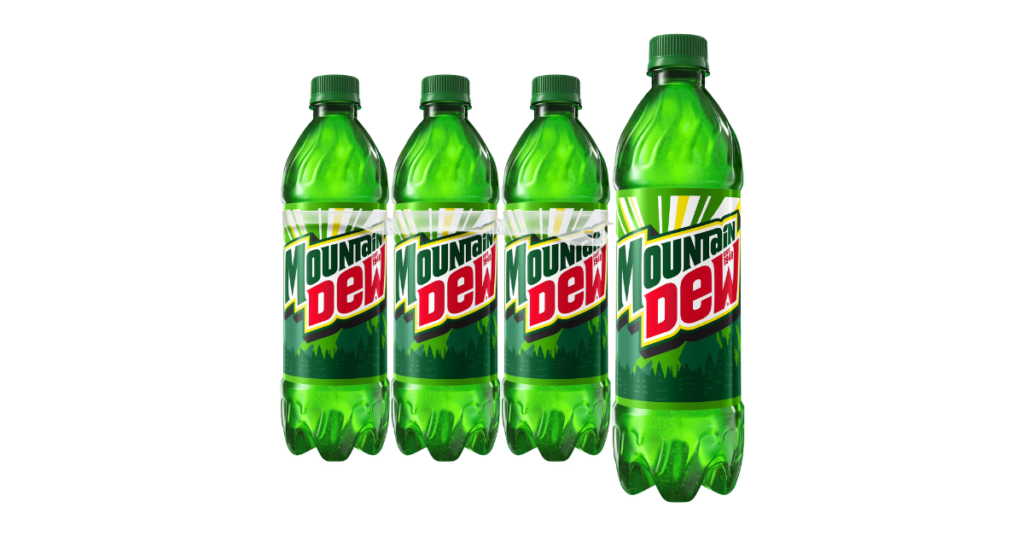
A standard 12 ounce can of Mountain Dew contains about 54 milligrams of caffeine, with larger bottles reaching around 90 milligrams or more.
When you crack open a bottle of Mountain Dew, you are not just getting sugar and citrus flavor. You are also taking in a measurable hit of caffeine. Many people reach for a Dew instead of coffee, or stack it on top of other caffeinated drinks during the day. That is why a clear answer to how many milligrams of caffeine are in Mountain Dew matters for sleep, focus, and long term health habits.
The short headline number is simple. A classic 12 ounce can of Mountain Dew in the United States contains about 54 milligrams of caffeine. That works out to roughly 4.5 milligrams of caffeine per fluid ounce. Once you know that rate, you can estimate the caffeine in most bottles and fountain cups built around the same base formula.
How Many Milligrams Of Caffeine Are In Mountain Dew? By Size And Version
The answer to how many milligrams of caffeine are in mountain dew depends first on how much you pour into your glass. Since the standard formula has about 4.5 milligrams per fluid ounce, larger portions climb quickly. A casual refill or an oversized gas station cup can double or triple the caffeine of a single can without feeling like “a lot” in the moment.
Most core Mountain Dew products in the United States stay close to that 54 milligram figure for a 12 ounce serving. Flavors such as Code Red or Purple Thunder often sit in the same range per can, while some zero sugar or specialty lines may vary slightly up or down. Regional recipes can change things too, since some countries still sell versions with little or no caffeine in the base soda.
Caffeine In Popular Mountain Dew Sizes
The table below uses the typical 4.5 milligrams of caffeine per fluid ounce for classic Mountain Dew. Values are approximate, but they match label data for standard American cans and bottles.
| Serving | Volume (fl oz) | Approximate Caffeine (mg) |
|---|---|---|
| Small Glass | 8 | 36 |
| Standard Can | 12 | 54 |
| Tall Can Or Small Bottle | 16 | 72 |
| Typical Convenience Bottle | 20 | 90 |
| Large Fountain Cup | 24 | 108 |
| One Liter Bottle | 33.8 | About 153 |
| Two Liter Bottle | 67.6 | About 304 |
Numbers like “153 milligrams in a liter” or “about 304 milligrams in two liters” look large on paper. In real life, though, people can reach those levels over an afternoon of refills or by sharing a large bottle across a gaming session. Once you know the rate per ounce, it becomes easier to add up what you drink in a typical day.
If you want the most precise figure for a specific flavor or package, the best place to look is the product label or the official caffeine listings from the maker of Mountain Dew. Many shoppers also check the PepsiCo caffeine information page before switching drinks or stocking a fridge for kids and teenagers.
Caffeine Variations Across Mountain Dew Flavors
The classic green Mountain Dew is only one part of a long flavor lineup. Citrus spin offs, tropical blends, zero sugar versions, energy crossovers, and limited editions all add nuance to the caffeine story. Some stick to the standard 54 milligrams per 12 ounce serving, while others shift the levels or remove caffeine entirely.
Caffeine free Mountain Dew once gave shoppers a way to keep the flavor while skipping the stimulant. In some regions that option has been scaled back or discontinued, so availability now depends on your local market. Other flavored Dews can stay near the core caffeine rate, give or take a few milligrams, which still matters if you stack multiple cans in a day.
On the other side of the range, some Dew inspired energy drinks pack more caffeine than standard soda. Those products come with different serving sizes, bold label warnings, and a stronger kick. Treat them as energy drinks first, not simple flavor variants, since their caffeine per ounce can sit much higher than the 4.5 milligrams per ounce in classic Mountain Dew.
How Mountain Dew Caffeine Compares With Coffee And Other Drinks
Many people want to know whether a can of Mountain Dew “equals” a cup of coffee. The short answer is no. Brewed coffee usually carries far more caffeine per serving. An 8 ounce mug of drip coffee often lands somewhere in the 80 to 120 milligram range, so a single cup can match or beat a 20 ounce bottle of Dew on caffeine alone.
Cola sits closer to Mountain Dew, but still a little lower. A typical 12 ounce cola has around 34 to 40 milligrams of caffeine. Classic Dew, at 54 milligrams, usually wins that matchup, which is one reason soda drinkers who want more caffeine lean toward Dew instead of cola.
Energy drinks take the top spot in many cases. A small 8.4 ounce can of a standard energy drink often contains about 80 milligrams of caffeine. Large cans and “energy shots” can soar far past that figure. When you add coffee, energy drinks, and soda together in the same day, total caffeine can climb faster than many people expect.
Relative Caffeine In Common Drinks
The table below places Mountain Dew next to a few familiar drinks so you can see how the caffeine stack looks at a glance. Values are rounded and can vary by brand and brew strength.
| Beverage | Typical Serving | Approximate Caffeine (mg) |
|---|---|---|
| Mountain Dew | 12 fl oz can | 54 |
| Cola Soda | 12 fl oz can | 34–40 |
| Brewed Coffee | 8 fl oz mug | 80–120 |
| Energy Drink | 8.4 fl oz can | Around 80 |
| Black Tea | 8 fl oz cup | 40–60 |
| Green Tea | 8 fl oz cup | 20–45 |
| Decaf Coffee | 8 fl oz mug | 2–5 |
Next time you reach for an afternoon drink, those ranges give you a quick way to swap choices. If you want less caffeine, moving from Dew to a small tea can cut your intake. If you already had coffee in the morning, stacking several Dew cans and an energy drink on top of that can push your daily total toward higher territory.
Daily Caffeine Limits And Mountain Dew Intake
Health agencies in the United States often mention 400 milligrams of caffeine per day as a reasonable upper boundary for healthy adults. The U.S. Food and Drug Administration caffeine update repeats that figure, while also stressing that sensitivity varies from person to person. Some people feel jittery or sleepless well below that range, while others feel fine at higher amounts.
Using the 54 milligram figure for a 12 ounce can, 400 milligrams works out to roughly seven standard cans of Mountain Dew in one day. That number does not leave any room for coffee, tea, chocolate, pre workout drinks, or energy shots. In real life, many people get caffeine from several sources, not just soda, so a safer range is lower.
For many adults, staying around two to three cans of Mountain Dew per day, or one large bottle plus other small sources, keeps total caffeine in a more moderate range. That pattern still assumes that sleep is stable, blood pressure is under control, and there are no heart issues or other conditions that make caffeine riskier.
Translating Limits Into Mountain Dew Servings
Looking at the 400 milligram guideline in terms of Mountain Dew alone can be helpful:
- About two 20 ounce bottles of Mountain Dew reach around 180 milligrams of caffeine.
- Three standard 12 ounce cans reach about 162 milligrams.
- Four standard cans reach around 216 milligrams.
- Six standard cans climb to about 324 milligrams.
Those totals show how fast caffeine adds up when servings are large. They also make it clear why someone who starts the day with coffee needs to be careful with later soda and energy drinks. If you already had 200 milligrams from coffee, then drink several cans of Dew and an energy drink, the combined amount can sit well above the level many experts see as sensible for daily life.
Who Should Be Careful With Mountain Dew Caffeine
Not every body handles caffeine the same way, and that matters more than the math alone. Children and teenagers tend to be smaller and are still growing, so a 54 milligram hit from a can of Dew weighs more on their system than on a large adult. Many pediatric groups advise keeping kids away from regular caffeine intake, especially from energy drinks and large sodas.
Pregnant people and those who are nursing also have lower suggested limits for caffeine. Obstetric providers often suggest staying well under the 400 milligram figure, and some give far lower targets. Caffeine passes through the placenta and into breast milk, so intake levels shift the exposure for the baby as well.
People with heart rhythm problems, high blood pressure, anxiety, panic attacks, or sleep disorders can also feel the effects of Mountain Dew caffeine more strongly. Even a single bottle late in the day can disturb sleep or trigger palpitations in a sensitive person. If any of those issues sound familiar, share your caffeine habits with your regular doctor and ask for personal guidance.
Signs You Might Be Getting Too Much Caffeine From Dew
Numbers help, but your body gives useful signals as well. When caffeine intake creeps too high, common signs include a racing heartbeat, shakiness, restless sleep, and headaches when you skip your usual drinks. Some people also notice stomach upset, heartburn, or a wired but tired feeling late at night.
If Mountain Dew is your main source of caffeine, track your cans and bottles for a week. Count how many ounces you drink each day, then multiply by 4.5 milligrams per ounce. Add that to estimated caffeine from coffee, tea, chocolate, or supplements. If the total sits near or above 400 milligrams on a regular basis, and you also feel off, it may be time to dial back.
Cutting down works best when you move in small steps. Swapping one Dew per day for water or a caffeine free soda, shrinking your usual bottle size, or setting a “no Dew after dinner” rule can bring your daily total down without a harsh crash. If withdrawal headaches or mood swings show up, slow the change rather than stopping cold.
Practical Ways To Manage Mountain Dew Caffeine
Once you understand how many milligrams of caffeine are in mountain dew, you can shape small habits that help you enjoy the drink without overdoing it. A few practical tactics make a big difference, and they do not require strict tracking every single day.
Plan Your Daily Caffeine Budget
Pick a rough daily caffeine target that fits your body and your doctor’s advice. Then list the caffeinated drinks you like the most. Maybe you want one morning coffee and one afternoon soda. Maybe you prefer tea with breakfast and a Dew with lunch. Add rough caffeine numbers to each drink and see how many cans, mugs, or cups fit your plan.
If you notice that your ideal layout leaves no room for an extra Mountain Dew in the evening, treat that as a firm line instead of a loose suggestion. Over time, these small guardrails feel routine, and you stop reaching for extra caffeine out of habit.
Switch Sizes And Timing, Not Just Brands
Brand changes help, but size and timing do a lot of the heavy lifting. Swapping from a 20 ounce bottle to a 12 ounce can once or twice a day trims plenty of caffeine without forcing you to drop Mountain Dew entirely. Setting a personal cutoff time, such as no Dew after mid afternoon, also protects your sleep even if your total daily intake stays moderate.
Another simple move is to pair a Dew with food rather than drinking it on an empty stomach. That can soften the spike in alertness and make jitters less likely. Water between caffeinated drinks also helps your body process sugar and caffeine, and it can slow automatic refills when you are distracted.
When To Talk With A Health Professional
If you have fainting spells, chest pain, strong palpitations, or severe anxiety after drinking Mountain Dew, do not treat that as normal. Those signs deserve proper medical attention. Share your usual caffeine intake, including all soda, coffee, tea, and energy drinks, so your provider can see the full picture.
Even for people without red flag symptoms, checking in about caffeine during routine visits is wise. A short conversation can confirm whether your daily Mountain Dew habit fits your health status and medications, or whether small adjustments would reduce risk. That way you can enjoy the citrus kick with a clearer picture of how it fits into your wider diet.
When you put everything together, the core numbers are clear. A regular 12 ounce Mountain Dew has about 54 milligrams of caffeine, larger bottles scale that figure up, and most adults do best when total daily caffeine from all sources stays near or below 400 milligrams. With that frame in mind, you can decide how often Mountain Dew belongs in your fridge and how many cans or bottles fit your day.