
Small kitchens don’t fail because they’re small. They fail because your daily routine has no breathing room. And coffee is usually the first routine that starts to feel chaotic: a water tank you can’t reach under cabinets, a lid that smacks the shelf above it, a carafe that dribbles down the side, a pod machine that splashes because your mug is too tall, or an espresso setup that looks “compact” until you realize you also need a grinder, a knock box, and a place to dry parts.
If you’re searching for the best coffee maker for small space, you’re not just shopping for flavor. You’re shopping for a smoother morning. That means this guide is not going to be a boring spec list. I’m going to focus on the friction points that actually decide whether you love your brewer after two weeks: cabinet clearance, fill workflow, how many “pieces” live on your counter, how annoying the cleanup is when you’re half awake, and which designs stay clean versus quietly turning into a sticky coffee museum.
I built this buyer guide from real-life patterns that show up again and again in owner feedback: the tiny annoyances that become daily dealbreakers, and the unexpected details that make a small machine feel like a luxury. You’ll see me talk about things Amazon listings rarely explain clearly: whether a removable reservoir is truly easier (or just another part to fumble), why some stainless carafes pour beautifully and others spill, how “cup” sizes are almost never what you think, and when pod convenience is worth the trade-offs.
Below, you’ll find 14 carefully chosen options—micro single-serve brewers, compact 5-cup drippers, pod machines that actually fit real dorm desks, a dual brewer that can handle guests without taking over your counter, plus a few espresso picks for people who want café-style drinks without a café-size footprint.
In this article
- How to choose the right compact coffee maker for your space and routine.
- Quick comparison table of 14 standout small-space models.
- In-depth reviews of each coffee maker, with pros and cons.
- How small-space coffee setups succeed (and where most people get stuck).
- FAQ: common questions, smart fixes, and final buying tips.
How to Choose the Best Coffee Maker For Small Space
A compact coffee maker isn’t “good” because the box says it’s compact. It’s good because it disappears into your routine: it fits where you want it, fills easily, brews consistently, and cleans up without drama. If you’ve ever bought a “tiny” coffee maker and still felt crowded, you didn’t buy the wrong size—you bought the wrong workflow.
1. Start with your real morning, not your ideal morning
Small-space brewing is all about reducing decisions. Before you pick a machine, decide what you want your mornings to feel like. Most people fall into one of these patterns:
- The “single cup sprint”: You want coffee in minutes with almost zero cleanup. Pods or enclosed single-serve brewers tend to win here.
- The “two mugs, no waste”: You want a small drip brewer that makes enough for you (and maybe one other person) without leftover coffee.
- The “I want real coffee flavor”: You’re willing to do slightly more work for better extraction—often grounds instead of pods, or a brewer with stronger saturation.
- The “I host sometimes”: Most days you drink one cup, but you need the ability to brew more without owning two machines.
- The “espresso at home”: You want cappuccinos and lattes—but you also need a machine that doesn’t demand an entire barista station.
- The “RV / travel”: Your priority is portability, charging options, and not needing a full kitchen setup.
2. Do the “small space math” the way pros do it
Most people measure width and forget the rest. In small kitchens, height and clearance are the hidden dealbreakers. Here’s the checklist I use:
- Footprint: Width and depth matter, but pay attention to “awkward depth” (machines that are narrow but stick far back).
- Height under cabinets: Many brewers need extra vertical room to open the top lid for water and grounds.
- Fill method: A removable water tank can be a superpower… or a daily annoyance if the latch is fussy.
- Steam path: Some drip makers vent a lot of steam straight up. Under wood cabinets, that can mean long-term discoloration if you brew in the same spot every day.
- Cord reality: Short cords are more common than you’d think. If your outlet isn’t right behind your machine, cord length becomes a real constraint.
3. Taste is mostly water, grind, and contact time (your machine is the referee)
Here’s the unpopular truth: the machine is not where taste starts. Taste starts with water quality and fresh coffee. But your brewer decides whether that potential becomes a great cup or a “meh” cup.
A compact machine can still brew excellent coffee if it does three things well:
- Heats water hot enough and stays stable: Under-heated brew water is the silent cause of thin, sour coffee.
- Saturates grounds evenly: If water channels through one spot, you get weak extraction even with good beans.
- Controls flow in a consistent way: Tiny brewers that rush water through the bed can taste watery unless you compensate with grind and dose.
That’s why some compact brewers taste “shockingly good” and others feel like they never quite wake the coffee up. The fix is not always “buy a bigger machine.” Often it’s choosing the right design for your style (pods, grounds, drip, espresso), then dialing in a smart routine.
4. The cleanup factor is what determines long-term happiness
Most small-space buyers care about counter space, but what actually breaks the relationship is cleaning friction. Watch for these two design personalities:
- Designs that keep coffee out of the machine: Some brewers route coffee directly into the carafe and keep the internal chassis cleaner.
- Designs that trap residue: Narrow drip paths, hidden needles, or hard-to-reach corners can become odor traps if you don’t maintain them.
If you know you won’t deep-clean often, choose a machine that stays clean by design (removable parts, smooth surfaces, easy access). If you like maintenance and ritual, you can get more adventurous—just be honest with yourself.
5. Decide if “keep warm” helps you or hurts you
Warming plates are not automatically good or bad. They’re a tool. In small spaces, “keep warm” is either:
- A lifesaver if you sip slowly and want refills without microwave reheating, or
- A flavor killer if it cooks the coffee for too long and makes it taste flat or bitter.
If you’re sensitive to “cooked coffee” flavor, aim for machines with adjustable warming behavior, shorter keep-warm windows, or single-serve brewing where the coffee goes straight into your mug.
6. Know the three best small-space paths (and pick one)
Almost every happy small-space coffee setup falls into one of these:
- Pods (fastest): Clean, quick, consistent. Trade-off: cost per cup and less control over flavor.
- Compact drip (best balance): Better flavor control and cheaper grounds, with manageable cleanup.
- Compact espresso (highest craft): Café-style drinks. Trade-off: more steps and more skill.
Once you choose the path, finding your perfect machine becomes dramatically easier.
And yes, this is where the phrase matters: the best coffee maker for small space is the one that matches your behavior, not your fantasy self.
Quick Comparison: 14 Best Coffee Maker For Small Space Picks
Use this table to shortlist the models that match your routine, then jump to the full reviews for the details that actually matter in small kitchens—like cabinet clearance, cleanup reality, heat behavior, and the “tiny annoyances” owners mention after months of daily use.
On smaller screens, swipe or scroll sideways to see the full table.
| Model | Brew style | Small-space superpower | Best match | Amazon |
|---|---|---|---|---|
| VINCI Micro Café Smallest Single‑Serve Glass Brewer | Pods + grounds | Micro footprint + enclosed brewing + flexible sizes up to a bigger mug | People who want one compact daily driver with real flavor control | Amazon |
| Zojirushi Zutto 5‑Cup Drip Coffeemaker | Compact drip | Removable tank + carafe-top basket keeps the machine cleaner | Small households that want a simple, high-quality drip routine | Amazon |
| Cuisinart 5‑Cup Stainless Carafe (DCC‑5570) | Compact drip | Stainless carafe + removable reservoir + brew pause in a tight footprint | People who hate glass carafes and want tidy small-batch coffee | Amazon |
| Keurig K‑Mini Mate Single Serve | Pods | Ultra-narrow body + fast one-cup convenience for micro counters | Dorms, offices, RV counters, and “I just need coffee now” routines | Amazon |
| Keurig K‑Express Single Serve | Pods | Removable reservoir reduces refills + strong button for bolder taste | Pod users who want less fuss and a little more “coffee punch” | Amazon |
| Keurig K‑Duo Hot & Iced (Gen 2) | Pods + carafe | Two brewing styles in one footprint + shared reservoir | Small kitchens that need single cups on weekdays and carafes on weekends | Amazon |
| BLACK+DECKER 12‑Cup Mill & Brew (CM5000B) | Grind + drip | Built-in grinder = fresher flavor without extra appliances | People who want “fresh ground” coffee but have limited counter room | Amazon |
| Cuisinart 14‑Cup PerfecTemp (DCC‑3200) | Large drip | Big capacity with temperature control + 1–4 cup mode for smaller brews | Households that want “one machine” even in limited kitchen space | Amazon |
| CASABREWS CM5418 Espresso Machine | Espresso | Real espresso + steam wand in a compact, slim body | Latte and cappuccino fans who want café-style drinks without a huge setup | Amazon |
| CERA+ Portable Self‑Heating Espresso Maker | Travel espresso | Self-heating + capsule/grounds flexibility for travel, RV, and outages | People who want espresso away from the kitchen (camping, work, road trips) | Amazon |
| Keurig K‑Mini Single Serve (with cord storage) | Pods | Cord storage + add-water-per-brew simplicity for portable setups | People who move their brewer often or want a tidy, travel-friendly pod setup | Amazon |
| KRUPS Simply Brew Compact 5‑Cup | Compact drip | Small stainless design + pause & brew + simple daily workflow | Singles/couples who want a clean-looking compact drip setup | Amazon |
| BELLA 12‑Cup Programmable Coffee Maker | Drip (budget) | Surprisingly compact 12-cup body + programmable brew + auto shutoff | Small counters that still need a full pot for families or roommates | Amazon |
| Mr. Coffee 5‑Cup Mini Brew Switch | Compact drip | Minimal parts + easy-to-reach cleanup + tiny footprint | People who want a simple, dependable backup or small daily brewer | Amazon |
In‑Depth Reviews: 14 Best Coffee Maker For Small Space Options That Feel Good to Use
Now we go model by model. I’m going to review these like a person who actually lives in a small kitchen: what feels effortless, what gets annoying, how owners describe daily use, and which type of coffee drinker each machine truly fits.
1. VINCI Micro Café – The Micro-Footprint Brewer That Still Feels Like “Real Coffee”
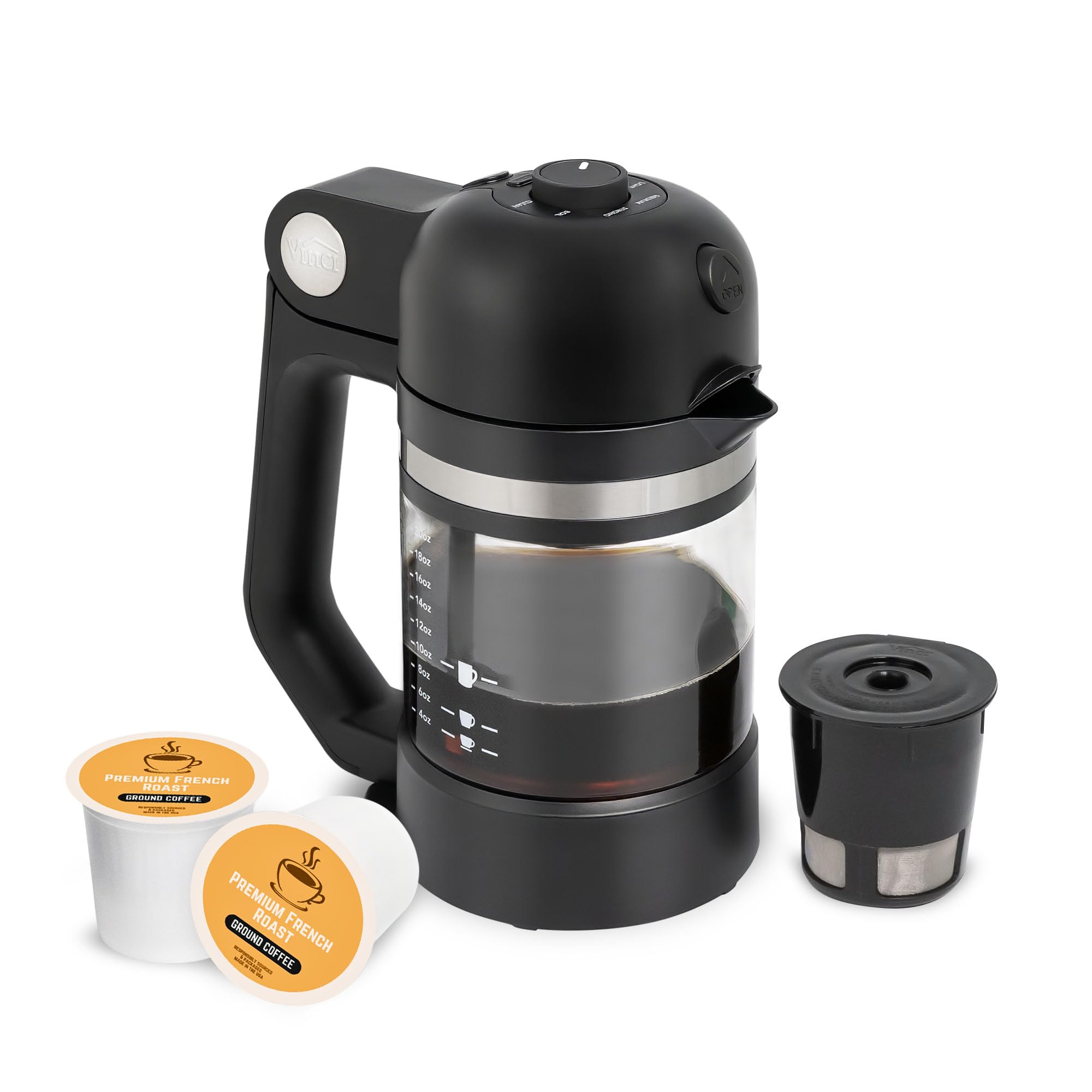
Most “smallest coffee maker” claims are marketing tricks: narrow bodies that are still deep, tiny machines that only accept one mug, or pod brewers that keep you locked into one kind of coffee. The VINCI Micro Café is different because it aims at the real small-space goal: one compact machine that can flex with your day. That’s why it earns the “best overall” spot in this guide.
Here’s the practical reason it works: the brewing system is enclosed, so the coffee isn’t splattering or misting onto your counter (a surprisingly common problem when you’re using tall mugs or you’re brewing into something that isn’t a perfect fit). That enclosed design also tends to make the machine feel cleaner over time, because the “mess zone” stays contained. For tiny countertops, that matters—nobody wants coffee residue drifting into the one spot you also prep food.
The second big advantage is flexibility. You can use pods for speed, but you’re not trapped in them. The included filter-cup option for grounds is what makes this feel like a daily driver rather than a novelty. If you’re the kind of person who wants a light cup one day and a stronger brew another day, you’ll appreciate that the machine isn’t dictating your coffee identity. You can go pod-convenient when life is chaotic, then go grounds-based when you want a richer cup—without owning two machines.
The “glass” aspect matters too. In small spaces, plastic-tasting coffee is one of the fastest ways to regret a purchase. A glass brewing element and a glass serving approach tends to feel cleaner on the palate, especially if you’re sensitive to odors. Owners who talk about this brewer as a daily machine often describe it as “hot,” “rich,” and “more like a real coffee pot than a pod machine” because you’re getting a stronger extraction feeling—especially when you use grounds and the bold setting.
The small-space pro insight: this kind of machine wins when you don’t have room for accessories. It’s not asking you to own a separate pod carousel, a massive drip brewer, and a kettle. It’s one compact unit that covers a wide range of coffee needs—and that’s exactly what a small kitchen requires.
Why it’s a small-space champion
- True micro footprint – Feels like it belongs on a small counter instead of “invading” it.
- Pods + grounds flexibility – Convenience when you want it, control when you crave it.
- Enclosed brewing = cleaner counters – Less splatter, less residue drift, easier daily living.
- Great “one machine” logic – Ideal when you don’t have room for multiple coffee tools.
Good to know
- If your outlet is far, measure cord reach—micro machines sometimes come with short cords.
- Like any small brewer, the best flavor comes from dialing in dose and grind; don’t treat it like a “magic” button machine if you’re using grounds.
- Glass is lovely for taste, but treat it with normal care if your kitchen storage is tight and busy.
Ideal for: people who want one compact daily driver that can brew fast pods or richer grounds without turning their counter into a coffee warehouse.
2. Zojirushi Zutto 5‑Cup – The “Quietly Brilliant” Drip Brewer for Small Households

The Zutto is the kind of product you buy when you’re tired of coffee makers that try to impress you with features you never asked for. It’s compact, it’s thoughtfully engineered, and it’s built around a small-space truth: clean design beats complicated design.
The standout detail is the layout. Many drip coffee makers route coffee through internal parts, and over time that can create a “coffee smell” inside the machine—especially if you’re not the type to deep-clean internal pathways. The Zutto’s filter basket lives on top of the carafe, not buried inside the machine. That means you can rinse it easily after each brew, and the machine body tends to stay cleaner. In small kitchens, “stays cleaner” is a huge deal. You don’t have space for a machine that slowly becomes sticky and hard to love.
The removable water tank is the other reason small-space owners adore this model. If your coffee maker lives under cabinets, top-filling can be awkward. A removable tank lets you fill it at the sink without scooting the machine forward every time. That sounds minor until you do it twice a day for months. It’s the kind of friction point that quietly decides whether your coffee routine feels calm.
Taste-wise, this brewer has a reputation for making coffee that’s clean and properly hot without tasting scorched. That “hot but not burnt” sweet spot usually comes from consistent heating and a flow rate that doesn’t rush through the grounds. And because it uses a cone filter style, you can tune flavor easily: paper filters for a cleaner cup, a permanent filter if you prefer a little more body.
Now, the honest side: the Zutto is simple. That’s the point. It doesn’t give you a timer and it doesn’t try to “automate your life.” Some people love that. Others want to wake up to coffee already brewed. If you’re in the “automation” camp, keep reading—there are strong programmable options in this list. But if you value a compact, well-made brewer that feels like it will quietly do its job for a long time, the Zutto is hard to beat.
Why it wins in tiny kitchens
- Removable tank is genuinely useful – Makes daily filling easy under cabinets.
- Carafe-top basket stays cleaner – Less internal residue, easier rinse-and-go maintenance.
- Strong “simple design” energy – Fewer gimmicks, fewer things to hate later.
- Great for one or two people – Enough coffee for a couple mugs without waste.
Good to know
- No built-in timer or fancy scheduling—this is a manual, ritual-friendly brewer.
- Some owners mention multiple small parts; treat it like a “set” and give the pieces a home to avoid clutter.
- Like many compact glass carafes, handle and lid fit matter—be mindful when pouring if you’re rushing.
Ideal for: small households that want quality drip coffee with a cleaner long-term maintenance profile—especially if you value a removable tank and simple operation.
3. Cuisinart 5‑Cup Stainless Carafe – A Small Brewer That Still Feels “Full Size”

This Cuisinart is for a very specific kind of small-space buyer: someone who wants a compact footprint, but refuses to accept “tiny machine vibes.” You want real coffee heat, a carafe that doesn’t feel fragile, and features that make daily life easier—like brew pause and a keep-warm window— without owning a bulky 12-cup brewer that dominates your counter.
The stainless steel carafe is the emotional hook for many owners. If you’ve ever broken a glass carafe (or just hate the anxiety of it), stainless feels like a practical upgrade. And in small kitchens—where storage is tighter and the “oops” moments happen more often—durability matters. The other small-space advantage is that stainless tends to be less visually messy: water spots and micro-scratches don’t scream at you the way they can on glass.
The removable reservoir is a big deal here, but it’s also where real-world feedback gets nuanced. Some owners love it because it makes filling easy under cabinets and easier to clean than fixed tanks. Others say the lid and “how it sits” can feel fussy until you learn the motion. Here’s my expert take: if you want removable tanks, choose them for the cleanup and fill benefit, but accept that removable parts can introduce a small learning curve. If you practice the fill-and-seat motion a few times, it stops being annoying—and starts being the feature you’re grateful for every day.
Heat matters in compact drip machines, and this model earns praise for brewing coffee that’s properly hot. That’s a common reason people upgrade into it: they tried another compact maker that brewed “warm” coffee, and they wanted something that felt more satisfying. It also includes brew pause, which sounds small, but in real life it’s a “save the morning” feature for people who are always one minute late.
Now, the honest friction points: multiple owners mention water collecting under the rim after washing the carafe, meaning you might need a quick towel dry. Some also mention minor dripping onto the hot plate after removing parts for cleaning. Those aren’t dealbreakers—they’re normal “small machine compromises.” But if you’re extremely sensitive to drips and micro-mess, you should know them before you buy. This machine is best for people who value hot coffee, compact durability, and overall workflow… and don’t mind a quick wipe once in a while.
Why small-space owners like it
- Stainless carafe practicality – Great if you hate glass or want a sturdier daily routine.
- Hot coffee output – A frequent reason people choose it over other compact drippers.
- Removable reservoir – Easier fill under cabinets and easier to clean than fixed tanks.
- Brew pause + keep warm – Everyday convenience that feels “full-size machine” in a compact body.
Good to know
- The reservoir lid/fit can feel fidgety at first; it becomes easy after a few repetitions.
- Some water may collect under the carafe rim after washing—quick towel dry fixes it.
- Stainless carafes vary in heat retention; treat keep-warm as a convenience window, not an all-morning thermos.
Ideal for: people who want compact drip coffee with a sturdier, no-glass lifestyle and a workflow that feels more premium than typical mini brewers.
4. Keurig K‑Mini Mate – The “Fits Anywhere” Pod Brewer for Micro Counters

When people say “small space,” they often mean “I have a narrow strip of counter and zero forgiveness.” That’s exactly the situation the K‑Mini Mate is built for. It’s designed to be extremely slim, which makes it a natural fit for dorm desks, office credenzas, tiny RV counters, or apartment kitchens where the coffee station is basically one corner you’re not willing to sacrifice.
The one-cup reservoir style is the secret reason it stays cleaner. Because you add water for each brew, you don’t have a large tank sitting full of water for days. That reduces “stagnant tank vibes” and makes the machine easier to maintain—especially for people who are not into descaling schedules and deep cleaning rituals. Owners often describe this as more hygienic and less fussy: brew, dump the pod, rinse a couple surfaces, done.
Now, let’s be honest about pod life. Pods are convenience-first. You’re choosing speed and consistency over maximum flavor control. But here’s the nuance many small-space buyers miss: pod machines can still taste surprisingly good if you treat them like a system. Use a mug that preheats quickly, choose a pod you actually like (not the cheapest random variety pack), and keep the needle area reasonably clean. If you do that, a tiny pod machine becomes a legitimate daily tool, not a compromise.
Small-space travel mug compatibility matters too. The K‑Mini Mate is meant to work with to-go cups, which is huge if your kitchen is also your commute station. If you’re the kind of person who wants to brew and immediately walk out the door, this machine supports that lifestyle better than most compact drip makers. Drip machines tend to be “brew a pot, then pour.” Pod machines are “brew into the mug you’re leaving with.”
The trade-offs: you’ll refill water for each cup, and you won’t get the “make coffee for a guest” vibe unless you do back-to-back brews. But for many small-space people, that’s exactly the point—fresh coffee, one cup at a time, without extra clutter.
Why it’s perfect for micro setups
- Very narrow footprint – Fits on counters where most machines simply can’t.
- Fast brew workflow – Coffee in minutes, minimal cleanup, minimal decisions.
- Add-water-per-brew keeps things fresh – Less standing water, easier routine maintenance.
- Travel-mug friendly – Great for “brew and go” mornings.
Good to know
- If you want coffee for multiple people at once, a compact drip or dual brewer fits better.
- Pod taste depends heavily on pod choice and basic upkeep; don’t expect magic from stale pods.
- Measure your vertical space: pod brewers need room to lift the top handle to insert pods.
Ideal for: dorms, offices, RVs, and tiny counters where the priority is speed, simplicity, and “it literally fits.”
5. Keurig K‑Express – Less Refilling, More Punch, Still Small-Kitchen Friendly

If you like pod convenience but hate the “refill water every single time” routine, the K‑Express hits the sweet spot. It stays small-kitchen friendly while giving you a removable reservoir, which changes the daily experience in a very practical way: you can brew multiple cups without constantly returning to the sink.
This is the pod machine I recommend for people who want a more “normal kitchen appliance” feel. It’s still simple, still fast, still pod-based—but it feels less like a travel gadget and more like a stable daily station. Owners often describe it as quick to heat, easy to use, and a big upgrade over off-brand pod machines that behave unpredictably. That reliability matters in small spaces, because you don’t have room (or patience) for a finicky brewer that needs coaxing.
The strong-brew style feature is also not just a checkbox. Pod coffee can sometimes taste thin, especially if you drink darker roasts and want more body. A “strong” mode gives you a better chance of getting a satisfying cup without resorting to brewing smaller sizes or double-brewing. It’s the difference between “this is fine” and “this actually feels like coffee.”
Small-space reality: pod machines can splash if you’re brewing into tall travel mugs or wide mugs that sit closer to the spout. Some owners mention that the K‑Express can spatter a bit more than other models simply because it accommodates taller mugs. That’s not a dealbreaker, but it’s a good reminder: if your counter is precious, put a small wipeable mat under the machine or keep a cloth nearby. A two-second wipe is easier than letting splatter dry into a permanent stain.
If you want pods, strong coffee, and less refilling—but you still want your counter to feel livable—this is one of the simplest “buy it and move on” choices.
Why it works so well day to day
- Reservoir reduces friction – Brew multiple cups without constant refills.
- Strong brew option – Helps pod coffee taste more satisfying and less thin.
- Fast, simple workflow – Designed for routine use, not coffee hobby projects.
- Travel-mug friendly – Good fit for commuters and small kitchens alike.
Good to know
- Some splatter can happen; a quick wipe routine keeps your station looking clean.
- Pods are convenient, but flavor variety depends on pod quality—choose pods you actually enjoy.
- If you want grounds-based control, consider the VINCI or a compact drip brewer instead.
Ideal for: pod drinkers who want a more “set it and forget it” daily station with fewer refills and better-tasting results.
6. Keurig K‑Duo (Gen 2) – The Small-Kitchen Peace Treaty: Single Cups + Carafes

In small kitchens, owning two coffee makers is often unrealistic. But many households have two coffee identities: weekday single cups and weekend “make a pot” moments. That’s exactly why the K‑Duo exists. It’s the compromise that doesn’t feel like a compromise—because it lets you brew by the cup or by the carafe using one unit.
The real small-space advantage isn’t just having two brewers. It’s having one shared reservoir. In many dual machines, you end up filling two tanks, managing two systems, and cleaning two sets of parts. A shared reservoir reduces daily fuss, which is the entire point of a consolidated setup. For small counters, fewer steps equals less mess, and less mess equals a calmer kitchen.
In owner feedback, you’ll see a recurring theme: the K‑Duo is a “good performer until it isn’t,” which is a reality for many appliance brands at this complexity level. But you also see why people keep buying it: convenience. It brews quickly, it supports pod variety, it gives you a carafe option for travel mugs or guests, and it compresses two lifestyles into one footprint. If you’re a household with mixed needs, this kind of convenience can be worth more than “perfect flavor.”
This is also one of those machines where your habits matter. If you do basic maintenance—rinsing the carafe parts, occasionally running a cleaning cycle, and not ignoring descaling signals—your experience is usually dramatically better. In small spaces, maintenance is easier than you think because the machine is right there. The trick is building a two-minute monthly routine rather than waiting until it tastes weird.
Another subtle win: the front-facing controls and clear interface reduce “kitchen chaos.” That matters when multiple people use the machine. If your partner wants pods and you want carafe coffee, the workflow should feel obvious—because confusion in small kitchens turns into clutter fast.
Why it’s a small-kitchen power move
- One machine, two brew styles – Great for mixed households and occasional hosting.
- Shared reservoir – Less daily refilling and fewer “two-machine headaches.”
- Flexible routine – Pods for speed, grounds for pots, iced options for variety.
- Space-saving consolidation – Frees counter space versus owning separate brewers.
Good to know
- Dual machines benefit from basic upkeep; don’t skip cleaning habits if you want consistent performance.
- If your space is ultra-micro, a single-serve only machine may fit better physically.
- Carafe brewing still means carafe cleanup—this isn’t “zero cleanup” like pods.
Ideal for: small kitchens with mixed coffee needs—single cups most days, carafes when you want to serve yourself (or a few people) without owning two machines.
7. BLACK+DECKER Mill & Brew – Fresh-Ground Flavor Without Extra Counter Clutter

If you care about flavor, grinding fresh is one of the biggest upgrades you can make—often bigger than upgrading the coffee maker itself. But grinders take space, and small kitchens rarely have a spare corner for “coffee hobby gear.” That’s why a grind-and-brew machine can be a small-space cheat code: it replaces two appliances with one.
The Mill & Brew’s value is the “direct path” concept: beans grind, then the machine brews quickly, capturing aromas that pre-ground coffee loses. Owners who love this machine often say the grinder is surprisingly quiet for the category, and that the coffee stays hot on the plate for a long time—meaning it behaves more like a full-size kitchen machine than a compact compromise. For households where coffee is a multi-cup ritual (not just a quick single serve), this kind of machine can make small-space living feel more generous.
Now, let’s talk about the real-life quirks that show up in user feedback (because grind-to-brew machines always have them). First: cleanup is messier than a simple drip basket. Grounds can cling to surfaces, and you may find yourself wiping around crevices more often. Second: if you reheat or run another cycle without paying attention to settings, some machines can re-grind when you don’t want it to. That’s not “broken”—it’s just the reality of a machine that combines two processes. The fix is learning your own routine: dump the basket, quick rinse, wipe the grinder area occasionally, and keep the workflow consistent.
Small-space pro tip: this is a machine that rewards “one dedicated station.” Because it can be messy during cleaning, put it on a tray or mat you can wipe quickly. That makes the cleanup feel contained, and it prevents grounds from turning into a daily counter-wide dusting.
If you want a fresher-tasting cup without owning a separate grinder, this is one of the smartest consolidations you can make. It’s not the smallest machine in this guide, but it can actually reduce your total counter footprint by eliminating a second appliance.
Why it’s a space-saving flavor upgrade
- Built-in grinder replaces a separate appliance – Big win for limited counters.
- Fresh-ground taste – Often noticeably better than pre-ground drip routines.
- Programmable + brew strength controls – Helps you tune coffee to your preference.
- Keeps coffee hot – Great for slow sippers who want refills without microwaving.
Good to know
- Cleanup is inherently messier than simple drip; grounds can cling and require occasional extra wiping.
- Grind settings and strength settings take a few days to learn; treat it like a “new routine” not an instant habit.
- If you prefer paper filtering, confirm how you like your cup—built-in filters can change mouthfeel.
Ideal for: coffee drinkers who want fresher flavor in a small kitchen without adding a separate grinder to the counter.
8. Cuisinart 14‑Cup PerfecTemp – Big Capacity Without “Cheap Coffee” Energy

You might be wondering why a 14-cup machine is in a “small space” guide. Simple: some small kitchens still need to brew for multiple people. Roommates, families, frequent guests, or people who fill a travel mug and want refills—capacity can be a daily need even when counter space is tight. In that scenario, the most space-efficient move is often one capable machine, not multiple smaller ones.
The PerfecTemp line is popular because it aims for hotter brewing and a more satisfying cup compared with bargain drip machines that taste flat. The adjustable warming plate is also important—because “keep warm” is only good if it keeps coffee warm without cooking it into bitterness. Being able to adjust warming behavior gives you control over that.
Real-world ownership feedback tends to fall into two buckets: people who love it say it makes excellent coffee, the controls are easy to read, and cleanup is straightforward. The “advanced user” feedback includes a very specific learning point: you must make sure the brew basket is seated correctly so the valve opens fully. If it isn’t pressed down properly, you can get slow flow and overflow mess. Once you learn that “click it in” step, it stops being a problem. But it’s a perfect example of why this guide exists—Amazon listings rarely tell you what matters in daily use.
Another pattern you’ll see: some owners report an initial “plastic smell/taste” during first use. This is not unique to this machine; it happens with a lot of new appliances that have internal plastics. The smart move is simple: run multiple water cycles and wash removable parts thoroughly before judging flavor. If you do that, most people report that the taste becomes clean and the machine performs the way they expected.
If you want a large-capacity machine in a smaller kitchen, this one is a strong contender because it doesn’t feel like a “budget compromise.” It feels like an intentional, capable brewer—especially once you learn the basket seating habit and you treat first-use cleaning as part of setup.
Why it earns its counter space
- Big capacity for small kitchens – Great when you need one machine to serve multiple people.
- Adjustable warming plate – Helps prevent “cooked coffee” flavor while keeping refills warm.
- 1–4 cup mode – Useful when you don’t want a full pot but still want drip coffee.
- Strong coffee performance – Many owners describe the cup as rich and satisfying once dialed in.
Good to know
- Basket seating matters—learn the “press until it clicks” habit to avoid overflow issues.
- First-use cleaning cycles are worth doing to eliminate any new-machine smell/taste.
- This is larger than compact drippers; choose it only if you truly need the capacity.
Ideal for: households with limited space but real capacity needs—people who want one capable brewer instead of juggling multiple small machines.
9. CASABREWS CM5418 – Real Espresso in a Slim Footprint (Without Barista Ego)
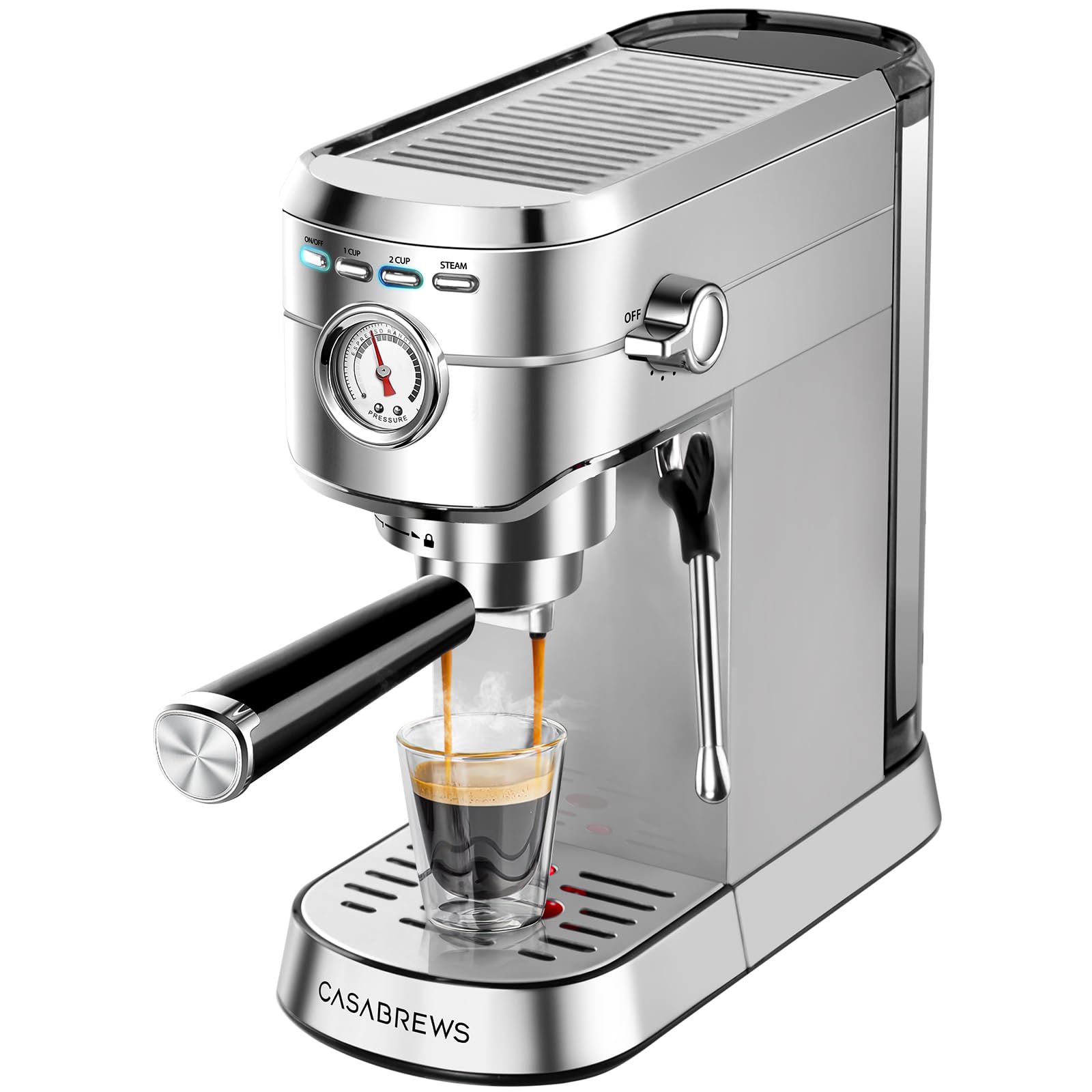
If you want lattes and cappuccinos in a small kitchen, the biggest mistake is buying an espresso machine that requires an entire ecosystem to feel satisfying. You don’t just need the machine—you need a grinder, a tamper you like, a place to knock out pucks, and somewhere to dry parts. So the right “small-space espresso” choice is not just about the espresso machine. It’s about how quickly you can get café-style results without building a café on your counter.
The CASABREWS CM5418 has a reputation for being beginner-friendly while still producing a satisfying shot. Owners frequently describe it as compact, stylish, and capable of producing espresso with a nice crema. The pressure gauge is a confidence feature: it gives you feedback as you learn dose and tamping. That’s valuable because espresso is the brew method where “tiny changes” matter most—and beginners often feel lost without feedback.
The milk frothing experience is another highlight. The steam wand can create creamy foam for lattes and cappuccinos, which is exactly what people want when they buy an espresso machine in the first place. But here’s the honest detail that shows up in real use: the steam wand can be loud, and the workflow has a rhythm. You typically can’t pull another espresso shot immediately after steaming without letting the machine cool down. That’s not a defect—it’s a reality of a single-boiler style heating system at this scale. The good news is: once you learn the order (pull shots first, steam after, or follow the cooldown steps), it becomes routine.
Small-space pro advice: if you want espresso but you don’t have room for an espresso grinder, you can still get great results by using a quality pre-ground espresso from a brand you trust. It won’t be “competition espresso,” but it can absolutely be café-level enjoyable. If you already own a small burr grinder, this machine becomes even more impressive for the footprint.
This is the espresso pick for people who want the experience—espresso shots, foamy milk, café drinks— without a complicated interface, without a huge machine, and without feeling like they need an espresso degree to get started.
Why it’s great for small kitchens
- Slim footprint for espresso – Helps keep “espresso life” realistic in tight spaces.
- Beginner-friendly feedback – Pressure gauge helps you learn and adjust.
- Steam wand for real drinks – Not just espresso; full latte/cappuccino capability.
- Strong value for the experience – Gives “café at home” energy without oversized gear.
Good to know
- Steaming can be loud and the workflow requires cooldown timing between brew/steam cycles.
- No built-in grinder—plan your grind solution to avoid expanding counter clutter.
- Like all espresso machines, it rewards practice; your first week will be a learning week.
Ideal for: latte and cappuccino lovers who want real espresso in a compact setup without turning their counter into a barista workstation.
10. CERA+ Portable Espresso Maker – The “Espresso Anywhere” Tool for RVs, Trips, and Backup Power
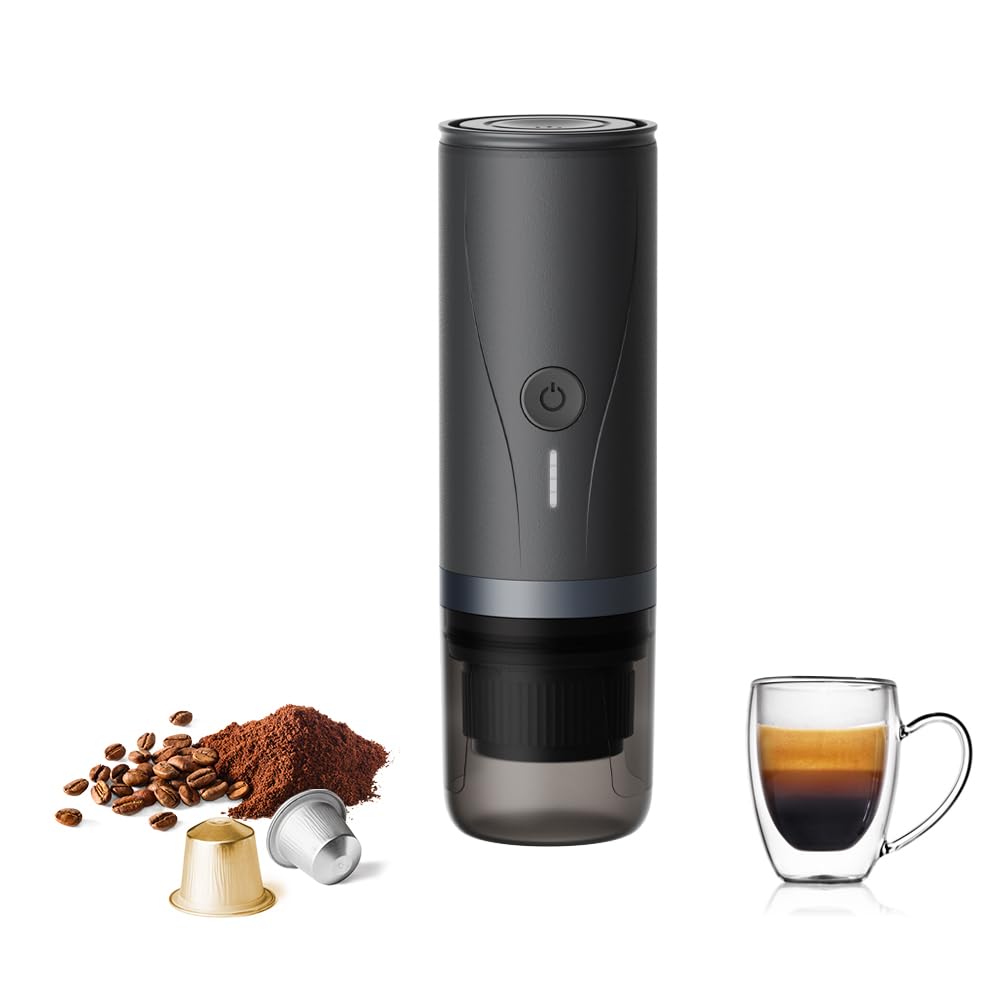
Not every “small space” is a kitchen. Sometimes it’s an RV counter, a hotel room, a camp table, a tiny office with no break room, or a home where you want a reliable backup option during outages. That’s where portable espresso makers earn their spot. They’re not trying to replace your home brewer—they’re trying to protect your coffee routine when life gets weird.
The CERA+ portable espresso maker is built around a clever idea: it can heat water and push espresso at pressure in a bottle-sized device. It’s compatible with capsules and fine grounds, which matters because portability is useless if you’re locked into one supply style. If you’re camping, capsules can be less messy. If you’re at home and want more control, grounds give you more flexibility. That adaptability is exactly what makes this a smart “small-space lifestyle” product.
Owner feedback tends to highlight a few consistent truths. First: it’s genuinely convenient and surprisingly fun when it works smoothly. Second: battery life is dramatically better if you start with hot water rather than relying entirely on self-heating. This is the key “expert” point—because a lot of disappointment comes from mismatched expectations. If you expect it to heat cold water and pull shot after shot, you may be frustrated. If you treat self-heating as an option for when you need it, and you use hot water when you can, it becomes a much more dependable part of your routine.
Another reality: crema and “espresso texture” vary. Some users get great results; others say it doesn’t match the marketing visuals every time. That’s common in portable espresso devices because small variables (capsule brand, grind fineness, packing, water temperature) have exaggerated effects. If you want perfect café consistency, a countertop espresso machine wins. If you want “espresso in places where espresso isn’t normally possible,” this wins—because it changes what’s possible.
Small-space use case that people underestimate: emergencies. Having a small, rechargeable brew tool can be oddly comforting during long outages or storms. It’s not just coffee—it’s routine. And routine helps people stay calm.
Why it’s a unique small-space tool
- Espresso away from the kitchen – Great for RVs, travel, work, and backup use.
- Capsules + grounds flexibility – Convenience when you need it, control when you want it.
- Self-heating capability – Useful when you don’t have a kettle or stove handy.
- Portable routine protection – Keeps your coffee habit alive in weird locations.
Good to know
- Battery life is best when starting with hot water; self-heating from cold uses more power.
- Results can vary by capsule/coffee choice and technique; treat it like a tool, not magic.
- Some users report consistency issues; portable espresso is inherently more variable than countertop machines.
Ideal for: travelers, RV owners, campers, and anyone who wants espresso in places where a traditional coffee setup isn’t realistic.
11. Keurig K‑Mini – Cord Storage + Simple Control for “Move-It” Coffee Stations

The K‑Mini is the pod brewer that’s been living in dorm rooms, tiny apartments, and office nooks for years—and for a specific reason: it’s built for people who don’t want a “coffee station,” they want a coffee corner. Less than five inches wide, cord storage for tidier counters, and the simplest possible user flow: add water, insert pod, press brew, walk away.
What owners tend to love is the “no nonsense” design. People who dislike complicated interfaces often prefer this model because it feels mechanical and straightforward, not like a machine with a personality. That simplicity is underrated in small spaces where you don’t want to babysit anything. Some users even prefer it over smart, connected models because fewer features can mean fewer weird error states.
But there’s a critical real-world lesson that shows up in owner experiences: this style of machine can be sensitive if you try to brew without water. Many people have a “half asleep” moment once in their life. Some larger machines handle it gracefully with warnings. Some compact machines don’t. So, treat this like a safety ritual: keep your mug under the spout, pour water in first, then brew. If you build that habit, you dramatically reduce your risk of an “oops” event.
Taste-wise, it’s pod coffee—so your flavor ceiling depends on the pod you choose and how you brew. A pro trick for a stronger cup: brew a smaller volume, use a bolder roast pod, and preheat your mug. That combination can make a small pod machine feel much more satisfying, especially in winter when mugs steal heat quickly.
This is the pick for people who want a portable, tidy pod machine that can be tucked away, moved easily, or stored between uses. In small spaces, that ability to “disappear” is a feature, not a compromise.
Why people keep buying it
- Compact width + cord storage – Helps keep tiny counters tidy and flexible.
- Simple workflow – Great for people who hate complex settings.
- Fast brewing – Fits the “coffee now” lifestyle.
- Portable feel – Works well for dorms, offices, and small living setups.
Good to know
- Be disciplined about adding water before brewing; compact machines can be less forgiving of dry-brew mistakes.
- Pods are convenient but limit flavor control—choose pods you enjoy and keep basic parts clean.
- If you want less refilling, consider a pod machine with a reservoir (like the K‑Express).
Ideal for: people who move their coffee maker often, want a tidy counter, and prefer pod convenience with minimal settings.
12. KRUPS Simply Brew Compact – A Clean-Looking 5‑Cup Dripper for Singles and Couples

This KRUPS is a classic “small household drip machine” done in a clean, modern way. If you want drip coffee but you don’t want a giant machine, a 5-cup format can be perfect—especially if you and one other person drink one mug each, or you drink a couple cups over the morning. But here’s the key: coffee maker “cup” sizing is famously misleading. In compact drippers, “5 cups” usually means smaller coffee cups, not five large mugs. So the smart mindset is: this is a two-mug machine, not a party machine.
Where this machine wins is workflow. It’s simple: fill from the top, add coffee, press the button, brew. Pause & brew is a quality-of-life feature that makes mornings smoother. And because the design is minimal, it tends to feel at home in small kitchens where visual clutter is already a problem. A sleek stainless exterior can make your coffee corner feel intentional instead of improvised.
Owners who love it often describe it as consistent and easy to use—especially once they find their preferred dose-to-water ratio. This is a good place to share an “expert trick” for compact drip machines: if your coffee tastes weak, don’t assume the machine is bad. Compact brewers can be sensitive to grind size and dose. Try slightly finer grind (not espresso-fine, just a step finer), or add a little more coffee per brew. Because the water volume is smaller, small adjustments make a big difference.
Heat is the main point of debate in compact drippers. Some people are thrilled; others are sensitive and wish it brewed hotter. In practice, your environment matters. A cold kitchen and a cold glass carafe can steal heat quickly. Preheating the carafe with hot water (then dumping it) before brewing can noticeably improve the drinking experience. It’s a ten-second habit that makes compact drip coffee feel more “grown up.”
If you want a simple 5-cup drip machine that looks good, doesn’t overwhelm your counter, and gives you a predictable morning rhythm, the KRUPS is a solid choice. Just buy it with the right mental model: compact drip is about balance and routine, not giant-batch convenience.
Why it fits small spaces well
- Compact footprint + clean design – Looks good without dominating the counter.
- Simple operation – Great for sleepy mornings and routine brewing.
- Pause & brew convenience – Helpful when you want a cup immediately.
- Easy-to-dial taste – Small-volume brewing responds well to small adjustments.
Good to know
- “Cup” sizing is small—think two mugs, not five big servings.
- If you’re very heat-sensitive, preheat your carafe/mug to reduce heat loss.
- Manual simplicity is the point; if you want a timer, look at programmable models.
Ideal for: singles and couples who want compact drip coffee with a clean look and an easy daily routine.
13. BELLA 12‑Cup Programmable – A Full-Pot Brewer That Still Respects Small Counters

This BELLA is for the small-space buyer with a specific situation: you don’t have a big kitchen, but you do have a “more than one person” coffee reality. Roommates, family breakfasts, or a household where coffee is brewed once and poured multiple times—those routines are real. And for those routines, a tiny single-serve machine can actually create more friction, not less.
The reason this model shows up in small-space conversations is simple: owners describe it as surprisingly compact for its category. That matters because many 12-cup machines are not just wide—they’re bulky and visually heavy. A slimmer-feeling brewer can fit a small counter without making the kitchen feel like it’s all coffee, all the time.
Programmability is also a real quality-of-life feature in smaller living situations. When your kitchen is small, mornings tend to be more crowded. Waking up to coffee already brewed can reduce bottlenecks. The clear LCD and straightforward controls get praised by users who want the machine to feel obvious, not complicated. A bold setting is another nice touch—because big-pot coffee can sometimes taste thin, and strength options help.
Now, the small-space warning that matters: cabinet clearance and steam. Owners mention the lid is long, meaning you may need to pull the machine out from under cabinets to fill it. They also mention a noticeable amount of steam venting from the top during brewing. In a small kitchen with wooden cabinets, it’s smart to brew with the machine slightly forward or in a spot where steam isn’t blasting the same cabinet underside daily. This is exactly the kind of detail most guides ignore—yet it’s the detail that protects your kitchen over time.
If you want an affordable programmable pot brewer that doesn’t feel enormous, this is a strong option—especially if you’re willing to use the “pull it forward while brewing” habit. That tiny routine change can make a full-pot machine feel completely manageable in a smaller kitchen.
Why it’s smart for small counters
- Compact feel for a 12-cup brewer – Doesn’t overwhelm as much as many full-size machines.
- Programmable brewing – Helps reduce morning chaos in smaller living spaces.
- Bold/regular options – Useful for dialing taste without changing beans.
- Reusable filter basket – Less daily waste and fewer “forgot filters” emergencies.
Good to know
- Lid clearance can be an issue under cabinets; you may need to pull it forward to fill.
- Steam vents upward—be mindful if it’s directly under wood cabinets.
- Buttons can require holding the machine steady (lightweight bodies can slide on counters).
Ideal for: small kitchens that still need a full pot and want programmable convenience without a giant-feeling brewer.
14. Mr. Coffee 5‑Cup Mini Brew Switch – The Minimalist “Just Make Coffee” Machine

There’s a reason Mr. Coffee machines show up in so many small spaces: they’re built for people who want coffee, not a project. This 5-cup Mini Brew Switch model is a pure minimalist tool—compact, straightforward, and easy to understand even if you’ve never used a coffee maker before. For small kitchens, that simplicity can be a feature because it reduces “stuff” in your brain as well as “stuff” on your counter.
What owners often love is how reachable everything is. If you’ve ever owned a pod machine that slowly became impossible to clean, or a drip machine where you can’t access the parts that matter, you’ll appreciate a design where you can see and reach the basket area. That kind of visibility makes routine cleaning easier, and easy cleaning is what keeps coffee tasting good month after month.
The auto pause feature is another practical win: it lets you grab a cup mid-brew without turning your counter into a disaster. In small spaces, mess is magnified. A few drips can feel like a big deal when your counter is already limited. Auto pause reduces that risk and keeps the machine feeling friendly.
Now, the honest downside that matters: this switch-style model is simple, which usually means less automation. If you want “wake up to coffee,” this isn’t the right kind of machine. And if you want a machine to shut itself off quickly because you forget things, look for auto shutoff models. This one is best for people who like manual control and are comfortable with a straightforward switch.
Also, this is a glass carafe experience, and glass carafes can show stains over time. That’s not failure—it’s normal. The small-space win is that the carafe is easy to wash because it’s not overly complex. If you want a minimalist compact drip machine that’s easy to understand, easy to clean, and does not pretend to be anything else, this is a satisfying choice.
Why it’s a tiny-kitchen classic
- Simple switch operation – Great for people who want zero learning curve.
- Easy-to-reach cleanup – Accessible basket area supports better long-term hygiene.
- Auto pause – Reduces mess risk in tight spaces.
- Compact footprint – Fits small counters and works well as a secondary brewer.
Good to know
- This is manual simplicity—if you want scheduling, choose a programmable machine instead.
- Glass carafes can stain over time; regular cleaning keeps it manageable.
- Compact “cup” sizing means it’s best for small households, not groups.
Ideal for: minimalists, small households, and anyone who wants a compact “just make coffee” brewer that’s easy to clean and easy to live with.
How Small-Space Coffee Setups Actually Succeed (and Why Most Fail)
Most small-space coffee frustration comes from a mismatch: you bought a machine that technically fits, but it doesn’t fit your workflow. When a kitchen is small, every extra step feels bigger. So the goal isn’t just “compact.” The goal is low friction.
What makes a coffee maker truly small-space friendly
- Fill without moving the machine – Removable tanks or smart lid clearance prevent daily scooting.
- Contained mess – Enclosed brewing (or easy-to-wipe surfaces) keeps counters from accumulating residue.
- Predictable cleanup – Removable baskets and simple parts reduce “I’ll clean it later” procrastination.
- Heat that feels satisfying – Small brewers that underheat often lead to constant microwaving, which defeats convenience.
- Right-size output – A machine that matches your actual mug habit reduces waste and stale coffee.
That’s why the best small-space picks in this guide either (1) reduce steps dramatically (pod machines), (2) keep the machine cleaner by design (Zutto), or (3) give you flexibility without extra appliances (VINCI, K‑Duo, Mill & Brew).
Pro-level tips that instantly improve your results
- Preheat the thing that touches your coffee – A cold mug or carafe steals heat fast in small brews. A quick hot-water rinse helps.
- Use better water – If your tap water tastes “off,” your coffee will taste off. Filtered water is the easiest upgrade.
- Dial dose before you blame the machine – Compact drippers often need a bit more coffee per ounce to taste rich.
- Keep a “wipe habit” – A 10-second wipe after brewing prevents sticky buildup that becomes hard to remove later.
- Descale on a schedule – The moment coffee tastes weird, scale is often the culprit. Small machines are not immune.
Small kitchens don’t need perfect coffee rituals. They need repeatable rituals. When the setup is easy, you’re more consistent—and consistency is what makes coffee taste good every day.
FAQ: Small-Space Coffee Makers (Without the Confusion)
What matters more in a small kitchen: width or height?
Pods or grounds—what’s better for small spaces?
Why does my compact drip coffee taste weak?
How do I keep my machine from getting that “old coffee” smell?
I want espresso, but I don’t have room for a full setup. What should I do?
Which machine is best if I’m moving soon (dorm, apartment, RV)?
Final Thoughts: Pick the Machine That Protects Your Counter—and Your Morning
A small kitchen isn’t the place for complicated gear you secretly resent. It’s the place for tools that do their job and then get out of your way. That’s why the best picks in this guide are less about “features” and more about workflow: filling, brewing, cleaning, and living around the machine.
Here’s the simplest way to choose from this list:
- Want one compact daily driver that can do pods and grounds? Start with the VINCI Micro Café. It’s the most “small-space intelligent” option because it stays compact while still giving you flexibility and strong flavor potential.
- Prefer compact drip quality for one or two people? Choose the Zojirushi Zutto for a cleaner long-term maintenance profile, or the Cuisinart 5‑Cup Stainless Carafe if you want no-glass durability and hot, satisfying coffee.
- All-in on pods and need micro-counter fit? Go with the Keurig K‑Mini Mate. If you want less refilling, step up to the Keurig K‑Express.
- Need single cups and carafes in one footprint? The Keurig K‑Duo (Gen 2) is the small-kitchen peace treaty for mixed households.
- Want fresher coffee flavor without buying a separate grinder? The BLACK+DECKER Mill & Brew is a smart consolidation move when counter space is limited.
- Want espresso in a small footprint? The CASABREWS CM5418 brings café drinks to small kitchens without turning the process into a complicated hobby.
- Need a portable espresso option for RV, travel, or backup power? Look at the CERA+ Portable Espresso Maker.
- Want a simple, affordable brewer with minimal learning curve? The Mr. Coffee 5‑Cup Mini Brew Switch is the “just make coffee” option that fits in almost any routine.
- Need a full pot but still have a small counter? The BELLA 12‑Cup Programmable is a practical way to keep capacity without buying a giant-feeling machine.
Choose the machine that matches how you actually live, and your coffee station will stop feeling like clutter and start feeling like a tiny daily upgrade. That’s the real definition of the best coffee maker for small space.