
A five‑cup drip machine looks “simple”… until you actually live with one. That’s when the real questions show up: Does the carafe dribble down the side and leave a sticky stripe on your counter? Can you fill the reservoir under low cabinets without playing water‑Jenga? Does the coffee taste clean and lively—or weirdly flat and burnt by cup two?
If you’re here for the best five cup coffee makers, you’re probably trying to solve one of three problems: (1) you’re tired of wasting coffee in a big brewer, (2) you want something compact that still tastes legit, or (3) you’re done with finicky “features” that break before you’ve even memorized the buttons.
Here’s my approach (and why this guide goes deeper than the usual feature list): the “best” small brewer is rarely the one with the most options. It’s the one that behaves well on your most rushed mornings. It heats water to a brew‑friendly range, saturates grounds evenly, doesn’t leak when you sneak a cup, and doesn’t quietly grow grime in a reservoir you can’t reach.
So below, I’m not just comparing wattage and carafe style. I’m pulling out the high‑impact real‑life friction points that come up over and over in long‑term owner feedback: hard‑to‑read water marks, lids that won’t seat while you pour, “pause‑and‑serve” features that aren’t actually pause‑and‑serve, thermal carafes that keep coffee warm without cooking it, and the one thing nearly nobody talks about until it’s too late—how easy it is to clean the parts you never see.
You’ll get 14 carefully chosen picks—from premium taste‑first brewers to budget workhorses—plus a practical framework for choosing the one you’ll still enjoy after the novelty wears off.
How to Choose the Best Five Cup Coffee Makers for Real‑Life Mornings
A compact coffee maker should feel like a shortcut—not a compromise. The goal is simple: fresh coffee that tastes clean, fits your space, and doesn’t create new little annoyances (drips, stains, stale flavor, confusing programming, or a reservoir you can’t properly clean). Here’s the decision framework I use to separate “cute but frustrating” from “small but seriously good.”
1. Start with the truth: “5 cups” is a measurement trick
Most 5‑cup machines measure a “cup” as about 5 oz. That means a full carafe often lands around the mid‑20‑oz range—usually enough for one big travel mug, or two normal mugs depending on how you pour. This matters because it affects:
- Strength: If you expect a big pot, you’ll under-dose coffee and think the machine is weak.
- Heat retention: Small volumes cool faster, especially in thin carafes.
- Workflow: If two people each want two big mugs, you’ll either rebrew or buy a different style.
So decide now: are you a “one big mug” household, a “two cups and done” couple, or a “we actually need more sometimes” home? That one answer will narrow your choices faster than any marketing label.
2. Choose your carafe philosophy: hot plate or thermal
This is the most important “feel” decision you’ll make, because it changes taste and habits.
- Glass carafe + warming plate: Great if you sip slowly, want visible coffee level, and like a second cup still warm later. The downside is flavor: a hot plate can nudge coffee toward “cooked” over time. Some machines handle this better than others (lower, steadier heat helps).
- Thermal carafe: Great if you want the first cup to taste like the last cup and hate “burnt pot” vibes. The downside is usually twofold: thermal carafes are harder to clean perfectly, and some pour slowly or trap a little liquid inside.
3. Brew quality comes from three hidden design choices
When owners say “this makes surprisingly good coffee,” it almost always traces back to one (or more) of these:
- Water temperature management: Cheap machines often run too cool (flat, sour coffee) or too hot and uneven (bitterness). A consistent, brew‑friendly range is the difference between “fine” and “wow.”
- Even saturation: A good showerhead spreads water across the grounds, not just one hot stream in the middle. Even wetting reduces channeling and makes small batches taste fuller.
- Basket geometry: Cone baskets tend to emphasize clarity and aromatics; flat bottoms tend to emphasize balance. Neither is “best,” but each changes what your coffee tastes like.
In the reviews below, you’ll notice I talk about “even extraction” more than “wattage,” because extraction is what you actually taste.
4. Don’t buy features—buy reliability
In small brewers, features are often where durability dies. Here’s how I translate features into real value:
- Programmable timer: Worth it if you truly use it daily. Otherwise, it’s just one more board that can fail after power blips and button mashing.
- Pause & serve / Sneak‑a‑Cup: Fantastic when engineered well, messy when it isn’t. The most common complaint is “it still drips” or “it dumps coffee on the hot plate.”
- Reusable filters: Great for convenience and reducing waste, but can let fines through. Some people solve this by placing a paper filter inside the reusable one—best of both worlds.
- Auto shut‑off: This is a safety and peace‑of‑mind feature, not a luxury. If you’re forgetful, it matters. If you’re strict about turning things off, you can live without it.
The best machines make the core workflow feel effortless: fill, dose, brew, pour, clean. Everything else is optional.
5. Under‑cabinet filling and spill behavior matter more than you think
Small kitchens and coffee nooks create a very specific type of annoyance: you can’t open the lid fully, you can’t see the water line, and you end up overfilling or sloshing water onto the counter at 6 a.m. If this sounds like your life, look for:
- Front‑fill reservoirs (or a removable tank) so you can fill without pulling the machine forward.
- Clear water windows that are actually readable in normal light.
- Carafes that pour cleanly so your counter stays dry.
A machine can brew great coffee and still be “the wrong machine” if it constantly creates micro‑messes.
6. Cleaning is the difference between “love” and “why does this taste weird?”
Drip coffee is mostly water. That means the places water touches—reservoir walls, tubes, showerheads—are the places that can collect mineral scale and residue over time. And in small brewers, those spaces are often tighter and harder to reach.
If you want a brewer that stays fresh‑tasting:
- Prioritize access: Removable reservoirs and parts you can actually rinse and dry beat “sealed mystery plastic” every time.
- Descale on a schedule: If your coffee starts tasting dull or the brew slows down, scale buildup is often the culprit, not “bad beans.”
- Dry the hidden spots: Lids, rims, and filter baskets can trap water. A quick wipe prevents that stale smell that makes people blame the machine.
Quick Comparison: 14 Best Five Cup Coffee Makers for Every Routine
Use this table to match a brewer to your routine fast—then jump into the deep reviews for the practical stuff that determines real satisfaction: pour control, under‑cabinet filling, timer usability, cleanup friction, and how the coffee actually tastes after week three (not day one).
On smaller screens, swipe or scroll sideways to see the full table.
| Model | Brewer style | Signature strength | Best match | Amazon |
|---|---|---|---|---|
| Zojirushi EC‑DAC50 Zutto | Drip + hot plate | Clean design + removable water tank for easy, consistent daily use | People who want “simple, great coffee” and easy filling | Amazon |
| Bonavita BV1500TS (5‑Cup Thermal) | Thermal carafe | Fast brew + even extraction + taste-first design (one button) | Flavor-focused drinkers who want café‑style drip at home | Amazon |
| Hamilton Beach FlexBrew Advanced 5‑in‑1 | Pod + drip combo | One machine for pods, grounds, single cup, iced, and a full carafe | Households with mixed preferences (pods + drip) | Amazon |
| Amaste Retro 5‑Cup (3 Strength Modes) | Drip + hot plate | Style + strength control that actually changes the brew feel | Small kitchens that want personality and adjustable strength | Amazon |
| Cuisinart DCC‑5570 (Stainless Carafe) | No‑glass option | Compact footprint + removable reservoir + Brew Pause | People who hate breaking glass but want full-size behavior | Amazon |
| Capresso 5‑Cup Mini Drip (426.05) | Programmable | Timer convenience + strong “small but sturdy” reputation | Early risers who want coffee ready without fuss | Amazon |
| KRUPS Simply Brew Compact 5‑Cup | Drip + hot plate | Pause & brew + tidy design + easy daily cleanup | Couples and small households who want quick, simple coffee | Amazon |
| Hamilton Beach 46111 FrontFill 5‑Cup | Under‑cabinet | Front-fill reservoir + programmable clock in a tiny footprint | Small counters, RVs, dorms, and “no-spill filling” setups | Amazon |
| Mr. Coffee 5‑Cup Programmable | Programmable | Brew Later simplicity + compact “set and forget” routine | People upgrading from pods and wanting easy cleaning access | Amazon |
| Holstein Housewares 5‑Cup (Teal) | Style pick | Color-forward compact brewer with reusable filter + scoop | Kitchen aesthetics + basic daily coffee for 1–2 people | Amazon |
| BLACK+DECKER DCM600B 5‑Cup | Ultra‑simple | One-button brewing + easy-to-clean basket-style workflow | Minimalists who want a straightforward small pot | Amazon |
| BLACK+DECKER CM0700BZ 5‑Cup Station | Budget + reusable | Sneak‑a‑Cup + space‑saving form + permanent filter option | Budget shoppers who still want a tidy daily workflow | Amazon |
| Newhouse Electric NHCM‑001‑5 | Hospitality | ETL-certified, no-drama brewing for offices and guest spaces | Break rooms, rentals, and “simple is the point” households | Amazon |
| Kismile 5‑Cup (LED + 12H Timer) | Budget timer | Programmable wake-up coffee in a tiny, lightweight frame | Solo drinkers who want cheap + practical + hot coffee | Amazon |
In‑Depth Reviews: 14 Small Coffee Makers That People Actually Keep Using
Now we go model by model. I’ll talk like a real owner: how it behaves under cabinets, what the “pause” feature really feels like, where it drips, how it pours, what makes the coffee taste better than you’d expect, and what you should know before you commit.
1. Zojirushi EC‑DAC50 Zutto – The Cleanest “Daily Driver” for Great Coffee in Small Spaces

The Zutto is what happens when a brand obsessed with practical engineering builds a small coffee maker that’s meant to be used every day—not admired for a week and then quietly resented. Owners consistently describe the same “quiet wins”: it brews fast, tastes clean, and stays surprisingly easy to keep tidy, because most of the coffee mess never touches the machine body.
Here’s the design detail that matters: the filter basket sits on top of the carafe, not deep inside the brewer. That means after you brew, you can lift the whole basket and rinse it right away over the sink. People who hate stale residue love this setup because it naturally nudges you into a cleaner routine. Add the removable water tank and you get a rare combo in compact brewers: you can fill it at the faucet without awkward pouring angles, and you’re less likely to spill.
Taste-wise, Zutto owners tend to describe coffee as “hot enough to be proper” without turning bitter and cooked immediately. That’s a classic Zojirushi vibe: no unnecessary gadgets—just stable performance. The trade‑off is also classic Zojirushi: you’re not buying a programmable clock machine. You’re buying a brewer that makes your morning simple.
Expert tip: if you’re a reusable-filter person, this machine is a great candidate for a hybrid approach—use a paper cone filter most days for maximum clarity, and keep a reusable option for “I’m out of filters” moments. Because cleanup is so easy, you won’t feel punished either way.
Why it’s the best overall
- Removable water tank = fewer spills – Filling under cabinets becomes painless and precise.
- Easy cleanup workflow – The basket-on-carafe design keeps the machine body cleaner over time.
- Consistent “good coffee” results – Owners praise flavor that stays clean instead of stale-burnt.
- Small-space friendly – Compact footprint without feeling like a flimsy hotel brewer.
Good to know
- No timer and limited “automation” — it’s intentionally simple, not a schedule machine.
- Some owners wish the lid seated more securely while pouring; learning the “correct fit” solves most annoyance.
- Capacity feels like “two mugs,” not “five big cups,” so it’s best for solo/couple use.
Ideal for: anyone who wants a compact brewer that’s easy to fill, easy to clean, and reliably makes coffee that tastes like you actually cared.
2. Bonavita BV1500TS – The Fast, Flavor‑Focused Thermal Brewer That Makes Small Batches Taste “Big”

If your top priority is “make my coffee taste better without making my life harder,” the Bonavita BV1500TS is the sharpest tool in this entire list. It’s built around a simple coffee‑nerd truth: a small batch only tastes “thin” when extraction is uneven. Bonavita’s claim to fame is keeping brew mechanics tight—steady heating, fast brew time, and a showerhead designed to saturate grounds evenly instead of drilling a hole in the middle.
Owners who switch from a big 12‑cup machine often describe the same surprise: the coffee tastes richer, and the countertop feels calmer. That’s because you’re not brewing “extra just in case.” You’re brewing a small amount, quickly, at a brew-friendly temperature, then holding it in a thermal carafe so it doesn’t cook. And there’s a sneaky benefit: thermal brewing changes your habits for the better. You stop letting coffee sit on a hot plate for an hour. You pour, you drink, and if you want more later—you brew again and it tastes fresh.
Where this machine can frustrate people is not brewing, but handling. Some owners mention water marks that are hard to read and a thermal carafe that takes a few days to “learn” (especially how to pour cleanly and how to clean the lid). That’s normal for thermal systems. The reward is flavor consistency from cup one to cup last.
Pro move: preheat the thermal carafe with hot tap water while you measure and grind. Dump it right before brewing. This small habit makes the first pour noticeably hotter and helps the carafe retain heat longer—especially useful if you’re a slow sipper.
Why it’s loved
- Excellent extraction for a small batch – Even saturation makes coffee taste fuller and cleaner.
- Thermal carafe protects flavor – Keeps coffee warm without “burner taste” creeping in.
- One-button workflow – Minimal learning curve: brew coffee, drink coffee, repeat happily.
- Counter-space saver – Compact for a premium brewer, especially compared to big machines.
Good to know
- Thermal carafes don’t always pour “fast”; use the lid properly for cleaner pours.
- Some units get reported with small puddles under the carafe—check seating and keep an eye early on.
- Water level marks can be hard to read; many owners measure with a cup for accuracy.
Ideal for: anyone who cares about taste first and wants a compact machine that can make grocery coffee taste noticeably better (and good beans taste fantastic).
3. Hamilton Beach FlexBrew Advanced 5‑in‑1 – The “One Machine, Everyone’s Happy” Solution

Let’s address the obvious: this isn’t a “pure” five‑cup machine. It’s a flexibility beast that happens to solve the most common real household problem: one person wants pods, the other wants grounds. Or one person wants a fast single cup, but weekends require a full pot. If that’s your reality, the FlexBrew can replace two machines and give your counter space back.
When people love it, they love it for the right reasons: it’s fast for single cups, it can do a carafe for guests, the reservoir reduces constant refilling, and the touchscreen makes it feel modern without being confusing. Owners also like the bold option for pods because it compensates for the watery problem that cheap pod brewers often create.
But here’s the expert truth: combo machines are always a trade. And the trade is reliability complexity. Some owners report frustrating behavior—loud noises, weak or inconsistent single-serve output, or a “cleaning reminder” logic that can interrupt brewing if it thinks maintenance is due. That doesn’t mean the machine is bad. It means you should buy it only if you genuinely need the flexibility—and then treat it like a system that deserves routine cleaning and descaling.
Pro tip: if you’re buying this mainly for single cups, commit to a monthly maintenance habit. Combo brewers have more internal pathways, which means more places for mineral buildup to reduce flow and temperature. Maintenance isn’t optional; it’s how you keep the “fast and good” promise intact.
Why it’s worth it
- Solves mixed-household brewing – Pods and grounds in one footprint.
- Single cup can be very fast – Great for “I have 90 seconds” mornings.
- Reservoir flexibility – Less refilling, and placement options can fit odd counters.
- Hot and iced capability – Handy if your coffee mood changes by season.
Good to know
- More features = more things to maintain; clean cycles matter for long-term happiness.
- Some users report inconsistent single-serve strength; dialing dose and brew settings helps.
- If you only ever want a five-cup pot, a dedicated small brewer will feel simpler and more durable.
Ideal for: households with different coffee preferences (pods vs grounds) who want one machine to handle weekday speed and weekend volume.
4. Amaste Retro 5‑Cup – The “Cute on the Counter” Brewer That Actually Lets You Tune Strength
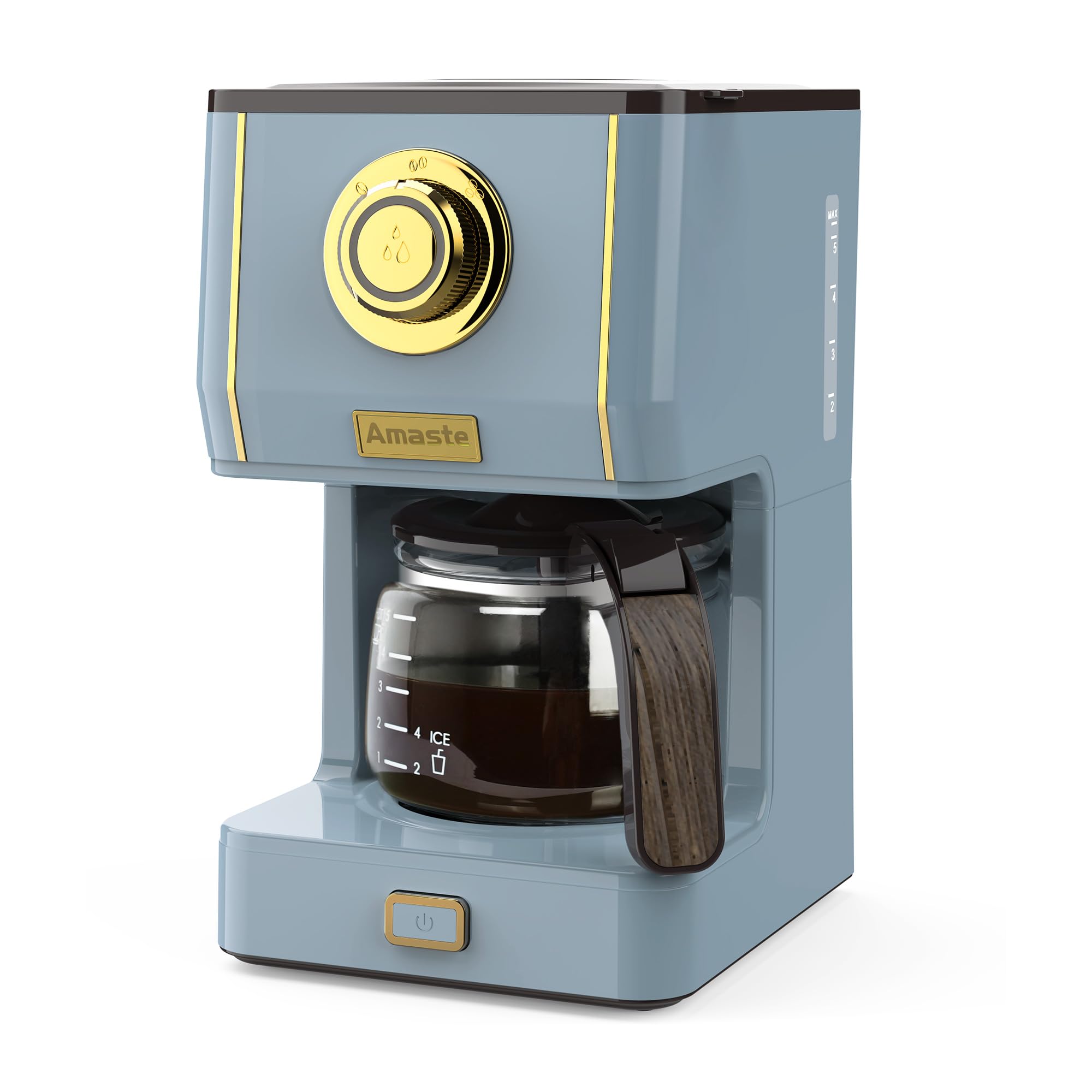
A lot of retro‑style small brewers are basically “decoration that makes coffee.” Amaste is different because owners repeatedly mention the same two surprises: (1) it’s genuinely easy to use (simple controls), and (2) the strength dial actually changes the output in a noticeable way. If you’ve ever wished you could make “weekday normal” and “weekend stronger” without changing your entire recipe, that matters.
A detail that comes up in real feedback (and I love this kind of owner detail) is how people describe the strength settings in everyday language. One owner joked that the strongest setting is “hair on your chest” strong—funny, but also useful, because it signals that the brewer is changing contact time, not just pretending. Another hidden perk: there’s a spot on top that can warm your mug during brewing. That’s a small touch, but it solves a real problem: cold mugs steal heat instantly in small batches.
Now the honest side: some owners wish it brewed hotter, especially in cold kitchens or winter months, and a few report needing to prewarm the carafe or mugs for maximum heat. There are also scattered reports of drip behavior (pouring too fast can spill) and, more importantly, rare leakage issues after a short ownership window. That doesn’t define the whole product, but it does mean you should treat it like a stylish appliance that deserves a quick early “keep an eye” period.
If you want the Amaste to shine, pair it with a simple ritual: rinse the carafe with hot water while you add grounds, then brew on your chosen strength. That one tweak often turns “warm enough” into “properly hot” with no extra gear.
Why it wins hearts
- Strength modes that matter – Owners feel real differences between mild, medium, and strong.
- Looks genuinely great – It’s the rare brewer people compliment on the counter.
- Reusable filter included – Less ongoing waste and easier daily setup.
- Thoughtful little touches – Mug-warming spot and clear markings help daily life.
Good to know
- Some users want hotter output; prewarming mug/carafe is an easy fix that helps a lot.
- Pour slowly for the cleanest experience—fast pours can encourage dribbles on some units.
- There are occasional reports of leaking after short use; monitor early and act quickly if it happens.
Ideal for: anyone who wants a stylish small brewer with adjustable strength—and is willing to use simple “prewarm” habits for best heat and flavor.
5. Cuisinart DCC‑5570 – Stainless Carafe Convenience in a Truly Compact Footprint

If you’ve ever shattered a glass carafe and then stepped on a hidden shard a week later, you understand the emotional appeal of a stainless carafe. Cuisinart’s DCC‑5570 exists for exactly that person: you want a compact machine with “real coffee maker” behavior, but you don’t want glass in your life.
The removable water reservoir is a big deal in small brewers. It turns filling into a clean, controlled step instead of an awkward pour into a narrow tank. Owners who come from older small machines often describe relief: it’s easier to keep clean, easier to fill, and the coffee comes out hotter than what they replaced. That “hotter than my old one” theme shows up a lot with this model, which is often the difference between “I like my coffee maker” and “I love it.”
Now the honest critique: stainless carafe design can cut both ways. Some owners mention that the walls feel thin, which limits heat retention compared to a true vacuum thermal carafe. In other words, it’s not the same as “thermos-hot for hours.” It’s “no glass, still warm, less fragile.” Some also mention fiddly lid handling and occasional drips after removing parts for cleaning. None of that ruins the machine, but it’s exactly the kind of daily friction you should know before buying.
Pro workflow: if you want maximum heat retention, pour your first cup promptly and then keep the carafe seated on the warming surface for the short keep-warm window. This model shines for “brew and drink now” mornings rather than “forget it for two hours” afternoons.
Why it’s a smart pick
- Stainless carafe means fewer accidents – Great for small homes, busy kitchens, and anyone who hates broken glass.
- Removable reservoir is genuinely useful – Cleaner fills and easier maintenance.
- Hotter output than many small brewers – A frequent owner upgrade story is “finally hot coffee again.”
- Compact but capable – Feels like a full machine in a small footprint.
Good to know
- Stainless carafe isn’t the same as a vacuum thermal carafe; heat retention varies by use habits.
- Some owners mention lid quirks and occasional drips after cleaning—wipe-down becomes part of the routine.
- If you want strong programmability, this model is more “simple daily brewer” than “clock-first machine.”
Ideal for: anyone who wants compact brewing without glass, plus a removable reservoir that makes daily filling and cleaning feel easier.
6. Capresso 5‑Cup Mini Drip – The “Set It Tonight, Wake Up Happy” Compact Classic

Capresso has a quiet reputation for making compact machines that feel more “appliance” than “temporary solution.” Owners who choose this one usually come from two places: they’re tired of a cheap brewer that dribbles everywhere, or they want a timer in a small footprint. And this machine delivers that “basic done well” experience: fill, dose, program if you want, and it brews consistently without drama.
In long-term owner feedback, the strongest praise is about consistency. People mention brewing multiple pots per day and getting the same taste every time once they dial their ratio. That’s the real sign of a good machine: it doesn’t force you to constantly adjust because of weird temperature swings or inconsistent flow. Another underrated detail: a drip-free pouring spout (when it’s designed well) keeps your counter clean. A lot of small machines fail right here.
The most realistic complaint is about the timer controls aging. Some owners report that after months of heavy use, timer adjustment becomes unreliable, even though the machine still brews fine manually. That suggests a simple buying strategy: if the timer is your whole reason for buying, treat it gently and protect it from power interruptions. If you’re fine brewing manually most days, the timer is just a nice bonus.
Pro tip for cleaner taste: even if you love the included reusable filter, consider paper filters on days you brew darker or oilier coffee. Paper can reduce sediment and keep flavor cleaner. On lighter roasts, the reusable filter can deliver a slightly fuller body that many people enjoy.
Why it’s a standout
- Programmable convenience in a compact body – Great for routine-driven mornings.
- Consistent taste once dialed in – Owners love repeatable results.
- Clean pour behavior – Less dribble means a cleaner counter and less frustration.
- Sturdy “small appliance” feel – Often described as more solid than bargain machines.
Good to know
- Some users report timer controls getting finicky over time; manual brewing remains straightforward.
- Clock placement/visibility can be a minor annoyance depending on your counter height and lighting.
- If you brew and walk away for a long time, remember hot plates change flavor—thermal mugs help.
Ideal for: anyone who wants a compact programmable coffee maker that feels dependable and doesn’t require constant babysitting.
7. KRUPS Simply Brew Compact – The No‑Drama “Two Cups, Zero Waste” Everyday Machine

The KRUPS Simply Brew Compact is a strong choice when you want a small brewer that feels tidy, modern, and predictable. It’s the kind of machine couples buy when they want enough coffee for two people without brewing a giant pot that gets stale. Owners typically praise it for hitting the “no drama” target: it brews hot, it keeps warm briefly, and cleanup doesn’t feel like a project.
The pause & brew function is the key daily-life feature here. When this feature works well, it changes your mornings. You’re not standing there waiting for the last drip just to get your first cup. You can pour mid-brew without a mess, then let the rest finish. This is exactly the kind of “small comfort” that creates long-term satisfaction, because it removes impatience from your routine.
Another subtle value: stainless exteriors tend to look cleaner longer in a coffee nook. Coffee oils and steam can stain cheaper plastics over time. KRUPS tends to hold up aesthetically, which matters more than people admit—especially if your coffee maker sits in a visible spot.
One important practical note: some listings and reviews online can involve plug/voltage confusion in non‑US regions. If you’re buying for travel or international use, double-check that your power setup matches the machine. In the right environment, this is a solid daily brewer.
Why it works so well
- Pause & brew convenience – Great for impatient first-cup mornings.
- Compact but not flimsy – Often described as “small but real,” not a toy.
- Easy cleanup – Reusable filter and simple parts reduce friction.
- Looks good on the counter – Stainless design stays more presentable long-term.
Good to know
- Keep-warm is designed for a short window; it’s not meant to hold coffee “all morning.”
- As with many pause systems, perfect performance depends on proper carafe seating.
- If you want a strong timer-first experience, Capresso or Mr. Coffee may fit better.
Ideal for: couples and small households who want compact, hot coffee with a simple mid-brew pour feature and easy cleanup.
8. Hamilton Beach 46111 – FrontFill Convenience That Saves Small Kitchens from Daily Spills

This is the small‑kitchen specialist. The Hamilton Beach 46111 is built around one painfully real problem: most compact coffee makers are annoying to fill under cabinets. You either pull the machine forward every day (which becomes a habit you hate), or you try to pour water into a narrow back opening and spill. FrontFill solves that. You fill from the front. You load coffee from the front. You keep the machine where it lives.
Owners who love this model tend to sound relieved. They talk about counter space, easy access, and “it’s programmable like a big coffee maker.” That last point matters because compact machines often force you to choose between size and convenience. Here, you get a small footprint but still wake up to ready coffee if you want the timer lifestyle.
The pause & pour feature is also a key selling point—especially because small-batch brewing is fast, and the urge to grab a cup mid-cycle is high. The best way to use it is to remove the carafe briefly (think: pour and return), not leave it off while you get distracted. Most drip-stops work best when treated as a quick pause, not a long break.
Pro tip: if you struggle to see side water windows, this model’s general front-access philosophy pairs well with using a dedicated measuring cup. It’s the simplest way to get repeatable strength without craning your neck to check a tiny window.
Why it’s so practical
- FrontFill is a real quality-of-life upgrade – Especially under cabinets or in tight coffee nooks.
- Programmable like a bigger machine – Wake-up coffee without giving up counter space.
- Compact footprint – Great for apartments, RV counters, dorms, and small kitchens.
- Pause & pour convenience – Helpful for quick first-cup mornings.
Good to know
- Some owners report that “5 cups” feels like 2–3 mugs; plan your expectations accordingly.
- Water fill openings can be small—slow pours prevent spillover.
- As with any compact programmable machine, a power outage means resetting the clock.
Ideal for: anyone with low cabinets or tight counter space who wants front-access filling plus a timer, without committing to a full-size brewer.
9. Mr. Coffee 5‑Cup Programmable – The Familiar Brew‑Later Routine, Done in a Smaller Footprint

Mr. Coffee is the brand many people grew up with, and this 5‑cup programmable model is basically that comfort—in compact form. It’s built for the person who wants to set up at night, wake up to brewed coffee, and clean the machine easily enough that it doesn’t become “the gross appliance.” Owners who switch from pod machines often mention the same joy: easier access for cleaning and “coffee tastes good again.”
The Brew Later feature is the main attraction, but the real value is routine stability. You’re not learning a new system every morning. You fill, you add grounds, you set the time, and you go to bed. That’s why this model works best for people who keep a simple weekday rhythm.
Now the honest owner complaints are worth hearing: drip-stop systems can be picky. Some people report that you can’t remove the carafe early without drips or mess, especially if a gasket gets dirty or the basket doesn’t seal perfectly. This is not unique to Mr. Coffee—it’s the most common complaint across the entire category. The fix is usually “wait an extra minute,” keep the valve area clean, and don’t treat pause-and-serve as permission to walk away mid-brew.
If you want the best results from this machine, treat it like a classic drip brewer: medium grind, consistent dose, and don’t overload the basket. Small machines punish overfilling more quickly than large ones because the filter area is tighter.
Why it’s still popular
- Brew Later is easy – Great for people who want morning coffee without morning effort.
- Compact and familiar – Simple workflow, not a gadget learning curve.
- Auto shut-off peace of mind – Helpful for forgetful households.
- Cleaning access is better than many pod machines – Owners love that it’s reachable and maintainable.
Good to know
- Mid-brew pouring can be messy if you don’t wait for the valve to seal; keep the gasket area clean.
- Some users dislike paper filter fit; try a different brand or fold edges for better seating.
- If you want “coffee stays hot without a hot plate,” thermal models will fit your taste better.
Ideal for: anyone who wants a compact programmable brewer with a familiar workflow—especially pod switchers who want easier cleaning and better-tasting drip.
10. Holstein Housewares 5‑Cup – A Small Brewer That Brings Personality (and Simple Coffee) to Dorms and Desks
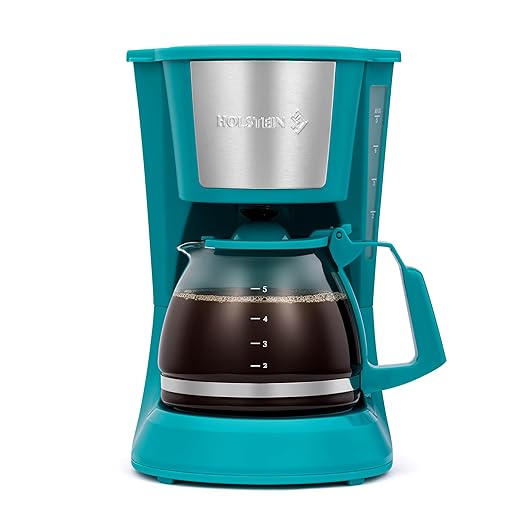
Holstein tends to win on vibe first—and that’s not shallow, it’s practical. If a coffee maker looks good on your counter, you’re more likely to keep it out, use it daily, and maintain it instead of stuffing it in a cabinet and forgetting it exists. Owners who buy this one often mention the color, the compact size, and the fact that it comes with the basics you actually need: reusable filter basket and a scoop.
Performance is what you’d expect from a compact drip brewer: quick coffee, simple controls, and a pause-and-serve feature designed for “I want my first cup now.” Some owners report that pour technique matters—slow, steady pours reduce dribble. That’s a real skill issue with many small carafes because the spout is smaller. But once you learn the angle, it becomes automatic.
The most important “heads up” is feature expectations. Some owners don’t experience the “auto” behavior the same way marketing language implies. In other words, you should buy Holstein for its simplicity and aesthetics—not because you’re trying to build a fully automated coffee station. Treat it as a clean, compact daily brewer that looks fun and works.
Pro tip: if you prefer paper filters (for less sediment and easier cleanup), check compatibility with cone filters and use them inside the reusable basket. It’s a simple way to get cleaner flavor while still keeping the basket as a support frame.
Why people enjoy it
- Looks fantastic – A genuine “adds personality to the counter” appliance.
- Compact and straightforward – Great for dorms, offices, and small kitchens.
- Comes with useful extras – Reusable filter + scoop = fewer immediate add-on purchases.
- Brews hot and fast – Owners often comment on quick heat-up for morning coffee.
Good to know
- Carafe pour technique matters; pour slowly for a clean counter.
- Some features may not feel as “automatic” as expected—plan to operate it like a simple brewer.
- Glass carafe feels thin to some owners; handle with normal care.
Ideal for: anyone who wants a compact brewer with style and a simple workflow—especially in offices, dorm rooms, and small apartments.
11. BLACK+DECKER DCM600B – The “One Button, Good Coffee” Minimalist Classic

This is the type of coffee maker that survives because it doesn’t try to be clever. The DCM600B is for people who want a compact pot of coffee without a clock, without menus, and without the risk of “my machine is stuck in programming mode.” You flip it on, it brews, it keeps coffee warm briefly, and you go on with your day.
Where this machine quietly wins is accessibility. Owners who care about hygiene love when they can actually see and reach the water reservoir and basket area. That matters because many “small” machines cut corners with hidden plastic pathways that get gross over time. This one is simple enough that basic cleaning is easy, which often translates into better-tasting coffee months later.
Another real advantage is speed. Small hot-plate machines tend to brew quickly, and when they’re not overloaded with features, there’s less that can interrupt flow. If you’re a “brew and drink immediately” person, this style works. If you’re a “brew and forget it for two hours” person, a thermal carafe model will preserve flavor better.
Pro tip: if you want stronger coffee from simple brewers, don’t grind finer first—dose slightly more coffee and keep grind medium. Finer grinds can clog basket filters and create bitter over-extraction in small machines.
Why it’s still a staple
- Simple operation – No learning curve, no confusing settings.
- Compact for small counters – Great for apartments and tight coffee nooks.
- Easy basket cleanup – Less hidden mess, easier routine maintenance.
- Quick daily coffee – Works well for “make a pot and drink now” households.
Good to know
- Not for timer lovers—this is manual, simple brewing.
- Mid-brew pouring can be messy on many basic machines; wait for the cycle to finish for cleanest use.
- Hot plates change flavor over time; use a thermal mug if you sip slowly.
Ideal for: minimalists who want a compact coffee maker that’s easy to understand, easy to maintain, and reliably makes a small pot of coffee.
12. BLACK+DECKER CM0700BZ – The Budget “Coffee Station” That Keeps the Routine Simple

This model has a loyal following for one reason: it gives you the core five‑cup experience without the “cheap hotel machine” look. People buy it because it’s compact, it works, and it can be paired with a reusable filter workflow to reduce paper waste and reduce the “I forgot filters” problem. It’s the kind of brewer that can live in an office, an RV, or a small apartment and just do its job.
Owners who are happiest with it tend to share a similar mindset: they don’t overthink it. They accept that it’s a straightforward machine, they dial their coffee-to-water ratio, and they brew fresh rather than leaving coffee sitting forever. In that zone, it’s a win. A common early complaint is an initial plastic smell. That’s not unique to this machine, but if you run a few water cycles (and a descaling cycle if needed), many owners report that smell fades and normal use becomes pleasant.
Sneak‑a‑Cup is a great feature name because it describes exactly what people try to do: grab the first cup while the rest is brewing. Here’s the honest truth: in budget machines, drip-stop systems work best when you “sneak” quickly—pour and return the carafe, rather than leaving it off. That’s how you avoid overflow and keep your hot plate clean.
Pro tip: if you want less sediment with the permanent filter, use a paper basket filter inside it. You still get the convenience of the frame and the clarity of paper.
Why it’s a smart budget buy
- Simple and compact – Great for small counters, break rooms, and tight spaces.
- Sneak‑a‑Cup convenience – Nice when you use it as a quick pause, not a long stop.
- Reusable filter workflow – Helps reduce waste and “ran out of filters” mornings.
- Solid everyday coffee – When dialed in, it reliably delivers a small pot without fuss.
Good to know
- Some units may have initial odor; running cleaning cycles helps many owners.
- No fancy automation—this is a basic, practical brewer.
- Like many small carafes, pour slowly for the cleanest counter experience.
Ideal for: budget shoppers who want a compact brewer with a simple workflow—and are happy to keep coffee fresh rather than held forever on heat.
13. Newhouse Electric NHCM‑001‑5 – The ETL‑Certified “Leave It for Guests” Coffee Maker

Some coffee makers are built for enthusiasts. This one is built for reliability in shared spaces: a small office counter, a hospitality nook, a rental kitchen, or a home where you want something straightforward that anyone can operate without instruction. The ETL certification angle matters here because it’s signaling “designed for both residential and hospitality use,” which is exactly what break rooms care about.
Owners who like it tend to use the same language: “simple,” “fast,” “does the job,” and “makes enough for one or two people.” That’s the correct expectation. It’s not meant to be a precision brewer; it’s meant to get you a fresh small pot without waste. The included metal mesh filter basket is also practical in shared spaces because you’re not dependent on someone remembering to buy filters.
The honest complaint is also consistent: auto shut-off timing and heat holding can be a love/hate feature. Some people appreciate the safety of the machine shutting down. Others feel it shuts off too quickly or doesn’t keep coffee hot long enough if you want to sip slowly. That means you should choose this model when safety and simplicity matter more than “keep it hot all morning.”
Pro tip: if you’re using this in an office, pair it with a thermal mug culture. Brew, pour, turn off. That keeps flavor fresher and reduces the “burnt coffee smell” that can linger in shared spaces.
Why it makes sense
- Hospitality-friendly simplicity – Easy for guests, coworkers, and family to use instantly.
- Auto shut-off for safety – Great for shared spaces and forgetful humans.
- Metal mesh filter basket – Less dependency on disposable filters.
- Compact, no-waste output – Makes a small pot that gets consumed instead of tossed.
Good to know
- Some owners wish it kept coffee hotter/longer; it’s designed more for safety than long holding.
- Reusable mesh filters can let fines through; paper filters can improve clarity if you prefer.
- If you want precise strength control, look at Amaste or a taste-focused premium brewer.
Ideal for: offices, guest suites, rentals, and simple households that value straightforward brewing and safety features over advanced controls.
14. Kismile 5‑Cup (LED + 12H Timer) – The Affordable “Wake Up to Coffee” Option That Stays Compact
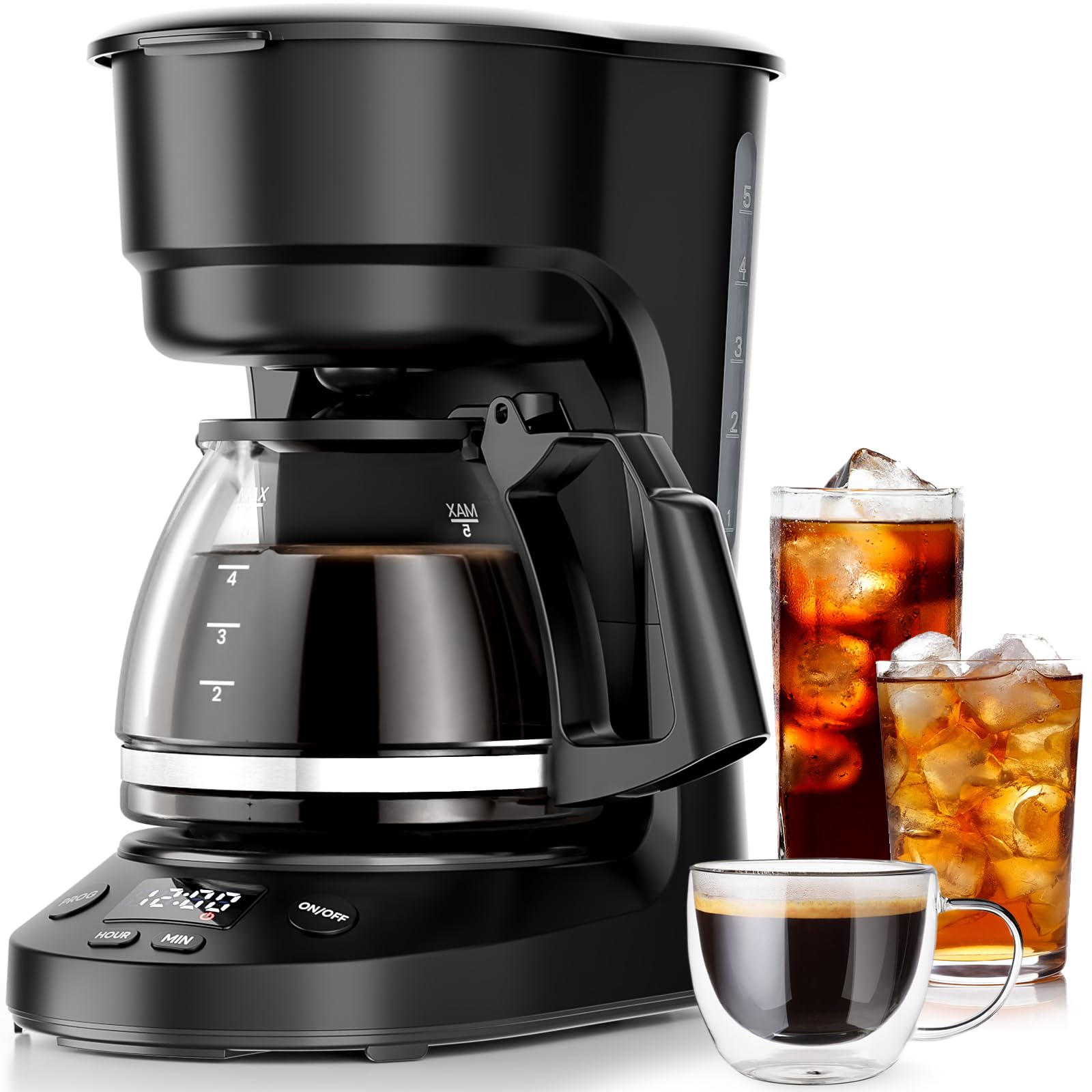
Kismile sits in the “surprisingly practical budget pick” lane: small, lightweight, and built around the features most people actually use in daily life. The big one is the timer. Owners who move away from single‑serve machines often mention the same desire: wake up to the smell of coffee again. This machine is designed to do that without taking over your counter.
Another consistent theme in budget-brewer happiness is heat: owners praise when a small machine makes coffee that’s actually hot. If you’ve ever had “warm but not satisfying” coffee from certain pod systems, you understand why this is a big deal. And because the parts are designed to be removable and dishwasher safe (carafe and funnel area), cleanup can be easier than you’d expect at this size.
Where you should be realistic is longevity expectations. Budget machines often deliver great value when they match a simple use case: one or two people, one pot at a time, basic maintenance, and not abused by constant brewing all day. If you’re that user, this is a clean, compact way to get timer coffee without spending premium money.
Pro tip: set your program time, but also keep a small “coffee routine” checklist: water level correct, basket seated, and carafe fully in place. In compact machines, correct seating is what keeps anti-drip features working well and prevents surprise messes.
Why it’s a value win
- Timer + LED display – A real upgrade from “manual only” budget brewers.
- Hot coffee satisfaction – Owners often praise the temperature versus pod machines.
- Compact and lightweight – Great for small counters and simple routines.
- Easy cleanup – Removable parts make daily cleaning faster.
Good to know
- Budget machines reward gentle use; avoid overfilling and keep up with descaling.
- Anti-drip systems work best with proper carafe placement—don’t “half-seat” the pot.
- If you want premium extraction and thermal holding, Bonavita-style brewers will feel like a real upgrade.
Ideal for: solo drinkers and small households who want an affordable programmable compact brewer that still makes genuinely hot coffee.
How Small Drip Machines Make Great Coffee (and Why Some Don’t)
Most people blame their coffee maker when the real problem is the triangle of water, dose, and extraction. Small brewers amplify mistakes because you’re working with less volume: a little too little coffee, slightly wrong grind, or uneven saturation shows up immediately as weak or bitter cups. Here’s how to make a compact machine taste shockingly good—without turning your kitchen into a lab.
What makes a five‑cup machine taste “premium”
- Consistent heating: Brew water needs to be hot enough to extract sweetness and aroma, not just “warm enough to look like coffee.” Premium machines manage temperature better.
- Even saturation: A good showerhead wets all the grounds. If water hits one spot, it channels and you get weak coffee plus bitterness at the same time.
- The right grind: For most drip machines, medium grind is your friend. Too coarse tastes thin; too fine can slow flow and turn bitter (and sometimes cause overflow).
- Correct dose beats “strong mode” marketing: Strength modes help, but a consistent coffee-to-water ratio is the real power lever.
- Pre-warming the system: In small batches, heat loss is brutal. A quick hot-water rinse of the carafe and mug can make coffee feel meaningfully hotter.
- Paper vs reusable filters: Paper cleans up oils and fines for clearer flavor; reusable adds body but can introduce sediment. Choose based on what you like.
This is why taste-first brewers like the Bonavita can make a small pot taste surprisingly full: they reduce the two most common causes of disappointment— cool water and uneven wetting. Meanwhile, a “basic” brewer can still make excellent coffee if you dose correctly and keep it clean.
Troubleshooting: fix the common “bad coffee” complaints
- “My coffee tastes watery” → Increase dose slightly first (not grind fineness). Also confirm you’re not expecting five 8‑oz mugs from a five‑cup line.
- “My coffee tastes bitter” → Grind slightly coarser, reduce hot-plate holding time, and avoid letting brewed coffee sit cooking for long.
- “It’s not hot enough” → Preheat mug and carafe, use room‑temp water (ice‑cold water can reduce final cup temp), and drink sooner.
- “It drips everywhere” → Pour slower, keep carafe seated fully, and clean the drip-stop valve area so it seals properly.
- “It’s slow / gurgly / sputtery” → Descale. Mineral buildup can reduce flow and heat transfer and make a machine feel “old.”
- “Reusable filter leaves grit” → Use a paper filter inside the reusable one or switch to paper for cleaner cups.
When you fix the real issue, compact machines become a joy: you brew only what you want, it stays fresher, and you stop dumping half pots down the sink. That’s the entire point of going smaller.
FAQ: Buying a Five‑Cup Coffee Maker Without Regrets
How much coffee is “5 cups,” really?
Is thermal always better than a warming plate?
Why do “pause & serve” features sometimes still drip?
What’s the easiest way to make small-batch coffee taste stronger?
Do reusable filters change taste?
How often should I descale a compact coffee maker?
Final Thoughts: Pick the Brewer That Fits Your Real Routine
A great small coffee maker is not the one with the most buttons. It’s the one that makes you think, halfway through a busy week, “Wow… this is easy. And the coffee actually tastes good.”
Here’s how to translate this guide into a confident purchase:
- Want the best overall compact daily driver? Start with the Zojirushi Zutto EC‑DAC50. It’s the rare mix of easy filling, easy cleaning, and reliably satisfying coffee in a small footprint.
- Want the best taste-first small batch? Choose the Bonavita BV1500TS. It’s built to extract evenly and hold coffee in a thermal carafe so flavor stays clean.
- Need one machine for a mixed household? Consider the Hamilton Beach FlexBrew Advanced 5‑in‑1. It’s for homes where pods, grounds, single cups, and carafe brewing all matter.
- Want style with real strength control? The Amaste Retro 5‑Cup is a fun, functional pick that lets you tune mild/medium/strong without changing your whole setup.
- Hate glass carafes and want compact convenience? Look at the Cuisinart DCC‑5570 for a stainless carafe + removable reservoir workflow.
- Want a compact programmable classic? Pick the Capresso 5‑Cup Mini Drip or the Mr. Coffee 5‑Cup Programmable for “set it at night, wake up to coffee” routines.
- Need the easiest under‑cabinet fill? The Hamilton Beach 46111 FrontFill is built specifically to prevent daily filling frustration in tight spaces.
- Want affordable, simple, and compact? The BLACK+DECKER DCM600B and BLACK+DECKER CM0700BZ keep the routine basic and dependable.
- Need a simple brewer for guests or offices? The Newhouse Electric NHCM‑001‑5 is designed for straightforward use with safety-minded shutoff behavior.
- Want the cheapest timer-based wake-up option? Try the Kismile 5‑Cup for an affordable programmable routine in a tiny frame.
Your “best” choice depends on how you actually drink coffee: quick and fresh, slow and warm, timer-driven, taste-obsessed, or shared-household flexible. Pick the best five cup coffee makers that match your habits, and your mornings get easier—and your coffee gets better—without needing a bigger machine.