
That creak over every speed bump, the dry clunk when you turn the wheel — a neglected suspension system makes itself known long before a part fails. The wrong grease washes out in a single rainstorm, melts away under heavy loads, or attracts grit that accelerates wear on bushings, ball joints, and tie‑rod ends. Choosing a suspension‑grade lubricant means matching viscosity, extreme‑pressure additives, and water resistance to the specific joint or bearing you are protecting.
I’m Mohammad Maruf — the founder and writer behind Drink4Good. I’ve spent years analyzing hardware specifications across automotive lubricant categories, comparing NLGI grades, dropping points, and additive packages to separate genuine performance from marketing claims.
Whether you are servicing a lifted truck’s control arms or refreshing the bushings on a daily driver, the best grease for suspension must deliver reliable film strength, resist water washout, and maintain consistency across temperature extremes.
How To Choose The Best Grease For Suspension
Suspension components operate in a harsh environment — constant vibration, road spray, temperature swings, and heavy cyclic loads. A multi‑purpose chassis grease from the auto‑parts store might keep a door hinge quiet, but it often fails under the shear forces found in a ball joint or a control‑arm bushing. Focus on three key attributes to match the grease to the job.
NLGI Grade & Consistency
The National Lubricating Grease Institute (NLGI) scale runs from 000 (fluid) to 6 (solid brick). For suspension work, NLGI #2 is the standard — it offers enough body to stay in place around a ball‑joint stud yet flows easily through a grease gun. Softer grades (NLGI #0 or #1) can leak past worn seals, while #3 may be too stiff to distribute evenly inside a bushing.
Extreme‑Pressure & Anti‑Wear Additives
Suspension joints endure point‑loading that would squeeze out a plain lubricant. Molybdenum disulfide (moly) and graphite form a sacrificial layer on metal surfaces, reducing friction during momentary boundary‑contact events. Ceramic‑based greases provide similar protection at higher temperatures without staining. Look for an additive package that matches the specific component — high‑moly greases excel in ball joints, whereas ceramic blends suit caliper slide pins on vehicles with integrated suspension‑brake junctions.
Water Resistance & Dropping Point
A grease that dissolves in the first puddle is useless under a vehicle driven year‑round. Water washout tests (ASTM D1264) tell you how much grease remains after a standardized water spray — aim for a rating of 5% loss or less. Dropping point is the temperature at which grease liquefies; for suspension use, pick a grease with a dropping point above 350°F so it survives hot brakes and sustained highway driving without turning into a runny mess.
Quick Comparison
On smaller screens, swipe sideways to see the full table.
| Model | Category | Best For | Key Spec | Amazon |
|---|---|---|---|---|
| Sta‑Lube SL3331 | Assembly Lube | Engine rebuild & chassis assembly | 10 wt‑oz tube, moly‑graphite | Amazon |
| Keze Ceramic Caliper Grease | Brake Grease | Slide pins & caliper contact points | 8‑oz bottle, ceramic + MCA | Amazon |
| CRC Marine Dielectric Grease | Electrical Grease | Connector seals & exposed terminals | 3.3‑oz pressurized can | Amazon |
| STAR BRITE White Lithium | Multi‑Purpose | Hinges, cables & light chassis spots | 14‑oz cartridge, water‑resistant | Amazon |
| Red Line CV‑2 Synthetic | CV Joint Grease | High‑angle CV joints & wheel bearings | 14‑oz jar, synthetic with red moly | Amazon |
In‑Depth Reviews
1. Red Line CV‑2 Synthetic Grease
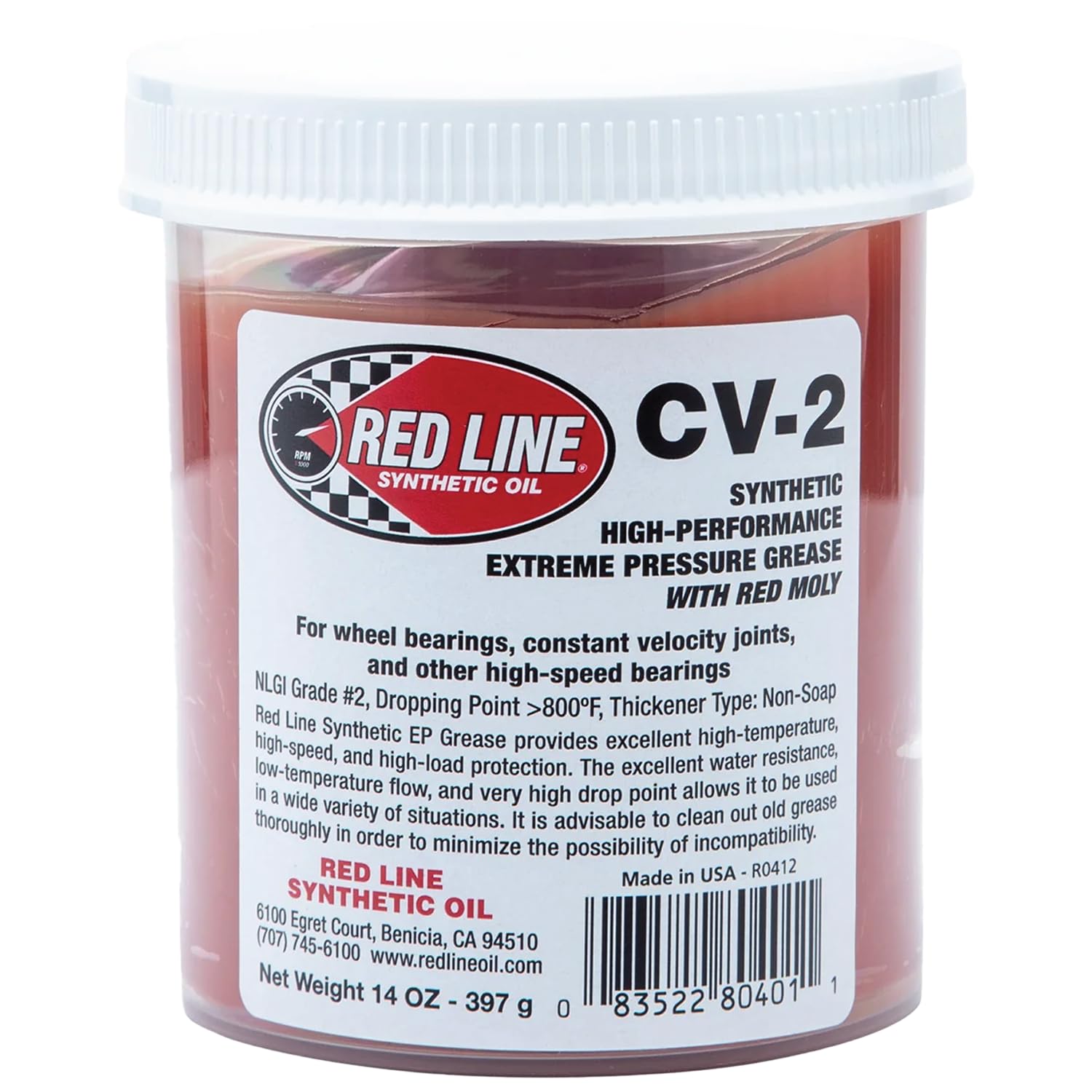
Red Line CV‑2 uses a synthetic base stiffened with red moly, giving it a dropping point well above what standard lithium‑complex greases can manage. The formulation stays put inside CV joints even when the axle articulates at extreme angles — a common failure point for lifted Jeeps and heavy‑duty trucks. With an operating range that spans from –100°F to 500°F, this grease handles both Arctic cold starts and sustained towing heat without bleeding oil.
In real‑world use, owners packing CV joints and repacking wheel bearings report reduced operating temperatures compared to conventional chassis greases. The moly additive forms a durable boundary film that prevents galling on the star‑shaped inner race of a constant‑velocity joint. Users also successfully applied it to supercharger bearings and trailer spindles, confirming its flexibility across high‑RPM applications.
Because this is a thick NLGI #2 paste, getting it into a tight CV boot requires a syringe or a dedicated packer. The 14‑ounce jar format is less convenient than a grease‑gun cartridge for bulk chassis lube, but the performance payoff for suspension‑specific joints is clear. For any component that sees articulation, high heat, or real load, Red Line CV‑2 delivers top‑tier film strength.
Why it’s great
- Extreme temperature range (–100°F to 500°F) suits high‑load suspension use
- Red moly additive provides excellent boundary lubrication on CV joints and bearings
- Synthetic base resists oxidation and evaporation far longer than conventional grease
Good to know
- Jar format requires manual packing — no grease‑gun cartridge option
- Premium pricing places it above budget multi‑purpose greases
2. Sta‑Lube SL3331 Assembly Lube

Sta‑Lube SL3331 is a lithium‑based grease fortified with both molybdenum disulfide and graphite — a dual‑additive approach that clings aggressively to bare metal. Designed primarily for engine assembly, its tenacity makes it equally effective on suspension components during a rebuild, particularly cam lobes, rocker arms, and ball‑joint studs. The moly‑graphite package prevents metal‑to‑metal scoring during that critical first rotation.
Users report that this grease stays in place on vertical surfaces and does not migrate even after weeks of sitting between assembly and first fire‑up. It dissolves cleanly into the motor oil once the engine runs, preventing any blockage in oil galleys. Outside the engine bay, mechanics have used it on manual transmission parts and suspension bolt threads to ensure proper torque readings during reassembly.
At 10 weight ounces in a squeeze tube, the quantity is modest compared to a full grease‑gun cartridge. The formula is noticeably thicker than standard chassis grease, which can make hand‑packing small bushings a chore but guarantees it won’t squeeze out under moderate loads. For anyone rebuilding a suspension or engine from scratch, this is the assembly‑phase insurance that protects costly components.
Why it’s great
- Moly‑graphite combo creates a tenacious film that stays put on metal parts
- Dissolves into oil without residue, safe for engines and gearboxes
- Thick enough to survive long storage periods before initial startup
Good to know
- Small tube format limits volume for large‑scale suspension greasing
- Very thick consistency increases rotational drag during manual turning
3. Keze Ceramic Caliper Grease
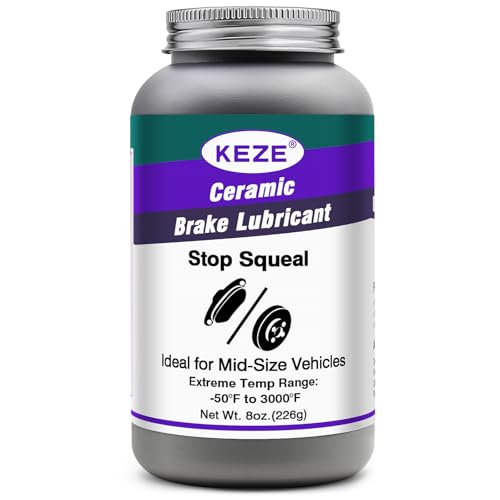
Keze ceramic brake grease combines synthetic MCA oil with ceramic powder to withstand flash temperatures up to 3000°F — far beyond the melting point of any conventional lithium or polyurea grease. This makes it a top choice for suspension components that sit adjacent to brake rotors, such as caliper slide pins and abutment clips, where radiated heat can turn ordinary grease into a dripping liquid.
The purple color‑coded formula makes application easy to see and verify coverage on pads, shims, and pin bores. Users report that sticky calipers become smooth after a single re‑grease, eliminating the uneven pad wear that often results from seized slide pins. The ceramic powder also acts as a dry lubricant carrier, ensuring some protection remains even if the base oil is momentarily overwhelmed by heat.
Because this grease is designed specifically for brake hardware, its NLGI consistency is slightly thinner than a #2 chassis grease, allowing it to flow into tight pin bores without binding. That same property means it is less suited for heavily loaded ball joints or wheel bearings where a stiffer grease is required. For anyone refreshing their suspension’s braking interface, Keze delivers targeted extreme‑temperature performance.
Why it’s great
- Flawless high‑heat stability with a 3000°F flash point
- Eliminates brake squeal and prevents caliper pin seizing
- Color‑coded formula aids visual application coverage
Good to know
- Too thin for heavily loaded ball joints or CV joints
- Primarily intended for brake hardware, not general chassis lube
4. STAR BRITE White Lithium Grease

STAR BRITE White Lithium Grease is an NLGI #2 formulation built for all‑weather durability, with a high‑temperature ceiling of 350°F and strong water‑resistance that prevents washout in rain‑soaked driving conditions. The white color is a practical advantage — it makes contamination easy to spot during inspection, helping mechanics identify when a joint has picked up grit or moisture.
This grease works well on hinges, cables, and chassis points where a non‑staining lubricant is preferred. Users in marine environments specifically praise its ability to cling to steering cables and trailer couplers without washing away after repeated saltwater exposure. The cartridge format fits standard grease guns, making it convenient for quick service on ball joints or tie‑rod ends.
While it performs admirably on general chassis points, the lithium‑soap base lacks the extreme‑pressure additives (moly, graphite, or ceramic) needed for high‑load suspension joints under heavy towing or off‑road use. For a daily‑driver suspension that sees mostly paved roads and moderate loads, STAR BRITE offers reliable, clean protection at a reasonable per‑ounce cost.
Why it’s great
- White color allows quick visual detection of contamination
- Excellent water resistance suits marine and wet‑weather use
- Grease‑gun cartridge format enables fast, low‑mess application
Good to know
- No moly or graphite additives for extreme‑pressure situations
- Not recommended for high‑angle CV joints or heavily loaded wheel bearings
5. CRC Marine Dielectric Grease

CRC Marine Dielectric Grease is a silicone‑based, non‑curing compound engineered specifically for electrical connections exposed to water and salt. It seals out moisture around sensor plugs, lighting connectors, and exposed terminals on off‑road vehicles — a common weak point where corrosion can cause intermittent suspension fault codes or lighting failures.
In marine conditions, this grease prevents short circuits and connector corrosion better than any chassis grease. Users report that ROV motor connectors and trailer lighting plugs survive repeated submersion when packed with CRC dielectric grease. The pressurized Select‑A‑BEAD nozzle allows precise application, keeping the grease where it is needed without contaminating nearby friction surfaces.
Because this is a dielectric compound, not a load‑bearing lubricant, it should never replace a proper NLGI #2 grease on ball joints or bushings. Its value in a suspension context is purely protective — coating electrical connections that serve suspension‑height sensors, ABS wheel‑speed sensors, and lighting circuits. For a comprehensive suspension service, add a small can to your toolkit to protect the electronics that keep your ride safe.
Why it’s great
- Excellent moisture seal for suspension sensor and ABS connectors
- Pressurized can with precision nozzle reaches tight electrical cavities
- Withstands saltwater exposure without hardening or washing out
Good to know
- Not a load‑bearing lubricant — do not use on joints or bearings
- Silicone base can interfere with paint adhesion if over‑applied
FAQ
Can I use plain multi‑purpose grease on suspension ball joints?
How often should I re‑grease suspension components?
What is the difference between lithium and synthetic‑complex grease for suspension?
Can I mix different grease types, like lithium and moly, on the same joint?
Is white lithium grease good for suspension bushings?
Final Thoughts: The Verdict
For most users, the best grease for suspension winner is the Red Line CV‑2 Synthetic Grease because its synthetic base and red moly additive handle the full temperature and load range that suspension components face — from CV joints to wheel bearings. If you want a tenacious assembly‑phase lubricant for a full rebuild, grab the Sta‑Lube SL3331. And for protecting the brake‑adjacent slide pins and electrical sensor connectors on your suspension, nothing beats the targeted high‑heat performance of the Keze Ceramic Caliper Grease paired with a small can of CRC Marine Dielectric Grease for your connectors.