
The difference between a podium finish and a smoking crater often comes down to a single spec in your goggles: video latency. In the fast-paced world of FPV racing — where gates come at you at 80 miles per hour — any delay between your quad’s camera and your eyes translates directly to missed gaps and broken props.
I’m Mohammad Maruf — the founder and writer behind Drink4Good. I’ve spent years analyzing the hardware specifications, receiver diversity systems, and display technologies that separate a reliable racing rig from a blind flight into a tree.
To help you cut through the noise and find the right pair for your skill level and budget, we’ve tested and compared the top contenders on the market to bring you this definitive guide to the best goggles for drone racing.
How To Choose The Best Goggles For Drone Racing
Choosing a pair of FPV goggles isn’t like buying a new monitor. Every decision — from the video transmission system to the type of receiver diversity — directly impacts your ability to fly confidently through a gate at high speed. Here are the core specs you should prioritize.
Video System: Analog vs. Digital vs. HDZero
This is the single most important choice you will make. Analog systems (5.8 GHz) offer the lowest real-world latency (sometimes under 20ms) and are the standard at nearly every MultiGP race event. Digital systems from DJI and Walksnail deliver stunning 1080p clarity but introduce more latency and potential signal breakup. HDZero occupies a middle ground, offering near-analog latency with digital picture quality.
Receiver Diversity
True receiver diversity uses two separate receivers and two independent antennas to constantly compare signal strength and pick the best feed. This is critical in racing, where your quad can be behind a tree and then instantly out in the open. Look for goggles that advertise true diversity rather than antenna diversity, which just uses two antennas on a single receiver.
Screen Technology and Resolution
Analog goggles typically use LCD or OLED screens with standard resolutions around 800×480. Digital goggles use micro-OLED panels with much higher resolutions (1080p). While higher resolution looks better, it does not always mean faster racing. Many pros prefer the motion clarity and instantaneous response of lower-resolution analog screens for racing.
Quick Comparison
On smaller screens, swipe sideways to see the full table.
| Model | Category | Best For | Key Spec | Amazon |
|---|---|---|---|---|
| DJI Goggles 3 | Digital HD | Premium DJI Ecosystem Pilots | 1080p Micro-OLED, 100Hz | Amazon |
| Walksnail Avatar Goggles X | Digital HD | High-End Digital & Head Tracking | Dual 1080p Displays, 50° FOV | Amazon |
| DJI Goggles Racing Edition | Digital/Analog Hybrid | Legacy DJI Drone Owners | 148° FOV, AMOLED Display | Amazon |
| BETAFPV Aquila16 Kit | Analog Kit | Beginner All-in-One Learning | 8 Min Flight Time, 800×480 | Amazon |
| BETAFPV Cetus Pro Kit | Analog Kit | Absolute Beginners & Altitude Hold | Turtle Mode, VR02 Goggles | Amazon |
| E MAX Tinyhawk 3 RTF Kit | Analog Kit | Intermediate Progression Pilots | Betaflight Configurable, 5.8G | Amazon |
| SoloGood EV800D | Analog Box | Budget Entry/Backup Goggles | 5″ LCD, 800×480, DVR | Amazon |
| DroneMask 2 | Smartphone VR | Camera Drone Pilots (Not Racing) | Unibody Lens, Glasses Compatible | Amazon |
| Tiny Hawk Micro RTF Kit | Analog Kit | Outdoor Racing Basics | Carbon Fiber Frame, 5.8G | Amazon |
In‑Depth Reviews
1. DJI Goggles 3

The DJI Goggles 3 represent the pinnacle of digital FPV immersion, pairing stunning 1080p micro-OLED screens with a 100 Hz refresh rate. This combination delivers fluid, razor-sharp motion that makes tree branches and gate edges pop with clarity. The Real View PiP feature allows you to see your surroundings without removing the goggles, a massive safety edge when you’re flying near other pilots on a racecourse.
Comfort is where these goggles truly excel. The battery is seamlessly integrated into the headband, balancing the weight perfectly and eliminating dangling cables. The included diopter adjustments range from -6.0 to +2.0, meaning most pilots with corrected vision can fly without wearing glasses underneath. The O4 video transmission system pushes a stable 60 Mbps bitrate at a latency of around 24 ms, which is very competitive for a digital system.
It’s critical to note that the Goggles 3 are locked to the DJI ecosystem. They are compatible with O3 and O4 Air Units and DJI drones like the Avata 2 and Mini 4 Pro, but they cannot be used with analog or Walksnail VTXs. For a pilot building a pure DJI digital racing setup, this is the gold standard.
Why it’s great
- Exceptional 1080p micro-OLED picture quality with 100 Hz refresh rate.
- Comfortable, balanced design with integrated headband battery.
- Real View PiP feature enhances safety on the race field.
Good to know
- Locked to the DJI Air Unit and drone ecosystem.
- Premium investment that reflects its high-end capabilities.
- No native analog module support without external adapters.
2. CADDXFPV Walksnail Avatar Goggles X
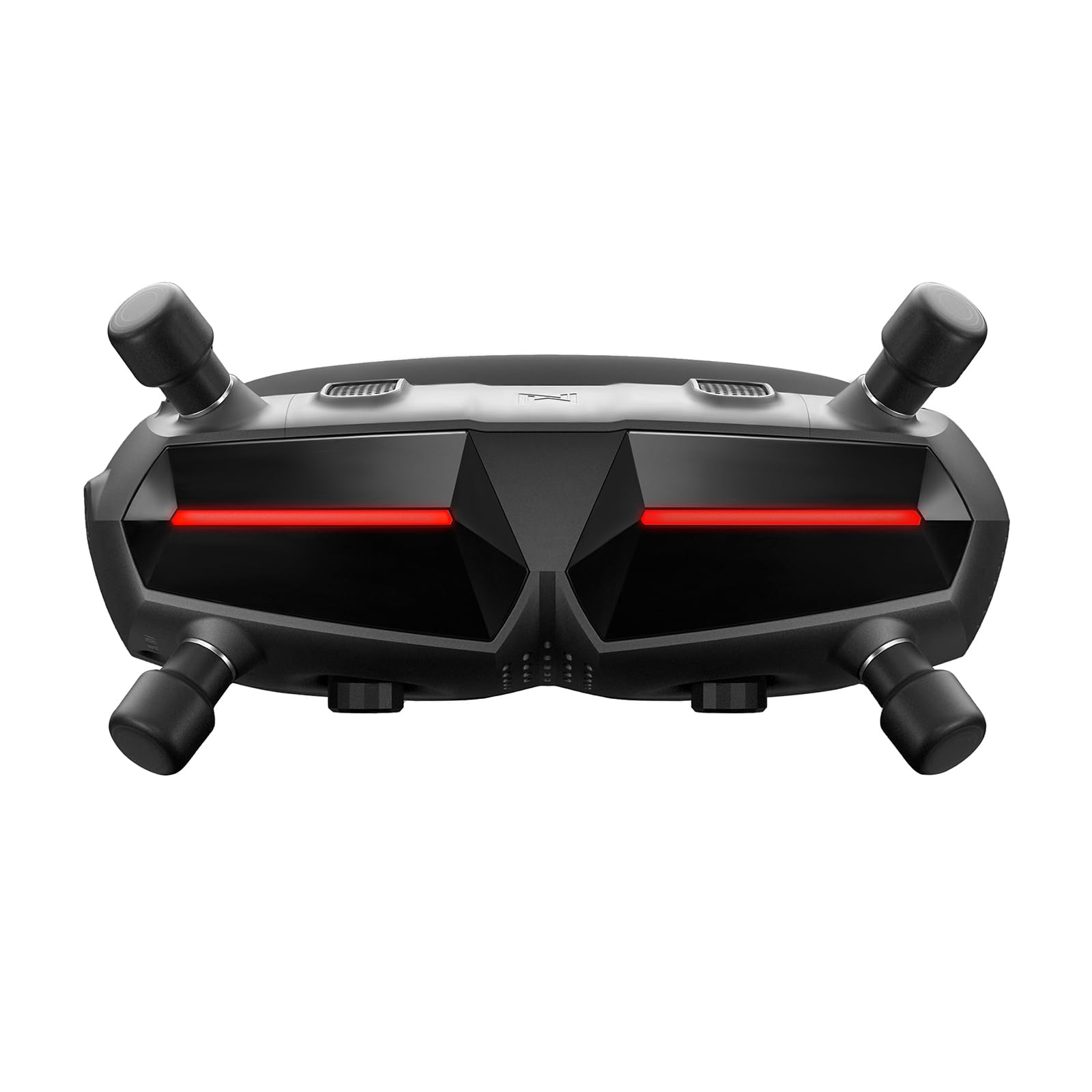
The Walksnail Avatar Goggles X offer a direct challenge to DJI’s dominance by delivering a fantastic digital image at a slightly lower entry price. With dual 1080p displays and a wide 50° field of view, the image is bright, colorful, and incredibly crisp. The built-in head tracking gyroscope is a standout feature for cinewhoop pilots, allowing for realistic camera pans when paired with a compatible gimbal system.
Design-wise, the Goggles X are noticeably lighter and more compact than their predecessor, the Goggles L. This makes them comfortable for long practice sessions. The integrated smart cooling fan is a smart touch, actively preventing the lenses from fogging up during humid summer race days. The adjustable IPD (57–72mm) and diopter range (+2.0 to -6.0) are generous and easy to dial in.
Stock foam is the most common complaint reported by users. It tends to be thin and doesn’t seal well on narrower face shapes, leading to light leakage. Fortunately, aftermarket foam is plentiful and solves the issue cheaply. For pilots who want high-quality digital FPV outside of the DJI ecosystem, the Goggles X are a brilliant and viable option.
Why it’s great
- Sharp dual 1080p displays with vivid colors and low latency.
- Integrated head tracking adds immersion for cine-style flight.
- Lightweight construction and effective anti-fog cooling fan.
Good to know
- Stock face foam is thin and prone to light leak for many users.
- Only compatible with Walksnail Avatar VTX systems.
- HDMI input is for video in, not for analog module use.
3. DJI Goggles Racing Edition

The DJI Goggles Racing Edition (RE) is the granddaddy of FPV goggles, and it still holds a special place for pilots flying legacy DJI hardware. Its massive 148° field of view on a single AMOLED panel creates a truly immense screen that is still unmatched by many modern box goggles. It works wirelessly with the Mavic 2 series at full 1080p, offering a clean, lag-free picture that feels like a movie theater strapped to your face.
Where the Racing Edition falters is compatibility and weight. It is designed primarily for DJI’s own drones; analog support is present via a 5.8 GHz receiver, but it is an afterthought, often plagued by green-screen splitting and lacking true antenna diversity. The unit is also heavy and blocks all peripheral vision, requiring a very secure headband adjustment.
For a pilot who only flies a Mavic 2 Zoom or Pro and wants the absolute widest digital FOV possible, this is a fantastic option. For a modern racer building a custom 5-inch quad with an O3 unit, the newer DJI Goggles 3 or Integra are significantly better choices due to their lower latency and sleeker form factor.
Why it’s great
- Huge 148° field of view provides a very cinematic, immersive image.
- Works wirelessly with legacy DJI Mavic/Phantom series at 1080p.
- Can function as a standalone media viewer for movies via HDMI.
Good to know
- Analog performance is poor and lacks receiver diversity.
- Very heavy and bulky compared to modern box-style goggles.
- Older technology; not recommended for modern O3/O4 digital builds.
4. BETAFPV Aquila16 FPV Kit

The Aquila16 kit is the single best package for someone who wants to get into FPV racing without soldering a single wire or configuring a single PID. It comes with everything: the drone, a transmitter, and the VR03 goggles. The VR03 goggles feature a 4.3-inch 800×480 display, DVR recording, and a 350 mW video transmitter built into the drone for stable analog video.
Flight performance is impressive for a ready-to-fly kit. The 1100mAh battery gives you a generous 8-minute flight window, which is exceptional for a 1S whoop. The three flight modes (Normal/Sport/Manual) allow a new pilot to progress naturally. The self-protection features and turtle mode mean you spend less time walking and more time flying, which is critical for building muscle memory in a practice session.
The included VR03 goggles are decent for the price point, but experienced pilots will notice the lack of nose foam, which can cause light bleed. The DVR recording feature is a nice touch for reviewing your flight lines. This kit is a fantastic stepping stone; fly this until you crash it to pieces, and then upgrade to a premium goggle set.
Why it’s great
- Outstanding 8-minute flight time on a 1S battery.
- Durable frame with useful beginner-friendly flight modes.
- VR03 goggles include DVR recording for practice review.
Good to know
- Goggle foam design can allow light leakage around the nose.
- Camera cable can come loose after repeated crashes.
- Not suitable for high-speed racing; better for learning lines.
5. BETAFPV Cetus Pro FPV Kit

The Cetus Pro kit redefined what a beginner FPV bundle should be by focusing on safety and crash tolerance. It uses a brushless motor setup, which offers more power and reliability than the brushed motors found on many toys. The altitude hold function in Normal mode is a literal lifesaver for new pilots, as it prevents the drone from rocketing into the ceiling the moment you breathe on the throttle.
The VR02 goggles included in this kit are basic but functional. They provide a clear analog feed for the small 1200 TVL camera on the Cetus Pro. The standout feature here is the self-protection and turtle mode. If you slam into a wall and land upside down, you can flip the quad over from the transmitter without having to walk over and pick it up. This drastically reduces frustration and keeps the flight pack moving.
The main killer for this kit is flight time. The included 450mAh batteries give you only about 3 to 5 minutes of flight per pack. A serious pilot will need to buy several extra batteries and a multi-charger to get a decent practice session in. For the absolute lowest barrier to entry with the highest safety net, however, this kit is unmatched.
Why it’s great
- Brushless motors offer reliability and power for learning.
- Altitude hold and turtle mode drastically reduce crash frustration.
- Extremely durable frame that survives hard impacts.
Good to know
- Very short flight time of 3-5 minutes per battery.
- Goggles lack external antennas for improved range.
- Normal mode can occasionally malfunction with sudden climbs.
6. EMAX Tinyhawk 3 RTF Kit

The Tinyhawk 3 is less of a toy and more of a training tool for the pilot who is ready to tweak and tune. Unlike the Cetus Pro, this kit allows full access to Betaflight. You can adjust rates, activate accelerometer limiting, and change VTX power levels. For a pilot who wants to understand how their quad actually flies, this is the best educational platform.
Durability is the Tinyhawk 3’s trademark. The flexible plastic frame allows it to absorb impacts that would shatter a rigid carbon fiber frame. It can survive tumbles down stairs and collisions with trees. The 5.8G video feed is clean, and the goggles included in the kit are functional, though they are the weakest link in the package — the build quality feels lower than the quad itself.
The biggest risk with the Tinyhawk 3 is the quality control lottery. Several units have arrived with faulty motors or broken connectors straight out of the box. While EMAX customer service is generally responsive, this is a frustrating experience for a new pilot. If you get a good one, it is an incredibly tough and capable micro for learning acro and proximity flying.
Why it’s great
- Full Betaflight configuration allows for deep tuning and learning.
- Extremely durable plastic frame survives massive crashes.
- Excellent indoor/outdoor versatility for a 1S whoop.
Good to know
- Quality control can be spotty with DOA motors or wiring issues.
- Included goggles and controller feel low quality.
- Firmware updates can break receiver connectivity.
7. SoloGood EV800D FPV Goggles

The EV800D is the ultimate entry-level box goggle. It features a massive 5-inch 800×480 LCD screen that is bright and easy to see, even in direct sunlight. The built-in DVR is a massive bonus at this price point, allowing you to record your flights directly onto a microSD card. The monitor is detachable, meaning it can double as a field monitor for spectators.
While marketed as having diversity, the EV800D uses a single receiver module with two antennas, which is antenna diversity, not true receiver diversity. This means it won’t pull in a signal from a dead zone as well as a true diversity goggle. However, the auto-search frequency function works well for general flying and band scanning.
Comfort is the main compromise. The box-style design is bulky and puts all the weight on your face. Battery life is about 2 hours, which is decent. The buttons on the bottom of the unit are easy to press accidentally, and the microUSB connector for DVR transfer can be flimsy. For a cheap, functional backup goggle or a first goggle, it is hard to beat the value.
Why it’s great
- Very bright, large 5-inch screen for clear analog viewing.
- Built-in DVR recording is a feature normally found on much pricier goggles.
- Detachable monitor can be used as a field or spectator screen.
Good to know
- Antenna diversity, not true receiver diversity — weaker performance on fringe signals.
- Bulky and heavy box design can be uncomfortable for long sessions.
- Buttons are poorly placed and prone to accidental presses.
8. DroneMask 2

The DroneMask 2 takes a completely different approach to FPV. Instead of a dedicated receiver and screen, it uses your smartphone as the display. The patented unibody lens system offers 4x the resolution of cheap split-screen VR headsets, providing a surprisingly crisp and immersive view. It is designed for pilots of camera drones like the DJI Mini series or Autel Evo Lite.
Comfort is a priority here. The padding is soft, the headband is adjustable, and the unit is specifically designed to fit over prescription glasses. The adjustable focal length dial lets you focus the lenses without your glasses on, depending on your vision. The screen-access flaps are a fantastic innovation, allowing you to tap your phone screen mid-flight to change camera settings without removing the headset.
The DroneMask 2 is not a racing goggle. The video latency is entirely dependent on your phone and the Wi-Fi or OTG connection to the drone’s controller, which introduces significant delay. It solves the “sunlight visibility” problem for camera drone pilots perfectly, but it cannot compete with a dedicated 5.8G analog or digital goggle for fast racing.
Why it’s great
- Sharp optics greatly improve smartphone FPV over regular VR headsets.
- Comfortable design with excellent glasses compatibility.
- Screen-access flaps allow controller menu changes without removal.
Good to know
- High video latency makes it unsuitable for racing or fast freestyle.
- Heavy unit can cause neck strain during long sessions.
- Lacks a fan, which can lead to lens fogging in humid conditions.
9. Tiny Hawk Micro Drone Free Style 2 RTF Kit

The Free Style 2 kit is designed for the pilot who wants to jump straight into acro and freestyle flying. It features a proper carbon fiber frame, which is rare for an RTF kit at this price point. This makes the quad both stiff and lightweight at just 4 ounces, allowing for aggressive flips and dives without the frame flexing. The included 5.8G video transmitter provides a clean analog feed.
This is not a beginner drone. It flies in full manual mode with no altitude hold or auto-leveling. New pilots who do not understand throttle management or acro rates will find themselves crashing almost immediately. Experienced pilots, however, will enjoy the durability and the lightweight feel of the carbon fiber airframe. It handles outdoor wind better than a plastic whoop.
The customer reviews highlight a major risk with this product: reliability. Several users reported units developing electrical shorts within the first hour of flight, and the customer service for returns has been described as poor. The goggles and controller included in the kit also look and feel generic. For a pilot who knows how to build, buying a separate goggle and a Bind-and-Fly quad is a safer bet.
Why it’s great
- Genuine carbon fiber frame for durability and a responsive feel.
- Very light weight at 4 ounces, great for outdoor freestyle.
- Designed for full acro — perfect for practiced pilots.
Good to know
- High defect rate with reports of shorts and poor soldering.
- Full manual mode is not suitable for beginners.
- Included goggles are low quality; customer service is unreliable.
FAQ
Can I use DJI Goggles 3 with an analog drone?
What is the difference between box goggles and compact binocular goggles?
Final Thoughts: The Verdict
For most users, the best goggles for drone racing winner is the DJI Goggles 3 because it offers the perfect balance of high-resolution digital clarity, industry-leading comfort, and ultra-low latency for the O3/O4 ecosystem. If you want the best analog entry kit with room to grow, grab the BETAFPV Aquila16 Kit. And for a pure pilot looking for the sharpest independent digital system with head tracking, nothing beats the Walksnail Avatar Goggles X.