
The difference between a good gaming session and a ranked victory often comes down to how your cursor moves. A mouse that lags, weighs you down, or forces an awkward grip will cost you reaction time in every firefight. The modern competitive landscape has shifted toward ultra-lightweight frames, sub-2ms click latency, and sensors that laugh at high-speed flicks—leaving older, heavier designs in the dust.
I’m Mohammad Maruf — the founder and writer behind Drink4Good. I’ve spent years dissecting sensor accuracy, polling rate ceilings, switch durability, and ergonomic geometry across hundreds of models to track what actually separates top-tier performance from marketing fluff.
Every millisecond matters when your reflexes are on the line. Whether you need a symmetrical claw-grip weapon for fast-paced shooters or a palm-friendly shape for marathon MOBA sessions, this guide breaks down the best gaming mice under $800 with concrete specs that define competitive edge.
How To Choose The Best Gaming Mice Under $800
The price ceiling in this category is so high that buyer confusion is real. With premium options well under that cap, the real challenge isn’t budget—it’s matching the mouse’s technical profile to your specific game genres and personal hand mechanics. A 61g haptic wonder might be overkill for a strategy gamer, while a budget-friendly 36g shell could be the only edge a competitive FPS player needs. Focus on the specs that actually move the needle: weight, sensor fidelity, polling rate, and switch actuation.
Weight, Shape, and Grip Compatibility
Weight is the most visible differentiator in this market, with models ranging from 36g ultralight shells to heavier ergonomic frames near 70g. Sub-50g mice feel almost weightless for rapid flicks but can be less stable for track-heavy movement. Shape dictates comfort over hours of play—right-handed ergonomic curves support palm grips, while symmetrical, low-profile designs suit claw or fingertip grips. If your hand measures over 19cm from wrist to middle fingertip, look for a longer body with a generous rear hump.
Sensor Core and Polling Rate Realities
Modern optical sensors from PixArt (PAW 3395, PAW 3950) and proprietary designs like Razer’s Focus Pro or Logitech’s HERO 2 all deliver flawless tracking above 26,000 DPI. The more relevant number is IPS (inches per second)—400 IPS or higher ensures your sensor won’t skip during a fast swipe. Polling rate (1,000 Hz vs 4,000 Hz vs 8,000 Hz) determines how often the mouse reports its position to the PC. The jump from 1,000 Hz to 8,000 Hz reduces input latency from 1ms to 0.125ms, a difference only high-refresh-rate gamers (240 Hz+ displays) will reliably perceive.
Switch Architecture and Click Longevity
Mechanical switches are the traditional standard, offering tactile feedback and satisfying click sound. Optical switches eliminate debounce delay and double-click failures by using light beams—rated for 90 to 100 million clicks. The newest innovation, magnetic inductive triggers (like Logitech’s HITS), provides adjustable actuation points and rapid trigger resets, allowing custom tension for every press. For competitive titles where rapid tap-firing determines outcomes, optical or magnetic switches offer tangible reliability over age.
Quick Comparison
On smaller screens, swipe sideways to see the full table.
| Model | Category | Best For | Key Spec | Amazon |
|---|---|---|---|---|
| Logitech G PRO X2 SUPERSTRIKE | Premium | Customizable click feel | Magnetic analog switches, HITS haptic | Amazon |
| Razer Viper V4 Pro | Premium | Long battery life / FPS endurance | 49g, 180 hours at 1KHz, 50K DPI | Amazon |
| GravaStar Mercury X Pro | Premium | Unique design / thermals | 49g magnesium alloy, 32K DPI PAW 3950 | Amazon |
| Logitech G PRO X Superlight 2 | Mid-Range | Pro-validated all-rounder | 60g, HERO 2 sensor, 44K DPI | Amazon |
| Razer DeathAdder V3 HyperSpeed | Mid-Range | Ergonomic palm grip comfort | 55g, 100-hour battery, 26K DPI | Amazon |
| Corsair Sabre v2 PRO Ultralight | Mid-Range | Extreme weight reduction | 36g, 33K DPI, 8K Hz hyper-polling | Amazon |
| GLORIOUS Model D Wireless | Budget-Friendly | Affordable ergonomic wireless | 69g, 71-hour battery, 19K DPI | Amazon |
In‑Depth Reviews
1. Logitech G PRO X2 SUPERSTRIKE
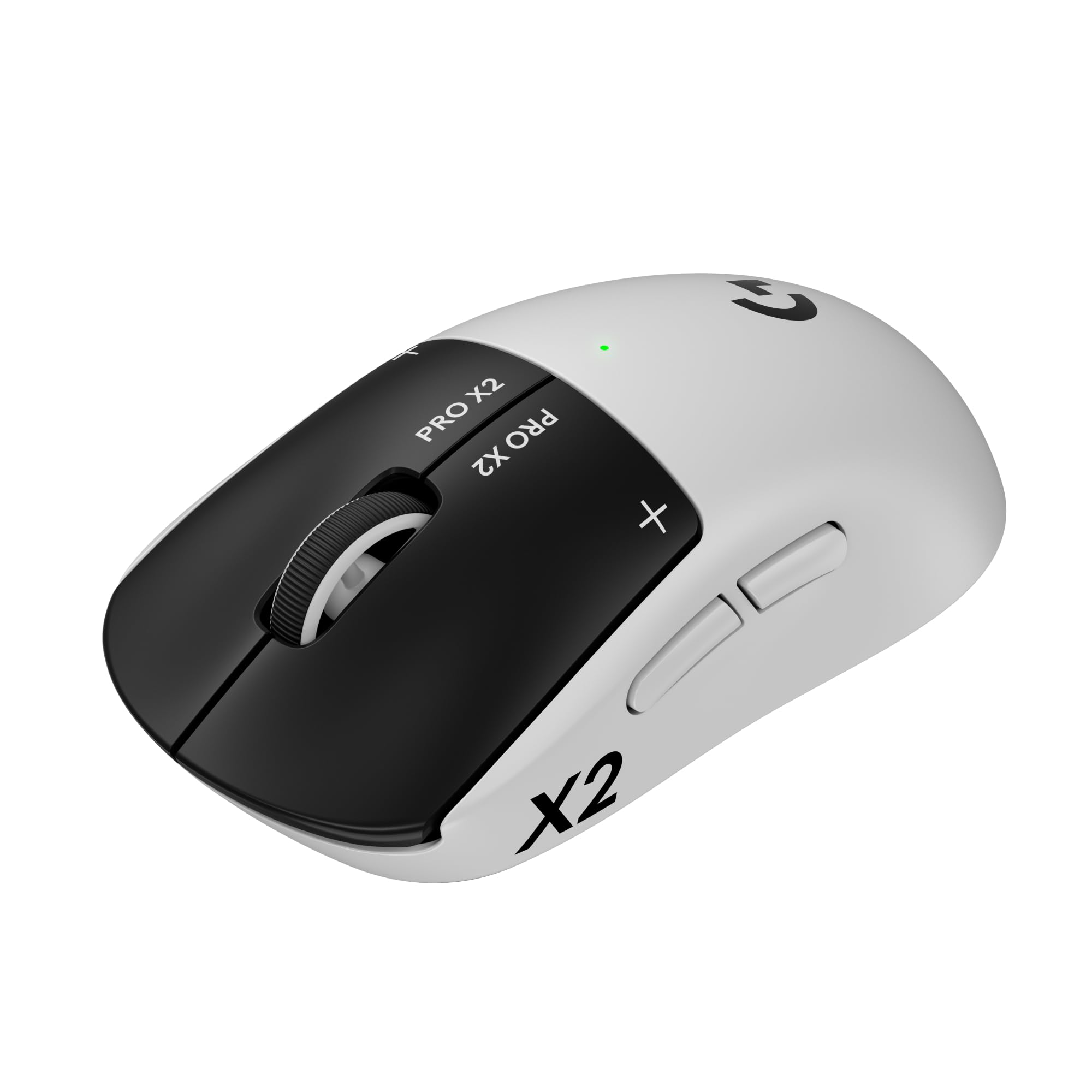
The PRO X2 SUPERSTRIKE represents the current apex of gaming mouse engineering, led by its Haptic Inductive Trigger System (HITS). This magnetic switch design lets you adjust actuation points across 10 levels and sets rapid trigger reset distance—effectively tuning how much travel you need before a click registers. In fast-paced shooters, this translates to faster follow-up shots and less finger fatigue, a genuine competitive advantage.
At 61g, the mouse is heavier than hyper-ultralight models like the Sabre v2, but Logitech compensates with UHMWPE feet that glide with zero friction. The HERO 2 sensor tracks past 888 IPS at up to 44,000 DPI, and the LIGHTSPEED wireless delivers full 8,000 Hz polling without noticeable battery drain—averaging 60 to 90 hours per charge. The thin-wall case feels hollow to some, but no creaks or wobbles emerge even after heavy use.
The primary trade-off is cost: this is a premium-tier investment. Also, the haptic customization requires Logitech G HUB software, meaning you’ll need a quick setup session before you can exploit the adjustable clicks. For serious esports players who value customization over raw minimalism, this is the most forward-thinking mouse in this roundup.
Why it’s great
- Adjustable magnetic click actuation with rapid trigger reset
- Silky UHMWPE feet glide effortlessly on any pad
- Excellent 60-90 hour battery at 8KHz polling
Good to know
- Higher price point within this category
- Requires G HUB software for full feature access
- Some users find 61g not light enough for hyper-fast flicks
2. Razer Viper V4 Pro
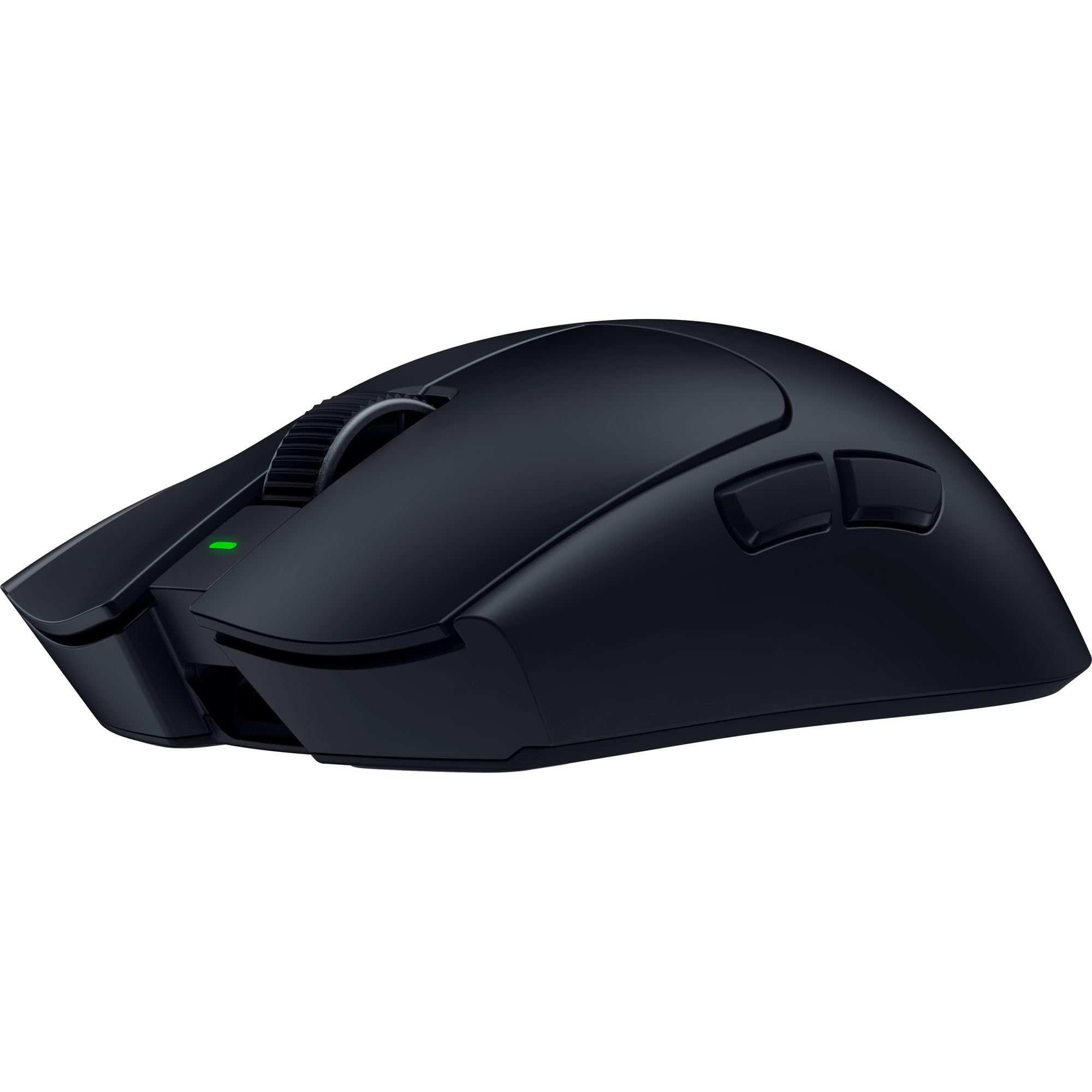
The Viper V4 Pro shatters battery life expectations for a featherweight mouse—up to 180 hours at 1,000 Hz polling. That’s enough for weeks of daily competitive play without reaching for a cable. The 49g symmetrical shell is tuned for claw and fingertip grips, and Razer’s HyperSpeed Wireless Gen-2 delivers 8,000 Hz polling with 55% lower latency than the previous generation.
Inside, the Focus Pro 50K DPI Optical Sensor Gen-3 tracks up to 930 IPS and 90 G acceleration, making it one of the most responsive sensors commercially available. Frame Sync technology aligns sensor data with the PC’s render cycle, reducing perceived input lag. The Gen-4 optical switches feel crisper than earlier optical designs, with a satisfying tactile bump that rivals quality mechanicals.
The symmetrical shape is safe for medium to large hands but lacks the pronounced ergonomic curve of the DeathAdder series. The scroll wheel uses optical actuation, which provides consistent step tracking but feels less tactile than standard mechanical wheels. At its premium price, the Viper V4 Pro earns its keep through sheer endurance and sensor excellence.
Why it’s great
- Industry-leading 180-hour wireless battery life
- 930 IPS tracking with Frame Sync for responsive aim
- 49g symmetrical shell suits claw and fingertip grips
Good to know
- Optical scroll wheel feels less defined than mechanical options
- Black finish is a visible oil magnet during long sessions
- High price point competes directly with Logitech’s flagship
3. GravaStar Mercury X Pro

The Mercury X Pro stands apart visually with its hollow magnesium alloy skeleton—a design that maximizes airflow to keep hands cool during marathon sessions. But beyond its industrial aesthetic lies a competitive beast: the PAW 3950 sensor delivers 32,000 DPI with flawless tracking, and the included 8K Hz dongle pushes polling rates to the limit. At 49g, the rigid metal frame feels surprisingly solid with zero flex.
Tri-mode connectivity (Bluetooth, 2.4 GHz, wired) adds versatility for users who switch between desktop and laptop gaming. The web-based configuration software works without clunky installers, though it doesn’t integrate with other peripheral software ecosystems. RGB lighting is tastefully integrated through the skeleton channels without adding bulk.
Scroll wheel feel is the weakest link—it requires more force than competitors and lacks defined detents for weapon switching. The hollow frame also means less internal damping; clicks resonate louder than solid-shell mice. For gamers who prioritize visual uniqueness and thermals over absolute traditional ergonomics, the Mercury X Pro delivers a truly distinct package.
Why it’s great
- Unique magnesium alloy skeleton reduces heat buildup
- Free-spinning 8K Hz dongle included in box
- Tri-mode connectivity for multi-device setups
Good to know
- Scroll wheel is stiffer than typical esports mice
- Software ecosystem is standalone, not integrated
- Hollow frame creates louder click acoustics
4. Logitech G PRO X Superlight 2

The Superlight 2 is the benchmark that other lightweight mice are measured against, and for good reason. At 60g, it’s not the absolute lightest, but the combination of HERO 2 sensor accuracy (44,000 DPI, 888+ IPS), LIGHTFORCE hybrid switches, and zero-additive PTFE feet delivers a balanced, proven feel that esports pros have validated across titles. The 95-hour battery life easily outlasts a week of heavy play.
Build quality is superb—no side play, no creaking, and the matte coating resists fingerprints better than glossy alternatives. The shape is ambidextrous but favors right-handed claw and fingertip grips with its low-profile hump. Setup through G HUB is straightforward, and on-board memory saves your DPI and polling profiles without software running in the background.
Lacks the customizable haptic triggers of the PRO X2 Superstrike, and the 8,000 Hz polling mode draws noticeably more power, shortening battery life. Some users also note that the main clicks feel slightly hollow compared to denser mice. Still, the Superlight 2 remains the gold standard for a reason—it simply works perfectly out of the box.
Why it’s great
- Flawless HERO 2 sensor with zero smoothing at any DPI
- 95-hour real-world battery life at 1KHz polling
- Proven shape with thousands of professional tournament hours
Good to know
- 8KHz polling drains battery significantly faster
- Click feel is slightly hollow compared to premium mechanicals
- No adjustable actuation or rapid trigger features
5. Razer DeathAdder V3 HyperSpeed

The DeathAdder V3 HyperSpeed delivers the iconic right-handed ergonomic shape that has defined Razer’s lineup for years, now slimmed to 55g. The contoured body fills the palm naturally for relaxed grip styles, and the smooth-touch coating provides a secure hold without added grip tape. Unlike the Pro version, this HyperSpeed variant uses a single AA battery or internal rechargeable cell—resulting in an impressive 100-hour battery life at 1,000 Hz.
The Focus X 26K Optical Sensor tracks at 99.6% resolution accuracy, and the Gen-3 Optical Switches actuate in 0.2ms with zero debounce delay. The symmetrical side button placement remains exclusive to the right-handed curve, so left-handed users will want to look at ambidextrous alternatives. Performance in titles like Valorant and CS2 feels immediate and connected.
Some units exhibit a slightly hollow left-click return that can hinder rapid tapping. The scroll wheel lacks the defined steps found on the Viper series, which can be less precise for weapon selection. For those who value palm-filling comfort over symmetrical efficiency, the V3 HyperSpeed is a standout mid-range pick.
Why it’s great
- Class-leading ergonomic shape for palm and claw grips
- 100-hour battery life out of a 55g wireless frame
- Snappy 0.2ms optical switches with no double-click risk
Good to know
- Left click feels hollow on some units, slows rapid tapping
- Right-handed only—not suitable for left-handed users
- Scroll wheel lacks tactile definition for precise steps
6. Corsair Sabre v2 PRO Ultralight
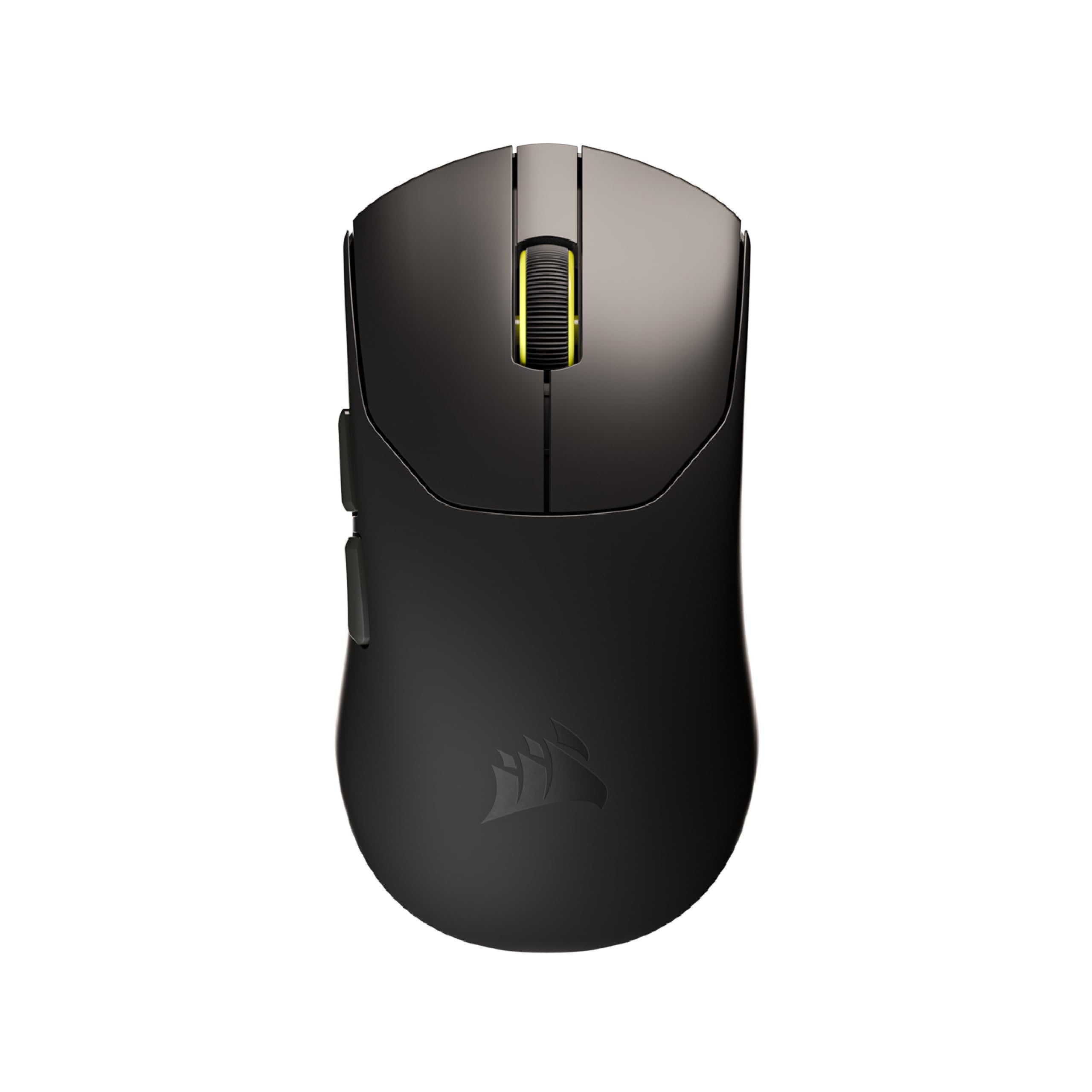
At 36g, the Sabre v2 PRO Ultralight is the featherweight king of this list. Corsair achieved this through aggressive shell drilling and ultra-thin wall construction, making it the ideal tool for players who want maximum agility for 180-degree flicks and fast target acquisition. The MARKSMAN S sensor offers true 33,000 DPI tracking with 750 IPS speed and 50G acceleration, more than enough for any competitive title.
The 8,000 Hz hyper-polling delivers latency-defying input, though as seen with other high-polling mice, it can drain battery faster—70-hour estimates drop sharply at the highest polling rate. Included grip tape adds texture for sweaty hands, and the included extra mouse skates are a thoughtful touch. The ambidextrous shape is narrow, making it better for medium and small hands.
Build quality concerns exist—the ultra-light construction can feel flimsy compared to more rigid competitors. The lack of native iCUE software at launch means customization is limited to web-based controls until Corsair pushes the update. For FPS players willing to accept some trade-offs in build density for raw speed, this is the lightest functional option available.
Why it’s great
- Extremely 36g weight for fastest possible flick speed
- 8,000 Hz hyper-polling for sub-millisecond input delivery
- Includes grip tape and extra skates for customization
Good to know
- 8KHz polling drains battery rapidly in practice
- Ultra-thin shell feels less premium than denser mice
- iCUE software support is pending, no native customization yet
7. GLORIOUS Model D Wireless

The Model D Wireless brings ergonomic comfort to the budget-friendly segment without sacrificing core performance. The right-handed shape is specifically contoured for medium to large hands using palm or claw grips, with a prominent hump that fills the hand naturally. At 69g, it’s heavier than premium featherweights but still light enough for extended play sessions without fatigue.
The BAMF sensor (PixArt 3370 derivative) tracks at 19,000 DPI with 400 IPS speed and 1,000 Hz polling—adequate for most competitive play, though lacking the ceiling of newer 8,000 Hz implementations. Battery life is rated at 71 hours with RGB off, and real-world testing shows closer to 48 hours under typical use, which is still solid for a wireless mouse at this level.
Build quality is generally good, but some units exhibit side play in the main clicks and button wobble on the side switches. There’s no onboard storage for the USB receiver, which is a minor annoyance. The GLORIOUS CORE software is intuitive and allows full customization. For gamers on a budget who still want a real ergonomic shape and wireless freedom, the Model D Wireless delivers a practical entry point.
Why it’s great
- Comfortable right-handed ergonomic shape for palm/claw grip
- Solid 19K DPI sensor with 400 IPS tracking
- Competitive wireless performance at a budget-friendly price
Good to know
- Battery life underperforms the 71-hour claim
- Some side play in main clicks and button wobble
- No onboard USB receiver storage
FAQ
Should I prioritize polling rate or DPI for competitive FPS gaming?
Can I use a 36g ultralight mouse for MOBA or RTS games?
Do optical switches really last longer than mechanical ones?
Final Thoughts: The Verdict
For most users, the best gaming mice under $800 winner is the Logitech G PRO X2 SUPERSTRIKE because its magnetic inductive triggers with adjustable actuation represent the most forward-thinking click technology available today, paired with proven lightweight engineering and top-tier wireless performance. If you want marathon battery life and an ambidextrous featherweight feel, grab the Razer Viper V4 Pro. And for a budget-friendly ergonomic wireless performer that won’t break the bank, nothing beats the GLORIOUS Model D Wireless.