
L-Citrulline is a non-essential amino acid that plays a central role in the urea cycle and, more importantly for athletes, the production of nitric oxide. However, every supplement shelf is crowded with powders claiming superiority, and the real distinction comes down to two molecules: pure L-Citrulline and L-Citrulline Malate. The form you choose directly dictates your dosage accuracy, the bioavailability of the compound, and the presence or absence of the tart malic acid that can either boost ATP resynthesis or mask a weaker dose.
I’m Mohammad Maruf — the founder and writer behind Drink4Good. I’ve spent years dissecting the raw material sourcing, third-party testing protocols, and molar-ratio differences that separate a clinically effective supplement from an overpriced tub of filler.
Whether you are chasing massive muscle pumps or supporting circulatory health, the best form of l-citrulline is the one that matches the intended dose to the cleanest raw ingredient available, free of synthetic dyes and animal-derived processing agents.
How To Choose The Best Form Of L-Citrulline
Two distinct molecular forms dominate the market: pure L-Citrulline and L-Citrulline Malate, the latter being a bonded compound of the amino acid and malic acid. The choice between them affects your actual gram intake of the active amino acid, the presence of a sour flavor profile, and the potential for a secondary energy benefit from the malate component.
Pure L-Citrulline vs. L-Citrulline Malate
A scoop that reads “6 grams of L-Citrulline Malate 2:1” delivers roughly 4 grams of L-Citrulline and 2 grams of malic acid. Pure L-Citrulline, by contrast, delivers the full label weight as the amino acid. If your primary goal is maximum nitric oxide output per gram of powder, pure L-Citrulline is the efficient choice. If you want the added ATP-recycling benefit of malic acid during high-rep sets, the malate form is worth the slightly lower citrulline density.
Source and Production Method
Most commercial L-Citrulline is produced via chemical synthesis or fermentation. Fermentation-derived powders, often labeled as plant-based or vegan, avoid the use of animal hair and fur as starting material — a common but rarely discussed industry practice. Third-party testing for banned substances provides an additional layer of trust for athletes subject to drug screening.
Dosage and Servings Per Container
Effective dosing for performance typically falls between 3 and 6 grams of L-Citrulline. A container with smaller servings per gram (e.g., 50 servings of a 6-gram Malate powder) may appear cheaper upfront but costs more per effective amino acid dose than a larger container of pure powder. Always calculate the milligrams of actual L-Citrulline per serving, not the total weight of the blend.
Quick Comparison
On smaller screens, swipe sideways to see the full table.
| Model | Category | Best For | Key Spec | Amazon |
|---|---|---|---|---|
| Kaged L-Citrulline Powder | Pure | Vegan purity & highest dose per scoop | 100% plant-based fermentation | Amazon |
| Doctor’s Best L-Citrulline Powder | Pure | Circulatory health & muscle recovery | 3g pure citrulline per scoop | Amazon |
| Type Zero L-Citrulline Malate 2:1 | Malate | Intense pumps & endurance | 6g serving with 2:1 ratio | Amazon |
| Nutricost L-Citrulline Malate 2:1 | Malate | Refreshing flavor & daily endurance | Strawberry Kiwi flavored | Amazon |
| PuriSure L-Citrulline Powder | Malate | Budget-friendly bulk option | 83 servings per container | Amazon |
In‑Depth Reviews
1. Kaged L-Citrulline Powder
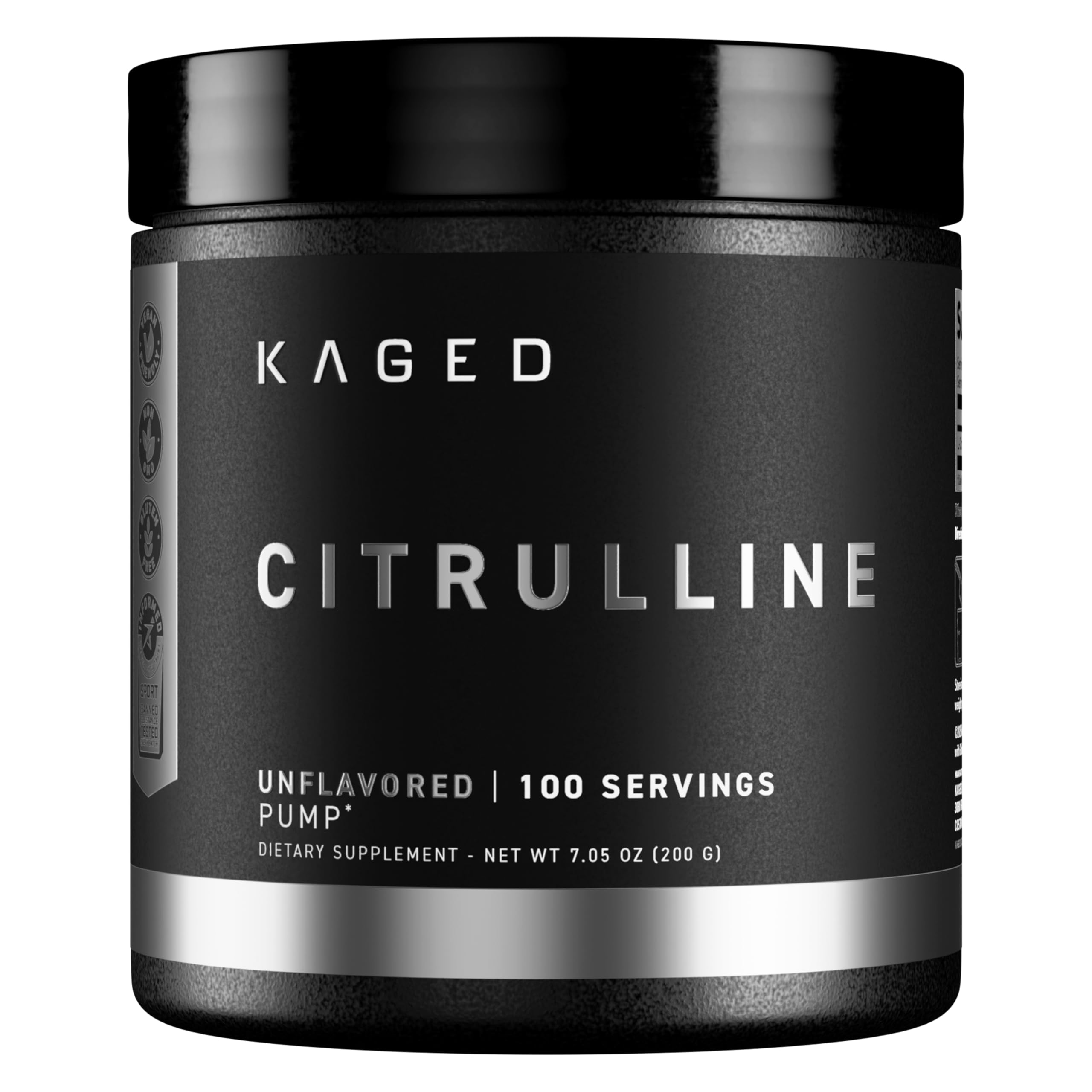
Kaged stands out because its L-Citrulline is 100% plant-based, produced through a fermentation process that completely avoids the animal hair and fur derivatives common in budget citrulline. Each 3.5-gram scoop delivers pure amino acid without the malic acid dilution, so you get the maximum nitric oxide potential per gram of powder.
Users consistently report easy mixing — the powder dissolves cleanly in water or coffee with no clumping — and the complete absence of flavor makes it a universal addition to any pre-workout stack. The 100-serving count for a tub of this size provides excellent value for daily dosing at the 3-gram level.
Third-party testing for banned substances adds confidence for competitive athletes. The only functional tradeoff is the lack of malic acid, which some users prefer for the ATP-recycling benefit during high-volume training sessions.
Why it’s great
- 100% vegan fermentation source — no animal-derived inputs
- Full 3.5g pure L-Citrulline per serving, no malate dilution
- Completely tasteless and mixes without residue
Good to know
- Does not include the malic acid component for ATP recycling
- Premium positioning compared to standard citrulline malate blends
2. Doctor’s Best L-Citrulline Powder
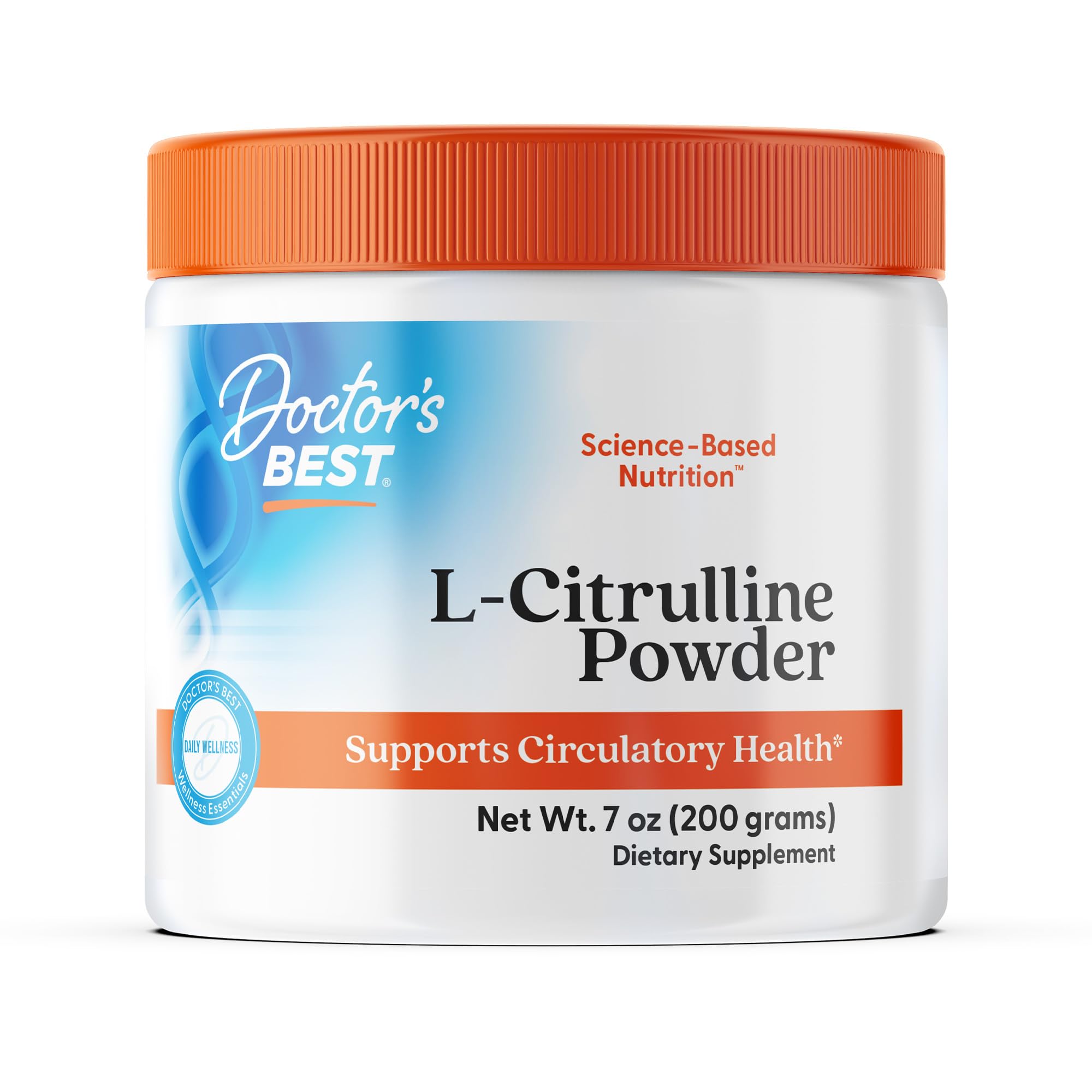
Doctor’s Best formulates its L-Citrulline at a 3,000 milligram dose per scoop, using a pure, unflavored powder that is certified non-GMO, gluten-free, soy-free, and vegan. The brand’s reputation rests on over 35 years of supplement research, and the label transparency here is excellent — there are no proprietary blends or hidden fillers.
User feedback consistently points to noticeable improvements in circulation and a reduction in post-exercise muscle soreness when taken 30–45 minutes before training. Several long-term users report that the effects on vascularity and energy become more pronounced after several weeks of consistent daily use, suggesting a cumulative benefit on endothelial function.
The container holds slightly fewer servings than some bulk options, and the price per gram of citrulline is higher than the malate blends. However, because this is pure citrulline, you are paying for the amino acid itself rather than a mix of citrulline and malic acid.
Why it’s great
- Clinically researched 3g dose in a single scoop
- Certified non-GMO, gluten-free, soy-free, and vegan
- Unflavored formulation mixes easily into any drink
Good to know
- Higher per-gram cost compared to malate blends
- Container size results in fewer total servings than bulk tubs
3. Type Zero L-Citrulline Malate 2:1

Type Zero’s L-Citrulline Malate uses the preferred 2:1 ratio, meaning a 6-gram scoop supplies approximately 4 grams of L-Citrulline and 2 grams of malic acid. The malic acid component supports the Krebs cycle for ATP regeneration, which translates to extended time to exhaustion during high-rep sets or prolonged cardio sessions.
The powder arrives unflavored by design, but users consistently report a naturally sour, citrus-like taste — a direct effect of the malic acid content. Many reviewers mix it with a sweetened beverage or use a straw to bypass the intense sourness. The 50-serving count is appropriate for a five-day-per-week training schedule, lasting roughly ten weeks.
Several users note that the sour intensity can overpower other flavors if mixed into a protein shake, so water or a citrus-based drink is the best carrier. The dosing flexibility allows users to increase to 8 grams for higher-end endurance work, though the sourness scales proportionally.
Why it’s great
- 2:1 ratio provides both citrulline and ATP-recycling malate
- Supports extended workout duration beyond 45 minutes
- No fillers or artificial ingredients
Good to know
- Naturally sour taste may be off-putting for some users
- Only 50 servings per container at the standard 6g dose
4. Nutricost L-Citrulline Malate 2:1
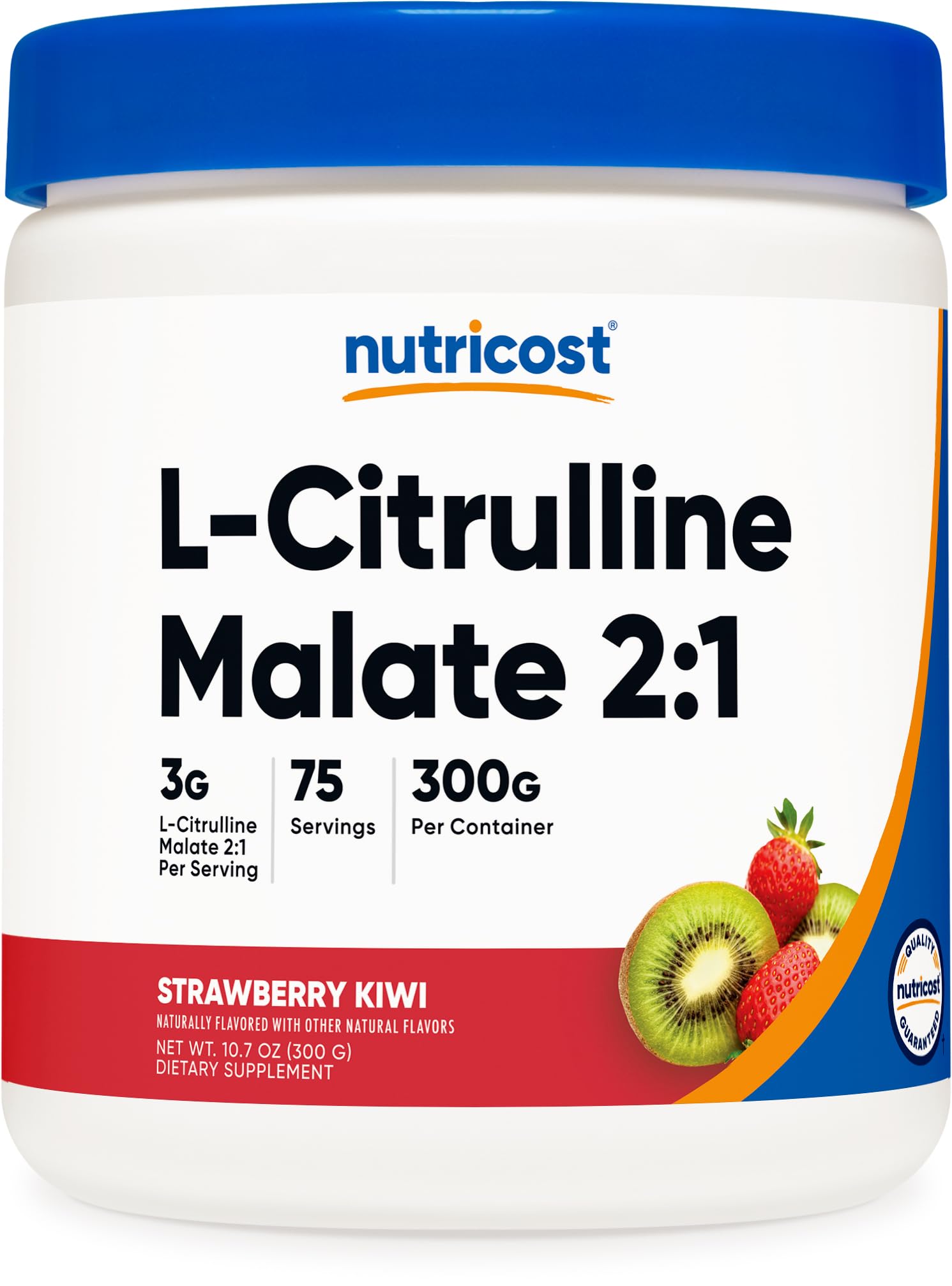
Nutricost’s offering is a flavored L-Citrulline Malate 2:1 in Strawberry Kiwi, which masks the inherent sourness of malic acid without adding excessive artificial sweetness. Each 3-gram scoop delivers half the amino acid dose of the Type Zero product, making this a better fit for users who prefer smaller, more frequent servings throughout the day rather than a single pre-workout blast.
Users who drink this in 48 ounces of water across multiple servings report sustained endurance improvements without the overwhelming sour punch. The flavor is described as refreshing rather than cloying, and the solubility is high — no gritty residue at the bottom of the shaker. The 300-gram container provides approximately 100 servings at the standard dose.
The 3-gram serving size means that users aiming for a full 6-gram pre-workout dose will need two scoops, which halves the effective servings. However, the flavor profile makes this a palatable option for those who find unflavored or sour powders difficult to tolerate on a daily basis.
Why it’s great
- Pleasant Strawberry Kiwi flavor masks malic acid sourness
- Non-GMO and manufactured in a GMP-compliant facility
- Smaller 3g scoop allows flexible daytime dosing
Good to know
- Requires two scoops for a full 6g pre-workout dose
- Flavored powder limits mixing options with other supplements
5. PuriSure L-Citrulline Powder 250g
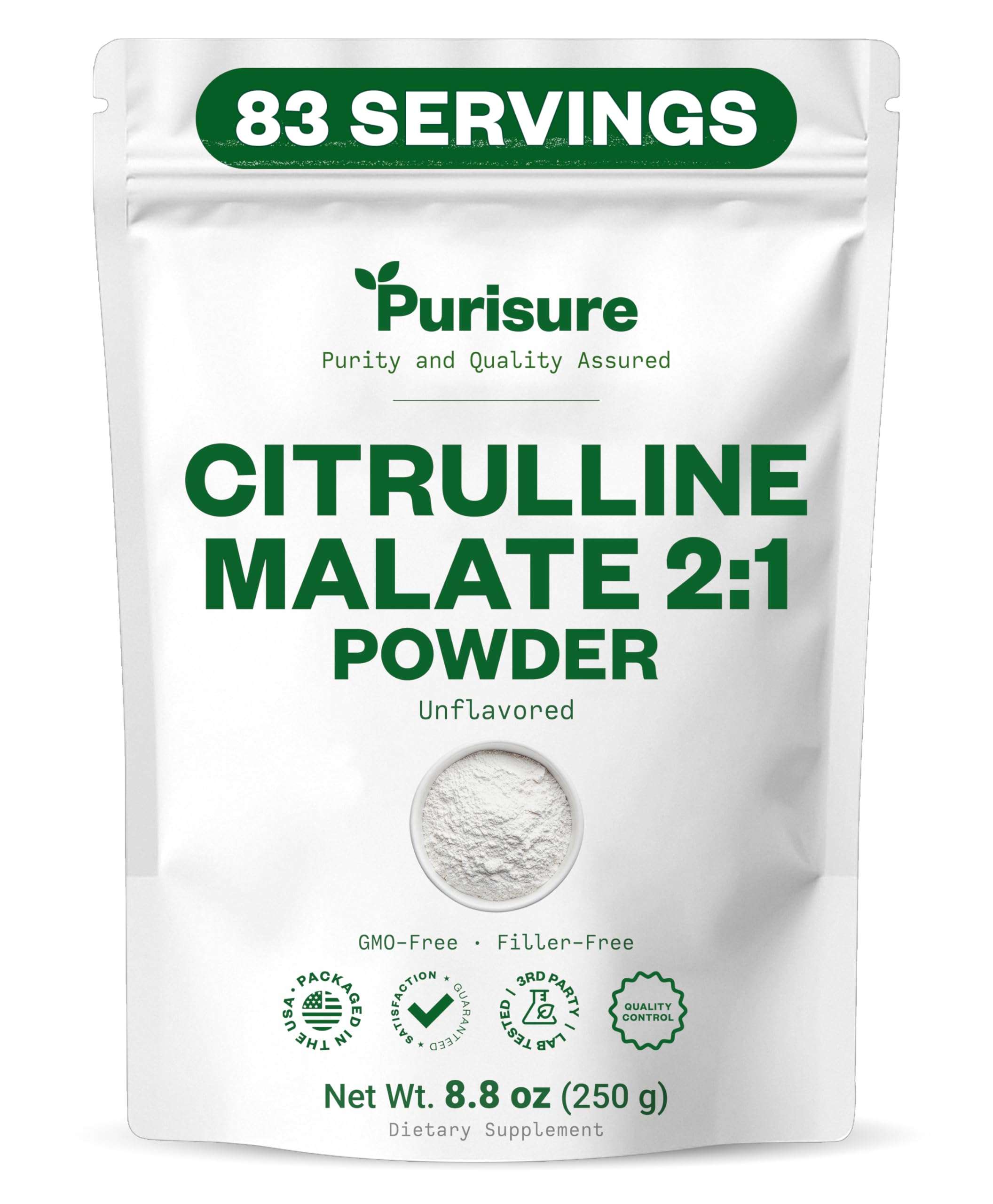
PuriSure provides a 250-gram container of L-Citrulline Malate 2:1 at a 3-gram serving size, yielding approximately 83 servings. The unflavored powder contains no fillers, additives, or artificial flavors, making it a straightforward bulk option for users who already have their own mixing preferences.
User reports highlight improved vascularity and stable energy during weightlifting sessions, with several reviewers pairing it with beta-alanine for the classic pump-and-tingle pre-workout experience. The powder dissolves reasonably well in water, though the natural sourness of malic acid is present — users who dislike the taste often mix it with a sweetened beverage.
One isolated report of elevated liver enzymes in combination with other supplements is worth noting, though no causal link is established. The low entry cost per container makes this an accessible starting point for newcomers to citrulline supplementation who want to test the effects before committing to a larger tub.
Why it’s great
- 83 servings provide excellent longevity per container
- No fillers, additives, or artificial flavors
- Low cost per serving for budget-conscious users
Good to know
- Unflavored powder still carries malic acid sourness
- Some users report digestive sensitivity at higher doses
FAQ
Is pure L-Citrulline better than L-Citrulline Malate for pumps?
What does the 2:1 ratio on L-Citrulline Malate labels mean?
Can I take L-Citrulline on an empty stomach?
Final Thoughts: The Verdict
For most users, the best form of l-citrulline winner is the Kaged L-Citrulline Powder because it delivers pure, fermentation-derived citrulline without animal-based processing agents, providing the highest amino acid dose per gram of powder. If you want the ATP-recycling benefit of malic acid for longer training sessions, grab the Type Zero L-Citrulline Malate 2:1. And for a budget-friendly bulk option with over 80 servings, nothing beats the PuriSure L-Citrulline Powder.