
Finding a game that captures attention without causing frustration is the central challenge when caring for a loved one with memory loss. The right activity provides a moment of calm, a spark of recognition, and a gentle sense of accomplishment that brightens the entire day.
I’m Mohammad Maruf — the founder and writer behind Drink4Good. I analyze market trends and hardware specifications across therapeutic and lifestyle categories to identify products built for real-world, compassionate care.
From oversized puzzle pieces designed for unsteady hands to card games with high-contrast imagery, this guide breaks down the best options available. Explore the curated selection of games for alzheimer’s patients designed to provide cognitive stimulation and meaningful engagement for your loved one.
How To Choose The Best Games For Alzheimer’s Patients
Selecting a game for someone with Alzheimer’s requires shifting focus from competition to connection. The primary goal is to reduce anxiety and spark a positive sensory or cognitive experience without demanding high-level recall or complex rules. The ideal game accommodates a short attention span, offers tactile satisfaction, and avoids anything that feels childish or demeaning. Below are the key factors to weigh before making a purchase.
Piece Size and Ease of Handling
For individuals with reduced dexterity or tremors, standard puzzle pieces and playing cards can be a source of frustration. Look for games with large, thick components—puzzle pieces measuring roughly 4 to 5 inches in length and cards with a sturdy laminate. A textured surface can also improve grip, making the act of picking up and placing a piece far less stressful.
Visual Clarity and Contrast
Cognitive decline often affects vision. High-contrast colors, simple imagery, and distinct shapes between pieces help a user focus on the task rather than struggling to decipher the image. Games that use bold, recognizable subjects—animals, flowers, familiar landscapes—tend to elicit stronger moments of recognition and recall than abstract designs.
Complexity and Adaptability
The best games for this category offer multiple difficulty levels or a straightforward, repetitive mechanic. A system that allows the caregiver to adjust the challenge—such as starting with a 6-piece puzzle before moving to a 24-piece set—ensures the activity grows with the user’s ability. Avoid games that rely on remembering sequences, timed moves, or turn-based pressure, as these can quickly trigger agitation.
Quick Comparison
On smaller screens, swipe sideways to see the full table.
| Model | Category | Best For | Key Spec | Amazon |
|---|---|---|---|---|
| Keeping Busy 3-in-1 Puzzle | Premium Puzzle | Progressive cognitive challenge | Matching layers + discussion guide | Amazon |
| WSCXSC 6-Pack 24-Piece Puzzle | Premium Puzzle | Visually rich, non-childish imagery | 24 large pieces at 0.1-inch thick | Amazon |
| WSCXSC 6-Pack 16-Piece Puzzle | Mid-Range Puzzle | Entry-level, confidence-building play | Embossed texture for easy grip | Amazon |
| Relish Animal Snap Card Game | Card Game | Social group play with familiar animals | 3 game modes: Snap, Pairs, Full House | Amazon |
| SEQUENCE Original Game | Board Game | Intergenerational family game night | 2-12 players, strategy + luck balance | Amazon |
In‑Depth Reviews
1. Keeping Busy 3-in-1 Numbered Dementia Puzzles
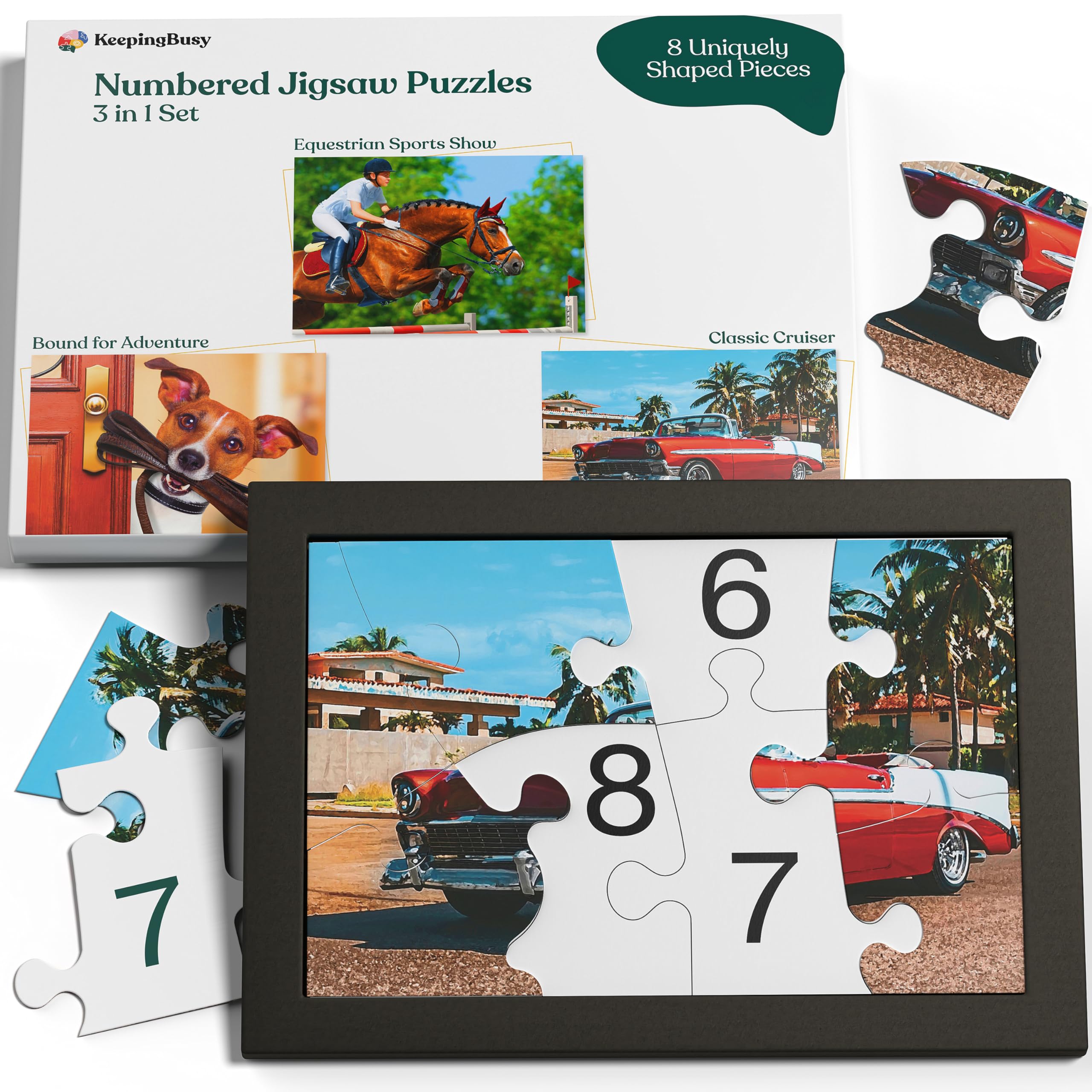
This premium set from Keeping Busy stands out because it treats cognitive stimulation as a layered process rather than a single activity. The user first assembles 6 giant puzzle pieces to form a base board, then matches 18 additional pieces on top using outlines or color-coded dots. This two-tier mechanic provides a gentle ramp in difficulty, allowing caregivers to adjust the challenge as the user’s attention and skill fluctuate.
The pieces themselves are thick and easy to grasp, and the set includes a discussion guide with prompts about the image subjects—kittens, flowers, and serene landscapes. These prompts turn the puzzle into a conversational tool, encouraging reminiscence and verbal engagement. Multiple reviewers noted that mid-stage Alzheimer’s patients stayed focused on the task for 45 minutes or more, which is a meaningful stretch of calm for both the user and the caregiver.
One minor critique from a reviewer pointed out large areas of single-color background (a stretch of brown above kittens) that confused their family member. While the overall design is strong, caregivers may want to preview the images to ensure sufficient contrast in the specific puzzle their loved one will use first.
Why it’s great
- Progressive difficulty with color-coded back matching
- Includes discussion prompts for verbal engagement
- Large, thick pieces ideal for reduced dexterity
Good to know
- Some images have large single-color areas that reduce contrast
- Premium price point reflects the specialized design
2. WSCXSC 6-Pack 24-Large Piece Puzzles
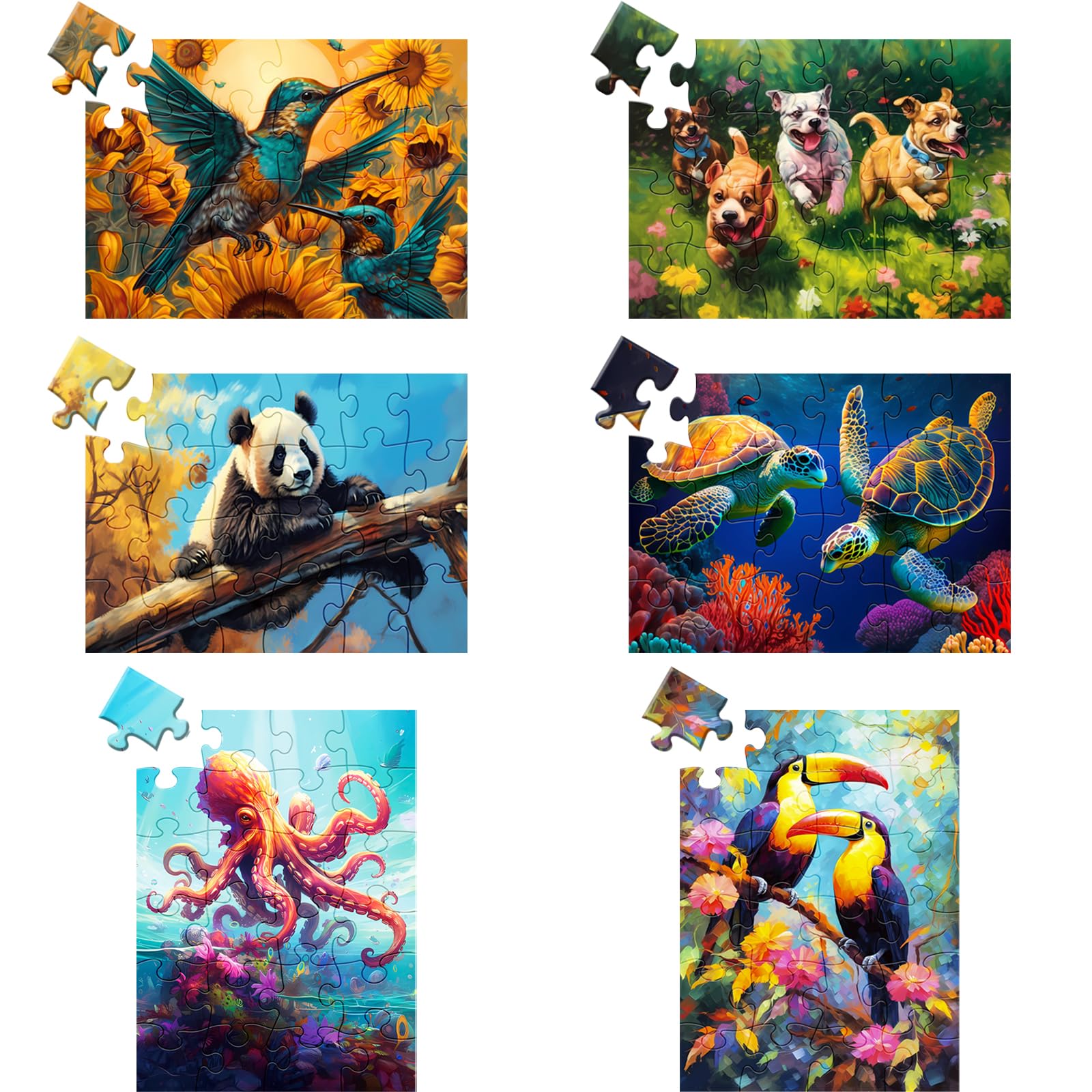
Where this puzzle set excels is in the quality and dignity of its imagery. The subjects—hummingbirds, turtles, dogs, and pandas—are rendered with vibrant color and high contrast, steering clear of cartoons or childish themes. Each piece measures approximately 5 inches in length and is 0.1 inches thick, making them easy to pick up, align, and press into place without the pieces bending or fraying.
The 24-piece count strikes a careful balance. It is challenging enough to feel like a meaningful activity for someone in early to mid-stage dementia, yet not so overwhelming that it causes frustration. Each puzzle ships with a full-size reference poster that matches the exact dimensions of the completed puzzle, allowing the user to build directly on top of the picture—a feature that significantly reduces the cognitive load of spatial assembly.
Reviewers consistently praise the packaging and presentation. The puzzles come in a sturdy box with individual storage bags, and the product packaging makes no mention of dementia or Alzheimer’s, preserving the recipient’s dignity when the gift is opened. A small note: the 24-piece level may be too advanced for users with advanced-stage Alzheimer’s, where 6 to 12 pieces are a safer starting point.
Why it’s great
- High-contrast, non-childish imagery preserves dignity
- Full-size reference poster supports guided assembly
- Durable cardboard pieces resist wear and bending
Good to know
- 24 pieces may be too many for advanced-stage users
- No embossed texture for additional grip
3. WSCXSC 6-Pack 16-Large Piece Puzzles

This set is the entry-level champion of the lineup, designed explicitly for users who need the gentlest possible cognitive lift. The 16-piece count is low enough to guarantee a feeling of success, yet the pieces are large enough—each about 5 inches long and 0.1 inches thick—to still feel substantial in the hands. The standout feature here is the unique embossing process on each piece, which adds a subtle raised texture that dramatically improves grip for individuals with tremors or arthritis.
The subjects lean toward bright botanical and animal scenes that are cheerful without being patronizing. A 1:1 instructional guide is included with each puzzle, allowing the user to place pieces directly onto the guide image, removing the need for abstract spatial matching. Reviewers from assisted living facilities report that these puzzles are a staple in their activity rooms because they require minimal supervision and hold attention reliably for 20–30 minute sessions.
One trade-off is the variety of images. Some users noted that the images, while pleasant, feel slightly less sophisticated than the 24-piece set from the same manufacturer. The storage bags are functional but thin; a more robust container would better protect the puzzles during long-term use in a group setting.
Why it’s great
- Embossed texture provides superior grip for unsteady hands
- 16-piece count ensures quick wins and reduced frustration
- 1:1 guide eliminates need for spatial reasoning
Good to know
- Imagery is less sophisticated than the 24-piece variant
- Storage bags are not heavy-duty for frequent packing
4. Relish Animal Snap Card Game
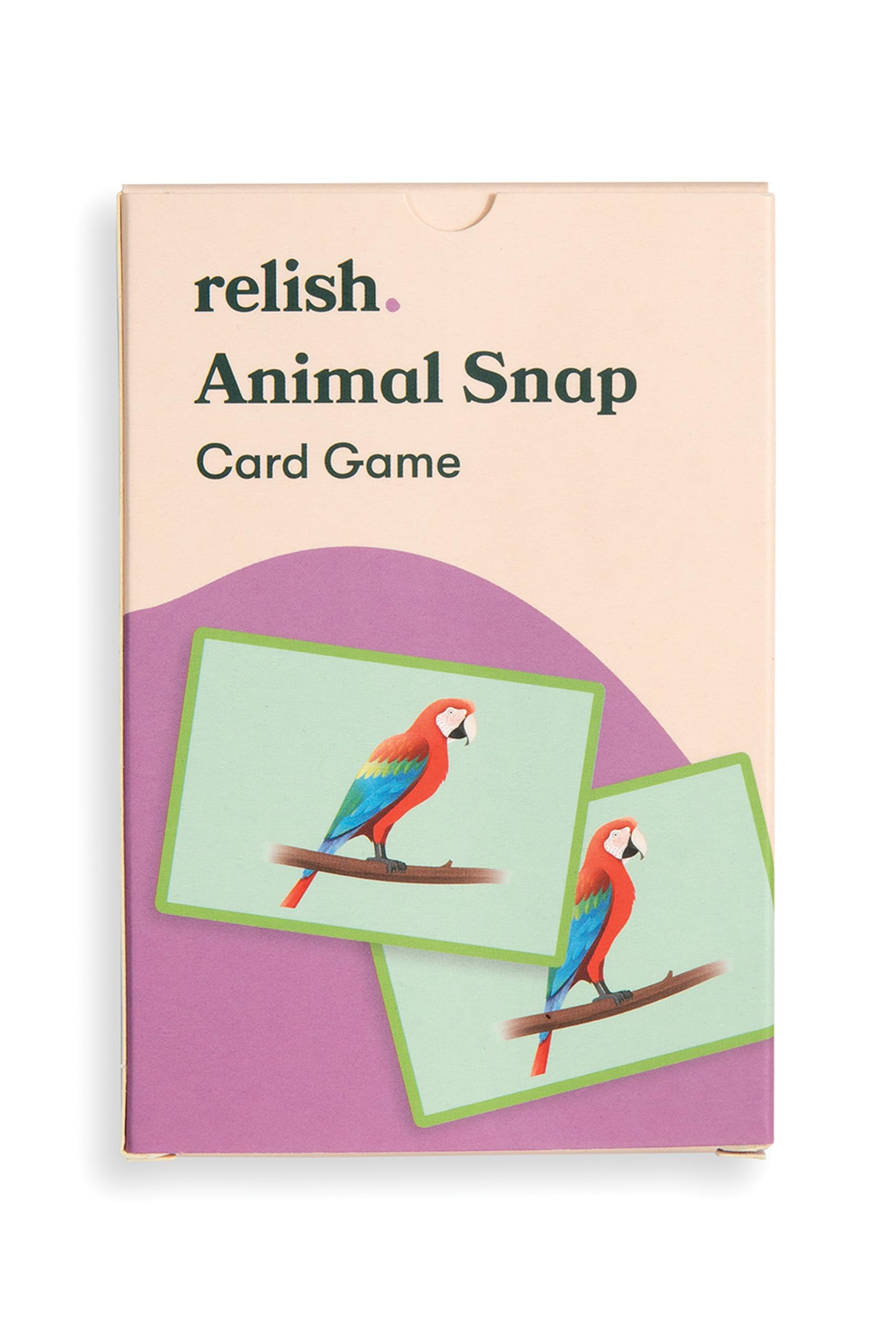
For caregivers who want a group activity that fosters social interaction rather than solitary focus, the Relish Animal Snap Card Game delivers. The set includes three distinct card games—Snap, Pairs, and Full House—each with different rules that can be matched to the user’s cognitive level. The cards feature large, easily recognizable animal images in bold, contrasting colors against a clean background, minimizing visual confusion.
The card stock is a thick, matte-laminated material that resists bending and is easy to clean if spills happen. This is a practical consideration for nursing home environments where hygiene is a priority. The brand, Relish, has been designing dementia-specific activities since 2011, and it shows in the thoughtful packaging—the box makes no mention of dementia or Alzheimer’s on the exterior, preserving the recipient’s dignity.
The main limitation is the ceiling of engagement. For someone in early-stage dementia, the games may feel too simple after a few rounds. The snap mechanic, while fun in bursts, can feel repetitive for longer sessions. This is best used as a 15–20 minute social warmer, not an hour-long activity. One caregiver noted that the cards held their loved one’s attention for a “good while,” but not indefinitely.
Why it’s great
- Three game modes allow complexity adjustment
- Thick, matte-laminated cards are durable and easy to clean
- High-contrast animal images minimize visual strain
Good to know
- May feel too simple for early-stage Alzheimer’s users
- Best suited for short, social group sessions
5. SEQUENCE Original Game by Jax
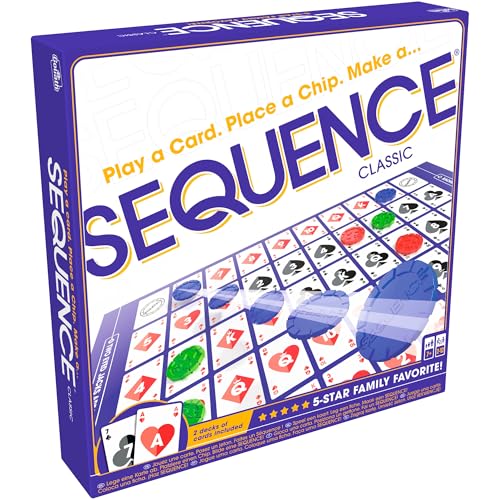
SEQUENCE is the outlier on this list because it is not a dementia-specific product. However, its blend of simple rules, minimal reading, and team-based play makes it a surprisingly effective intergenerational game that includes an Alzheimer’s patient without singling them out. Each player draws a card from their hand and places a colored chip on the matching space on the board. The goal is to form a row of five chips, which requires both luck in the draw and a basic level of strategic planning.
The board uses large, clear spaces and the icons on the board match the card images exactly, removing the need for word recognition. For individuals in earlier stages who can still recognize patterns, the physical act of placing chips on the board provides a satisfying tactile component. The game also supports team play, so two or three family members can play together, allowing the Alzheimer’s patient to participate without the pressure of managing their own turn sequence.
The complexity must be carefully assessed. The standard rules require a moderate level of strategic thinking. For someone with mid-stage Alzheimer’s, the number of options on the board may cause confusion. Caregivers may need to modify the rules—such as reducing the target sequence length or removing the “Jack” special cards. This is a great choice for a family game night where multiple cognitive levels are present, but it is not a dedicated therapeutic tool.
Why it’s great
- No reading required; uses image matching for play
- Team mode allows inclusive play without pressure
- Durable board and chips withstand frequent use
Good to know
- Strategic complexity may overwhelm mid-stage users
- Not a dedicated dementia activity; requires rule modification
FAQ
How many puzzle pieces should I start with for someone with late-stage Alzheimer’s?
Are regular board games like SEQUENCE suitable for someone with memory loss?
Final Thoughts: The Verdict
For most users, the games for alzheimer’s patients winner is the Keeping Busy 3-in-1 Puzzle because it adapts to the user’s changing abilities through its layered matching system and includes a discussion guide for verbal engagement. If you want beautiful, non-childish imagery that respects the user’s dignity, grab the WSCXSC 6-Pack 24-Piece Puzzle. And for cost-effective, high-grip entry-level play, nothing beats the WSCXSC 6-Pack 16-Piece Puzzle.