
A go bag first aid kit is your lifeline when every second counts — whether you’re evacuating during a wildfire, responding to a car accident on a remote highway, or treating a deep cut miles from the trailhead. This isn’t the dusty plastic box under the kitchen sink; it’s a deliberately packed survival asset designed for mobility, speed, and real trauma response.
I’m Mohammad Maruf — the founder and writer behind Drink4Good. I’ve spent years analyzing emergency preparedness gear, breaking down the difference between a cheap kit that shreds in the rain and a properly assembled system that stops bleeding, stabilizes fractures, and keeps you warm through the night.
After combing through hundreds of user reports and technical specs, I’ve narrowed the field to the seven most capable kits available today. Here is a definitive evaluation of the best go bag first aid kit options for hikers, drivers, and families who refuse to be caught unprepared.
How To Choose The Best Go Bag First Aid Kit
A go bag first aid kit must satisfy three conflicting demands: it has to be small enough to grab mid‑panic, complete enough to treat moderate trauma, and rugged enough to survive being tossed into a trunk or stuffed under a seat for months. Most beginners grab the biggest piece count they see — that’s often a mistake. Below are the real decision points.
Prioritize Hemorrhage Control Over Band‑Aids
A kit with 300+ bandages and no tourniquet is useless for the top cause of preventable death in emergencies: severe bleeding. Look for a genuine tourniquet (not a cheap knock‑off that snaps), hemostatic gauze or trauma pads, and a chest seal if respiratory injuries are a risk in your environment. These items weigh almost nothing but change survival odds drastically.
Case Material and Closure Hardware
Cheap nylon splits at the seam after a year in a hot car. The best go bag kits use 600D or 1000D ripstop fabric with double‑stitched stress points and metal YKK or comparable zippers. A MOLLE back panel adds modularity so you can attach your kit to a backpack, vest, or vehicle seatback without losing cargo space. Water resistance — not waterproofing — is the practical minimum.
Labeling and Layout Under Stress
When adrenaline surges, you won’t read tiny font inside a dark bag. Kits with labeled compartments, color‑coded pouches, or a built‑in organization system let you grab the correct item without pulling everything out. Avoid deep, undivided sacks that become a jumble after one use.
Quick Comparison
On smaller screens, swipe sideways to see the full table.
| Model | Category | Best For | Key Spec | Amazon |
|---|---|---|---|---|
| GEVOKE 500 Piece | Premium | Family/household go bag | 500 pieces, 1680D polyester shell | Amazon |
| RHINO RESCUE Survival | Premium | Compact vehicle/prepper kit | 124 pieces, 600D oxford nylon MOLLE | Amazon |
| Abpir 318 PCS Survival | Mid-Range | Multi‑tool & medical combo | 318 pieces, 1000D nylon MOLLE bag | Amazon |
| Pasenhome Labeled Kit | Mid-Range | Organized car/dorm kit | 20 rapid‑response labeled compartments | Amazon |
| TLIEAO 330 Piece First Aid | Mid-Range | High volume at medium cost | 330 pieces, 1680D waterproof shell | Amazon |
| XUANLAN 248 piece Kit | Budget | Entry‑level outdoor/camping | 248 pieces, 600D nylon MOLLE pouch | Amazon |
| Adventure Medical Hiker | Budget | Ultralight backcountry trips | Wilderness medicine guidebook included | Amazon |
In‑Depth Reviews
1. GEVOKE Professional 500 Piece Emergency First Aid Kit

The GEVOKE 500‑piece kit is the benchmark for a household go‑bag that must serve multiple people. Its 1680D tear‑resistant polyester shell shrugs off abrasion from car trunks and campsite gravel, and the dual‑handle design (top and side) lets you yank it from a tight spot one‑handed. Internally, every compartment is labeled, and the clear pouch arrangement mirrors the layout of a professional trauma bag — you locate the gauze roll by feel, not by rummaging.
True to its 500‑piece count, this kit stacks bandages, antiseptic wipes, trauma pads, and a CPR mask with room to spare. The MOLLE back panel accepts pouches for extra tourniquets or an EpiPen, making it modular without needing a second bag. At under four pounds fully loaded, it stays light enough for a single adult to carry while also evacuating a child or pet.
Reviewers consistently note the sturdy case and thoughtful organization; several use it as the core of their RV or home bug‑out bag. If you’re building a single kit that covers vehicle, home, and trail scenarios, this is the strongest all‑in‑one foundation on the market.
Why it’s great
- Massive 500‑piece count in a very organized case
- Reflective strips for low‑light identification
- Excellent build quality for long‑term vehicle storage
Good to know
- Size may be excessive for ultralight backpacking
- No dedicated tourniquet included
2. RHINO RESCUE Survival First Aid Kit
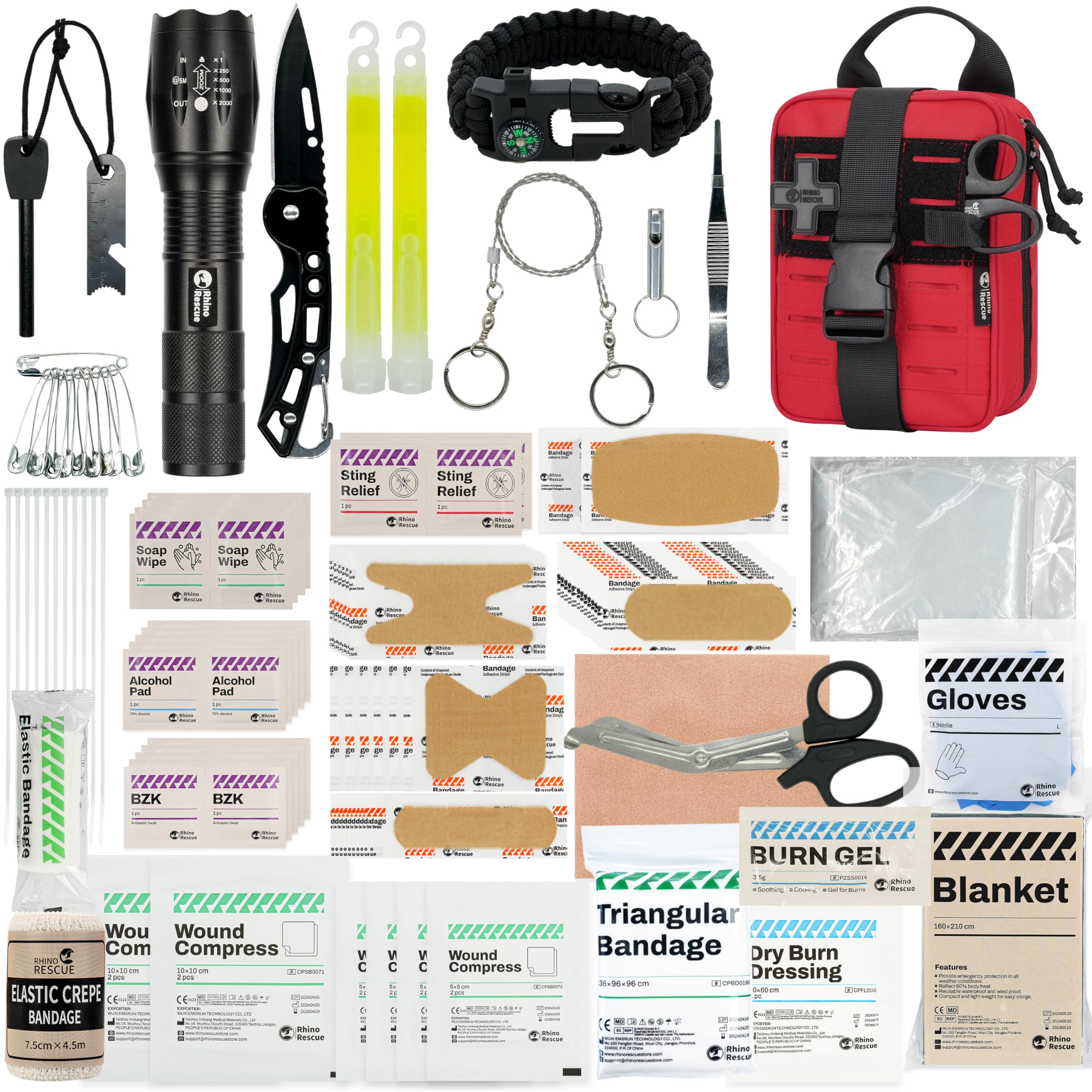
The RHINO RESCUE kit was engineered with input from pre‑hospital professionals, and it shows in the component choices. The 600D oxford nylon pouch is double‑stitched at every seam and uses a removable quick‑release panel — the same style used by military medics for immediate access under duress. At 124 pieces, it is deliberately lean: you get trauma pads, a genuine CPR mask, and a quality tourniquet without the filler items that bulk up budget kits.
What sets this kit apart is its balance of medical and survival gear in a package that fits under a car seat or inside a daypack. It includes a multi‑tool, fire starter, and emergency blanket alongside the wound‑care supplies. The MOLLE straps are especially robust, locking onto backpacks and tactical vests without slipping.
HSA/FSA eligibility makes it a practical buy for budget‑conscious preppers. Several reviewers mention buying two — one for the glovebox and one for the go‑bag. For anyone who needs a compact, tested system they can trust on a long trail or during an evacuation, this is the smartest mid‑capacity choice.
Why it’s great
- Professional‑grade components in a small pouch
- HSA/FSA eligible
- Quick‑release panel for trauma access
Good to know
- Flashlight is basic; consider replacing it
- Only one burn gel included
3. Abpir 318 PCS Emergency Survival Kit

The Abpir 318‑piece kit blurs the line between a first‑aid pouch and a survival toolbox. Beyond the medical essentials — bandages, wound pads, a CPR mask — it packs a folding shovel, a 14‑in‑1 hatchet, a collapsible lantern, and a wire saw. That makes it an excellent choice for a vehicle go‑bag where weight isn’t critical but versatility is. The 1000D nylon pouch is noticeably tougher than the 600D bags on cheaper kits and holds its shape even when fully stuffed.
The medical supplies total 305 pieces, leaving 13 slots for the survival tools — a ratio that works if you expect to need shelter‑building or fire‑starting gear when you grab this bag. The MOLLE attachment panel is sewn rather than a removable strap, which provides a more secure lock but limits swapping bags.
A few buyers reported the flashlight needed modification, but the overall impression is that this kit delivers genuine tool quality at a mid‑range investment. If you want one grab‑and‑go solution that covers both trauma and tactical survival scenarios, the Abpir is a strong contender.
Why it’s great
- Includes serious survival tools (hatchet, shovel, saw)
- 1000D nylon is exceptionally abrasion‑resistant
- Good variety of medical + gear for car bag
Good to know
- Flashlight reliability is inconsistent
- Larger pouch may be heavy for hiking
4. Pasenhome First Aid Kit with Labeled Compartments

The Pasenhome kit solves the most common go‑bag complaint: finding the right item when your hands are shaking. Every internal compartment is labeled with the supply type and a brief use note, so you don’t waste seconds trying to interpret a generic pouch. The 600D ripstop polyester body is stitched with double seams at the stress points, and the 2‑way zippers glide smoothly even after months of storage.
Measuring 7.9 x 5.9 x 3.6 inches, it fits neatly under a car seat or inside a backpack’s water‑bladder sleeve. The kit leaves a small empty pocket for personal additions like a rescue inhaler or suture kit. Reviewers praise the thoughtful layout — one noted it survived an Alaska winter without the clear plastic breaking that softens cheaper organizers.
On the con side, the trauma capability is limited to medium injuries: you get trauma pads but no tourniquet. That’s acceptable for a kit aimed at daily carry and road‑trip scrapes rather than wilderness expeditions. For a driver or commuter who wants rapid access without bulk, this is the most intelligently arranged option available.
Why it’s great
- Excellent labeled organization speeds response time
- Compact enough for daily carry
- Durable construction with reinforced stitching
Good to know
- No tourniquet or hemostatic gauze included
- Stock supplies are a starting point — plan to customize
5. TLIEAO 330 Piece Premium Waterproof First Aid Kit
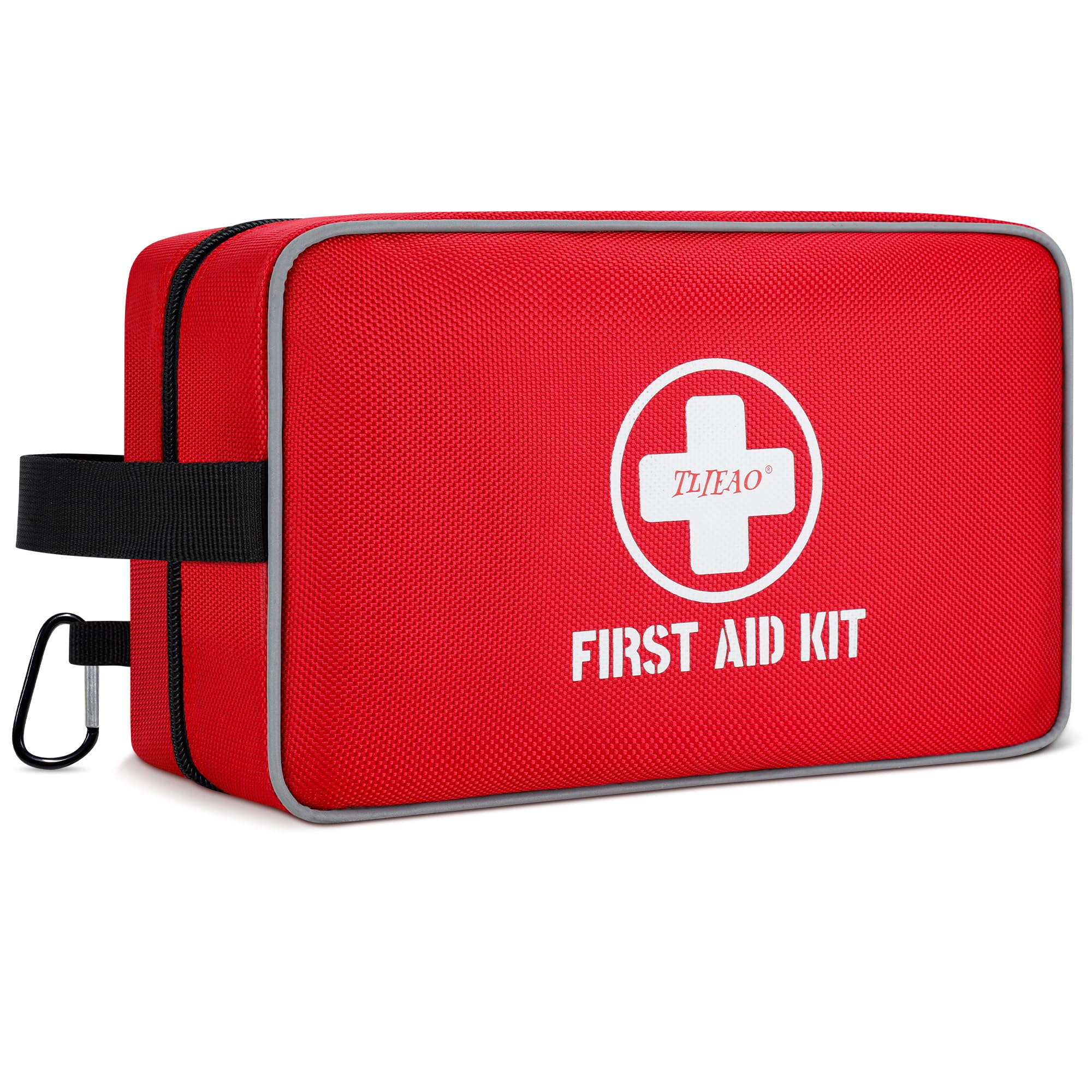
The TLIEAO 330‑piece kit competes directly with the GEVOKE for high‑capacity buyers but targets a different niche: it emphasizes waterproofing and reflective visibility over modular expansion. The outer shell is 1680D polyester fiber with a waterproof coating that sheds rain and splashes, and the reflective piping makes the bag visible in car headlights or flashlight beams at night. For a stationary go‑bag stored in a garage or trunk, that visibility can be a lifesaver during a power outage.
Inside, the compartments are labeled and arranged by injury type — burn, wound, fracture — which mirrors the decision tree a panicked user follows. The kit includes a tourniquet, instant ice pack, and CPR face shield alongside the standard bandages and wipes. A bonus carabiner is sewn onto the handle, letting you clip the bag to a backpack loop or seat anchor.
The biggest shortcoming is the lack of serious trauma gear beyond the tourniquet — no hemostatic gauze or chest seal. That makes this a volume kit for moderate emergencies, not a tactical trauma bag. For a family leaving a kit in each vehicle or at the cabin, the TLIEAO offers strong value and ease of use.
Why it’s great
- Waterproof reflective shell ideal for wet conditions
- Clear labeling with injury‑type logic
- High piece count with a bonus carabiner
Good to know
- No advanced hemorrhage control items
- Relatively new brand with limited long‑term reviews
6. XUANLAN Survival First Aid Kit, 248 Pieces

The XUANLAN 248‑piece survival kit is the entry‑level benchmark for budget‑minded preppers. The 600D nylon MOLLE pouch is compact at 8.2 x 5.5 x 4.5 inches, and the inclusion of a survival bracelet, saber card, and fire starter gives it a tactical feel that appeals to new campers and gift buyers. For the price, you get a genuinely broad assortment — bandages, iodine pads, triangular bandages, a CPR mask, and a tourniquet.
Where this kit saves money is material quality: the 600D nylon is functional but not as abrasion‑resistant as premium 1000D or 1680D fabrics. The scissors and tweezers do the job but won’t survive repeated heavy use, and the flashlight is basic. Still, for a starter kit that lives in a glove compartment or a hiking daypack, the XUANLAN provides enough coverage to stabilize a wound while you seek professional help.
Reviewers consistently mention it as a great gift for scout‑age kids or as a redundant backup kit. If you’re building your first go‑bag on a tight budget, this is a solid foundation — just plan to upgrade the tourniquet and add a quality trauma shears.
Why it’s great
- Lowest investment for a full 248‑piece start
- Includes survival fringe items (saber card, bracelet)
- Compact pouch fits most go‑bags easily
Good to know
- Bag fabric and tool quality are entry‑level
- Flashlight and some tools are basic
7. Adventure Medical Kits Mountain Series Hiker
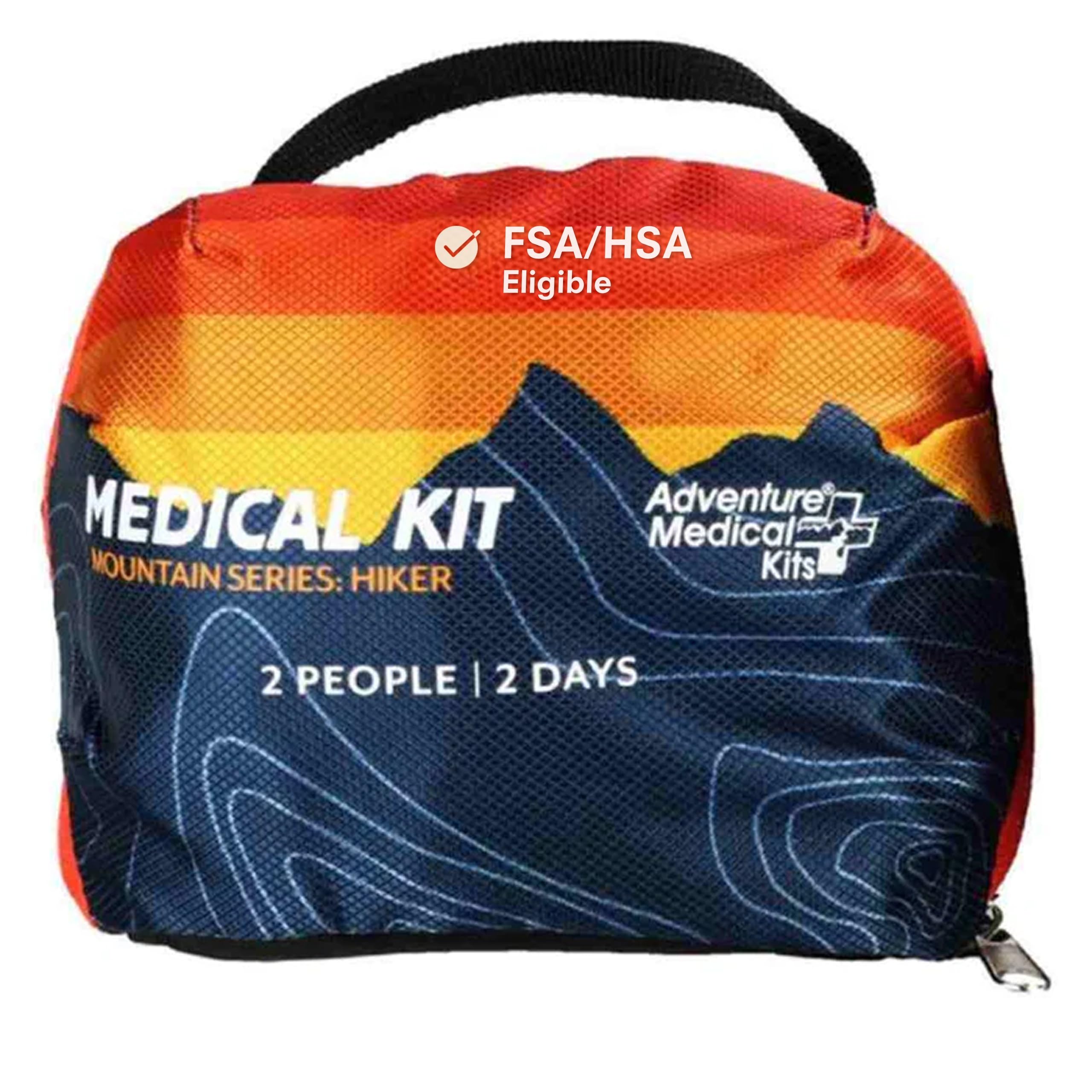
The Adventure Medical Hiker is the outlier on this list — a purpose‑built kit for ultralight summit pushes and long trail runs where every gram matters. At 9.91 ounces, it supports two people for two days and fits into a fanny pack or hydration vest pocket. The Easy Care organization system uses clear, labeled pouches inside a water‑resistant bag, and the included wilderness medicine guidebook is genuinely useful for diagnosing altitude sickness, hypothermia, and snakebites in the field.
The medical contents are lean: trauma pad, elastic bandage, a selection of gauze rolls, and basic wound‑care items. This is not a kit for heavy bleeding or multi‑patient scenarios. It is, however, the most thoughtfully composed lightweight option on the market, with components specifically selected for mountaineering where urgent care may be hours or days away.
Buyers who hike light praise the form factor and the upgrade path — you can add a tourniquet and chest seal without overwhelming the small case. For day hikers and fastpackers who refuse to carry a big bag just for medical gear, the Adventure Medical Hiker is the specialist choice.
Why it’s great
- Extremely lightweight for alpine missions
- Includes actual wilderness medicine guidebook
- Labeled pouches aid rapid access on trail
Good to know
- Not intended for heavy trauma or long trips
- Medication shelf life is shorter than standalone items
FAQ
Should I add a tourniquet to a ready‑made go bag first aid kit?
How often should I replace the contents of a go bag first aid kit?
Final Thoughts: The Verdict
For most users, the best go bag first aid kit winner is the GEVOKE Professional 500 Piece because it offers the highest piece count in a durable, well‑organized case that serves a whole family without requiring immediate customization. If you want a compact system that fits under a car seat and includes professional‑grade trauma gear, grab the RHINO RESCUE Survival Kit. And for ultralight backcountry trips where every gram counts, nothing beats the Adventure Medical Hiker for its size‑to‑intelligence ratio.