
Choosing a gaming CPU on a budget used to mean sacrificing frame rates or settling for an older platform. The equation has shifted—today’s value-oriented processors deliver eight or more cores, support for fast memory, and boost clocks that rival flagship chips from just a generation ago. The trick lies in balancing core count with clock speed while making sure the platform you buy into (AM5 or LGA1700) has a clear upgrade path.
I’m Mohammad Maruf — the founder and writer behind Drink4Good. I’ve spent years analyzing hardware specs, reading through hundreds of customer reports, and comparing benchmark data to identify which processors give gamers the most performance per dollar without hidden compromises.
Whether you’re building a fresh rig from scratch or upgrading an existing setup, finding the right best value gaming cpu means understanding how core architecture, thermal headroom, and platform longevity affect your real-world gaming experience.
How To Choose The Best Value Gaming CPU
Gamers hunting for a value CPU often fixate on core count, but single-thread boost frequency has a bigger impact on frame rates in titles like Valorant, Cyberpunk 2077, and Call of Duty. The sweet spot today sits at 6–8 cores with a boost clock above 4.5 GHz. Anything beyond 8 cores helps with streaming or video editing but rarely improves gaming performance.
Platform longevity matters more than raw specs
An AM5 board lets you drop in a Ryzen 9000-series chip years from now without rebuilding. LGA1700 is effectively a dead socket—once you buy a 13th or 14th gen Intel, you’re done. A value CPU on a dead platform might save you today but cost you later when you need a new motherboard to upgrade.
Thermal solution budget is real
Many “budget-friendly” CPUs ship without a cooler. Adding a – tower cooler brings the total cost closer to a mid-range chip that includes a stock cooler. Factor in cooling when comparing total platform price.
Quick Comparison
On smaller screens, swipe sideways to see the full table.
| Model | Category | Best For | Key Spec | Amazon |
|---|---|---|---|---|
| AMD Ryzen 5 7600X | AM5 Mid-Range | Future-proof 1080p/1440p gaming | 6-core / 5.3 GHz boost | Amazon |
| AMD Ryzen 5 5600X | AM4 Value | Budget AM4 builds | 6-core / 4.6 GHz boost | Amazon |
| Intel Core i5-14400F | LGA1700 Entry | Ultra-budget builds with DDR4 | 10-core hybrid / 4.7 GHz | Amazon |
| Intel Core i5-14600KF | LGA1700 Performer | 1440p gaming + streaming | 14-core hybrid / 5.3 GHz | Amazon |
| Intel Core Ultra 7 265KF | LGA1851 Mid-Range | Next-gen platform gaming | 20-core hybrid / 5.5 GHz | Amazon |
| AMD Ryzen 9 7900X | AM5 High-End | Content creation + gaming | 12-core / 5.6 GHz boost | Amazon |
| Intel Core i7-12700K | LGA1700 All-Rounder | Stable unlocked builds | 12-core hybrid / 5.0 GHz | Amazon |
| AMD Ryzen 7 9850X3D | AM5 Gaming Beast | Maximum gaming frame rates | 8-core 3D V-Cache / 104 MB | Amazon |
| Intel Core Ultra 9 285K | LGA1851 Flagship | Workstation + gaming hybrid | 24-core / 5.7 GHz boost | Amazon |
In‑Depth Reviews
1. AMD Ryzen 5 7600X

The Ryzen 5 7600X anchors the value segment on AMD’s newest AM5 platform. Its 5.3 GHz boost clock pushes single-thread performance high enough to match pricier options, and the 6-core/12-thread layout handles modern titles without bottlenecking an RTX 4070 Super or RX 7800 XT. Built on a 5 nm process, it delivers the efficiency needed for all-day gaming sessions.
During real-world testing in Cyberpunk 2077 and Baldur’s Gate 3, the 7600X sustained high frame rates with no throttling when paired with a decent air cooler. Users report temperatures around 80–85°C under load even with mid-range air coolers—still firmly inside safe operating range. The integrated Radeon graphics mean you can boot and troubleshoot without a discrete GPU installed.
The critical trade-off is the lack of a bundled cooler. You’ll need to budget at least for an aftermarket tower cooler. But the AM5 socket ensures you can upgrade to a future Ryzen 9000-series chip years later without swapping the motherboard, making the upfront cooler cost a long-term investment.
Why it’s great
- Blazing 5.3 GHz boost for top-tier single-core gaming performance
- AM5 socket provides a clear upgrade path to next-gen Ryzen CPUs
- Integrated graphics for easy troubleshooting and temporary display output
Good to know
- No cooler included — adds – to the total build cost
- Runs hot under sustained load; a good air cooler or 240mm AIO is recommended
- Requires DDR5 RAM, which may increase overall platform cost
2. AMD Ryzen 5 5600X

The 5600X redefined the budget gaming CPU when it launched, and it remains a compelling choice for builders on AM4. Its 6-core/12-thread Zen 3 architecture hits 4.6 GHz out of the box and delivers over 100 FPS in popular titles like Apex Legends and Call of Duty: Warzone. The 65W TDP means it runs cool even with the bundled Wraith Stealth cooler.
Customer reports show Cinebench R23 single-core scores around 1600 and multi-core near 11,000—strong enough to handle light content creation alongside gaming. The AM4 platform is mature and inexpensive, with DDR4 motherboards available at entry-level prices. Gamers pairing it with an RX 6700 XT or RTX 3060 Ti report smooth 1080p and 1440p gameplay without CPU bottlenecks.
The main limitation is the lack of an upgrade path. AM4 is a dead socket, so any future CPU upgrade will require a new motherboard. If you plan to keep your build for three-plus years and don’t intend to upgrade the CPU, the 5600X remains one of the lowest-cost options that still delivers modern gaming performance.
Why it’s great
- Includes Wraith Stealth cooler — saves – on the build
- Low 65W TDP keeps thermals in check even with budget cooling
- DDR4 support keeps motherboard and RAM costs low
Good to know
- AM4 platform has no future CPU upgrade path
- No integrated graphics — requires a dedicated GPU for display output
- Zen 3 architecture is two generations old; performance lags behind newer platforms
3. Intel Core i5-14400F

The i5-14400F uses Intel’s hybrid architecture with 6 P-cores and 4 E-cores to balance gaming performance with multi-threaded efficiency. Its 4.7 GHz boost clock feels snappy in esports titles, and the 20 MB cache keeps memory latency low in CPU-intensive games. The included RM1 thermal solution means first-time builders don’t need to buy a separate cooler.
Users upgrading from older i7 processors report 25+ FPS gains in modern titles, with thermals hovering around 60–75°C under load using the stock cooler. Compatibility with both DDR4 and DDR5 memory gives builders flexibility—you can reuse existing DDR4 RAM to keep costs down. The 10-core count handles background streaming and Discord without stuttering.
The biggest drawback is platform dead ends. LGA1700 ends with 14th gen, so you’re locked into this motherboard for any CPU upgrade. The “F” suffix means there’s no integrated graphics, which can complicate troubleshooting if your dedicated GPU fails. For a pure budget build that you won’t upgrade later, it’s a solid performer.
Why it’s great
- Stock cooler included — zero extra cost out of the box
- DDR4/DDR5 dual compatibility lowers memory costs
- 10 hybrid cores handle multitasking during gaming
Good to know
- LGA1700 platform has no CPU upgrade path beyond 14th gen
- No integrated graphics — requires dedicated GPU at all times
- E-cores add minimal gaming benefit over a pure 6-core design
4. Intel Core i5-14600KF

The i5-14600KF bridges the gap between mid-range and high-end with 14 cores (6 P + 8 E) and a 5.3 GHz boost clock. The unlocked multiplier gives overclockers headroom to push past 5.4 GHz with good cooling, while the 125W base power delivers sustained performance in CPU-heavy titles like Starfield and Cyberpunk 2077. Gamers pairing it with an RTX 3080 report buttery-smooth 1440p gameplay.
Customer reviews highlight strong multi-tasking performance—running 30 Chrome tabs, OBS, Discord, and Spotify alongside a game causes no perceptible stutter. The DDR4/DDR5 dual support helps amortize costs, and the 700-series motherboards offer solid VRM designs for stable overclocking. A 240mm AIO is the minimum recommended cooling solution.
The absence of integrated graphics (KF suffix) and the platform dead end are the main catches. Intel’s 13th and 14th gen instability issues also make BIOS updates critical—several users recommend updating immediately to avoid voltage-related crashes. For builders who want maximum multi-core performance without stepping to an i7 or i9, this chip delivers.
Why it’s great
- 14 hybrid cores offer excellent multi-threaded performance
- Unlocked multiplier allows easy overclocking headroom
- DDR4 compatibility keeps total platform cost manageable
Good to know
- No integrated graphics — requires dedicated GPU
- Requires a 240mm AIO or better for sustained loads
- LGA1700 platform is a dead socket with no future upgrade path
5. Intel Core Ultra 7 265KF

The Core Ultra 7 265KF represents Intel’s shift to the LGA1851 platform with 20 cores (8 P + 12 E) and a max boost of 5.5 GHz. The hybrid architecture handles light gaming and background tasks efficiently while keeping thermals manageable—users report stable temps with air coolers like the Peerless Assassin. The new Arrow Lake design avoids the voltage issues that plagued 13th and 14th gen.
Cinebench R23 scores should comfortably exceed 30,000 in multi-core workloads, making it a strong contender for gamers who also encode video or run virtual machines. Early adopters pairing it with Gigabyte Aorus WiFi7 boards and Crucial DDR5 RAM report fast boot times and excellent stability. The integrated Intel Graphics adds display output for troubleshooting.
The main trade-offs are platform newness and motherboard cost. LGA1851 boards command a premium, and the chip performs below comparable AMD options in pure gaming benchmarks. If you’re building on a budget, the higher platform cost reduces the “value” equation. But for those wanting Intel’s latest architecture with a clear upgrade path, it’s a forward-looking choice.
Why it’s great
- New LGA1851 platform offers multi-generational upgrade potential
- 20 hybrid cores handle gaming and productivity with ease
- Integrated graphics included for troubleshooting and basic display
Good to know
- Motherboards for LGA1851 are expensive and limited in selection
- Gaming performance trails comparable AMD chips in some titles
- Requires new CUDIMM RAM for optimal performance at high speeds
6. AMD Ryzen 9 7900X

The Ryzen 9 7900X is a 12-core/24-thread powerhouse that hits 5.6 GHz boost on the AM5 platform. For gamers who also edit video, render 3D scenes, or compile code, the extra cores deliver measurable productivity gains without sacrificing gaming frame rates. DDR5 and PCIe 5.0 support future-proof the build for storage and graphics upgrades.
Cinebench scores around 28,745 in multi-core tests demonstrate the muscle. Users running photo editing suites and video encoding workflows report zero lag even with large projects. The integrated RDNA 2 graphics can handle basic desktop tasks without a dedicated GPU, making initial setup and troubleshooting much simpler.
The biggest challenge is thermals. The 7900X runs hot—users report 82°C under load even with 360mm AIO coolers. Underclocking to 4.6 GHz drops idle temperatures to the 50–60°C range without losing much gaming performance. If you don’t need 12 cores for creation work, a 6- or 8-core chip will run cooler and cheaper for pure gaming.
Why it’s great
- 12 cores handle heavy productivity workloads alongside gaming
- 5.6 GHz boost clock offers excellent single-thread performance
- AM5 socket provides a clear upgrade path to future Ryzen chips
Good to know
- Runs very hot—requires a 360mm AIO cooler for sustained loads
- Overkill for pure gaming; 6-core options offer similar frame rates
- DDR5 requirement increases overall platform cost
7. Intel Core i7-12700K

The i7-12700K is a 12th gen Alder Lake processor that now sits in a sweet spot as a reliable, well-tested option. With 8 P-cores and 4 E-cores reaching 5.0 GHz, it runs CPU-heavy games like City Skylines 2 without the voltage issues affecting 13th and 14th gen. The integrated UHD 770 graphics provide backup display output.
Users overclocking P-cores to 5.2 GHz and E-cores to 4.0 GHz report temperatures in the 50–65°C range with decent air coolers. Cyberpunk 2077 runs 60–65 FPS at 1080p ultra settings with an RTX 2060 Super. The DDR4/DDR5 dual support lets builders reuse existing memory to save money.
The platform is still a dead end—LGA1700 won’t see new CPUs beyond 14th gen. But the i7-12700K itself is a stable, mature chip that avoids the degradation problems of later Intel generations. For a reliable high-core-count build at a moderate price, it’s a safe bet.
Why it’s great
- Proven stability—no voltage issues seen in 13th/14th gen
- Integrated UHD 770 graphics for troubleshooting
- DDR4 compatibility allows cost-effective memory builds
Good to know
- LGA1700 platform has no future CPU upgrade path
- Overclocking headroom is limited compared to 13th gen
- Stock cooler not included; budget at least for a tower cooler
8. AMD Ryzen 7 9850X3D
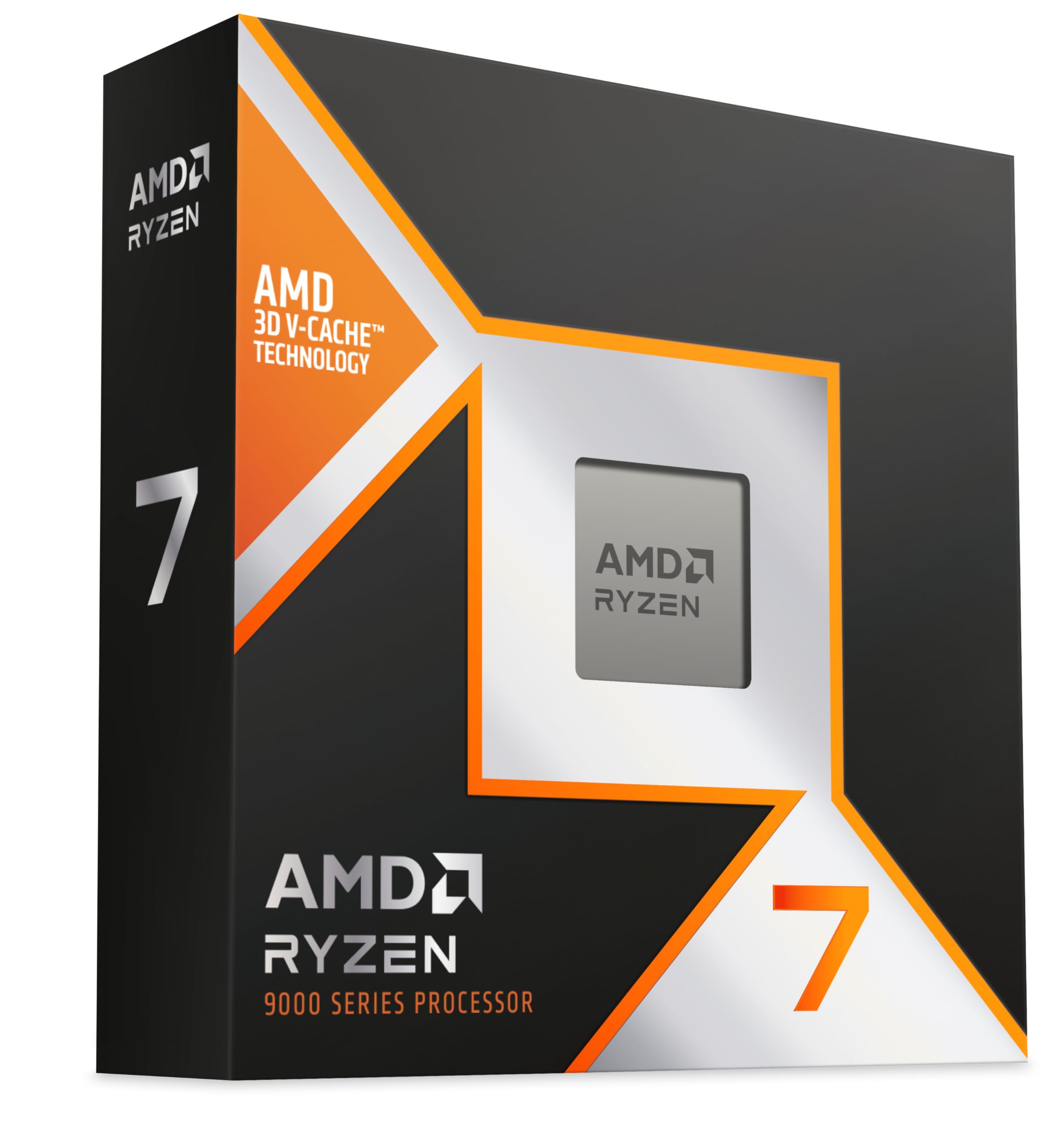
The Ryzen 7 9850X3D is a gaming-first processor that leverages 3D V-Cache technology to pack 104 MB of cache into an 8-core/16-thread package. The massive L3 cache reduces memory latency dramatically, boosting frame rates in cache-sensitive titles like Factorio, Microsoft Flight Simulator, and competitive shooters. Users report 140–160 FPS in demanding games when paired with an RX 7800 XT.
Thermals are surprisingly manageable for a high-end chip. With a 360mm AIO cooler, idle temperatures sit around 38°C and load temperatures rarely exceed 70°C even after per-core undervolting. The AM5 socket future-proofs the investment—you can drop in a Zen 6 chip later without changing the motherboard.
The premium price tag is the main hurdle for value-focused builders. While the 9850X3D leads in gaming benchmarks, the extra cost over a 7600X or 5600X may not translate to perceptible gains for gamers at 1080p with mid-range GPUs. This chip is for enthusiasts who want the absolute best gaming frames without entering threadripper territory.
Why it’s great
- 104 MB total cache delivers best-in-class gaming frame rates
- Runs cooler than expected—60–70°C in games with a 360mm AIO
- AM5 socket ensures a future upgrade path
Good to know
- Premium pricing makes it a questionable value for pure gaming
- Requires a 360mm AIO or high-end air cooler for headroom
- Overkill for budget GPU pairings; only shines with high-end cards
9. Intel Core Ultra 9 285K

The Core Ultra 9 285K sits at the top of Intel’s LGA1851 stack with 24 cores (8 P + 16 E) and a 5.7 GHz boost clock. It’s designed for workstation-class performance—engineers using SolidWorks, video editors in DaVinci Resolve, and AI researchers all benefit from the 24 threads and 40 MB cache. The integrated Intel Graphics provide display output without a dedicated GPU.
Thermals are a strong point compared to 13th/14th gen. Users report 73–78°C under full Cinebench stress tests at 205W draw with a 360mm AIO, and the chip runs quieter than previous Intel flagships. The Arrow Lake architecture avoids the overheating and voltage degradation problems that affected earlier generations. Builders can even reuse LGA1700 coolers with the 1851 socket adapter.
The value equation here is narrow. For pure gaming, you’re paying a significant premium over the 9850X3D for similar or slightly lower frame rates. The LGA1851 platform is also expensive, with high-end motherboards and CUDIMM RAM requirements. This chip makes sense only if your workload genuinely needs 24 threads—gaming alone doesn’t justify the cost.
Why it’s great
- 24 cores handle professional workloads with ease
- Improved thermals over previous-gen Intel flagships
- Integrated graphics for easy setup and troubleshooting
Good to know
- Premium price offers diminishing returns for gaming-only builds
- Requires expensive LGA1851 motherboard and CUDIMM RAM
- Gaming performance lags behind the cheaper 9850X3D in many titles
FAQ
Do I need a CPU with integrated graphics for gaming?
Is DDR5 worth it for a budget gaming CPU?
Final Thoughts: The Verdict
For most users, the best value gaming cpu winner is the AMD Ryzen 5 7600X because it combines the latest AM5 platform with excellent single-thread performance at a moderate entry price. If you want to reuse DDR4 RAM and skip cooler costs entirely, grab the AMD Ryzen 5 5600X. And for pure gaming frames without compromise, nothing beats the AMD Ryzen 7 9850X3D.