
Nothing ruins a season’s worth of work faster than finding caterpillars lacing your tomatoes or aphids clustering on your roses. The right spray makes the difference between a harvest you’re proud of and a plant you throw in the compost, but the shelf is crowded with solutions that either don’t work or nuke your garden’s ecosystem.
I’m Mohammad Maruf — the founder and writer behind Drink4Good. I’ve spent years analyzing pest-control chemistries, comparing active ingredients from mineral oils to microbial proteins, and cross-referencing thousands of user reports to find what actually stops garden pests without burning foliage or leaving toxic residues.
Whether you need to protect ornamentals, vegetables, or fruit trees, finding the right garden insect spray comes down to matching the active ingredient to the specific pest you’re fighting and the stage of growth your plants are in.
How To Choose The Best Garden Insect Spray
Selecting a garden insect spray isn’t about grabbing the bottle with the biggest bug on the label. The right choice depends entirely on what pest you have, what plant it’s attacking, and whether you care about organic certification. Here are the three factors that separate an effective spray from a waste of money.
Match the Active Ingredient to the Pest
Mineral oil works by smothering soft-bodied insects like aphids, scale, and mites, and it also coats fungal spores to prevent powdery mildew. Bacillus thuringiensis (Bt) is a bacteria that only affects caterpillars and worm-type larvae — it won’t touch aphids or beetles. Neem oil disrupts feeding and reproduction across a broad spectrum of pests but requires consistent reapplication. Using the wrong mode of action means the spray simply won’t work, no matter how much you apply.
Choose Between Ready-to-Spray and Concentrate
Ready-to-spray bottles with hose-end attachments are convenient for covering large areas quickly, but the calibration is often imprecise, leading to waste. Concentrates give you control over dilution strength and cost less per application, but they require a separate pump sprayer and manual mixing. If you have a small garden or just a few potted plants, a smaller concentrate with a refillable spray bottle offers better precision and a lower cost per season.
Check the Organic and Safety Status
OMRI-listed sprays are approved for organic gardening under USDA standards. Read the label for re-entry intervals and whether the product is safe for bees, earthworms, and beneficial predators. Some oils and soaps can burn foliage if applied during direct sunlight — look for instructions about temperature and time of day. If you’re spraying vegetables or herbs, verify the pre-harvest interval so you don’t end up eating residual chemicals.
Quick Comparison
On smaller screens, swipe sideways to see the full table.
| Model | Category | Best For | Key Spec | Amazon |
|---|---|---|---|---|
| Bonide All Seasons Oil | Mineral Oil | Year-round disease & insect smothering | 32 oz RTU, OMRI listed | Amazon |
| Monterey B.t. | Biological | Caterpillars & worms on veggies | 16 oz concentrate, OMRI listed | Amazon |
| Botanical Tradesman Neem Oil | Neem Oil | Broad-spectrum indoor/outdoor pest control | 3.4 oz concentrate, 20 refills | Amazon |
| Garden Safe Fungicide3 | Neem Oil RTU | Large-area fungus & insect control | 128 oz RTU, neem extract | Amazon |
| County Vet FarmGard Fly Spray | Pyrethrin | Barns, stables & flying insect knockdown | 96 oz total, fast kill | Amazon |
In‑Depth Reviews
1. Bonide All Seasons Horticultural & Dormant Spray Oil

The Bonide All Seasons Oil is the closest thing to a one-bottle solution for a mixed garden. Its mineral-oil base smothers aphids, scale, mites, and adelgids on contact while also coating leaves to prevent powdery mildew, rust, and botrytis from taking hold. Unlike broad-spectrum synthetics, it leaves no toxic residue, and its OMRI listing means it’s safe to use on vegetables, fruit trees, ornamentals, and shrubs right up to the day before harvest.
What sets this apart is its versatility across the growing calendar. You can apply it during the dormant stage on bare branches to kill overwintering eggs, then use it again at green tip and through the growing season as a foliar protectant. Users report seeing results on black cherry aphids and azalea bark scale within a single overnight period, and it’s thin enough to spread evenly without clogging sprayer nozzles.
The only real complaint centers on the included hose-end sprayer, which users describe as poorly calibrated and prone to waste. For most gardeners, using a separate pump sprayer with the mixed solution delivers far better coverage and control. If you have a small yard or a mix of ornamentals and edibles, this is the single spray that covers the widest range of threats.
Why it’s great
- Year-round use from dormant stage through growing season
- Smothers insects AND prevents fungal diseases
- OMRI listed, safe around people and pets once dry
Good to know
- Hose-end sprayer is imprecise and messy
- Requires thorough pre-soaking for large trees
- Can burn foliage if applied in direct hot sun
2. Monterey B.t. (Bacillus Thuringiensis)

If you’ve spotted cabbage loopers shredding your broccoli or bagworms turning your pine trees into skeletons, Monterey B.t. is the spray you want. The active ingredient, Bacillus thuringiensis var. kurstaki, is a soil bacterium that produces a protein that only breaks down the gut lining of caterpillars and worm-type larvae. It won’t affect aphids, beetles, or bees, making it one of the most targeted biological controls available for edible gardens.
Users report success on cabbage worms, tomato hornworms, and pumpkin mildew when used as a preventative. The concentrate mixes instantly with water — no shaking or emulsifier needed — and has almost no odor compared to neem oil. The OMRI listing confirms it fits into strict organic gardening protocols, and it’s safe for earthworms and ladybugs, so your soil food web and beneficial predator population stay intact.
The limitation is that B.t. is pest-specific. It won’t help with aphids, mites, or fungal diseases, so you may need a second product for those issues. Also, because it works through ingestion, the caterpillars must be actively feeding on sprayed foliage — it’s not a contact killer. Apply it when you first see damage, and reapply after rain for the best results.
Why it’s great
- Safe for bees, earthworms, and beneficial insects
- OMRI listed, nearly odorless
- Highly effective on cabbage loopers, bagworms, and hornworms
Good to know
- Only works on caterpillars and worm larvae
- Requires ingestion — not a contact killer
- Must reapply after rain
3. Botanical Tradesman Pure Neem Oil
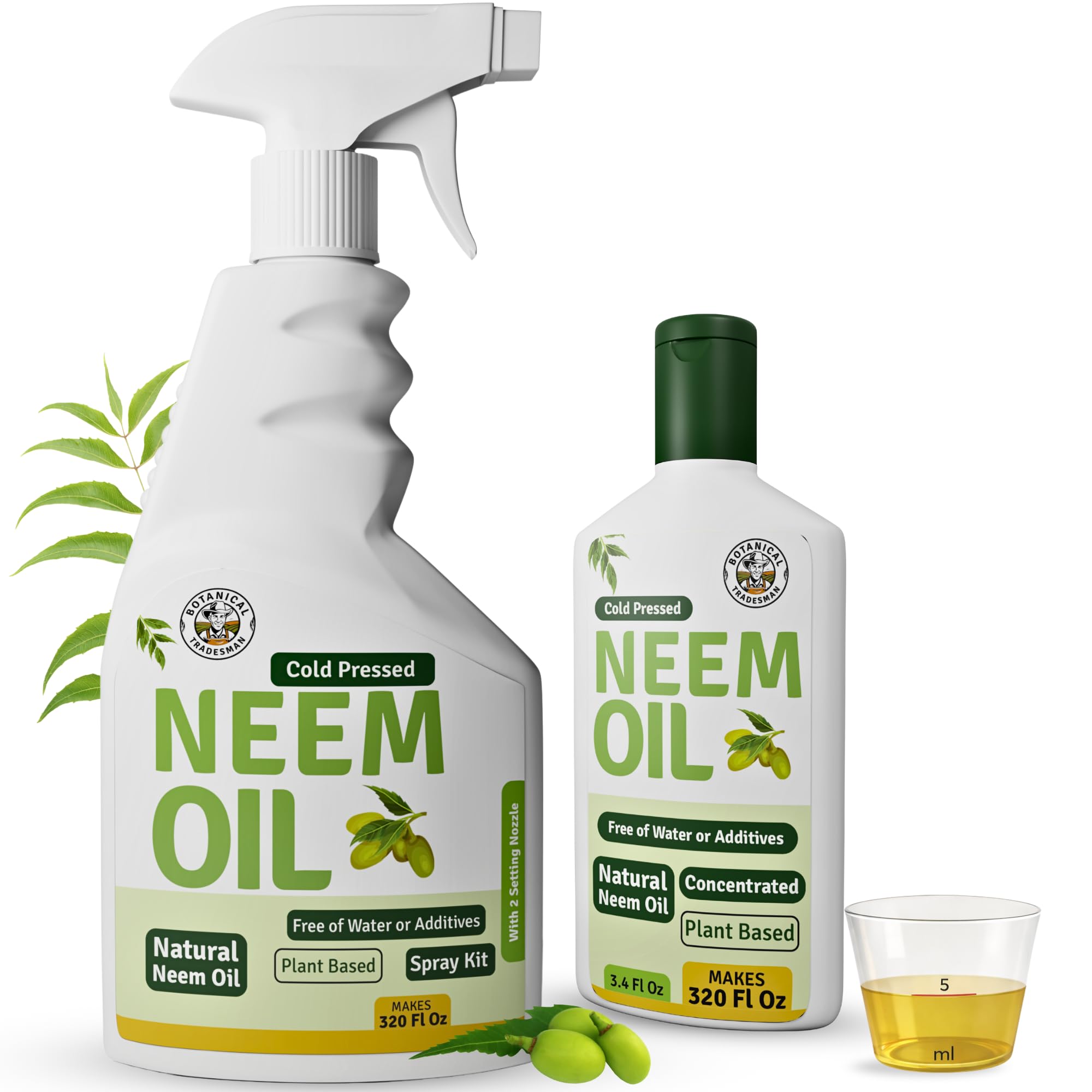
This kit from Botanical Tradesman delivers one of the best cost-per-application ratios in the garden aisle. The 3.4-ounce bottle of 100% cold-pressed neem oil concentrate mixes with water and a mild soap to produce approximately 338 fluid ounces of spray — enough to treat a modest garden for an entire season. The included 16-ounce trigger spray bottle with adjustable nozzle lets you switch from a fine mist to a direct stream depending on the target.
Neem oil works by disrupting the feeding and reproductive cycles of a broad range of pests, including aphids, whiteflies, spider mites, and fungus gnats. Users saw fungus gnat counts drop from 3–8 per plant to 1–2 after a four-week cycle, though the gnats returned when spraying stopped. The concentrate is OMRI-listed and free of added vegetable oils or diluents, giving you full control over the strength you apply.
The biggest drawback is the smell — neem oil has a strong, garlic-like odor that lingers for hours after application. Some users also report a faulty applicator tip on the provided spray bottle that fails to dispense liquid properly, causing spills. If you can tolerate the smell and use your own quality sprayer, this is the most economical entry point for organic pest control on indoor and outdoor plants.
Why it’s great
- Makes over 330 oz of spray from one bottle
- 100% cold-pressed, no fillers or additives
- Works on fungus gnats, aphids, mites, and more
Good to know
- Strong unpleasant odor that lingers
- Included spray bottle tip can be faulty
- Requires consistent reapplication every 7–10 days
4. Garden Safe Fungicide3
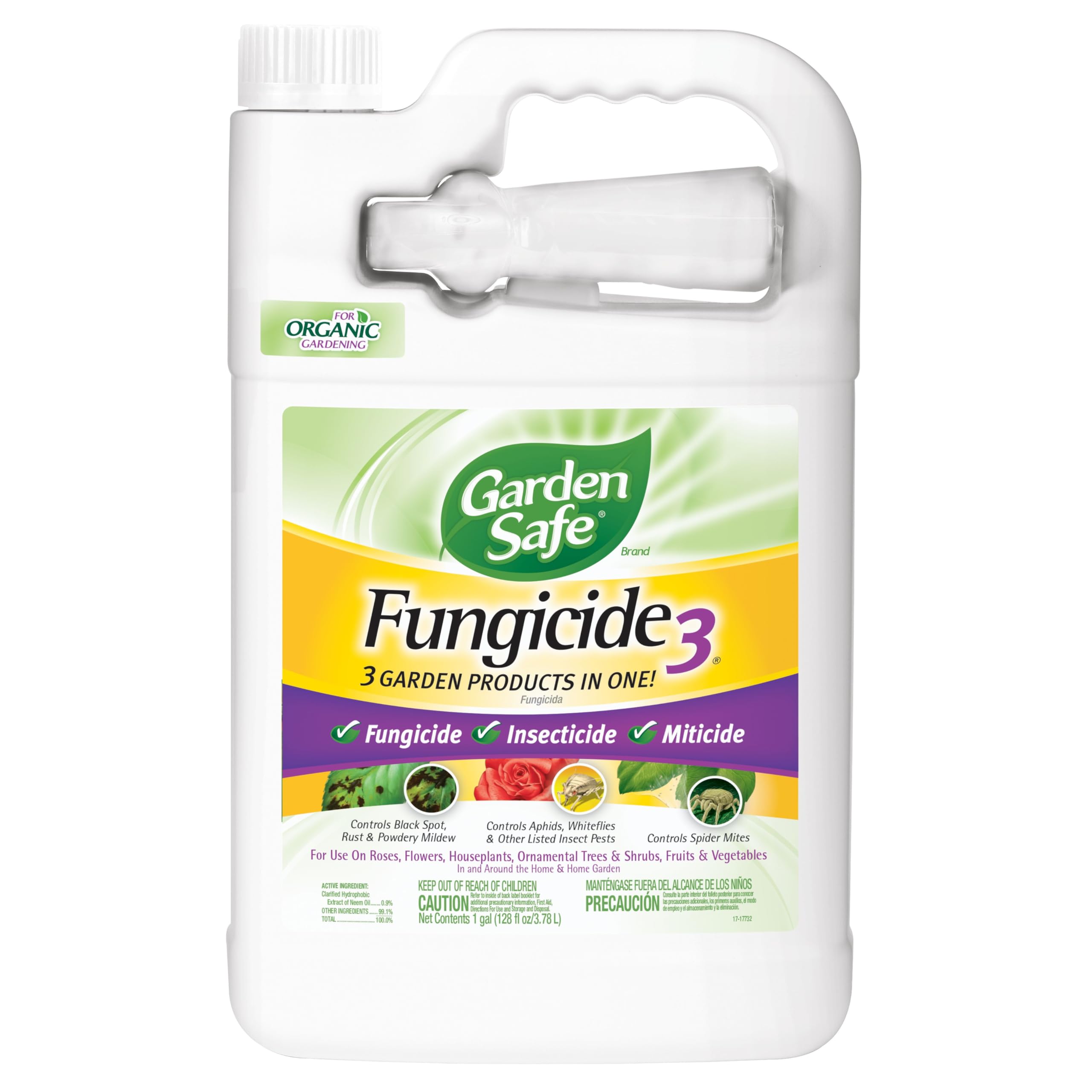
When you have a large garden with roses, tomatoes, and fruit trees all at once, the Garden Safe Fungicide3 gives you a full gallon of ready-to-use spray that functions as a fungicide, insecticide, and miticide. Its active ingredient — clarified hydrophobic extract of neem oil — kills eggs, larvae, and adults of aphids, whiteflies, and spider mites while preventing fungal diseases like black spot, rust, and powdery mildew from colonizing leaf tissue.
Users with hibiscus, blueberries, and mixed flower beds report that weekly application keeps foliage greener and increases blossom and fruit yield. The formula also works as a preventative after you prune away infected leaves — it won’t heal existing damage, but it stops new outbreaks. The sprayer attaches directly to the gallon jug, making it simple to grab and walk the garden without mixing or measuring.
Some users note that the sprayer design is frustrating — the short, coiled hose only extends a few inches, forcing you to hold the heavy gallon jug close to the plant. Others recommend using half the recommended dose to avoid leaf burn on sensitive ornamentals during hot weather. If you want a gallon-sized, no-mix solution for a large garden and can supply your own wand sprayer, this is the most convenient full-coverage option.
Why it’s great
- One gallon ready-to-use, no mixing required
- Triple-action: fungicide, insecticide, miticide
- EPA-listed for organic gardening on fruits and vegetables
Good to know
- Attached sprayer has very short reach
- Can burn foliage if applied in direct sun
- Neem smell is strong and lasts for hours
5. County Vet FarmGard Fly Spray
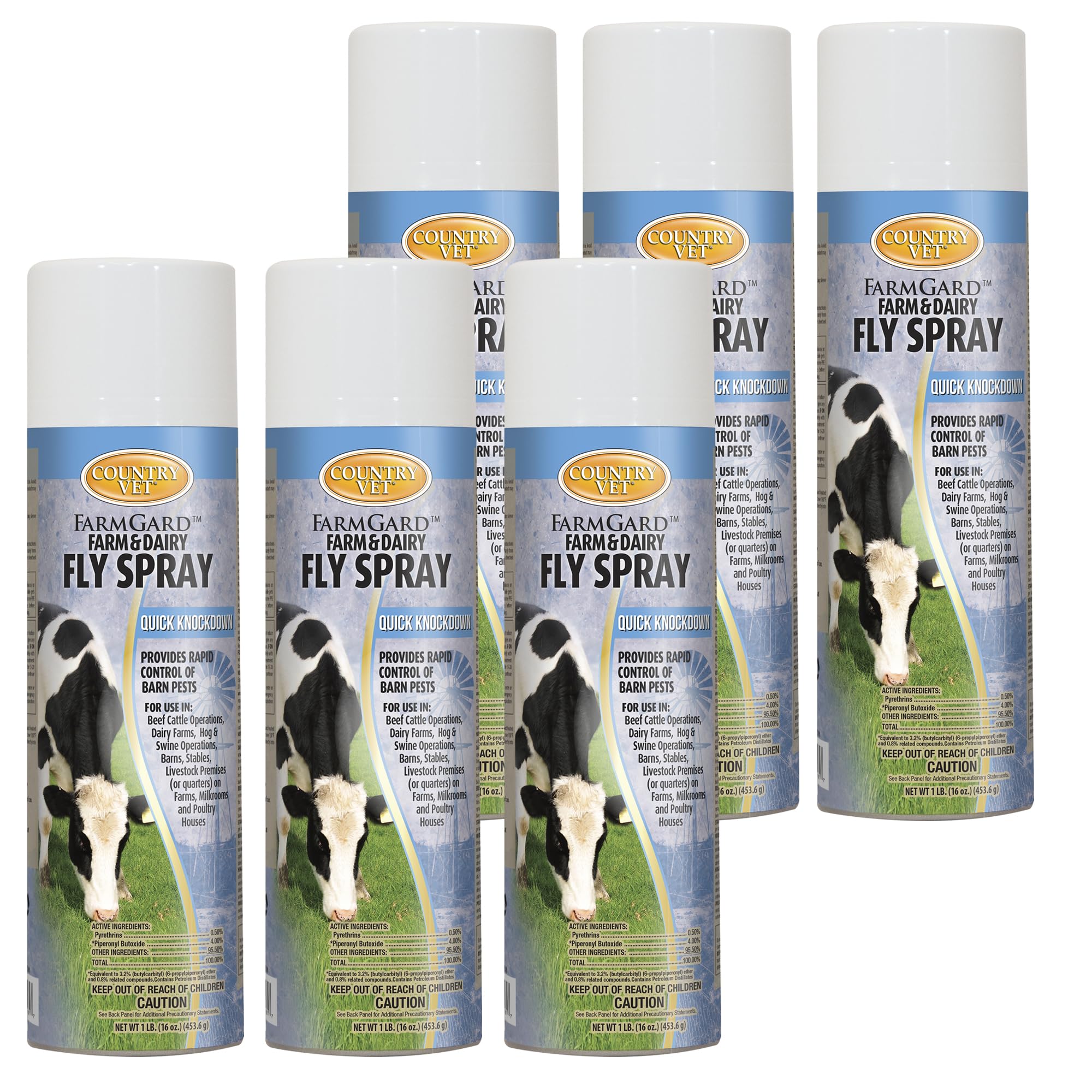
The County Vet FarmGard is a different category entirely from the other products on this list — it’s designed for space spraying inside barns, stables, and dairies rather than for foliar application on plants. The active ingredient, pyrethrin, provides rapid knockdown of flies, mosquitoes, gnats, wasps, and small flying moths by targeting the insect nervous system on contact.
Users with horse barns report that flies drop dead immediately after spraying, and the residual effect keeps flying insects from returning for a noticeable period. The recommended application is 2–3 seconds per 1,000 cubic feet of enclosed space, and the formula works best when doors and windows are closed during treatment. It’s also effective for fleas in pet sleeping areas and for Indianmeal moths around stored grain.
The major caveat is that this spray is not intended for use on edible plants — it’s strictly for pest control in animal housing and agricultural buildings. The case of six 16-ounce cans (96 ounces total) is a bulk buy suited for large properties with livestock. If your pest problem is primarily flying insects in a barn, shed, or milking parlor, this is the most effective option. For garden plants, stick with the oil-based or biological options above.
Why it’s great
- Kills flies, mosquitoes, and wasps on contact
- Residual effect deters re-infestation
- Bulk case covers large barns and stables
Good to know
- Not for use on edible garden plants
- Requires closed room and ventilation after treatment
- Bulk pack is overkill for small gardens
FAQ
Can I use neem oil and Bt together in the same spray tank?
Will mineral oil spray damage my bees if I spray during bloom?
How often should I reapply Bt to keep cabbage worms under control?
Final Thoughts: The Verdict
For most users, the garden insect spray winner is the Bonide All Seasons Oil because smothers both insects and fungal diseases across all growth stages, making it the true one-bottle solution for mixed ornamental-edible gardens. If you want a caterpillar-specific control that won’t harm bees or earthworms, grab the Monterey B.t. . And for the best value on broad-spectrum neem oil with enough concentrate to last the whole season, nothing beats the Botanical Tradesman Pure Neem Oil.