
Inside a stiff ski boot shell, even a few millimeters of unwanted foot movement translates directly into sloppy edge control and painful pressure points that ruin a day on the mountain. The thin, flat liner that came with your boots provides almost no structural support, leaving your foot to float inside the shell rather than locking down for precise energy transfer. The right aftermarket footbed solves this by filling dead space, supporting your arch, and creating a solid foundation that connects your foot directly to the boot’s sole.
I’m Mohammad Maruf — the founder and writer behind Drink4Good. After analyzing hundreds of footbeds across dozens of brands, I’ve focused on the specific metrics that matter most inside a ski boot: arch height compatibility, heel cup depth, moldability, and material density under load.
This guide breaks down the seven strongest contenders for the title of best footbeds for ski boots, comparing how each handles volume reduction, vibration damping, and long-haul comfort across a full season of hard skiing.
How To Choose The Best Footbeds For Ski Boots
Choosing a footbed for your ski boot isn’t like picking one for your sneakers — inside a rigid shell, the wrong option can cause numbness, cramping, or loss of control. Focus on three factors: moldability, arch profile, and heel cup depth. A footbed that can be heat-molded conforms to your foot’s exact shape, filling volume gaps that cause your foot to slide forward during aggressive turns. Arch height compatibility prevents cramping for high-arched feet or collapse for flat feet. A deep heel cup locks the calcaneus in place, stopping the heel lift that leads to shin bang and poor edge engagement.
Volume Reduction and Shell Fit
The primary job of a ski boot footbed is to take up space inside the shell. Many stock liners are thin and compress quickly, leaving your foot sitting low. A thicker aftermarket footbed raises your foot slightly, centering your ankle in the cuff and improving lateral control. Some models also act as a dedicated volume reducer, filling the toe box and heel pocket without creating painful pressure points.
Material Density and Vibration Damping
Ski boot footbeds must resist bottoming out under load — soft foam that feels great in a sneaker will compress to nothing inside a boot shell under a hard carve. High-density EVA, polyurethane, or layered cork bases maintain their structure all day. Look for materials like Poron or gel inserts in the heel that absorb chatter from hardpack and crud, reducing fatigue in your calves and knees over multiple runs.
Quick Comparison
On smaller screens, swipe sideways to see the full table.
| Model | Category | Best For | Key Spec | Amazon |
|---|---|---|---|---|
| Superfeet Winter Support | Premium | All-day warmth & heel lock | Thermal top cover + Moisturewick | Amazon |
| SOLE Active Thick | Premium | Custom moldable support | Heat-moldable at 170°F | Amazon |
| Masterfit EZFit QF | Mid-Range | Auto-adapt shaping | Poron heel cushioning | Amazon |
| SIDAS 3Feet Activ’ High-Arched | Mid-Range | High arch pressure distribution | Shell height 3.4 cm (high arch) | Amazon |
| PowerStep Archmolds | Premium | Full-length heat mold | Heat-moldable EVA base | Amazon |
| Protalus M-100 Elite | Premium | Deepest heel cup on market | Patented deep heel cup | Amazon |
| Vasyli Custom Full Length | Mid-Range | Biomechanical alignment | Built-in rearfoot varus angle | Amazon |
In‑Depth Reviews
1. Superfeet Winter Support

The Superfeet Winter Support footbed is the closest thing to a one-size-fits-all solution for ski boots. Its deep heel cup is the standout feature — it grabs the calcaneus firmly, virtually eliminating the heel lift that causes shin bang and vague edge control. The thermal top cover traps warmth inside the boot without adding bulk, a real advantage on cold chairlift rides. The Moisturewick layer also keeps the footbed dry after a full day of hard carving, reducing the musty odor that plagues many all-season insoles.
This model supports all arch heights, which makes it a safe bet if you don’t know your exact arch profile. It is also trim-to-fit, so you can size up to the men’s 9.5-11 / women’s 10.5-12 and trim down to match your shell. Users on ski patrol have reported that it completely resolved their boot fit issues without additional padding or boot work. The base material is dense enough to resist bottoming out under aggressive skiing but remains comfortable for long days.
The only real trade-off is that it does not offer the deep customization of a heat-moldable footbed. If your feet have unusual pressure points or extreme arch profiles, a moldable option may serve you better. Still, for the vast majority of skiers, this footbed delivers the best balance of warmth, support, and heel lock.
Why it’s great
- Deep heel cup stops lift effectively
- Thermal layer keeps feet warm in cold boots
- Fits all arch heights without customization
Good to know
- Not heat-moldable for ultra-personal fit
- May feel too thick in very low-volume shells
2. SOLE Active Thick Insoles

When your ski boots feel like they were shaped for someone else’s feet, the SOLE Active Thick footbed offers a solution that molds directly to your unique foot shape. The heat-molding process is straightforward: warm the footbed in the oven at 170°F for a few minutes, place it in your boot, and stand for 60 seconds. The result is a custom cradle that supports your arch and wraps your heel with a precision that off-the-shelf footbeds cannot match. This makes it particularly effective for skiers with high arches or collapsed arches who need targeted relief.
The thickness of this footbed is a key advantage inside ski boots. It raises your foot slightly within the shell, which can center your ankle in the cuff and improve lateral response. Multiple long-term users have reported that it resolved plantar fasciitis pain that had plagued them for years. It is also machine washable, a rare feature that keeps the footbed fresh through a wet season.
One consideration is that the thickness may crowd the toe box in very low-volume ski boots. Some users found that sizing requires trimming to fit, and the heat-mold process must be followed precisely to avoid over-softening the material. If you have a shell that is already tight in the forefoot, this footbed may push it past the comfort point.
Why it’s great
- Heat-moldable for a truly custom fit
- Dense material resists compression all season
- Machine washable for easy maintenance
Good to know
- Thick profile may not suit very low-volume shells
- Heat-molding requires careful oven timing
3. Masterfit EZFit QF Ski Boot Insoles
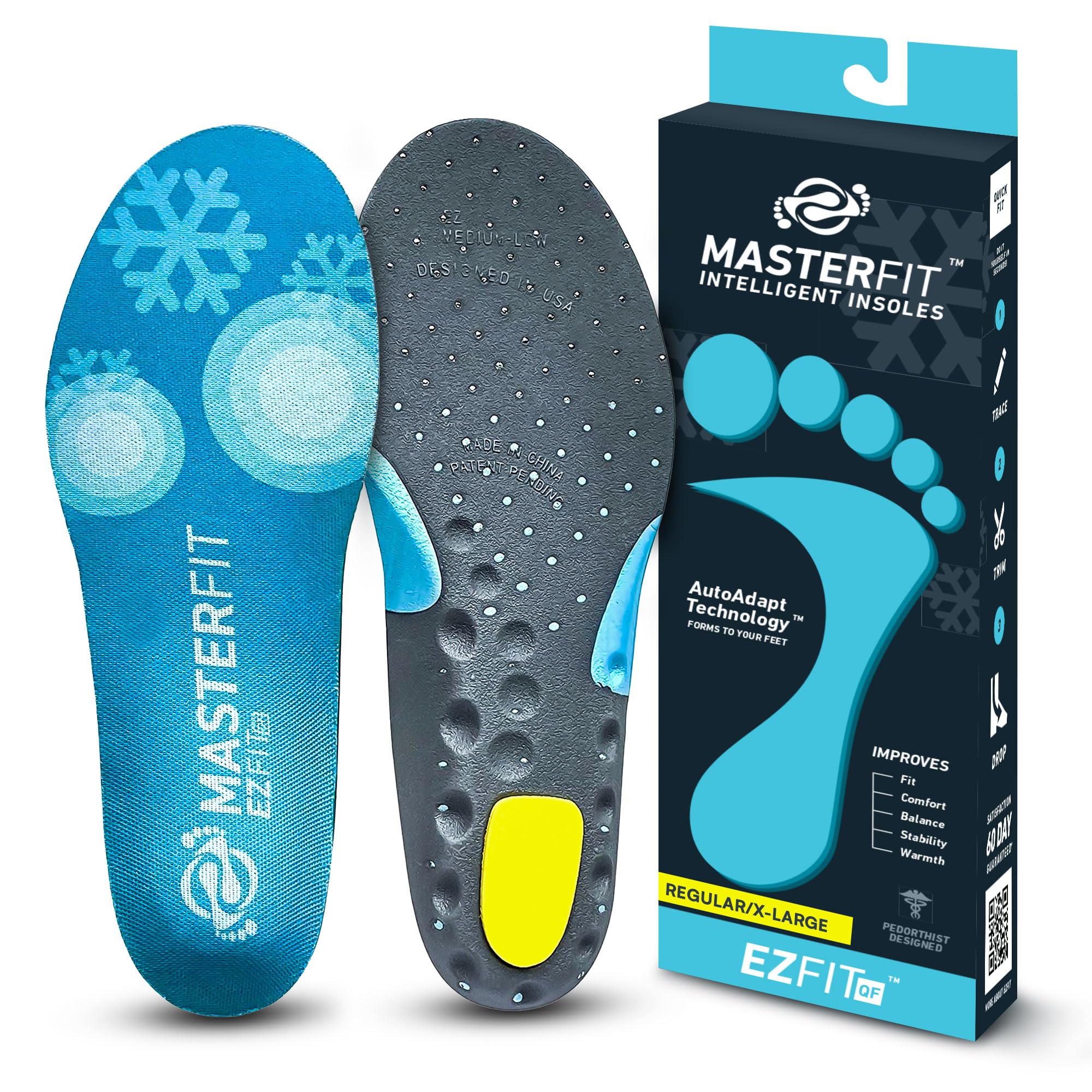
The EZFit QF from Masterfit is designed specifically as a volume reducer for ski boots, which is its primary superpower. Inside a stiff alpine shell, the auto-adapt shaping material molds to your foot over the first few uses, creating a stable platform that fills the dead space between your foot and the boot. The result is a significant reduction in heel lift and foot slide, translating directly into more precise edge engagement. The Poron heel pad is a smart addition — it absorbs high-frequency vibration from hardpack and chatter, reducing fatigue in your lower legs.
This footbed comes in low-volume and regular-volume versions, which is critical for ski boot fit. The low-volume option is ideal for snug alpine shells where every millimeter matters, while the regular version suits roomier boots. Users have reported that it dramatically improved comfort in new boots that were causing blisters, with some noting no blisters after several full days of skiing. The trim-to-fit design is straightforward, and the material holds its shape without needing heat activation.
Some users have noted that the material feels less premium compared to higher-end options like Superfeet or SOLE. There are isolated reports of the arch support being too aggressive for low-arched feet. If you need a dedicated volume reducer that also adds vibration damping, this is a solid mid-range choice, but those with extreme arch profiles may want a moldable alternative.
Why it’s great
- Functions as an effective volume reducer
- Poron heel pad absorbs chatter well
- Low-volume version ideal for alpine shells
Good to know
- Arch support may feel aggressive for flat feet
- Material feels less dense than premium options
4. SIDAS 3Feet Activ’ High-Arched

SIDAS approaches foot support with a data-driven method — they categorize feet by arch height and build specific shells for each. The High-Arched version has a shell height of 3.4 cm, which lifts the metatarsal heads and supports the medial arch without jamming into the navicular. This targeted support is a game-changer for skiers with high arches who find that generic footbeds cause arch cramps after a few runs. The gel pad in the heel provides enhanced cushioning that takes the sting out of hard landings and frozen snow.
The dynamic forefoot flex zone is another well-engineered feature — the shell is designed to flex at the metatarsal break, allowing your foot to roll through turns naturally. This makes the footbed feel less intrusive than stiffer orthotic options. Multiple users have reported that these footbeds relieved long-standing plantar fasciitis pain, which speaks to the quality of the arch support. The materials are lightweight and breathable, which helps with moisture management inside the boot.
These footbeds are positioned as multisport, so the base is thinner than dedicated ski-specific footbeds from Superfeet or Masterfit. This means they may not provide enough volume reduction for skiers with oversized shells. They also lack a thermal layer, so they do not add warmth in cold conditions. If your primary need is arch support and you have high arches, this is a stellar pick, but it is not a volume reducer.
Why it’s great
- Tailored shell height for high arches reduces cramping
- Gel heel pad adds effective vibration damping
- Dynamic forefoot flex zone feels natural in turns
Good to know
- Thinner base adds less volume reduction
- No thermal layer for cold weather warmth
5. PowerStep Archmolds
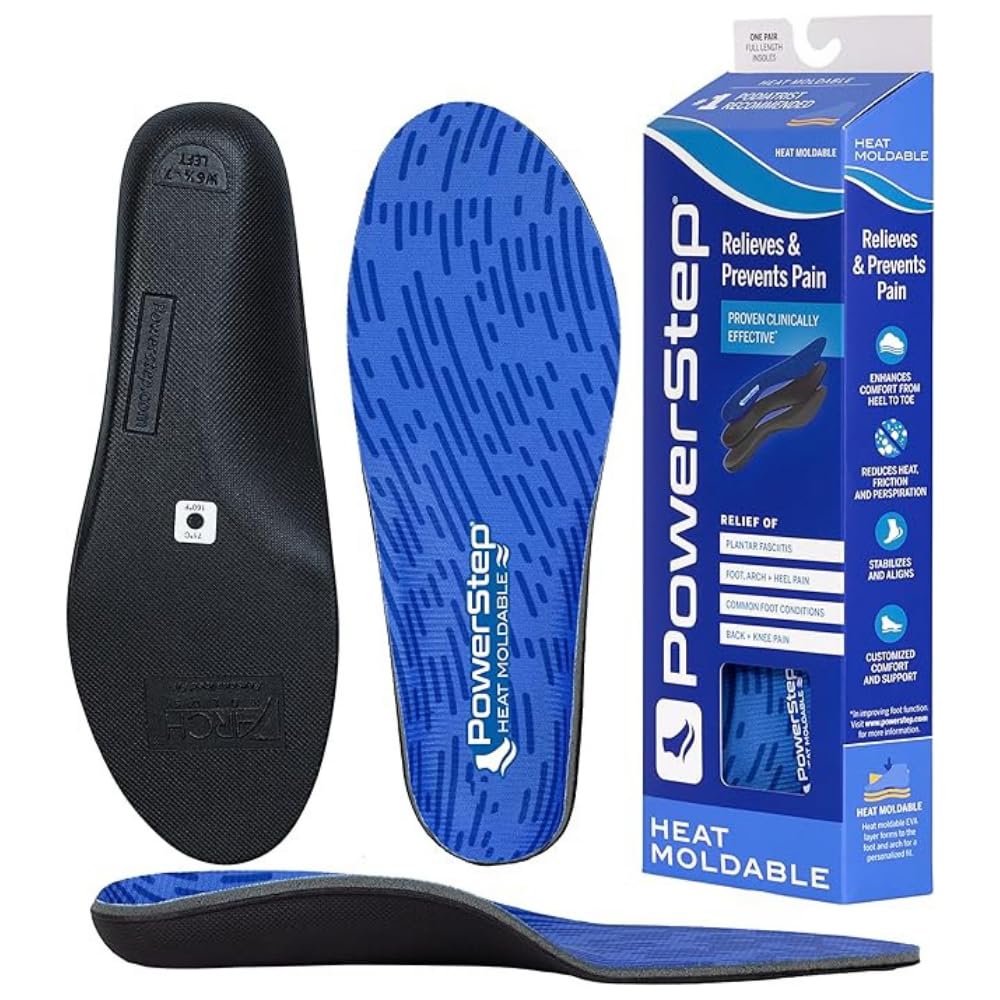
The PowerStep Archmolds use a heat-moldable EVA base that conforms to your foot after a short oven session, creating a custom footprint inside your ski boot. The arch support is pronounced and runs the full length of the footbed, providing support from the heel through the midfoot. This full-length design prevents the footbed from sliding forward inside the boot, a common annoyance with partial-length insoles. Users with plantar fasciitis and Achilles tendonitis have reported significant relief, which indicates that the arch contour is well-calibrated for clinical support.
The thickness of the footbed is moderate — it adds enough volume to improve shell fit without crowding the toe box. The material has a slight cushioning feel that is still firm enough to resist compression under load. After the heat-mold process, the footbed holds its shape well, and multiple users have reported using them for years without deformation. The trim-to-fit sizing accommodates a wide range of boot shells.
Some users with fallen arches found that the arch support was too aggressive and caused discomfort, as the footbed is designed for naturally established arches rather than collapsing ones. There are also reports that the cushioning layer stiffens after several months, reducing its comfort for all-day standing on concrete. If your arch structure is stable and you want a heat-moldable footbed that provides consistent support, this is a strong contender.
Why it’s great
- Heat-moldable for personalized arch contour
- Full-length design prevents sliding inside boot
- Firm support resists compression all season
Good to know
- Arch support may be too aggressive for fallen arches
- Cushioning can stiffen after several months
6. Protalus M-100 Elite
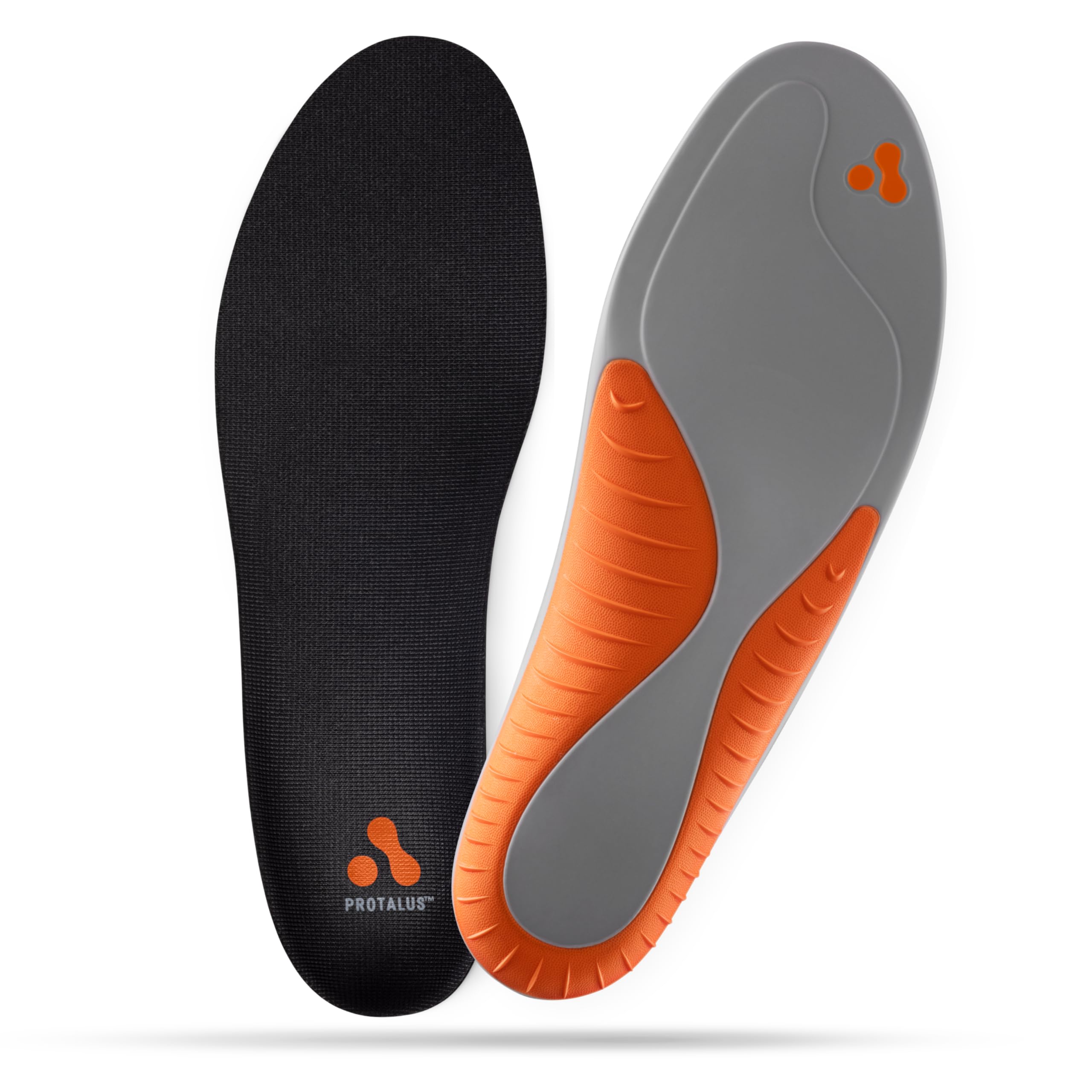
The Protalus M-100 Elite is built around a single, aggressive design philosophy — the deepest heel cup available on the market. Inside a ski boot, this translates to a level of heel lock that is almost surgical. The deep cup grabs the calcaneus and prevents the inward or outward rotation that leads to ankle strain and knee pain over a long day. The patented alignment technology extends this stabilization through the kinetic chain, which is beneficial for skiers who also experience hip or lower back discomfort after skiing.
This footbed is thick and substantial — it weighs over 10 ounces, reflecting the dense materials used. The dynamic arch support is designed to move with your foot rather than resist it, which helps your arch function naturally while still being guided into alignment. Users who spend long hours on concrete floors have reported that it reduces foot pain significantly compared to other inserts. The materials are designed to maintain their supportive structure for up to a year, which is competitive with premium options.
The thick profile is a double-edged sword. Some users found that the footbed made their boots feel too tight, requiring removal of the stock liner or even boot stretching. There are also reports of a slick surface texture that causes the foot to slide slightly inside the boot, which partially undermines the heel lock benefit. If you have ample volume in your shell and need maximum heel stabilization, this is a serious option, but it is not for low-volume boots.
Why it’s great
- Deepest heel cup provides exceptional heel lock
- Patented alignment tech reduces joint strain
- Dense materials maintain structure for a year
Good to know
- Very thick profile can crowd low-volume shells
- Slick surface texture may cause foot to slide
7. Vasyli Custom Full Length Insoles
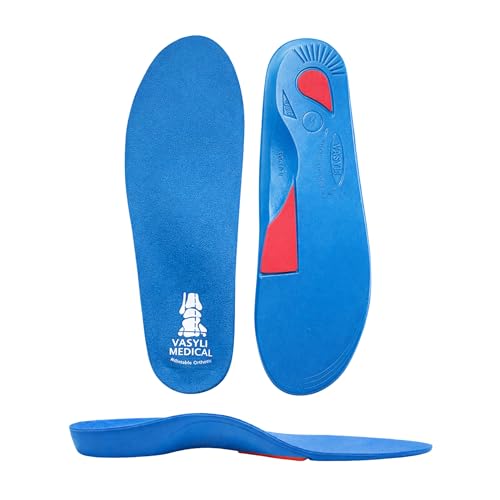
The Vasyli Custom Full Length Insole is built around biomechanical control rather than simple cushioning. The medium-density blue orthotic shell includes a built-in rearfoot varus angle, which subtly tilts the heel to correct overpronation. This is a feature typically found in prescription orthotics, making this footbed a strong choice for skiers who need more than just volume reduction. The deep heel cup stabilizes the calcaneus, and the full-length design distributes pressure evenly across the entire foot, reducing hotspots under the metatarsal heads.
The heat-moldable construction is designed to be customized with a heat gun, which gives you precise control over the fit — you can target specific areas like the arch or lateral edge. This is useful for accommodating bunions or tailors bunions without sacrificing overall support. Users with complex conditions like multiple sclerosis have reported significant improvements in stability and pain relief, which speaks to the footbed’s ability to manage alignment issues. The non-latex material is also a plus for those with latex allergies.
These footbeds are intentionally firm — the medium density is not plush, and some users may find them uncomfortable in the first few days. There are also occasional reports of a squeaking noise when walking, which may be more noticeable inside a quiet lift line. If you need a semi-rigid orthotic that provides biomechanical correction rather than volume fill, this is an excellent choice, but it is not a comfort-focused footbed.
Why it’s great
- Built-in rearfoot varus angle corrects overpronation
- Heat-gun moldable for targeted customization
- Non-latex material for allergy-friendly use
Good to know
- Firm feel may require break-in period
- Some units may squeak inside boots
FAQ
How thick should a footbed be for a low-volume ski boot shell?
Can I use a general-purpose insole from my running shoes inside my ski boots?
How often should I replace the footbeds in my ski boots?
Final Thoughts: The Verdict
For most users, the best footbeds for ski boots winner is the Superfeet Winter Support because it combines a deep heel cup, all-arch support, and a thermal layer into a package that improves fit in almost any shell without the complexity of heat molding. If you want a heat-moldable custom fit that resolves plantar fasciitis, grab the SOLE Active Thick. And for skiers with high arches who need targeted arch support, nothing beats the SIDAS 3Feet Activ’.