
Nothing kills a backcountry day faster than numb, wet fingers that refuse to tie a knot, adjust a camera dial, or unscrew a fuel canister. The gap between a glove that works and one that fails is measured in the specific interplay of insulation, dexterity, and waterproofing — a balance that changes drastically based on whether you’re moving fast in the alpine, grinding out cold miles on a bike, or glassing for game in a November snow squall.
I’m Mohammad Maruf — the founder and writer behind Drink4Good. My glove research is built on cross-referencing fabric composition, laminate waterproofing claims, real-world thermal ratings, and dozens of verified user reports covering long days in wet, cold, and high-output conditions.
This guide cuts through the marketing to deliver a curated selection of the best gloves for backpacking — focusing on the specific specs and real-world performance traits that actually matter when ounces, moisture management, and finger mobility are non-negotiable.
How To Choose The Best Gloves For Backpacking
The perfect backpacking glove is rarely the warmest one you can find. Overheating on a climb leads to sweat-soaked liners, which leads to dangerously cold hands the moment you stop. Start by identifying the typical low temperature and activity level of your trips. High-output winter hiking demands a breathable, less insulated glove that sheds moisture. Static camp use or alpine belays requires a thicker, fully insulated option or a separate liner-plus-shell system.
Insulation Type and Weight
Thinsulate, PrimaLoft, fleece, and wool each handle moisture and warmth differently. Fleece is fast-drying and breathable but fails in wind. PrimaLoft and Thinsulate retain warmth even when damp, making them ideal for wet environments. For most backpacking applications, a mid-weight glove (roughly 40-100g of insulation) provides the best versatility. Lightweight fleece options work for cold-weather running or high-climbing output but require a waterproof shell for precipitation.
Waterproofing vs. Breathability
A fully waterproof membrane like the TEMRES in the SHOWA gloves or the water-repellent shell in the Black Diamond Mont Blanc creates a hard barrier against rain and snow but reduces moisture vapor transmission. For wet-weather backpacking — especially in rain, sleet, or wet snow — a waterproof glove is non-negotiable. For dry, cold environments where you generate significant heat, a breathable softshell or stretch glove paired with a separate waterproof shell mitten offers more flexibility.
Cuff Design and Fit
An integrated gaiter cuff with a drawstring, like the one on the SHOWA Temres 282-02, prevents snow and water from entering the sleeve. Shorter knit cuffs, like those on the Carhartt, pair well with jacket sleeves that have internal snow cuffs. Long gauntlets are superior for deep-snow travel and ice fishing but trap heat in milder conditions. Fit should be snug enough to handle tools and zippers but not so tight that circulation is cut off — one or two sizes up from dress glove size often works best.
Dexterity and Touchscreen Compatibility
Thick insulation kills dexterity. If you need to tie knots, operate a camera, use a stove, or handle a map, look for a glove with articulated fingers, a pre-curved shape, or a very thin pile liner. Touchscreen-compatible fingertips work well with thin fleece or conductive thread on the thumb and forefinger, but heavy insulation or significant moisture renders them unresponsive. The TrailHeads and Outdoor Research Fairbanks are designed specifically for touchscreen use, while the SHOWA relies on removing the glove to operate your phone.
Quick Comparison
On smaller screens, swipe sideways to see the full table.
| Model | Category | Best For | Key Spec | Amazon |
|---|---|---|---|---|
| SHOWA Temres 282-02 | Waterproof/Insulated | Wet, cold, and deep snow | Rated to -58°F / Gaiter Cuff | Amazon |
| TrailHeads Convertible Mitt | 2-in-1/Convertible | Winter running / active use | Convertible mitten shell / Touchscreen | Amazon |
| Glacier Glove Alaska Pro | Leather/Waterproof | Hunting / hard use in wet cold | Goat leather palm / Thinsulate | Amazon |
| Black Diamond Mont Blanc | Lightweight/Softshell | High-output alpine / scrambling | Silicone palm / Wind-resistant shell | Amazon |
| Carhartt Waterproof Insulated | Durable/Work-style | Bushcraft / cold-weather camp chores | Waterproof coating / Knit cuff | Amazon |
| Rab Power Stretch Pro | Light Fleece Liner | Liner glove / mild cold | Polartec Power Stretch / 1.5 oz | Amazon |
| Outdoor Research Fairbanks | Fingerless/Touchscreen | Photography / phone use in cold | Fingerless design / Touchscreen tip | Amazon |
In‑Depth Reviews
1. SHOWA Temres 282-02
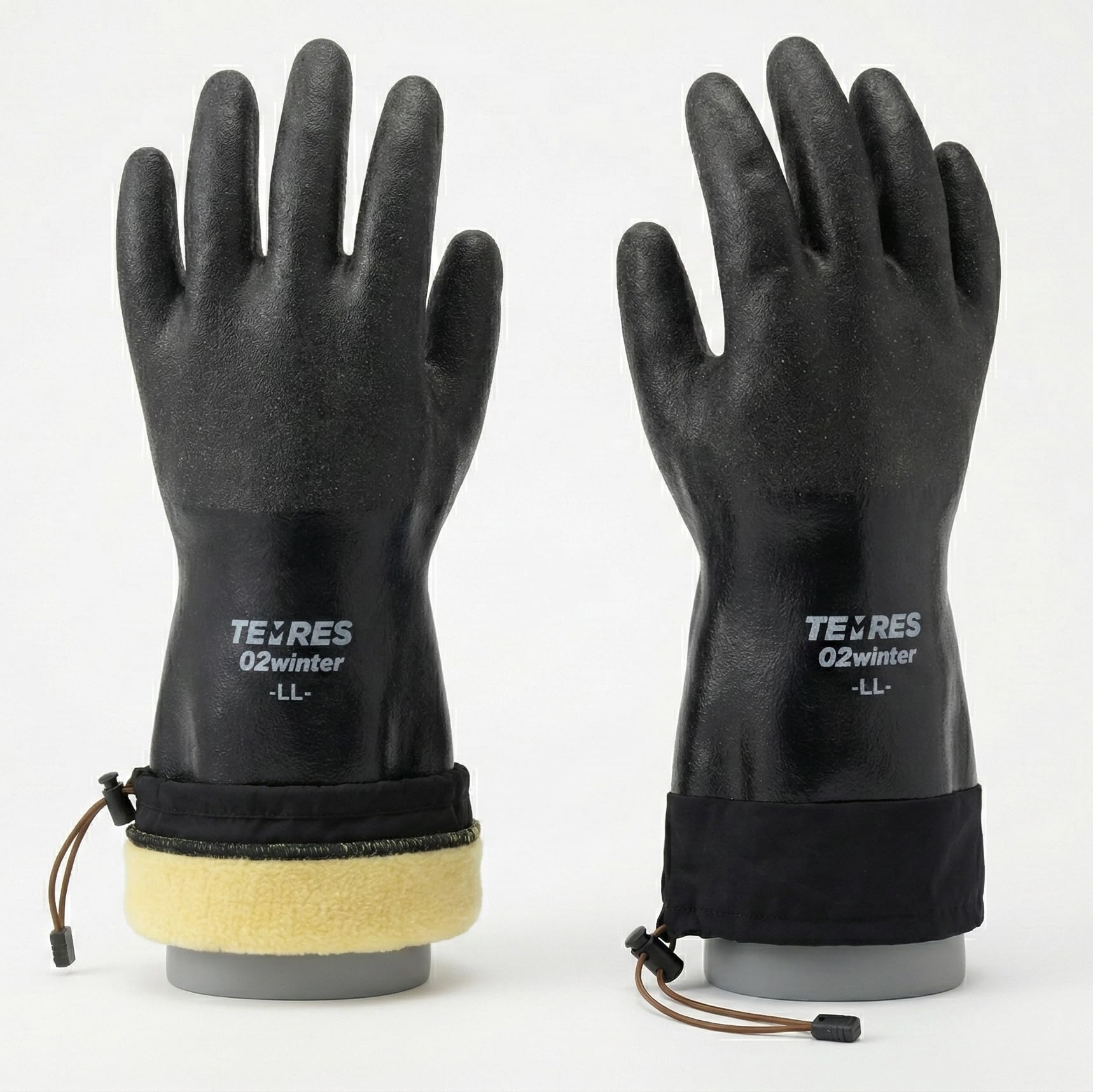
This glove punches so far above its price point that it has become a cult favorite among kayakers, ice fishermen, and winter backpackers who refuse to tolerate cold, wet hands. The core technology is TEMRES — a proprietary waterproof-breathable film that delivers a 100% liquid-proof seal without the clamminess of bulky PVC. The outer is a 50% PU / 50% acrylic shell coated with a textured rough finish that provides impressive grip on wet trekking poles, frozen zipper pulls, and slick water bottles.
Inside, the acrylic fleece liner is rated to an extreme -58°F (-50°C), though that figure applies in static conditions with no wind. What’s more practically important is that real-world users report warm, dry hands at 35°F during 20-mph scooter rides and fully submerged kayak sessions. The 5-inch integrated gaiter with a drawstring toggle seals out snow and prevents wet sleeves from dumping cold water into the glove interior. Sizing runs small — users consistently advise ordering one to two sizes up.
The dexterity is remarkable for a fully waterproof, insulated gauntlet. The glove is pre-curved to reduce hand strain, and the foam rubber palm is flexible enough for paddling grips but not built for heavy abrasion. There is no touchscreen functionality, which is the main trade-off. But for any backpacker who has had to stop mid-trail because their fingers were too numb to handle a zipper or tighten a strap, this is a transformative piece of gear.
Why it’s great
- Fully waterproof yet breathable TEMRES membrane keeps hands dry through submersion
- Integrated gaiter with drawstring completely seals out snow, ice, and debris
- Excellent dexterity for a thick insulated glove — pre-curved shape reduces fatigue
Good to know
- No touchscreen conductive fingertips — you must remove the glove for any device use
- Runs significantly small; order 1-2 sizes up from normal for proper fit
- Breathability is limited during very high-output aerobic activity
2. TrailHeads Convertible Mitten-Glove

The brilliance of this glove is its two-in-one construction — a thin, stretchy polyester-spandex glove with conductive touchscreen on the thumb and forefinger sits beneath a waterproof mitten shell that tucks into a wrist pocket when not needed. This setup solves the classic winter runner’s dilemma: you need full finger dexterity for phone use and adjusting gear, but also need emergency warmth when the wind picks up or your hands go numb.
Tested heavily in Pacific Northwest winter running, the TrailHeads gives reliable warmth down to about 20-25°F with moderate activity. At colder temperatures, the mitten shell traps enough heat to keep fingers functional even after a mile or two, and the extended cuff wraps onto jacket sleeves to block drafts. The moisture-wicking grid fleece on the thumb is a subtle but appreciated touch — clearing sweat and nasal drips without pulling the whole glove off.
Durability is the main caution. Several users report pilling at the thumb sweat zone and the reflective piping flaking off after a month of regular use. The waterproof mitten shell works well but lacks a snap or magnet to secure the flap when folded back, so it can flap during high winds. For the price and the brilliant convertible concept, these are the best option for women who run, hike, or cycle in variable winter weather.
Why it’s great
- Unique 2-in-1 design: insulated glove plus a waterproof mitten shell that stows in a pocket
- Touchscreen fabric on thumb and forefinger works reliably for phones, watches, and GPS units
- Extended cuff with pull tab tucks neatly into jacket sleeves to keep wrists warm
Good to know
- Mitten flap lacks a retention snap — can blow open in strong wind when not in use
- Reflective trim may flake off with regular washing and abrasion
- Not warm enough below 20°F for low-output activities without active movement
3. Glacier Glove Alaska Pro
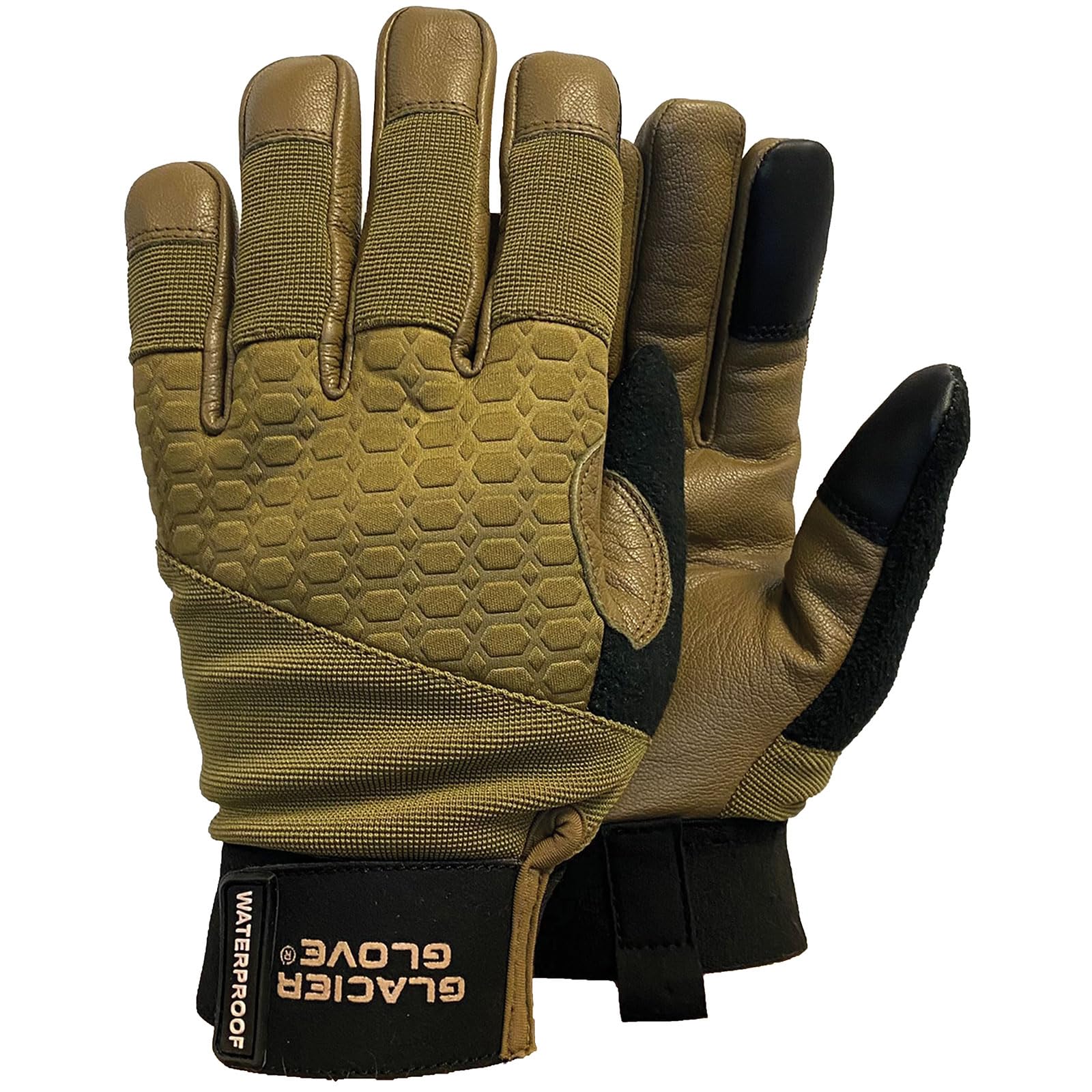
If your backpacking involves handling game, pulling trigger guards, or bushwhacking through dense willow thickets, the Alaska Pro upgrades the equation with a goat skin leather palm that combines genuine durability with a surprisingly precise grip. Unlike synthetic palms that degrade after a season of heavy rubbing against pack straps, snow shovels, or tree branches, the goat leather resists punctures and maintains its tactile integrity in temperatures well below zero.
The Thinsulate liner provides active warmth without the bulk of thick fleece or down, and users report that the gloves remain comfortable into the low single digits during deer hunting and ice fishing. The outer shell is fully waterproof — one user submerged the glove in water for an hour and found the interior completely dry. The touchscreen functionality on the fingers works well for quick phone checks, though the goat leather adds some stiffness that reduces sensitivity compared to fleece-based conductive tips.
There are two distinct compromises. The wrist cloth absorbs water if snow or rain runs down the jacket sleeve, so wearing the cuff inside a coat sleeve is mandatory in wet snow. The snug fit makes donning and doffing tricky — fingers can invert if you pull too hard. These are not the right gloves for dexterity-intensive tasks like tying a fly or adjusting a camera lens, but they are nearly indestructible for the backcountry tasks that routinely shred cheaper synthetics.
Why it’s great
- Goat skin leather palm provides exceptional grip, durability, and abrasion resistance
- Fully waterproof construction survived one-hour submersion tests in user reviews
- Thinsulate insulation is warm yet low-bulk — comfortable for trigger work and detail tasks
Good to know
- Wrist cloth material absorbs water if not worn inside a jacket sleeve
- Snug fit and stiff leather make the gloves difficult to pull on and off quickly
- Not ideal for high-dexterity tasks like zipping a sleeping bag or tying small knots
4. Black Diamond Mont Blanc
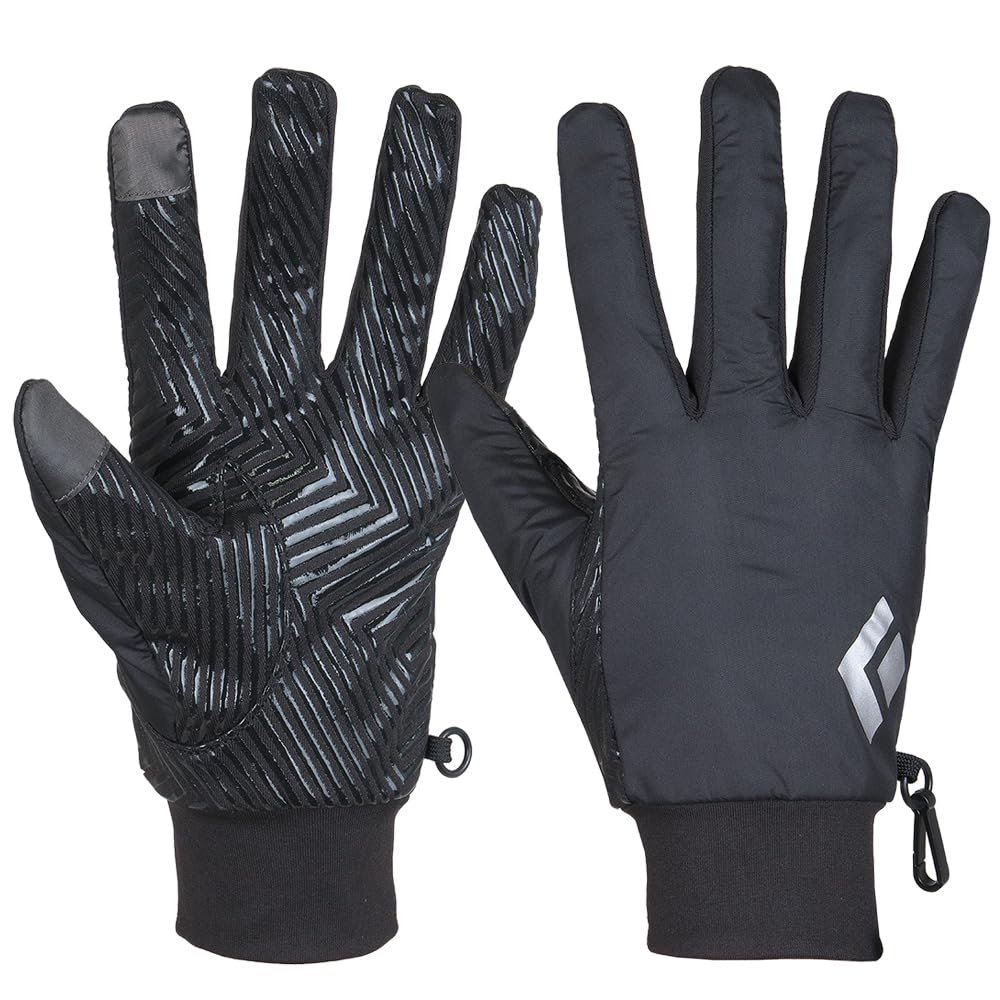
This glove is designed for a specific niche: fast-and-light alpine travelers who need a weather-resistant barrier that doesn’t restrict movement. The outer is a stretch polyester-nylon blend with a DWR treatment that sheds light precipitation, while the palm is a patterned silicone print that provides a surprisingly tenacious grip on ropes, rock, and trekking pole handles. At under two ounces, it disappears in a pack and can be worn comfortably for hours without creating sweat pockets.
Real-world users consistently describe the Mont Blanc as “not warm” in the traditional sense — it lacks any significant insulation layer. What it does is block wind effectively while remaining breathable, which makes it excellent for high-output climbing or running in the 25-40°F range. The digital conductive fingertips work reliably for touchscreens, and the stretch fabric allows full articulation for tying knots or operating carabiners. Some users found the cuffs too narrow and inflexible for easy on/off, especially when wearing larger watch faces or bulky jacket cuffs.
This is not a glove for standing still at a belay ledge or sitting around camp. It needs body heat and movement to be effective. Used as intended — as a lightweight, low-bulk barrier for active alpine travel — it outperforms every other glove in this guide for dexterity-to-weight ratio. For day hikes where the biggest cold threat is a chilly gust at the summit, the Mont Blanc is almost perfect.
Why it’s great
- Extremely lightweight and packable at well under 2 ounces — disappears in a jacket pocket
- Silicone palm pattern provides excellent grip on ropes, tools, and rock surfaces
- Stretch fabric allows unrestricted finger movement for dexterity-intensive alpine tasks
Good to know
- No significant insulation — warmth is entirely generated by active body heat
- Cuffs are narrow and inflexible, making them tricky to pull on over gloves or watches
- Not waterproof — only water-resistant DWR coating handles light precipitation
5. Carhartt Waterproof Insulated Knit Cuff

Carhartt’s insulated glove has been a reliable workhorse for decades, and the latest waterproof version brings the same rugged DNA to cold-weather camping, ice fishing, and bushcraft chores. The outer shell is a thick synthetic that takes serious abuse — cutting wood, hauling water, slinging snow — and the waterproof coating handles wet snow and sleet without wetting out. The insulation is substantial enough to keep hands warm in -29°F wind chill, according to one verified user report from a Midwestern winter.
The knit cuff design is a functional choice for layering with a jacket that has internal snow cuffs. It prevents drafts around the wrist but is shorter than a gaiter, so deep-snow users need to ensure their sleeve covers the cuff entirely. The glove runs snug — almost all reviewers recommend sizing up by at least one full size — and the initial stiffness requires a break-in period. Touchscreen compatibility is nonexistent, and dexterity is limited by the thick insulation, so fine motor tasks require removing the glove.
For the budget-conscious backpacker who spends more time in a camp than on a trail, the Carhartt delivers disproportionate warmth and durability for its price. The value gap is especially stark when compared to premium options costing twice as much. The downsides — bulk, lack of touchscreen, no women’s sizing — mirror the utilitarian nature of the brand. If your trip is about survival tasks in single-digit temps rather than smartphone photography, these will serve you for years.
Why it’s great
- Extremely durable synthetic shell stands up to wood chopping, ice fishing, and camp chores
- Thick insulation is genuinely warm — tested in -29°F wind chill with positive results
- Excellent value for the level of warmth and durability provided
Good to know
- No touchscreen-compatible fingertips — gloves must be removed for phone use
- Runs small and requires sizing up at least one full size for a comfortable fit
- Bulky insulation and stiff shell limit dexterity for fine motor tasks
6. Rab Power Stretch Pro Lightweight
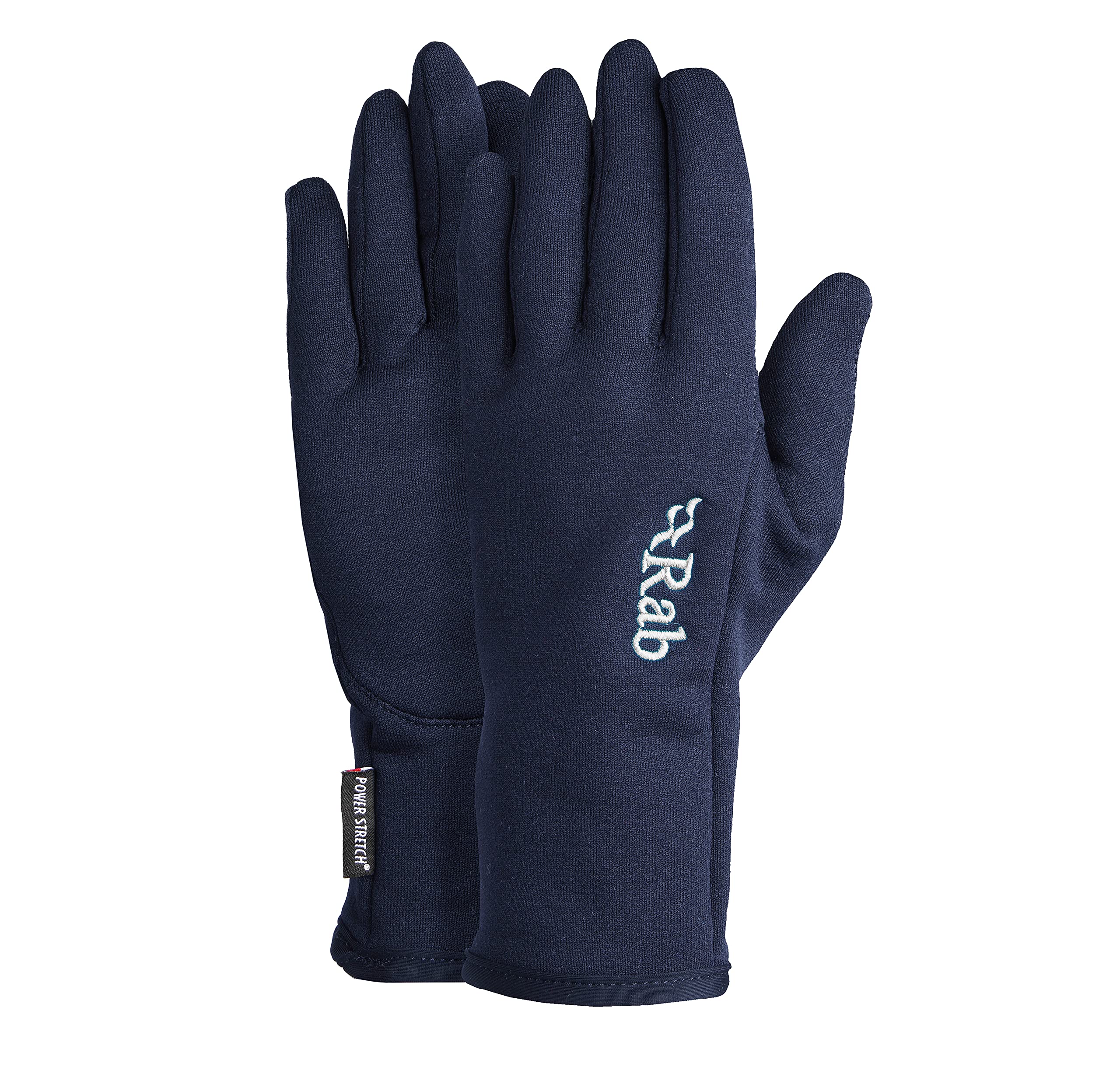
The Rab Power Stretch Pro sits in the lightweight liner category — a glove that prioritizes breathability, moisture management, and unrestricted movement over insulation mass. The Polartec Power Stretch fabric is a four-way stretch fleece that fits like a second skin, making it an excellent first layer beneath waterproof mittens for sub-zero expeditions or a standalone option for chilly low-output hikes where you just need a hand warmer. At 1.5 ounces, it’s the lightest glove in the lineup.
User feedback is mixed on the durability of the stretch fabric — several reports mention pilling on the palm after extended use — and the primary frustration revolves around the touchscreen claim. Multiple verified buyers explicitly state that the advertised touchscreen-compatible fingertips do not function at all with smartphone screens, contradicting the product description. This is a meaningful flaw for anyone expecting a liner glove they can use for map checking or photo-taking without removing their shell layer.
Fit is another concern. The glove runs very small, with XL sizing fitting like a standard M-L in other brands, and the cut does not accommodate long fingers comfortably. For dedicated Rab fans who already own a shell mitten system, the Power Stretch Pro works fine as a moisture-wicking liner. But as a standalone backpacking glove for cold conditions, it is too thin to provide meaningful warmth and the fit/touchscreen issues make it less appealing than the Outdoor Research alternative.
Why it’s great
- Excellent moisture-wicking and all-day breathability for high-output activities
- Ultralight weight (1.5 oz) makes it nearly unnoticeable in a pack or jacket pocket
- Stretchy Polartec fabric provides unrestricted finger movement for handling gear
Good to know
- Touchscreen functionality is non-functional despite being advertised — a known issue
- Runs extremely small and short in the fingers — size up significantly
- Very thin insulation layer offers minimal warmth as a standalone glove in cold temps
7. Outdoor Research Fairbanks Fingerless

The Fairbanks Fingerless Gloves from Outdoor Research solve one very specific problem: maintaining full tactile access to your fingers while keeping the palm and back of your hand warm. The fingerless cut leaves the last two phalanges exposed, enabling unencumbered use of touchscreen devices, camera dials, map compasses, and stove controls. The knit fabric is dense, soft, and stretchy with a 1×1 ribbed cuff that stays put without constricting circulation.
Pacific Northwest photographers and PNW-based creatives rave about these for outdoor shoots in December — the combination of finger-free dexterity and wrist/palm coverage means you can operate a DSLR for hours without losing fine motor control. The material does pill with minimal abrasion; reports of pilling on the palm from backpack straps and climbing ropes mean these are not built for heavy friction. They are also lightweight, so they offer no protection in bitter cold — best used in 30-45°F range or as a liner beneath larger mittens for extra warmth.
If your backpacking style involves frequent phone checks, GPS navigation, or camp photography, the Fairbanks is a category-specific tool that outperforms full-fingered touchscreen gloves because there’s no fabric to interfere with screen sensitivity. For general winter backpacking where you just need warm hands, a full-fingered insulated glove is more practical. But for its intended use case, there is no better option at this price point.
Why it’s great
- Fingerless design provides unrestricted access to touchscreens, dials, and camera controls
- Soft, stretchy knit fabric is comfortable to wear for extended periods without irritation
- Excellent for outdoor photography, navigation, and any task requiring fine finger dexterity
Good to know
- Pills easily on the palm with minimal abrasion from backpack straps or climbing rope
- Not warm enough for sub-freezing temps — best suited for 30-45°F range or as a liner
- Fingerless design leaves fingertips exposed to cold, wind, and precipitation
FAQ
Can I use the SHOWA Temres for high-output backpacking in dry cold?
How do I keep my touchscreen compatible gloves working when they are wet?
What glove weight do I need for typical three-season backpacking in temperatures from 20 to 40 degrees Fahrenheit?
Are fingerless gloves like the Outdoor Research Fairbanks practical for backpacking?
Final Thoughts: The Verdict
For most backpackers who face wet, cold conditions on the trail, the best gloves for backpacking winner is the SHOWA Temres 282-02 because it delivers reliable waterproofing, genuine warmth, and integrated snow protection at a price that undercuts most competitors by a wide margin. If you need a glove for high-output trail running in variable winter weather, grab the TrailHeads Convertible Mitten-Glove. And for rugged durability or trigger-finger precision in heavy winter conditions, nothing beats the Glacier Glove Alaska Pro.