
Freeride demands boots that refuse to surrender—stiff enough to transmit every edge pressure at speed, yet precise enough to feel the snowpack beneath your feet. When you’re dropping into a chute or slashing through variable crud, a sloppy heel lift or a flex that folds under load turns a powder day into a survival mission.
I’m Mohammad Maruf — the founder and writer behind Drink4Good. I’ve spent years breaking down the nuances of snowboard boot hardware, from lacing architectures to liner densities, to separate marketing hype from real backcountry-ready performance.
The challenge is cutting through the noise to find the best freeride snowboard boots that combine a locked-down heel pocket, a responsive flex profile, and a lacing system you can adjust without removing your gloves at 12,000 feet.
How To Choose The Best Freeride Snowboard Boots
Freeride boot selection is about avoiding the two worst enemies of aggressive riding: heel lift and excessive flex. A boot that lets your heel rise inside the shell robs you of instant edge engagement. A boot that folds over when you drive your shins forward kills the energy transfer you need to carve through chop. Here’s what separates a true freeride boot from a soft all-mountain cruiser.
Flex Rating and Stiffness Profile
Most brands use a 1–10 scale where 1 is marshmallow-soft and 10 is a carbon-fiber race shell. For freeride, aim for a 7/10 or higher. A boot that soft at the top will let your ankle flex mid-turn, forcing your upper body to compensate. Stiffer boots also resist pack-out over a full season, so the same lockdown you feel in December still holds in April. The K2 Maysis and Nidecker Altai both deliver a 7/10 flex that suits charging through uneven snow.
Heel Retention Systems
Even a stiff boot is useless if your heel lifts every time you pressure the tongue. Look for dedicated heel hold mechanisms—internal ankle harnesses, J-bars inside the liner, or a locked-down cuff like Burton’s Focus Cuff. The DC Phase BOA Pro uses a SuperLock heel harness, while the Burton Ruler employs a lock-up cuff that grips the Achilles area. If you have narrow heels, these systems are non-negotiable.
Lacing Architecture: BOA vs. Traditional
Dual-zone BOA systems let you tension the lower foot independently from the upper cuff, which is ideal for fine-tuning heel hold without crushing your toes. Traditional lace boots (like the ThirtyTwo Lashed) offer more friction-lock but are slower to adjust. For freeride, dual-zone BOA is the sweet spot—you want to micro-adjust on the lift without re-lacing the entire boot. The H4 Coiler dials on DC and K2 models provide 1mm adjustment precision.
Liner Quality and Molding Potential
A heat-moldable liner conforms to your ankle bone shape and arch profile, eliminating pressure points that cause pain by run three. The Burton Imprint 3 and the Intuition Control Foam 3D liner inside the K2 Maysis both respond well to heat molding. If you plan to keep the boot for more than one season, a quality liner that doesn’t pack out after 30 days is worth the premium. Cheaper foam liners lose their density quickly and force you to over-tighten the laces.
Quick Comparison
On smaller screens, swipe sideways to see the full table.
| Model | Category | Best For | Key Spec | Amazon |
|---|---|---|---|---|
| K2 Maysis | Premium | Charging wide-foot riders | Flex 7/10, Intuition liner | Amazon |
| Burton Photon Step On | Premium | Step-on binding users | Step On outsole, dual BOA | Amazon |
| ThirtyTwo Lashed Double Boa | Premium | All-day comfort riders | Dual-zone BOA, foam liner | Amazon |
| Nidecker Altai BOA | Mid-Range | Stiff flex on a budget | Articulating flex zone | Amazon |
| Burton Ruler BOA | Mid-Range | All-mountain / freeride hybrid | Imprint 2 heat-moldable liner | Amazon |
| DC Phase BOA Pro | Mid-Range | Narrow-ankle riders | SuperLock heel harness | Amazon |
| ThirtyTwo Lashed ’24 | Mid-Range | Traditional lacing fans | Performance liner, lace-up | Amazon |
| Nidecker Sierra BOA | Budget | Entry-level freeride practice | Relaxed flex, TX3 laces | Amazon |
| DC Control BOA | Budget | First steeps on a budget | Flex 4/10, UniLite outsole | Amazon |
In‑Depth Reviews
1. K2 Maysis Mens Snowboard Boots
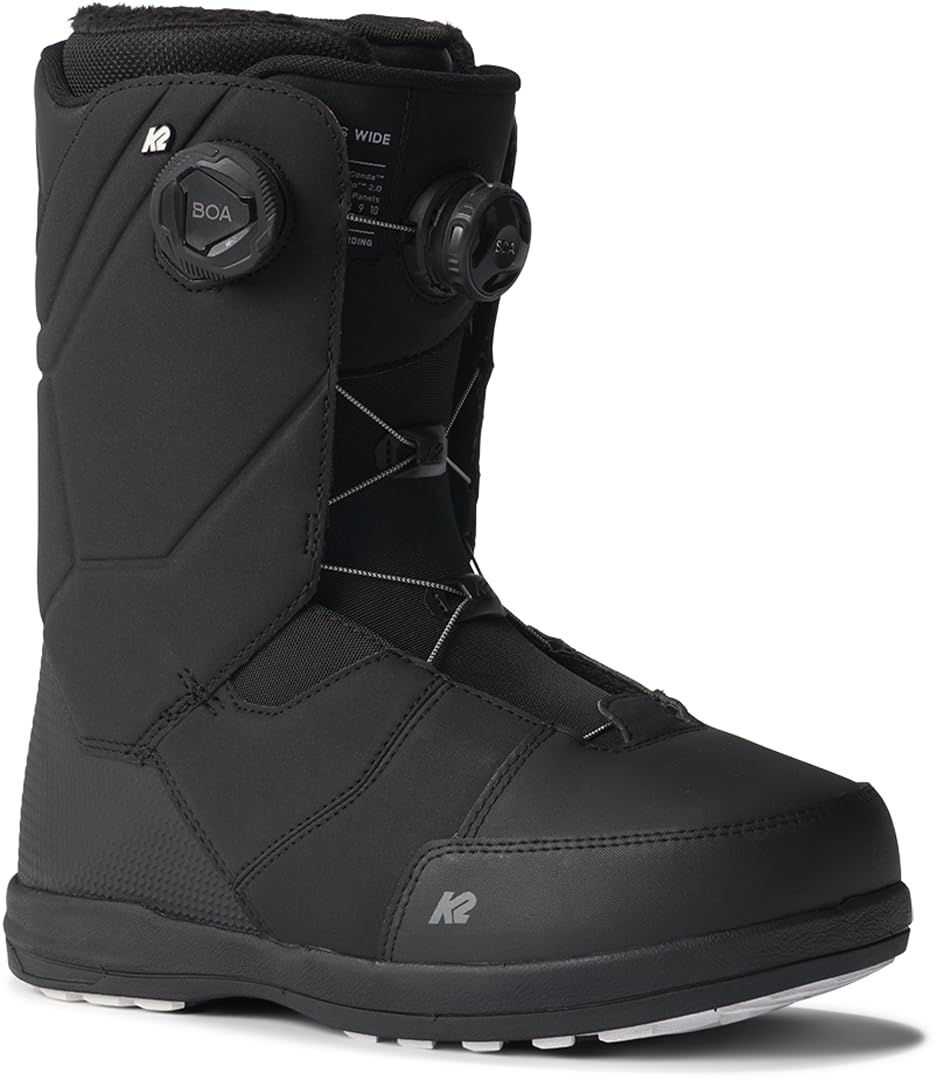
The K2 Maysis sits at the top of this list because it nails the core freeride equation: a stiff 7/10 flex that doesn’t rattle your spine, combined with an Intuition Control Foam 3D liner that heat-molds to the exact contours of your ankle and arch. The H4 Coiler BOA system delivers dual-zone precision—crank the lower zone to lock your heel, then adjust the upper independently for shin support. Every rider I’ve spoken to who rides the Maysis reports zero heel lift after the liner packs in, even on chundery steeps where you’re driving the nose through variable snow.
K2 also offers this boot in a Wide option, which is rare for a performance-level freeride boot. The premium rubber outsole with Harshmellow damping eats up the vibration from hard-packed runouts without dulling board feel. Multiple verified buyers mention that the fit runs true to street shoe size, and the slim profile avoids toe jam inside Flow and Union bindings. For riders with wide feet who previously had to size up and suffer heel slip, the Maysis Wide is a genuine solution.
Downsides are mostly about the break-in period—the Intuition liner feels snug before heat molding, and some users needed a full day of riding before the foam softened. The boot also lacks a dedicated internal ankle harness, relying instead on the liner geometry and BOA tension to secure the heel. But for riders charging big terrain who need a boot that stays consistent season after season, the Maysis justifies its premium position.
Why it’s great
- Intuition liner molds to your foot for zero heel lift
- Wide option available without sacrificing flex or feel
- H4 Coiler BOA provides precise, on-the-fly adjustments
Good to know
- Liner feels tight before heat molding; requires patience
- No dedicated internal ankle harness like some competitors
2. Burton Step On Photon Mens Snowboard Boots
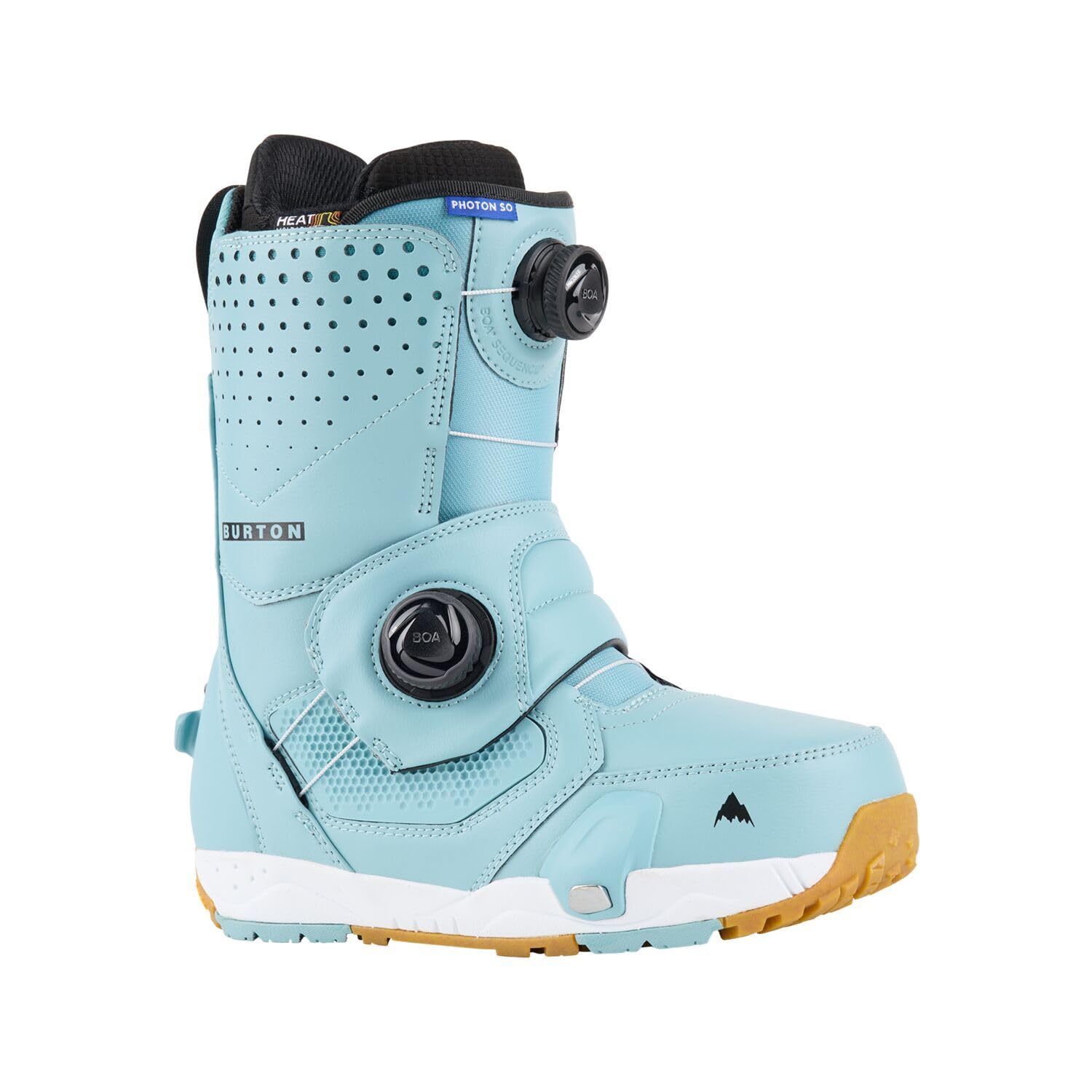
If you’ve already committed to Burton’s Step On binding ecosystem, the Photon Step On is the obvious freeride companion. The boot shares the same dual-zone BOA and Imprint 3 heat-moldable liner as the traditional Photon, but adds the Step On outsole with forefoot toe cleats that click into the binding instantly. The heel connection point on the backstay creates a direct, strapless link between boot and binding that feels more responsive than any traditional strap system I’ve tested. Edge-to-edge transfers happen immediately because there’s no strap slack to take up.
The Focus Cuff rides slightly higher than the standard Photon cuff, which improves heel hold for riders with skinny heels. The 1:1 firm flex PowerUp tongue creates a consistent shin interface that won’t fold over when you’re driving through heavy crud. Riders who heat-molded the Imprint 3 liner report that the boot went from “tight in the ankle” to “zero pressure points” after a single day. The Vibram Ecostep outsole uses 30% recycled rubber but still delivers reliable grip when you’re boot-packing up a ridge to access a line.
The main caveat is that the Step On Photon only works with Step On bindings, locking you into Burton’s ecosystem. A few users with wide feet noted the boot felt narrow in the forefoot before molding, though the double-BOA allows some relief on the lower zone. If you want the fastest binding entry in the game and don’t mind the ecosystem lock-in, this boot delivers a level of direct connection that traditional boots can’t match.
Why it’s great
- Step On system eliminates strap lag for instant response
- Heat-moldable liner adapts to unique foot shapes
- Vibram outsole provides reliable grip for boot-packing
Good to know
- Only compatible with Burton Step On bindings
- Narrow forefoot before molding; wide-footers should size up
3. ThirtyTwo Lashed Double Boa Snowboard Boots
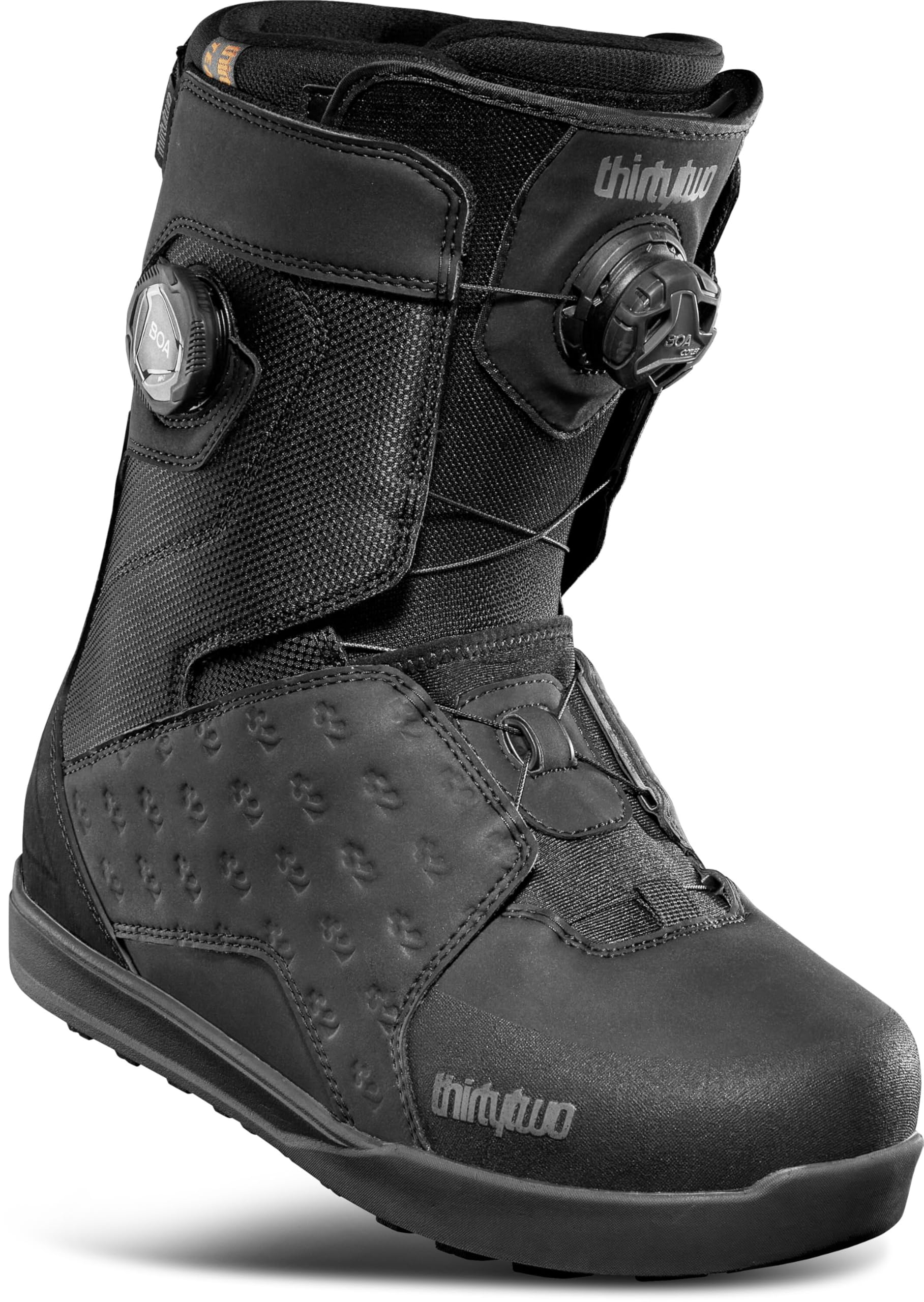
The ThirtyTwo Lashed Double Boa takes the classic Lashed platform—known for its forgiving flex and reliable construction—and adds a dual-zone BOA system that lets you dial in the lower foot independently from the upper cuff. This is a significant upgrade for freeride because you can crank the lower BOA to lock your heel without over-tightening the shin area. The internal foam liner packs out quickly (one or two days of riding) but provides a plush, comfortable fit that absorbs chatter on long traverses.
Riders with high arches or duck feet report that the Lashed Double Boa accommodates their foot shape better than many Burton or DC offerings. The double Velcro strap on the boot liner keeps the tongue centered, though some users noted that the Velcro can restrict the BOA’s tightening range if you cinch it too aggressively. The outsole grip is solid for walking through parking lots or short boot-packs, though it’s not as aggressive as the Vibram-equipped Maysis or Photon.
The biggest knock is relative softness for true freeride charging. The Lashed leans toward a medium flex, which means aggressive riders driving through variable snow may feel the upper cuff fold slightly under hard pressure. The boot also runs slightly small—several buyers recommended sizing up a half size, especially if you wear thick socks. For intermediate-to-advanced riders who want comfort and adjustability on all-day missions, this is a strong mid-range pick.
Why it’s great
- Dual-zone BOA enables precise heel hold without overtightening
- Accommodates high arches and wider forefeet comfortably
- Packs out quickly for a plush, broken-in feel
Good to know
- Medium flex may feel soft for hard-charging freeriders
- Runs small; consider sizing up half a size
4. Nidecker Altai BOA Men’s Snowboard Boots
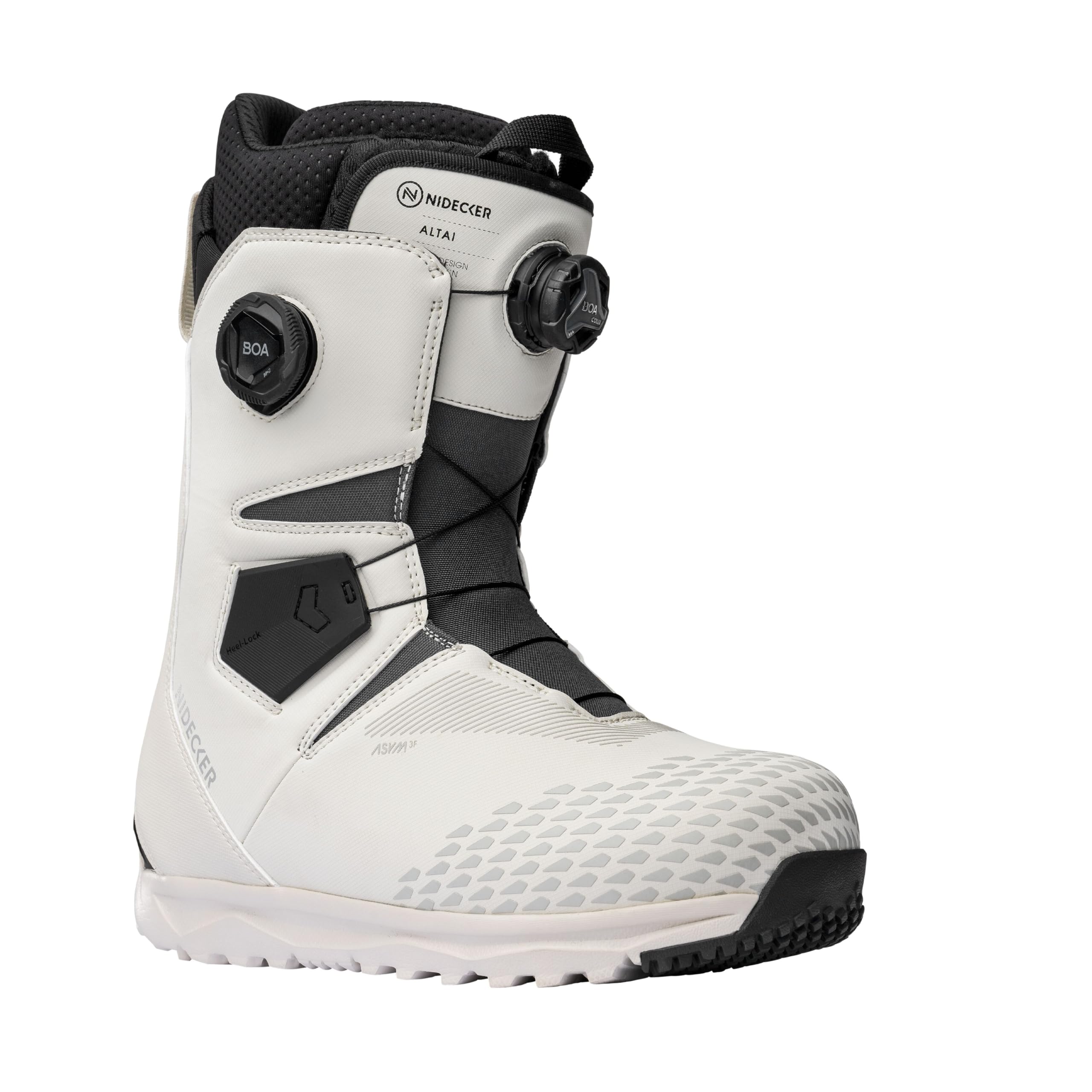
The Nidecker Altai is the dark horse of this list—a boot that delivers premium-level stiffness (7/10 flex) and construction detail at a price that undercuts the big-name competition. The articulated flex zone in the upper cuff allows the boot to move naturally when you’re in a deep toe-side turn, preventing the shell from fighting your ankle’s range of motion. The 3D molded lasted toe box and tongue eliminate dead space over the instep, so you feel the board edge immediately when you shift weight.
Riders who have paired the Altai with Nidecker Supermatic bindings report a seamless interface, but the boot works equally well with standard strap bindings. The Silver Liner lining and fleece-topped footbed keep feet warm even on sub-20-degree mornings, and the dual-density EVA footbed provides arch support that doesn’t collapse after a full season. Multiple user reviews note that the boot is comfortable out of the box but improves significantly after a single heat-molding session.
The main drawbacks are the weight—the Altai is noticeably heavier than the K2 Maysis or Burton Photon, partly due to the beefier construction. The BOA dials also sit slightly lower on the tongue than on some competitors, which can be awkward if you have a high instep. But for riders who want a stiff, responsive boot without paying +, the Altai delivers surprising performance for the spend.
Why it’s great
- Articulated flex zone allows natural ankle movement in turns
- 3D molded toe box eliminates forefoot dead space
- Excellent value for a stiff 7/10 freeride boot
Good to know
- Heavier than many premium competitors
- BOA dials positioned lower on tongue; may suit high insteps less
5. Burton Men’s Ruler BOA Snowboard Boots
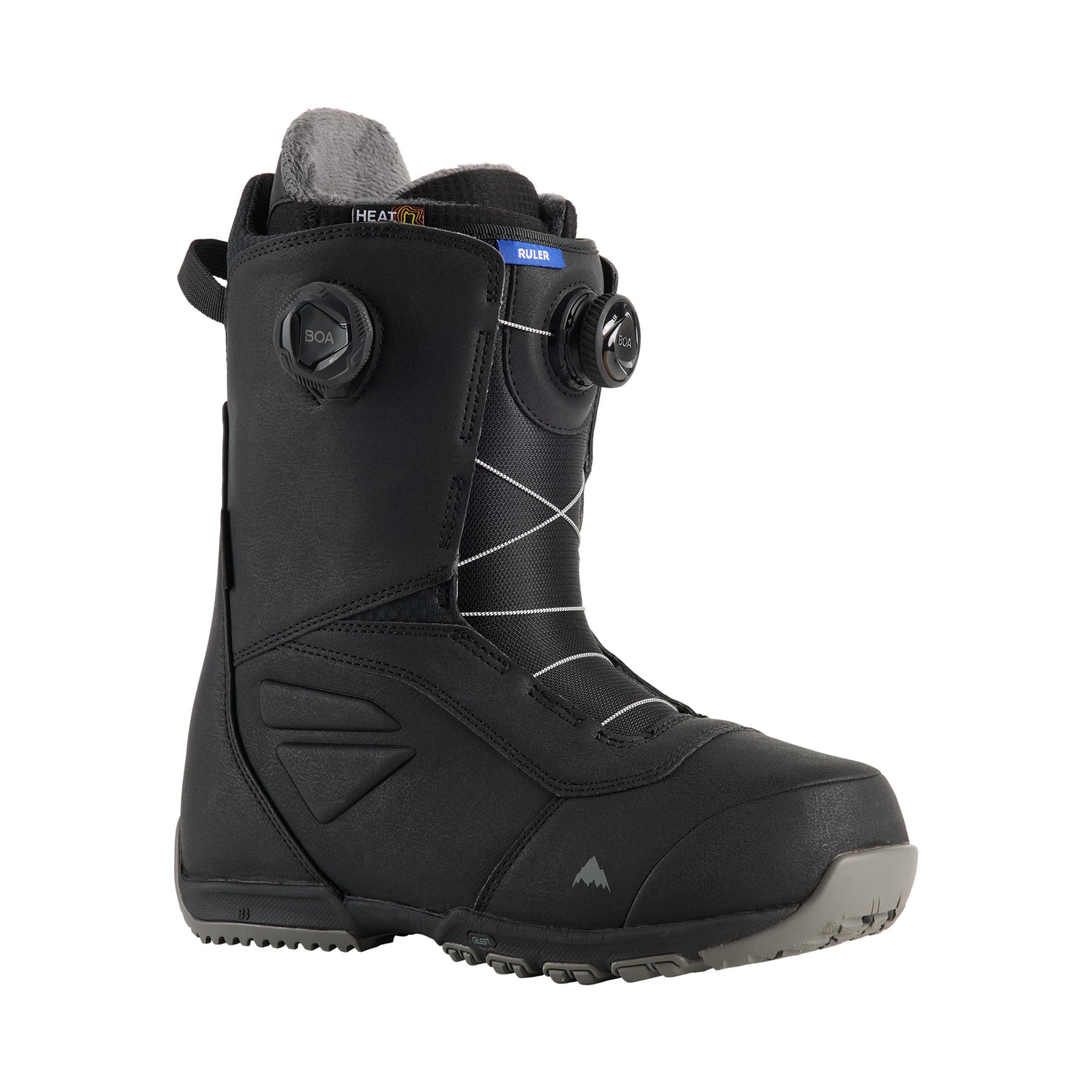
The Burton Ruler BOA has been a staple in the freeride community for years, and the current iteration continues to justify that reputation. The boot’s lock-up cuff is a low-profile inner cuff that grabs the calcaneus (heel bone) area and pulls it back into the heel pocket, virtually eliminating lift. Combined with the dual-zone BOA system, you can tension the lower foot to your preferred snugness without affecting the upper cuff’s shin support. The PowerUp tongue uses a 1:1 medium flex that’s stiff enough for steep charging but not so rigid that it causes shin bang on groomer laps.
The Imprint 2 liner is heat-moldable and lined with 3M Thinsulate, which keeps feet warm without excessive bulk. The sleeping bag reflective foil under the footbed bounces heat back toward your toes, a feature that makes a real difference on cold mornings when the chairlift wind is biting. The EST-optimized midsole lowers your center of gravity relative to the board, improving edge feel and response. Multiple user reports confirm the boot is comfortable straight out of the box, with zero break-in blisters even after eight-hour days.
The synthetic leather upper is durable but tends to show scuffing faster than the rubber-reinforced competitors. Some riders also note that the medium flex sits at the softer end of the freeride spectrum—if you’re a 200+ pound charger, you might prefer the stiffer K2 Maysis. But for the vast majority of advanced freeriders, the Ruler BOA hits the perfect balance of response, warmth, and all-day comfort.
Why it’s great
- Lock-up cuff delivers exceptional heel hold for narrow heels
- Imprint 2 liner is heat-moldable and Thinsulate-insulated
- EST midsole reduces center of gravity for improved board feel
Good to know
- Synthetic leather scuffs easier than rubber-reinforced uppers
- Medium flex may feel soft for heavy, aggressive riders
6. DC Shoes Phase BOA Pro
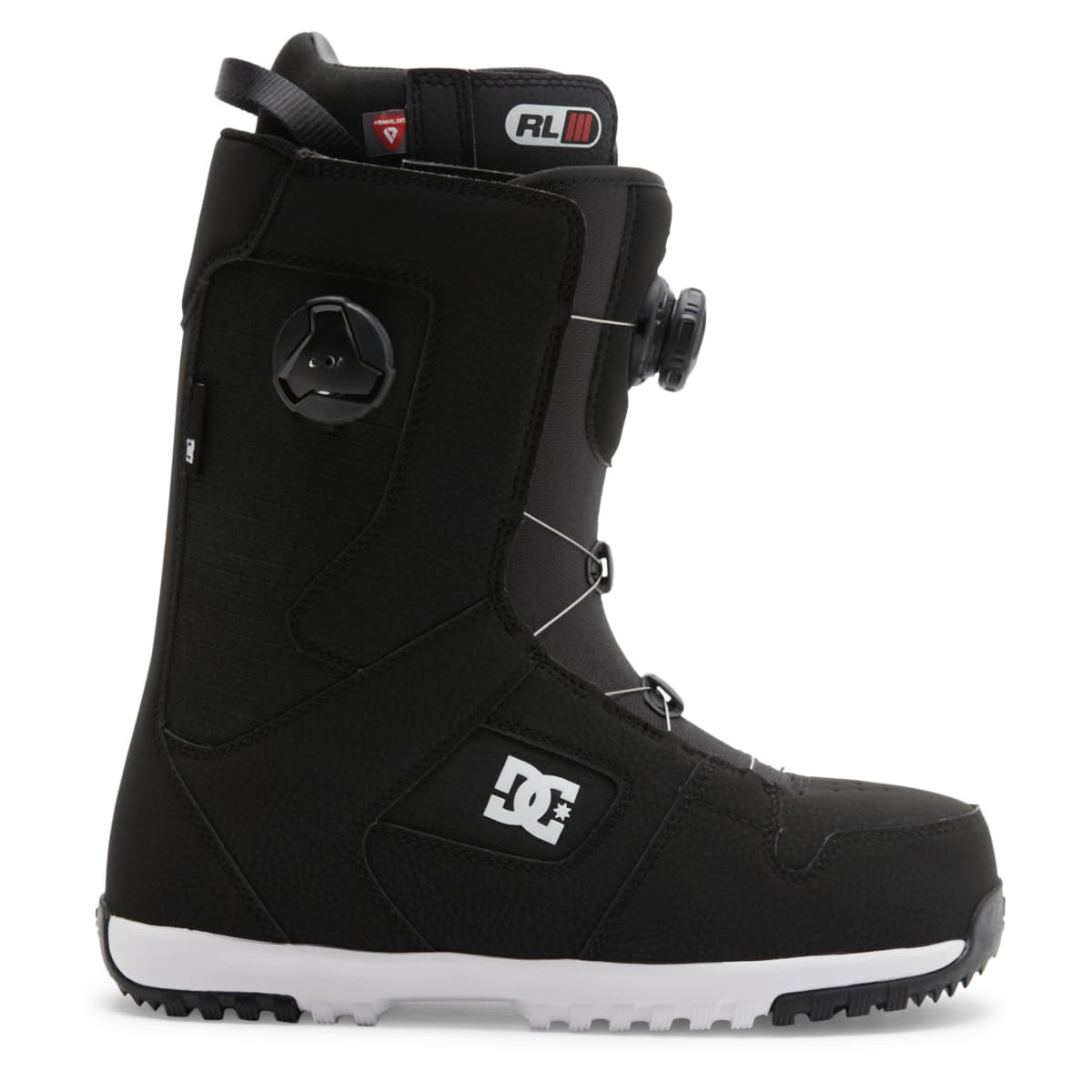
The Phase BOA Pro is DC’s answer to the rider who struggles with heel lift because of a narrow ankle and a lower-volume foot. The SuperLock heel harness is a strap that wraps around the Achilles tendon and pulls the heel back into the pocket independently of the main BOA lacing. This solves the fundamental geometry problem that many boots face: riders with narrow ankles have to crank the entire boot tight to secure the heel, which then crushes their forefoot. With the Phase BOA Pro, you tension the harness, then adjust the Dual Zone BOA for overall fit.
The Response Liner III uses Primaloft insulation and Aerotech ventilation to regulate temperature without bulk. The Contact Unilite outsole is inspired by skate shoe design—it’s lighter than traditional snowboard boot outsoles but still uses durable rubber in high-wear zones. Multiple users with wider feet or high-volume calves also reported a good fit, contradicting the assumption that this boot is exclusively for narrow-footed riders. The 5/10 flex rating is on the medium side, but the articulated construction keeps the boot responsive enough for all-mountain freeride scenarios.
The primary limitation is the flex ceiling—riders who push 200+ pounds or spend most of their time in steep, icy couloirs may find the Phase BOA Pro bends too much under aggressive forward lean. The Bungee closure type listed on the spec sheet also confused some buyers, though it refers to the BOA cable system, not a traditional lace. If you prioritize heel hold over maximum stiffness, this is one of the most effective solutions on the market.
Why it’s great
- SuperLock harness isolates heel hold for narrow ankles
- Lightweight skate-inspired outsole with good board feel
- Primaloft insulation keeps feet warm without bulk
Good to know
- 5/10 flex is medium; not ideal for hard-charging freeriders
- Bungee/BOA categorization on label can confuse
7. ThirtyTwo Mens Lashed ’24
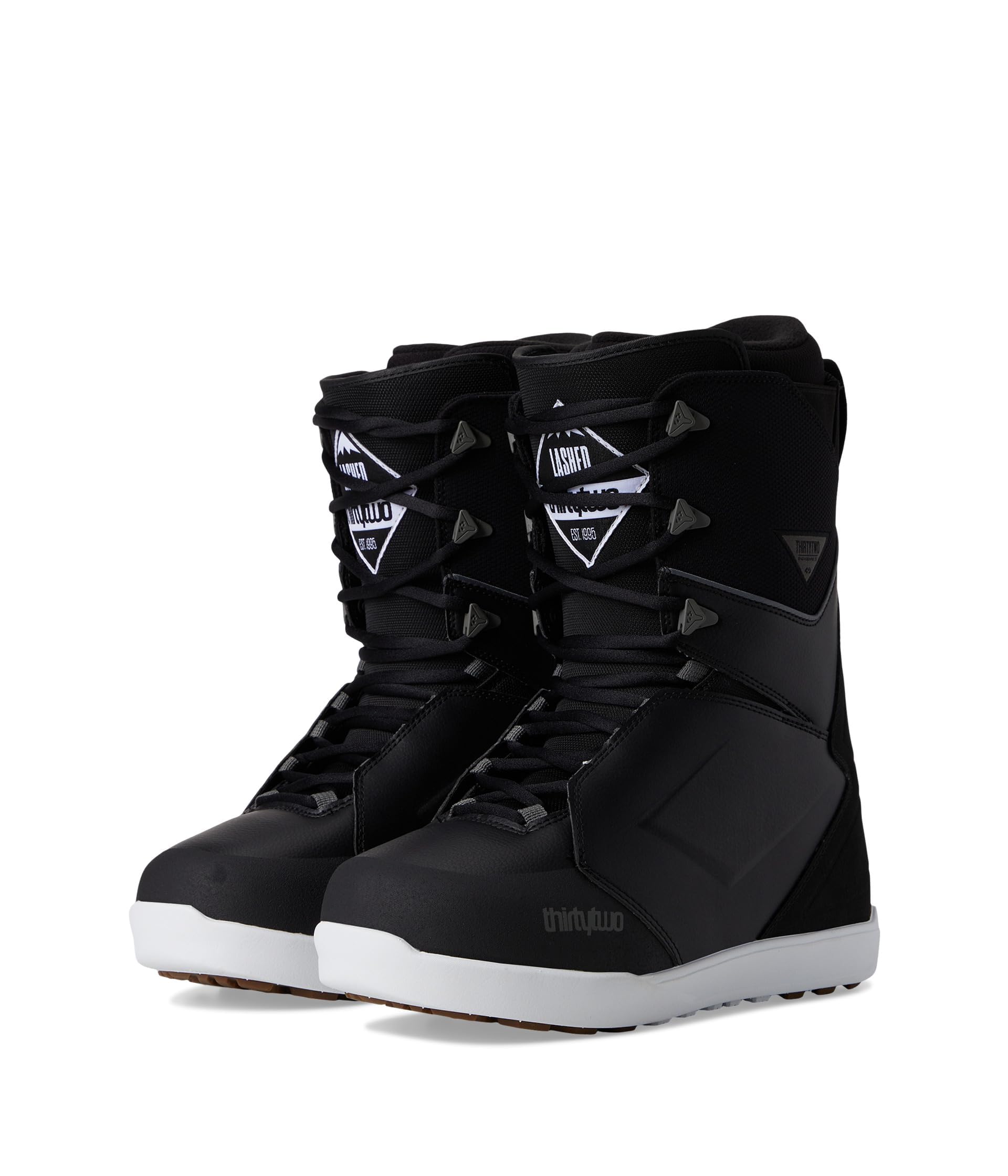
The ThirtyTwo Lashed has long been a favorite for riders who prefer the tactile control of traditional lacing. The Performance liner in the ‘24 model improves heel hold and ankle support over previous versions, addressing the biggest complaint about earlier Lashed boots. The soft-medium flex is ideal for riders who spend time in the park or on mellow steeps, but it’s also a capable freeride option if you’re at an intermediate level or prefer a more forgiving flex that lets you feel the board flex beneath you.
The boot runs true to size for most testers, though several users with street shoe size 10.5 found that size 10 boots fit perfectly after the liner packed out. The traditional lace system uses a speed-lace mechanism that’s easy to tension evenly, and the lace lock holds tension even after a full day of riding. The heat-moldable liner responds well to a home oven treatment (following the manufacturer’s guidelines), which helps eliminate any pressure points around the ankle bones.
The soft flex is the main limitation for serious freeride charging—if you’re dropping into steep couloirs at speed, you’ll want a stiffer boot to prevent the cuff from folding. The boot also lacks any dedicated heel retention system beyond the lace tension, so riders with narrow heels may experience some lift. But for intermediate riders who want to explore off-piste terrain without spending premium money, the Lashed ‘24 is a comfortable, reliable entry point.
Why it’s great
- Traditional lacing provides reliable, even tension
- Performance liner improves ankle support over previous models
- Heat-moldable for a custom fit at home
Good to know
- Soft-medium flex is not ideal for aggressive freeride charging
- No dedicated heel harness; narrow heels may lift
8. Nidecker Sierra Men’s Snowboard Boots

The Nidecker Sierra is the most affordable fully featured BOA boot on this list, and it delivers a surprising amount of value for riders who are transitioning from all-mountain to freeride terrain. The relaxed flex (around 4/10) is softer than what purist freeriders want, but it makes the Sierra an excellent boot for mastering fundamentals like turn initiation and edge pressure modulation. The BOA Fit System closes the entire boot with a single dial, while TX3 textile laces reduce weight compared to traditional metal cable BOA systems.
The 1:1 lasting—where each full and half size gets its own shell, liner, and footbed—means the fit is more precise than most budget boots, which often share shells across two sizes. The fleece lining is cozy on cold days, and the EVA sole provides adequate damping for resort riding. Several user reviews mention that the boot is comfortable right out of the box, requiring minimal break-in time. The mid-calf height map offers decent support for riders who don’t need a super-stiff cuff.
The main trade-off is the flex—riders who push hard on steep slopes will find the Sierra too soft for reliable edge hold at speed. Some users also reported that the BOA system doesn’t hold tension as firmly as the H4 Coiler dials found on higher-end models, requiring occasional re-tightening during the day. For the price-conscious rider who wants a BOA system and a precise fit to start exploring off-piste lines, the Sierra is a smart stepping stone.
Why it’s great
- 1:1 lasting per half-size ensures precise fit at this price
- BOA + textile lace system is lightweight and easy to use
- Comfortable out of the box with minimal break-in
Good to know
- Relaxed flex is too soft for aggressive freeride charging
- BOA may need re-tightening during the day
9. DC Shoes Men’s Control BOA Snowboard Boots
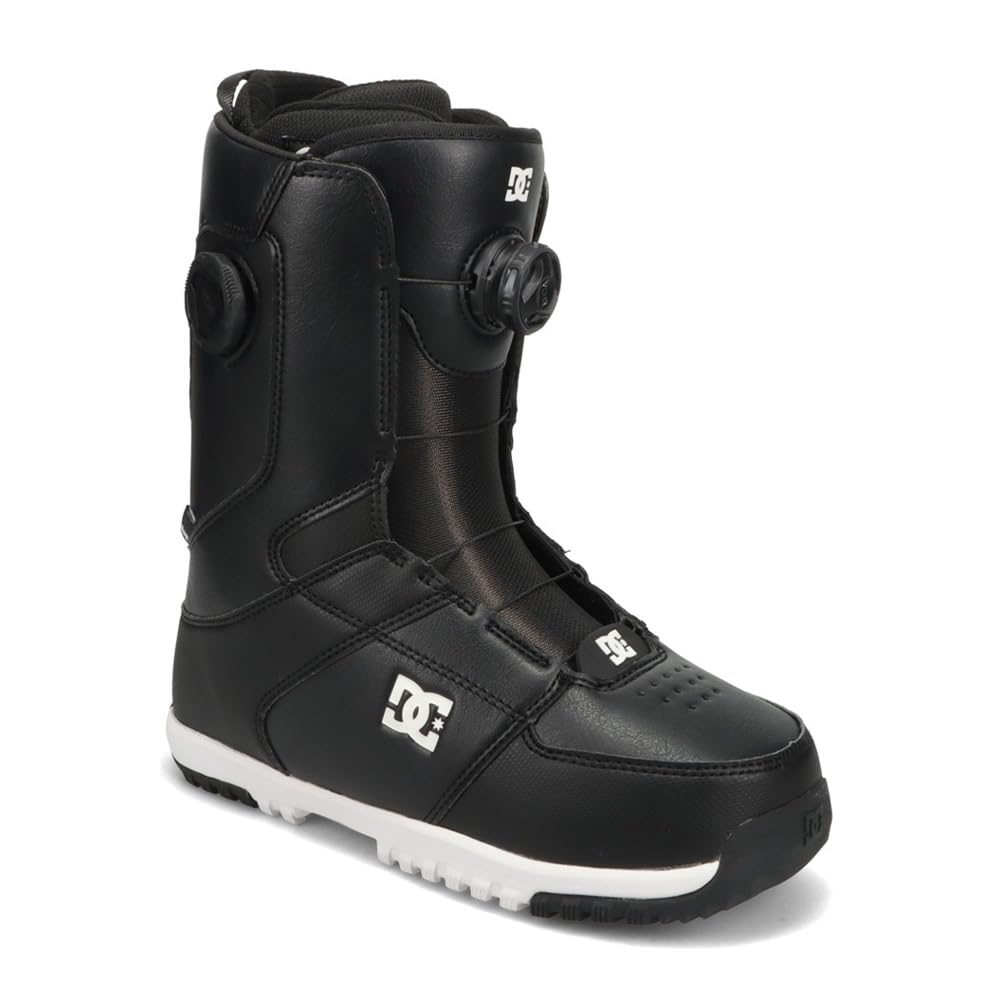
The DC Control BOA is the most budget-friendly entry in this lineup, designed for newer riders or those who want a dual-zone BOA system without the mid-range price tag. The Dual Zone BOA Fit System with H4 Coiler Dials is the same hardware found on DC’s higher-tier boots, which is a genuine bonus at this price—you get micro-adjustable precision fit in both zones. The UniLite outsole is lightweight and provides decent board feel for a boot in this flex category.
The Response Liner II uses a multi-layer construction with a 360-degree power strap and latex J-bars to lock the heel. In practice, the J-bars help reduce lift for riders with average-volume feet, though the boot’s 4/10 flex means the heel pocket won’t stay as locked under aggressive pressure. The IMPACT-ALG insole provides arch support that’s rare at this price point, reducing foot fatigue on long days. Multiple users report that the boot fits like a glove for standard foot shapes, though sizing runs slightly small (half size up recommended).
The core limitation is the flex—at 4/10, the Control BOA is too soft for sustained freeride charging on steep, hardpack terrain. The boot also lacks a dedicated internal ankle harness, relying on the BOA system and J-bars for heel retention. Riders who already know they want a freeride boot should save for a stiffer option. But for the skier-turned-snowboarder or the intermediate rider who wants BOA convenience on a budget, the Control BOA is a functional starting point.
Why it’s great
- H4 Coiler BOA dials provide precision at a budget price
- IMPACT-ALG insole offers decent arch support
- UniLite outsole keeps the boot lightweight
Good to know
- 4/10 flex is too soft for serious freeride charging
- Runs slightly small; consider going up half a size
FAQ
Should I buy a stiffer boot than I think I need for freeride?
Can I use a standard dual-zone BOA boot with Step On bindings?
Does a heat-moldable liner really make a difference for heel lift?
Final Thoughts: The Verdict
For most users, the best freeride snowboard boots winner is the K2 Maysis because it combines a stiff 7/10 flex with an Intuition liner that molds to your foot and a wide-foot option that doesn’t compromise performance. If you want the fastest binding entry and maximum board feel, grab the Burton Photon Step On. And for a mid-range boot that punches above its weight in stiffness and construction, nothing beats the Nidecker Altai BOA.