
Old furniture carries a specific dryness—a thirsty look that off-the-shelf aerosol sprays simply cannot fix. The wood has lost its internal moisture over decades, and the wrong polish leaves a sticky, silicone-laden film that actually accelerates cracking. Restoring a piece that has survived generations requires a formula that penetrates, not just sits on top.
I’m Mohammad Maruf — the founder and writer behind Drink4Good. I spend my time analyzing the molecular composition of wood care products, cross-referencing ingredient safety data, and mapping customer feedback from antique restorers to find what actually reverses the damage of time without introducing new problems.
Dry wood, stubborn heat rings, and faded patina need targeted conditioning, not a generic dusting spray. Whether you own a mid-century sideboard or a Victorian keepsake, the right bottle can return life to the grain without stripping the original finish. This guide walks through the top contenders for furniture polish for old furniture and explains exactly which ingredients matter for your heirloom pieces.
How To Choose The Best Furniture Polish For Old Furniture
Old furniture polish is different from modern dusting aids because it must address decades of oxidation and dried-out fibers. Selecting the correct formulation comes down to understanding what the wood actually needs rather than what smells the strongest.
Wax Base vs. Oil Base
A wax-based polish (beeswax or carnauba) creates a physical barrier that fills micro-scratches and builds a soft sheen over multiple applications. Oil-based polishes, like lemon oil, penetrate the grain to add moisture but do not provide the same level of scratch coverage. For a piece with worn edges, wax offers more restorative benefit.
Silicone-Free Verification
Most commercial furniture sprays rely on silicone to create an instant slick shine. That film prevents any future refinishing from adhering properly, which is catastrophic for an old piece you might want to professionally restore down the road. Silicone-free polish is non-negotiable for heritage wood.
Food-Safe and Non-Toxic Certification
Old wood is porous and can absorb chemicals through the finish. A USDA Biobased label or explicit food-safe claim means the polish will not off-gas volatile compounds into the room. This matters especially for dining tables, kitchen cabinets, and children’s bedroom furniture.
Quick Comparison
On smaller screens, swipe sideways to see the full table.
| Model | Category | Best For | Key Spec | Amazon |
|---|---|---|---|---|
| Renapur Premium Beeswax | Premium Wax | Removing water rings and scratches | Food-safe beeswax 6.7 oz | Amazon |
| Guardsman Clean & Polish | Mid-Range Cream | UV protection and scratch concealment | Silicone-free 16 oz | Amazon |
| Howard Lemon Oil | Entry-Level Oil | Quick dust removal and light moisture | Silicone-free 16 oz spray | Amazon |
| Daddy Van’s Beeswax & Lavender | Premium Wax | Conditioning dry antique wood | USDA Biobased 6 oz | Amazon |
| Milsek Antiques & Restoration | Premium Cleaner | Erasing heat rings on antiques | High oil content 12 oz | Amazon |
In‑Depth Reviews
1. Renapur Premium Beeswax Wood Polish

The Renapur formula combines beeswax, carnauba wax, and food-grade mineral oil into a thick balm that penetrates dry fibers while leaving a breathable barrier. Unlike aerosol sprays, this wax requires a small dab on a cloth, but the payoff in scratch coverage is dramatic. Customer reports show it reviving an 1800s biscuit bowl and blending water-damaged areas on an oak bench with minimal buffing effort.
Application follows the grain direction, and a second coat builds additional protection for heavily worn edges. The chemical-free composition means no respiratory irritation during use, and the finish remains matte rather than greasy. It handles both finished and unfinished wood equally well, making it a versatile choice for mixed-wood households.
Because the wax layer is physical rather than chemical, it can be stripped later without damaging the underlying finish—critical for anyone who rotates restorers. The 6.7-ounce tin covers roughly 80 square feet per coat, though users with deep scratches or heat rings reported visible improvement after just one application.
Why it’s great
- Removes water rings and fine scratches with minimal effort
- Food-safe certification works for kitchen and dining pieces
Good to know
- Requires manual buffing rather than spray-and-wipe convenience
- Very dry wood may need two coats for full saturation
2. Milsek Antiques & Restoration Polish & Cleaner

Milsek loads its 12-ounce bottle with organic oils that tackle the hardest antique problems: heat rings, white water stains, and decades of kitchen cabinet grease. The formula contains no water, wax, or silicone, which means it cleans without leaving any residue that could cloud a future refinishing job. Antique dealers and repair shops commonly reach for this because it revives walnut, cherry, and mahogany without altering the patina.
Application is a single-step wipe-on, wipe-off process that removes grime while the oil penetrates. The lemon fragrance is natural rather than synthetic, and users reported that cabinets looked brighter and cleaner after a full pass. The lack of wax means it will not fill scratches, but it excels at clearing the white film that develops from hot mugs and damp glass bottoms.
Dry climates are especially hard on old furniture, and Milsek’s high oil content counteracts the seasonal checking that occurs when wood loses moisture. A standard application every three months keeps the grain from opening. The bottle’s slim profile stores easily under a sink, and the cap design prevents accidental leakage.
Why it’s great
- Erases heat rings and water marks in one pass
- No wax or silicone means no harmful buildup
Good to know
- Does not fill scratches like a wax-based polish
- Strong lemon scent may linger for an hour
3. Daddy Van’s All Natural Beeswax & Lavender

Daddy Van’s carries a USDA Certified 100% Biobased label and comes scented with pure lavender essential oil rather than synthetic fragrance. The wax is petroleum-free, chemical-free, and solvent-free, making it one of the safest options for bedrooms and nurseries. When applied to a thrifted maple desk, the wax produced a deep, even color with a subtle sheen and noticeable water beading.
The 6-ounce tin lasts longer than a spray because a little wax covers a lot of surface area. Users who revived a thrifted dresser noted that the matte finish did not alter the wood’s color, and the coating held up inside drawers where friction is constant. It also works as a finishing wax for chalk and milk paint projects, adding utility beyond simple furniture maintenance.
Application involves rubbing a small amount in a circular motion and buffing with a clean cotton cloth. The lavender scent is relaxing rather than perfumey, and the wax dries to a durable coating that resists fingerprints. Daddy Van’s is made in Asheville, North Carolina, with domestic and imported ingredients.
Why it’s great
- USDA Biobased certification guarantees no petroleum ingredients
- Gentle lavender scent makes polishing enjoyable
Good to know
- Not ideal for heavy grease removal on kitchen cabinets
- Requires thorough buffing to avoid wax streaks
4. Guardsman Clean & Polish for Wood Furniture
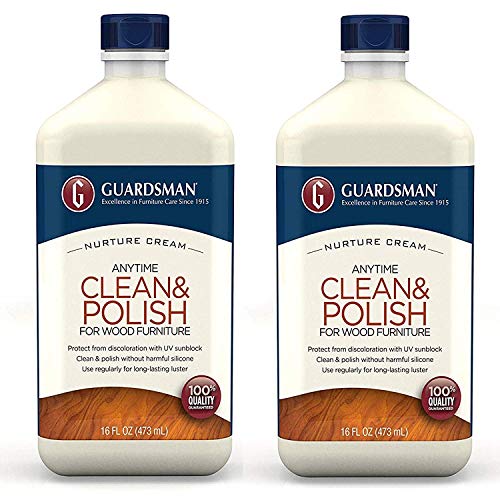
Guardsman delivers a silicone-free cream that cleans and protects in one pass, with built-in UV sunblock to prevent discoloration on sun-exposed furniture. The woodland scent is fresh but mild, and the cream consistency reduces overspray compared to liquid sprays. Users with Pennsylvania-style furniture reported that the polish absorbs well into thirsty wood and leaves a rejuvenated shine without an artificial gloss.
The formula conceals fine surface scratches effectively, and regular use twice a month maintained the finish on pieces that see daily contact. The 16-ounce bottle comes in a two-pack, providing enough product for an entire home’s worth of furniture. Guardsman has been in the furniture care business since 1915, and the legacy shows in the refined chemical balance that avoids sticky buildup.
Teak furniture owners appreciated that Guardsman removed grime and restored luster without the long cure time of tung oil. The product dries quickly, and the odor is minimal compared to solvent-based polishes. While the shine may not match a hand-buffed wax, the convenience of a squeeze-and-wipe cream is hard to beat for busy households.
Why it’s great
- UV sunblock protects old wood from sun fading
- Conceals scratches without silicone or artificial gloss
Good to know
- Not food-safe for kitchen surfaces
- Best as maintenance polish, not deep restorative wax
5. Howard Products Lemon Oil Furniture Polish

Howard Lemon Oil is the most accessible entry point for keeping old furniture hydrated without spending on premium waxes. The trigger spray delivers a fine mist of naturally scented oil that penetrates finished and unfinished wood to prevent drying and fading. Silicone-free formulation means it will not ruin future refinishing attempts, and the lemon aroma is genuinely uplifting during use.
Dust management is the primary strength here—the oil attracts and holds dust particles so they wipe off cleanly rather than redistributing into the air. Users with kitchen cabinets and stainless steel sinks found it effective as a multi-surface cleaner. The spray does splatter if aimed directly at the wood, so applying it first to the cloth is recommended to avoid oil spots on nearby walls.
Daily maintenance is where this polish shines, but the shine itself does not last as long as a wax-based product. Reapplication every week or two is typical for high-traffic surfaces. The 16-ounce bottle covers a lot of ground quickly, and the spray format makes it the fastest option here for a quick refresh before guests arrive.
Why it’s great
- Fast spray application for quick dust removal
- Natural lemon scent is pleasant and non-toxic
Good to know
- Shine fades faster than wax-based polishes
- Spray nozzle requires careful aim to avoid splatter
FAQ
Can I use furniture polish on a piece that has been waxed before?
Does lemon oil actually nourish old wood or is it cosmetic?
Final Thoughts: The Verdict
For most users, the furniture polish for old furniture winner is the Renapur Premium Beeswax because it combines scratch removal, water ring elimination, and food-safe certification in a single tin. If you want to erase heat marks without any wax residue, grab the Milsek Antiques & Restoration. And for a non-toxic, lavender-scented conditioning wax ideal for bedrooms and finished surfaces, nothing beats the Daddy Van’s Beeswax & Lavender.