
Nothing kills a good Twitch clip like a blurry, lagging face cam that misses every clutch reaction. A gaming camera needs to lock focus fast, handle low-light chaos from your RGB setup, and deliver smooth motion at a frame rate your viewers actually enjoy. The right pick changes your stream vibe instantly; the wrong one makes you look like you’re broadcasting from a 2012 webcam.
I’m Mohammad Maruf — the founder and writer behind Drink4Good. I spend my time tearing apart spec sheets, testing frame rates under real game lighting, and comparing autofocus speed across budgets to find the cameras that actually hold up under a streaming load.
After digging through the market, I have assembled a focused list of the top contenders for your best gaming camera upgrade, balancing resolution, low-light performance, and smart tracking features to match any streaming setup.
How To Choose The Best Gaming Camera
Choosing a gaming camera is different from buying a cheap webcam for weekly work calls. You need smooth motion at 60 FPS, reliable autofocus during movement, and decent low-light performance when your monitor is the only light source. Here are the three factors that separate a good stream cam from a frustrating one.
Frame Rate Versus Resolution
Streaming at 4K looks crisp on paper, but 4K webcams typically cap at 30 FPS. A camera locked to 1080p at 60 FPS produces visibly smoother motion for gameplay reactions and fast gestures. Unless you truly need 4K for recorded content, prioritize 60 FPS output for a more professional live look.
Autofocus and AI Tracking
Standard webcam autofocus struggles when you lean out of frame to grab a controller or reach for a drink. Look for PDAF (phase detection) or advanced AI tracking that physically pans and tilts to keep you centered. PTZ (pan-tilt-zoom) cameras with subject tracking eliminate the need to constantly adjust your camera position mid-stream.
Low-Light Sensor Quality
Gaming environments are notoriously dark. A camera with a large 1/2.8” or bigger sensor, wider pixel size (2.9 µm or above), and dual native ISO will produce a clean image without excessive grain. Features like Staggered HDR improve dynamic range between your bright monitor and shadowed face.
Quick Comparison
On smaller screens, swipe sideways to see the full table.
| Model | Category | Best For | Key Spec | Amazon |
|---|---|---|---|---|
| Insta360 Link 2 Pro | PTZ 4K | Pro Streams & AI Tracking | 1/1.3” Sensor + Bokeh | Amazon |
| Elgato Facecam 4K | Studio 4K | DSLR-Like Control | Sony STARVIS 2 Sensor | Amazon |
| ASUS ROG Eye S | 1080p 60FPS | Low-Light & AI Audio | Beamforming Mic Array | Amazon |
| OBSBOT Tiny SE | 1080p 100FPS | AI Gesture Control | Stacked CMOS + 2.9 µm | Amazon |
| NexiGo N660P Pro | 4K 30FPS | Budget 4K Clarity | Distortion-Free Lens | Amazon |
| EMEET C60E Dual | Dual-Camera 4K | Dual-Zoom Streaming | 11X Hybrid Zoom | Amazon |
| Logitech C920x Pro | 1080p 30FPS | Entry-Level Reliable | HD Light Correction | Amazon |
In-Depth Reviews
1. Insta360 Link 2 Pro
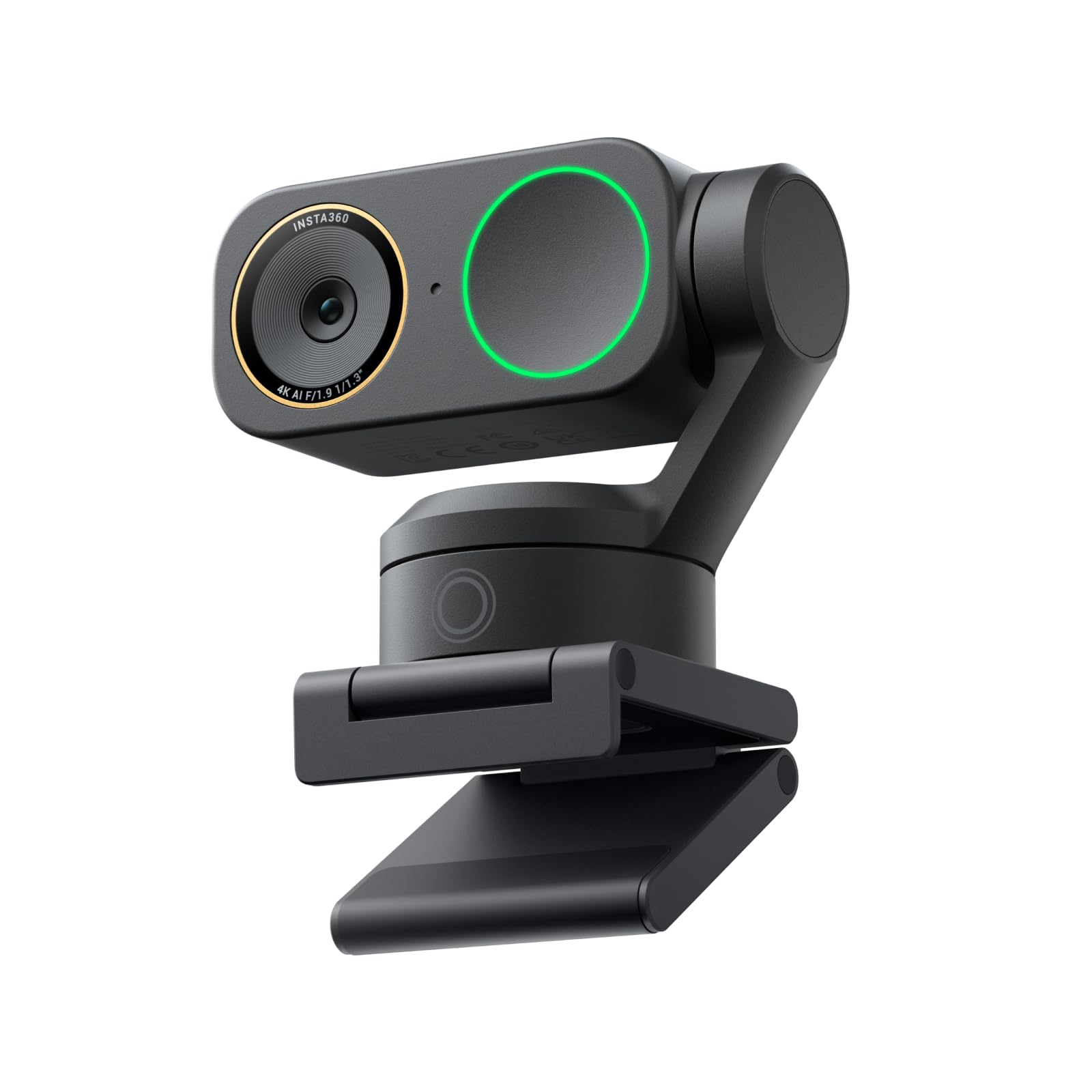
The Insta360 Link 2 Pro sits at the premium end with a large 1/1.3” sensor that captures sharp 4K video with excellent low-light performance. The physical pan-tilt mechanism provides smooth AI tracking that adjusts to your movements without any blur, and the Staggered HDR helps balance bright game monitors with your face in dimmer room light. It supports Elgato Stream Deck integration for easy scene switching mid-stream.
The built-in dual-mic system with beamforming directional pickup isolates your voice from keyboard clicks and room echoes, which is a noticeable step up from basic omnidirectional mics. Gesture control via palm and finger motions allows you to start tracking or zoom without touching the camera. The magnetic mount keeps setup clean and the USB-C cable includes a USB-A adapter for broader compatibility.
This camera requires good lighting to maximize its 4K clarity and Bokeh effect. It is not compatible with ARM-based Windows systems, so check your PC architecture before buying. The 4X digital zoom works well but reduces effective resolution, so positioning the camera at the right distance from your face is key.
Why it’s great
- Exceptional low-light clarity thanks to the 1/1.3” sensor
- Smart physical PTZ tracking keeps you centered automatically
- Natural Bokeh mode for a professional shallow depth-of-field look
Good to know
- Does not support ARM-based Windows systems
- Digital zoom drops resolution quickly beyond 2X
- Requires a fairly bright room for best 4K quality
2. Elgato Facecam 4K

The Elgato Facecam 4K delivers DSLR-like control with a premium Sony STARVIS 2 CMOS sensor that produces clean, sharp video at 4K 60 FPS. The Prime Lens technology avoids typical webcam distortion, and the 49mm filter thread allows you to attach polarizers or ND filters — a feature you rarely find on a dedicated gaming camera. The included Camera Hub software gives you manual control over exposure, white balance, and ISO.
The built-in flash memory saves your custom settings directly to the camera, so you can plug it into a different PC without reconfiguring. The USB-C connection supports uncompressed video, and the HDR mode adds extra dynamic range for mixed-lighting streams. The monitor mount is sturdy and the 200 cm cable gives you generous placement flexibility.
This camera is manual focus only — there is no autofocus system. You need to set your focus distance once using the software, and it will stay locked. The lens is quite wide at roughly 20mm, which captures more background than expected. Digital zoom reduces 4K quality, so you cannot crop in without losing sharpness.
Why it’s great
- Uncompressed 4K video at 60 FPS is incredibly detailed
- Standard 49mm filter ring for professional lens accessories
- Onboard flash memory saves settings independent of software
Good to know
- Manual focus only — no autofocus for moving subjects
- Wide lens angle may capture too much background clutter
- Needs a direct USB-C connection; fails through most hubs
3. ASUS ROG Eye S

The ASUS ROG Eye S focuses on delivering clean 1080p video at a smooth 60 FPS with Face Auto Exposure technology that keeps your face properly exposed even when your game screen is the only light source. The beamforming microphones use AI-powered noise cancellation to filter out mechanical keyboard clicks and fan hum, making it a strong choice for streamers who talk over noisy peripherals.
The aluminum alloy adjustable base clips securely onto thick gaming monitors, and the foldable design drops to 17mm thin for easy portability between setups. The blue-glass filter reduces infrared light interference, which keeps colors accurate under warm RGB lighting. The Armoury Crate software provides control over microphone settings and image tuning.
This camera sticks to 1080p, so it is not an option if you want native 4K. The autofocus system can be a bit slow when you move in and out of the frame quickly. The cable is on the shorter side at roughly 1.5m, which might limit placement depending on your desk layout.
Why it’s great
- Face Auto Exposure handles mixed lighting very well
- Beamforming mics cancel keyboard and ambient noise effectively
- Compact, foldable build with a solid aluminum monitor mount
Good to know
- Limited to 1080p resolution only
- Autofocus can be sluggish during quick movements
- USB cable is shorter than competing models
4. OBSBOT Tiny SE

The OBSBOT Tiny SE delivers an impressive 1080P at 100 FPS and 720P at 150 FPS — far beyond the usual 30 or 60 FPS cap of most webcams. This high frame rate makes every movement buttery smooth, which is critical for streams where you gesture, lean, or demonstrate hand movements. The 1/2.8” Stacked CMOS sensor with 2.9 µm pixel size provides strong low-light performance and a 12-bit dynamic color range.
AI tracking is the headline feature here, with zone tracking and body-part tracking (upper body and hand) that gives you granular control over how the camera frames you. Gesture control 2.0 lets you lock tracking with a palm gesture and zoom with a finger gesture — no remote or software needed. The PTZ mechanism is quiet and fast, making it ideal for solo streamers who cannot adjust the camera mid-broadcast.
This is a 1080p camera, so 4K content creators should look elsewhere. The built-in microphones are usable but not exceptional — you will want a dedicated mic for serious streaming. Some users report that the camera occasionally faces downward and requires a restart to fix the orientation.
Why it’s great
- Unmatched 1080p at 100 FPS for ultra-smooth video
- AI tracking with gesture control works smoothly in OBS
- Excellent low-light performance from the Stacked CMOS sensor
Good to know
- Limited to 1080p resolution — no 4K output
- Built-in mic is average; external mic recommended
- Occasional camera orientation bug requiring a power reset
5. NexiGo N660P Pro
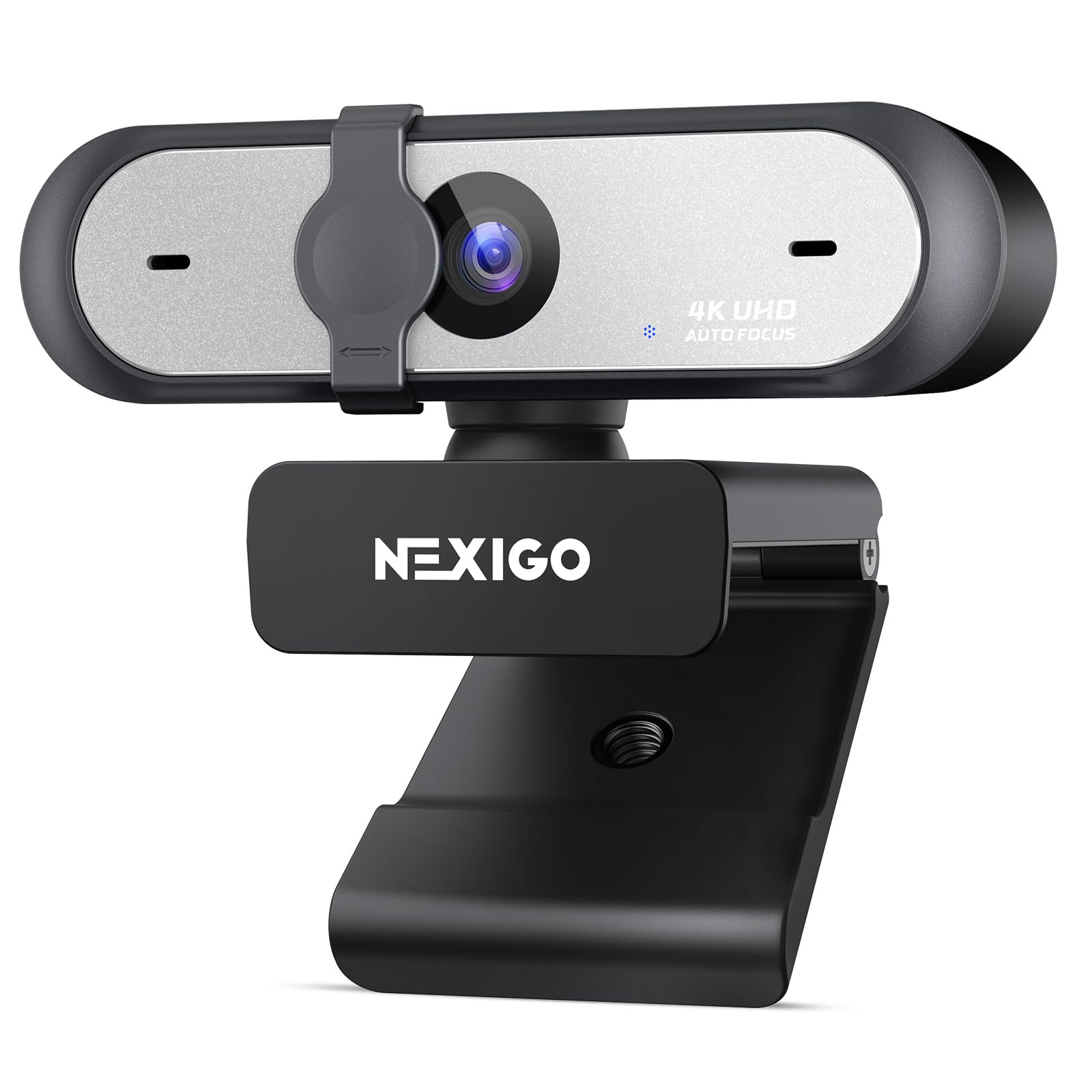
The NexiGo N660P Pro hits a sweet spot for budget-conscious streamers who still want 4K clarity, offering UHD resolution at 30 FPS and smooth 1080p at 60 FPS for fast-paced broadcasts. The distortion-free lens preserves natural facial proportions and straight lines, eliminating the fisheye warp common on cheaper wide-angle sensors. Integrated 3D Noise Reduction cleans up grain in dim environments for a sharper low-light image.
The dual noise-canceling microphones filter out background noise reasonably well, and the sliding privacy cover provides physical security when you step away. The 360° swivel mount and 1/4” tripod thread offer flexible positioning on monitors or arms. The NexiGo software allows 4X digital zoom and fine-tuning of exposure and focus.
4K streaming at 30 FPS is fine for recorded content but looks less fluid than 1080p at 60 FPS during live broadcasts. The privacy cover can feel a bit loose after repeated use, and the software interface is clunkier compared to premium competitors.
Why it’s great
- Affordable entry into 4K streaming with solid color accuracy
- Distortion-free lens avoids fisheye warping
- 3DNR effectively reduces noise in lower light conditions
Good to know
- 4K mode is locked to 30 FPS
- Privacy cover may loosen over time
- Software experience is less polished than Armoury Crate or Camera Hub
6. EMEET C60E Dual-Camera
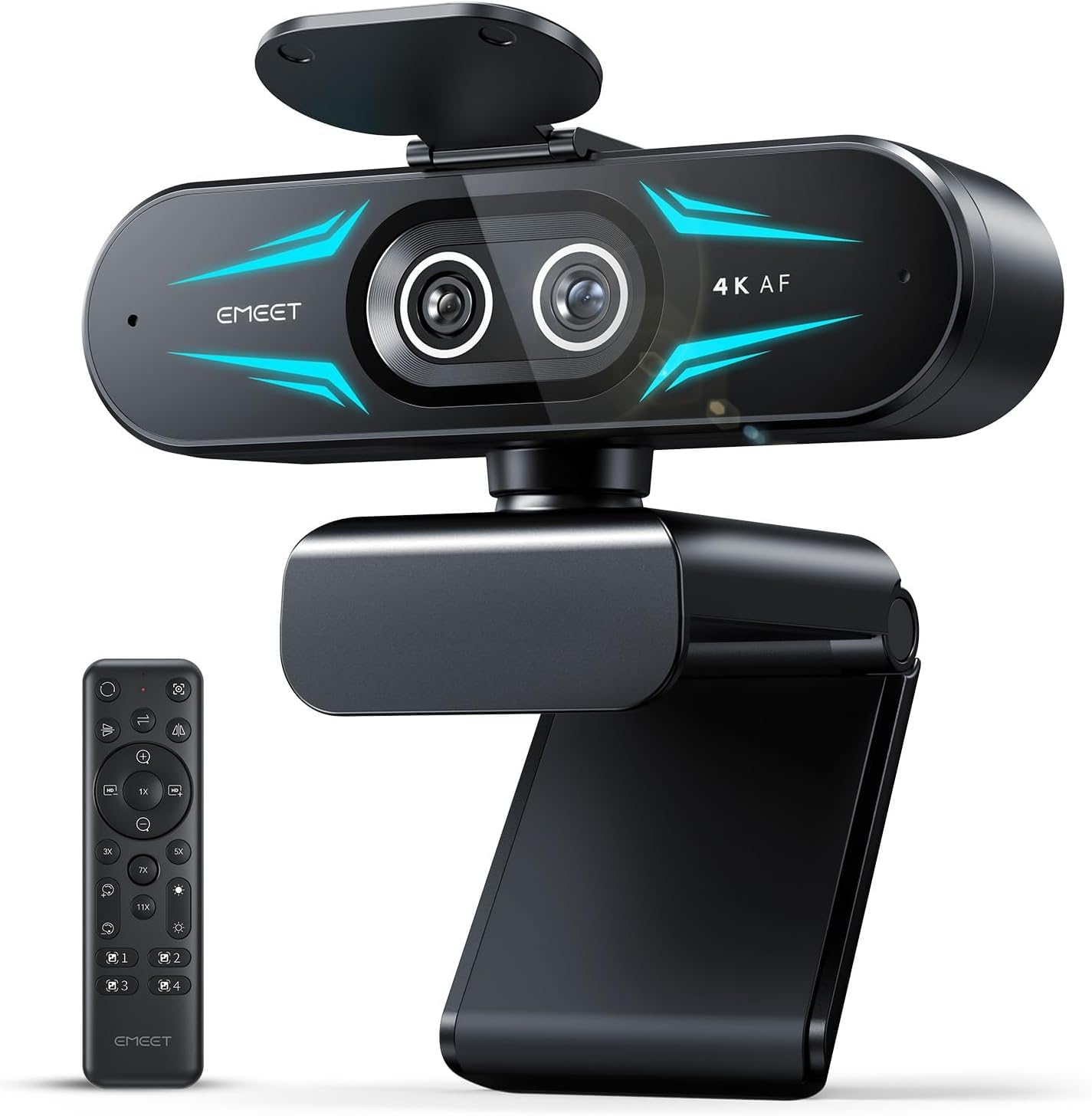
The EMEET C60E uses an unconventional dual-camera design with a wide-angle lens for panoramic scenes and a telephoto lens for detailed close-ups, sharing a single 1/2.8” 4K CMOS sensor. The switch between full-scene and close-up views lets you show your face and then zoom into a product demo or whiteboard without moving the camera. The 11X hybrid zoom combined with PDAF autofocus keeps focus stable across the zoom range.
The included remote control allows real-time zoom and color adjustments mid-stream, while the EMEET STUDIO software offers granular settings for brightness, focus, and RGB lighting control. The two omnidirectional microphones capture audio within a 9.8ft radius, and the built-in RGB lighting adds visual flair with red, green, and blue accent colors.
Zoom functionality does not work in 4K, 60 FPS, or YUY2 modes — you need to drop to 1080p for the full zoom range. The telephoto lens requires a recommended distance of 13.8 inches for optimal close-up quality. The camera uses a USB 2.0 connection, which limits data bandwidth compared to USB 3.0 alternatives.
Why it’s great
- Dual-camera system allows seamless wide-to-close-up transitions
- Remote control provides offline zoom and color adjustments
- 11X hybrid zoom with fast PDAF autofocus
Good to know
- Zoom is disabled in 4K and 60 FPS modes
- Telephoto lens needs close distance for optimal detail
- USB 2.0 limits high-resolution data throughput
7. Logitech C920x Pro

The Logitech C920x Pro is the veteran workhorse of the streaming world, delivering reliable 1080p video at 30 FPS with automatic light correction that adapts to changing room brightness. While it cannot match the frame rates or resolution of newer premium cameras, its consistent autofocus and reliable plug-and-play compatibility make it an accessible starting point for beginner streamers. It works with Windows, macOS, and Nintendo Switch 2’s GameChat mode.
The dual stereo microphones capture natural-sounding audio, though they are sensitive to room echo and keyboard noise. The included 3-month XSplit VCam license lets you remove or blur your background without a green screen, which is a nice bonus for new streamers testing their setup. The clip mounts securely on monitors and laptops, and the 1.5m cable offers reasonable placement flexibility.
The C920x lacks a privacy shutter, and its low-light performance is noticeably grainier than mid-range options. At 30 FPS, motion will look less smooth than 60 FPS alternatives. This camera is best seen as a budget stepping stone — it will get you streaming, but you will notice the difference compared to higher-tier options on this list.
Why it’s great
- Proven reliability and broad software compatibility
- Automatic light correction handles basic mixed lighting
- Very easy setup — true plug-and-play experience
Good to know
- Maximum 30 FPS limits motion smoothness
- Low-light performance is poor compared to modern sensors
- Does not include a physical privacy cover
FAQ
What frame rate should a gaming camera support for live streaming?
Is 4K necessary for a streaming gaming camera?
Do AI tracking cameras work with OBS Studio?
Final Thoughts: The Verdict
For most users, the best gaming camera winner is the Insta360 Link 2 Pro because its large sensor, physical PTZ AI tracking, and professional audio make it a complete streaming solution without needing add-ons. If you want DSLR-like control and uncompressed 4K video, grab the Elgato Facecam 4K. And for the highest frame rate smoothness at a mid-range price, nothing beats the OBSBOT Tiny SE with its 1080p 100 FPS output.