
That sticky residue left behind by a bumper sticker, the hard water stain masquerading as glue on a glass door, or the dried super glue smear on a cherished wooden table — these are the stubborn messes that turn a simple cleanup into a frustrating battle. A dedicated solvent is the only way to dissolve these bonds without damaging the surface underneath, and picking the wrong one can ruin a paint job or etch a countertop.
I’m Mohammad Maruf — the founder and writer behind Drink4Good. I’ve spent years analyzing consumer chemistry, evaluating the solvent strength, surface safety, and application precision of dozens of adhesive removers to find which formulas truly match their claims.
Whether you are removing automotive decals, cleaning super glue from a leather couch, or stripping old silicone caulk from tile, the right choice depends entirely on the adhesive type and the material beneath. Here is the best glue remover for every common household and workshop scenario.
How To Choose The Best Glue Remover
Not all glue removers are chemically equal. Choosing the wrong one can strip paint, etch plastic, or leave an oily film that attracts dirt. Start by understanding your adhesive type and your surface material.
Match the Solvent to the Adhesive
Cyanoacrylate (super glue) requires a debonder that breaks the polymer chain — typically an organic solvent in gel form to control runoff. Pressure-sensitive adhesives (tape residue, bumper stickers) respond well to aerosol citrus or hydrocarbon solvents. Silicone sealants and construction adhesives need heavier d-limonene or hydrocarbon-based sprays and longer dwell times. A multi-purpose formula that claims to work on everything often excels at nothing.
Surface Safety Comes First
Non-porous surfaces like glass and cured automotive paint can handle aggressive solvents. Porous materials — wood, brick, leather, painted drywall — absorb solvents and can be stained, darkened, or chemically damaged. Water-based or gel formulas are safer for these surfaces because they stay on top of the adhesive rather than soaking in. Always test on an inconspicuous spot before full application.
Application Method Matters
Aerosol sprays cover large areas quickly and are ideal for car decals and floor residue. Precision brush caps or gel dispensers are required for small areas like countertop glue spills or tight corners. A plastic scraper is essential for lifting dissolved adhesive without scratching, and many kits include one — don’t use a metal razor on delicate surfaces unless the formula explicitly states it is safe.
Quick Comparison
On smaller screens, swipe sideways to see the full table.
| Model | Category | Best For | Key Spec | Amazon |
|---|---|---|---|---|
| 3M Adhesive Remover | Aerosol Solvent | Automotive paint & vinyl | Low VOC (<20%) aerosol | Amazon |
| MCTRHG Sticker Remover | Water-Based Spray | Windows, whiteboards, painted surfaces | Water-based with 19 plastic blades | Amazon |
| Starbond Super Glue Remover | Gel Debonder | Super glue on hands, wood, countertops | Gel formula with brush cap | Amazon |
| ORANGE-SOL Contractor Solvent | Citrus Solvent | Silicone caulk, tar, spray foam | D-limonene, non-toxic spray | Amazon |
| Goo Gone Original | Citrus Spray | Labels, decals, crayon, gum | Citrus-based, 8 oz spray | Amazon |
In‑Depth Reviews
1. 3M Adhesive Remover 03618VOC20
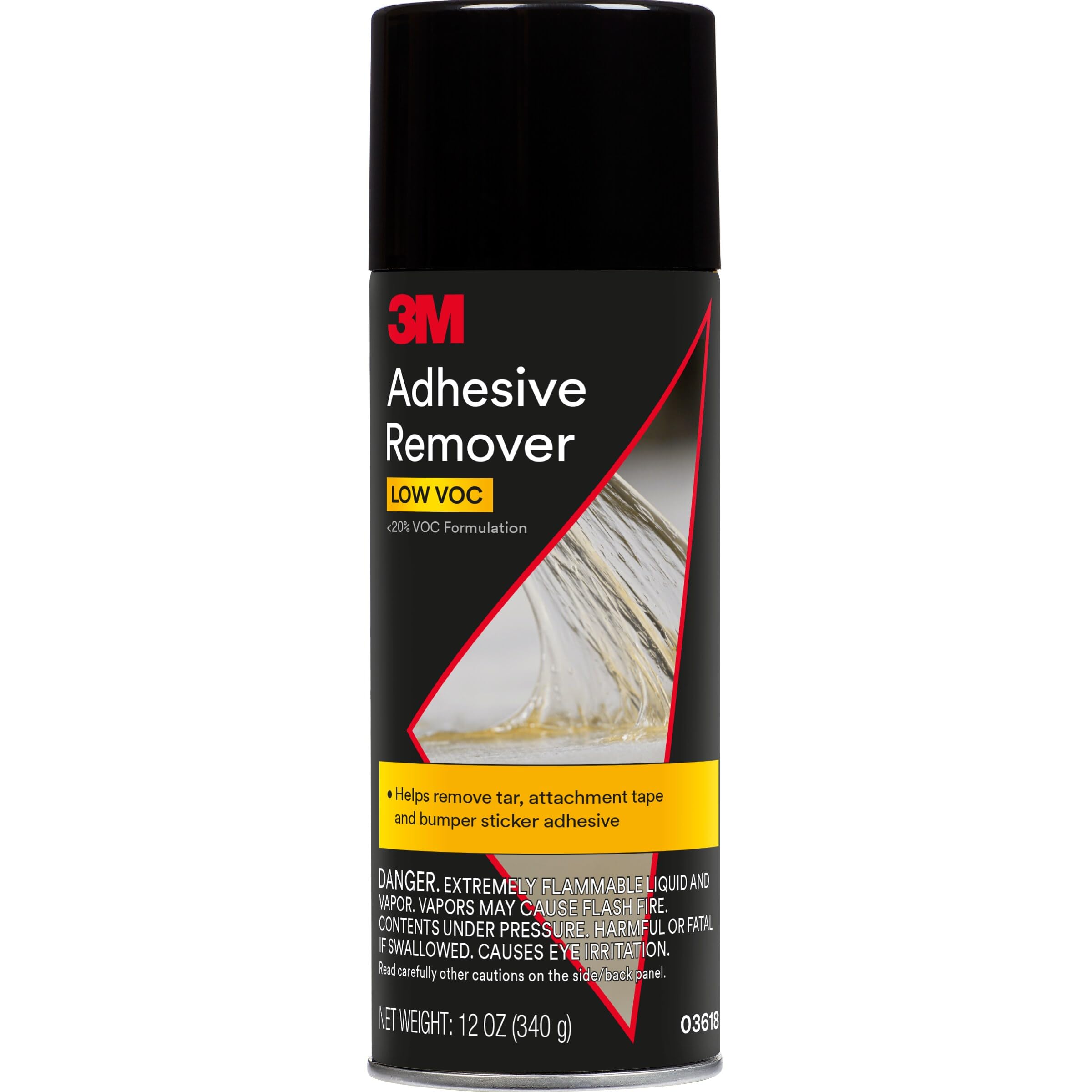
The 3M Adhesive Remover is the go-to aerosol for anyone working on automotive surfaces. Its blend of non-abrasive solvents dissolves double-sided tape, tar, wax, and adhesive residue quickly without damaging cured automotive paint. The low VOC content (under 20%) keeps the fumes manageable in a garage or driveway setting, though you still want good ventilation.
Users report it removes stubborn residue from vinyl laminate floors and glass shower doors in 30 seconds with minimal effort. Unlike citrus-based alternatives that can leave an oily film, this 3M formula evaporates cleanly, leaving no residue behind. The 12-ounce can is compact enough for a tool drawer yet holds enough for several full-size decal removals.
It is designed for non-porous surfaces — cured paint, glass, metal, and vinyl. Do not use on porous wood, drywall, or unfinished plastic where the solvent may soak in. A plastic scraper is recommended for lifting the dissolved adhesive, and a 3-5 minute dwell time is all it needs before scraping.
Why it’s great
- Evaporates without leaving oily residue
- Low VOC formula reduces harsh fumes
- Safe on nearly all cured automotive paints
Good to know
- Requires 3-5 minute dwell time for best results
- Not intended for porous or unfinished surfaces
2. MCTRHG Adhesive Remover Kit
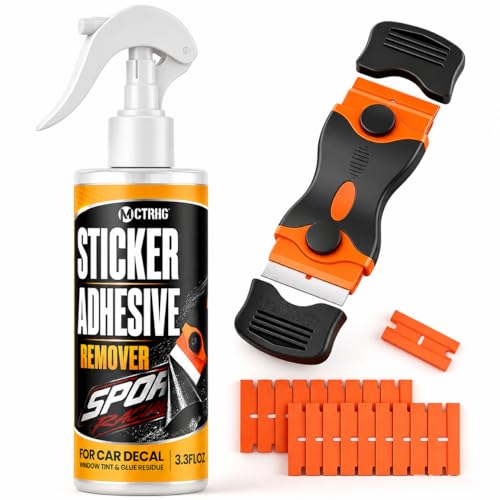
This MCTRHG kit stands apart with its water-based formula — a rarity in a category dominated by strong hydrocarbon solvents. It is designed to loosen decals, window tint, sticker residue, and glue buildup without leaving an oily film or emitting a heavy chemical odor. The included dual-blade scraper (plastic for delicate surfaces, metal for tough buildup) and 19 extra plastic razor blades make it a complete ready-to-use system.
It works particularly well on painted walls, sealed wood, and glass where solvent absorption is a concern. Teachers report it removes tape residue from whiteboards instantly, and users find it effective on used electronics where harsh chemicals would damage plastic casings. The 3.3-ounce bottle is small but punches above its weight — a little spray goes far.
The spray mechanism can be touchy; some users needed to transfer the liquid to another bottle when the sprayer failed. It also requires patience — letting the solution soak for a minute before scraping yields the best results. For large jobs like full vehicle decals, you may need more than one bottle.
Why it’s great
- Water-based formula is safe on painted and sealed surfaces
- Comes with 19 plastic blades plus dual-blade scraper
- Mild odor suitable for indoor use
Good to know
- Small bottle volume — not ideal for large surfaces
- Sprayer may need troubleshooting or replacement
3. Starbond Super Glue Remover

Super glue requires a different chemistry than pressure-sensitive adhesives, and the Starbond Debonder delivers that exact match. Its gel formula stays where you put it — no dripping down vertical surfaces or running into adjacent areas. The built-in brush cap allows millimeter-precise application on corners, edges, and gaps where an aerosol would overspray.
It is a non-acetone, mild formula that takes 10 to 15 minutes to soften cured cyanoacrylate, not seconds. This patience trade-off protects porous surfaces like wood, leather, and granite from the damage that acetone-based removers cause. Users have successfully dissolved super glue from a leather couch and a finished kitchen table without harming the underlying finish.
It works best on non-porous materials like metal and plastic, and on sealed wood. Some users found it caused a chemical reaction on synthetic leather and porous fabrics, leaving a sticky residue. Always spot-test on an inconspicuous area first. The 2-ounce bottle is small but appropriate for the precision work this product is designed for.
Why it’s great
- Gel stays put on vertical surfaces
- Brush cap enables pinpoint application
- Non-acetone formula is safe on finished wood and leather
Good to know
- Requires 10-15 minutes dwell time, not instant
- May react with synthetic leather and porous fabric
4. Orange-Sol Contractor Solvent

Orange-Sol is a serious contractor-grade solvent built for the nastiest jobs: old silicone caulk, hardened spray foam, road tar, and asphalt sealant. Its d-limonene active ingredient (derived from citrus) is significantly stronger than most retail sticker removers, breaking down cured silicone that other products can’t touch. The 12-ounce spray can delivers a fine mist that covers large areas evenly.
It is non-hazardous and non-corrosive, meaning it is safe on fingers, hair, and most painted surfaces when used per instructions. It has effectively removed silicone from powder-coated metal without damaging the coating, where harsher solvents like acetone would dissolve the paint. The citrus scent is mild compared to petroleum-based alternatives.
The major downside is the spray bottle design — many users report it leaks or drips from the nozzle, making controlled application difficult. It also leaves an oily residue that must be wiped away with warm water and soap. This oil has been known to darken porous surfaces like brick, requiring pressure washing to restore the original appearance. For silicone caulk removal, expect a 30-minute dwell time with a plastic scraper.
Why it’s great
- Dissolves silicone caulk and spray foam effectively
- Non-toxic and non-corrosive formula
- Safe on powder-coated metal finishes
Good to know
- Spray bottle is prone to leaking
- Leaves oily residue that requires cleanup
5. Goo Gone Original Adhesive Remover
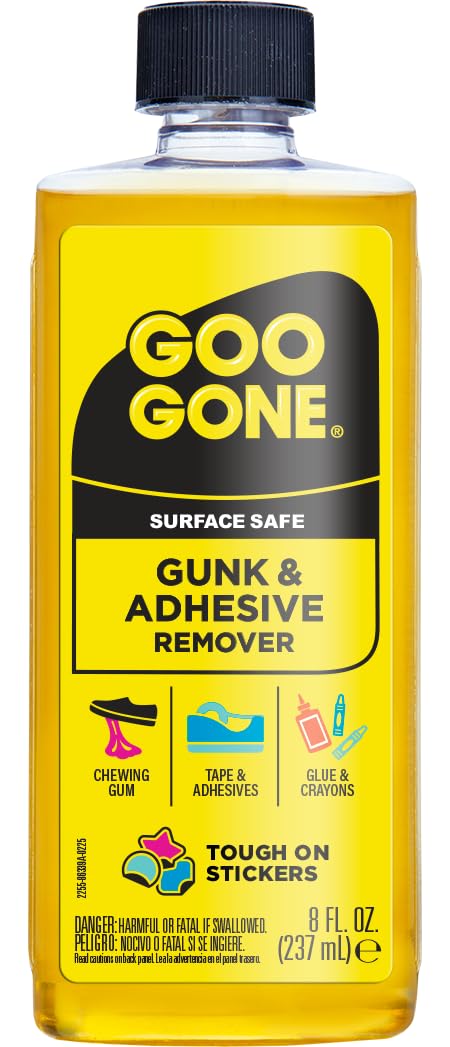
Goo Gone is the household name in adhesive removal for good reason: its citrus-based formula is gentle enough for carpets, fabrics, and painted walls yet strong enough to dissolve sticker residue, crayon marks, tree sap, and candle wax. It works on glass, wine glasses, car exteriors, and clothing — making it the most versatile surface-safe option in this lineup.
Users report it easily removes glue residues left by baby-proofing tape from walls and wood floors without damaging the paint. A wet-on-the-tag sticker that survived a full wash cycle on a t-shirt was removed in minutes with no damage to the fabric. The citrus scent is strong — some users describe tearing and recommend using a mask if sensitivity is a concern, but it dissipates quickly after wiping.
The 8-ounce spray bottle is compact and the formula is ready to use with no mixing. It requires a few minutes of dwell time for heavy residue, and stubborn jobs may need a second application. It leaves an oily film that should be wiped clean with warm water and a cloth. For super glue or construction adhesive, a more aggressive solvent like the Starbond or Orange-Sol will be needed.
Why it’s great
- Safe on a wide range of surfaces including fabric and carpet
- Works on crayon, gum, wax, and tree sap
- Trusted household brand with proven track record
Good to know
- Strong citrus scent may cause irritation
- Less effective on super glue and silicone caulk
FAQ
Can I use the same glue remover on car paint and on my kitchen counter?
Why does my glue remover leave an oily film after cleaning?
How long should I let a glue remover sit before scraping?
Final Thoughts: The Verdict
For most users, the best glue remover winner is the 3M Adhesive Remover because it combines fast evaporation, low-VOC safety, and automotive-grade solvent strength that works on glass, vinyl, and cured paint without leaving residue. If you need a precision tool for super glue spills on finished surfaces, grab the Starbond Super Glue Remover. And for non-toxic household cleanup of tape, crayon, and gum on multiple surfaces, nothing beats the Goo Gone Original.