
A dry, dusty film that dulls the grain instead of deepening it — that is the reality of most spray-on polishes. The difference between a cheap silicone slick and a true conditioning polish is the difference between a surface that looks coated and a surface that feels fed. The right furniture polish for wood penetrates the grain, displaces dust without a static charge, and leaves a low-build finish that does not yellow or peel over time.
I’m Mohammad Maruf — the founder and writer behind Drink4Good. I have spent years researching wood-care chemistry, from solvent-based waxes to plant-oil blends, to understand exactly what restores wood versus what just sits on top of it.
This guide covers five distinct formulas — from lemon-oil conditioners to beeswax sprays — that actually hydrate and protect wood rather than leaving a sticky attractant for dust. You will learn exactly which furniture polish for wood matches your finish type, your scent preference, and your tolerance for reapplication.
How To Choose The Best Furniture Polish For Wood
Selecting a wood polish is not about picking the shiniest bottle. The finish on your furniture — shellac, lacquer, polyurethane, wax, or raw oil — determines which polish formula will bond without causing cloudiness or buildup. Start by identifying whether your surface is sealed or unsealed, then match the solvent base accordingly.
Solvent Base: Oil vs. Wax vs. Plant-Based
Lemon oil and mineral-oil polishes penetrate dry wood and replace lost moisture, making them ideal for antiques and unfinished pieces. Beeswax sprays like the Goddard’s formula add a thin protective layer that resists fingerprints but can build up if over-applied. Plant-based surfactants clean without leaving any hydrocarbon residue, which matters if you polish surfaces near food prep areas or pets.
Residue Profile and Reapplication Cadence
Some polishes require a dwell time — you apply, let the oil soak for ten minutes, then buff. Others, like the almond-scented Method spray, wipe on and off with no waiting. A polish that leaves an oily film can attract dust within hours, so check whether the formula is described as “low-build” or “dry-to-touch” if you dislike reapplying weekly.
Quick Comparison
On smaller screens, swipe sideways to see the full table.
| Model | Category | Best For | Key Spec | Amazon |
|---|---|---|---|---|
| Howard Products Lemon Oil | Lemon Oil | Daily dusting & hydration | 16-ounce trigger spray | Amazon |
| Method Wood Polish Almond | Plant-Based | Finished surfaces & cabinets | 14-ounce recycled bottle | Amazon |
| Mighty Mint Peppermint | Plant-Based | Multi-surface safe for pets | 16-ounce spray, no ammonia | Amazon |
| Natchez Solution Complete Care | Natural Oil | Antique restoration | 8-ounce, FDA-quality mineral oil | Amazon |
| Goddard’s Cabinet & Wood Wax Spray | Beeswax | Vintage cabinets & high-traffic areas | 23-ounce spray, beeswax + lemon oil | Amazon |
In‑Depth Reviews
1. Howard Products Lemon Oil Furniture Polish

The Howard Lemon Oil has been a staple in wood-care circles for decades because it does one thing that many modern sprays skip: it actually hydrates the wood fibers rather than coating them. The 16-ounce trigger bottle delivers a fine mist, though you should spray onto a cloth instead of directly onto furniture to avoid the splatter that some users report staining walls. On sealed polyurethane surfaces, it wipes clean and leaves a low-gloss sheen that does not feel greasy to the touch.
On unfinished or dry wood — think oak table legs, butcher block, or an older dresser — the lemon oil absorbs quickly and darkens the grain slightly, which restores the “wet” look that dry air steals. The fresh lemon scent is noticeable during application but dissipates within an hour, making it suitable for kitchens or dining rooms where you do not want lingering perfume.
The downsides are minor but worth noting: the shine does not last as long as a wax-based polish, so you will reapply every two to three weeks on high-touch surfaces. And the spray nozzle produces a forceful stream rather than a cone — aim carefully to avoid overspray onto walls or upholstery.
Why it’s great
- Penetrates dry wood instead of just coating the surface
- No silicone means no yellow buildup over time
- Fresh lemon scent fades quickly without lingering
Good to know
- Spray nozzle shoots a stream — must mist onto cloth first
- Shine fades faster than beeswax options
2. Method Wood Polish, Almond
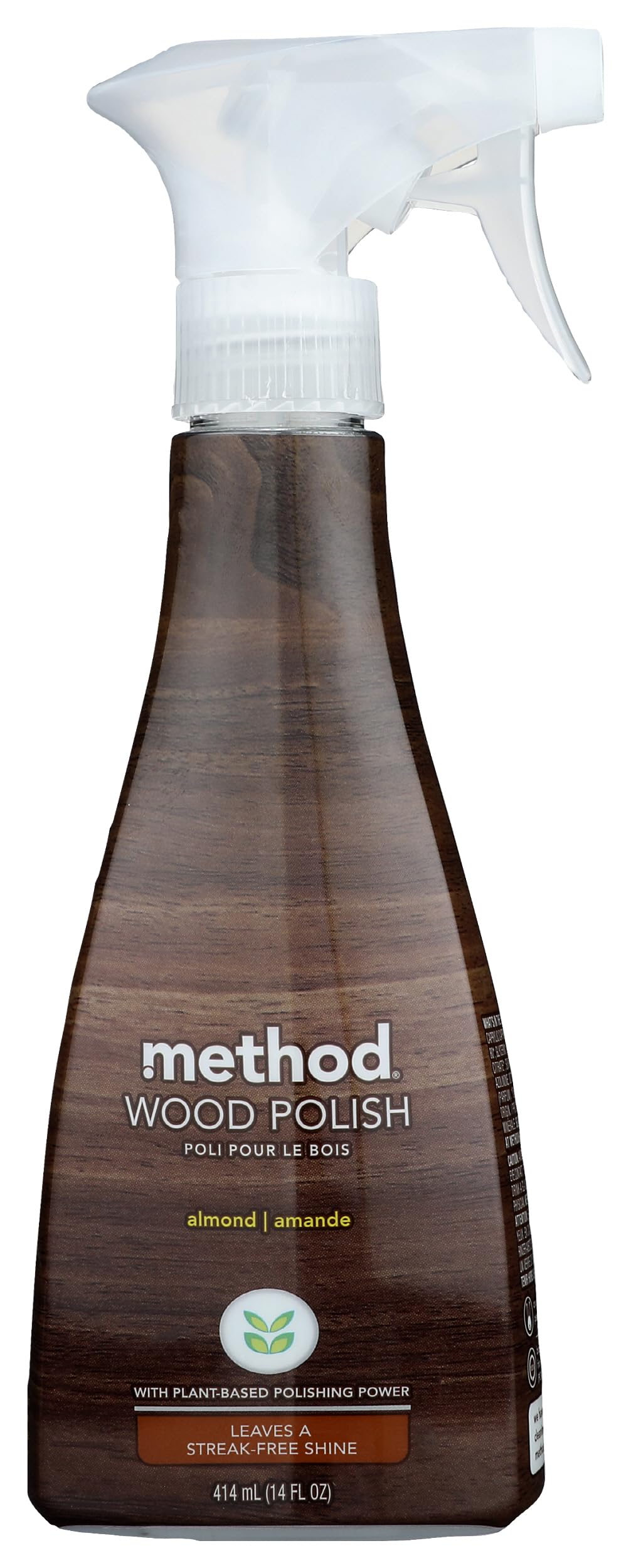
Method’s Almond Wood Polish is the choice for anyone who prioritizes ingredient transparency and fragrance that does not smell like a cleaning aisle. The plant-based formula uses no phthalates or animal-derived ingredients, and the bottle (minus the trigger) is made from 100 percent recycled plastic. On finished wood surfaces like painted cabinets, veneered tables, or lacquered chairs, it wipes on clear and buffs to a satin shine without any haze.
The almond scent is the standout feature — it is sweet and warm without being cloying, and it lingers lightly for several hours. Multiple long-term users mention that their housekeepers specifically request this polish, which suggests the low-residue formula makes subsequent dusting easier. It works well when paired with a wood cleaner first, but the polish alone handles light smudges and fingerprint removal on high-gloss cabinets.
On raw or porous wood, this formula sits on the surface rather than soaking in, so it does not hydrate as deeply as oil-based polishes. It is also slightly pricier per ounce than the lemon-oil options, though the 14-ounce bottle still lasts several months with weekly use.
Why it’s great
- Plant-based, cruelty-free, and chemically transparent
- Almond scent is distinctive and long-lasting
- Works beautifully on sealed and painted wood
Good to know
- Does not penetrate or condition raw wood
- Premium cost per ounce compared to standard polishes
3. Mighty Mint Wood Cleaner & Conditioner Spray
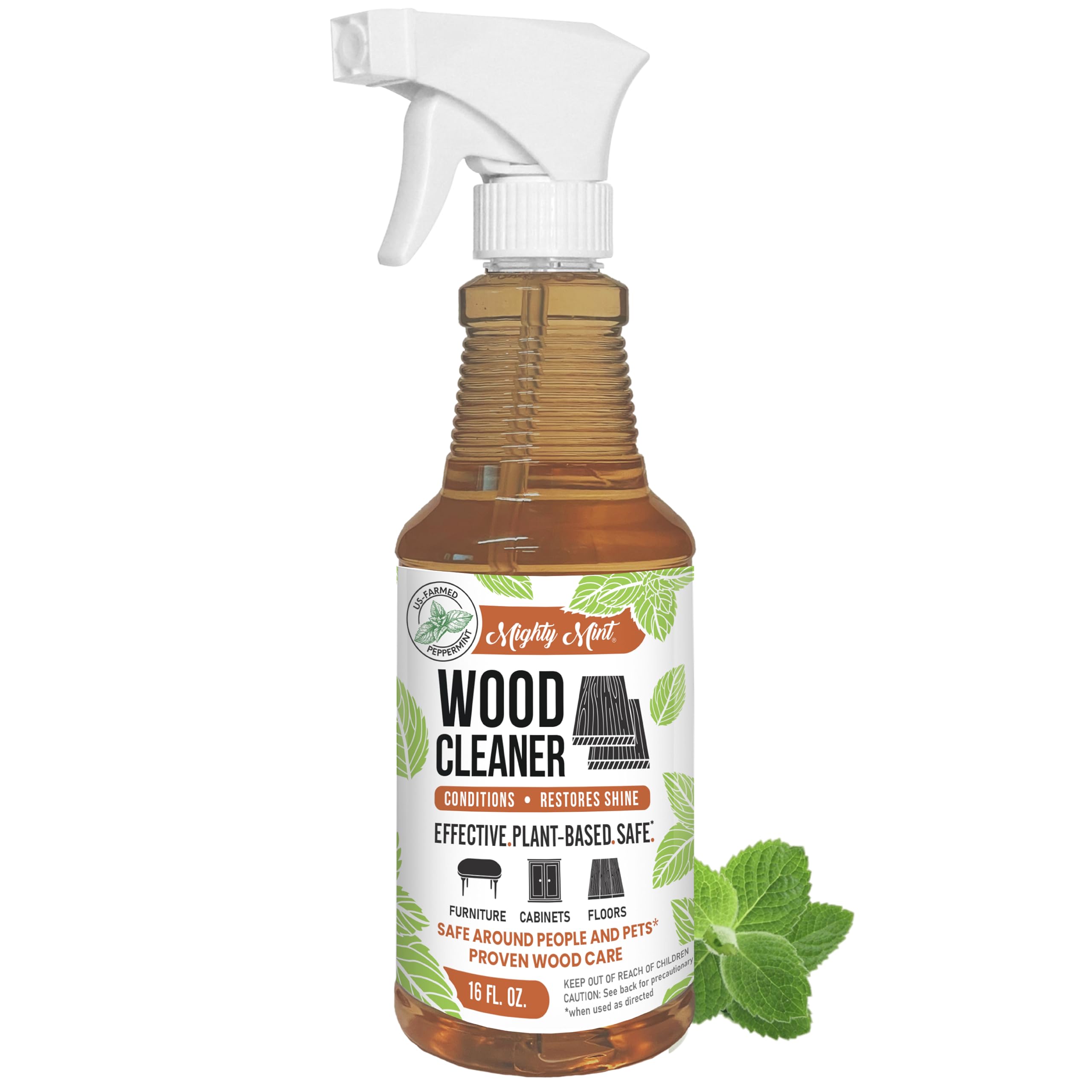
Mighty Mint differentiates itself by being formulated without bleach, ammonia, or petroleum distillates, making it one of the safer options for homes with cats, dogs, or children who touch furniture frequently. The peppermint scent is noticeably strong during application — refreshing if you like menthol, but assertive if you prefer neutral odors. On butcher block countertops and wood floors, it cleans well and leaves a very low shine that does not feel slippery.
Users report that it effectively removes dried-on grime from dining tables that had not been polished in years, which suggests the surfactant blend has real cleaning ability rather than just adding a gloss layer. The spray pattern is more of a wet mist than a foam, so it covers a wide area quickly — good for large surfaces like a dining table or a set of cabinets. On infrared sauna wood, one reviewer noted it left a spa-like peppermint aroma that lasted through multiple heat cycles.
This is not a deep-conditioning oil. For quarterly moisture replenishment on raw wood, you will still need a dedicated oil or wax. The bottle is also slightly smaller than the other 14- and 16-ounce options, though the 16-ounce claim is accurate for the liquid volume inside.
Why it’s great
- No bleach, ammonia, or petroleum distillates
- Effective on dried-on grime and heavy buildup
- Peppermint scent is invigorating and pet-safe
Good to know
- Not a deep conditioner for dry, porous wood
- Scent is strong — may not suit neutral-fragrance households
4. Natchez Solution Complete Furniture Care

Natchez Solution takes a minimalist approach: beeswax, lemon oil, and FDA-quality mineral oil, with no synthetic additives. The 8-ounce bottle seems small, but the formula is concentrated — a thin layer covers a large dining table, and it requires a dwell time of about ten minutes before buffing. Users who have restored antique furniture note that it removes light scratches and water rings when applied as a paste and left to soak overnight.
The application process is more labor-intensive than a spray. You rub it on like a wax, let it sit until it hazes, then buff with a clean cloth. The payoff is a deep, warm luster that looks like hand-rubbed oil rather than sprayed silicone. It also works on teak and other oily hardwoods that reject lighter polishes — the beeswax binds to the natural oils in the wood rather than sitting on top.
This is not a quick-dusting solution. The label explicitly states it is not for daily use, and the bottle will last a year or more for most households. If you prefer a spray-and-wipe routine, the longer process here will feel cumbersome.
Why it’s great
- Penetrates deeply and removes light scratches and water rings
- Three-ingredient formula is hypoallergenic and safe
- Works well on teak, oak, and antiques
Good to know
- Requires ten-minute soak and buffing — not a quick spray
- 8-ounce size is small despite concentrated formula
5. Goddard’s Cabinet & Wood Wax Spray

Goddard’s is the legacy brand in this list — 140 years of wood-wax expertise distilled into a 23-ounce trigger spray. The beeswax and lemon oil emulsion cleans, shines, and deposits a thin wax layer that repels dust and fingerprints better than any oil-only polish. On high-traffic cabinet doors and kitchen table tops, the wax film means you can go three to four weeks between applications without the surface feeling sticky.
Users consistently mention that dust “whisks off” easily after application, which is the clearest sign of a good wax finish — the static charge that normally pulls dust onto furniture is neutralized by the wax layer. On vintage oak cabinets that had not been polished in years, reviewers described the results as transformative, with worn areas visibly darkening and blending back into the surrounding grain. The spray nozzle is prone to spurting rather than misting, so you should test it on a rag first.
Because it builds a wax film, you need to be careful not to overspray or apply too many coats — thick wax can cloud over time and require stripping with mineral spirits to remove. It is also not ideal for raw, unfinished wood that you want to oil regularly, as the wax will seal the surface and block future oil absorption.
Why it’s great
- Wax layer repels dust and fingerprints for weeks
- Restores color depth on worn vintage cabinets
- Large 23-ounce bottle offers the most volume per use
Good to know
- Sprayer can spurt instead of mist — test on a cloth first
- Wax buildup requires periodic stripping with mineral spirits
FAQ
Can I use lemon oil on polyurethane-finished wood?
How do I remove wax buildup from many years of polish?
Final Thoughts: The Verdict
For most users, the furniture polish for wood winner is the Howard Products Lemon Oil because it hydrates dry wood without silicone, works on both finished and unfinished surfaces, and leaves a natural low-gloss sheen. If you want a wax shield that makes dusting effortless for weeks, grab the Goddard’s Cabinet & Wood Wax Spray. And for a zero-worry plant-based polish that is safe around pets and children, nothing beats the Mighty Mint Peppermint Spray.