
Nothing derails a summit push faster than hot spots, achy arches, or that numb, bruised feeling under the ball of your foot halfway through a rocky descent. Swapping them out for purpose-built footbeds is the single most impactful upgrade you can make to your trail footwear.
I’m Mohammad Maruf — the founder and writer behind Drink4Good. I’ve spent years analyzing the materials science, arch geometry, and shock-absorption data across dozens of hiking-specific orthotics to separate genuine performance gains from marketing fluff.
Whether you struggle with high arches, flat feet, plantar fasciitis, or just want a more stable platform for uneven terrain, the right pair transforms how your boot feels mile after mile. That’s why I’ve put together this guide to the very best footbeds for hiking boots on the market right now.
How To Choose The Best Footbeds For Hiking Boots
The wrong footbed can cause more problems than the stock insole it replaces, especially if you pick an arch profile that doesn’t match your foot’s natural curve. Your body weight, pack load, typical trail surface, and any existing foot conditions should all factor into the decision. Focus on three core traits: arch type, heel-cup structure, and the balance of cushioning vs. stability.
Arch Profile: Low, Medium, or High
Most hiking-specific footbeds come in two or three arch-height options. A low arch profile supports flat feet without applying uncomfortable pressure to the mid-foot. Medium arches work for the widest range of hikers and are a safe starting point if you’re unsure. High-arch footbeds lift the foot’s center, reducing strain on the plantar fascia and evenly distributing load across the heel and forefoot — critical for long days with a heavy pack. If you can, wet your foot and step on a dark surface: if you see most of your foot, you likely need low support; if you see only the heel and ball, go high.
Heel-Cup Depth and Heel Lock
A shallow heel cup allows the foot to slide slightly inside the boot, especially on downhill sections where your toes jam forward. The best hiking footbeds use a deep, contoured heel cup that wraps the calcaneus bone and prevents lateral movement. Some models add a non-slip gel or textured surface over the heel area to hold the foot in place, which reduces blister risk from heel lift.
Cushioning Density vs. Ground Feel
Thick, plush foam feels great in the parking lot but can rob you of trail sensitivity and stability over uneven rock. The ideal hiking footbed uses a dual-layer approach: a firmer base layer for torsional rigidity and a thinner, resilient top layer for comfort. Look for materials like high-rebound PU foam or open-cell PU foam, which absorb shock without collapsing after repeated use. Avoid gel-only constructions — they tend to bottom out under a loaded pack.
Quick Comparison
On smaller screens, swipe sideways to see the full table.
| Model | Category | Best For | Key Spec | Amazon |
|---|---|---|---|---|
| Superfeet Hike Cushion | Premium | Plush support + arch stability | Adaptive Comfort Technology | Amazon |
| Superfeet Hike Women’s | Premium | Women’s-specific medium-high arch | EVOLyte carbon fiber stabilizer | Amazon |
| CURREX HikePro | Premium | 3D dynamic arch + anti-slip heel | SuperGrip non-slip heel surface | Amazon |
| pedag Viva Outdoor | Mid-Range | High arches + metatarsal pad | Semi-rigid arch + vegan leather | Amazon |
| Oboz Unisex Trail Insole | Mid-Range | Medium-high arch, trim-to-fit | ACT PU Heel/Forefoot Foam | Amazon |
| CRUVHEAL Sport Shock Absorbing | Budget | Gel impact + low arch support | Gel heel pad + deep heel cup | Amazon |
In‑Depth Reviews
1. Superfeet Hike Cushion Insoles

The Superfeet Hike Cushion is the top all-around pick for hikers who want noticeable arch support without sacrificing underfoot plushness. Its patented Adaptive Comfort Technology uses a polymer blend that flexes with each stride, promoting a natural heel-to-toe transition that reduces fatigue on long, steady climbs. At roughly a quarter-inch thick, it adds noticeable volume inside the boot — best suited for lace-up, over-the-ankle footwear where space isn’t tight.
The Moisturewick top cover actively pulls sweat away from the skin, which helps keep feet dry and cuts down on odor after successive days on the trail. Users with plantar fasciitis report significant relief thanks to the combination of a deep heel cup and resilient foam under the heel. The insole holds up well under heavy rucking loads — one reviewer logged six months of daily landscaping work and 30- to 60-pound packs without structural breakdown.
If you’re transferring from the old Superfeet ADAPT Hike Max, this is the exact same product with a new name. It runs thick enough that you may need to size up half a shoe in narrower boots, but for any moderate to aggressive hiking boot with a removable liner, this is the benchmark.
Why it’s great
- Excellent balance of cushioning and arch stiffness
- Moisture-wicking top layer reduces blister risk
- Proven durability under repeated heavy loads
Good to know
- Thick profile may crowd the toe box in low-volume boots
- Trim-to-fit requires precise cutting for best results
2. Superfeet Hike Women’s Support Insoles
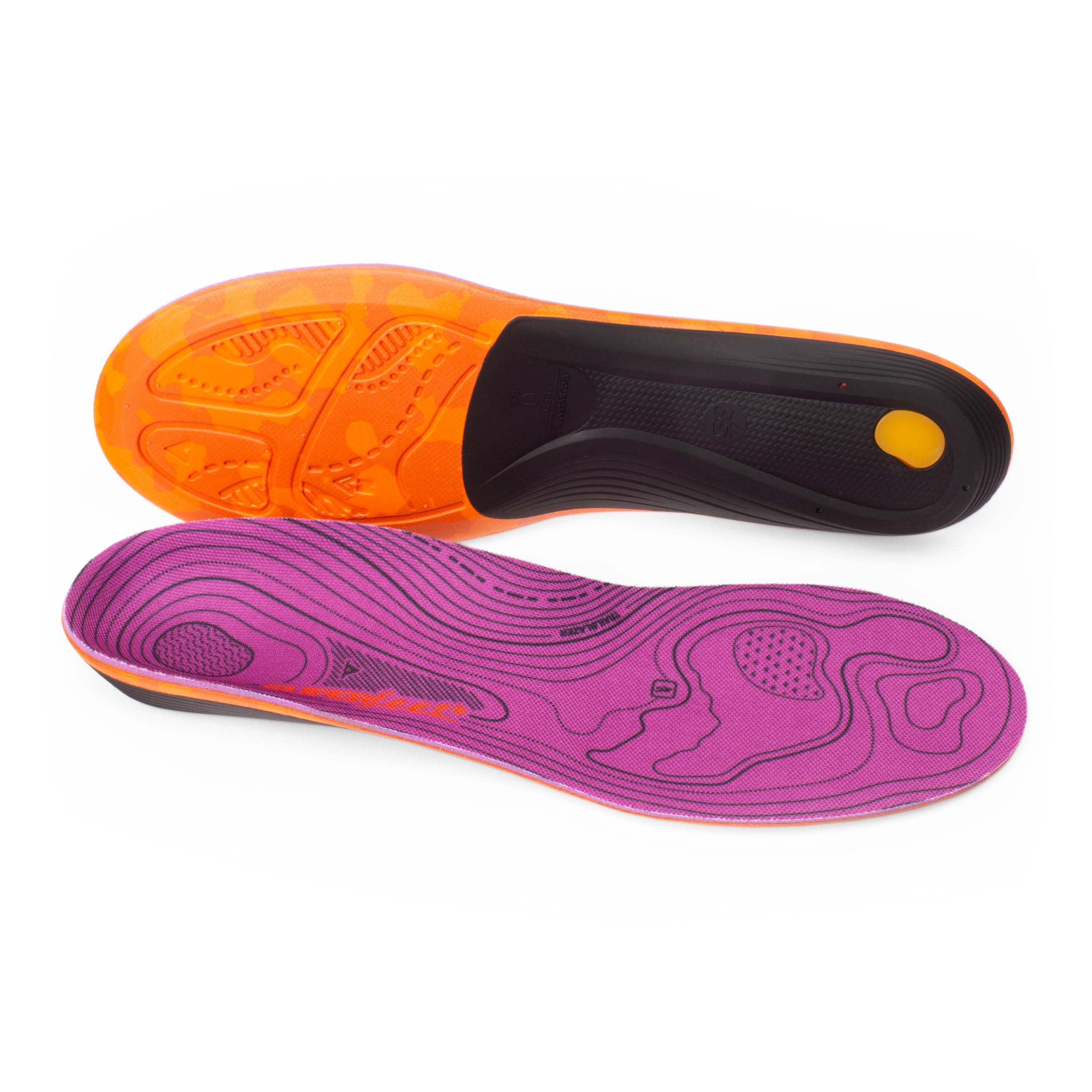
Engineered specifically for women’s foot geometry — narrower through the heel and with a slightly different arch placement — the Superfeet Hike Women’s Support insole delivers a locked-in feel on uneven terrain. The proprietary EVOLyte carbon-fiber and polymer blend provides a lightweight support structure that doesn’t add unnecessary bulk inside the boot. Reviewers consistently praise how the deep heel cup prevents forward sliding on steep downhill stretches, which directly reduces toe-jamming and subungual hematomas.
The medium to high arch profile lifts the foot’s center without feeling aggressive under the mid-foot. Women with psoriatic arthritis or plantar fasciitis report day-long comfort on technical trails that previously caused pain. The Moisturewick top layer also helps manage moisture during warm-weather hikes, though it’s not waterproof — expect it to dry more slowly than open-cell foam if submerged.
Formerly sold as the Superfeet Women’s Trailblazer Comfort, the formula and shape remain unchanged. It’s a reliable choice for any female hiker who wants to stop fighting heel lift and start trusting her footing on loose rock.
Why it’s great
- Women’s-specific shape prevents heel slip
- Carbon-fiber stabilizer adds torsional rigidity without weight
- Proven track record for reducing downhill toe jamming
Good to know
- Arch may feel too high for flat-footed hikers
- Thinner cushioning than the Hike Cushion version
3. CURREX HikePro Insoles
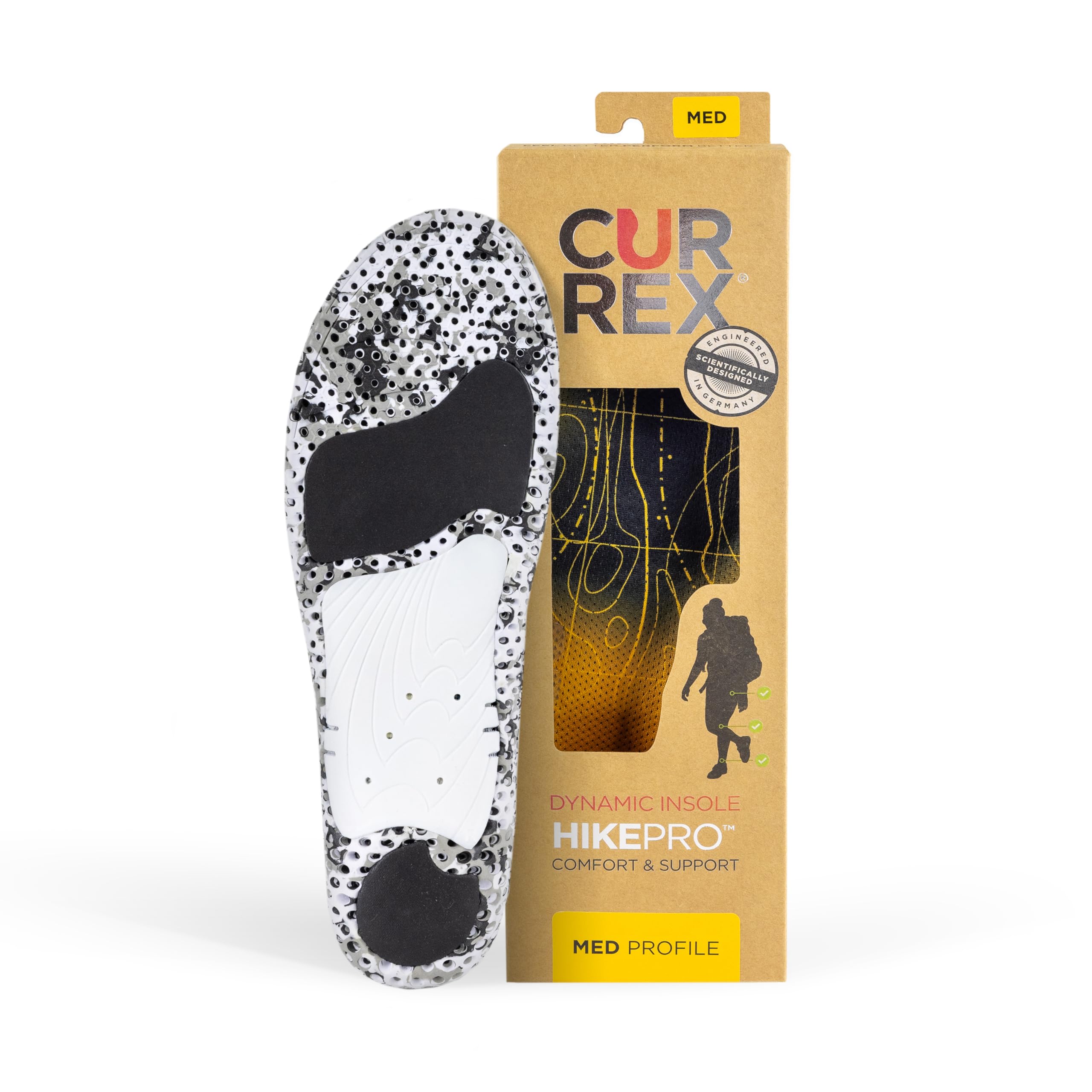
What sets the CURREX HikePro apart is its 3D Dynamic Arch Technology, which offers low, medium, and high arch profiles in a single product line so you can match the footbed to your exact foot type. The arch is decoupled from the heel, meaning the heel cup can wrap and lock independently — a design that significantly improves lateral stability on off-camber sections of trail. A SuperGrip non-slip surface on the heel further prevents the foot from shifting inside the boot during steep descents.
The recycled EVA base with air vent technology keeps the insole breathable without sacrificing shock absorption. Hikers carrying heavy packs on rocky terrain report that the firm heel and forefoot pads do an excellent job of absorbing impact at the point of heel strike without feeling mushy under the ball of the foot. The premium foam also resists odor buildup, which is a real bonus on multi-day trips.
One trade-off: the firmness of the arch support takes a short break-in period for those unaccustomed to structured orthotics. Once broken in, the HikePro turns a standard pair of boots into a custom-feeling platform that handles everything from day hikes to overnighters.
Why it’s great
- Three arch-height options fit nearly any foot shape
- Decoupled heel cup provides superior lateral control
- Breathable, odor-resistant construction
Good to know
- Firm arch may feel aggressive during the first few miles
- Premium price point reflects activity-specific design
4. pedag Viva Outdoor Insoles

For hikers with high arches who need a metatarsal pad to offload pressure from the forefoot, the pedag Viva Outdoor is a standout. Made in Germany and carrying the American Podiatric Medical Association Seal of Acceptance, this insole uses a semi-rigid arch support that doesn’t collapse under load, combined with a targeted metatarsal pad that can relieve symptoms of Morton’s neuroma and general forefoot pain. The top layer is breathable vegan leather, which resists odor and stands up to sweat better than traditional foam covers.
The heel cushion is substantial enough to absorb impact on steep descents, but the overall feel is firm — intentionally so, because a rigid arch platform is what keeps the foot stable on uneven ground. One note: the metatarsal pad position is fixed and may not align perfectly with every foot’s anatomy. Some users find the pad slightly off for their specific metatarsal heads, requiring a drop pad for custom placement.
If you have high arches and want a footbed that combines certified medical-grade design with outdoor-specific durability, the Viva Outdoor is a reliable, well-constructed option that won’t quit after a season of weekend hiking.
Why it’s great
- Metatarsal pad provides targeted forefoot relief
- APMA Seal of Acceptance indicates medical-grade design
- Breathable vegan leather top resists odor
Good to know
- Metatarsal pad placement is not adjustable
- Rigid arch may feel uncomfortable in low-volume boots
5. Oboz Unisex Trail Insole
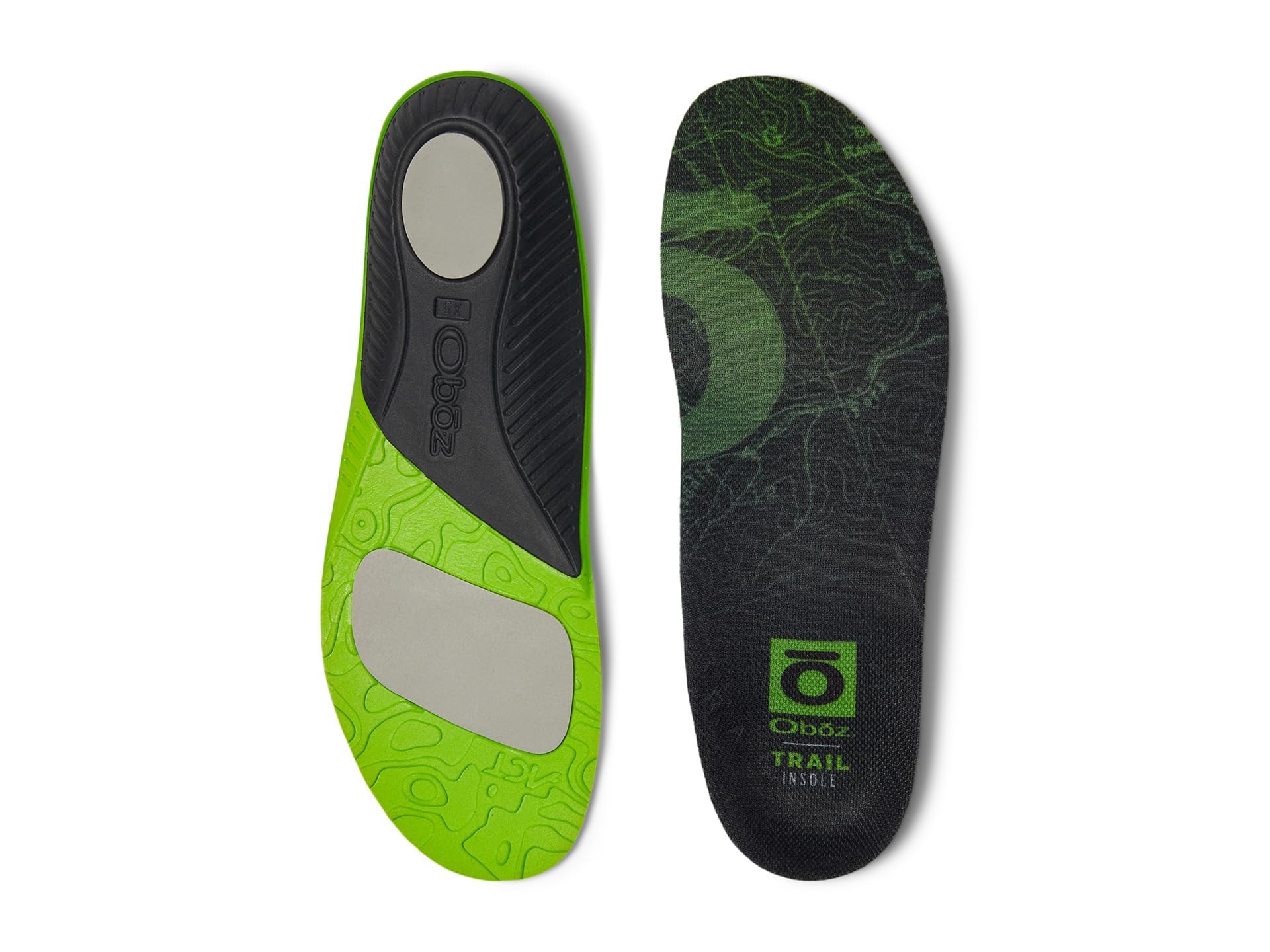
If you’re looking for a straightforward upgrade from stock insoles without jumping to a premium price point, the Oboz Trail Insole hits a sweet spot. It uses a two-part ACT foam system — a firmer PU heel and forefoot formulation for impact protection, and an open-cell PU top layer for cushioning. The medium-high arch profile is broad enough to support most foot shapes without feeling overly corrective.
The heel cup is moderately deep and does a good job of limiting side-to-side movement inside the boot. The fabric top is smooth and non-slip, which reduces the friction points that cause blisters. Reviewers who switched from custom orthotics report that the Oboz insole replicates much of the support without the cost or the wait for a podiatrist fitting. The trim-to-fit sizing is accurate — most users need only a light trim around the toe box.
Durability runs about a year of near-daily wear before the foam begins to lose its rebound, which is reasonable for the price. If you mostly hike on maintained trails and want a reliable, fuss-free insole that works straight out of the box, this is an excellent choice.
Why it’s great
- Balanced arch support works for a wide range of feet
- Smooth fabric top minimizes blister-causing friction
- Dual-density foam absorbs shock without being too soft
Good to know
- Not ideal for very high or very low arches
- Foam may lose some loft after a year of daily use
6. CRUVHEAL Sport Shock Absorbing Insoles

The CRUVHEAL Sport insole is a budget-conscious entry that focuses on impact absorption through strategically placed gel pads in the heel and forefoot. It’s designed with a low arch profile, making it a solid fit for hikers with flat feet who need extra cushion more than aggressive structural support. The deep heel cup and non-slip gel surface work together to keep the foot stable during quick changes in direction on uneven trails.
The construction uses a PU foam base with gel inserts rather than a single-density slab, which gives it a noticeably springy feel right out of the box — several reviewers noted no break-in period. It’s bulkier than some premium options, so it works best in boots with a roomy toe box. The insole is marketed for athletic use, and it performs well on moderate day hikes where shock absorption is the primary concern.
For beginners or weekend hikers who want to add comfort without a big investment, the CRUVHEAL delivers good value. A year of replacement protection is included if you encounter any manufacturing defects after trimming.
Why it’s great
- Gel pads provide immediate, noticeable shock absorption
- Low arch profile suits flat-footed hikers well
- No break-in period required
Good to know
- Bulkier profile may crowd narrow boots
- Lacks rigid arch support for technical terrain
FAQ
How do I know which arch height to choose for my hiking footbeds?
Can I use the same footbeds for hiking and daily walking?
How often should I replace the footbeds in my hiking boots?
Do hiking footbeds fix plantar fasciitis pain on the trail?
Final Thoughts: The Verdict
For most users, the best footbeds for hiking boots winner is the Superfeet Hike Cushion because it delivers a nearly perfect balance of adaptive arch support and plush, resilient cushioning that performs equally well on day hikes and multi-day treks. If you need a women’s-specific design that locks the heel and prevents toe jamming on descents, go with the Superfeet Hike Women’s Support. And for hikers with high arches who also want a built-in metatarsal pad for forefoot relief, the pedag Viva Outdoor is a unique and capable choice.