
Idaho’s high desert climate, with its freezing winters, dry summers, and alkaline soil, can turn a lawn care routine into a battle against the elements. The wrong seed mix just won’t survive the temperature swing from 100°F in July to -10°F in January, leaving you with thin, patchy turf that demands constant watering and reseeding.
I’m Mohammad Maruf — the founder and writer behind Drink4Good. Over the last 15 years, I’ve analyzed hundreds of grass seed formulas, focusing on germination rates, drought resistance, and cold-hardy cultivar blends that actually hold up in intermountain growing zones like Idaho’s 4 through 7.
This guide breaks down the specific seed varieties—tall fescue, Kentucky bluegrass, and perennial ryegrass—that thrive in Idaho’s unique soil and weather patterns, helping you choose the best grass seed for idaho based on your sun exposure, watering schedule, and desired turf density.
How To Choose The Best Grass Seed For Idaho
Idaho’s climate demands a grass seed that handles both scorching summers and deep freezes. You need a mix that germinates fast enough to establish before the first frost but stays green through a dry August. Focus on three factors: the specific grass variety, the blend’s tolerance to your yard’s sun exposure, and the amount of “mulch” versus actual seed in the bag.
Choose the Right Grass Variety for Your Zone
Kentucky bluegrass is the gold standard for northern Idaho because it spreads via rhizomes and recovers from wear, but it needs more water. Tall fescue is the better pick for southern Idaho’s drier areas—it develops deep roots that tap moisture lower in the soil profile. Perennial ryegrass germinates fast (often in 5–10 days) and works well as a nurse grass, but it tends to thin out in extreme heat unless blended with a more heat-tolerant variety like fine fescue.
Understand Seed Coating and Weed Content
Many budget-friendly bags contain a high percentage of coated seed or filler, meaning you’re paying for clay or polymer coating rather than live seed. Look for a label that lists “pure live seed” (PLS) content above 95%. Also check the “other crop seed” and “weed seed” percentages—anything above 0.5% weed seed can introduce crabgrass or clover into your lawn. A premium mix will list 99.9% weed-free on the bag.
Match the Sun Exposure
Idaho yards vary widely—from full-sun south-facing slopes to shaded north-facing lots near the foothills. Sun mixes typically rely on Kentucky bluegrass and tall fescue, while shade blends add fine fescue, which tolerates as little as 3–4 hours of direct sun. Don’t use a shade mix in full sun; the fine fescues will scorch in Idaho’s intense UV. Conversely, a full-sun mix in deep shade will fail to thicken and become patchy.
Quick Comparison
On smaller screens, swipe sideways to see the full table.
| Model | Category | Best For | Key Spec | Amazon |
|---|---|---|---|---|
| Jonathan Green Black Beauty | Premium | Drought tolerance & disease resistance | Waxy coating for moisture retention | Amazon |
| Scotts All-Purpose Mix | Premium | Large-area coverage & weed-free assurance | 20 lb. bag, covers up to 8,000 sq. ft. | Amazon |
| Pennington Smart Seed Northeast | Mid-Range | Cold winters & moderate sun (4–6 hrs) | 7 lb., covers up to 2,330 sq. ft. | Amazon |
| Sunday Northwest Seed + Feed | Mid-Range | All‑in‑one seed & fertilizer for Northwest lawns | Tall fescue & perennial ryegrass blend | Amazon |
| Scotts Sun & Shade Mix | Budget-Friendly | Quick repair for sun/shade spots | Root-building nutrition & fertilizer combo | Amazon |
| Sunday Lawn Kickstart + Green Machine | Premium | Liquid fertilizer pairing for established lawns | 22-0-3 NPK with iron & seaweed | Amazon |
| Barenbrug Winter Wonderlawn | Premium | Overseeding southern Idaho lawns in winter | Germinates in 2–4 days, 25 lb. bag | Amazon |
In‑Depth Reviews
1. Jonathan Green Black Beauty Ultra Grass Seed

The Jonathan Green Black Beauty Ultra is built for Idaho’s extremes. Its signature invisible waxy coating—similar to the natural film on an apple—slows water loss from the leaf blade, giving this tall fescue and Kentucky bluegrass blend a meaningful edge during July’s dry spells. The 7-pound bag covers up to 2,800 square feet, which is generous for a premium seed, and the coating also helps ward off fungal diseases common in Idaho’s spring wet periods.
Germination tends to be slower than ryegrass-heavy mixes (expect first shoots around 10–14 days), but the payoff is a denser, deeper-rooted turf that survives drought stress without turning brown. Several users reported that the grass filled in completely by day 23 with consistent watering, even in high-heat conditions. The blend is also certified pet-friendly, so you won’t worry about your dog damaging newly sprouted areas.
One trade-off: this mix demands soil preparation. It performs best when you till, aerate, and apply a starter fertilizer before seeding. Using it straight onto compacted clay without prepping the topsoil can lead to uneven germination. For Idaho homeowners willing to invest in soil prep, Black Beauty is the most resilient option for a full-lawn renovation.
Why it’s great
- Waxy coating reduces watering frequency during drought
- Excellent disease resistance for wet spring conditions
- Pet-safe formula for homes with dogs
Good to know
- Requires soil tilling and starter fertilizer for best results
- Germination is slower (10–14 days) compared to ryegrass blends
2. Scotts Turf Builder Grass Seed Quality All-Purpose Mix

Scotts Turf Builder Quality All-Purpose Mix is the seed for Idahoans who need to cover serious acreage without breaking the bank. At 20 pounds, the bag covers up to 8,000 square feet for overseeding, making it the largest-volume option in this lineup. The mix is 99.9% weed-free—a critical spec when you’re spreading across a full property and don’t want to introduce crabgrass or quackgrass into an established lawn.
Each seed kernel is coated with a water-absorbing polymer that takes in up to twice as much moisture as uncoated seed. That’s a real advantage in Idaho’s arid air, where surface soil can dry out within hours of watering. Users consistently note germination in 10–14 days, with thick, deep-green growth that blends seamlessly with existing tall fescue and bluegrass lawns. The mix handles both full sun and moderate shade, which covers the majority of residential yards.
The main downside is the coating itself: you’re paying for some weight that isn’t pure seed. A 20-pound bag contains roughly 15–16 pounds of actual seed after accounting for the coating mass. Also, several customers reported that the mix required crabgrass preventer afterward, as a small percentage of weed seeds still made it through. For large-scale overseeding where weed pressure is manageable, this remains the best value for square-footage coverage.
Why it’s great
- Massive coverage at 8,000 sq. ft. per bag
- Water-absorbent coating helps germination in dry soil
- 99.9% weed-free for clean overseeding
Good to know
- Coating adds weight—actual seed content is lower
- Some users needed post‑emergent crabgrass treatment
3. Pennington Smart Seed Northeast Grass Mix

Pennington’s Smart Seed Northeast Mix brings a well-balanced blend of Kentucky bluegrass, perennial ryegrass, and fine fescue to Idaho lawns at a mid-range price point that often undercuts comparable Scotts products by a noticeable margin. The 7-pound bag covers up to 2,330 square feet for overseeding, putting the cost per square foot among the lowest in this tier. The fine fescue component gives this mix an edge for yards that only get 4–6 hours of direct sun—common in Boise’s older neighborhoods with mature shade trees.
Germination is reliably fast, often visible within 8–10 days when soil temperatures hover around 60–70°F. The Kentucky bluegrass adds the spreading rhizome structure that helps fill in bare spots over time, while the fine fescue stays green in partial shade without going to seed prematurely. Users report strong, dense turf after two weeks, with good color retention through the first summer heat wave.
The occasional bag has been reported with lower germination rates—likely a storage-age issue rather than a formula problem. Pennington’s customer service generally replaces those bags without hassle. Also, the mix is best for spring or early fall planting; late fall dormant seeding may not be as successful with the fine fescue component. For Idaho homeowners looking for a cost-effective, shade-tolerant lawn, Smart Seed Northeast delivers consistent results.
Why it’s great
- Affordable price per square foot
- Fine fescue handles 4–6 hour sun/shade spots
- Fast germination visible in 8–10 days
Good to know
- Some bags may have lower germination due to age
- Not ideal for late fall dormant seeding
4. Sunday Northwest Seed + Feed

Sunday takes a unique approach by combining tall fescue and perennial ryegrass seed with a 9-0-2 NPK fertilizer blend and soil conditioners like limestone and gypsum, all in one bag. That means fewer trips around the yard and no need to buy a separate starter fertilizer. The all-in-one design is particularly useful for Idaho’s alkaline soils—the gypsum helps break up clay and lower soil pH over time, which fescue loves.
Germination is reported between 8 and 21 days depending on watering consistency and soil temperature. The seed blend is designed for the Northwest’s varied rainfall and cooler spring conditions, so it performs well in Idaho’s higher-elevation areas like the Panhandle. Users who applied it in early spring with consistent moisture saw deep greening within two weeks. The fertilizer’s 9-0-2 ratio provides nitrogen for leaf growth and potassium for root development without adding phosphorus that can run off into local waterways.
The main quirks are the smell (the organic poultry-based fertilizer has a noticeable odor for a few days after application) and the fact that the seed-to-fertilizer ratio means you’re covering less square footage with actual seed—1,500 square feet per 10-pound bag. Some buyers found the seed distribution thinner than expected for bare-soil renovation. If you need a quick, eco-friendly overseeding solution with built-in nutrients, this is a solid choice.
Why it’s great
- All-in-one seed, fertilizer, and soil conditioner
- Pesticide-free and safe for kids and pets after watering
- Limestone/gypsum helps correct alkaline Idaho soil
Good to know
- Strong poultry‑based smell for the first few days
- Lower seed density means thinner coverage for bare patches
5. Scotts Turf Builder Grass Seed Sun and Shade Mix

Scotts Sun and Shade Mix is the go-to for patching bare spots and repairing thin areas that get a mix of sun and shade throughout the day. The 5.6-pound bag is compact—covers only 745 square feet for a new lawn or 2,240 square feet for overseeding—but it packs a three-in-one punch: seed, slow-release fertilizer, and a soil improver. The Root-Building Nutrition formula helps seedlings develop deeper root systems before the summer heat hits, which is critical in Idaho’s short spring window.
Germination is moderate, typically around 10–14 days with consistent twice-daily watering. Several users noted strong sprouting even after just one rainfall, thanks to the coated seed that absorbs water efficiently. The mix is designed for full sun to moderate shade, which matches most suburban yards. The included fertilizer means you don’t need to apply a separate starter, saving time and reducing the risk of burning young turf.
The trade-off is the relatively small bag size—if you’re covering more than 2,000 square feet, you’ll need multiple bags. Also, a few customers reported increased weed pressure from recent batches, suggesting the weed-seed content has crept up. For targeted spot repair and small-area renovation, this mix is convenient and effective, but it’s not a full-lawn solution.
Why it’s great
- Three-in-one: seed, fertilizer, soil improver
- Root-building nutrition helps survive dry periods
- Easy to apply for small spot repairs
Good to know
- Small bag size—multiple units needed for large areas
- Recent batches may have higher weed seed content
6. Sunday Lawn Kickstart + Green Machine Liquid Fertilizer

This pair from Sunday is not a seed product, but it’s the perfect companion for an established lawn that needs a nutritional boost. The Lawn Kickstart (22-0-3) delivers a high-nitrogen punch with iron for deep greening, while the Green Machine adds seaweed and potassium for stress resistance. The hose-on sprayer makes application effortless—just attach, spray, and you’re done in under 15 minutes for a 5,000-square-foot lawn.
Idaho’s alkaline soil often locks up iron, leading to yellowing grass. This liquid formula chelates iron in a form that stays available even at higher pH levels, so you’ll see visible greening within 5–7 days. The potassium from the seaweed helps the grass handle both heat stress in July and freeze stress in November, acting like a natural antifreeze for cell tissue. Users consistently report a rich green color that lasts 4–6 weeks per application.
The main drawback is the price per application—it’s more expensive than granular fertilizer, especially if you’re covering a large property. A few users also reported sprayer nozzle failures, though Sunday’s customer service promptly issued refunds. If you already have a good seed base and just want to maximize color and stress tolerance, this liquid duo is a clean, effective solution.
Why it’s great
- Fast greening in 5–7 days with iron chelation
- Hose-on application is quick and mess-free
- Seaweed and potassium improve heat and cold stress tolerance
Good to know
- Higher cost per application versus granular fertilizer
- Sprayer nozzle quality is inconsistent
7. Barenbrug Winter Wonderlawn Grass Seed
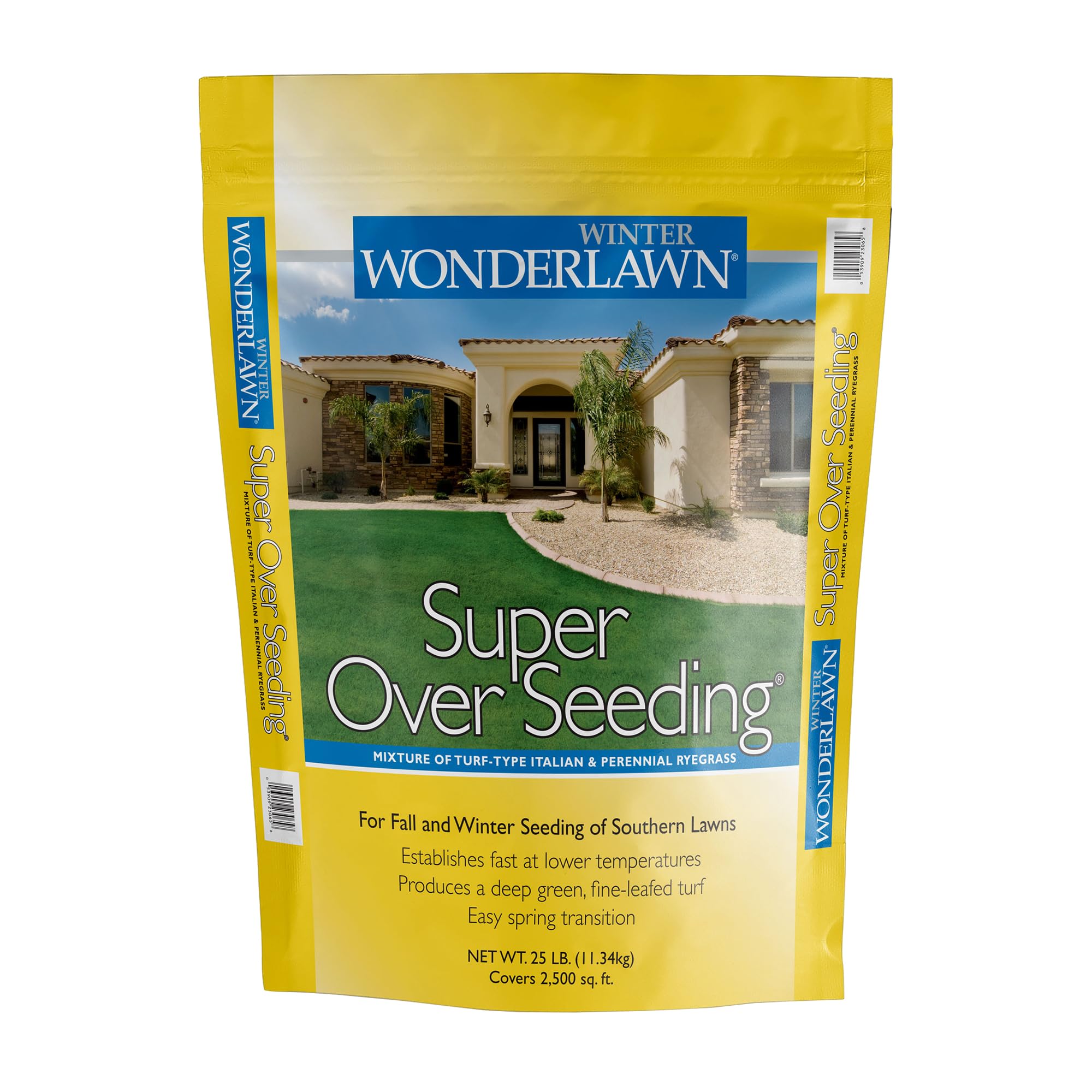
Barenbrug Winter Wonderlawn is a specialty mix designed for overseeding warm-season lawns (like Bermuda) in southern Idaho during the winter months when the primary grass goes dormant. The blend uses high-quality perennial and Italian ryegrasses that germinate in as little as 2–4 days—the fastest sprouting time in this roundup. It creates a lush green carpet over the cold months and naturally dies back in the spring without needing chemical transition sprays.
Users in southern Idaho and similar climates report that it filled bare spots in muddy yards, survived under snow packs for weeks, and came back strong in early spring. The 25-pound bag offers excellent coverage for the price, and the ryegrass varieties have fine leaf blades that blend attractively with finer-textured lawns. The mix is labeled for full shade, which is unusual for a winter overseed—it actually thrives in low-light winter conditions when the sun is weak.
The obvious limitation is that it’s not a permanent solution—it only lasts through the winter and spring transition. If you’re looking for a year-round lawn, this isn’t the primary seed. Also, the ryegrasses can be more susceptible to summer heat if they linger into June. But for Idaho homeowners with Bermuda or zoysia lawns who want green grass through the holidays, this is the most effective winter overseed available.
Why it’s great
- Ultra-fast germination in 2–4 days
- Natural spring transition—no chemicals needed
- Large 25-pound bag covers extensive winter lawn area
Good to know
- Only a temporary winter cover, not a permanent lawn
- Ryegrass can struggle if summer heat arrives early
FAQ
Can I use a “Northeast” grass seed mix in Idaho?
When is the best time to plant grass seed in Idaho?
How much water does new grass seed need in Idaho’s dry climate?
Final Thoughts: The Verdict
For most users, the best grass seed for idaho winner is the Jonathan Green Black Beauty because its waxy coating provides superior drought tolerance and disease resistance, exactly what Idaho’s dry summers and wet springs demand. If you want massive coverage and a 99.9% weed-free guarantee for a full-lawn renovation, grab the Scotts All-Purpose Mix. And for a budget-friendly, shade-tolerant option that germinates fast, nothing beats the Pennington Smart Seed Northeast Mix.