
The promise of a tender, risen cake or a slice of bread that doesn’t crumble the moment you pick it up is the single biggest reason gluten-free bakers keep experimenting with new flour blends. One bag delivers dense, gritty disappointment; another unlocks the texture you thought you’d lost when you gave up wheat. Getting that result consistently depends on knowing exactly what a given blend is designed to do.
I’m Mohammad Maruf — the founder and writer behind Drink4Good. I’ve spent years analyzing gluten-free flour formulations, from starch-to-protein ratios to particle-size distribution, so you can skip the trial-and-error phase and pick a bag that actually performs in your oven.
Whether you’re aiming for a fluffy birthday cake or a loaf that holds together for sandwiches, the right starting point makes all the difference. This guide breaks down five proven options to help you confidently choose the best gluten free baking flour for your specific recipe.
How To Choose The Best Gluten Free Baking Flour
Picking the right gluten-free flour isn’t about grabbing the cheapest bag on the shelf. The biggest mistake bakers make is assuming one blend works for every recipe. Cakes, breads, cookies, and pizza crusts each require a different protein and starch balance to achieve the right structure. Understanding a few key factors will help you match the flour to your project.
Single Ingredient vs. Blended Flours
A single-ingredient flour like white rice flour or millet flour offers a specific flavor and texture but rarely works alone for complex bakes. Blended flours combine starches and grains to mimic wheat’s structure. Some blends include xanthan gum, which provides the elasticity that gluten normally supplies.
Texture: Grit Is the Enemy
The most frequent complaint from new gluten-free bakers is a gritty or sandy mouthfeel. This usually comes from brown rice flour or improperly milled grains. Premium blends use finely milled white rice flour, potato starch, and tapioca starch to create a smooth, silky texture that behaves much closer to all-purpose wheat flour.
Protein Content and Structure
Bread recipes need a higher protein content to develop a chewy crumb, while cakes require a lower protein percentage for a tender rise. Many blends are optimized for a specific purpose. A dedicated bread flour blend may contain extra protein from chickpea or sorghum flour, while a cake blend relies more on starch for lightness.
Quick Comparison
On smaller screens, swipe sideways to see the full table.
| Model | Category | Best For | Key Spec | Amazon |
|---|---|---|---|---|
| Steve’s GF Bread Flour | Bread Blend | Yeast loaves, rolls, bagels | Works without added gums | Amazon |
| Steve’s GF Cake Flour | Cake Blend | Cakes, muffins, cookies | Cup-for-cup wheat replacement | Amazon |
| gfJules All Purpose Flour | All-Purpose Blend | General baking, 1:1 sub | Top 9 allergen free | Amazon |
| Anthony’s White Rice Flour | Single Ingredient | Thickening, noodles, blends | Fine powder, 3 lb bag | Amazon |
| Bob’s Red Mill Millet Flour | Single Ingredient | Quick breads, pancakes | Stone ground, 4-pack | Amazon |
In‑Depth Reviews
1. Steve’s GF Bread Flour Blend by Authentic Foods
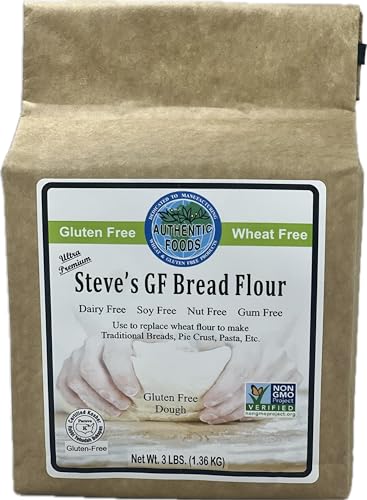
This is the flour that gives gluten-free bakers back their bread routine. Steve’s GF Bread Flour Blend is formulated to create a true dough that kneads, stretches, and rises — without relying on gums like xanthan. The protein structure comes from a proprietary mix of primarily white rice flour and starches, delivering a crumb that is chewy enough for a rustic loaf but light enough for cinnamon rolls. Reviewers consistently report that family members couldn’t tell the difference from wheat-based bread.
What sets this bread flour apart is its ability to handle yeasted projects. Pan loaves, bagels, soft pretzels, English muffins, and even artisan sourdough-style loaves all work using the recipes on AuthenticFoods.com. For bakers adapting their own wheat recipes, the instruction to substitute at 70 percent of the wheat flour volume is a crucial detail — this flour behaves differently from all-purpose blends and needs that ratio adjustment.
Moisture retention is strong here. Rolls and buns stay soft into the next day, which is rare in the gluten-free baking world. The 3-pound bag is cost-effective compared to store-bought gluten-free bread, though the premium price reflects the specialized formulation. If baking bread regularly is your goal, this blend is worth the investment.
Why it’s great
- Creates a true, kneadable dough without gums
- Excellent rise and texture for yeasted bakes
- Versatile for rolls, bagels, pizza, and sourdough
Good to know
- Higher price point than standard blends
- Requires reducing wheat flour volume by 30% in adapted recipes
- Only 3 lb bag size limits bulk storage
2. Steve’s GF Cake Flour Blend by Authentic Foods

For bakers who crave a delicate, tender crumb in their cakes, this cake flour blend is the closest gluten-free option to traditional pastry flour. Steve’s GF Cake Flour is a cup-for-cup wheat replacement, meaning you can swap it directly into most standard cake, muffin, and cookie recipes without adjusting liquids or leaveners. The formulation excludes xanthan gum, relying instead on the natural starches in the blend to provide structure while keeping the texture light and airy.
The absence of brown rice flour in this blend is deliberate — brown rice is the main source of the gritty texture that plagues many gluten-free baked goods. Instead, this flour uses finely milled white rice flour and starches to produce a smooth, silky batter. Reviewers have successfully used it in layered birthday cakes, pound cakes, and even delicate pastries like scones with results that fooled wheat-eaters at the table.
One reviewer noted that this flour requires about 35 to 40 grams more weight per cup compared to wheat flour when measuring by volume, so a kitchen scale is recommended for precise bakes. The 3-pound bag delivers roughly 10 to 11 cups of flour, which goes fast if you bake regularly, and the price per cup is higher than mid-range all-purpose blends. For special occasion cakes where texture is non-negotiable, this is the clear choice.
Why it’s great
- True cup-for-cup substitution for wheat cake flour
- No gritty texture from brown rice
- Produces light, fluffy cakes with clean flavor
Good to know
- Weight-based measurement recommended for accuracy
- Premium pricing per cup
- Best limited to cakes, muffins, and cookies
3. gfJules Certified Gluten Free All Purpose Flour

gfJules is an all-purpose blend that has been voted number one eight times by consumers in the Gluten Free Awards — a testament to its reliable performance across a wide range of recipes. The formula is a white flour blend that excludes brown rice flour, eliminating the dry, gritty aftertaste that turns many people off gluten-free baking. Instead, it uses modified tapioca starch, potato starch, corn starch, white rice flour, corn flour, and xanthan gum to create a smooth, light texture.
The cup-for-cup nature of this flour makes it the easiest entry point for someone switching from wheat. You can pull out your standard chocolate chip cookie or banana bread recipe and substitute directly without worrying about hydration or gum adjustments. The 1.5-pound pouch yields about 5 cups, and the larger 4.5-pound bag yields 15 cups. Beyond its performance, gfJules is certified free of the top nine allergens — wheat, milk, eggs, peanuts, tree nuts, soy, fish, sesame, and crustaceans — making it one of the safest options for households with multiple food sensitivities.
Bakers who have used this flour for birthday cakes, pie crusts, biscuits, and even savory applications like sausage gravy report that the texture is indistinguishable from wheat flour. The primary drawback is the price per cup, which is higher than many big-box store brands. But for those who need a single flour that works across most recipes — and need it to be free of major allergens — this is a superb daily driver.
Why it’s great
- True 1:1 substitution for wheat all-purpose flour
- Certified free of top 9 allergens
- No gritty or off-putting aftertaste
Good to know
- Expensive per cup compared to bulk store brands
- Small pouch size may require frequent reordering
- Contains xanthan gum, which some bakers prefer to control themselves
4. Anthony’s Premium White Rice Flour, 3 lb
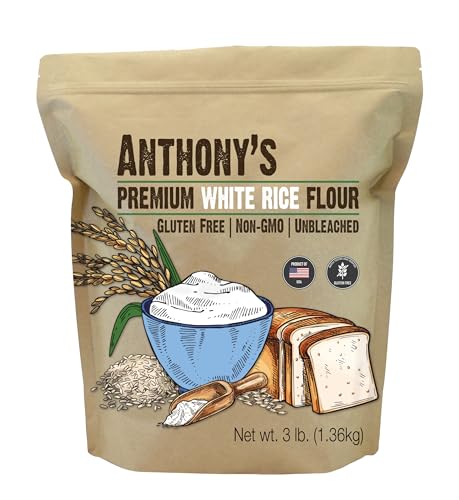
Single-ingredient flours are the building blocks of any good gluten-free pantry, and Anthony’s Premium White Rice Flour is a solid choice for bakers who prefer to mix their own blends. The fine powder consistency means it integrates smoothly into batters and doughs without leaving a visible grain. As a white rice flour, it has a neutral flavor that won’t compete with other ingredients, making it a versatile base for everything from cookies to homemade noodles.
The 3-pound bag provides 48 ounces of flour, which is a generous amount for the price point. It is batch tested and verified gluten-free, produced in the USA, and certified non-GMO and vegan. Bakers with celiac disease report that it works well when paired with other flours and starches to create custom blends. It also performs excellently as a thickening agent for soups, gravies, and sauces where a gluten-free roux is needed.
While white rice flour lacks the protein and structure to stand alone in most baked goods, it is indispensable for those who want to control exactly what goes into their flour blend. The fine grind here is noticeably smoother than some competing brands, reducing the risk of grit. If you plan to make your own all-purpose or bread flour mix, this is the base you want in your pantry.
Why it’s great
- Fine, smooth texture with minimal grit
- Neutral flavor works in any recipe
- Large 3 lb bag at a reasonable price
Good to know
- Not a complete baking solution alone
- Requires blending with starches for good structure
- Smaller than the more common 5 lb size
5. Bob’s Red Mill Stone Ground Millet Flour, 4-Pack
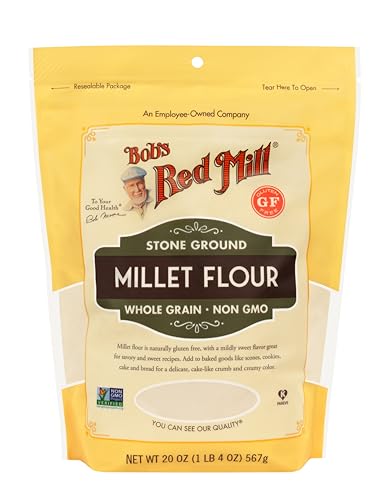
For bakers looking to add variety and whole-grain nutrition to their gluten-free baking, Bob’s Red Mill Millet Flour offers a unique alternative to rice-based flours. Millet flour has a subtle, slightly sweet flavor and imparts a creamy golden color to baked goods. It works beautifully in quick breads, pancakes, muffins, and as part of a multi-flour blend for more complex bakes. Bob’s Red Mill produces this flour in a dedicated gluten-free facility and batch tests using an ELISA assay to verify purity.
This 4-pack gives you four separate 20-ounce bags, which is convenient for portion control and freshness. The stone grinding process retains more of the whole grain’s natural nutrients compared to roller-milled flours. Millet flour is naturally high in fiber and protein relative to white rice flour, which can improve the nutritional profile of your baked goods without heavily altering the flavor. The vegan and non-GMO certification adds to its appeal for health-conscious shoppers.
One caveat: millet flour behaves differently in recipes. It absorbs more liquid than white rice flour, so bakers may need to adjust hydration levels when substituting. It also does not work well as a standalone flour for yeast breads without additional starches. But for those who enjoy experimenting with whole grains, this is a pantry staple that brings a welcome complexity to the gluten-free kitchen.
Why it’s great
- Unique whole-grain flavor and creamy color
- Produced in dedicated gluten-free facility
- Higher fiber than refined rice flours
Good to know
- Requires recipe adjustments for hydration
- Not suitable as a sole flour for yeast breads
- Stone ground texture may feel coarser to some users
FAQ
Can I use gluten free baking flour cup for cup in any wheat recipe?
Why does my gluten free bread come out dense and crumbly?
What is the difference between white rice flour and brown rice flour in baking?
Final Thoughts: The Verdict
For most users, the best gluten free baking flour winner is the Steve’s GF Bread Flour Blend because it gives you the closest experience to working with wheat dough for yeast-based recipes without relying on gums. If you want a versatile all-purpose that works across birthdays and weeknight dinners, grab the gfJules All Purpose Flour. And for delicate cakes where texture is everything, nothing beats the Steve’s GF Cake Flour Blend.