
Pairing a graphics card with the AMD Ryzen 7 9700X is less about raw core count and more about balancing clock-sensitive gaming with modern feature sets like ray tracing and upscaling. The 9700X’s strong single-threaded performance means it can push high frame rates, but it won’t magically erase a GPU bottleneck if you overshoot your resolution or undershoot memory capacity. The real challenge is matching the card’s thermal profile, power draw, and VRAM to your specific use case—whether that’s 1440p ultra, 4K entry, or compute-heavy creative work.
I’m Mohammad Maruf — the founder and writer behind Drink4Good. My focus is on dissecting hardware specifications and market data to isolate the cards that deliver genuine, measurable performance gains for specific CPU pairings like the 9700X.
This guide stacks the full range of current-generation options, from entry-level Blackwell cards to high-VRAM RDNA 4 models, to help you find the best gpu for 9700x without paying for features your processor can’t leverage or skimping on the bandwidth your games demand.
How To Choose The Best GPU For 9700X
The Ryzen 7 9700X is an 8-core, 16-thread processor built on the Zen 5 architecture, capable of driving high frame rates at 1440p and even 4K depending on the title. Your GPU choice must complement this CPU’s strengths: fast L1 cache and strong single-threaded performance mean it can keep a mid-to-high-end card fed, but pairing it with a very high-tier card may lead to diminishing returns in CPU-bound scenarios at lower resolutions.
VRAM Capacity and Resolution Targets
For 1080p, 8GB of GDDR6 is generally sufficient for current titles, but 1440p and 4K benefit strongly from 12GB or 16GB. The 9700X has enough grunt to push texture-heavy scenes, so a card with 12GB or more provides headroom for high-resolution texture packs and future titles. The RX 9060 XT models and RX 9070 XT cards offer 16GB, while the RTX 5070 series tops out at 12GB GDDR7.
PCIe Generation and Bandwidth
The 9700X supports PCIe 5.0 on compatible motherboards (B650/E, X670/E, X870/E). A PCIe 5.0 GPU—like the RTX 5070 series or RX 9060 XT—can leverage the full bandwidth for tasks that scale with bus speed, such as some AI inference workloads. In pure gaming, PCIe 4.0 x16 is still plenty, but future-proofing with 5.0 is a small insurance for next-generation asset streaming.
Power Delivery and Thermal Design
The 9700X has a 65W TDP, so it doesn’t demand a massive PSU by itself. Your total system draw depends on the GPU. Cards like the RTX 5070 (250W TDP) and RX 9070 XT (304W TDP) require a quality 750W PSU as a baseline. Triple-fan designs with vapor chambers handle the heat, but you need case clearance for large cards exceeding 300mm in length.
Quick Comparison
On smaller screens, swipe sideways to see the full table.
| Model | Category | Best For | Key Spec | Amazon |
|---|---|---|---|---|
| ASRock RX 9070 XT Challenger 16GB | Premium Mid-Range | 1440p max settings, 4K entry | 2970 MHz boost, 16GB GDDR6 | Amazon |
| Sapphire Nitro+ RX 9070 XT 16GB | High-End | Silent 4K, premium build | 3060 MHz boost, 16GB GDDR6 | Amazon |
| PowerColor Reaper RX 9070 XT 16GB | High-End | Dual-slot SFF build, 1440p | 2400 MHz base, 16GB GDDR6 | Amazon |
| MSI RTX 5070 Gaming Trio OC 12GB | Premium Mid-Range | 1440p RT with DLSS 4 | 2625 MHz boost, 12GB GDDR7 | Amazon |
| PNY RTX 5070 Epic-X ARGB OC 12GB | Premium Mid-Range | 1440p high FPS, compact build | 2685 MHz boost, 12GB GDDR7 | Amazon |
| ASUS SFF-Ready Prime RTX 5070 12GB | Premium Mid-Range | ITX/SFF 1440p, competitive titles | 2542 MHz boost, 12GB GDDR7 | Amazon |
| GIGABYTE RTX 5070 AERO OC 12GB | Premium Mid-Range | White aesthetic build, 1440p | 2600 MHz boost, 12GB GDDR7 | Amazon |
| ASUS Dual RX 9060 XT 16GB | Mid-Range | 1080p/1440p balanced, compact | 3250 MHz boost, 16GB GDDR6 | Amazon |
| GIGABYTE RX 9060 XT Gaming OC 16GB | Mid-Range | 1440p ultra, budget-conscious | 2700 MHz boost, 16GB GDDR6 | Amazon |
| XFX Swift RX 9060 XT 16GB | Mid-Range | 1080p max, entry-level 1440p | 3320 MHz boost, 16GB GDDR6 | Amazon |
| MSI Gaming RTX 5050 8GB Shadow 2X | Entry-Level | 1080p moderate gaming, upgrade | 2617 MHz boost, 8GB GDDR6 | Amazon |
In‑Depth Reviews
1. ASRock Radeon RX 9070 XT Challenger 16GB OC
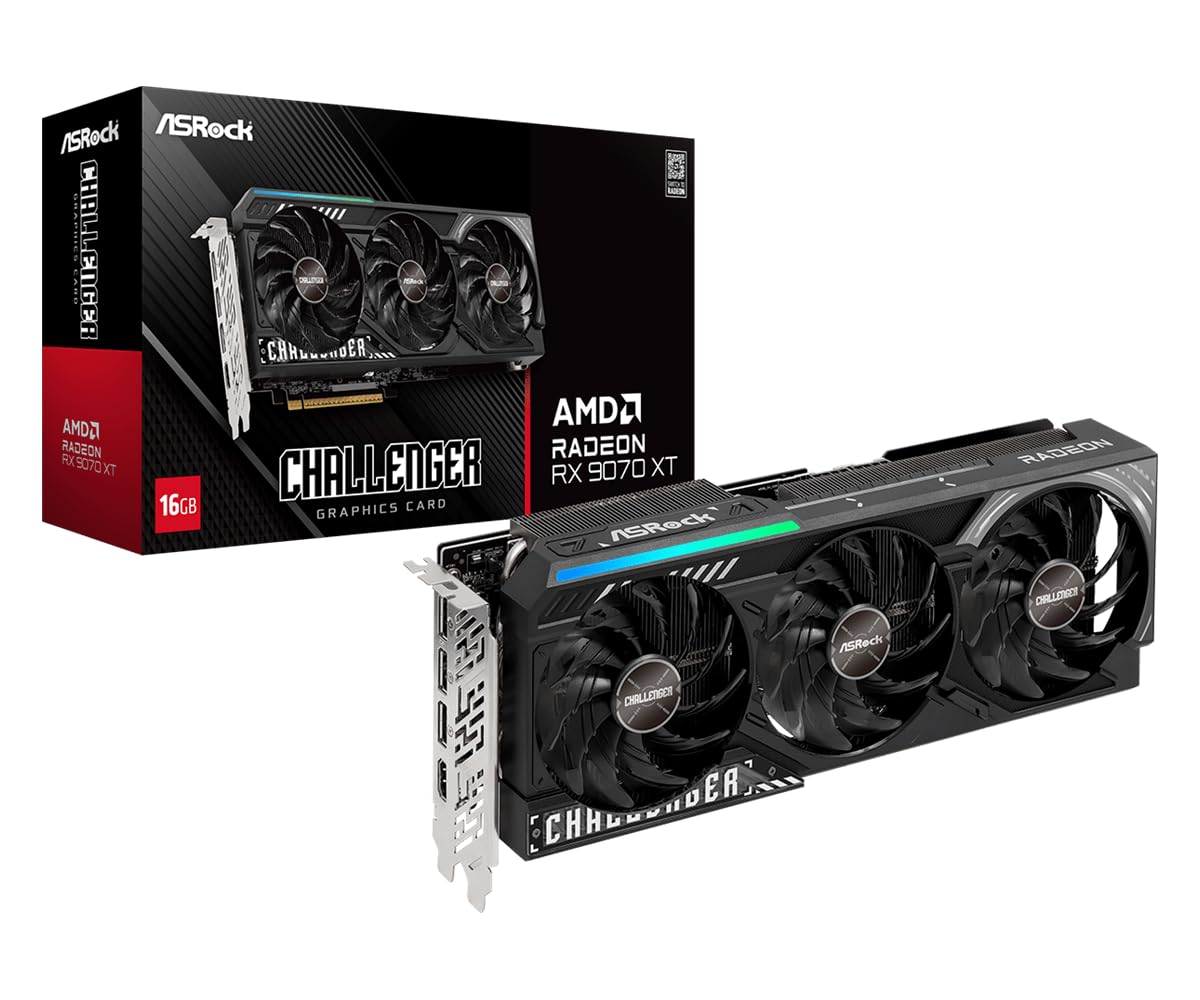
The ASRock Challenger RX 9070 XT strikes an excellent balance between raw performance and price, offering a 2970 MHz boost clock with 16GB of GDDR6 on a 256-bit bus. This card easily handles 1440p max settings in demanding titles and can push playable frame rates at 4K without relying on aggressive upscaling. The triple-fan cooling setup with Striped Axial Fan technology keeps thermals in check even during extended sessions, while the 0dB silent mode cuts fan noise entirely at low loads.
Build quality includes a metal backplate for rigidity and a physical LED switch that lets you control the single-color white light without software. The PCIe 5.0 interface matches well with the 9700X’s platform, ensuring no bandwidth bottleneck. Undervolting via AMD Adrenaline is straightforward and typically yields a few percent improvement in frame rate consistency while lowering power draw.
Pairing this card with a 750W power supply is the baseline recommendation; ASRock specifically notes a 750W+ requirement for stability. The 2.5-slot design is relatively compact for a premium card, measuring around 9.5 inches, which improves case compatibility over larger triple-slot boards.
Why it’s great
- Very strong 1440p max settings performance with 16GB VRAM for texture-rich titles
- Quiet operation with effective 0dB fan stop mode at idle
- Physical LED switch eliminates reliance on buggy software for lighting control
Good to know
- Single-color white LED only — no RGB customization
- Prompt 750W PSU requirement means older builds may need an upgrade
- Lighting control software from ASRock has been reported as buggy by some users
2. Sapphire 11348-01-20G Nitro+ AMD Radeon RX 9070 XT Gaming OC 16GB

The Sapphire Nitro+ RX 9070 XT is the premium Radeon option with a 3060 MHz boost clock out of the box, making it one of the fastest Ampere-class cards available. The triple-slot cooler is overbuilt, using a vapor chamber and large aluminum fin stack to keep temperatures low while maintaining near-silent fan operation — even under sustained 4K loads. The card’s 16GB GDDR6 buffer is a strong asset for 4K texture-heavy titles and can also accommodate local LLM inference without swapping to system RAM.
Supporting dual HDMI 2.1 and dual DisplayPort 2.1 outputs, the Nitro+ is well-suited for multi-monitor setups or high-refresh-rate 4K displays. At over 300mm in length and requiring roughly 2.9 slots, case compatibility is the primary consideration — this card will not fit compact or mid-tower cases without careful measurement. An included support bracket helps mitigate sag, but users have reported the bracket itself can be tricky to install.
Power delivery uses two 8-pin connectors, which compatibility-wise is easier than NVIDIA’s 12VHPWR standard on older PSUs. Sapphire recommends a 850W power supply to accommodate transient spikes. For the 9700X, this represents a pairing where CPU is rarely the bottleneck — the card will be the performance limiter only in pathological CPU-bound scenarios.
Why it’s great
- Excellent thermal performance with very low noise levels even under sustained 4K load
- Higher factory boost clock than most RX 9070 XT variants
- Strong VRAM capacity for both gaming and AI/ML workloads
Good to know
- Very large triple-slot design may not fit smaller cases
- Requires a robust 850W power supply for stable operation
- Ray tracing performance still trails NVIDIA equivalents in comparable price brackets
3. PowerColor Reaper AMD Radeon RX 9070 XT 16GB GDDR6
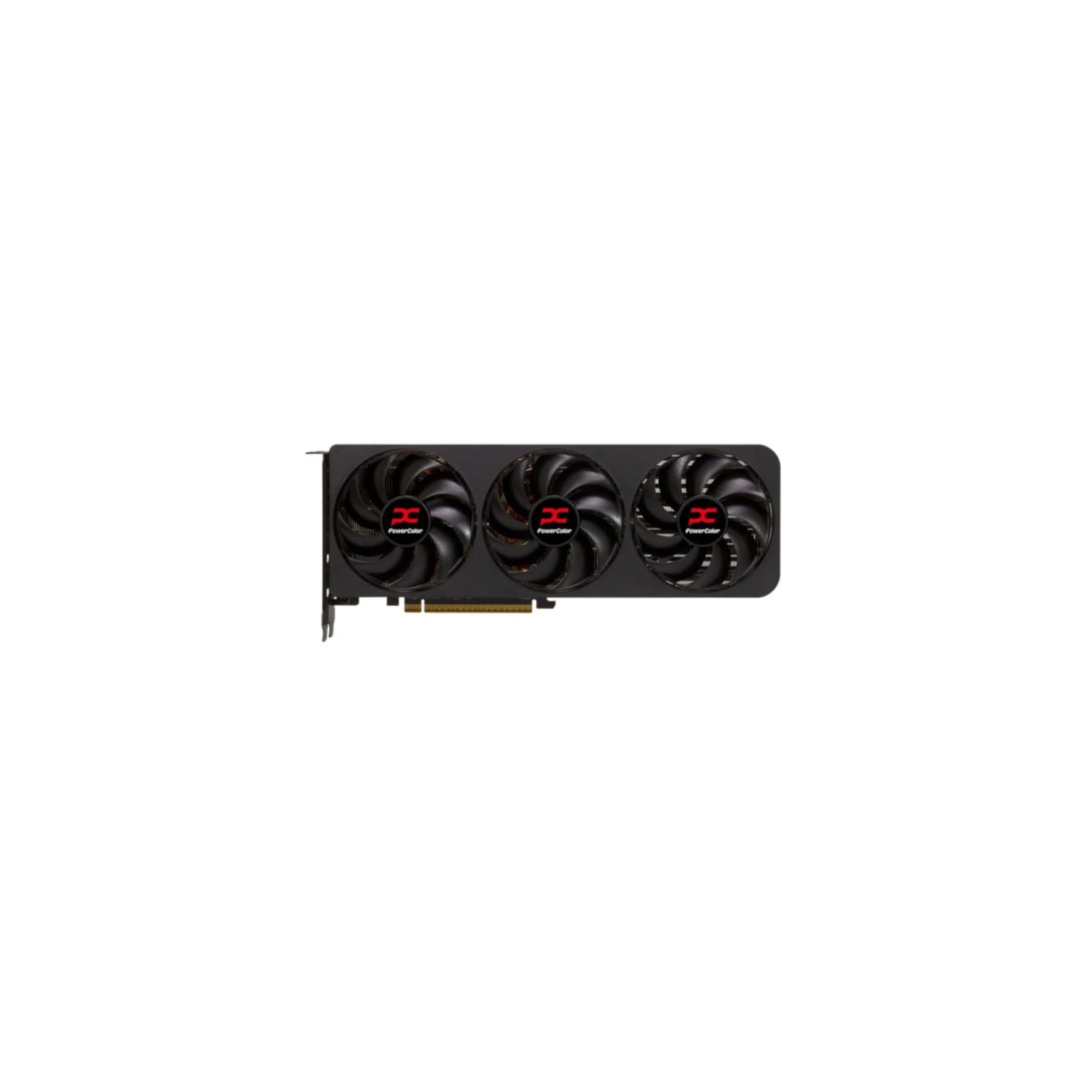
The PowerColor Reaper RX 9070 XT is a leaner alternative to the bulky Nitro+, coming in at a 2-slot design that’s 289mm long and uses standard two 8-pin power connectors. This makes it an excellent choice for small-form-factor builds or cases with limited clearance where a full triple-slot card won’t fit. Despite its compact dimensions, the Reaper maintains solid cooling performance and stays quiet under typical gaming loads.
Performance aligns closely with other RX 9070 XT variants, with a 2400 MHz base clock that can boost higher depending on thermal headroom and power limit. The 16GB VRAM buffer is identical, so there’s no compromise on texture memory for 1440p ultra or 4K. Users have reported excellent stability in Linux environments (Bazzite), with faster shader compilation and better color saturation compared to NVIDIA alternatives.
The card supports one HDMI 2.1 and three DisplayPort 2.1 outputs, providing flexibility for multi-monitor setups. At just over 11 inches in length and occupying only two expansion slots, the Reaper is one of the most accessible high-performance cards for the 9700X platform. It requires a 750W power supply, which is standard for this tier.
Why it’s great
- Dual-slot design fits more cases than typical triple-slot RX 9070 XT cards
- Uses standard 8-pin connectors, avoiding 12VHPWR compatibility issues
- Excellent Linux driver experience with superior shader compilation times
Good to know
- Lower base clock than high-end variants may result in slightly lower stock performance
- Compact cooler may run louder under extreme overclocking scenarios
- Ray tracing performance still behind NVIDIA competition at similar price
4. MSI RTX 5070 12G Gaming Trio OC

The MSI RTX 5070 Gaming Trio OC leverages the NVIDIA Blackwell architecture with a 2625 MHz Extreme Performance boost clock and 12GB of GDDR7 memory on a 192-bit bus. The Trio’s TRI FROZR 4 thermal design uses three fans with STORMFORCE blades and a nickel-plated copper baseplate to manage the 250W TDP efficiently. The full 80 ROPs are active, and the card consistently outperforms the RTX 4070 Super in rasterization and ray-tracing workloads.
DLSS 4 is a standout feature for this card, enabling smoother frame rates in demanding titles like Cyberpunk 2077 with Path Tracing enabled. The triple-fan system is quiet even under sustained load, and the card includes a metal backplate with airflow vents to prevent heat buildup. Build quality is high, with solid components and a clean aesthetic.
For the 9700X, the RTX 5070 Gaming Trio is a strong pairing for 1440p ultra settings with ray tracing enabled. It can handle 4K in less demanding titles or with DLSS enabled, though the 12GB VRAM may become a limitation in future 4K texture-heavy titles. The card requires a 750W power supply and uses a 12+4-pin connector, so verify your PSU compatibility.
Why it’s great
- Excellent 1440p ray-tracing performance with DLSS 4 support
- Premium thermal solution with quiet triple-fan operation
- Overclocking headroom beyond the factory boost clock
Good to know
- 12GB VRAM may be limiting for high-resolution texture mods and 4K
- Uses 12+4-pin power connector, requiring PSU compatibility check
- Premium pricing means lower value proposition than some AMD equivalents
5. PNY NVIDIA GeForce RTX 5070 Epic-X ARGB OC Triple Fan
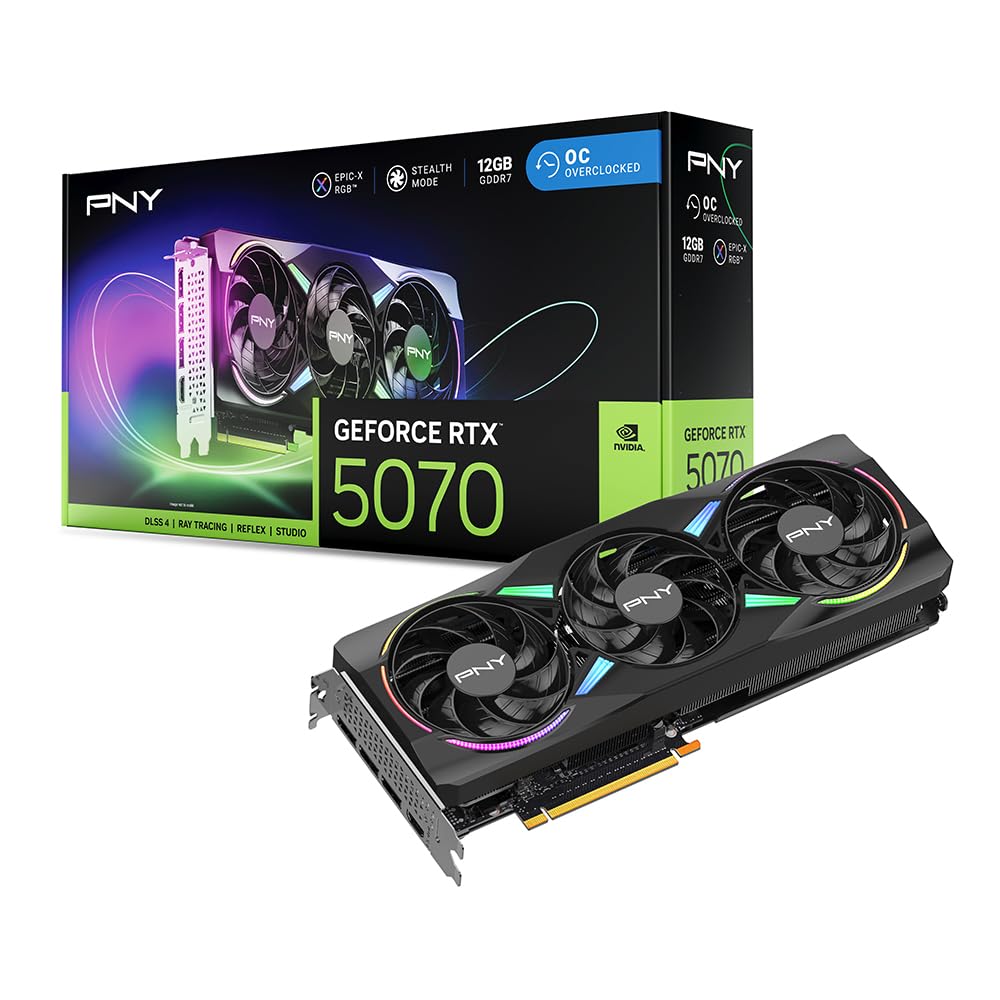
The PNY RTX 5070 Epic-X ARGB OC is a SFF-ready model that delivers 2685 MHz boost clock performance in a compact triple-fan design. It uses 12GB of GDDR7 memory with a 192-bit interface and 672 GB/s bandwidth, enabling smooth 1440p high-refresh-rate gaming in competitive titles. The card includes all 80 ROPs and consistently outperforms the RTX 4070 Super in both raster and ray-traced workloads without frame generation enabled.
Thermal management is excellent for a card of its size, with triple axial fans that remain quiet under load. The ARGB lighting adds a customizable aesthetic element, and the card includes a 12-pin to dual 8-pin adapter cable for compatibility with standard power supplies. The 2.4-slot width and moderate length improve case compatibility over larger RTX 5070 variants.
DLSS 4 provides a significant frame rate boost in supported titles without the ghosting artifacts of earlier upscaling versions. The 9700X can easily feed this card at 1440p, delivering high frame rates in both CPU and GPU-bound scenarios. The primary trade-off is the 12GB VRAM ceiling for 4K or future high-resolution texture packs.
Why it’s great
- Excellent 1440p high-refresh-rate performance with full 80 ROPs
- Compact SFF-ready form factor improves compatibility in smaller cases
- Effective cooling with quiet fan operation and ARGB lighting
Good to know
- 12GB VRAM may limit 4K texture quality in upcoming titles
- Power adapter included but adds cable management complexity
- Premium pricing pushes value proposition toward cheaper AMD alternatives
6. ASUS SFF-Ready Prime NVIDIA GeForce RTX 5070 12GB

The ASUS Prime RTX 5070 is specifically designed for small-form-factor and ITX builds, using a 2.5-slot form factor that is compact enough for most mITX and mATX cases while maintaining strong cooling performance. The 2542 MHz boost clock is slightly lower than some premium variants, but the card still delivers consistent 1440p performance in competitive titles like Overwatch 2, Rainbow Six Siege, and Marvel Rivals with high frame rates. Phase-change thermal pad technology on the GPU helps ensure reliable heat transfer even in compact enclosures.
The axial-tech fans use a smaller hub design that facilitates longer blades and a barrier ring to increase downward air pressure. A dual BIOS switch allows you to toggle between Quiet and Performance profiles without software. The card uses 12GB of GDDR7 memory, which is sufficient for 1440p gaming and light creative workflows, but may show signs of strain with 4K or multi-monitor setups.
For the 9700X in an ITX build, this is likely the most compatible high-performance option available from NVIDIA’s Blackwell series. Users have reported excellent frame rate consistency in CPU-bound scenarios, suggesting the 9700X feeds the card adequately. Case clearance is the primary consideration — verify both length and width dimensions before purchase.
Why it’s great
- Specifically designed for SFF/ITX compatibility without sacrificing performance
- Dual BIOS switch offers convenient profile switching for noise or performance
- Phase-change thermal pad material improves heat transfer longevity
Good to know
- 12GB VRAM is borderline for higher-resolution texture workloads
- Boost clock is lower than some competing RTX 5070 models
- Requires careful case dimension verification before purchase
7. GIGABYTE GeForce RTX 5070 AERO OC 12G

The GIGABYTE RTX 5070 AERO OC stands out with its all-white design and consistent color across the shroud, backplate, and fans — a rare feature that makes it the premier choice for white-themed builds. Beyond aesthetics, the card delivers solid 1440p performance with a 2600 MHz boost clock and 12GB of GDDR7 memory. The WINDFORCE cooling system with triple fans keeps temperatures low while maintaining near-silent operation.
Performance figures are strong: users report idle temperatures around 35°C and maximums around 60°C under gaming load, with fans remaining silent during light workloads. DLSS 4 and Ray Reconstruction effectively boost frame rates without visible artifacts in supported titles. The card includes a support bracket to prevent GPU sag over time, a thoughtful inclusion given the card’s nearly 13-inch length.
The 9700X pairs well with this card for 1440p high-refresh-rate monitors, particularly in first-person shooters where high frame rates matter. The 12GB VRAM is sufficient for 1440p ultra and most 4K scenarios with DLSS quality mode enabled. Buyers should note that the white finish may show dust more readily than dark-colored cards, though it does clean easily.
Why it’s great
- Premium all-white design is the best option for white-themed builds
- Excellent thermal performance with quiet fans and near-silent idle
- Includes anti-sag bracket for long-term installation stability
Good to know
- Very long card length requires a large case for installation
- 12GB VRAM may not be sufficient for 4K texture-intensive workloads
- White finish requires more frequent dusting to maintain aesthetic
8. ASUS Dual AMD Radeon RX 9060 XT 16GB
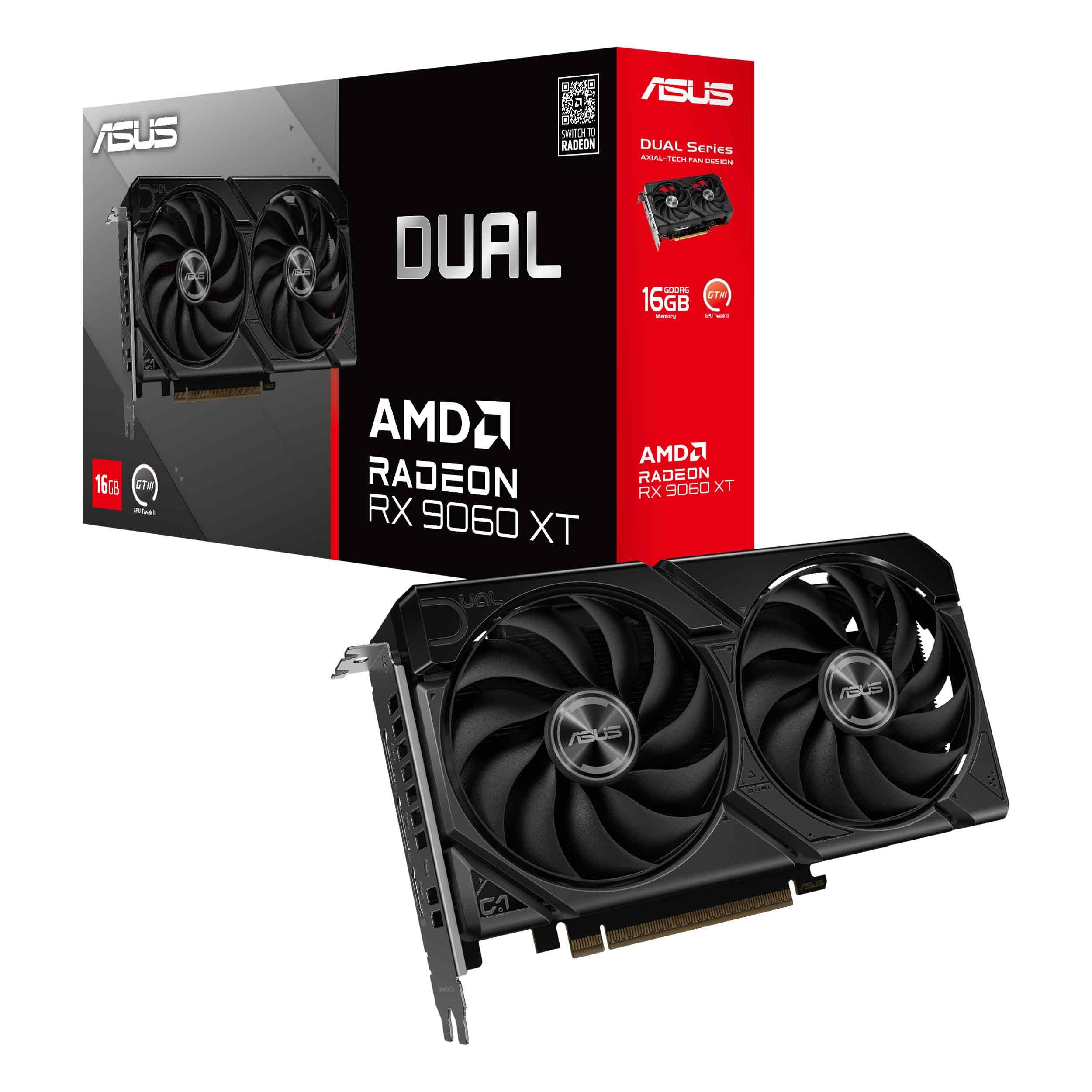
The ASUS Dual RX 9060 XT offers the best price-to-performance ratio in this lineup, combining a 3250 MHz boost clock with 16GB of GDDR6 memory on a compact 2.5-slot design. The axial-tech fans with 0dB technology provide silent operation during light gaming and desktop use, with the fans only spinning under heavier load. The 16GB VRAM buffer is the standout feature at this price point, providing meaningful headroom for high-resolution textures and creative workloads like video editing and 3D rendering.
Performance aligns strongly with 1440p ultra settings in most modern titles, and the card handles 1080p with ease. The dual BIOS switch lets you toggle between Quiet and Performance profiles without software, a convenience for users who prioritize noise levels during less demanding tasks. At only 8 inches in length, this card fits most cases including compact mATX builds.
For the 9700X, this pairing offers balanced performance without overspending. The 16GB VRAM future-proofs the system for upcoming titles that may require more memory for high-quality textures. The card requires standard 8-pin power connectors, avoiding the 12+4-pin compatibility issues with older PSUs.
Why it’s great
- Exceptional value with 16GB VRAM at a competitive price point
- Compact 2.5-slot, 8-inch length fits most cases including small form factors
- Dual BIOS with 0dB mode provides quiet operation for light workloads
Good to know
- Ray tracing performance is not as strong as similarly priced NVIDIA competition
- Some users have reported occasional driver stability issues
- Dual fan cooler may not match triple-fan designs under sustained heavy load
9. GIGABYTE Radeon RX 9060 XT Gaming OC 16G

The GIGABYTE RX 9060 XT Gaming OC uses the larger WINDFORCE cooling system with Hawk fans and server-grade thermal conductive gel to deliver excellent thermals while maintaining quiet operation. The 2700 MHz boost clock and 16GB GDDR6 buffer make it well-suited for 1440p ultra settings, with the VRAM providing headroom for high-resolution textures and future titles.
The RGB lighting adds customizable aesthetic options, and the card’s 8-pin power connector simplifies installation with older PSUs. The zero-RPM mode ensures silent operation during light desktop use, with fans only engaging under heavier gaming loads. The 11-inch length is standard for triple-fan cards and should fit most mid-tower and larger cases.
For the 9700X, this card delivers a balanced 1440p experience without pushing into premium pricing territory. The 16GB VRAM is particularly advantageous for creative workflows like video editing and 3D rendering. Buyers should note that ray tracing performance is not a strength of this architecture, though it remains functional in supported titles.
Why it’s great
- WINDFORCE cooling provides strong thermal performance with quiet fan operation
- 16GB VRAM offers excellent headroom for high-resolution textures and creative work
- Standard 8-pin power connector compatible with older PSUs
Good to know
- Ray tracing performance lags behind NVIDIA competition
- Large card size may not fit compact cases without careful measurement
- Some users have reported coil whine audible under heavy load
10. XFX Swift AMD Radeon RX 9060 XT OC Gaming Edition 16GB
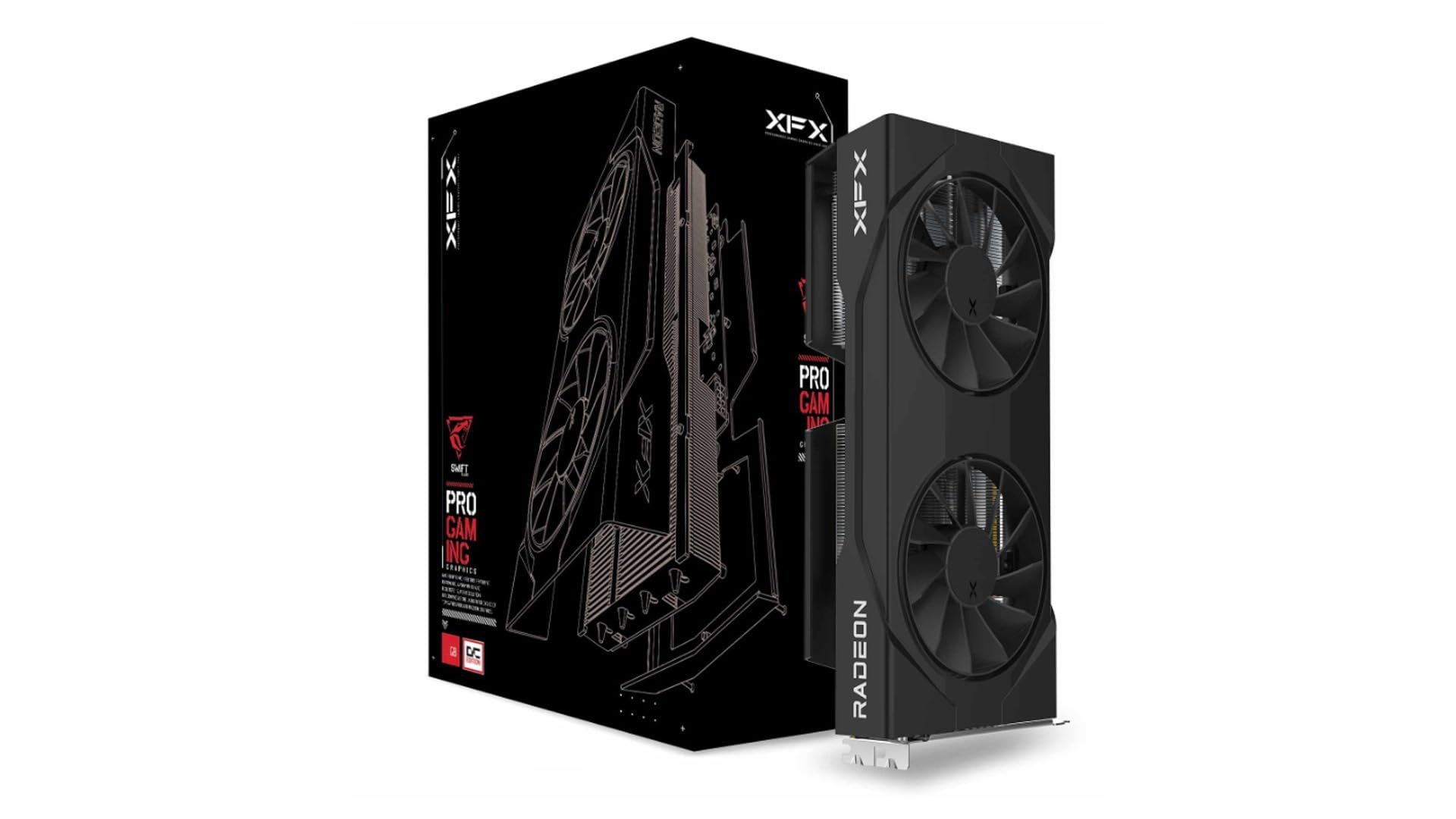
The XFX Swift RX 9060 XT offers the highest boost clock in its class at 3320 MHz, paired with 16GB of GDDR6 memory. This combination delivers strong 1080p max settings performance and capable entry-level 1440p gaming in most modern titles. The XFX SWFT dual-fan cooling solution maintains reasonable temperatures for the power draw, with the card remaining quiet under moderate gaming loads.
User data shows this card runs at around 60°C under sustained load, with Timespy scores around 17000, placing it solidly in the mid-range performance tier. The card is slightly larger than some dual-fan designs at 10.63 inches but still fits standard mid-tower cases. The PCIe 5.0 interface matches the 9700X’s platform for maximum bandwidth.
For the 9700X, this is an excellent pairing for budget-conscious builders who want strong 1080p performance with the option to step up to 1440p. The 16GB VRAM provides texture memory headroom that higher-tier NVIDIA cards lack at similar price points. Buyers should note the limited output configuration: two DisplayPort 2.1 and one HDMI 2.1, which may be limiting for multi-monitor setups.
Why it’s great
- Highest boost clock in the RX 9060 XT lineup at 3320 MHz
- 16GB VRAM provides excellent texture memory headroom
- Good thermal performance with quiet dual-fan operation
Good to know
- Limited to 3 display outputs (2 DP + 1 HDMI)
- Dual-fan cooling may not match triple-fan designs under heavy sustained load
- Ray tracing performance is not a strength of this architecture
11. MSI Gaming RTX 5050 8G Shadow 2X OC
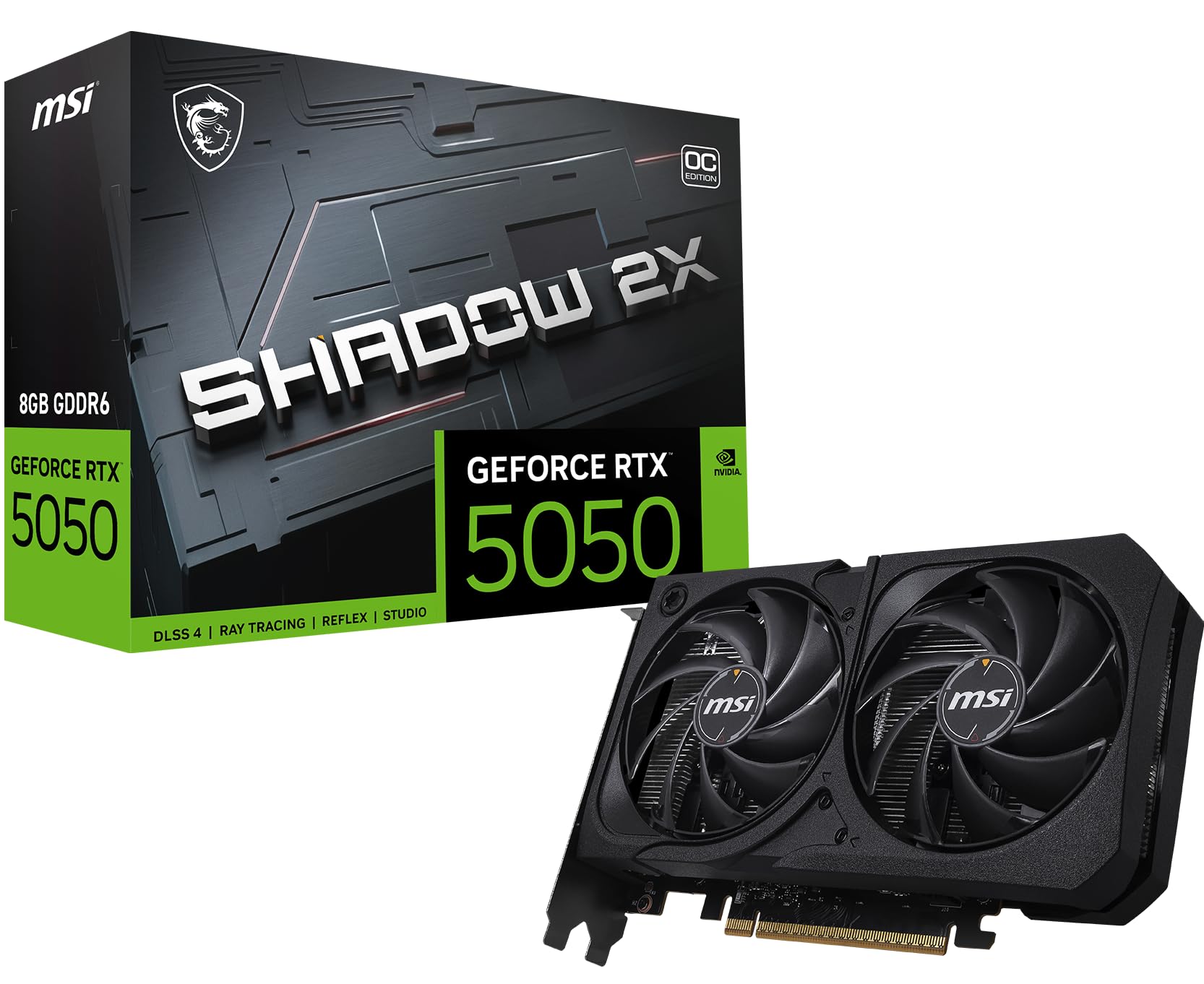
The MSI RTX 5050 Shadow 2X OC is the most affordable card in this lineup, built on the NVIDIA Blackwell architecture with 8GB of GDDR6 memory on a 128-bit bus. The 2617 MHz Extreme Performance boost clock is reasonable for entry-level gaming, with the TORX Fan 5.0 design providing effective cooling with quiet operation. The heat pipe design draws thermal energy away from the GPU efficiently for a card of this size.
Performance data shows this card handles 1080p gaming well, with Fortnite at 1440p achieving around 60fps on high settings and 120-180fps on low/medium. The card is quiet and low-profile, making it a simple upgrade for moderate gaming systems. Video encoding is significantly faster than older cards, with clip encoding taking 10-15 seconds versus over a minute on older RX 580 cards.
For the 9700X, this is a budget-friendly pairing for users who prioritize CPU performance for productivity and only need casual gaming capability. The 8GB VRAM is sufficient for 1080p gaming but will be a limitation at 1440p or with high-resolution texture packs. This card works with PCIe 3.0 platforms but performs better with PCIe 4.0, which the 9700X supports.
Why it’s great
- Most affordable entry point into NVIDIA Blackwell architecture
- Quiet and low-profile design fits almost any case
- Significantly faster video encoding than older-generation cards
Good to know
- 8GB VRAM limits resolution targets to 1080p for modern titles
- 128-bit memory bus restricts bandwidth for memory-intensive workloads
- Not suitable for serious 1440p or 4K gaming
FAQ
Does the 9700X bottleneck the RX 9070 XT or RTX 5070 at 1440p?
Is PCIe 5.0 necessary for the 9700X with these GPUs?
Should I choose an AMD or NVIDIA GPU for the 9700X?
Final Thoughts: The Verdict
For most users, the best gpu for 9700x winner is the ASRock Radeon RX 9070 XT Challenger 16GB because it delivers premium 1440p performance with ample VRAM at a mid-range price point. If you want superior ray tracing and DLSS 4 features, grab the MSI RTX 5070 Gaming Trio OC 12GB. And for a budget-conscious 1080p build with the 9700X, nothing beats the MSI RTX 5050 Shadow 2X OC for value.