
Bonding fresh concrete to an existing slab or patching a broken step can feel like a permanent headache when the joint fails. The wrong glue leaves you with cracks, loose anchors, or a repair that crumbles under the first freeze-thaw cycle. Getting the right adhesive the first time saves you from drilling out failed anchors or chiseling off an entire patch job.
I’m Mohammad Maruf — the founder and writer behind Drink4Good. I’ve spent years analyzing construction adhesives, structural epoxies, and polymer blends specifically for concrete-to-concrete bonding, tracking tensile strength data and real-world performance feedback from thousands of verified users.
This guide focuses entirely on the best glue for concrete to concrete, comparing epoxy systems, fast-curing anchoring resins, and bonding admixtures to help you choose the right grip for your specific project.
How To Choose The Best Glue For Concrete To Concrete
Selecting the right adhesive depends on three factors: the load type you are securing (heavy anchor versus thin overlay), the condition of the base concrete (clean damp or flooded), and how quickly you need to move on to the next step. An epoxy anchoring system designed for rebar will not work the same way as a liquid bonding adhesive brushed onto a dusty slab before a repair pour.
Understand PSI and Load Type
Tensile strength measured in PSI tells you how much pulling force the cured bond can withstand before failing. For anchoring threaded rods or handrails, look for epoxy systems rated above 4000 PSI. For bonding a new layer of concrete to an old surface, the bond strength tends to be lower — around 500 PSI — because the adhesion relies on mechanical interlock rather than pure epoxy grip.
Know Your Working and Cure Times
Fast-setting polyester resins harden in under 10 minutes and achieve full load capacity in under 2 hours — great for speed but punishing if you misalign a fastener. Epoxy systems with 15-hour cure windows let you position rebar and check level before the bond locks. Liquid bonding adhesives designed for overlays dry overnight and require the new concrete to be placed while the adhesive is still tacky, not after it has fully cured.
Quick Comparison
On smaller screens, swipe sideways to see the full table.
| Model | Category | Best For | Key Spec | Amazon |
|---|---|---|---|---|
| J-B Weld 8281 | Epoxy | High-strength repairs | 5020 PSI tensile | Amazon |
| DCP Quickmast AE15 | Epoxy Acrylate | Rebar & heavy anchors | 40-145 min cure | Amazon |
| Quikrete Bonding Adhesive | Liquid Bond | Overlays & patches | 24 hour cure | Amazon |
| SIKA SikaLatex R | Admixture | Mortar & scratch coats | 500 PSI bond | Amazon |
| Somafix S700 | Resin Anchor | Fast anchors in masonry | 10 min cure | Amazon |
In‑Depth Reviews
1. J-B Weld 8281 Steel Reinforced Epoxy

The J-B Weld 8281 is a two-part steel-reinforced epoxy paste that mixes at a 1:1 ratio and cures to a dark grey finish with a tensile strength of 5020 PSI. It handles continuous temperatures up to 550°F and resists petroleum, chemicals, and acid once fully cured, which makes it viable for outdoor concrete repairs exposed to oil drips or road salt.
Users report successful bonds on cracked concrete steps, broken masonry edges, and anchoring metal brackets into concrete slabs. The 15-hour full cure window gives you plenty of time to clamp and adjust parts, unlike fast-setting options that lock in seconds. The paste consistency stays put on vertical surfaces without sagging during the set phase.
One limitation is the tube size — at 10 ounces total, this is best for small to medium repair jobs rather than large anchoring pours. The epoxy also requires thorough mixing, so a clean surface and accurate ratio are non-negotiable for reaching that 5000+ PSI rating.
Why it’s great
- Steel-reinforced structure delivers extreme tensile strength
- Heat and chemical resistant after full cure
- Long working time allows precise positioning
Good to know
- Tube quantity is modest for larger projects
- Requires thorough hand mixing for full strength
- Dark grey finish may not match all concrete shades
2. DCP Quickmast AE15 Concrete Epoxy
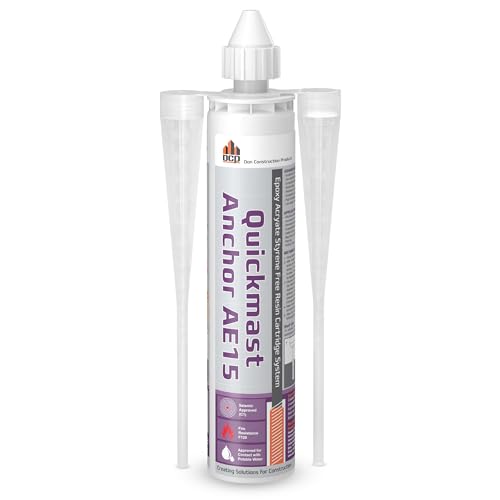
The DCP Quickmast AE15 is a two-part epoxy acrylate anchoring system designed specifically for concrete, masonry, stone, and rock. It comes in a 10.1 fluid ounce cartridge compatible with standard caulking guns and includes two mixing nozzles for multiple applications. The system bonds in dry, wet, and even flooded holes — which is rare for a mid-priced anchoring epoxy.
The 4 to 10-minute working time demands quick insertion of rebar or threaded rods, but the payoff is a full load-bearing cure in as little as 40 minutes at higher temperatures. Users have successfully set rebar into foundation edges and post holders in fresh concrete with this product, noting that the epoxy became immovable within minutes.
The cartridge is thick, so a dripless or heavy-duty caulk gun is recommended over a standard lightweight frame. Packaging can sometimes arrive with a crushed nozzle, though the kit includes two spares to cover that risk.
Why it’s great
- Bonds in wet and flooded concrete holes
- Rapid cure time for load-bearing anchors
- Cartridge format works with standard caulk guns
Good to know
- Thick consistency may overpower lightweight caulk guns
- Working time is very short — no room for error
- Nozzles can arrive damaged in transit
3. Quikrete Concrete Bonding Adhesive

The Quikrete Concrete Bonding Adhesive is a clear liquid designed to bond new concrete or mortar to old, cured concrete surfaces. It works by brushing the adhesive onto the substrate and allowing it to dry until tacky before pouring the overlay or patch. The formulation resists moisture and freeze-thaw cycles, making it a solid choice for outdoor stair repairs and driveway resurfacing.
Users report that concrete repairs applied over this bonding agent have held for years through snow and ice without cracking or separating. The medium viscosity spreads smoothly with a standard paintbrush, and the 1-quart bottle covers roughly 20 square feet per coat, which is enough for most small repair jobs.
The primary consideration is that the adhesive requires the new concrete to be placed while the layer is still tacky — if you wait too long or apply on a windy day that dries the surface faster than expected, the bond weakens. Full cure takes 24 hours, so traffic should be avoided during that window.
Why it’s great
- Excellent freeze-thaw resistance for outdoor patches
- Easy brush-on application
- Proven multi-year performance on steps and slabs
Good to know
- New concrete must be placed while adhesive is tacky
- Not designed for heavy anchor loads
- Full traffic wait time is 24 hours
4. SIKA SikaLatex R Concrete Adhesive

SIKA SikaLatex R is an acrylic-polymer latex admixture that you add to Portland-cement mortar or concrete to improve adhesion and tensile strength. Unlike direct brush-on bonding agents, this product is mixed into the repair material itself, creating a monolithic bond rather than a layered interface. The resulting concrete achieves 500 PSI bond strength and resists freeze-thaw damage better than plain Portland mixes.
Users have used SikaLatex R for reattaching ceramic fixtures to concrete walls, bonding brick replacements, and reinforcing scratch coats over old concrete slabs. The liquid form stores well and requires no dilution, so prep work is minimal — just open and pour into your dry mix. A full 30-day cure is listed in the technical data, but practical results show adequate handling strength within 48 hours.
The gallon jug is larger than typical tube formats, making it suitable for mixing multiple batches. Check the expiration date before purchase, as the polymer can degrade after roughly one year on the shelf. It also needs to be supported with temporary bracing for vertical applications until the mortar sets.
Why it’s great
- Integrates directly into mortar for monolithic bonding
- Resists freeze-thaw degradation
- Large volume suitable for multiple batches
Good to know
- Full cure time stretches to 30 days
- Requires temporary bracing for vertical repairs
- Limited shelf life — always check expiration
5. Somafix S700 Fast Curing Anchoring Adhesive
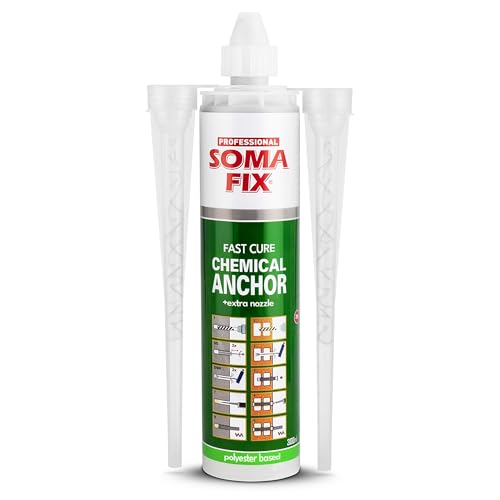
The Somafix S700 is a polyester resin anchoring adhesive formulated for quick-setting bonds on concrete, brick, stone, and granite. It comes in a 300-milliliter cartridge with an extra mixing nozzle included, so you can tackle multiple anchor points without stopping to swap nozzles. The resin sets fast — users report that injected fasteners become immovable within minutes — making it a time-saver for repetitive anchoring tasks.
This adhesive is particularly useful for hollow materials when used with a mesh sleeve, which prevents the resin from running into empty cavities. Several users have confirmed its effectiveness for securing outdoor railings and handrails into concrete slabs, noting that it hardened quickly and held without loosening over time. The price point is noticeably lower than comparable Sika anchoring products, which makes it an attractive option for budget-conscious jobs.
The fast cure is a double-edged sword: you must have your holes drilled, cleaned, and fasteners ready before injecting. Once the resin hits the hole, the working window closes rapidly. The cartridge is also on the smaller side, so large anchoring projects may require multiple tubes.
Why it’s great
- Sets in minutes for rapid project progress
- Extra nozzle included for continuous work
- Performs well in hollow-block applications with sleeve
Good to know
- Working time is extremely short
- Small cartridge volume for larger jobs
- Resin requires clean, dust-free holes for best grip
FAQ
Can I use epoxy instead of concrete for a full pour?
How do I prepare a concrete surface before applying glue?
Final Thoughts: The Verdict
For most users, the best glue for concrete to concrete winner is the J-B Weld 8281 because its 5020 PSI tensile strength and long working time offer flexibility for both minor repairs and anchoring light fixtures. If you need rapid-cure anchoring for rebar or threaded rods, grab the DCP Quickmast AE15. And for bonding new concrete overlays to old slabs, nothing beats the Quikrete Concrete Bonding Adhesive.