
Every backyard orchardist knows the disappointment of a tree loaded with leaves but bare of fruit. The real difference between a lush ornamental and a productive fruit tree often comes down to one thing: the specific balance of nutrients you deliver to the root zone. Home growers regularly over-apply high-nitrogen lawn foods, which pushes vegetative growth at the expense of the flowers and fruit set they actually want.
I’m Mohammad Maruf — the founder and writer behind Drink4Good. I’ve spent years analyzing soil amendment formulations, decoding NPK ratios, and cross-referencing customer results with technical specifications to separate the fertilizers that actually move the needle from those that just look good on the shelf.
After evaluating dozens of formulas, I’ve narrowed the field to the top performers that deliver measurable improvements in bloom density, fruit size, and root health. This guide presents the best fruit tree fertilizer options for achieving a productive and vigorous home orchard.
How To Choose The Best Fruit Tree Fertilizer
Selecting the right fertilizer for your fruit trees goes beyond grabbing a bag labeled “fruit tree.” The formula’s NPK ratio, release mechanism, and added biological amendments determine whether your tree produces abundant fruit or just dense foliage. Understanding these variables helps you match a product to your specific tree species, soil conditions, and growing goals.
Decoding the NPK Ratio for Fruit Production
The three numbers on a fertilizer label represent nitrogen (N), phosphorus (P), and potassium (K). For fruit trees, a lower middle number (phosphorus) supports bloom and fruit set, while excessive nitrogen drives leafy growth at the cost of fruit. Look for ratios where the first number is not dramatically higher than the second—formulas like 6-2-4 or 7-3-3 target the balance fruiting trees need. High-potassium formulas, such as 12-10-10, also help with winter hardiness and fruit quality.
Slow-Release vs. Quick-Release Mechanisms
Slow-release fertilizers, whether granule-based or pre-measured spikes, feed trees gradually over weeks or months. This reduces the risk of nutrient runoff and root burn, and it aligns well with the tree’s natural growth cycle. Quick-release granular formulas provide an immediate boost but require more frequent reapplication. For established trees, slow-release options generally deliver more consistent results with less labor.
Biological Additives: Mycorrhizae and Microbial Inoculants
Some premium fertilizers include mycorrhizal fungi or beneficial bacteria like Jobe’s Biozome. These microorganisms colonize the root zone, expanding the effective root surface area and improving water and nutrient absorption. For trees planted in compacted or degraded soil, products with these biological additives can dramatically improve uptake efficiency and long-term tree health.
Quick Comparison
On smaller screens, swipe sideways to see the full table.
| Model | Category | Best For | Key Spec | Amazon |
|---|---|---|---|---|
| FoxFarm Happy Frog Fruit & Flower | Organic Granules | General fruit and flowers | NPK 4:9:3 with mycorrhizae | Amazon |
| FoxFarm Happy Frog Citrus & Avocado | Organic Granules | Citrus, avocado, and subtropicals | NPK 7:3:3 with mycorrhizae | Amazon |
| Down To Earth Organic Fruit Tree | Organic Powder | Apples, pears, stone fruits | NPK 6:2:4 with calcium | Amazon |
| Jobe’s Organics Fruit & Citrus Spikes | Spikes | Container and in-ground trees | NPK 3:5:5 with Biozome | Amazon |
| Nelson NutriStar Citrus & Avocado | Granular | High-potassium feeding | NPK 12:10:10 with calcium | Amazon |
In‑Depth Reviews
1. FoxFarm Happy Frog Fruit & Flower Fertilizer

FoxFarm’s 4:9:3 granule formula flips the typical high-nitrogen script, delivering a phosphorus boost that directly supports flower and fruit development. This makes it a standout choice for stone fruits, berries, and flowering fruit trees where bloom-to-fruit ratio matters more than foliage mass. The inclusion of mycorrhizal fungi adds a biological layer that improves root efficiency, especially valuable if your soil has been depleted by previous planting seasons.
Gardeners report consistent results across containers, raised beds, and in-ground setups, with several reviews noting impressive recovery in cold-damaged tropicals like banana trees. The granules have a mild, natural odor and are easy to sprinkle around the drip line—no mixing or special tools required. Monthly application during the growing season is straightforward, and the 4-pound bag covers multiple small trees or a single large established specimen.
A few users mention that results take two to three weeks of consistent application before visible changes appear, typical of slow-release organics. The 4-pound size is adequate for a small orchard but larger properties may need multiple bags. For growers seeking a versatile, biologically active fertilizer that prioritizes fruit output over leaf growth, this FoxFarm formula is the most reliable all-around pick.
Why it’s great
- High phosphorus (9) drives abundant blooms and fruit set
- Mycorrhizal fungi enhance root nutrient uptake
- Versatile for containers, in-ground, and various fruit types
Good to know
- Results may take several weeks to become visible
- 4-pound bag limited for larger orchards
2. FoxFarm Happy Frog Citrus and Avocado Fertilizer

This formulation shifts to a 7:3:3 NPK ratio, providing more nitrogen than the Fruit & Flower version while keeping phosphorus and potassium balanced for subtropical fruit production. It is specifically designed for citrus, avocado, and related trees like guava and kumquat. The slow-release nitrogen prevents the leaf burn and excessive vegetative push that fast-acting synthetics can cause on sensitive citrus roots.
User feedback from Oregon to Florida shows dramatic yield increases: one grower saw a potted 5-foot guava jump from 1-3 fruit to approximately 15 fruit after switching to this fertilizer. Another long-term user with a dozen citrus trees reports greener foliage and better fruit retention across Meyer lemons, blood limes, and mandarins. The mycorrhizal fungi blend again plays a role, helping trees absorb nutrients even in less-than-ideal soil conditions.
Some buyers note the 4-pound bag feels small relative to the price, and a handful of customers observed that the formula consists largely of alfalfa meal, though results remain strong. For growers with multiple citrus or avocado trees, purchasing two to three bags per season may be necessary. For targeted feeding of acid-loving subtropical fruit trees, this FoxFarm variant delivers measurable productivity gains.
Why it’s great
- 7:3:3 ratio tailored to citrus and avocado needs
- Slow-release nitrogen prevents root burn
- Proven yield increases on guava and citrus
Good to know
- Small bag size for the price
- Primarily alfalfa meal base may feel underwhelming
3. Down To Earth Organic Fruit Tree Fertilizer

Down To Earth’s 6:2:4 powder formula is a straightforward, no-frills option built for apples, pears, plums, and tropical fruit trees like mango and fig. The 5-pound box offers more volume than most competitors at a similar entry point, making it the most economical choice per pound in this lineup. Ingredients include feather meal, fish bone meal, kelp meal, and calcium carbonate, providing a broad spectrum of macro and micronutrients in one blend.
Multiple reviews highlight dramatic recovery results: a crabapple tree that was in decline for two years returned to full health with abundant berries after consistent use. Another grower used this fertilizer to revive trees damaged by a hard frost, noting the trees bounced back with strong new growth. The powder form (essentially a very fine granule) mixes easily into the top inch of soil or can be broadcast under the canopy, but it does have a stronger organic smell than pelleted options.
The 6:2:4 ratio leans slightly heavier on nitrogen, which is suitable for trees recovering from stress or those planted in poor soil. However, growers looking to maximize fruit production on already-healthy trees may prefer a formula with more phosphorus or potassium. Storage is simple—the manufacturer states it does not expire if kept cool and dry. For budget-conscious growers or those with multiple trees, this Down To Earth product delivers reliable nutrition without premium pricing.
Why it’s great
- 5-pound box provides excellent value per pound
- Contains calcium for proper fruit development
- Recovery results on stressed or frost-damaged trees
Good to know
- Powder form has a stronger organic odor
- Higher nitrogen ratio may prioritize foliage over fruit
4. Jobe’s Organics Fruit & Citrus Tree Fertilizer Spikes

Jobe’s takes the guesswork out of fertilizing with pre-measured spikes that you drive into the soil around the tree’s drip line. Each spike delivers a 3:5:5 ratio, which provides a solid phosphorus and potassium base for root and fruit development while keeping nitrogen moderate. The spikes are perfect for container-grown trees or small in-ground specimens where measuring granular product can be imprecise or messy.
The proprietary Biozome archaea culture is the standout feature here—it aggressively breaks down organic matter in the root zone, speeding up nutrient release and improving soil biology. Users with potted Meyer lemon trees report abundant, juicy harvests year after year. One reviewer noted that timing and placement are critical: spikes placed too close to the trunk caused initial stress, but following the package instructions (use in late fall and early spring, spaced around the canopy edge) resolved the issue and produced noticeable growth improvement.
Each package contains 6 spikes, and the brand recommends using multiple packs for larger trees or heavier feeding schedules. Some users find the per-spike cost higher than granular alternatives, and the spikes are less flexible if you need to adjust the NPK ratio mid-season. For gardeners who prioritize convenience, minimal mess, and consistent slow-release feeding over precise nutrient customization, Jobe’s spikes are an excellent solution.
Why it’s great
- Pre-measured spikes eliminate measuring and mess
- Biozome archaea speeds up nutrient breakdown
- Ideal for container trees and small orchards
Good to know
- Critical to space spikes correctly away from the trunk
- Less flexible for custom NPK adjustments
5. Nelson NutriStar Citrus Fruit & Avocado Plant Food
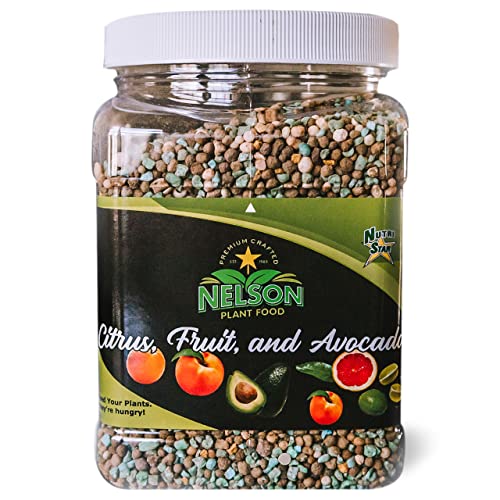
Nelson’s NutriStar formula takes a different approach with a 12:10:10 NPK ratio that emphasizes potassium—the element responsible for fruit quality, disease resistance, and cold hardiness. This makes it a strong choice for growers in cooler climates or those who want to push maximum fruit size and sweetness on established trees. The inclusion of calcium further supports trunk and limb strength, reducing the risk of breakage under heavy fruit loads.
The 2-pound bag is compact, but the concentration of nutrients means a little goes a long way—apply every 30 days during the growing season. Users report rapid results: one grower saw an indoor orange tree produce a full flush of new leaves within two months of switching to this product. The granules are fine and easy to broadcast under the canopy or work into the top layer of container soil. Nelson has been formulating plant foods for over three decades, and the formula is horticulturally targeted rather than generic.
Because the potassium content is relatively high, this formula may not be ideal for young or recently transplanted trees that need more balanced growth ratios. Additionally, the 2-pound bag covers fewer applications than larger boxes of competitors, making it less economical for growers with multiple large in-ground trees. For those focused on maximizing winter hardiness and fruit quality on mature citrus and avocado trees, Nelson NutriStar delivers a potent and targeted nutrient profile.
Why it’s great
- High potassium (10) boosts fruit quality and cold hardiness
- Fast visible results on mature trees
- Calcium included for trunk and limb strength
Good to know
- 2-pound bag size means fewer applications per purchase
- High nutrient concentration less suited for young trees
FAQ
What NPK ratio is best for established fruit trees versus young transplants?
Should I use spikes or granular fertilizer for my fruit trees?
Final Thoughts: The Verdict
For most users, the best fruit tree fertilizer winner is the FoxFarm Happy Frog Fruit & Flower Fertilizer because its 4:9:3 ratio emphasizes fruit production over foliage, and the added mycorrhizal fungi improve root efficiency across diverse tree types and soil conditions. If you need a targeted formula for citrus and avocado, grab the FoxFarm Happy Frog Citrus & Avocado Fertilizer with its 7:3:3 ratio and proven yield improvements. And for mess-free convenience on container trees, nothing beats the Jobe’s Organics Fruit & Citrus Tree Fertilizer Spikes with Biozome technology.