
A good piece of wooden furniture is a long-term investment, but standard spray polishes often leave a greasy film or fail to penetrate the grain. The real secret to reviving a dry heirloom table or a weathered teak chair is a penetrating oil that feeds the wood from within. Without the right oil, your finish will look superficial and won’t last.
I’m Mohammad Maruf — the founder and writer behind Drink4Good. I’ve spent years analyzing natural wood finishes, from curing oils to nourishing blends, so you can pick a formula that actually restores grain clarity and durability.
Whether you are protecting a dining table or an antique bookshelf, finding the right furniture oil for wood comes down to absorption rate, ingredient purity, and the specific finish you want.
How To Choose The Best Furniture Oil For Wood
Not all oils behave the same on oak, teak, or walnut. A polish that works on a sealed lacquer table may leave an ugly residue on raw butcher block. Understanding the chemistry between the oil and your wood type is the first step toward a durable finish.
Polymerizing vs. Non-Polymerizing Oils
Polymerizing oils like tung and linseed cure into a solid film inside the wood pores. They leave a dry, protective finish that darkens and hardens over time. Non-polymerizing oils like mineral oil stay liquid inside the wood and do not cure — they require routine reapplication. For furniture that sees regular handling, a polymerizing oil offers better longevity.
Food-Safe Certification and Ingredient Purity
If you plan to treat a dining table, butcher block, or wooden utensils, check that the oil is labeled food-contact safe. Beware of oils containing added drying agents, metallic driers, or synthetic solvents. Look for raw or pure oils derived from flaxseed, tung, or walnut — these remain gentle on both wood and skin.
VOC Levels and Odor Profile
Indoor furniture projects benefit from low-VOC and low-odor formulations. Boiled linseed oil often contains chemical driers that release fumes, while 100% natural wood oils (like those from Walrus or LinSheen) maintain a pleasant or neutral scent that dissipates quickly during curing.
Quick Comparison
On smaller screens, swipe sideways to see the full table.
| Model | Category | Best For | Key Spec | Amazon |
|---|---|---|---|---|
| Tried & True Danish Oil | Polymerizing Oil | Bare wood refinishing | 120 sq ft per pint coverage | Amazon |
| Milsek Furniture Polish | Cleaner & Polish | Quick daily dusting & shine | Water-free orange oil formula | Amazon |
| Walrus Oil Furniture Oil | Curing Oil | Matte finish restoration | FDA food-safe ingredients | Amazon |
| LinSheen Raw Linseed Oil | Pure Oil | Outdoor & antique conditioning | 100% flaxseed-derived | Amazon |
| Natchez Complete Furniture Care | Polish & Restorer | Antique restoration | Blend of beeswax & mineral oil | Amazon |
In‑Depth Reviews
1. Tried & True Danish Oil

This premium Danish oil uses pure polymerized linseed oil that cures into a hard, moisture-resistant film rather than sitting on the surface. Professionals choose this formulation because it penetrates deeply into open-pored woods like redwood, oak, and teak, enhancing every grain line without a glossy topcoat. The pint container covers approximately 120 square feet, making it economical for large furniture projects.
The application process is straightforward: wipe on a thin coat, let it set for just five minutes, then buff dry. Each coat cures in around eight hours, and users report excellent results after two to three thin layers. Many craftsmen have used it as a primer for other oil-based finishes, proving its versatility on both raw wood and previously stained pieces.
One minor trade-off is the cost per ounce compared to standard boiled linseed oils. However, because Tried & True contains zero solvents or metallic driers, you use less product per coat and avoid the harsh fumes that typically accompany linseed-based finishes. It is a serious option for anyone who wants a non-toxic, low-odor finish that will last for years.
Why it’s great
- Fast 5-minute penetration time per coat
- Completely odorless and non-toxic
- Excellent grain enhancement on bare wood
Good to know
- Premium price per ounce
- Requires multiple coats for full protection
- Not ideal as a high-gloss topcoat
2. Milsek Furniture Polish with Orange Oil

Milsek stands out for its completely water-free formulation, which eliminates the cloudiness or streaking common with spray waxes. The orange oil base cuts through light grime and restores the natural luster of wood cabinets, doors, and hardwood floors without leaving a sticky residue. Users frequently note that one application removes heat rings and water spots that other cleaners could not touch.
The 12-ounce bottle is ideal for regular maintenance on sealed surfaces. Unlike penetrating oils, this polish does not cure inside the wood, so it works best on already-finished pieces where you want a quick refresh. The fresh orange scent is strong but dissipates after a few minutes, leaving behind a pleasant, non-oily shine.
For espresso cabinets or dark wood with visible streaks, Milsek delivers a clean, even appearance with minimal rubbing. A few users mention that full-strength application yields the best results, and that it should not be diluted. It is an excellent entry-level choice for households that want an effective daily cleaner-polish without investing in a full refinishing protocol.
Why it’s great
- No water, wax, or silicone means no buildup
- Removes water rings quickly
- Pleasant orange scent
Good to know
- Not a curing oil — needs reapplication
- Strong odor requires ventilation
- Does not remove heavy grease near stoves
3. Walrus Oil Furniture Oil
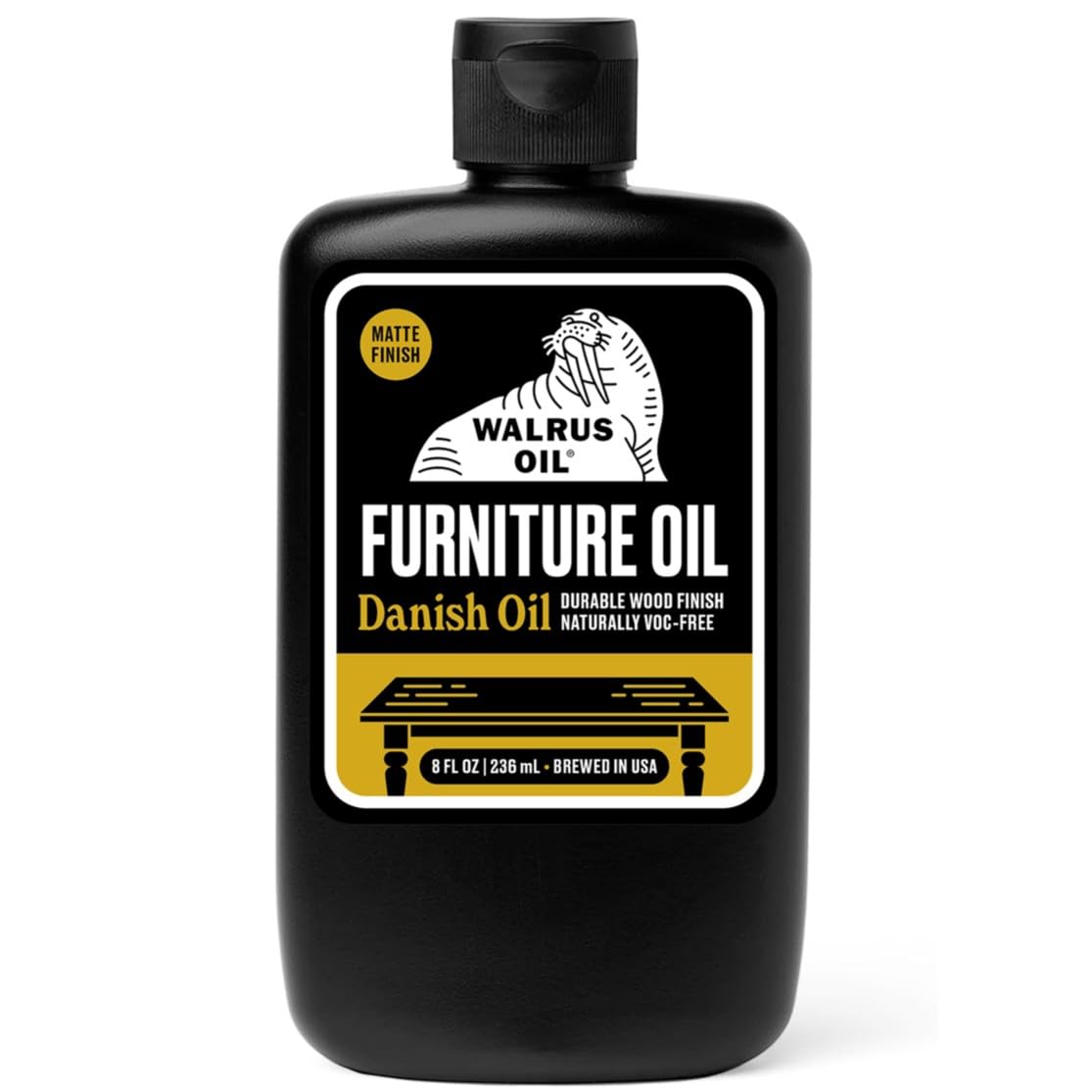
Walrus Oil is a 100% natural curing oil made from a blend of tung, safflower, and hemp oils, designed for users who want a matte, butter-soft finish that feels dry to the touch. It polymerizes as it cures, meaning it forms a protective layer within the wood fibers rather than sitting on top. VOC-free and FDA food-contact safe, it is suitable for both furniture and kitchen items like cutting boards.
Customers have revitalized sun-battered wood decks and antique musical instruments with just a single coat. The light scent from the natural oils is mild, and the finish can be built up — more coats produce a slightly higher sheen without ever becoming glossy. It is especially effective on raw or stripped wood where you want to maintain the natural texture of the grain.
The main consideration is that Walrus Oil is a curing oil, so you cannot simply wipe it on and forget it. Each coat requires a short dwell time followed by buffing. Still, the depth of color and the water resistance it provides make the extra steps worthwhile for furniture that sees regular use.
Why it’s great
- FDA food-safe and non-toxic ingredients
- Creates a beautiful matte finish
- Revives weathered wood without sanding
Good to know
- Requires multiple coats for best results
- Slightly darkens the wood color
- Price per ounce higher than generic oils
4. LinSheen Raw Linseed Oil

LinSheen’s raw linseed oil is cold-pressed from flaxseeds with no chemical additives, making it one of the purest options for wood conditioning. It penetrates deep into the grain to nourish dry, rough surfaces from the inside out. Users have successfully treated everything from antique rosewood carvings to outdoor teak furniture, noting how the wood absorbs the oil readily and returns to a healthy luster.
The clear, well-refined oil has a mild, pleasant smell that fades quickly once applied. Unlike boiled linseed oil, which may contain metallic driers, this raw version is safe for food-contact items like cutting boards and wooden utensils. It dries relatively fast for a pure oil, though true curing takes a day or so between coats.
One detail worth noting is that raw linseed oil stays wet on the surface longer than polymerized blends. You must wipe off excess thoroughly to avoid a tacky residue. For those who want a simple, natural treatment that lets the wood speak for itself, LinSheen delivers dependable results at a moderate price point.
Why it’s great
- 100% pure flaxseed oil, no additives
- Excellent penetration into dry wood
- Safe for cutting boards and kitchen tools
Good to know
- Can remain tacky if not buffed properly
- Slower curing than polymerized oils
- Small 8-ounce bottle for large projects
5. Natchez Solution Complete Furniture Care

Natchez combines beeswax, lemon oil, and FDA-quality mineral oil into a gentle cream polish that is safe for hypoallergenic households. It is particularly effective on antique furniture where a heavy chemical treatment could damage the patina. Users have reported that it re-moisturizes dry wood, removes light scratches, and even lifts water stains with some careful rubbing.
The 8-ounce bottle uses a wax-and-oil suspension that does not build up or become sticky over time. Unlike straight oils, the beeswax component provides a very light surface protection that polishes to a soft sheen. Many customers use it exclusively on their teak and mahogany pieces, noting how the wood looks refreshed without looking artificially glossy.
The main limitation is that this product is not a curing oil — it never hardens into a protective film. For everyday cleaning and light conditioning on already-finished furniture, it is a safe and effective choice. But for raw wood that needs structural restoration, you would want a deeper-penetrating product like Tried & True or Walrus Oil.
Why it’s great
- Hypoallergenic and safe around children
- Revives antiques without damaging the finish
- Pleasant lemon scent
Good to know
- Not a curing polymerizing oil
- Best for sealed or lightly worn surfaces
- Small bottle size for large projects
FAQ
Can I use furniture oil on a polyurethane-sealed table?
How often should I reapply Danish oil on a dining table?
Final Thoughts: The Verdict
For most users, the furniture oil for wood winner is the Tried & True Danish Oil because it combines deep grain penetration, fast curing, and a non-toxic formula that works on bare wood and antiques alike. If you want a budget-friendly daily cleaner, grab the Milsek Furniture Polish. And for a natural matte finish that is safe for cutting boards, nothing beats the Walrus Oil Furniture Oil.