
Michigan clay soil compacts like concrete after a rain and cracks like glass during a drought, creating a brutal environment for standard grass seed blends. The secret to a lush lawn in this state isn’t more water or fertilizer — it’s selecting seed varieties whose root architecture can physically penetrate heavy clay and survive the freeze-thaw cycle.
I’m Mohammad Maruf — the founder and writer behind Drink4Good. I have spent years analyzing seed blend compositions, soil adaptability data, and regional germination patterns to identify which grass seed species actually thrive in the dense, poorly draining clay profiles common across Michigan.
Whether you are patching bare spots or establishing a new lawn from scratch, finding the right grass seed for michigan clay soil requires understanding how deep root systems, drought tolerance, and cold hardiness interact with your site’s unique growing conditions.
How To Choose The Best Grass Seed For Michigan Clay Soil
Clay soil in Michigan presents three concrete obstacles: slow drainage that rots shallow-rooted grasses, extreme compaction that blocks tender seedlings, and a short growing window bookended by cold springs and early frosts. Choosing the right seed blend means matching root depth, drought tolerance, and cold hardiness to your yard’s specific light exposure and traffic level.
Root Architecture Determines Survival
Fine fescues such as creeping red, Chewings, hard, and sheep fescue develop a fibrous root system that can wedge through dense clay layers. Turf-type tall fescue sends down a deep taproot that reaches moisture below the compacted zone. Both groups handle the wet-dry cycles of Michigan clay far better than shallow-rooted Kentucky bluegrass or annual ryegrass.
Seed Coating and Weed-Free Certification
Seeds with a coating like Barenbrug’s Yellow Jacket retain moisture longer during the critical germination window on sun-baked clay. A 99.9% weed-free label (like GreenView advertises) prevents invasive species such as crabgrass and nutsedge from exploiting the same cracks in clay that your grass needs. Uncoated seed on exposed clay often dries out before roots establish.
Germination Speed vs. Long-Term Persistence
Perennial ryegrass germinates in 5-7 days, which helps hold soil against erosion, but many ryegrass varieties lack the deep root system to survive the following summer. A blend that includes at least 50% fine fescue or tall fescue by weight provides the long-term persistence that Michigan clay demands, even if the initial green-up takes an extra week.
Quick Comparison
On smaller screens, swipe sideways to see the full table.
| Model | Category | Best For | Key Spec | Amazon |
|---|---|---|---|---|
| Barenbrug Turf Star | Perennial Ryegrass | Regenerating worn patches | RPR technology revives thin spots | Amazon |
| Lesco All-Pro Fescue | Tall Fescue Blend | High-traffic Michigan lawns | Endophyte-enhanced insect resistance | Amazon |
| GreenView Pure Tall Fescue | Turf-Type Tall Fescue | Large area coverage | 99.9% weed-free, 20 lb bag | Amazon |
| Jonathan Green Black Beauty | Cool Season Mix | Sun and shade balance | 4 cool-season grass families | Amazon |
| GreenView Perennial Ryegrass | Perennial Ryegrass | Fast green-up on bare spots | 7-12 day germination window | Amazon |
| Pennington Signature Series | Tall Fescue Blend | Very large project coverage | 50 lb bag, 10,000 sq ft | Amazon |
| Twin City Seed Eco Seed | Fine Fescue Mix | Low-mow clay slopes and shade | Four fine fescue varieties | Amazon |
In‑Depth Reviews
1. Barenbrug Turf Star Regenerating Perennial Ryegrass

Barenbrug’s RPR technology is the standout feature for Michigan clay — this perennial ryegrass blend is genetically programmed to regenerate worn patches by sending out new tillers from the crown, which means you do not have to re-seed every spring after winter heave lifts shallow roots out of clay. The Yellow Jacket seed coating retains moisture during the critical first 7 days, a direct advantage on exposed clay that dries out faster than loam.
Real-world customers with clay-heavy yards report germination in roughly one week and dense, dark green turf that survives both bitter Michigan cold and the transition into summer heat. One verified buyer mentioned using it on a new construction lot with pure clay and weeds and achieving good results after some trial with watering frequency. The blend resists heavy foot traffic from dogs and kids, making it suitable for active families.
The 10-pound bag covers between 2,500 and 5,000 square feet depending on whether you are overseeding or starting fresh. A small number of buyers reported crabgrass infiltration, which is a risk with any grass seed on disturbed clay soil where weed seeds already exist in the seed bank. Pre-treating your soil before application minimizes this issue.
Why it’s great
- RPR technology regenerates thin spots without yearly re-seeding
- Yellow Jacket coating improves germination on dry clay surfaces
- Handles foot traffic, pets, and Michigan temperature swings
Good to know
- Not a pure fescue — primarily ryegrass, which requires more frequent mowing
- Some bags may contain weed seeds depending on batch; pre-emergent recommended
2. Lesco All-Pro Transition Tall Fescue Blend
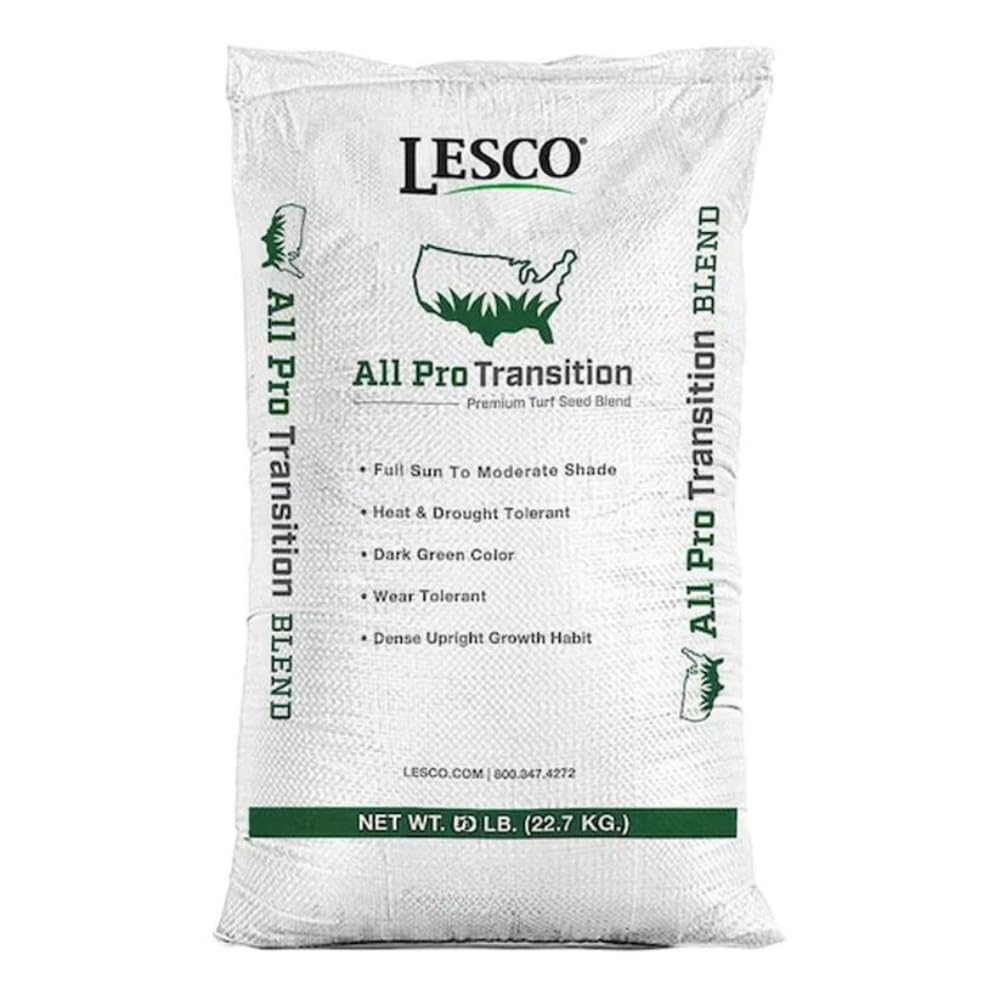
Tall fescue’s deep taproot system is the biological answer to Michigan clay’s double problem of surface compaction and subsurface drought. Lesco All-Pro uses a blend of turf-type tall fescue varieties selected for transitioning zones, which includes the lower peninsula of Michigan where summers can push into the 90s while winters drop below zero. The endophyte enhancement provides natural resistance to chinch bugs and sod webworms, insects that commonly attack stressed grass on heavy soil.
Customers report germination within one week and a dense, dark green lawn that holds up to regular foot traffic. Multiple verified buyers noted the absence of weed seeds in the bag — a critical detail when you are trying to establish a monoculture on clay that already hosts crabgrass and nutsedge. The texture is medium-coarse and soft underfoot, typical of premium tall fescue blends.
The 10-pound bag is non-returnable per Lesco policy, so measure your coverage area carefully before purchase. It covers approximately 2,000-3,000 square feet for new lawns depending on seeding rate. This is a professional-grade product that rewards proper soil preparation and consistent watering during the 10-14 day establishment period.
Why it’s great
- Deep taproot breaks through compacted clay layers
- Endophyte-enhanced defense against surface insects
- Virtually weed-free seed for clean establishment
Good to know
- Non-returnable — confirm coverage area before ordering
- Requires consistent moisture for first 2 weeks on exposed clay
3. GreenView Pure Grass Seed Turf Type Tall Fescue Sun & Shade Blend

The 20-pound bag size makes GreenView’s Turf Type Tall Fescue Blend the most economical option for covering large Michigan properties without sacrificing seed quality. This blend is 99.9% weed-free and contains no filler material, which means every pound goes toward establishing deep-rooted tall fescue that can handle the alternating wet and dry cycles of clay soil. The turf-type tall fescue varieties produce a dark green, medium-coarse blade that stands up to heat, drought, and disease pressure.
Buyers report germination in 10-14 days with results visible as thick, dark turf that fills in bare spots completely. One reviewer in zone 8b achieved 90% germination in 10 days using a peat moss topdressing. The blend is listed for both sun and partial shade, which covers the mixed light conditions typical of Michigan residential lots with mature trees.
Coverage is generous — 2,500 square feet for new lawns and up to 5,000 square feet for overseeding. A small number of users noted that germination was slower than advertised, consistent with tall fescue’s natural establishment timeline on cooler clay soils. Watering discipline during the first two weeks is non-negotiable for uniform coverage.
Why it’s great
- 20 lb bag provides best square-foot cost for large lawns
- 99.9% weed-free with no filler content
- Tall fescue root system handles clay compaction
Good to know
- 10-14 day germination window feels slow compared to ryegrass
- May require two applications for bare clay spots with erosion
4. Jonathan Green Black Beauty Sun & Shade Grass Seed

Jonathan Green’s Black Beauty Sun & Shade uses a four-family blend of turf-type tall fescue, Kentucky bluegrass, perennial ryegrass, and fine fescues. The diversity is a practical hedge for Michigan clay — if one species struggles with a particular drainage pocket or shade line, the others compensate. The tall fescue component provides the deep root penetration needed for clay, while the fine fescues fill in the tighter shady spots under maple and oak trees common in Michigan neighborhoods.
Customer reviews consistently highlight rapid germination and the ability to fill bare spots within a few weeks. One verified buyer in a hot, humid area with drought conditions reported a 95% lawn transformation by May after a fall seeding. The dark green color and dense growth habit improve curb appeal, and the mix requires regular watering to establish on clay that may crust over between rains.
The 7-pound bag seeds up to 2,625 square feet for new lawns and 5,250 square feet for overseeding. A small number of buyers reported that the mix contained a noticeable amount of ryegrass with a lighter color and wider blade, which may create visual inconsistency if you prefer a uniform dark green lawn. Best applied between mid-August and mid-October for Michigan fall planting.
Why it’s great
- Four-species blend adapts to variable clay drainage
- Good performance in both full sun and deep shade
- Fast germination fills bare spots before erosion starts
Good to know
- Contains Kentucky bluegrass, which struggles in pure clay without amendment
- Ryegrass component may appear lighter green than fescue
5. GreenView Pure Grass Seed Perennial Ryegrass Blend

For homeowners who need fast soil coverage to prevent clay erosion on a sloped lot or exposed bank, GreenView’s Perennial Ryegrass Blend germinates in 7-12 days and establishes a dense root mat quickly. The 99.9% weed-free certification means you are not introducing crabgrass or broadleaf weeds into the clay seed bank. Perennial ryegrass has a fibrous root system that holds surface soil in place during Michigan’s spring rains, giving you time to amend the clay for deeper-rooted species later.
Reviews from verified buyers describe this as pure grass seed with no filler material — one customer compared it directly against a major competitor and found GreenView germinated where the other did not. The dark green color and medium-to-fine texture produce a vibrant lawn that holds up to moderate foot traffic. The blend grows in all common soil types, including clay, as long as it receives consistent moisture during establishment.
The 7-pound bag covers 1,750 square feet for new lawns and 3,500 square feet for overseeding. Because perennial ryegrass is a bunch-type grass, it may require annual overseeding to maintain density, especially on clay where winter heave can pull shallow roots. Best used as a rapid cover crop or in a blend rather than a permanent monoculture on heavy soil.
Why it’s great
- Fast 7-12 day germination for erosion control on clay slopes
- No filler material — every pound is pure seed
- Adapts to all common soil types including clay
Good to know
- Shallow root system may not survive Michigan winter on pure clay
- Requires annual overseeding to maintain density
6. Pennington Signature Series Tall Fescue Blend Blue Tag
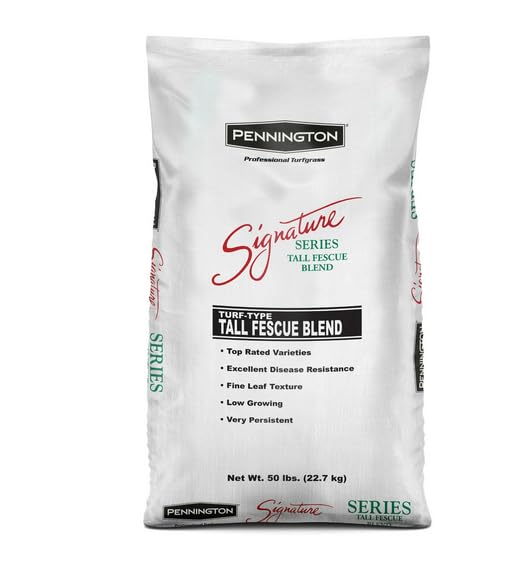
The 50-pound bag of Pennington Signature Series Tall Fescue Blend is designed for large-scale projects where covering 10,000 square feet in a single pass matters more than boutique seed composition. Tall fescue’s deep taproot is inherently suited to clay because it can extract moisture from below the compacted surface horizon. The Blue Tag designation indicates a higher germination standard than basic Pennington offerings, which matters when you are investing in bulk seed for a full lawn renovation on heavy Michigan soil.
Customer feedback shows germination in 5-7 days under good conditions, with a pleasing dark green color and medium blade texture that tolerates both summer heat and dog traffic. One verified buyer in northern Indiana, a climate very similar to southern Michigan, reported excellent results cutting at 4 inches through 90-degree days. A small minority experienced zero germination, which may be batch-specific and is handled by Amazon’s return policy.
The seed is labeled for full sun to partial shade, covering most Michigan yard conditions. At 50 pounds, this bag requires a walk-behind spreader for even distribution — hand broadcasting will produce patchy coverage on clay. Consider running a soil test before investing in a full-lawn application, as clay pH above 7.5 can lock up nutrients and stunt tall fescue establishment.
Why it’s great
- 50 lb bag is the most cost-efficient option for full-lawn projects
- Tall fescue taproot penetrates clay better than ryegrass
- Blue Tag certification ensures higher germination rates
Good to know
- Zero germination reported in a small number of bags
- Requires a broadcast spreader for even clay coverage
7. Twin City Seed Co. Eco Seed Low Grow Fescue
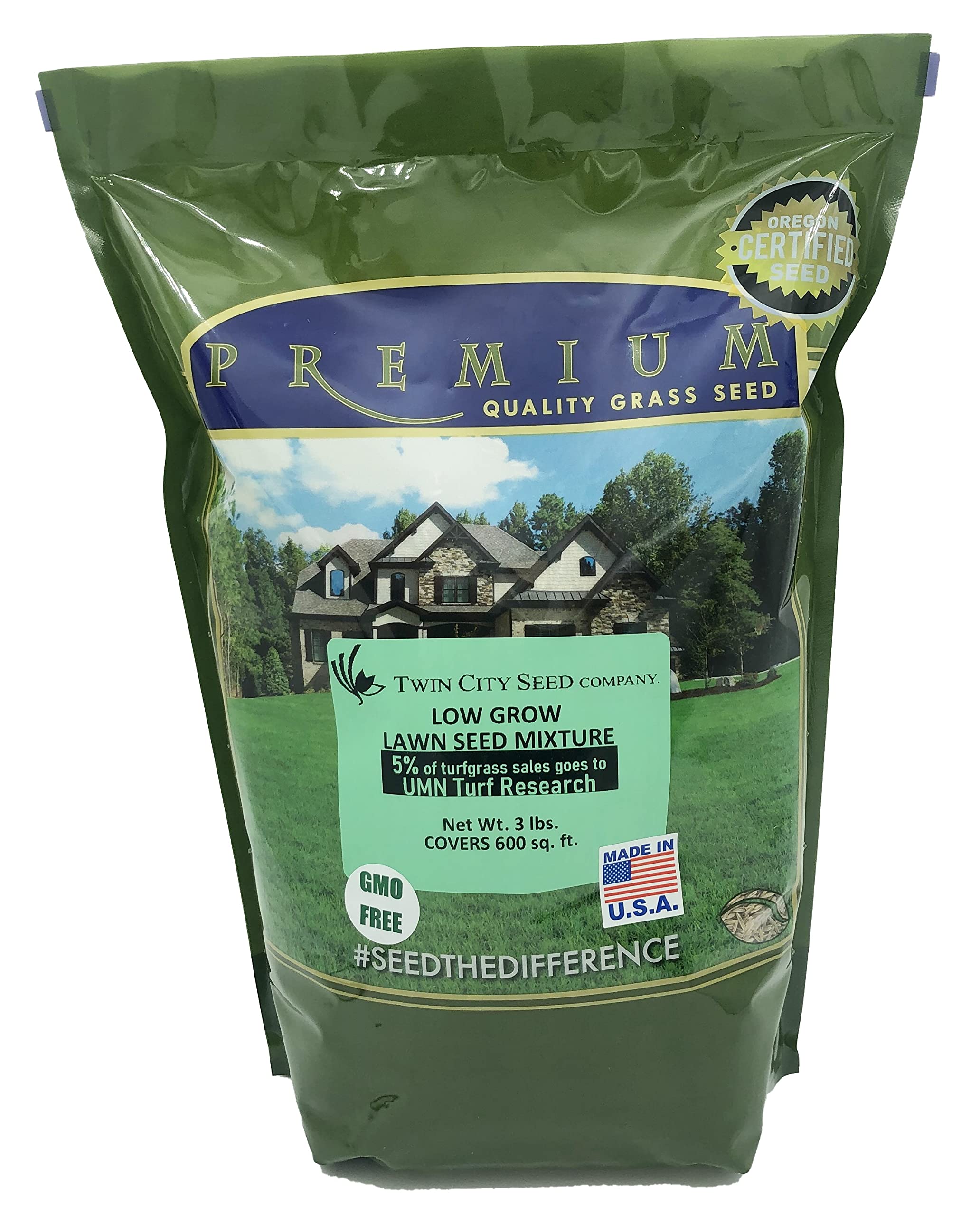
Twin City Seed’s Eco Seed is a 100% fine fescue blend — creeping red, Chewings, hard, and sheep fescue — that thrives on the low-fertility, acidic conditions typical of Michigan clay. Fine fescues have the thinnest blade profile of any cool-season grass, which reduces water demand and allows them to survive on clay that dries out between rains. The advertised 10-12 inch unmown height makes this a legitimate no-mow option for slopes, roadside banks, or low-traffic areas where mowing is impractical.
Buyers report germination in 4-9 days with slow vertical growth as advertised. One customer used it successfully in a no-mow lawn setting and described it as superior to a budget box-store alternative. The mix is designed for full sun to heavy shade, drought tolerance, and adapts to very sandy through heavy clay soils. It also serves as a companion for wildflower establishment, making it suitable for naturalized areas.
The 3-pound bag covers a smaller area — roughly 300-500 square feet for new lawns at the recommended rate of 6-9 pounds per 1,000 square feet. This is a specialized product, not a general-purpose turf builder. Best suited for Michigan zones 3-7, which covers the entire state. The seed mix composition may vary slightly by batch as stated by the manufacturer, but the four-fescue function remains consistent.
Why it’s great
- Fine fescue roots penetrate heavy clay without soil amendment
- No-mow growth habit saves time on slopes and banks
- Thrives in low-fertility soil typical of Michigan
Good to know
- 3 lb bag is small — not economical for large lawns
- Unmown height of 10-12 inches may look weedy to some homeowners
FAQ
Can I plant grass seed directly into Michigan clay without tilling?
Should I fertilize clay soil before or after seeding grass?
How often should I water grass seed on clay soil in Michigan spring?
What is the best grass seed blend for clay soil that gets partial shade in Michigan?
Why did my grass seed germinate in patches on clay soil?
Final Thoughts: The Verdict
For most users, the grass seed for michigan clay soil winner is the Barenbrug Turf Star Regenerating Perennial Ryegrass because its RPR technology fixes the chronic problem of winter heave and thin patches without annual re-seeding, and the Yellow Jacket coating improves germination on crust-prone clay. If you want deep-rooted durability for high-traffic areas, grab the Lesco All-Pro Transition Tall Fescue Blend for its endophyte-enhanced insect resistance. And for large-acreage projects where budget matters most, nothing beats the coverage of the GreenView Pure Grass Seed Turf Type Tall Fescue 20-pound bag.