
A sore-backed horse that drops its shoulder under saddle or a rider constantly re-tightening the girth mid-trail are symptoms of the same problem: insufficient cushioning that fails to manage impact and grip. A gel saddle pad sits directly between the tree and the horse’s back, doing the heavy lifting of distributing compressive forces, wicking moisture away from the skin, and preventing the entire assembly from migrating sideways during collection or lateral work.
I’m Mohammad Maruf — the founder and writer behind Drink4Good. I’ve analyzed over 60 gel-infused and memory-foam half pads across English, Western, and trail disciplines, cross-referencing foam density specs, shim-pocket construction, and real rider accounts to separate performance engineering from marketing claims.
Choosing the right gel saddle pad means matching the pad’s thickness profile, shim adjustability, and non-slip backing to your saddle’s tree fit and your horse’s specific topline condition — a layered decision that directly determines long-term comfort and soundness.
How To Choose The Best Gel Saddle Pad
A gel saddle pad isn’t a one-size-fits-all accessory — its effectiveness hinges on how it interacts with your saddle’s tree width, your horse’s wither shape, and the type of work you do. Below are the three factors that separate a good pad from a back-soreness liability.
Foam Density & Gel Composition
Not all gel pads use the same internal material. Open-cell memory foam conforms to the horse’s back and rebounds slowly, ideal for horses with prominent withers or muscle asymmetry. Closed-cell gel or PU foam provides consistent impact dissipation without bottoming out under heavier riders but tends to trap more heat. Look for pads that specify gel-foam hybrids — these balance shock absorption with breathability longer than solid gel bladders alone.
Shim Pocket Adjustability
Horses change shape seasonally, after injury, or as they build topline. A pad with four or more shim pockets lets you lift the front, rear, or sides independently to correct saddle bridging or fill a dip behind the shoulder. The best systems use removable memory-foam inserts that can be trimmed or layered — fixed-thickness pads offer no correction if your saddle fit shifts over time.
Non-Slip Backing & Spine Clearance
A gel pad that slides compromises both horse comfort and rider security. The most stable designs use a tacky silicone or “Tacky Too” bottom that grips the saddle pad and horse hair without pinching. Equally important is a spine relief channel or anatomic cutout — this prevents direct pressure on the spinal processes and allows air to flow along the back, reducing sweat buildup under heavy work.
Quick Comparison
On smaller screens, swipe sideways to see the full table.
| Model | Category | Best For | Key Spec | Amazon |
|---|---|---|---|---|
| ECP Equine Comfort Adjustable | Half Pad | Saddle fit correction | 12 memory foam shims | Amazon |
| Kavallerie 3D Air-Mesh | Half Pad | Heat management & grip | Gel with airflow holes | Amazon |
| ECP Western Thermoregulating | Full Pad | Western trail & arena | Thermoregulating fabric | Amazon |
| Weaver Equine Wool Blend | Full Pad | Shock absorption & durability | 3/4 in wool felt | Amazon |
| Reinsman Contoured Trail | Full Pad | No-slip trail riding | Tacky Too bottom | Amazon |
| Harrison Howard Dyna-Sorb | Half Pad | Memory foam value | Gel-foam memory fill | Amazon |
| Harrison Howard Trail Seat Saver | Seat Saver | Rider seat cushion | Suede non-slip top | Amazon |
In‑Depth Reviews
1. ECP Equine Comfort Products Adjustable Memory Foam Half Pad

This half pad houses four shim pockets — two front, two rear — that accept twelve contoured memory-foam inserts in two thicknesses. Riders with horses suffering from uneven shoulders or post-injury muscle loss can stack, trim, or completely remove shims to re-level the saddle tree without buying a new pad. The quilted polycotton top breathes well, and the brushed underside prevents friction on clipped coats.
At 8.5 by 22 inches, it fits most close-contact and dressage saddles up to 17.5 inches. Multiple buyers report that removing the fur ruff common on many half pads eliminates bulk at the withers, allowing a cleaner interface between saddle and horse. The shims themselves are simple foam slabs — easy to rinse off and air-dry between uses.
One caveat: the topline seam is thinner than the body of the pad, so if your saddle sits unusually far forward the back cushion may not align perfectly under the cantle. Some users solved this with minor repositioning; others ran the pad without any shims at all and still saw improved horse posture during shoulder-in and lateral work.
Why it’s great
- Four independent shim pockets allow granular fit correction
- All-cotton construction avoids synthetic heat buildup
- Machine washable after removing shims
Good to know
- Topline padding is thinner than the main body
- Best suited for English-style saddles despite adjustable fit
2. Kavallerie 3D Air-Mesh Half Pad

The standout feature here is the perforated gel layer: small holes run through the entire gel panel, allowing air to circulate between horse and saddle rather than getting trapped under a solid sheet. Paired with a 3D air-mesh top and fleece underside, this design moves moisture away from the skin faster than most solid-foam competitors, making it a strong choice for summer shows or intense schooling sessions.
The gel surface itself creates a high-friction interface that grips both the saddle and the pad beneath it. Riders of hot-blooded horses — particularly Thoroughbred crosses — report that the pad completely eliminated the roaching and hollow-back behavior caused by previous saddle discomfort. At 16 ounces it adds negligible weight while distributing pressure over a larger area to prevent bridging.
A few users noted the pad runs slightly oversized compared to the listed dimensions, which can cause the edges to extend past the saddle flap on smaller 16-inch seats. Machine washing is limited to 30°C, so a stiff brush for daily cleaning between washes is recommended to prolong the gel’s tackiness.
Why it’s great
- Perforated gel layer prevents heat trapping
- Non-slip surface keeps saddle locked in place
- Lightweight at one pound
Good to know
- May extend past smaller saddle flaps
- Limited to low-temperature machine washing
3. ECP Equine Comfort Products Thermoregulating Western Saddle Pad

Built for Western saddles, this pad uses a diamond-quilted cotton top and a soft flannel underside that wicks sweat without the stiff feel of traditional felt. The ergonomic contour follows the horse’s backline from withers to loin, reducing the gap between pad and skin that causes pressure points during extended trail rides or arena work. Two shim pockets per side accept the same twelve memory-foam inserts as ECP’s half pad, giving you the same correction capability in a full-size Western cut.
Sizing at 31 by 16 inches, it clears most Western riggings cleanly. Owners of Thoroughbreds or other high-withered horses appreciate that this pad mimics the close-contact shape of an English cut while accommodating the wider tree of a Western saddle. The shims are removable, making the pad fully machine-washable on a gentle cycle — a practical advantage when dealing with heavy summer sweat.
The main complaint is the large white logo tape sewn down the spine, which some riders find visually loud for a dressage-ring or show appearance. Additionally, the included shim foam is not the densest — heavy-use riders report it compressing faster than the half-pad version, though replacements are easy to cut from generic memory foam sheets.
Why it’s great
- Thermoregulating fabric keeps horses cool on long rides
- Contoured Western cut fits high-withered horses
- Machine washable with shims removed
Good to know
- Large logo tape may not suit all show preferences
- Shim foam compresses faster under heavy use
4. Weaver Equine 30″ x 30″ Contoured Wool Blend Felt Saddle Pad

Rather than synthetic gel, this pad leverages a 3/4-inch wool-blend felt body that naturally absorbs shock and wicks moisture without active heat generation. Wool felt compresses under the rider’s weight but retains enough loft to prevent the saddle tree from digging into the trapezius muscles. The contoured cut and reinforced spine with top-grain wear leathers add durability for daily ranch work or long trail miles.
The 30-by-30-inch square fits most Western saddles on horses between 14.1 and 16.3 hands, though it performs best under 16 hands where the extra length doesn’t protrude past the cantle. A wither slit stops the pad from riding up against the pommel, and multiple riders confirm that this pad stays put without girth-cinching recurrences during uphill climbs or galloping transitions.
Wool pads require different maintenance than synthetic gel units — you cannot machine-wash felt without damaging its structure. A dry sponge or stiff brush suffices for daily cleaning, but deep stains may be harder to lift compared to a polyester pad. Riders who prefer hot-water sanitation should look at the ECP or Reinsman options instead.
Why it’s great
- Natural wool felt provides excellent shock absorption
- Wither slit prevents slippage under Western saddles
- Top grain leathers add real durability
Good to know
- Not machine washable — dry sponge cleaning only
- Best for horses under 16 hands
5. Reinsman Contoured Trail Pad with Tacky Too Bottom
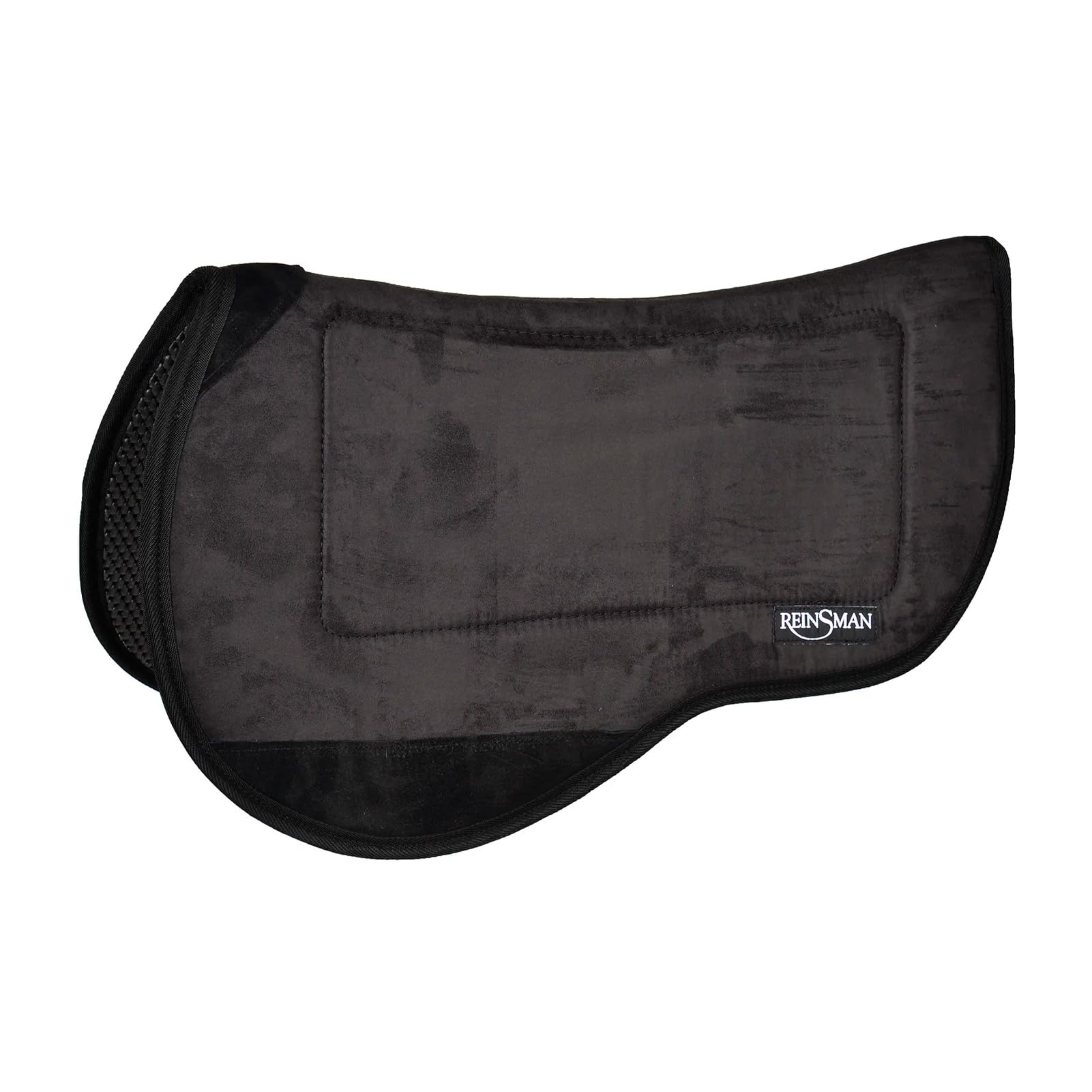
The defining element of this pad is the Tacky Too bottom — a breathable, non-slip synthetic surface that grips the horse’s hair without pulling or pinching. When paired with the contoured spine relief channel, the pad stays centered even on horses with asymmetrical muscle development or during tight rollbacks on the trail. The top material is microsuede that resists UV fading and staining, holding up to multiple seasons of outdoor use.
At 30 inches long by 34 inches deep by 3/4 inch thick, it’s generous enough to cover most Western saddles, but multiple buyers mention the actual length measures closer to 28 inches when the binding is excluded. If you ride a 16-inch or larger saddle, double-check that the binding won’t sit under the bars where it could cause friction rubs over long distances. The internal padding is a comfort-felt layer that absorbs shock without the bulk of gel-filled bladders.
Rider loyalty is high — one reviewer has owned three of these pads over a decade, reporting zero degradation in the Tacky Too grip even after hundreds of washes. The pad does run warm in direct summer sun because of the microsuede top, but the spine channel offsets this by promoting airflow along the backline.
Why it’s great
- Tacky Too bottom eliminates saddle slippage
- Spine relief channel reduces pressure on vertebrae
- UV and stain resistant top holds up for years
Good to know
- Actual pad length is shorter than labeled
- Microsuede top can retain heat in direct sun
6. Harrison Howard Dyna-Sorb Full Shock Absorbing Memory Half Saddle Pad

This half pad uses a dense gel-foam core that compresses under load and returns to its original shape after each ride — the “memory” effect that prevents permanent flattening over a season of use. The outer sleeve is a lightweight slip-proof material that stays put under English and Western saddles alike, though several reviewers found it needed extra hook-and-loop tape to prevent migration under a wide Western tree.
The 0.79-kilogram weight is barely noticeable in the tack room, and the breathable inner fabric pulls sweat away from the horse’s back to reduce fungal spots common with non-breathable foam pads. Riders of older horses with dipped toplines or low withers report that the pad transforms their horse’s willingness to move forward, with one owner noting their previously nervous gelding now rounds up willingly.
Its thin profile — around half an inch uncompressed — is both an advantage and a limitation. It won’t alter saddle fit significantly, making it safe for well-fitting saddles, but it doesn’t provide enough bulk to correct a major bridging issue. If your saddle fit is already close, this pad adds just enough gel damping to soften the ride without lifting the tree.
Why it’s great
- Memory foam bounces back to original shape
- Breathable inner fabric reduces sweat buildup
- Thin profile preserves existing saddle fit
Good to know
- May slide under wide Western trees without added grip
- Limited correction for major saddle fit issues
7. Harrison Howard Trail Seat Saver Western Tack Saddle Pad

Designed primarily as a rider-facing seat saver, this pad sits on top of the saddle rather than under it, adding cushion between the rider’s seat bones and a hard or worn saddle tree. The suede finish provides enough grip to keep the rider from sliding forward during downhill trail sections, and the 0.47-kilogram weight doesn’t throw off balance when mounting from the ground.
It fits Western saddles from 15.5 to 17 inches, and several users with older Big Horn or similar saddles report that the pad restored comfort to a tree that had become punishing over long rides. The elastic band intended to anchor the pad under the cantle works for moderate riding, but some riders found it insufficient for preventing the pad from sliding out sideways during dismount or when the horse jogs.
The most common workaround is to substitute the included elastic with a wider exercise band that wraps under the cantle and over the pad — a cheap fix that turns a three-star product into a five-star one. If your saddle already fits well and you just need a bit more padding for your own pelvis, this pad delivers. But if you need the pad to stay put through vigorous ranch work, consider upgrading the retention system yourself.
Why it’s great
- Suede top prevents rider sliding
- Restores comfort to older hard saddles
- Lightweight and easy to install
Good to know
- Elastic band may not hold pad in place during dismounts
- Designed for rider comfort, not horse back correction
FAQ
Will a gel saddle pad fix a saddle that doesn’t fit my horse?
How do I clean a gel saddle pad without damaging the gel layer?
Is a gel half pad better than a full felt pad for trail riding?
Final Thoughts: The Verdict
For most users, the gel saddle pad winner is the ECP Adjustable Memory Foam Half Pad because its four-pocket shim system, all-cotton shell, and twelve foam inserts combine fit correction with breathable comfort at a mid-range investment. If you want maximum heat management and grip during summer competition, grab the Kavallerie 3D Air-Mesh Half Pad. And for a Western rider who needs a zero-slip trail pad that lasts a decade, nothing beats the Reinsman Contoured Trail Pad with Tacky Too bottom.