
Every guitarist knows the moment a fresh set of strings goes dead, dragging down your tone and killing your confidence mid-song. Finding a set that balances rich, expressive sound with the durability to survive daily practice is the real challenge—not just grabbing the cheapest pack off the shelf.
I’m Mohammad Maruf — the founder and writer behind Drink4Good. I’ve spent years analyzing the metallurgy, core wire construction, and corrosion-resistance treatments that define how steel strings perform across different playing styles and environments.
Whether you’re a flatpicker chasing projection or a fingerstylist wanting clarity, the right choice transforms your instrument. This guide breaks down the top contenders with a sharp focus on core specs and real-world performance to help you find the very best guitar steel strings for your setup and budget.
How To Choose The Best Guitar Steel Strings
Steel strings are not a monolith. The alloy of the wrap wire, the diameter of the core, and the presence of a protective coating all affect how your guitar sounds, feels, and ages. Understanding these variables prevents you from swapping sets every two weeks.
Winding Material: Phosphor Bronze vs. Nickel-Plated Steel
Phosphor bronze strings dominate the acoustic world because they produce a warm, full-bodied tone with articulate lows and mids. Nickel-plated steel is standard for electric guitars—it delivers a bright, balanced output that works with magnetic pickups. Choosing the wrong type for your instrument results in a dull or overly harsh sound.
Core Wire Construction
The core wire—either hex-shaped or round—affects tuning stability and break resistance. Hex cores grip the wrap wire tighter, offering better intonation and less slippage under aggressive bending. Round cores are more flexible and produce a slightly warmer attack but can be less stable during heavy use. Serious players prioritize hex cores for consistency.
Coating and Corrosion Protection
Uncoated phosphor bronze strings sound incredible out of the package but oxidize quickly, especially in humid environments or from acidic sweat. Treated and coated strings use a thin polymer barrier or anti-corrosion chemical bath to extend usable life by three to five times. The trade-off is a marginally different feel—some coatings feel slicker or slightly stickier than bare metal.
Quick Comparison
On smaller screens, swipe sideways to see the full table.
| Model | Category | Best For | Key Spec | Amazon |
|---|---|---|---|---|
| Ernie Ball 2221 Nickel Regular Slinky 3-Pack | Electric | Stage players needing backup sets | Nickel-plated steel, .010–.046 | Amazon |
| Martin Authentic Lifespan 2.0 MA500T | Acoustic | Flatpickers wanting vintage, woody tone | 92/8 phosphor bronze, treated | Amazon |
| Cleartone Phosphor Bronze 7412 | Acoustic | Aggressive strummers who hate frequent changes | Coated phosphor bronze, .012–.053 | Amazon |
| John Pearse JP550SL Slightly Light | Acoustic | Players chasing rich, balanced tone | Phosphor bronze, .011–.050 | Amazon |
| GHS Strings 345 Silk And Steel | Acoustic | Fingerstyle players wanting low-tension feel | Silver-plated copper, .010–.042 | Amazon |
In‑Depth Reviews
1. Ernie Ball 2221 Nickel Regular Slinky Electric Guitar Strings 3-Pack

The Ernie Ball 2221 Regular Slinky set has been a staple for electric players for decades, and the three-pack option makes it an unbeatable value for gigging musicians. The .010–.046 gauge strikes the classic balance between bend-friendly tops and a tight low end that stays articulate under gain. The hex-shaped steel core wire grips the nickel-plated wrap securely, reducing fret wear and keeping intonation stable through repeated string bends.
Players in the raw data consistently praise these strings for rarely breaking even during aggressive live sets, and the 3-pack means you always have a fresh backup ready. The balanced sound profile works equally well for blues, rock, and country, giving you a consistent tonal foundation across different guitars. The tin-plated hex core also resists corrosion better than unplated alternatives, extending usable life for hobbyists who don’t change strings weekly.
If you play an electric guitar and want a proven string that delivers reliability and brightness set after set, this three-pack removes the hassle of last-minute ordering. It is the most practical entry point for any player who values consistency and preparedness without inflating their per-set spend.
Why it’s great
- Three-pack provides excellent value and backup convenience
- Hex core keeps tuning stable during aggressive bends
- Decades of proven reliability across many genres
Good to know
- Only available in nickel-plated steel; no coated option
- .010 gauge may feel too light for players wanting heavier tension
2. Martin Authentic Acoustic Guitar Strings Lifespan 2.0 Treated
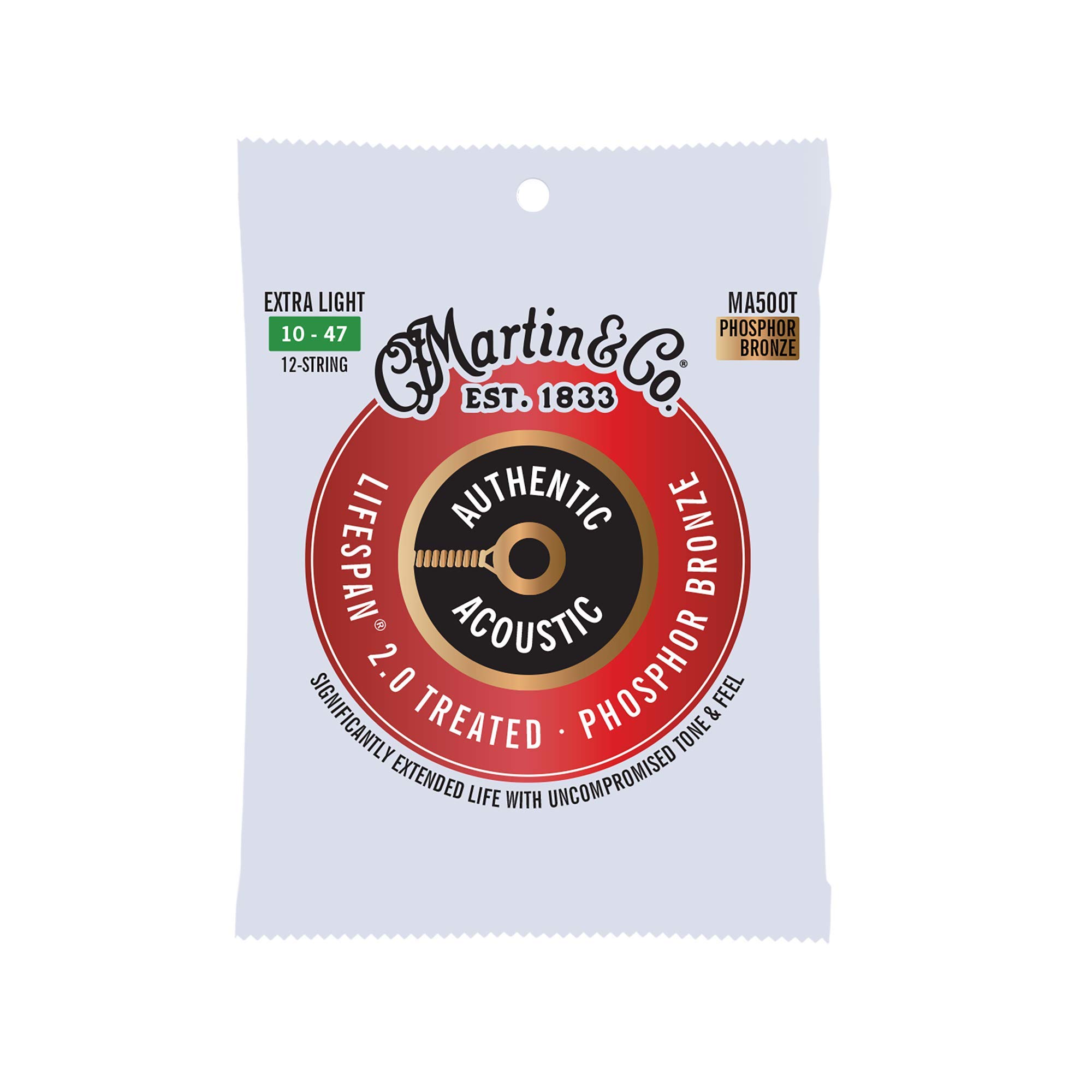
Martin’s Lifespan 2.0 technology applies a patented anticorrosion treatment to both the 92/8 phosphor bronze wrap wire and the core wire, meaning these strings resist sweat and humidity far better than standard uncoated phosphor bronze sets. The result is a round, woody tone with strong projection that players in the raw data describe as “vintage” and “fabulous”—ideal for flatpicked bluegrass and country music. The treated surface also reduces finger noise, making slides and position shifts less distracting.
Reviewers note that these strings feel slightly stickier than Elixir’s polymer coating, which can be a minor annoyance for fingerstyle players doing quick slides. However, the trade-off is a tone that stays lively for weeks longer than untreated bronze strings, and several users highlight how the extra-light gauge set (included in the pack) makes long practice sessions easier on the fingertips. The hex-core construction keeps each string intonating correctly even after heavy strumming.
If your acoustic guitar sits in a case for days between sessions or if you live in a humid climate, the corrosion barrier here is a genuine performance upgrade. This set excels for players who want premium tone preservation without committing to the slick feel of a full polymer coating.
Why it’s great
- Anti-corrosion treatment drastically extends string life
- Rich, woody tone perfect for flatpicking
- Hex core ensures stable tuning across the fretboard
Good to know
- Stickier surface feel compared to coated alternatives
- Premium-tier pricing sits above standard uncoated sets
3. GHS Strings 345 Silk And Steel, Silver-Plated Copper Acoustic Guitar Strings

The GHS 345 set is a unique acoustic offering that uses a round silk-and-steel core wrapped in silver-plated copper, producing a warm, mellow voice with noticeably lower tension than standard phosphor bronze strings. At a light .010–.042 gauge, this is the go-to option for fingerstyle players who prioritize comfort and reduced hand strain over raw projection. Players in the raw data consistently call them “easy on the fingers” while still praising the bold, warm character that fills a room.
The silver-plated copper wrap delivers a slightly metallic, shimmering top end that sits well under a microphone, though it lacks the aggressive bite of phosphor bronze for hard strumming. The low tension also increases the guitar’s natural resonance and complexity, particularly on solid wood instruments with a responsive top. Reviewers note the high E string is remarkably lightweight yet durable, and the set holds its tone for a solid stretch without going dull.
This is a specialty set for anyone who suffers from finger fatigue or wants to explore a softer attack without sacrificing tonal depth. It works brilliantly on smaller-body guitars and is a fantastic upgrade for beginners who find standard acoustic strings too punishing.
Why it’s great
- Extremely low tension reduces finger pain significantly
- Warm, mellow tone that records beautifully
- Great for fingerstyle and light strumming
Good to know
- Not loud enough for aggressive flatpicking
- Premium pricing and limited availability in retail stores
4. Cleartone Phosphor Bronze Acoustic Guitar Strings (12-53)
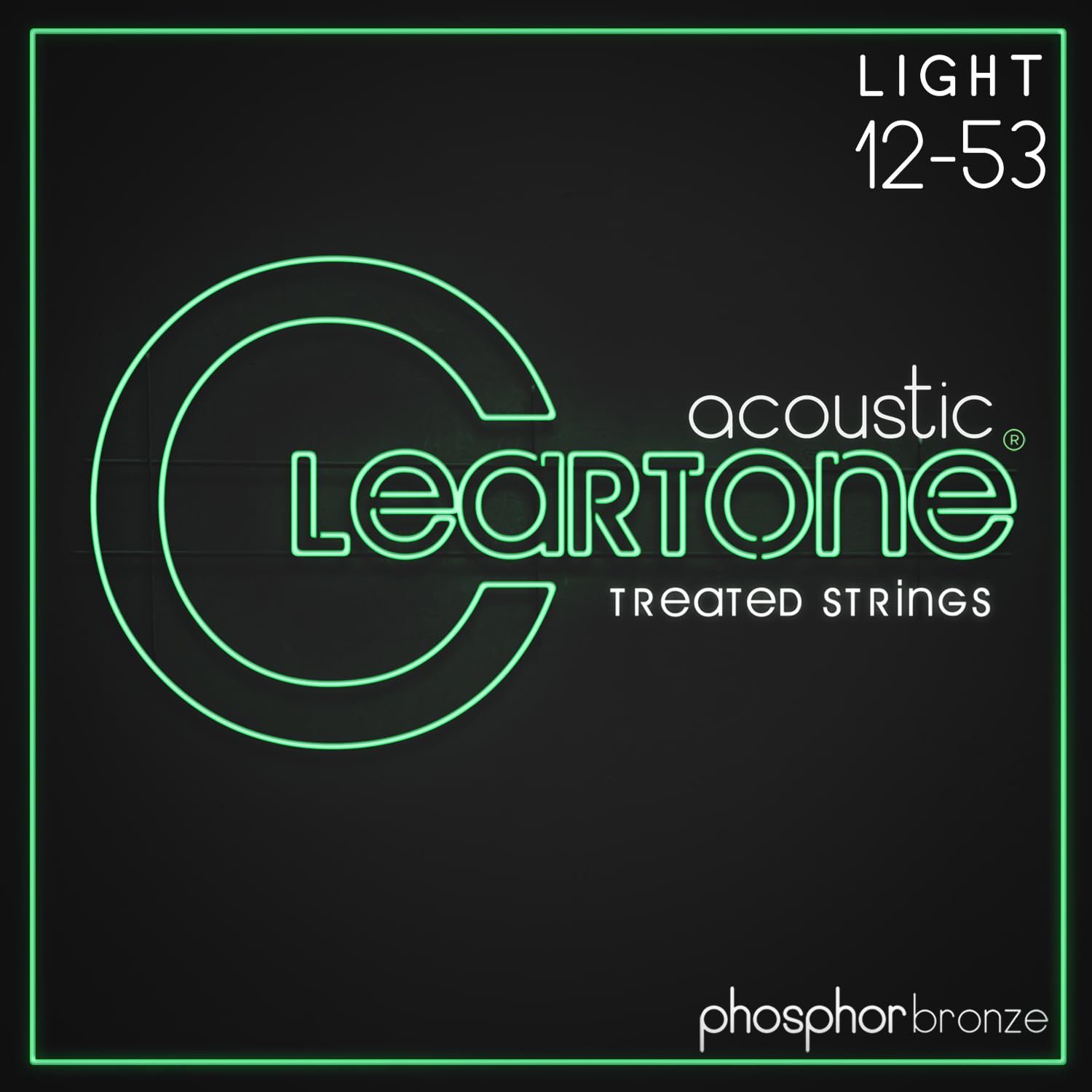
Cleartone’s coated phosphor bronze strings stand out because the thin polymer coating preserves the feel and sound of uncoated strings while dramatically extending lifespan. The high-carbon hex core gives these .012–.053 lights exceptional strength and tuning stability, even under aggressive flatpicking. Players in the raw data confirm they last significantly longer than Elixir strings while delivering a warmer, less slippery feel that many acoustic players prefer.
Reviewers note that these strings start off bright and slightly thin compared to D’Addario but settle into a rich, full-bodied tone after a short break-in period. The coating resists corrosion and finger grime, so the set stays lively for weeks even in humid environments. One detail to watch: the Amazon listing for .012–.053 lights has occasionally shipped the .011–.052 custom light set (model 7411), so verify the model number on the package if you need the exact gauge.
For strummers who play hard and want a coated string that still feels like bare metal, Cleartone delivers the best of both worlds. The slightly higher per-set cost is offset by the extended replacement interval, making it a smart choice for players who go through strings quickly.
Why it’s great
- Coating extends lifespan without feeling slick or plasticky
- High-carbon hex core provides excellent tuning stability
- Warm, loud tone well-suited for maple-body guitars
Good to know
- Coated feel may still be noticeable to purists
- Listing gauge mismatch has been reported by buyers
5. John Pearse Acoustic Guitar Strings Phosphor Bronze Slightly Light

John Pearse strings are handcrafted in the United States and have a cult following among acoustic players who prioritize tonal purity over longevity. The JP550SL “slightly light” gauge (.011–.050) offers a middle ground between extra-light and light sets, giving you enough tension for solid projection while still being comfortable for extended sessions. Players in the raw data rave about the balanced lows and mids, describing them as “not overly bright” and “a joy to play” once properly stretched.
These are uncoated phosphor bronze strings, so the tone is immediate, rich, and natural from the first strum. The trade-off is that they corrode and deaden faster than coated or treated alternatives—reviewers consistently note they are a “buy for tone, not longevity.” The hex core construction makes tuning stable and reduces the need for constant retuning, which is a common frustration with round-core strings.
If you are the type of player who changes strings every week or two and demands the purest acoustic tone money can buy, John Pearse strings belong on your guitar. They are especially rewarding on vintage instruments where you want to bring out the wood’s natural voice without any coating dampening the resonance.
Why it’s great
- Exceptional warm, balanced tone with articulate mids
- “Slightly light” gauge offers a comfortable middle ground
- Hex core provides reliable tuning stability
Good to know
- Uncoated and prone to faster corrosion
- Premium per-set price reflects domestic manufacturing
FAQ
How often should I change my guitar steel strings?
What is the difference between phosphor bronze and 80/20 bronze strings?
Final Thoughts: The Verdict
For most players looking for the best guitar steel strings with proven reliability and unbeatable value, the Ernie Ball 2221 Regular Slinky 3-Pack is the smartest buy because it combines decades of consistent performance with a multi-set package that keeps you playing without interruption. If you want the richest acoustic tone and don’t mind changing strings more often, the John Pearse JP550SL delivers exquisite warmth. And for fingerstyle players seeking the gentlest feel on the fretboard, nothing beats the GHS Silk And Steel 345.