
Bonding soft fabric to slick plastic is one of the most frustrating DIY challenges — most general glues either bead up and slide off the plastic or soak through the fabric and create a stiff, ugly mess. Whether you’re reupholstering a car headliner, attaching foam to a plastic panel, repairing a torn cushion, or tackling a craft project, you need an adhesive that grabs both surfaces aggressively without ruining the fabric’s flexibility. The wrong choice leads to peeling, bubbling, or a bond that fails the first time you put it under tension.
I’m Mohammad Maruf — the founder and writer behind Drink4Good. I’ve spent years analyzing adhesive formulations, evaluating contact cement performance, and cross-referencing customer feedback to identify which spray and paste adhesives actually deliver a lasting, flexible bond on these two very different material families.
This guide breaks down the five top performers based on real-world bonding strength, chemical compatibility with plastics, and resistance to heat and moisture to help you pick the best glue for fabric to plastic for your project without wasting time or money on products that simply do not hold.
How To Choose The Best Glue For Fabric To Plastic
Not every adhesive claims to bond both fabric and plastic equally well. Some dry too rigid, others cannot adhere to low-energy plastics like polypropylene. The right choice starts with understanding how the glue is applied, how quickly it grabs, and what happens when the joint flexes or gets wet.
1. Spray vs. Liquid/Paste Applicator
For large surfaces — headliners, foam panels, carpet to plastic tubs — a spray adhesive delivers a thin, even web that prevents glue clumps from bleeding through the fabric. Liquids and pastes work better for small repairs, seams, or attaching patches where precision matters more than coverage speed.
2. Aggressive Tack vs. Working Time
Contact adhesives with high initial grab lock the materials in place almost instantly, which is essential for vertical or overhead repairs. However, if you need time to align curved or complex shapes, a product with a longer open time (30–60 minutes) gives you the flexibility to adjust before the bond becomes permanent.
3. Plastic Substrate Compatibility
Hard plastics like ABS, acrylic, and polycarbonate bond readily with solvent-based adhesives. Low-surface-energy plastics like polyethylene and polypropylene often require a primer or a specialty adhesive that contains aggressive solvents. Always check the label for specific plastic compatibility before committing.
4. Environmental Resistance
If the repaired item lives in a car, boat, or outdoor setting, the glue must withstand heat, humidity, and occasional moisture. Spray contact adhesives formulated with heat and water resistance are far less likely to delaminate when temperatures spike inside a parked vehicle.
Quick Comparison
On smaller screens, swipe sideways to see the full table.
| Model | Category | Best For | Key Spec | Amazon |
|---|---|---|---|---|
| 3M Hi-Strength 94 ET | Spray | Indoor & outdoor large surfaces | 60-minute open time | Amazon |
| 3M Max Strength 90 | Spray | Heat & moisture resistance | 10-minute bond cure | Amazon |
| Gorilla Ultimate Spray Adhesive | Spray | Instant tack and versatility | 2-minute full cure | Amazon |
| Loctite Vinyl, Plastic, and Fabric Adhesive | Paste | Small repairs and precision | 24-hour full cure | Amazon |
| FITTDYHE 3Pcs Fabric Glue | Liquid | Washable fabric-to-fabric repairs | 48-hour full cure | Amazon |
In‑Depth Reviews
1. 3M Hi-Strength 94 ET Spray Adhesive
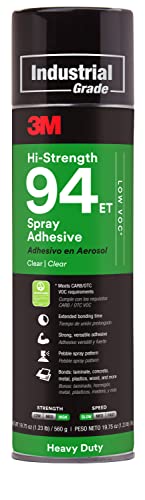
The 3M Hi-Strength 94 ET is the most versatile and forgiving spray adhesive for fabric-to-plastic bonding. Its standout feature is a 60-minute open time, giving you a full hour to carefully align fabric over a plastic panel before the contact bond locks in. The aggressive tack grabs immediately upon contact, yet you can still peel and reposition within that window — a lifesaver for complex headliner repairs or laminating large surfaces like acoustic panels to plastic roofing.
Industrial strength is not an exaggeration here. Users have successfully bonded foam soundproofing to plastic panels inside vehicles, even in freezing temperatures, without the adhesive losing grip. The low-VOC formulation and GREENGUARD certification make it safer for indoor use than many solvent-heavy alternatives, and it contributes to LEED credits for those tracking green building standards.
One trade-off is the strong solvent odor during application — adequate ventilation and a mask are recommended. The 19.75-ounce can delivers generous coverage for large projects, and the bond remains flexible after curing, preventing cracking when the plastic substrate flexes.
Why it’s great
- 60-minute repositioning window is unmatched for complex fabric alignment
- Low VOC and GREENGUARD certified for safer indoor use
- Excellent adhesion to foam, carpet, and hard plastics
Good to know
- Strong odor requires ventilation and mask during application
- Over-spray can be messy on small detailed areas
2. 3M Max Strength 90 Multi-Surface Contact Adhesive
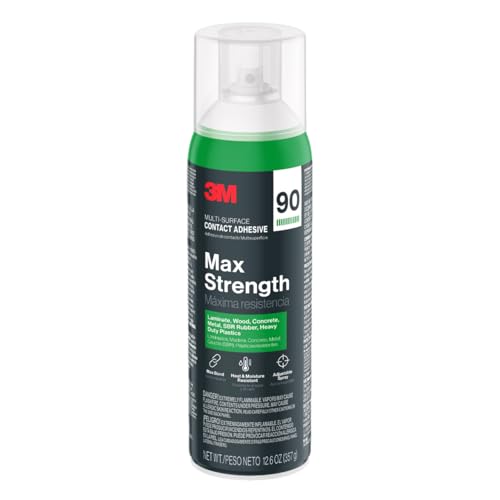
When your fabric-to-plastic bond needs to survive high heat, moisture, or a marine environment, the 3M Max Strength 90 is the specialist to reach for. This spray contact cement cures to a full bond in just 10 minutes, making it one of the fastest setting options for impatient projects. The heat and moisture resistance is specifically noted by users who have used it to bond carpet to sound deadener in vehicle spare tire wells — a location that experiences both temperature swings and occasional water intrusion.
The adjustable nozzle offers three spray patterns, giving you control over the web width so you can coat a narrow strip of plastic without overspray hitting adjacent areas. It bonds strongly to heavy-duty plastics, wood, concrete, metals, and rubber, which makes it a solid choice for attaching fabric-backed foam to plastic panels in upholstery or automotive interiors.
The main limitation is the short working window — once you spray both surfaces, you have roughly 2 minutes before the tack becomes too aggressive to reposition. For small projects with simple geometry, this speed is a benefit. For large or complicated layups, the 3M 94 ET is a better fit.
Why it’s great
- Heat and moisture resistant for automotive and marine use
- Fast 10-minute full cure reduces project downtime
- Adjustable nozzle for precise spray control
Good to know
- Very short open time makes repositioning difficult
- Strong fumes require good ventilation
3. Gorilla Ultimate Spray Adhesive
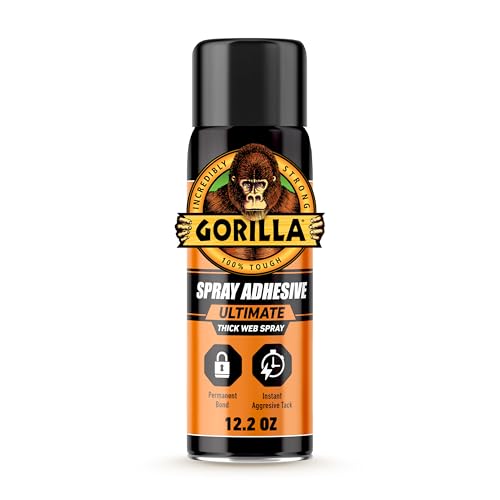
Gorilla’s Ultimate Spray Adhesive is designed for those who need an instant, aggressive tack with zero waiting. The web spray formula grabs fabrics like felt, canvas, and upholstery materials the moment they touch plastic, and the full cure happens in just 2 minutes. Users have successfully bonded ceramic blankets to the inside of plastic storage bins for insulated speaker boxes — a demanding application that requires both initial grab and long-term heat resistance.
The adjustable anti-clog nozzle offers low, medium, and high settings, letting you dial in the spray pattern from a narrow stream to a wide web. This is especially helpful when you are coating a small plastic part and don’t want overspray on surrounding surfaces. The low-VOC formula meets CA CARB/OTC requirements, making it friendlier for indoor crafting than older solvent-based sprays.
One common feedback point is that the spray covers a wide area even on the lower setting, so precision on tiny components can be a challenge. You cannot reposition the fabric once it touches — the bond is immediate and permanent. For straightforward panel repairs where alignment is simple, this speed is a major advantage.
Why it’s great
- Instant aggressive tack with 2-minute full cure
- Heat and water resistant for indoor/outdoor use
- Three spray settings for application control
Good to know
- No repositioning possible after contact
- Wide spray coverage can overshoot small areas
4. Loctite Vinyl, Plastic, and Fabric Adhesive

For small-scale repairs where precision matters more than speed, the Loctite Vinyl, Plastic, and Fabric Adhesive in a tube format is a proven workhorse. The paste consistency stays where you put it without running or soaking through thin fabric, making it ideal for reattaching padding to vinyl lawn mower seats or bonding fabric to plastic action figure components. Users report that with proper surface preparation (cleaning and roughening the plastic), the bond holds through an entire mowing season without peeling.
The clear drying finish is a plus for visible repairs. Unlike many general-purpose pastes that yellow over time, this adhesive remains transparent when cured, so it won’t ruin the appearance of a repair on light-colored fabric or clear plastic. The 24-hour full cure time means you need to clamp or hold the pieces in place overnight, but the trade-off is a very strong, flexible bond that handles vibration and flex without cracking.
One behavior to watch for is stringing — the adhesive can pull thin strands as you withdraw the nozzle, so dabbing rather than dragging the applicator helps keep things clean. It performs best on plastics like ABS, vinyl, and acrylic; low-surface-energy plastics like polyethylene will require mechanical abrasion to achieve a reliable hold.
Why it’s great
- Precision tube applicator for small detailed repairs
- Dries clear and remains flexible after curing
- Proven long-term hold on vinyl and hard plastics
Good to know
- 24-hour cure time requires overnight clamping
- Stringing occurs if nozzle is withdrawn too quickly
5. FITTDYHE 3Pcs Fabric Glue

The FITTDYHE 3Pcs Fabric Glue kit is an entry-level, budget-friendly option designed primarily for fabric-to-fabric bonding, but it can handle light fabric-to-plastic applications with careful surface preparation. The kit includes three 60ml bottles with precision needle tips, plus spreaders and clips. The needle tip allows you to apply a thin bead directly onto the plastic or fabric seam without the mess typical of larger nozzles, and the anti-clogging cap design prevents the glue from drying out between uses.
This glue dries clear and flexible, and users report that it holds up surprisingly well through multiple wash cycles when used on clothing patches or hems. For attaching fabric to plastic items like doll parts or lightweight plastic trim, the bond is adequate as long as the joint won’t be under tension. The 48-hour full cure time is the longest in this lineup, so patience is required before the repair can be handled normally.
The main limitation is adhesion to smooth, non-porous plastic surfaces. Without roughing up the plastic with sandpaper, the glue may peel away under stress. It works best on porous or textured plastics and is not recommended for load-bearing repairs or outdoor exposure.
Why it’s great
- Three bottles with precision needle tips for detailed work
- Dries clear and remains flexible after curing
- Washable for clothing repairs that see regular laundering
Good to know
- Requires 48 hours for full cure
- Adhesion to smooth plastic requires surface roughening
FAQ
Can I use these adhesives on polyethylene or polypropylene plastic?
Will the glue bleed through thin fabric and leave a visible stain?
How do I prepare the plastic surface for the strongest bond?
Are these glues waterproof for outdoor or marine use?
Final Thoughts: The Verdict
For most users, the glue for fabric to plastic winner is the 3M Hi-Strength 94 ET because it combines an industry-leading 60-minute open time with aggressive tack, low-VOC safety, and proven adhesion to a wide range of plastics and fabrics. If you need a fast-curing, heat-and-moisture-resistant bond for automotive or outdoor repairs, grab the 3M Max Strength 90. And for small, precise repairs where a tube applicator gives you better control, the Loctite Vinyl, Plastic, and Fabric Adhesive delivers reliable long-term results.