
The right game for a sleepover doesn’t demand a forty-page rulebook or a two-hour time commitment. It needs to spark conversation, survive an attention-span dip at midnight, and still be fun when half the players are in pajamas and the other half are on the floor with a bag of chips. Card-driven party games and quick board games win here because they rely on social energy rather than complex setup, and they scale naturally as the group size shifts—someone grabbing a snack doesn’t derail the whole round.
I’m Mohammad Maruf — the founder and writer behind Drink4Good. I’ve spent years tracking the social-dynamics and party-game market, studying how player counts, round times, and card mix affect group laughter versus awkward silence, so I can separate the games that actually work at 11 PM from the ones that collect dust after one play.
After combing through the data on group play, replayability, and real-world feedback from sleepovers, these are the picks that keep the energy high and the lulls short. This roundup of the best games for a sleepover is built for groups who want less downtime and more shared laughter.
How To Choose The Best Games For A Sleepover
A sleepover crowd is a volatile mix of tiredness, sugar, and shifting attention spans. The best games respect that volatility. Before you click “add to cart,” weigh the following factors to ensure the game you bring will actually get played past the first round.
Player Count and Scalability
The biggest mistake is buying a game that caps out at four players when your sleepover has six or seven. Look for an upper limit of at least six players, ideally eight. Bonus points if the game allows players to drop in and out without breaking the flow—midnight snack runs happen, and a game that requires a full reset every time someone leaves will lose momentum fast. Games that support 2–8 players give you the most breathing room.
Round Time and Attention Span
Games that run longer than 30 minutes per round create a real risk of mid-game drift—someone pulls out a phone, someone else gets distracted by a conversation, and suddenly the group is fractured. For sleepover use, target 15–20 minute rounds. Shorter rounds allow for multiple plays, let rotating players join fresh games, and maintain a higher energy floor. The best games in this space finish a round before the group’s interest starts to wane.
Social Interaction Over Strategy
A sleepover is a social event first and a gaming event second. Games that rely on deep strategy or heavy rule memorization tend to create a split between players who know the meta and those who are learning on the fly. Conversation-driven mechanics—ranking, guessing, truth-or-dare, and simple reaction prompts—keep the whole group engaged because the gameplay is about the people at the table, not the board. If a game requires focused silence to play well, it’s probably not the right piece for a pajama party.
Quick Comparison
On smaller screens, swipe sideways to see the full table.
| Model | Category | Best For | Key Spec | Amazon |
|---|---|---|---|---|
| Put A Finger Down | Party Card Game | Viral energy & big groups | 400 cards, ages 17+ | Amazon |
| Exploding Kittens Original | Strategy Card Game | Fast-paced survival play | 15 minute rounds | Amazon |
| Girl Talk Truth or Dare | Board Game | Nostalgic tween/teen groups | 200 cards, ages 10+ | Amazon |
| SKYJO | Card Game | Mixed-age family play | 30 minute rounds | Amazon |
| First to Worst | Ranking Party Game | Cooperative guessing & laughs | 300 ranking cards, ages 8+ | Amazon |
In‑Depth Reviews
1. Put A Finger Down
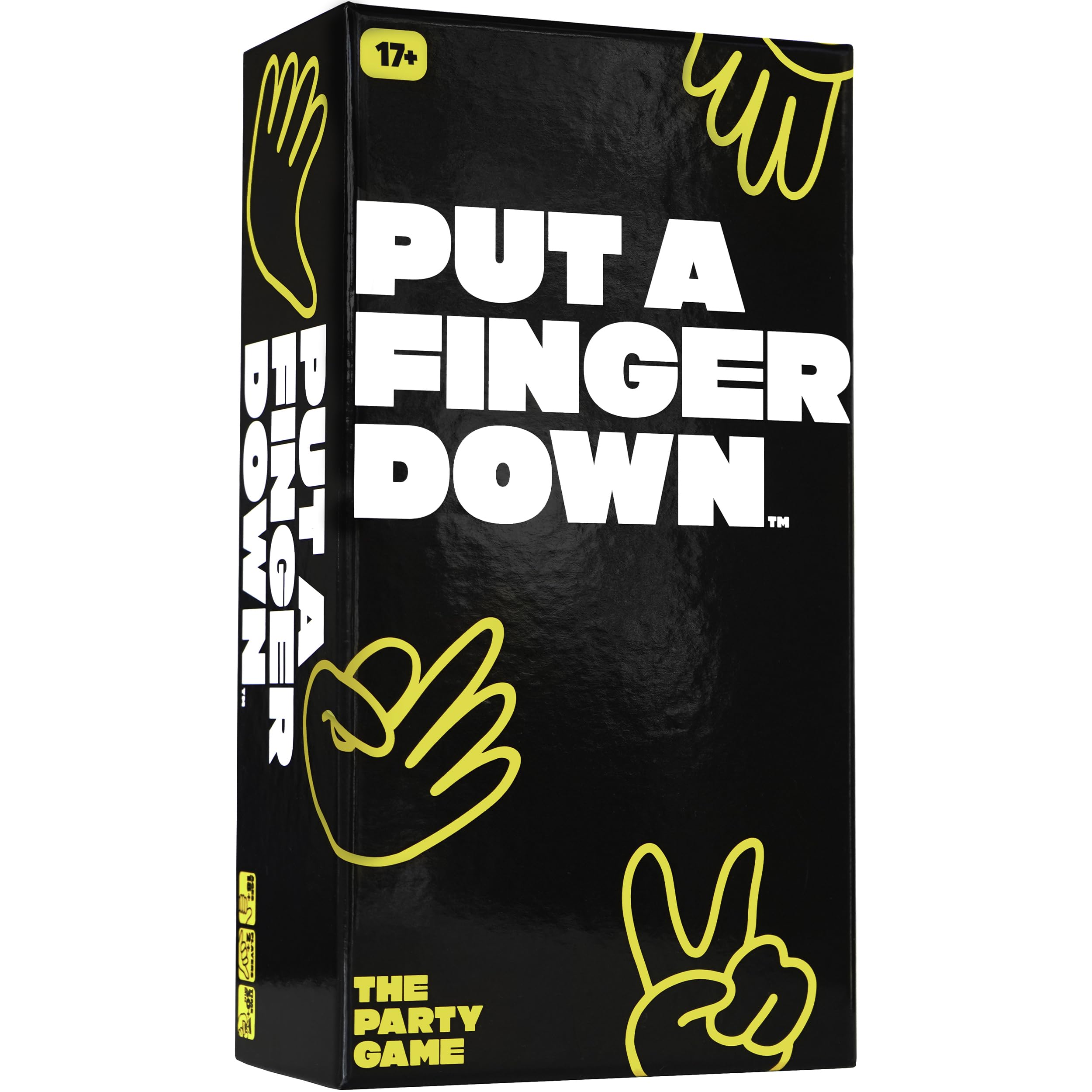
Put A Finger Down translates the viral social-media challenge into a tactile card game that works perfectly in a sleepover environment. Players hold up five fingers, read a card aloud, and put a finger down if the statement applies to them—it’s that simple. The deck contains 400 prompts, and the “Special Cards” add unexpected twists that force players to react quickly, keeping the energy high without anyone needing to memorize rules. The round time is roughly 10–20 minutes, which is ideal for a group that might lose focus after a longer game.
The flexible player count—listed as 2+ players—means no one gets left out. In practice, the game shines with groups of six to eight, where the shared reactions and finger-putting create a natural rhythm. The “Put a Finger Up / Down” mechanic makes it easy for a player to join mid-round without waiting for a new game to start, a huge practical advantage when someone returns from grabbing a drink. The prompts are skewed toward ages 17+ with a separate grown-up version, so it’s best suited for teen or adult sleepovers rather than younger kid groups.
Customer feedback consistently highlights the conversation-starting power of the questions—players report learning surprising details about friends they’ve known for years. The cards are designed to provoke storytelling, not just yes/no answers, which is the key to keeping a sleepover animated past the first hour. For groups that want a high-laugh, low-explanation game that runs on social energy, this is the strongest contender in the current market.
Why it’s great
- No setup or complex rules—can go from box to play in under 30 seconds
- Player count is essentially unlimited; works for pairs or full gatherings alike
- Special twist cards add unpredictable energy that keeps engagement high
Good to know
- Age-rated 17+, so not ideal for younger sleepover groups without adult discretion
- Some groups may finish the 400 cards quickly and want expansion packs
2. Exploding Kittens Original Edition

Exploding Kittens is a high-stakes draw-and-defuse card game where the objective is simple: don’t draw the exploding kitten card. Players use action cards to skip their turn, peek at the deck, shuffle, or defuse a kitten with laser pointers and catnip sandwiches. Rounds last roughly 15 minutes, making it one of the fastest filler games for a sleepover rotation. The art style from The Oatmeal keeps the tone absurd and funny, and the short rules fit on a single skimmable page.
The 2–5 player cap means it works best as a smaller-group game within a larger sleepover—perfect for a breakout session while others are snacking or watching a movie. The “last player standing” mechanic creates a natural tension point, and the game gets more intense as the deck shrinks. The 56-card box is highly portable, fitting into a backpack or tote without trouble. Reviewed consistently as easy to learn and quick to teach, it’s a reliable anchor for any sleepover game collection.
Cognitive development is listed as an educational objective on the spec sheet, with skills including strategic planning and social interaction. The only real limitation is the player cap—if you have six or more people, you’ll need to split into groups or rotate players between rounds. But for the moments when you need a high-energy, low-time commitment game that can reset quickly, Exploding Kittens has been the standard-bearer for years.
Why it’s great
- Extremely fast to learn; most groups are playing within two minutes of opening the box
- Short round time means you can play multiple games without losing the group’s attention
- Art and humor from The Oatmeal create a genuinely funny, memorable experience
Good to know
- Limited to 5 players, so larger sleepovers will need to take turns or split into groups
- Pure luck element may frustrate players who prefer skill-based strategy games
3. Girl Talk Truth or Dare Board Game

Hasbro revived the iconic 1980s Girl Talk board game with an updated edition that captures the same truth-or-dare energy for today’s tween and teen crowd. The large central spinner determines whether you answer a “Truth” card or complete a “Dare” card, with special spaces that allow you to tag a friend into the action. The box holds 200 cards, 10 score trackers, and a board that sets up in seconds. Designed for 2–10 players, it’s one of the most flexible setups for a sleepover where the group size might shift throughout the night.
The questions are tuned for ages 10 and up, hitting a sweet spot between silly and slightly edgy without crossing into inappropriate territory for middle-school groups. Reviews note that even players who are normally shy tend to open up when the spinner lands on a “Truth” card—the game structure provides a safe social framework for sharing secrets or taking playful risks. The portable case is a smart practical touch, making it easy to stash between games or bring to a friend’s house.
The two downsides are the scoring trackers (paper-based and easy to lose) and the fact that some cards may feel dated or repetitive after a few plays. But for a sleepover where the goal is to generate conversation and light dares rather than complex strategy, Girl Talk delivers exactly what it promises—loud, laughter-filled rounds that thrive on the group’s energy. It runs best with 4–6 players where turn wait time stays low and the dares stay visible.
Why it’s great
- Player count of 2–10 is ideal for sleepover groups with fluctuating numbers
- Truth and dare mix encourages both confession-style bonding and goofy physical dares
- Nostalgic design appeals to parents hosting the sleepover as well as kids playing it
Good to know
- Paper score trackers are fragile and may need to be tracked separately on a phone or pad
- Best suited for ages 10–14; older teens may find the content too tame
4. Skyjo

Skyjo flips the typical party-game script by rewarding players who score the fewest points, not the most. Each player starts with a hand of face-down cards arranged in a grid, and they take turns swapping cards from the draw and discard piles to lower their point total. The twist is that a column of cards with the same number can be discarded entirely, potentially wiping out high-point cards and creating dramatic momentum shifts. Rounds last roughly 30 minutes, and the game supports 2–8 players.
The age rating of 8+ means Skyjo can comfortably sit at a mixed-age sleepover table with younger siblings and older cousins playing together—and still be interesting enough for adults. The educational objective explicitly includes calculation (adding two-digit numbers up to 100) and concentration (tracking which cards other players are collecting). This subtle math layer makes it a stronger pick for families who want their game to have a light cognitive benefit without feeling like homework. Cards are thick and the box is compact, making it a durable travel companion.
The main trade-off is that Skyjo is less overtly “party” than a game like Put A Finger Down—it’s quieter, more strategic, and requires players to pay attention to their own grid rather than reacting to a central prompt. For sleepover groups looking for a calm cooldown game before bed, or for groups that include players who prefer thinking to shouting, Skyjo is an excellent counterbalance to the high-energy card games on this list.
Why it’s great
- Works well for mixed-age groups, from 8-year-olds to grandparents
- Negative-number scoring adds a clever strategic twist that rewards both risk and caution
- Round-based format allows flexible play time—stop anytime without ruining a narrative arc
Good to know
- Round time of ~30 minutes is longer than most sleepover card games
- Scoring involves addition that younger players may need help with
5. First to Worst Party Game

First to Worst flips the typical competitive party-game dynamic on its head. Instead of playing against each other, the group works cooperatively to guess how one player ranked a set of five topics from “best” to “worst.” The topics are deliberately polarizing—Pineapple on Pizza, Country Music, Cat Videos—so every round reveals something about the ranker’s personality. The game boxes 300 ranking cards, a score pad, and full rules in a compact 7.5 x 4.5-inch box, delivering hefty content for a budget-friendly entry point.
The cooperative scoring model is a real differentiator for sleepovers where competition can turn sour after a loss. Here, the team scores points against the game itself, not against each other, so the tone stays playful and conversational. Players report that the real fun comes during the discussion phase, when the ranker explains why they rated “Eating alone” above “Public speaking” or vice versa. The game lasts 30–45 minutes, which is on the longer side, but the round-based format allows groups to pause between topics without ruining the flow.
Age-rated 8+ with educational objectives that include social and critical thinking, First to Worst hits a broad demographic. It works equally well for a group of adults and a group of 10-year-olds because the topics are drawn from universal cultural touchpoints. The main limitation is that it’s best with at least 3 players; a 2-player round loses the “guess the ranker’s mind” tension that makes the full group setting sing.
Why it’s great
- Cooperative scoring removes the competitive pressure that can derail a sleepover
- 300 cards ensure high replayability—unlikely you’ll repeat topics in a single session
- Ranking discussions naturally generate stories and opinions, keeping conversation flowing
Good to know
- Round time of 30–45 minutes is longer than the average sleepover card game
- Best with 3+ players; a 2-player round loses the collaborative guessing tension
FAQ
How many players should a sleepover game support?
What round length works best for a sleepover?
Final Thoughts: The Verdict
For most sleepover groups, the best games for a sleepover winner is the Put A Finger Down because its instant setup, flexible player count, and conversation-driving prompts match the natural rhythm of a pajama party better than any competitor. If you want a fast, competitive card game that thrives on short rounds and absurd humor, grab the Exploding Kittens. And for a cooperative, low-pressure option that sparks deep conversations and works for mixed-age groups, nothing beats the First to Worst.