
Finding the right gear for a welder means cutting through a lot of smoke about what actually matters on the job. The difference between a tool that frustrates and one that performs often comes down to two things: how your hands feel after four hours of continuous welding and how clearly you can see the puddle without craning your neck. A poorly fitting glove kills dexterity, and a dim helmet turns every bead into a guessing game — both are avoidable with the right picks.
I’m Mohammad Maruf — the founder and writer behind Drink4Good. My research into welding accessories focuses on real-world durability metrics like leather grain type, seam construction, optical clarity ratings, and arc sensor count rather than marketing claims.
Below, I’ve broken down the essential specs and real user feedback that separate daily-driver gear from shop-drawer clutter. Whether you are shopping for a weekend fabricator or a full-time pipe welder, this guide to the best gifts for welders focuses on the protective and visual upgrades that actually improve the work.
How To Choose The Best Gifts For Welders
Welding gear falls into two core categories: what goes on your hands and what goes over your head. Gloves must balance burn protection with fingertip feel for wire feed control. Helmets must eliminate eye strain while offering a large enough viewing window to track the weld pool without repositioning. Prioritize leather type and stitch quality on gloves, then optical clarity and sensor count on helmets.
Glove Construction: Leather Grain and Stitching
The leather grain determines how fast the glove stiffens from heat exposure. Top-grain cowhide holds up well under MIG and stick welding, while buffalo leather offers a slightly softer break-in for TIG work. Kevlar stitching is non-negotiable — standard cotton thread burns through quickly when hot sparks land on the seams. A reinforced palm and index finger patch adds months of life for welders who brace their hands near the weld zone.
Helmet Optical Clarity and Viewing Area
Optical clarity is rated on a 1/1/1/1 scale — the lower the number, the clearer and more distortion-free the lens. A 1/1/1/1 rating means the lens delivers sharp, color-true vision without the wavy effect cheaper lenses produce. Viewing area matters almost as much: anything under 3.5 inches wide forces you to tilt your head to see the puddle. Larger screens (3.94 x 3.66 inches) let you keep your head still and your weld steady.
Auto-Darkening Sensor Count and Speed
Two arc sensors work fine for open-position welding where the arc is unobstructed. Four arc sensors reduce the chance of the lens flashing when you weld in tight corners or behind brackets where your body blocks one side of the helmet. Switching speed of 1/25,000 second is the standard for avoiding eye fatigue — anything slower risks a momentary flash that strains the eyes over an eight-hour shift.
Quick Comparison
On smaller screens, swipe sideways to see the full table.
| Model | Category | Best For | Key Spec | Amazon |
|---|---|---|---|---|
| ARCCAPTAIN With LED Light | Helmet | Low-light shop welding | 3.94 x 3.66 in viewing | Amazon |
| ARCCAPTAIN 4-Sensor | Helmet | All-day professional use | 1/1/1/1 optical clarity | Amazon |
| SONNLER Large View | Helmet | Budget-conscious beginners | 3.94 x 3.66 in viewing | Amazon |
| YESWELDER Auto Darkening | Helmet | Entry-level MIG/TIG | 1/30,000 sec switching | Amazon |
| DEWALT MIG/TIG | Gloves | Dexterity-focused MIG | Grade-A buffalo leather | Amazon |
| Revco GM1611 | Gloves | Heavy MIG and stick | Kevlar stitched seams | Amazon |
| Caiman 1828 | Gloves | All-around shop work | Kevlar-seamed palm | Amazon |
In‑Depth Reviews
1. ARCCAPTAIN Large View Welding Helmet with LED Light
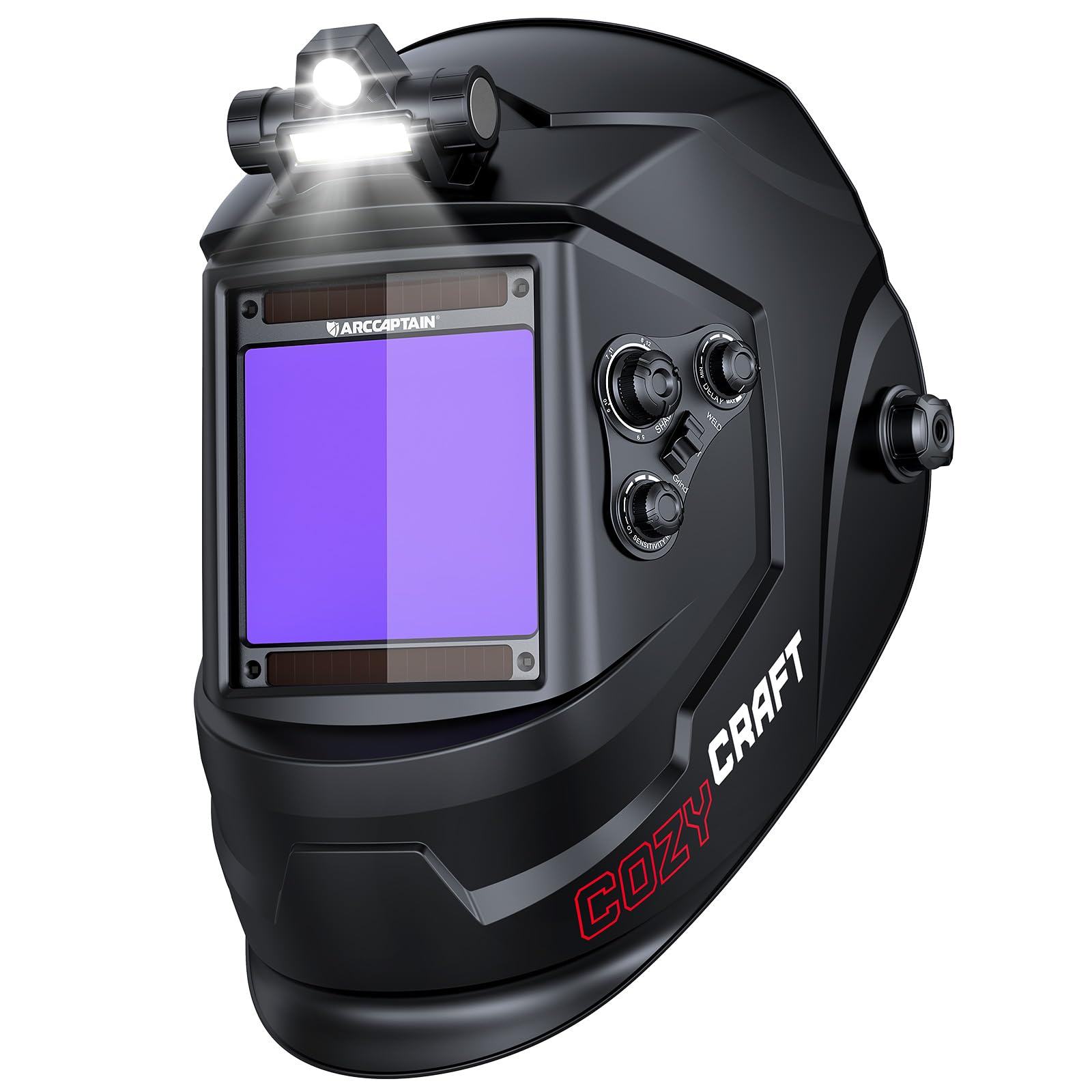
This ARCCAPTAIN model stands out in the premium tier because it pairs a 3.94 x 3.66-inch viewing window with a dedicated USB-powered LED light mounted on top. The two brightness levels let you see the weld joint clearly in dim booths or under-deck repairs without relying on a second work light. The 1/1/1/1 true color lens keeps the puddle visible and the arc glow natural, reducing the head-tilting that causes neck fatigue over long shifts.
Four arc sensors trigger darkening in 1/25,000 second, and the wide shade range (DIN 4/5-9/9-13) covers stick, MIG, TIG, and cutting. The shell is made from flexible PP material and weighs just over a pound, which helps during overhead welding. The adjustable headgear uses a two-strap suspension that prevents the helmet from bashing your nose when you look down — a common annoyance with cheaper suspension designs.
Users with 25+ years of welding experience have noted that the clarity surpasses older flagship helmets costing several times more. The LED light requires a microUSB cable and is not waterproof, so it is not ideal for wet-site structural work. The headband tension knob may loosen over time with daily professional use, but for intermediate and hobbyist welders the value is undeniable.
Why it’s great
- Integrated LED light with two brightness levels for dark work areas
- Top-tier 1/1/1/1 optical clarity reduces eye strain significantly
- Four arc sensors prevent flash in obstructed welding positions
Good to know
- LED light is battery-powered via microUSB, not rechargeable in-helmet
- Lightweight shell may feel less impact-resistant than fiberglass models
2. ARCCAPTAIN 3.94″ x 3.66″ Auto Darkening Welding Helmet
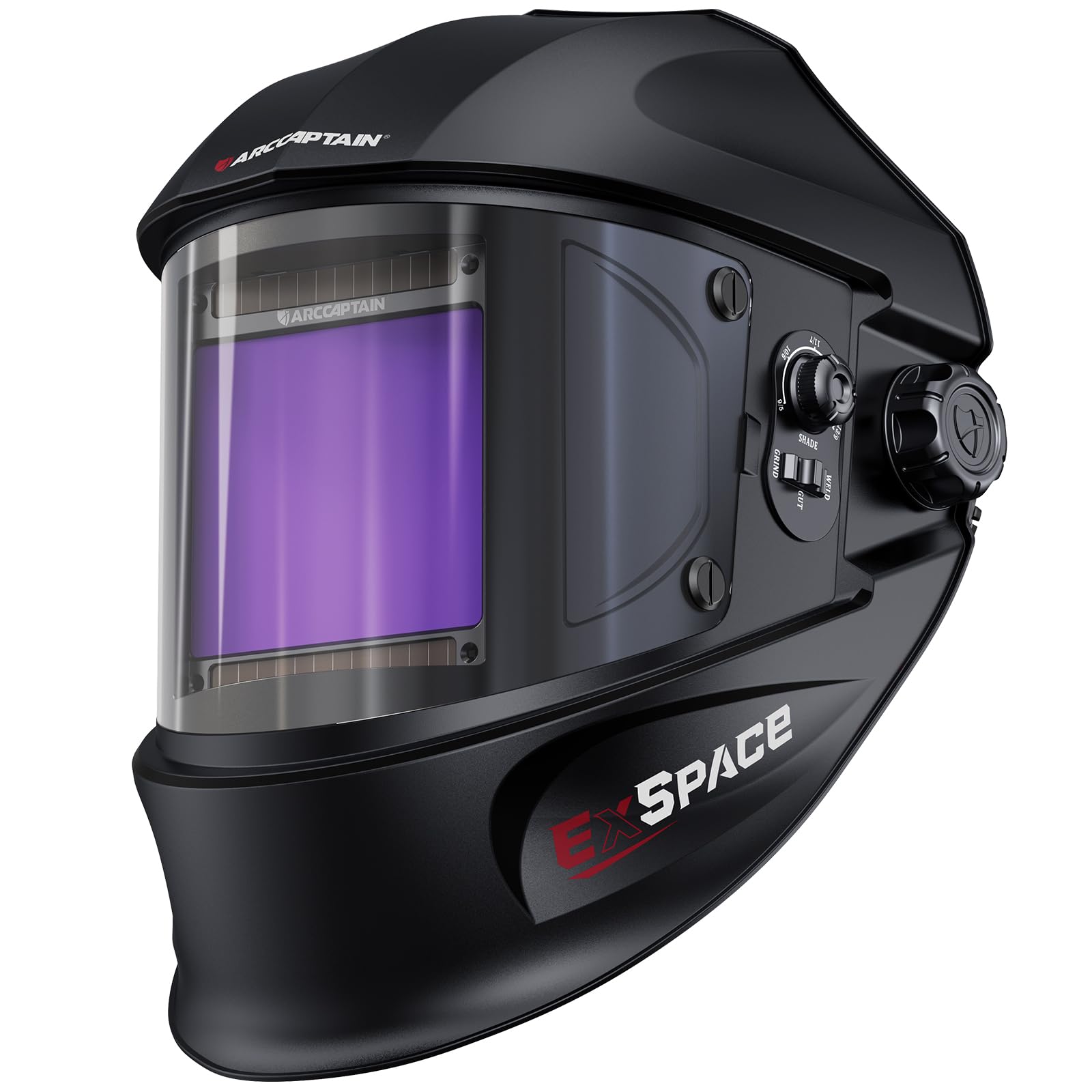
This ARCCAPTAIN version drops the LED light but keeps the same massive 3.94 x 3.66-inch viewing area and the 1/1/1/1 optical clarity that makes tracking the puddle effortless. It runs on dual solar panels and two CR2450 lithium batteries, which users report lasting for years under regular weekend use. The four arc sensors cover 360-degree detection, so even if you block one sensor with your shoulder during a tight corner weld, the remaining three keep the lens from flashing.
The external adjustment knobs for shade and sensitivity are large enough to turn with welding gloves on, a small detail that saves time when switching from TIG to stick. The dark-state shade range (DIN 5-9/9-13) gives you enough range for aluminum TIG at the low end and heavy stick gouging at the high end. The grind mode switches the lens to a fixed clear state, so you can use the same helmet for pre-weld prep without lifting it.
Experienced welders have compared the lens clarity favorably to units costing several times more. The headgear design uses a ratcheting system that holds position well, though one user reported the adjustment knob slipping after extended use. The shell is made from eco-friendly PP with a tensile strength rated at 120 MPa, making it more flexible than rigid fiberglass — a trade-off that favors comfort over absolute impact rigidity.
Why it’s great
- Four arc sensors eliminate shadow-induced flashing in confined spaces
- Dual solar panel design plus replaceable batteries extend service life significantly
- External adjustment knobs work well with heavy welding gloves
Good to know
- PP shell is more flexible than fiberglass, may dent under heavy impact
- Headband tension can loosen with very heavy daily professional use
3. SONNLER Large Viewing Welding Helmet
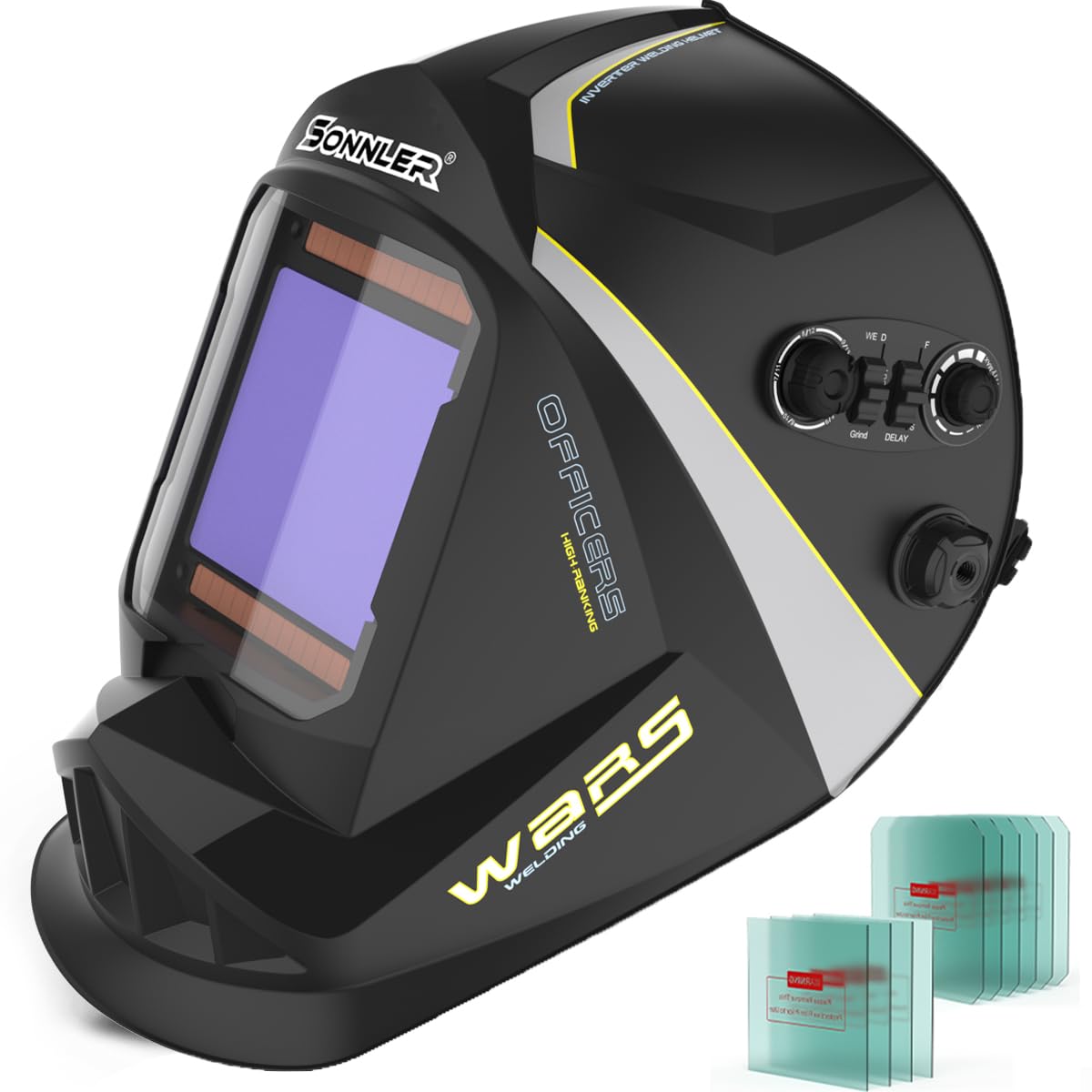
The SONNLER helmet delivers a 3.94 x 3.66-inch viewing window and 1/1/1/1 true color clarity at an entry-level price point that usually only buys smaller screens. The four arc sensors switch the lens from light to dark in 1/25,000 second, which matches the refresh speed of helmets costing two to three times as much. It ships with a storage bag, six replacement outer shields, four inner shields, and two button batteries — a kit that covers accidental lens scratches for months.
Users report that the lens clarity is noticeably more natural than the YESWELDER LYG-L600A, with less color distortion around the edges of the viewing area. The headgear uses a padded sweatband and a ratcheting adjustment, though some welders with larger head circumferences found it slightly tight on the sides. The sensitivity and delay knobs are mounted externally and have enough texture to operate with gloves on.
The main durability concern is the headband itself — several users noted that after a few months of regular use the plastic ratchet mechanism started slipping when the helmet was flipped up. For infrequent home-shop work or as a backup helmet, this is a non-issue. The replaceable battery is a genuine advantage over sealed-unit designs, since you can swap a dead cell instead of buying a whole new lens cartridge.
Why it’s great
- Large viewing area (3.94 x 3.66 in) at a very accessible price point
- Replaceable battery extends the service life of the auto-darkening lens
- Includes 10 replacement shields and a storage bag for field use
Good to know
- Headband ratchet can loosen after several months of frequent use
- Side pressure may feel snug for welders with larger head shapes
4. YESWELDER Auto Darkening Welding Helmet
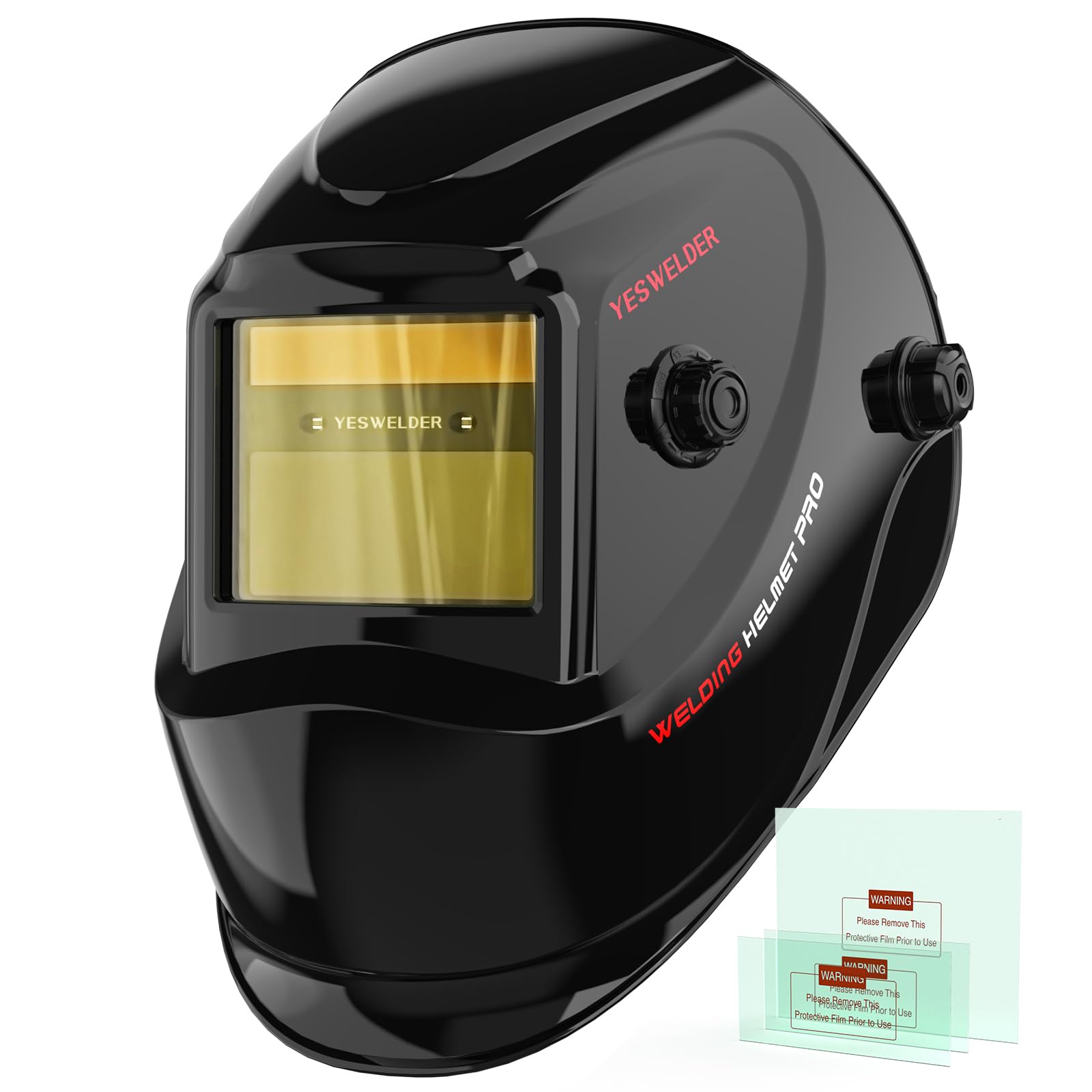
The YESWELDER LYG-L600A is the most established entry-level auto-darkening helmet on the market, with tens of thousands of verified buyers and a steady stream of five-star feedback. It uses two arc sensors and switches in 1/30,000 second — slightly faster than the 1/25,000 second standard, though the difference is negligible to most users. The viewing window is 3.64 x 1.67 inches, which is smaller than the ARCCAPTAIN and SONNLER options but still larger than basic fixed-shade hoods.
A unique feature at this price is the blue light blocking outer lens, which filters out high-energy visible blue light while passing less harmful wavelengths. This reduces the eye fatigue that beginners often feel during their first few welding sessions. The helmet is powered by a solar panel with a CR2450 backup battery, and users report that the battery lasts over a year with regular weekend use.
The pivot-style headgear is comfortable for most head shapes and includes enough clearance for a half-mask respirator underneath, which is rare in this price band. The shade control knob is located on the outside of the helmet, but the sensitivity and delay adjustments require removing the helmet to access internal controls. Some users reported the backup battery arrived installed backward, causing the auto-darkening to fail until the battery was flipped — a quick fix, but worth checking on arrival.
Why it’s great
- Blue light blocking outer lens reduces eye strain for less experienced welders
- Fast 1/30,000 second switching speed with two reliable arc sensors
- Ample interior space allows comfortable use with a respirator underneath
Good to know
- Internal sensitivity and delay knobs require removing the helmet to adjust
- Backup battery orientation should be verified immediately upon arrival
5. DEWALT Premium MIG/TIG Welding Gloves

DEWALT uses grade-A buffalo leather for the palm on these gloves, which breaks in softer than top-grain cowhide while maintaining similar abrasion resistance. The result is a glove that feels pre-broken from the first wear, giving the welder full finger articulation for wire feed control without the stiff palm common in thick stick-welding gloves. The entire glove is stitched with Kevlar thread, which withstands direct contact with hot sparks better than cotton or polyester thread.
The open gauntlet cuff extends far enough up the wrist to overlap with fire-resistant sleeves, and it uses an elastic closure that keeps the glove snug without restricting blood flow. Fire-resistant cotton padding across the knuckles and fingers adds impact protection for welders who brace against metal fixtures. The buffalo leather is thin enough to feel the filler rod through while still blocking radiant heat from MIG puddle work at moderate amperages — typically up to around 200 amps.
Hobbyist welders report these gloves lasting about six months of weekend MIG use before holes appear at the index finger crease. Professional fabricators have noted that the Kevlar stitching holds up, but the buffalo leather itself will eventually burn through under heavy daily stick welding at high amperage. For TIG and light MIG work, the dexterity-to-protection ratio is the best in this list.
Why it’s great
- Grade-A buffalo leather palm breaks in soft without sacrificing abrasion resistance
- Kevlar stitching throughout prevents seam failure from spark contact
- Elastic cuff closure stays secure and fits under welding jacket sleeves
Good to know
- Buffalo leather may burn through faster than cowhide under continuous high-amp stick welding
- Knuckle padding adds some bulk for jobs requiring very fine fingertip feel
6. Revco GM1611 Top Grain Cowhide MIG Welding Gloves
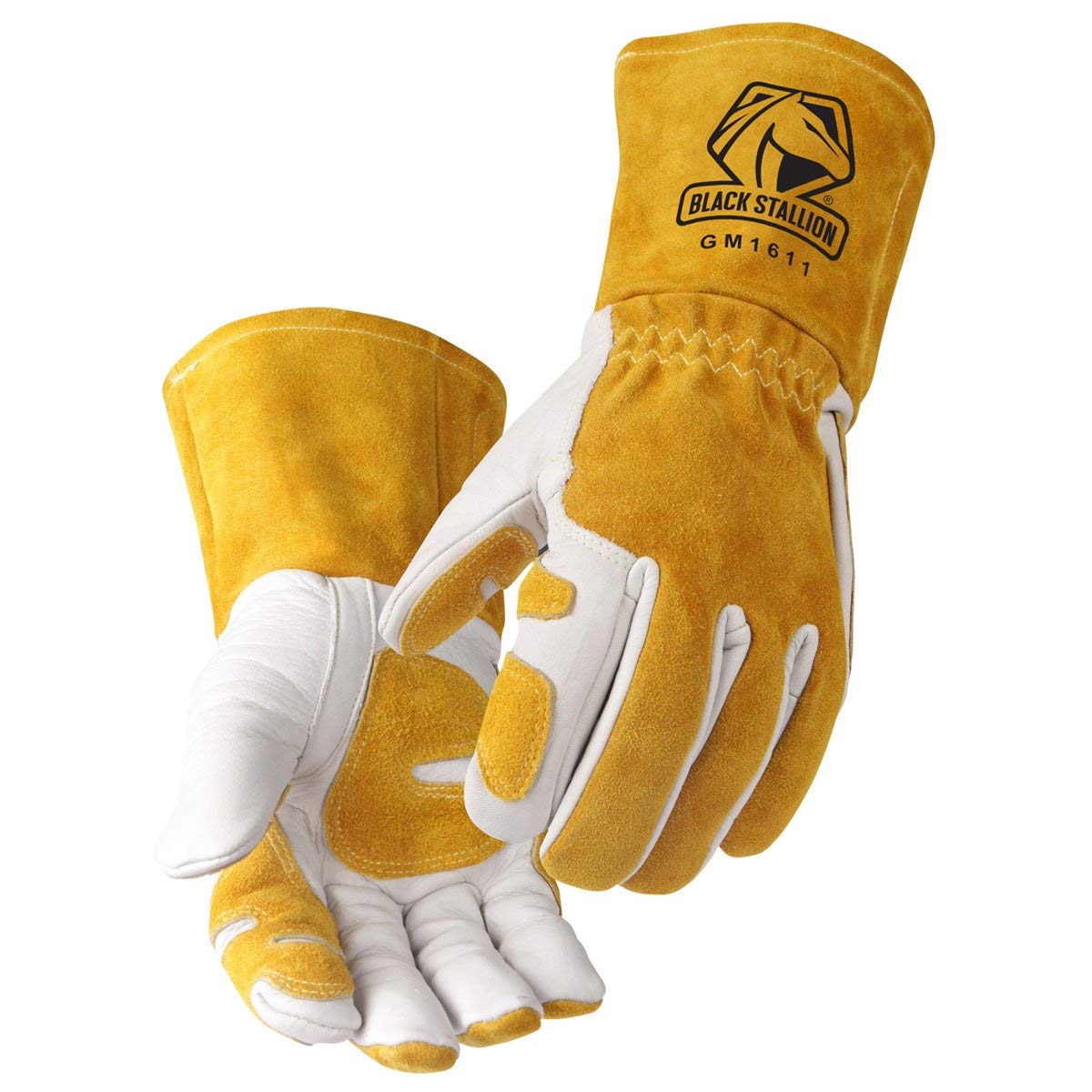
The Revco GM1611 uses a top-grain cowhide leather palm with a split cowhide leather back, creating a glove that is heavier and more heat-resistant than the DEWALT buffalo leather option. Reinforcement patches are stitched into the palm, thumb saddle, and index finger — the three high-wear zones that fail first on standard gloves. A drag patch on the side and a rest patch on the wrist add padding for welders who brace their hands directly on hot metal.
The seamless index finger construction eliminates the internal seam that often rubs the finger raw during repetitive torch manipulation. A soft cotton lining wicks moisture and keeps the hands from sweating inside the glove, which is a real issue during summer shop work. The five-inch cuff provides extra forearm coverage compared to shorter gloves, and the Kevlar stitching throughout resists the heat that causes cotton thread to fail at the seams first.
Users who work daily with MIG and stick report these gloves lasting several months longer than the DEWALT option when used at higher amperages. The trade-off is reduced fingertip sensitivity — the cowhide is thicker and takes longer to break in than buffalo leather. Some welders with square-shaped hands found the opening slightly tight, but the general feedback points to a glove that outlasts most alternatives in the same mid-range price bracket.
Why it’s great
- Reinforced palm, thumb, and index finger patches extend service life significantly
- Kevlar stitched throughout for superior heat and spark resistance
- Seamless index finger construction prevents internal friction points
Good to know
- Top-grain cowhide is stiffer than buffalo leather and requires longer break-in
- The combination of thickness and patches reduces tactile feedback for precision TIG work
7. Caiman Kevlar-Seamed Multi-Task Welding Gloves 1828

The Caiman 1828 uses a Kontour cut that shapes the glove closer to the natural curve of the hand, reducing the bulk that makes cheap gloves feel like oven mitts. The Kevlar-seamed construction uses fire-resistant thread at every stress point, and the goatskin leather palm offers a balance of flexibility and moderate heat resistance that works for MIG, stick, and general shop handling. These are not the most heat-resistant gloves on the list, but they are the most versatile for welders who also do grinding, fitting, and material handling without swapping gloves constantly.
The thumb length is proportioned correctly — a common complaint with generic gloves is an excessively long thumb that bunches at the tip, which Caiman avoids here. Fitment runs slightly snug for users with wider hands, but the leather stretches noticeably after a few sessions. The closure strap is positioned on the bottom of the cuff rather than the top, which some users prefer for wrist mobility and others find prone to snagging on sharp edges.
Users consistently report that these gloves last longer than expected at this price, with the Kevlar stitching holding strong even after the leather surface shows wear. The primary limitation is heat resistance: the goatskin palm is not suitable for extended contact with hot workpieces or high-amp stick welding. For a fabricator who needs one glove that does welding, grinding, and lifting without making the hands sweat, the Caiman 1828 delivers durable, well-fitting function.
Why it’s great
- Kontour cut provides a natural hand shape fit that reduces fatigue
- Kevlar stitching throughout the seams prevents spark-driven thread failure
- Goatskin palm offers better dexterity than cowhide for multi-task shop work
Good to know
- Goatskin palm provides less heat insulation than cowhide for high-amp stick welding
- Bottom-positioned closure strap may snag on sharp metal edges during material handling
FAQ
Can I replace the battery on an auto-darkening welding helmet?
What shade number should I use for MIG welding?
Final Thoughts: The Verdict
For most users, the best gifts for welders winner is the ARCCAPTAIN with LED Light because it combines a 1/1/1/1 rated viewing area with a built-in work light and four arc sensors at a price that undercuts comparable feature sets. If you want maximum glove dexterity for MIG and TIG, grab the DEWALT Premium MIG/TIG for its soft buffalo leather palm. And for heavy-duty stick welding where seam durability matters most, nothing beats the Revco GM1611 with its reinforced patches and Kevlar stitching.