
A hurricane strips the grid and leaves you guessing how long the fridge stays cold, whether the sump pump will keep the basement dry, and if the medical device will make it through the night. The difference between a minor inconvenience and a full-blown crisis often comes down to the portable power solution you chose before the cone of uncertainty even appeared.
I’m Mohammad Maruf — the founder and writer behind Drink4Good. I spend my time analyzing hardware specifications and real-world performance data for home backup solutions, comparing inverter THD figures, dual-fuel capabilities, runtime curves, and battery chemistry cycles so you don’t have to.
Whether you need a lightweight inverter for a few essentials or a whole-home tri-fuel beast, this guide breaks down the top options to help you choose the right generators for hurricane season based on your actual power needs, fuel preferences, and budget.
How To Choose The Best Generators For Hurricane Season
Hurricane season throws a unique mix of challenges at your backup plan: days-long blackouts, fuel shortages, potential flooding, and the need to power both sensitive electronics and heavy appliances. The right generator strategy balances fuel availability, runtime, noise, and total output. Below are the critical factors to weigh before buying.
Running Watts vs. Starting Watts: Why Both Matter
Every motor-driven appliance — refrigerator compressor, well pump, window AC — pulls a surge of power for a split second when it kicks on (starting watts) before settling into its steady draw (running watts). If your generator cannot deliver the starting surge, the appliance will fail to start or trip the overload. Always size your generator so the combined starting watts of everything you plan to run simultaneously falls comfortably below the generator’s peak rating.
Fuel Source: Gas, Propane, Natural Gas, or Battery
Gasoline is energy-dense and widely available, but it degrades over time and can be hard to find after a hurricane. Propane stores indefinitely and burns cleaner, but it delivers slightly lower wattage. Natural gas offers unlimited runtime if the gas lines stay intact, but the generator must be near a connection point. Battery/solar power stations produce zero fumes and run silently indoors, but their stored capacity is finite and recharging depends on grid power or sunlight. Dual-fuel and tri-fuel generators give you more options during a fuel crisis.
Inverter vs. Conventional: Which Is Safer for Your Electronics
Inverter generators produce cleaner electricity (Total Harmonic Distortion under 3 percent), making them safe for laptops, phones, TVs, and modern refrigerator control boards. Conventional open-frame generators produce THD of 6 to 12 percent, which can damage sensitive electronics over time. If you plan to power any computer, smart appliance, or medical device, an inverter generator is the safer choice.
Quick Comparison
On smaller screens, swipe sideways to see the full table.
| Model | Category | Best For | Key Spec | Amazon |
|---|---|---|---|---|
| AIVOLT 4300W Inverter | Inverter Gas | Camping & small home essentials | 3450W running / 4300W surge | Amazon |
| Champion 4000W Inverter | Inverter Gas | Lightweight RV backup | 48.1 lbs / 64 dBA | Amazon |
| WEN DF360iX | Dual-Fuel Inverter | Dual-fuel flexibility | 3600W surge gas / 3500W surge propane | Amazon |
| WEN DF480iX | Dual-Fuel Inverter | Electric start & wheel kit | 4800W surge gas / 4320W surge propane | Amazon |
| Westinghouse iGen4000cv | Inverter Gas | Remote start convenience | 3300W running / 52 dBA | Amazon |
| Anker SOLIX C2000 Gen 2 | Battery/Solar | Silent indoor backup | 2048Wh / 2400W continuous | Amazon |
| Jackery Explorer 2000 v2 | Battery/Solar | Lightweight 2kWh power station | 2042Wh / 39.5 lbs | Amazon |
| Westinghouse 12500W Dual Fuel | Open Frame Dual-Fuel | Whole-home heavy loads | 9500W running gas / 8500W propane | Amazon |
| DuroMax XP13000HXT | Open Frame Tri-Fuel | Whole-home tri-fuel flexibility | 13000W surge / 500cc engine | Amazon |
| EcoFlow DELTA Pro | Battery/Solar | Expandable high-capacity backup | 3600Wh / 3600W output | Amazon |
| Jackery HomePower 3000 | Battery/Solar | High-capacity with solar panels | 3072Wh / 7200W surge | Amazon |
In‑Depth Reviews
1. Westinghouse 4000W iGen4000cv

The Westinghouse iGen4000cv strikes a rare balance: enough power (3300 running watts, 4000 peak) to run a 15,000 BTU RV AC plus a fridge and lights, yet quiet enough — rated as low as 52 dBA in economy mode — that you can hold a conversation next to it. The remote start key fob is a genuine luxury when you need to fire it up from the covered porch without walking into the rain. The telescoping handle and wheels make it easy to roll out of storage despite its 61-pound weight.
Users report the 1.69-gallon tank yields roughly six to seven hours at full load, extending further with the economy mode engaged. The LED data center clearly displays fuel level, remaining runtime, voltage output, and power draw, helping you gauge when to refuel. The integrated CO shutdown sensor and low-oil automatic shutoff add critical safety layers for hurricane scenarios where you may run the unit for hours unattended. The duplex household outlet plus the TT-30R RV outlet cover most essentials, though you won’t find a 240V outlet on this model.
A small portion of customers noted the battery can arrive drained, requiring an overnight charge before first use. The overall build quality feels solid for a mid-range inverter generator, and the three-year warranty with lifetime support backs the investment. For most households looking for a portable yet powerful backup during hurricane season, this model offers the best package of convenience, noise control, and reliability.
Why it’s great
- Remote start key fob adds unbeatable convenience during wet or dark conditions
- Extremely quiet for its class at 52 dBA in economy mode
- LED display with fuel gauge, runtime, and power output makes load management easy
Good to know
- Only a 1.69-gallon tank; runtime is limited compared to larger dual-fuel models
- Battery may arrive with low charge; plan for an overnight top-up before a storm
- No 240V or L14-30R outlet for transfer switch connection
2. AIVOLT 4300W Inverter Generator
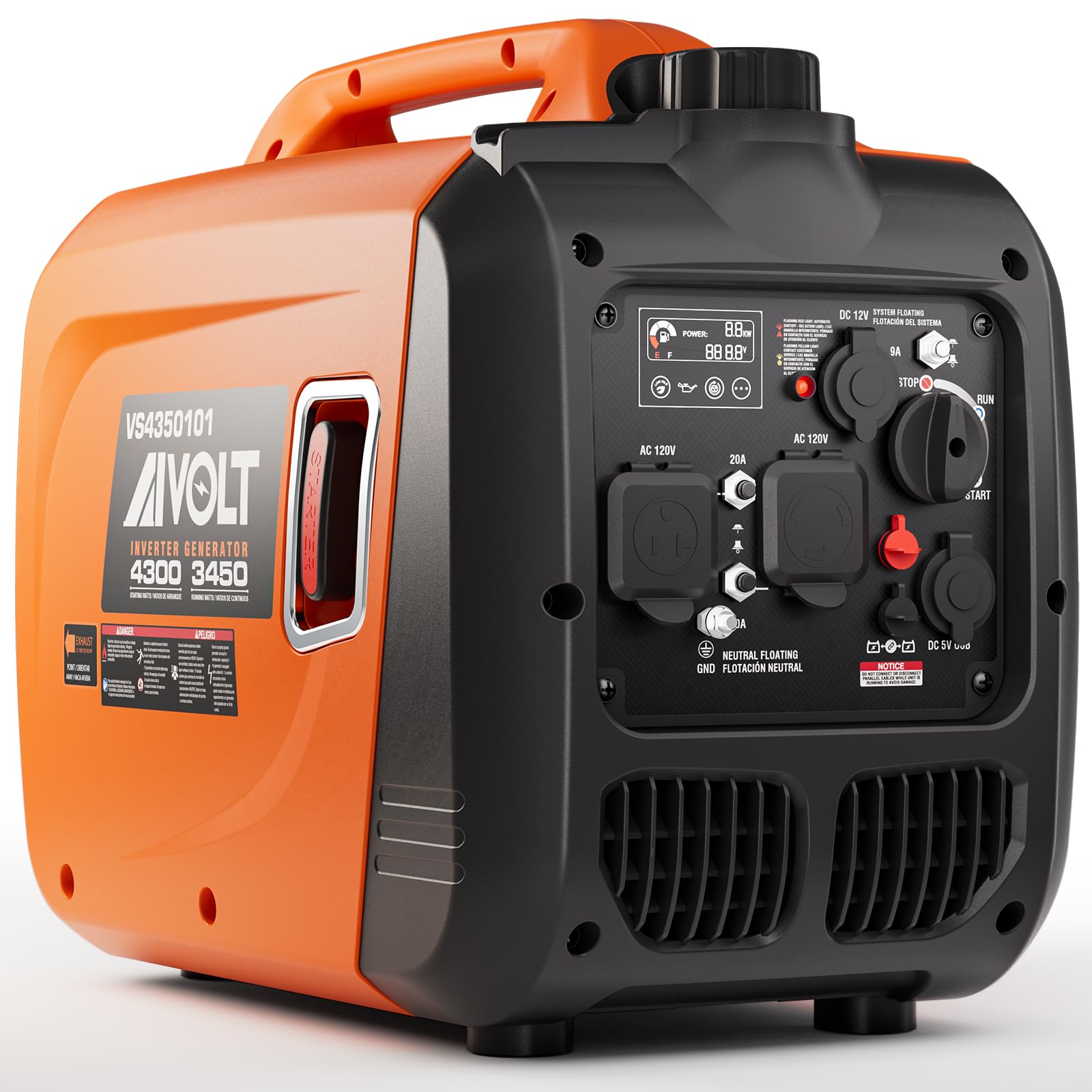
The AIVOLT 4300W inverter generator packs 3450 running watts into a remarkably lightweight 51-pound frame — about 20 percent lighter than typical competitors. The 149cc copper-wound engine delivers clean power with less than 3 percent THD, safe for phones, laptops, and game consoles even during long outages. The 60 dBA noise rating at 23 feet (no load) puts it in normal-conversation territory, making it neighbor-friendly during overnight hurricane recovery.
The control panel offers a 120V 20A GFCI outlet, a 120V 30A locking outlet, a 12V DC outlet, plus USB-A and USB-C ports for direct device charging. The 5-in-1 LCD shows oil, fuel, and overload warnings in real time. The CO Alert technology automatically shuts the generator down if carbon monoxide reaches unsafe levels, which is essential for hurricane setups where the unit may be placed closer to living spaces than ideal. The parallel kit (sold separately) allows doubling power by linking two AIVOLT units.
Some users noted that at full load the noise climbs closer to 72-73 dBA measured at five feet, which is louder than the no-load spec suggests. Customer support issues have been reported, particularly with delayed part replacements. The unit requires 89 octane fuel for optimal quiet operation, and engine oil is not included. For those prioritizing low weight and portability for RV or camp use during evacuations, this generator delivers strong value.
Why it’s great
- Second-lightest 4000-watt-class inverter at 51 pounds, easy to lift and move
- Clean under-3% THD power safe for sensitive electronics and medical devices
- CO Alert automatic shutdown adds critical safety during hurricane use
Good to know
- Noise climbs to 72-73 dBA under load, louder than no-load spec suggests
- Customer service response can be slow for parts and warranty claims
- Engine oil not included; must purchase separately before first startup
3. WEN DF360iX

The WEN DF360iX brings dual-fuel flexibility — gasoline (3600 surge, 2900 rated) or propane (3500 surge, 2600 rated) — into an inverter package that weighs just 49 pounds. The ability to switch to propane is a strategic advantage during hurricane season when gasoline supplies dry up and stations lose power. Propane stores indefinitely, so you can keep tanks on hand year-round without worrying about fuel stabilizer.
The CO Watchdog sensor automatically shuts the generator down if carbon monoxide accumulates, and the fuel shut-off feature lets you empty the carburetor before storage, reducing gumming and maintenance. The control panel includes two 5-20R 120V household outlets, one TT-30R RV outlet, one 12V DC outlet, and two 5V USB ports. The tool-free LPG quick-connector makes switching between fuel sources fast. Users consistently praise the quiet low-frequency sound profile and first-pull starts on both gas and propane.
A frequent criticism is that both 20A household outlets hold plugs loosely, which can be annoying in a power-loss situation where every connection must stay secure. The unit’s 3600-watt surge rating means it will handle a fridge, lights, a fan, and a small window AC, but not a well pump or large central AC. The three-year warranty adds peace of mind. For a budget-conscious buyer who wants fuel flexibility without sacrificing inverter clean power, this is a strong candidate.
Why it’s great
- Dual-fuel (gas/propane) ensures backup fuel option when gas is scarce
- Very lightweight at 49 pounds for a dual-fuel inverter with this power range
- Fuel shut-off and CO Watchdog enhance long-term reliability and safety
Good to know
- Both 20A household outlets hold plugs loosely, potential for accidental disconnection
- Not powerful enough for a well pump or central air conditioner
- Propane wattage (2600 running) is noticeably lower than gas (2900 running)
4. WEN DF480iX
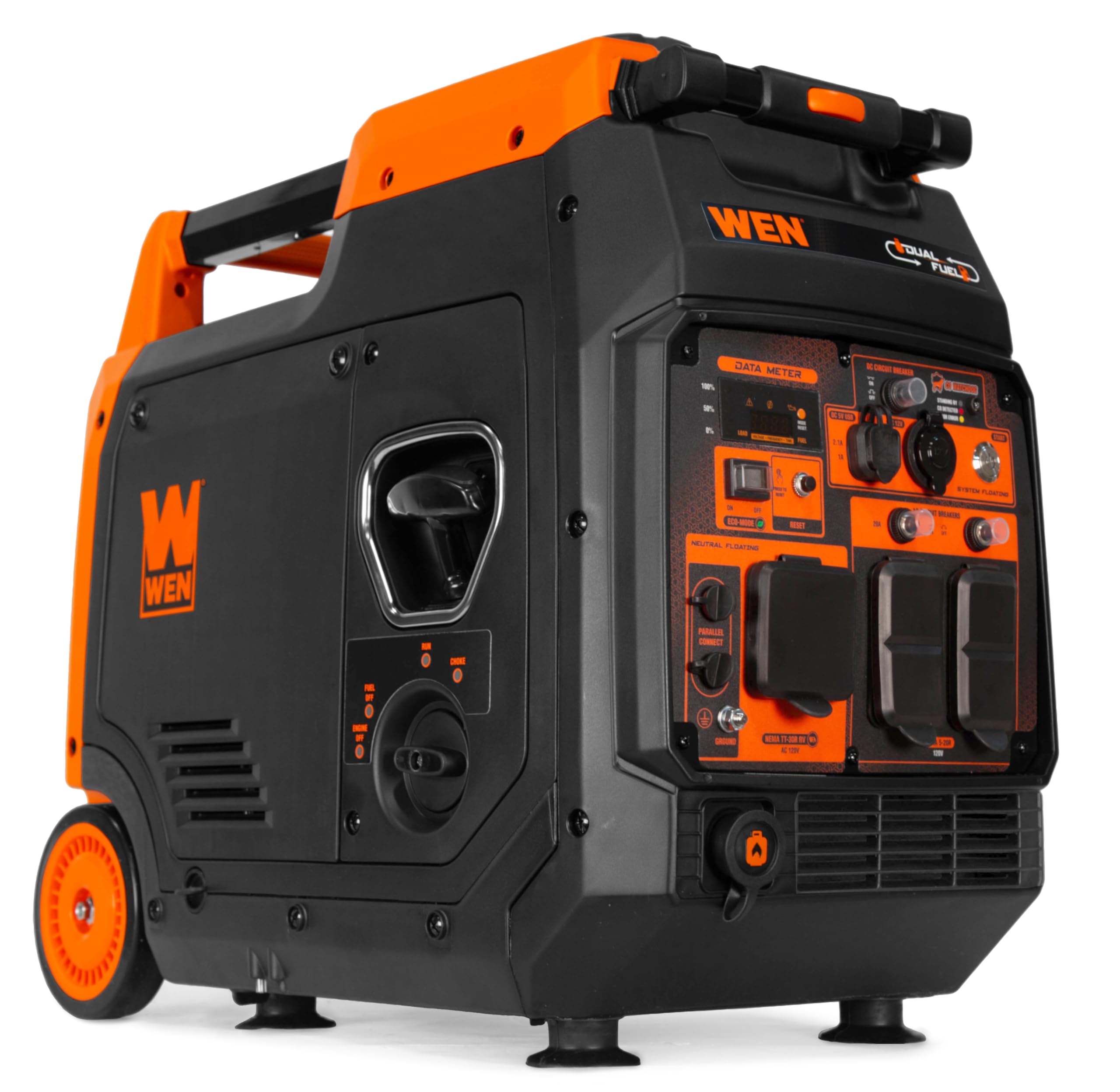
The WEN DF480iX takes the dual-fuel formula and scales it to 4800 surge watts (gas) and 4320 surge watts (propane), with a 224cc engine delivering 4000 rated watts on either fuel. That extra headroom compared to the DF360iX means you can run a larger window AC, a sump pump, and multiple fridge-freezers simultaneously without hitting the overload. The electric start — coupled with a key and push-button — eliminates the pull-start struggle that can be difficult for some users during stressful storm setups.
This model includes onboard wheels and a telescoping pull handle, making it far easier to move than the 78.5-pound weight suggests. The control panel is generous: four three-prong 120V receptacles, one TT-30R RV receptacle, one 12V DC outlet, and two USB ports. The WEN Watchdog CO sensor auto-shuts the unit if carbon monoxide reaches dangerous levels. Users report that a 20-pound propane tank can run this generator for roughly eight hours at around 1000-watt load, making it practical for overnight essential power.
The magnetic dipstick is a nice touch for catching metallic shavings during break-in, though some owners noted the dipstick threads can feel loose, causing minor oil drips. The wheels themselves can rattle during operation, adding noise that isn’t present on rubber-wheeled competitors. The three-year warranty covers parts and labor, and WEN’s customer support is generally rated as responsive. For hurricane preppers who want electric start, dual-fuel flexibility, and enough power for most household essentials, this is a premium mid-range choice.
Why it’s great
- Electric start with push-button makes storm activation simple and reliable
- 4000 running watts on both gas and propane provides consistent performance
- Telescoping handle and wheels allow one-person mobility despite 78.5 lbs
Good to know
- Wheel rattle during operation adds audible noise compared to competitors
- Magnetic dipstick threads can feel loose, with minor oil drips reported
- Battery connector placement is tight, making panel reattachment fiddly
5. Champion Power Equipment 4000W Inverter

At 48.1 pounds, the Champion 4000-watt inverter generator is one of the lightest in its class — a meaningful advantage when you need to grab the generator and head for higher ground during a mandatory evacuation order. It delivers 3000 running watts and 4000 starting watts, with clean electricity under 3 percent THD. The 64 dBA noise rating at 23 feet means it’s quiet enough for campgrounds and respectful for neighborhoods during prolonged blackouts.
The control panel offers a TT-30R RV outlet, a 120V 20A duplex household outlet, a 12V automotive-style outlet, and parallel outlets so you can connect a second Champion 4000-watt unit to double power. The CO Shield carbon monoxide auto-shutdown system provides essential safety for hurricane use. The recoil start is straightforward — most users report first or second pull success — and the three-year warranty with free lifetime technical support from Champion’s dedicated experts is one of the best in the industry.
With a 5-gallon tank, users running a 15,000 BTU RV AC continuously report about 24 hours of runtime before refueling. The generator handles the AC plus lights and fridge without issue, though adding a microwave to that load may trigger the overload reset. Some customers disabled the CO sensor for their specific setup, though this voids the safety feature. The parallel kit is sold separately. For hurricane season, this is a strong lightweight option for RV owners and those who want minimal weight without sacrificing inverter reliability.
Why it’s great
- Incredibly light at 48.1 pounds for a 4000-watt-class inverter generator
- CO Shield auto-shutdown and 3-year warranty with lifetime support are class-leading
- Quiet 64 dBA noise level is neighbor-friendly for extended outages
Good to know
- No electric start; recoil only, which may be difficult for some users
- 3000 running watts may not handle a microwave plus AC simultaneously
- Parallel kit sold separately if you want to combine two units
6. Anker SOLIX C2000 Gen 2
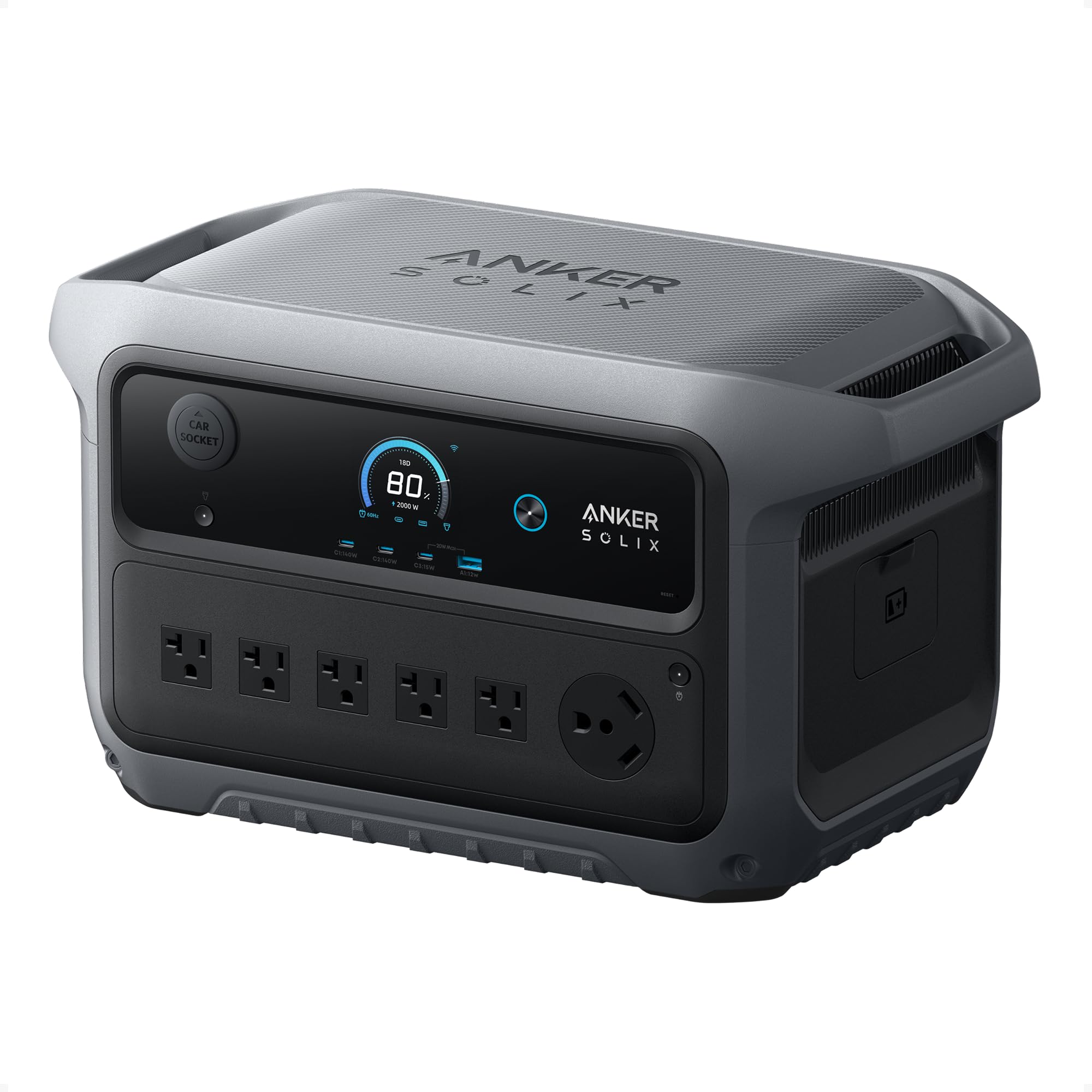
The Anker SOLIX C2000 Gen 2 redefines what a portable power station can do in a hurricane scenario. With a 2048Wh LiFePO4 battery delivering 2400W continuous (4000W peak), it runs a dual-door fridge for up to 32 hours, and adding an expansion battery pushes total capacity to 4kWh for up to 64 hours. The 58-minute full recharge via AC is extraordinary — you can top up between outages or during the brief moments when grid power flickers on.
At 41.7 pounds and roughly the size of a small suitcase, it’s 25 percent lighter and 29 percent smaller than comparable 2kWh stations. The six-way recharging includes AC, solar (up to 800W), car alternator, and even EV station charging. The 9W standby draw means the battery doesn’t drain itself while waiting for the next outage. Users consistently note the solid build, clear display, and ability to power multiple appliances including window AC units and power tools without any voltage sag.
This is a zero-emissions, silent machine — you can run it inside your home without worrying about carbon monoxide poisoning or noise attracting attention. The trade-off is that once the battery is depleted, recharging depends on grid recovery or solar panels (sold separately). For those who cannot store fuel or need safe indoor operation during hurricanes, the C2000 Gen 2 is a premium solution that eliminates the traditional generator’s biggest liabilities.
Why it’s great
- Near-silent operation and zero fumes allow safe indoor use during storms
- 58-minute full AC recharge is fastest in its class for rapid turnaround
- Expandable to 4kWh for extended fridge and appliance backup
Good to know
- Expansion battery and solar panels sold separately, adding significant cost
- Once depleted, must wait for grid reconnection or sun to recharge
- 2400W output may not handle large well pumps or central AC units
7. Jackery Explorer 2000 v2

The Jackery Explorer 2000 v2 takes the weight penalty out of a 2kWh power station. At 39.5 pounds, it’s 41 percent lighter than typical 2kWh LiFePO4 units, thanks to Jackery’s CTB (Cell-to-Body) technology derived from EV manufacturing. The 2042Wh capacity with 2200W continuous output (4400W surge) powers a refrigerator for roughly 21 hours, plus lights, fans, medical devices, and electronics simultaneously through the generous array of AC, USB-A, USB-C (100W PD), and DC ports.
Fast charging reaches 80 percent in 66 minutes via AC, or a full charge in 102 minutes using the Emergency Super Charging mode accessible through the app. The Silent Charging mode keeps fan noise below 30 dB, making it truly bedroom-friendly during overnight outages. The 20ms UPS switching means critical devices like CPAP machines or security cameras never blink off during grid flickers — a feature certified under UL1778 for uninterruptible power systems.
The LiFePO4 battery is rated for 4000 cycles while retaining 70 percent capacity, translating to roughly 10 years of daily use. Users praise the reliable build quality and the fact it doubles as a UPS for home networking equipment. The included app provides real-time monitoring of charge level, input/output rates, and individual port control. The main limitation is that solar panel is optional and the 200W panel charges the unit slowly (about 6 hours full charge with 400W of panels). For hurricane preppers who want zero-emission backup that doubles as everyday UPS protection, this is a top-tier choice.
Why it’s great
- Remarkably light at 39.5 pounds for a 2kWh capacity power station
- 20ms UPS switching protects sensitive devices during grid flickers
- 4000-cycle LiFePO4 battery provides decade-long service life
Good to know
- Solar panels are optional; standard 200W panels charge slowly
- 2200W output may struggle with high-surge appliances like large AC units
- Cannot be expanded with extra batteries; capacity is fixed at 2042Wh
8. Westinghouse 12500W Dual Fuel

When a hurricane takes out the grid for days, the Westinghouse 12500-watt dual fuel generator becomes the difference between camping in your own home and living normally. With 9500 running watts (12500 peak) on gasoline and 8500 running watts (11200 peak) on propane, it powers a well pump, central AC, refrigerator, freezer, lights, furnace fan, and entertainment systems simultaneously. The 6.6-gallon fuel tank delivers up to 12 hours of runtime at 50 percent load.
The remote start via key fob, plus electric and recoil backup, ensures you can fire it up from inside the garage or porch. The 457cc cast-iron sleeve engine is built for longevity under heavy loads. Outlet options include two GFCI 120V 20A household receptacles, one L14-30R 30A transfer-switch-ready outlet, and one 14-50R 50A RV outlet — all with rubber weather covers. The automatic low-oil and CO shutdown provide critical safety during extended unattended operation.
This is an open-frame generator, so it produces the typical steady hum — not inverter-quiet. The 212-pound weight requires two people to lift off the truck bed, though the wheel kit makes rolling it into position manageable after assembly. Some users noted the included assembly instructions could be clearer, and the battery charger is basic. The three-year warranty with nationwide service network is reassuring for such a large investment. For homeowners who want true whole-house backup during hurricane season without a permanent standby installation, this is the benchmark.
Why it’s great
- Massive 9500 running watts powers entire home including central AC and well pump
- Remote start key fob allows convenient activation from inside during storms
- Dual-fuel with propane option when gas stations run dry after hurricanes
Good to know
- Weighs 212 pounds and requires assembly; not a solo-lift generator
- Open-frame design is louder than inverter models; not for quiet neighborhoods
- No economy mode; runs at full engine speed regardless of load
9. DuroMax XP13000HXT
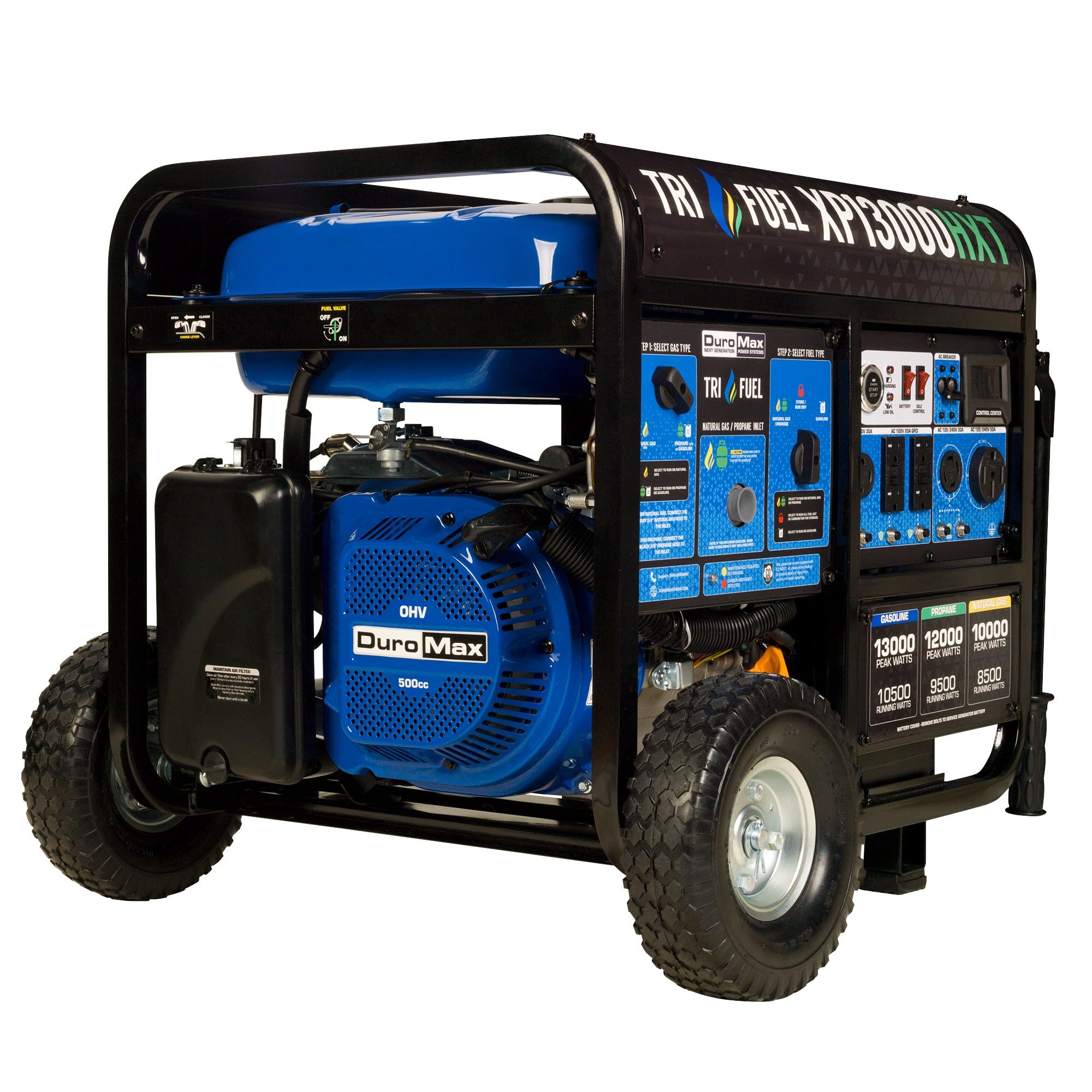
The DuroMax XP13000HXT is the ultimate fuel-agnostic backup for serious hurricane prep. The tri-fuel engine — gasoline, propane, or natural gas — gives you three ways to keep power flowing when fuel logistics break down. The 500cc OHV engine delivers 13,000 surge watts and enough running power to handle a whole home: four refrigerators, furnace, well pump, security lights, cameras, and all general appliances simultaneously, as one verified user reported during a Tennessee ice storm.
The push-button electric start and included remote start make activation effortless. The front-facing interface lets you switch fuel types in seconds. Outlets include a transfer-switch-ready 50-amp outlet, ensuring seamless home integration. The CO Alert sensor adds the critical safety layer for hurricane scenarios where ventilation may be compromised. The generator comes with a 15-foot natural gas hose, propane regulator, remote control, wheel kit, and tool set — essentially everything needed out of the box except oil.
At 240 pounds, this is a permanent-install-sized portable generator. It should be placed on a flat, well-ventilated surface and ideally on a small concrete pad. Some users reported that the initial battery charge may be weak, requiring a trickle charger to maintain readiness. The noise is noticeable — the 500cc engine produces a semi-loud rumble typical of large open-frame generators. DuroMax customer service has a strong reputation for responsiveness when parts are needed. For preppers who want to tap into their home’s natural gas line and never worry about fuel availability, this generator sets the standard.
Why it’s great
- Tri-fuel (gas, propane, natural gas) provides maximum fuel flexibility during crises
- 13,000 surge watts powers an entire house with multiple large appliances
- Includes natural gas hose, propane regulator, and remote start in the box
Good to know
- Very heavy at 240 pounds; requires a permanent or semi-permanent placement
- Open-frame noise is significant compared to inverter or battery alternatives
- Battery may arrive with low charge; trickle charger recommended for standby
10. EcoFlow DELTA Pro
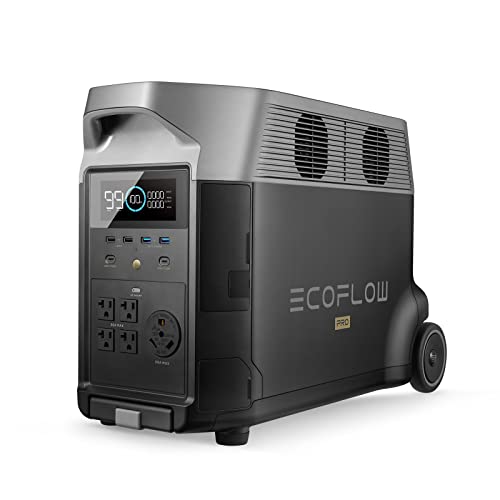
The EcoFlow DELTA Pro is a battery backup system that scales to an industrial degree. Starting with a 3600Wh LiFePO4 battery and 3600W continuous output (7200W with X-Boost), you can add Extra Batteries and Smart Generators to expand capacity all the way to 25kWh — enough to power a typical home for days. The five 120V AC outlets, plus USB-A (including fast-charge), USB-C (100W PD), DC outlets, and an Anderson port, provide 15 output methods for every device imaginable.
The X-Stream fast charging fully recharges the main unit in 1.8 hours from a 240V outlet or 2.7 hours from a standard 1800W wall outlet — far faster than any traditional generator’s refueling cycle. The 23 percent solar conversion efficiency is among the industry’s best, meaning you can top up the battery with solar panels faster than most competitors. The smart app control via Wi-Fi or Bluetooth lets you monitor charge level, temperature, and customize input/output settings remotely.
Users report that the DELTA Pro runs two refrigerators, a freezer, a Keurig, an induction cooktop, and an air fryer for about two days without mid-storm recharging. The pass-through mode automatically switches to battery during a grid outage and recharges when power returns, making it effectively a whole-home UPS. The main drawbacks are the weight (99 pounds) and the cost of expansion batteries and solar panels. For homeowners who want a zero-emission, expandable system that can power most of a home for days and integrate with solar, this is the most versatile battery option available.
Why it’s great
- Expandable up to 25kWh for multi-day whole-home backup without fuel
- Fast AC recharge (1.8 hours) and industry-leading solar conversion efficiency
- Pass-through UPS mode seamlessly handles grid outages without interruption
Good to know
- 99-pound base unit is heavy; expansion batteries add even more weight
- Full expansion to 25kWh requires significant additional investment
- Recharge depends on grid or solar; no fuel option for extended blackouts
11. Jackery HomePower 3000 with 2x Solar Panels
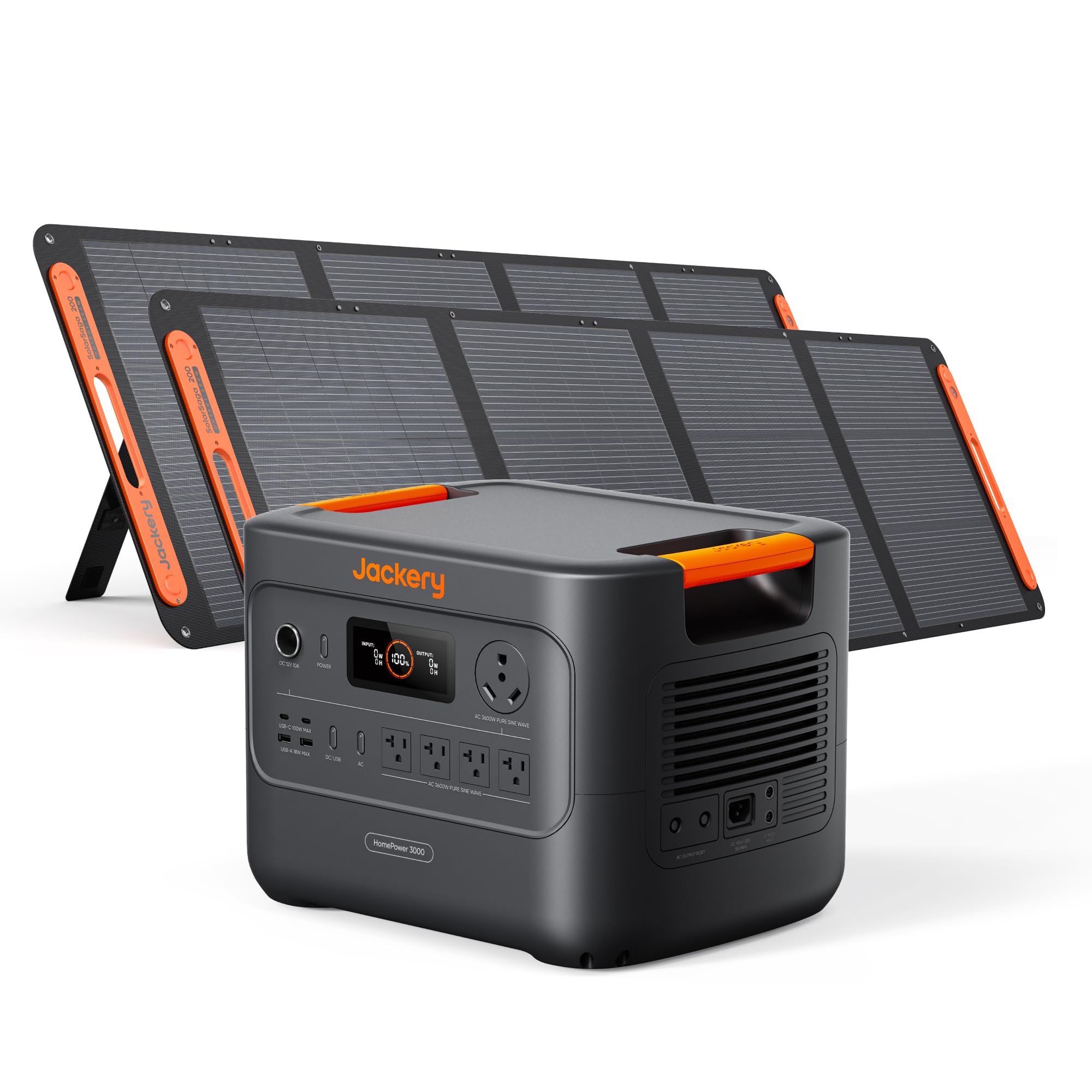
The Jackery HomePower 3000 combines a 3072Wh LiFePO4 battery with two 200W SolarSaga panels, creating a complete solar generator package that can power household essentials for 15 hours or a refrigerator for one to two days. The 3600W continuous output (7200W surge) handles start-up loads from fridges, freezers, and power tools without hesitation. The ≤20ms UPS switching keeps critical devices running through grid interruptions, certified to UL standards.
The CTB (Cell-to-Body) technology makes this 3kWh station 47 percent smaller and 43 percent lighter than comparable models — it weighs 59.5 pounds with a compact honeycomb-shell design that’s easy to lift and store. The TT-30 RV port provides plug-and-play power for RVs, and the dual 100W USB-C PD ports charge phones and laptops rapidly. The ChargeShield 2.0 AI algorithm extends battery life to 4000 cycles while retaining 70 percent capacity, promising roughly 10 years of reliable service.
The two included 200W solar panels charge the battery to 80 percent in about 9 hours under optimal sun, which is practical for daytime recharging during post-hurricane sunny weather. The AC charging is faster at 2.2 hours for a full charge. Some users found the solar charging slower than expected in partial shade and recommend having the AC charger as a backup. The HomePower 3000 cannot have its battery expanded, so capacity is fixed at 3072Wh. For hurricane preppers who want a complete, ready-to-deploy solar backup system with enough capacity to keep critical appliances running through multi-day outages, this bundle delivers exceptional value.
Why it’s great
- Complete kit with two 200W solar panels included for immediate off-grid capability
- 3072Wh capacity powers fridge for 1-2 days and home essentials for 15 hours
- CTB tech makes it remarkably compact and lightweight for a 3kWh station
Good to know
- Battery capacity cannot be expanded; fixed at 3072Wh
- Solar charging is slower in partial shade; AC backfill recommended
- 59.5 lbs is moderate; wheels are not included, may need a dolly for moving
FAQ
Can I run a generator inside my garage during a hurricane if the door is open?
How do I calculate the right generator size for my home?
Is a battery power station better than a gas generator for hurricanes?
How long can I store gasoline before it goes bad?
Do I need a transfer switch or can I use extension cords?
Final Thoughts: The Verdict
For most households preparing for hurricane season, the generators for hurricane season winner is the Westinghouse iGen4000cv because it delivers a near-perfect balance of power (4000 surge, 3300 running), very low noise (52 dBA in eco mode), and the unmatched convenience of remote start — all in a portable inverter package that protects your electronics. If you want dual-fuel flexibility and need higher wattage for a well pump or central AC, the WEN DF480iX is the best upgrade path with its electric start and wheel kit. And for those who want zero-emission indoor backup with the longest possible runtime, the Anker SOLIX C2000 Gen 2 sets a new benchmark for fast-recharging silent battery power. Whatever you choose, the right generator turns a hurricane blackout from a crisis into a manageable inconvenience.