
You’ve spent hundreds on a graphics card, yet your headphones flatten explosions into mush and hide footsteps in a muddy haze. The wrong pair turns a competitive advantage into a liability, masking the delicate reverb of a reload or the spatial cue of an enemy flank. A gaming audiophile headphone bridges that gap by pairing the imaging precision of studio monitors with the comfort and durability demanded by long sessions. It’s not about exaggerated bass — it’s about hearing the recording exactly as the sound engineer intended, so you can react faster and feel more immersed.
I’m Mohammad Maruf — the founder and writer behind Drink4Good. I’ve spent years digging through driver materials, impedance curves, and open-back acoustics to separate marketing hype from measurable performance in the gaming audio space.
After weeks of cross-referencing specifications and analyzing hundreds of verified user reports, I’ve identified the models that deliver genuine high-fidelity sound for gaming without needless upcharges. The best gaming audiophile headphones combine wide soundstage, neutral frequency response, and a build robust enough for marathon sessions.
How To Choose The Best Gaming Audiophile Headphones
Selecting the right pair for competitive or immersive play requires more than chasing the highest price tag. You need to match the headphone’s acoustic design to your environment, your source hardware, and the type of games you play most.
Open-Back vs. Closed-Back: The First Decision
Open-back headphones vent the rear of the driver, creating a natural, airy soundstage that mimics real-world acoustics. This design excels at positional audio — footsteps and gunshots feel three-dimensional. However, open-back models leak sound and offer little noise isolation, making them unsuitable for noisy rooms or shared spaces. Closed-back designs seal the driver, delivering punchier bass and passive isolation, but the soundstage is usually narrower. For pure competitive awareness, open-back wins; for loud environments, closed-back is the practical choice.
Impedance and Sensitivity: The Amplifier Question
Impedance (measured in ohms) determines how much power a headphone needs. Models rated 32 ohms or lower are easily driven by a motherboard’s onboard audio or a console controller, while 80-ohm or higher models often require a dedicated DAC or headphone amplifier to reach sufficient volume and avoid distortion. Sensitivity (decibels per milliwatt) also matters: higher sensitivity means louder output from less power. A pair with 32-ohm impedance and 110 dB sensitivity will play loudly from any device; a 300-ohm, 98 dB pair will sound weak without an amp.
Driver Size and Material
Larger drivers (40 mm to 50 mm) can move more air, which helps with bass extension and overall dynamics. Driver material affects transient response: copper-clad aluminum wire voice coils (as used in the Audio-Technica ATH-M50X) offer faster attack and clearer highs, while dynamic drivers with rare earth magnets improve efficiency and control distortion. Carbon fiber drivers, found in the premium SteelSeries Arctis Nova Elite, combine rigidity with low mass for exceptionally clean transients.
Frequency Response Curve: Flat vs. V-Shaped
A neutral or flat frequency response reveals every detail of the audio mix without artificial coloring. This is critical for identifying footsteps in the upper midrange and bass texture in explosions. Headphones with a “V-shaped” response boost lows and highs while scooping mids — this sounds exciting for music but can mask subtle midrange cues in games. For competitive gaming, aim for a model with minimal bass bleed into the lower mids (200-500 Hz) and a smooth treble without piercing peaks in the 8-10 kHz region.
Quick Comparison
On smaller screens, swipe sideways to see the full table.
| Model | Category | Best For | Key Spec | Amazon |
|---|---|---|---|---|
| Audio-Technica ATH-M50X | Closed-Back | Versatile studio & gaming | 45mm driver with CCAW voice coil | Amazon |
| Audio-Technica ATH-R50X | Open-Back | Ultra-lightweight immersive gaming | 207g and wide-open soundstage | Amazon |
| Meze Audio 99 Neo | Closed-Back | Stylish closed-back with bass | 32 ohm, self-adjusting headband | Amazon |
| beyerdynamic DT 990 Pro X | Open-Back | Critical listening & spatial audio | STELLAR.45 driver, 48 ohm | Amazon |
| beyerdynamic TYGR 300 R | Open-Back | Dedicated gaming headset | Professional spatial tuning | Amazon |
| Sennheiser HD 490 PRO | Open-Back | Mix-ready neutral reference | Dual pad set, FSC packaging | Amazon |
| Sennheiser HD 660S2 | Open-Back | Warm, detailed audiophile listening | 42mm transducer, 27.5 Hz extension | Amazon |
| Focal Bathys | Wireless ANC | On-the-go high-resolution audio | 40mm Al/Mg driver, USB-C DAC | Amazon |
| SteelSeries Arctis Nova Elite | Wireless Gaming | Multi-platform hi-res wireless | Carbon fiber driver, 96kHz/24bit | Amazon |
In‑Depth Reviews
1. Audio-Technica ATH-M50X

The ATH-M50X has earned its legendary status through a combination of proprietary 45mm large-aperture drivers with rare earth magnets and copper-clad aluminum wire voice coils. This driver assembly delivers an extended frequency range with deep, accurate bass response that doesn’t bleed into the critical midrange where footsteps live. The circumaural earcups provide excellent passive isolation, making them usable in noisy environments where open-back alternatives would leak and pick up ambient sound.
Three detachable cables (straight, coiled, and short) come in the box, giving you flexibility for desktop use or mobile operation. The 90-degree swiveling earcups fold flat for transport, and the metal-reinforced headband and professional-grade earpad materials hold up well to years of daily use. Many users report that the sound transforms with a quality DAC or soundcard, revealing detail and separation that rivals much pricier options.
The stock earpads compress over time, which can alter the frequency response slightly, and the headband padding is thinner than some premium competitors. The soundstage, while excellent for a closed-back, remains more intimate than an open-back design — so competitive players seeking the widest possible spatial awareness may prefer an open model.
Why it’s great
- Critically acclaimed neutral-revealing sound signature
- Foldable design with three detachable cables
- High build quality with metal components
Good to know
- Earpads compress over time
- Soundstage is intimate for a closed-back
- Requires a quality source to fully shine
2. Audio-Technica ATH-R50X
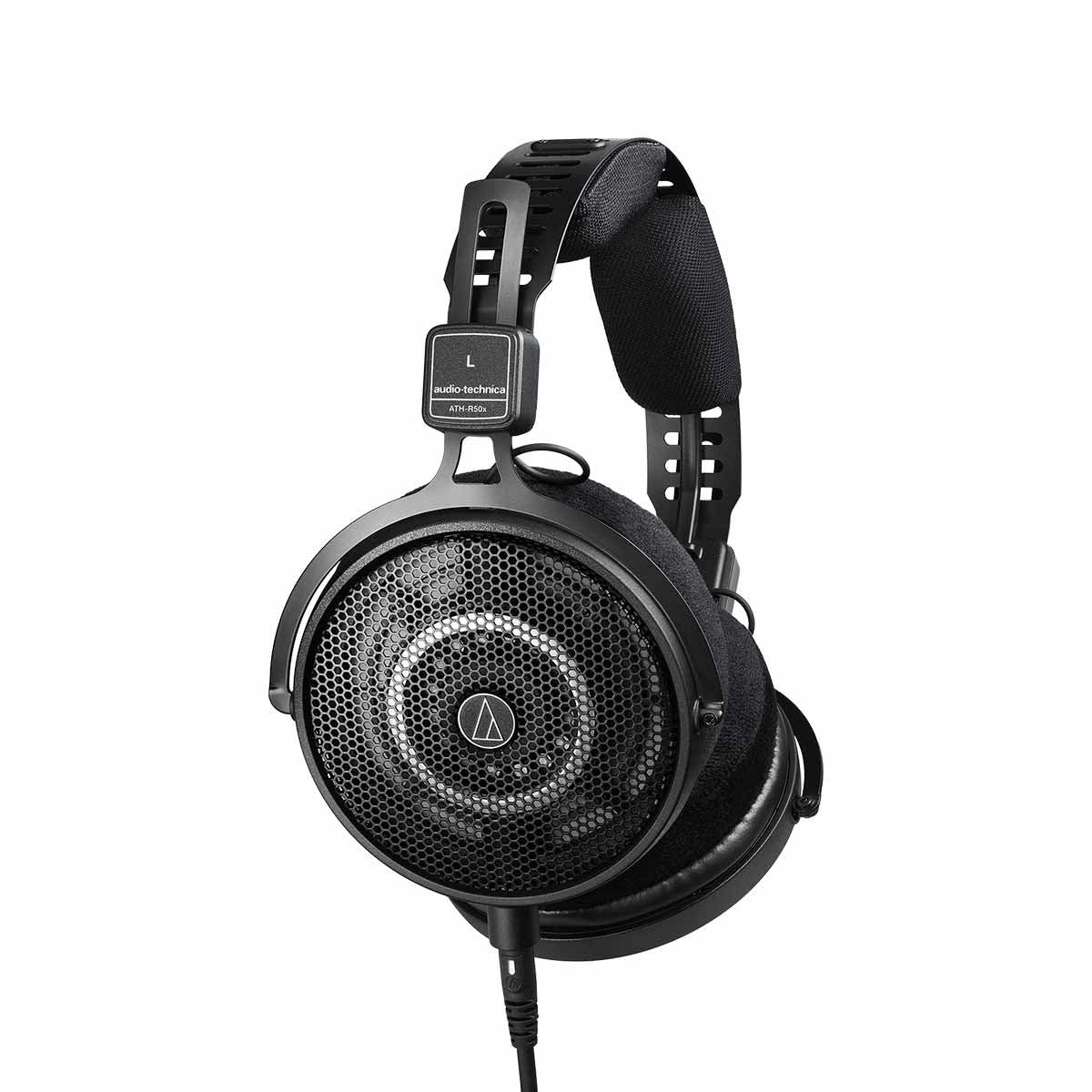
Weighing just 207 grams, the ATH-R50X is among the lightest open-back reference headphones available, making it ideal for gamers who spend hours in a single session without wanting a heavy clamp on their skull. The fully open-back design eliminates internal resonance and provides extremely quick transient response, giving sound effects a snappy, immediate quality that helps differentiate simultaneous audio cues in chaotic firefights.
The wide, realistic soundstage creates an immersive experience that open-back fans crave — footsteps, reloads, and environmental ambience are reproduced with spatial accuracy. Two detachable cables (3.0m and 1.2m) with a 2.5mm twist-lock connector on the left earcup provide flexibility, and the included 6.3mm adapter and carrying pouch enhance portability. The new headband design and low clamp force ensure the R50X stays comfortable even for users who wear glasses.
The sub-bass does roll off compared to closed-back designs, and some users coming from warmer-sounding headphones (like the Sennheiser HD 599) may find the R50X’s analytical presentation sterile for music enjoyment. It also lacks an integrated microphone, so voice chat requires a separate mic setup.
Why it’s great
- Extremely lightweight for long sessions
- Wide, realistic open-back soundstage
- Low clamp force great for glasses wearers
Good to know
- Sub-bass roll-off inherent to open-back
- Analytical presentation may feel sterile
- No microphone included
3. Meze Audio 99 Neo

The Meze 99 Neo takes a different approach from neutral studio monitors — it’s tuned to be fun. With a low impedance of 32 ohms, these closed-back headphones are extremely easy to drive from any device, and their sound signature features a satisfying bass boost that adds thump to explosions and rhythmic impact to game soundtracks without completely masking the mids.
The self-adjusting headband, reinforced with manganese spring steel, distributes weight evenly across most head shapes, and the vegan leather earpads provide plush comfort for extended sessions. Every component — earcups, headband, cables, and driver — is fastened with screws instead of glue, making the 99 Neo fully repairable and designed to last well beyond the typical consumer headphone lifespan.
The included 1.5m Kevlar-reinforced cable with inline microphone and remote is functional but relatively short, and some users will need a longer 3.5mm extension for desktop PC use. The stock pleather pads can make ears warm after a couple of hours, and the sound is not analytical — competitive players who prioritize footstep detail over punchy bass may prefer a more neutral option.
Why it’s great
- Fun, bass-rich sound with clear mids
- Fully repairable screw-together construction
- Self-adjusting headband provides even pressure
Good to know
- Stock cable is short for PC setups
- Pleather pads can get warm
- Not analytical — less footstep detail
4. beyerdynamic DT 990 Pro X

The DT 990 Pro X combines the classic DT 990 soundstage with a new STELLAR.45 driver that delivers a frequency range of 5–40,000 Hz with studio accuracy. The open-back design provides a natural, wide soundstage where directional audio — pin-pointing footsteps left, center, or right — becomes more intuitive. The 48-ohm impedance is a sweet spot, offering easy drivability from most onboard audio while still benefiting from a dedicated amp.
Soft velour earpads and a circumaural fit ensure comfort for multi-hour game sessions without heat buildup. Handcrafted in Germany, the build uses replaceable parts — including pads, headband padding, and the detachable mini-XLR cable — which extends the product’s life significantly. The 3-meter detachable cable with locking connector provides security for active setups.
Some users find the stock tuning a bit restrained out of the box, requiring EQ to bring out the bass and treble sparkle that many expect from the DT 990 lineage. The open-back design inherently limits bass extension, and the clamping force may feel tight for users with larger heads until the headband breaks in.
Why it’s great
- Wide, natural soundstage with accurate imaging
- STELLAR.45 driver with 40kHz top-end response
- Replaceable parts for long-term durability
Good to know
- Stock tuning may sound restrained without EQ
- Open-back limits sub-bass impact
- Initial clamp can be tight for larger heads
5. beyerdynamic TYGR 300 R

The TYGR 300 R is beyerdynamic’s purpose-built gaming headphone, and it shows in the tuning. It takes the professional sound of the DT series and reworks the frequency response to emphasize spatial awareness without the bright treble peaks that can cause fatigue. The open-back design creates an airy soundstage that elevates footstep recognition and environmental immersion in both competitive shooters and atmospheric RPGs.
The circumaural earpads and lightweight construction (well under 300 g) make it comfortable for sessions lasting five hours or more. Users often report a significant upgrade in clarity and soundstage compared to mainstream gaming headsets from Logitech or Razer, validating the premium over those consumer designs.
The rubber cable is a known weak point — reports of strain at the jack or cable splitting are not uncommon, and the included cable is relatively short for desktop setups. Bass response is lighter than closed-back gaming headsets, and some audiophiles find the mids slightly recessed compared to the DT 990’s more balanced presentation.
Why it’s great
- Optimized spatial tuning for gaming immersion
- Lightweight and comfortable for long sessions
- Clear step-up from mainstream gaming headsets
Good to know
- Stock cable durability is a known concern
- Bass response is lighter than closed-back models
- Cable length is short for desktop use
6. Sennheiser HD 490 PRO

The HD 490 PRO is Sennheiser’s professional reference for mixing and critical listening, but its uncolored frequency response (5–36,000 Hz) and ultra-precise localization make it equally potent for competitive gaming. The open-frame architecture reduces total harmonic distortion to near-immeasurable levels, so every audio artifact — or lack thereof — is faithfully reproduced. The low-frequency cylinder system delivers full, accurate bass without boominess.
Two unique sets of ear pads ship in the box: “mixing” pads for reducing ear fatigue and “producing” pads for pinpointing frequencies. The right and left earcups each accept the detachable cable, adapting easily to any studio configuration. The patented cable coil structure blocks cable-borne noise, and the fiberglass-reinforced polymer construction keeps the weight manageable for all-day wear.
The price is a significant jump from mid-range options, and the proprietary earpad attachment means replacement pads are only available from Sennheiser. Some users note that while the soundstage has precise directionality, it is more intimate than the very widest open-back models on the market.
Why it’s great
- Crystal-clear imaging for directional audio
- Dual pad sets for mixing vs. producing
- Extremely low distortion open-frame design
Good to know
- Premium price point
- Proprietary pads limit third-party alternatives
- Soundstage is intimate vs. widest open models
7. Sennheiser HD 660S2
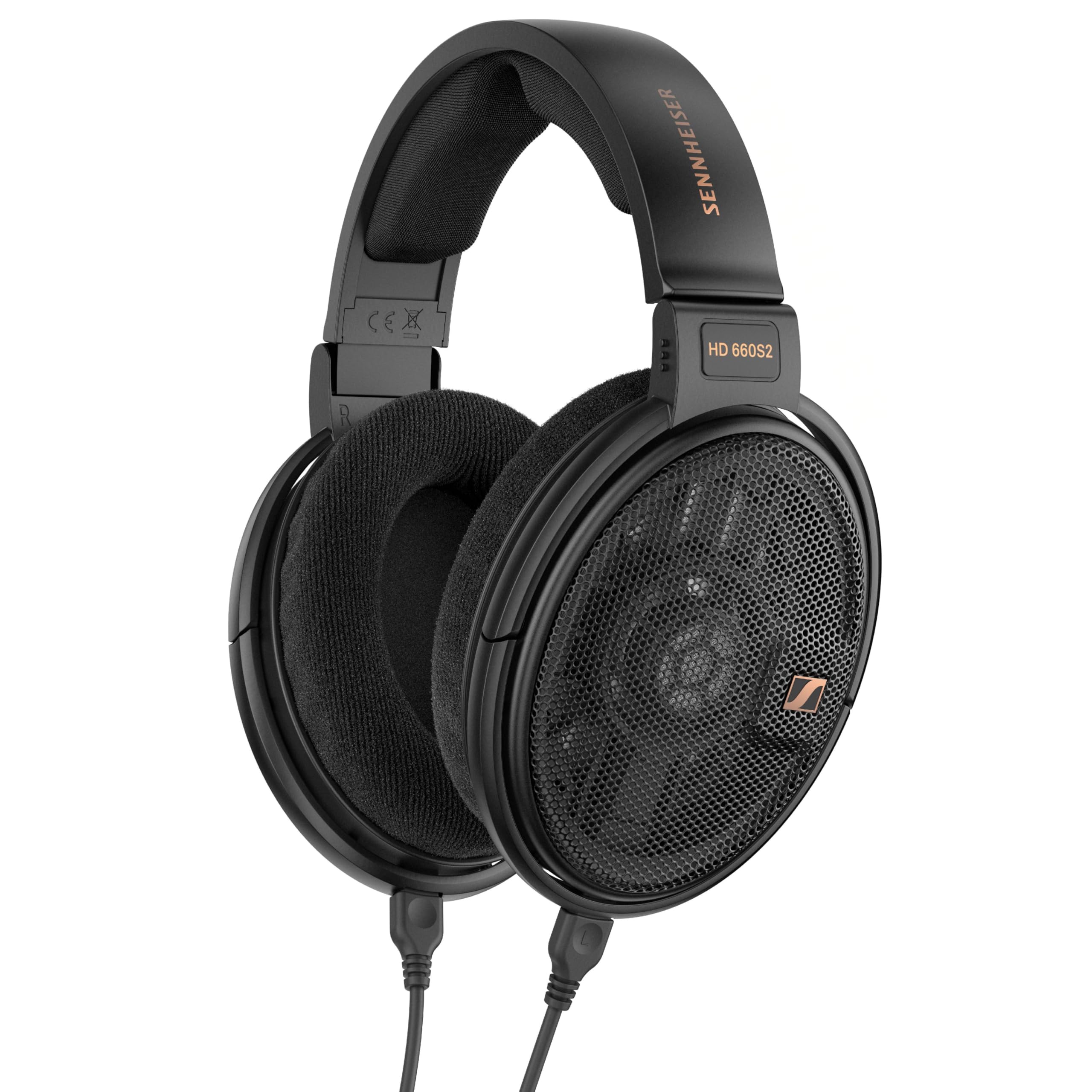
The HD 660S2 refines the classic Sennheiser 600-series formula with an ultra-light aluminum voice coil and a 42mm transducer that extends bass down to 27.5 Hz — piano lows and kick drums sound full and physical. The open-back presentation is natural and spacious, with lifelike vocals and excellent instrument separation that helps you distinguish between overlapping sound effects in busy game audio scenes.
Breathable velour ear cushions and a lightweight design keep fatigue at bay during marathon sessions. The detachable cables (6.3 mm and 4.4 mm balanced) allow easy integration with high-end DACs and headphone amplifiers. The carry pouch is practical, and the build quality — assembled in Germany and Ireland — inspires confidence in daily use.
Cables are on the shorter side, especially the 4.4 mm balanced option, and can be microphonic near the earcup connection. The soundstage is narrower than some rivals like the HD 490 PRO, which may matter less for music but can reduce the sense of three-dimensional space in open-world games.
Why it’s great
- Deep, controlled bass extension down to 27.5 Hz
- Natural, lifelike vocal reproduction
- Lightweight with ventilated velour cushions
Good to know
- Soundstage is narrower than some competitors
- Cables are short and can be microphonic
- Requires a quality DAC/amp for best results
8. Focal Bathys

The Focal Bathys stand out as the only wireless active noise-canceling headphones in this guide that can truly challenge wired audiophile models. A 40mm aluminum-magnesium driver (made in France) delivers a naturally detailed sound with punchy transients, and the USB-C DAC mode supports 24-bit/192 kHz audio for a lossless connection to a PC or smartphone. Over 30 hours of battery life in Bluetooth/ANC mode ensures a full week of gaming without recharging.
The real leather headband and microfiber earpads provide class-leading comfort, and the aluminum mechanical construction and magnesium yokes keep the weight reasonable for a portable design. ANC offers two optimized modes plus transparency, though it’s not quite as effective as Sony’s latest chips — the trade-off is dramatically better sound quality. Fast charging delivers five extra hours in 15 minutes.
When used over USB-C as a wired gaming headphone, the EQ customizations available in the app are bypassed, and the heavy weight (350 g) may cause fatigue in very long sessions. Some users find the treble overly bright, and the ANC cannot be fully disabled — only cycled between modes.
Why it’s great
- USB-C DAC delivers hi-res wired audio
- Aluminum-magnesium driver with detailed sound
- Over 30 hours of battery life
Good to know
- Heavier than wired alternatives
- Treble can be bright for some listeners
- ANC cannot be fully disabled
9. SteelSeries Arctis Nova Elite
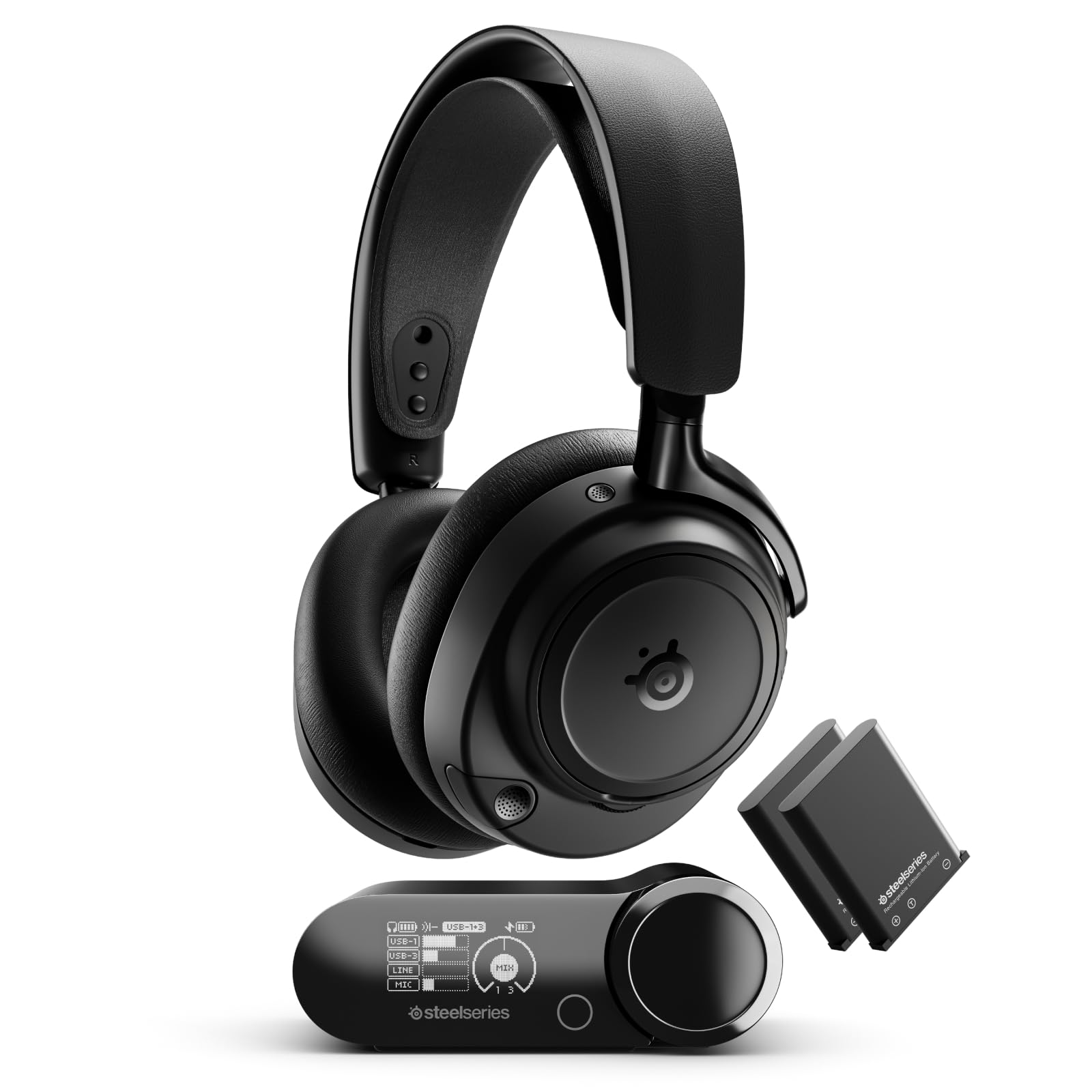
The Arctis Nova Elite is the first wireless gaming headset to achieve hi-res certification, delivering 96 kHz/24-bit audio over 2.4 GHz or Bluetooth. Its carbon fiber drivers combine extreme rigidity with low mass for faster transient response and lower distortion than typical mylar or polymer drivers — this translates to gunshots that snap without lingering resonance and footsteps that remain distinct in chaotic audio scenes.
OmniPlay connectivity allows simultaneous mixing between PC, console, Bluetooth, and line-in sources, all controlled via the GameHub’s OLED screen. ANC reduces up to 42% more ambient noise than competing gaming headsets, and AI-powered noise rejection filters 97% of background noise from your microphone. The swappable battery system (one charges while the other powers the headset) provides up to 30 hours per battery with 15-minute fast charging giving four extra hours.
The price is the highest of all models tested, and some users with larger heads find the headband extension insufficient for a perfect fit. The Sonar software offers deep EQ customization but lacks a live preview feature. The retractable microphone mechanism can occasionally stick, and the sound signature is bass-heavy out of the box, which may require EQ adjustment for neutral reference listening.
Why it’s great
- Hi-res wireless with 96kHz/24bit fidelity
- Carbon fiber drivers for fast, clean transients
- Swappable zero-downtime battery system
Good to know
- Highest price point in this guide
- Headband may not fit very large heads well
- Out-of-box sound is bass-heavy
FAQ
Do I need a DAC or amp for gaming audiophile headphones?
Can gaming audiophile headphones be used for music production?
Why do some audiophile headphones not have a microphone?
Final Thoughts: The Verdict
For most users, the best gaming audiophile headphones winner is the Audio-Technica ATH-M50X because it combines a critically acclaimed neutral-revealing sound signature, robust foldable build, and three detachable cables for a price that rivals sets costing twice as much. If you need ultra-lightweight open-back immersion for long sessions, grab the Audio-Technica ATH-R50X. And for hi-res wireless freedom without sacrificing audio fidelity, nothing beats the SteelSeries Arctis Nova Elite.