
The wrong glue joint on a mitered corner or a loose chair spindle means the piece either fails under weight or leaves a visible glue line that ruins the finish. Furniture-grade wood glue must deliver a bond that outlasts the wood itself, sand cleanly, and resist moisture without swelling the fibers. Fast-setting formulations now allow you to skip lengthy clamping sessions, but choosing the wrong viscosity or cure speed for the specific repair can cause joint failure before the glue even dries.
I’m Mohammad Maruf — the founder and writer behind Drink4Good. I spend hundreds of hours analyzing tensile strength data, cure-time claims, and real-world user reports across dozens of adhesive formulations to separate marketing hype from genuine woodworking performance.
This guide breaks down the top five adhesives for furniture projects, with a focus on bond strength, working time, and application ease for different repair scenarios. Whether you need a waterproof bond for outdoor teak or a quick-setting formula for a hairline crack, the following analysis will help you choose the right glue for wood furniture.
How To Choose The Best Glue For Wood Furniture
Selecting the correct adhesive for wooden furniture requires matching the glue’s chemistry to the repair’s structural demands. Thickened cyanoacrylates work for fast repairs on small parts, while water-based PVA formulas provide the deep penetration needed for load-bearing joints. Understanding cure time, moisture resistance, and the wood species you’re bonding will prevent joint creep and visible glue stains.
Working Time vs. Cure Speed
Every furniture repair involves a trade-off between how long you can adjust the joint (open time) and how fast the glue reaches handling strength. Extended open times of 15 minutes suit complicated assemblies like cabinet face frames. Fast-setting formulas that achieve handling strength in 30 seconds eliminate clamping but leave zero room for alignment errors. Choose based on whether the joint requires minor adjustments or a one-shot placement.
Water Resistance and Interior vs. Outdoor Use
Standard interior wood glues fail when exposed to humidity cycles or direct rain. ANSI/HPVA Type I certification means the adhesive passes a rigorous boiling-water test, making it suitable for outdoor furniture, garden benches, or table tops near sinks. For indoor pieces that never see moisture, a standard Type II PVA provides ample strength at a lower cost.
Viscosity and Wood Porosity
End-grain joints and porous species like oak or ash soak up thin glue, starving the bond. Medium-to-thick viscosity formulas stay on the surface and fill gaps in uneven joints. Thin, water-like cyanoacrylates work best for hairline cracks where capillary action pulls the adhesive deep into the fissure. Matching glue thickness to wood density keeps the bond line intact.
Quick Comparison
On smaller screens, swipe sideways to see the full table.
| Model | Category | Best For | Key Spec | Amazon |
|---|---|---|---|---|
| Titebond Instant Bond Thick | Cyanoacrylate | No-clamp repairs | 18-sec cure time | Amazon |
| Gorilla Ultimate Waterproof | PVA | Outdoor projects | ANSI/HPVA Type I | Amazon |
| DAP Rapid Fuse | Hybrid | Multi-material bonds | 30-minute full cure | Amazon |
| FastCap 2P-10 Thin | Cyanoacrylate | Crack filling | 4000 PSI tensile | Amazon |
| Weldbond PVA | PVA | Kids crafts | Non-toxic formula | Amazon |
In‑Depth Reviews
1. Titebond Instant Bond Wood Adhesive Thick

Titebond’s thick cyanoacrylate formulation eliminates the need for clamping on most furniture repairs. The gel consistency stays put on vertical surfaces and fills tiny gaps in uneven joints without running. Curing in roughly 18 seconds, it reaches handling strength fast enough that you can release the part within a minute, saving hours compared to traditional PVA glues that require overnight clamp time.
Woodworkers and remodelers report success bonding oak, MDF, acrylic, and even granite to wood. The thick formula swells slightly as it cures, which helps lock loose tenons or loose veneer edges back into place. One 72-year-old user shared that a minute of hand pressure was all it took to permanently fix a chair dowel — no clamps needed. Professional users note it eliminates the need for pin nails on cabinet face frames, leaving a cleaner surface.
The trade-off is the zero margin for alignment. Once the gel contacts both surfaces, repositioning is impossible within seconds. The 2-ounce bottle is small, but a few drops go a long way on most repairs. Users advise pre-fitting the joint dry before applying any adhesive.
Why it’s great
- Eliminates clamping for most repairs
- Thick gel stays put on vertical surfaces
- Bonds stronger than the wood itself
Good to know
- Cannot reposition after contact
- Small 2 oz bottle for the price
2. Gorilla Ultimate Waterproof Wood Glue

Gorilla’s Ultimate Wood Glue is designed for outdoor furniture and high-moisture environments. It passes the ANSI/HPVA Type I test, meaning the bond survives boiling water, direct sun, and freeze-thaw cycles. The extended 15-minute open time is generous enough for assembling a full outdoor bench or gluing up a segmented turning without rushing. It cures to a natural tan color that blends well with hardwoods and softwoods.
The PVA formulation does not foam during curing, which keeps the bond line clean. It sands and paints over easily, making it a workable choice for both structural builds and finish-focused repairs. The 8-ounce pair bottle gives ample volume for larger projects. Hobbyist woodworkers praise its reliable hold on pressure-treated lumber and composite wood.
Some users note that the nozzle often arrives with dried glue inside from storage. Clearing the tip before the first squeeze prevents clogging. The 24-hour full cure time is standard for PVA, so you need patience before stressing the joint with weight.
Why it’s great
- ANSI/HPVA Type I certified waterproof
- Long 15-minute open time for large assemblies
- Sands and paints cleanly
Good to know
- 24-hour full cure before stressing joint
- Nozzle may dry shut during storage
3. DAP 157 4oz Rapid Fuse Wood Adhesive

DAP Rapid Fuse bridges the gap between instant cyanoacrylates and traditional PVA. It achieves handling strength in 30 seconds but stays repositionable for about three minutes, giving you a small window to adjust the joint before the bond locks. Full cure completes in 30 minutes — far faster than any standard wood glue, yet still forgiving enough for semi-complex repairs.
Users confirm strong adhesion on wood-to-wood and wood-to-metal applications. The clear cure makes it suitable for visible joints where a dark glue line would be noticeable. One woodworker used it to hold parts while drilling and fastening jig components, praising the speed it added to the workflow. It also bonds well to many plastics, glass, and rubber, so a single bottle can handle mixed-material fixes around the house.
Several reviewers note the product labels fall off due to weak adhesive, but that does not affect the glue itself. The 4-ounce bottle is larger than typical CA glue packs, offering more volume for small-to-medium repairs.
Why it’s great
- Repositionable for 3 minutes after application
- Full cure in 30 minutes
- Bonds wood to metal and plastic
Good to know
- Labels fall off the bottle
- Liquid formula can run on vertical surfaces
4. FastCap 2P-10 Professional Thin Wood Adhesive
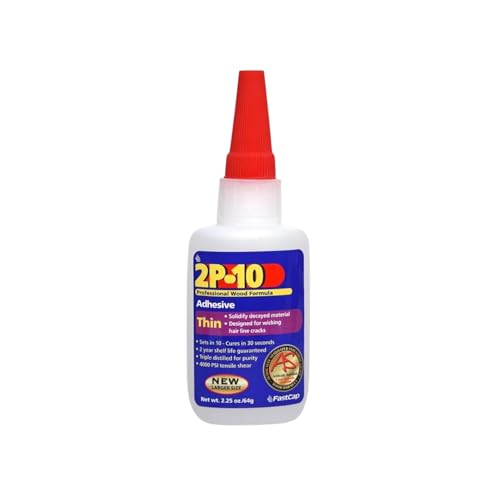
FastCap 2P-10 is a thin cyanoacrylate designed specifically for penetrating hairline cracks and micro-fissures in wood. Its water-like viscosity soaks deep into the grain, filling voids that thicker glues cannot reach. The 4000 PSI tensile rating means the cured bond is exceptionally strong for a thin adhesive, and the bond clears to a transparent finish with zero visible glue lines.
Professional cabinet makers and hobbyists use it for precision mending on figured veneer and delicate inlays. The glue sands within 60 seconds, allowing fast cleanup and immediate finishing. When paired with FastCap’s activator spray, the cure becomes instant, which is ideal for repairs where clamping is impossible. Users report success on leather, ceramics, and plastics as well.
The extreme thinness makes it difficult to control. A single drop can spread across a large area, so precise placement is critical. It is best reserved for non-structural repairs, such as filling cracks in tabletops or fixing loose veneer sections.
Why it’s great
- Penetrates deep into hairline cracks
- 4000 PSI tensile strength
- Sands clear within 60 seconds
Good to know
- Very hard to control placement
- Not for structural or load-bearing joints
5. Weldbond Non-Toxic Glue
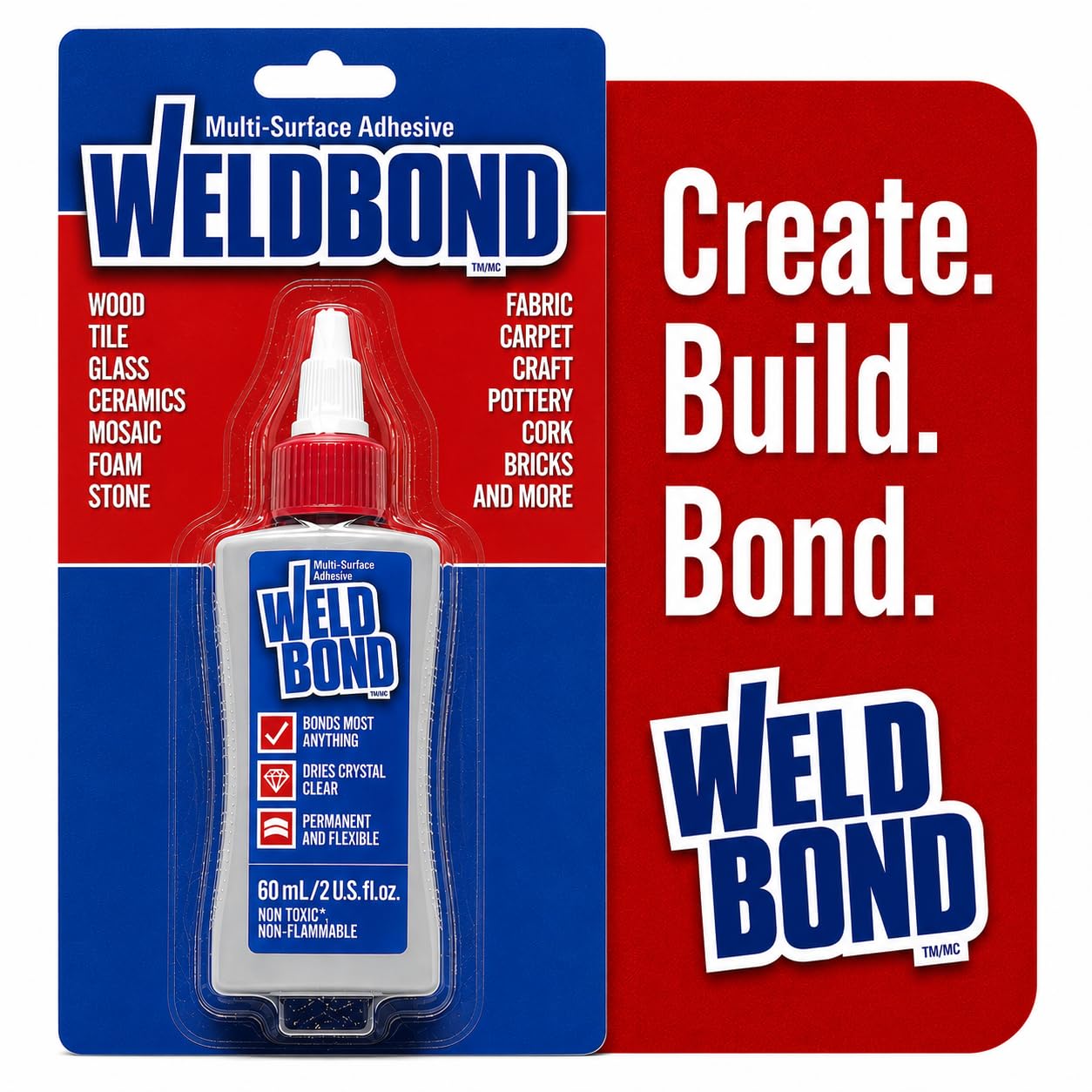
Weldbond is a non-toxic PVA formula that bonds wood, fabric, glass, ceramics, and other porous surfaces. It is completely free of fumes, solvents, and animal by-products, making it a safe choice for school projects or repairs in small spaces. The glue dries crystal clear with no run or drip, and any excess cleans up easily with warm water while still wet.
Mosaic artists rate it highly because it secures glass tile firmly while drying clear, preserving the design underneath. For carpentry, it bonds strongly enough to be sanded and painted. The 20-minute set time is fast enough for small craft projects but still leaves room for adjustment. Users find it outperforms standard white glues on wood repairs, especially for interior items where moisture exposure is minimal.
The full 24-hour cure time is standard for PVA, so it is not suited for quick repairs. The 2-ounce bottle is small, sufficient for light crafting but not large furniture builds. The self-sealing applicator tip works well, but leaving the cap off causes the tip to dry out quickly.
Why it’s great
- Non-toxic, odorless, and fume-free
- Dries crystal clear with no run
- Bonds multiple porous materials
Good to know
- 24-hour cure time for full strength
- Small 2 oz bottle for the price
FAQ
Can I use cyanoacrylate glue on all wood types?
How do I clean excess glue from a furniture joint?
Is clamping required for every wood glue job?
Final Thoughts: The Verdict
For most users, the glue for wood furniture winner is the Titebond Instant Bond Thick because it delivers no-clamp convenience with a bond stronger than wood, making everyday repairs fast and reliable. If you need waterproof performance for outdoor pieces, grab the Gorilla Ultimate Waterproof. And for crack-filling precision on veneers and tabletops, nothing beats the FastCap 2P-10.