
Finding a gift for an engineering student means moving past generic hoodies and coffee mugs. The best tools earn a permanent spot in their backpack, desk drawer, or project bag — items that make problem-solving faster, drafting cleaner, or debugging less painful. Whether they’re buried in a circuits lab, sketching structural plans, or coding past midnight, the right piece of gear is a signal that you understand the weight of their workload.
I’m Mohammad Maruf — the founder and writer behind Drink4Good. I’ve spent years analyzing the hardware and software tools that actually move the needle for students in technical disciplines, from precision measurement to computational firepower.
This guide rounds up seven field-tested options to help you pick the best gift for engineering students, each chosen for its real-world utility in coursework, labs, and personal projects.
How To Choose The Best Gift For Engineering Students
Engineering students live at the intersection of theory and hands-on application. A thoughtful gift needs to match their specific discipline — a civil engineering student craves different tools than a computer engineering student. Start by identifying whether they work more with code, circuits, drafting, or mechanical assembly, then narrow based on durability, portability, and the precision specs that actually affect their daily workflow.
Match the Tool to the Discipline
A mechanical or civil engineering student will get immediate use from a comprehensive drafting set with architectural scale rulers and reusable templates for floor plans. Electrical engineering students benefit from digital measurement tools like a circuit breaker finder or a precision electric screwdriver with multiple torque presets to protect delicate PCBs. For students in programming or embedded systems, a microcontroller starter kit with over 200 components and structured tutorials builds practical coding and electronics skills from the ground up.
Prioritize Precision and Build Quality
Look for tools with concrete, proven accuracy specs rather than vague marketing claims. A smart scale ruler with ±0.004 inch accuracy and 93 built-in scales competes with traditional scale rulers while adding digital convenience. For measuring odd shapes and curves, a digital tape measure that uses wheel-based tracking and delivers ±0.04 inch precision fills a gap that standard tape measures leave open. In every case, the materials matter — machined aluminum housings, S2 steel bits, and metal drafting components outlast plastic equivalents through years of campus use.
Consider Portability and Organization
Engineering students bounce between lecture halls, labs, and study lounges. Tools that pack into a single organized case, like a 21-piece drafting set or a 56-bit electric screwdriver set with magnetic storage, prevent lost pieces and cut setup time. Battery-powered tools with USB-C charging and auto-shutdown features reduce the hassle of dead batteries mid-project. A compact form factor also matters — a pocket-size digital tape measure or a 12-inch smart ruler with a slim profile slides easily into a crowded backpack without adding noticeable bulk.
Examine the Learning Curve and Support
The best gift is useless if the recipient can’t figure out how to use it effectively. For microcontroller kits, prioritize offerings with a detailed PDF tutorial, clear component labeling, and responsive customer support. Digital rulers and measuring tools should have an intuitive interface, a companion app for CAD export, and enough online tutorials to bridge the gap between unboxing and productive use. Avoid tools that bury essential functions behind poorly translated manuals or require third-party forums just to calibrate basic features.
Quick Comparison
On smaller screens, swipe sideways to see the full table.
| Model | Category | Best For | Key Spec | Amazon |
|---|---|---|---|---|
| ELEGOO Mega R3 Starter Kit | Starter Kit | Learning embedded systems & C programming | 200+ components, 35+ lessons | Amazon |
| HOZO NeoRuler Digital Scale Ruler | Digital Ruler | Scaled drawing takeoffs & space division | ±0.004 inch accuracy, 93 scales | Amazon |
| HOTO SNAPBLOQ S-A01 Screwdriver | Precision Tool | Repairing laptops, phones & consoles | 56 bits, 3 torque presets (0.05/0.35/0.5 N·m) | Amazon |
| HOZO NeoRulerGO Digital Tape Measure | Measuring Tool | Measuring curves, irregular surfaces & floor plans | ±0.04 inch precision, 93 built-in scales | Amazon |
| Instrodots CBF01 Circuit Breaker Finder | Electrical Tool | Identifying breakers & testing GFCI outlets | 90-135V AC, GFCI test, 3 adapters | Amazon |
| Nadex Scientific Calculator | Calculator | SAT/ACT/AP exams & calculus/statistics | 360+ functions, graph visualizations | Amazon |
| Nicpro 21PCS Drafting Tools Set | Drafting Set | Hand-drafting floor plans & interior layouts | 21 pieces, 5 templates, metal compass | Amazon |
In‑Depth Reviews
1. ELEGOO Mega R3 Project The Most Complete Ultimate Starter Kit
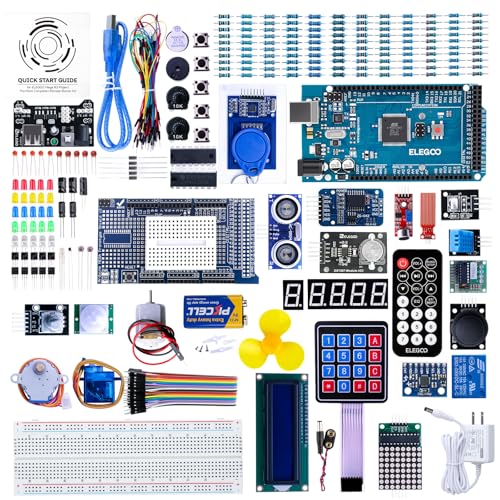
This Kit packs over 200 components around the Arduino-compatible Mega 2560 board — including an LCD1602 module, GY-521 sensor, servo motor, and a full resistor/capacitor assortment. The included PDF tutorial walks through more than 35 lessons that start with blinking an LED and progress to stepper motor control and serial communication. For an engineering student learning embedded systems, this is a structured curriculum disguised as a gift, removing the friction of sourcing parts individually.
The board itself is the MEGA2560 form factor, offering 54 digital I/O pins and 16 analog inputs — far more headroom than the Uno variant for ambitious projects. The kit includes male-to-male and female-to-male DuPont wires, a full-size breadboard, and labeled component boxes that keep tiny resistors and ICs organized. Students working on course projects in mechatronics, IoT, or robotics will find the component selection directly applicable to real lab assignments.
Some jumper wires feel slightly less premium than the rest of the kit, and the stepper motor example code from the official Arduino IDE may need substitution with Elegoo’s provided library. But the customer support is responsive about defective components, and the organized packaging survives repeated packing and unpacking. This kit earns its spot as a foundational tool for any student serious about electronics and embedded programming.
Why it’s great
- Comprehensive component selection covers dozens of projects out of the box
- Structured PDF tutorial lowers the learning curve for beginners
- Mega 2560 board offers generous I/O for advanced builds
Good to know
- Some jumper wires have loose fit on breadboard pins
- Minor typographical errors in the tutorial manual
- Stepper motor code may require library substitution
2. HOZO NeoRuler Digital Scale Ruler, 12 inch

The NeoRuler replaces the need for a drawer full of dedicated scale rulers. With 52 US Standard scales and 41 Metric scales built in, a civil engineering or architecture student can switch from 1/4″ = 1 ft to 1:50 metric in a single button press — no more squinting at tiny printed scale numbers. The ±0.004 inch accuracy rating comes from a digital encoder that tracks movement along a machined aluminum and stainless steel frame, delivering repeatable measurements that match traditional scale rulers.
The space divider function is a standout feature for layout work: select any distance and choose 2 to 12 equal segments, and the ruler lights up LED indicators at each division point. This eliminates manual calculation and marking errors when spacing columns, windows, or structural grids. Measured data transfers via Bluetooth to the MEAZOR App for CAD export in DXF, PDF, or JPG, making digital documentation of hand-scaled drawings straightforward.
The learning curve is the primary friction point. The default cursor indexing could be sharper — some users report needing a magnifier cursor for precise reading. The included manual is sparse on real-world usage scenarios, and online tutorials are more feature demonstrations than practical walkthroughs. Despite this, the 1000 mAh battery lasts through extended drafting sessions, and the aluminum alloy frame feels sufficiently robust for daily carry in a backpack.
Why it’s great
- Instant scale switching eliminates multiple dedicated rulers
- LED-guided space divider prevents manual calculation errors
- Bluetooth data transfer to CAD-ready formats
Good to know
- Cursor indexing may not be precise enough for ultra-fine work out of the box
- Instruction manual lacks real-world usage examples
- Premium price point reflects its niche application
3. HOTO SNAPBLOQ S-A01 3.7V Electric Screwdriver, 56 Bits
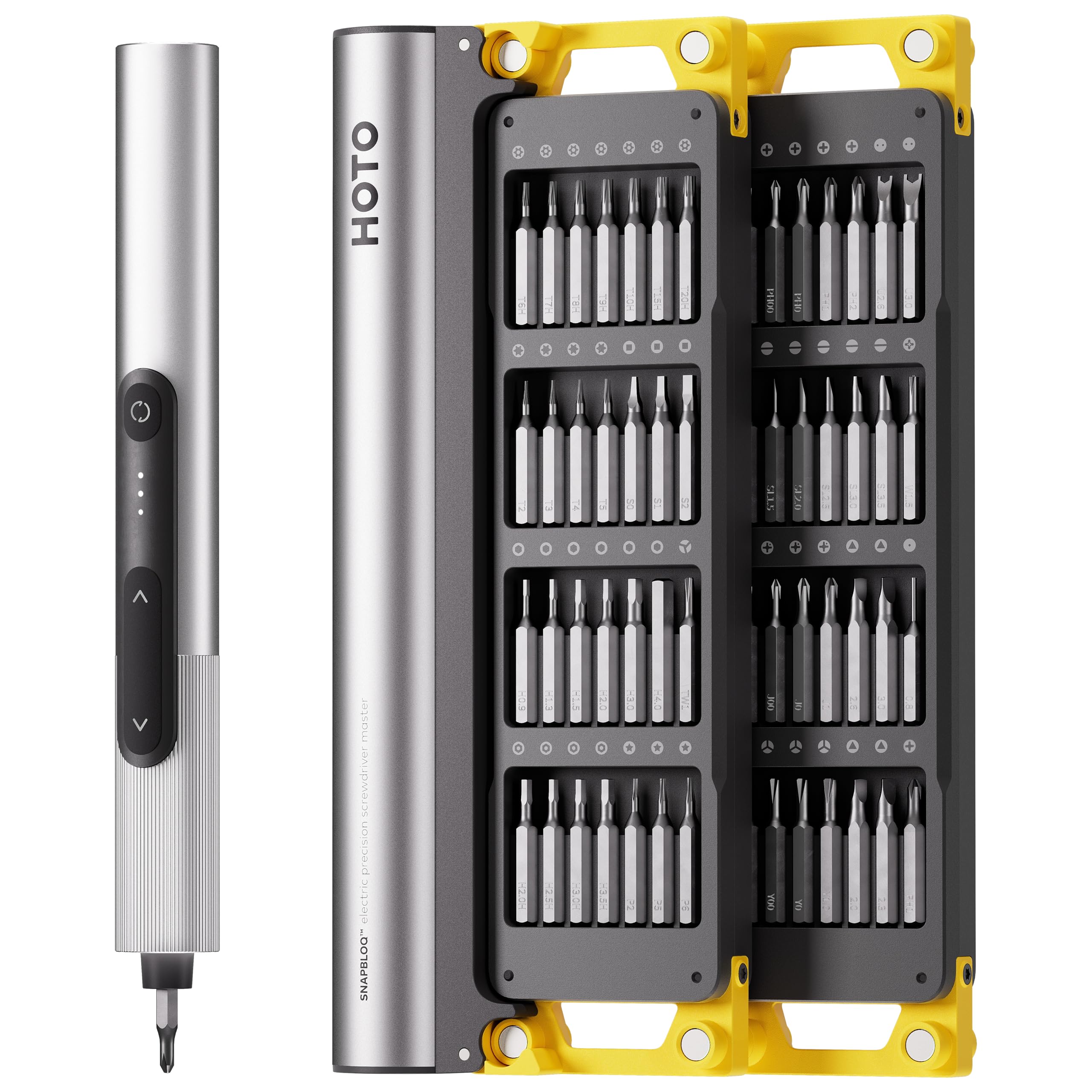
This precision screwdriver set is a game-changer for students who spend time inside laptops, gaming consoles, drones, or RC models. The 56-bit assortment covers every fastener type an engineering student will encounter: Phillips, slotted, Torx, Torx Security, Pentalobe, Tri-Wing, Y-Shaped, standoff bits, and even a SIM eject tool. All bits are crafted from S2 steel and magnetically snap into the compact housing, which doubles as the handle in portable mode or docks into a workstation configuration via the SNAPBLOQ modular system.
The three torque presets — 0.05 N·m, 0.35 N·m, and 0.5 N·m — prevent overtightening damage that strips threads in plastic housings and delicate PCB mounts. Auto-stop kicks in when the preset torque is reached, so the motor stops spinning before the screw bottoms out. The 800 mAh battery delivers roughly 60 minutes of continuous runtime and charges via USB-C, and the micro-lens star ring light casts shadow-free illumination directly over the work area, critical for low-light dorm-room repairs.
The main trade-off is torque ceiling: this tool is purpose-built for small electronics, not furniture assembly or heavy mechanical work. Users needing to drive larger screws into wood or metal will need a separate driver. The magnetic modular connections feel secure, but the bits must be handled carefully to avoid loss. For computer engineering, electrical engineering, or mechatronics students, this tool eliminates the frustration of juggling separate screwdrivers across multiple projects.
Why it’s great
- Three precision torque presets with auto-stop protect delicate electronics
- 56-bit set covers nearly every small fastener type used in modern devices
- Shadow-free LED ring light improves visibility in tight spaces
Good to know
- Torque range is too low for larger screws or wood applications
- Bits are small and easy to misplace if not stored properly
- Motor power is adequate for electronics but not heavy-duty tasks
4. HOZO NeoRulerGO Digital Tape Measure with Laser

The NeoRulerGO solves a problem that traditional tape measures and laser distance meters can’t handle: measuring curved, irregular, or odd-shaped surfaces. Its wheel-based tracking mechanism rolls along contours — think pipe diameters, curved walls, or irregular floor plan perimeters — and records the distance with a stated ±0.04 inch accuracy. The form factor is pocket-size at 3.4 inches long and 1.6 ounces, making it a carry-everywhere companion for site visits, studio classes, or lab space planning.
It includes 93 built-in scales (52 US Standard and 41 Metric) and supports switching between mm, cm, m, inch, ft, ft+inch, yard, mile, and km on the fly. The companion app connects via Bluetooth for data export to CAD files (DXF, PDF, JPG), which is useful for students documenting physical measurements in digital form. The LCD screen supports both landscape and portrait orientations, and left-hand/right-hand modes accommodate both dominant hands. Auto-shutdown after one minute of inactivity preserves battery life.
The screen brightness is adequate for indoor use but becomes difficult to read in direct sunlight, which limits outdoor measurement scenarios. The rolling wheel picks up dust and debris from surfaces, requiring occasional cleaning to maintain accuracy. For engineering students working on interior design, structural surveying, or any project involving non-linear measurement, this tool fills a real gap in a typical kit.
Why it’s great
- Measures curves and irregular shapes that tape measures can’t handle
- Ultra-portable at 1.6 oz with pocket-friendly dimensions
- Bluetooth export to CAD-compatible file formats
Good to know
- Screen becomes hard to read in bright outdoor conditions
- Wheel needs periodic cleaning after use on dusty surfaces
- Not a replacement for laser distance meters on straight long-range measurements
5. Instrodots CBF01 Circuit Breaker Finder Tool Kit
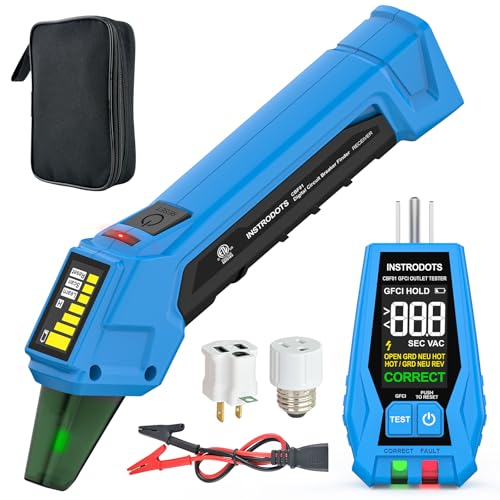
This circuit breaker finder simplifies a task that frustrates every electrical engineering student working on residential or lab wiring projects: locating the exact breaker for a specific outlet without flipping switches and running back and forth. The system uses a two-part transmitter-receiver setup — plug the transmitter into any outlet, scan the panel with the receiver, and it signals the correct breaker with both an audible buzzer and an analog bar display. The signal-injection technology doesn’t require sensitivity dial adjustment, making operation straightforward even for first-time users.
The transmitter doubles as a GFCI outlet tester, detecting six common wiring conditions and measuring GFCI trip time in seconds. The included accessories expand its versatility: a light socket adapter for fixture circuits, an alligator clip adapter for bare wires, and a 3-prong to 2-prong grounding adapter for older outlets. The carrying case keeps everything organized, and the precision-molded case is designed for dust and drop resistance. Both components automatically shut off and display low-battery warnings to prevent unexpected power loss during a job.
The system operates on 90-135V AC circuits only, so it won’t work with low-voltage DC systems common in some lab environments. Users with larger or unlabeled panels may need repeated scanning to confirm identification, but the audible feedback and bar graph are consistent enough to trust the result. For students in electrical engineering technology or anyone interning in facilities management, this tool eliminates guesswork and reduces the time spent mapping circuits.
Why it’s great
- Quickly identifies breakers without trial-and-error flipping
- Built-in GFCI tester checks wiring conditions and trip time
- Includes light socket and alligator clip adapters for versatile use
Good to know
- Only works on standard 90-135V AC circuits, not low-voltage DC
- Large panels may require repeated scans for confirmation
- Batteries included but not rechargeable
6. Nadex Scientific Calculator with Graph Functions
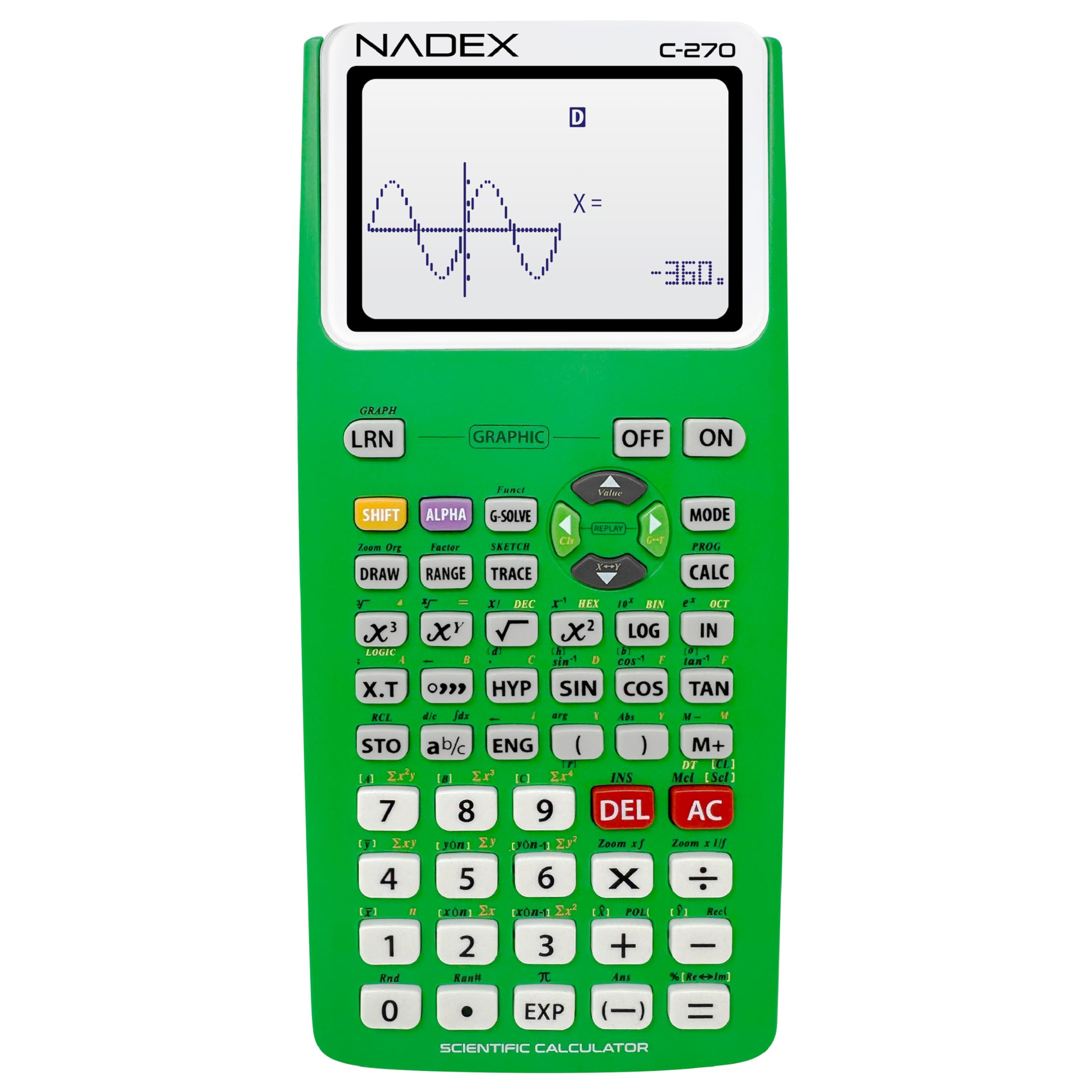
The Nadex Scientific Calculator is a strategic choice for engineering students who need approved exam-compatible devices. With over 360 functions covering complex number calculations, linear regression, standard deviation, permutations, fractions, and variable solving, it handles the computational demands of calculus, statistics, physics, and chemistry courses. The large screen displays equations and graph visualizations simultaneously, providing formula visualization without crossing into the full graphing-calculator territory that some exams prohibit (PSAT/NMSQT, SAT, ACT, and AP exams allow this model).
Three operating modes — Calculation, Angular Measurement, and Display — keep the interface organized, and the solar-powered design with an included backup AA battery means it won’t die mid-exam. The included booklet explains function usage, though users accustomed to TI-84 workflows will find a short adjustment period for the button layout. The plastic housing feels durable enough for backpack carry, and the included slide cover protects the screen during transport.
It’s important to note that the graph functions are designed for formula visualization, not full coordinate plotting — students expecting a graphing calculator will be under-equipped. The button response is crisp, and the solar panel works well under standard classroom lighting. For the engineering student who needs a reliable exam-approved calculator that covers advanced math and science coursework without the cost of a graphing model, this is a practical, budget-conscious choice.
Why it’s great
- Approved for PSAT, SAT, ACT, and AP exams
- Solar-powered with backup battery prevents dead-device exam stress
- 360+ functions cover advanced coursework through calculus and statistics
Good to know
- Graph functionality is for visualization, not full plotting
- Button layout differs from TI-84, requiring brief adaptation
- Plastic build is durable but not ruggedized for heavy drops
7. Nicpro 21PCS Professional Drafting Tools & Geometry Set

The Nicpro drafting set delivers everything a civil engineering or architecture student needs for manual drafting in a single organized case. The 21 pieces include a metal compass with extension bar, an architect scale ruler, a metal protractor, two triangle squares (45° and 30°/60°), and five reusable plastic templates for house plans, interior design, furniture, and landscaping. The templates use a standard 1/4 inch = 1 ft scale and are durable enough to handle repeated use on both flat and curved surfaces without cracking.
The two mechanical pencils (0.5 mm and 0.7 mm) come with lead refills and multiple erasers, supporting both fine-line sketching and bold layout marks. The fineliner pens provide permanent ink for final drawings, and the steel erasing shield allows precise corrections without damaging surrounding lines. The dusting brush keeps the workspace clean, a small but appreciated detail for students working on deadline. The hard case features a built-in stand for upright storage, keeping each tool visible and accessible rather than stuffed into a jumbled pouch.
The plastic case can arrive with cracks if roughly handled during shipping, and the compass could benefit from slightly tighter pivot tension for consistent circle drawing. The templates, while useful, are specific to residential and interior scales — students working on large-scale civil infrastructure projects may need additional templates. For the engineering student who still hand-drafts floor plans, sections, or details before moving to CAD, this set replaces the need to purchase individual components separately.
Why it’s great
- Complete 21-piece set covers all essential drafting tools in one case
- Five reusable templates streamline repetitive drawing elements
- Including metal scale ruler, protractor, and compasses provides professional-grade accuracy
Good to know
- Plastic case may arrive damaged if packaging is insufficient
- Compass pivot tension could be more consistent for precise circles
- Templates focus on residential/interior scales; civil infrastructure scales not included
FAQ
What is the difference between a scientific calculator with graph functions and a full graphing calculator?
Are digital scale rulers like the HOZO NeoRuler accurate enough for professional drafting work?
How many bits do I need in a precision screwdriver set for engineering student projects?
Final Thoughts: The Verdict
For most users, the best gift for engineering students winner is the ELEGOO Mega R3 Starter Kit because it combines hands-on learning with a structured curriculum that builds real embedded systems skills from first principles. If you want a tool for precision drawing and scaled measurements, grab the HOZO NeoRuler Digital Scale Ruler. And for a student deep into computer engineering or electronics repair, nothing beats the HOTO SNAPBLOQ Electric Screwdriver for safe, efficient disassembly of their daily drivers.