
You’ve tried a dozen GF flour blends, and every single cookie came out sandy, dense, or tasting like cardboard. The dream of a gluten-free chocolate chip cookie that actually bends before it breaks can feel impossible. But the right blend — with the exact balance of rice flour, starches, and gums — changes everything.
I’m Mohammad Maruf — the founder and writer behind Drink4Good. Over the last several years, I’ve analyzed batch testing protocols, certified facilities, and the granular makeup of dozens of GF flour blends to understand why some deliver a seamless crumb while others leave a gritty aftertaste.
Whether you’re baking a birthday cake or thickening a weeknight gravy, finding a reliable blend saves time, money, and heartbreak. This guide breaks down the five top-rated options to help you choose the right gf flour for your kitchen without wading through conflicting reviews.
How To Choose The Best GF Flour
GF flour blends vary wildly in composition, performance, and price per cup. The right choice depends on whether you’re making airy pastries, sturdy bread, or thickening a sauce. Ignoring the flour’s base grain and whether it contains a binder like xanthan gum is the fastest route to a ruined recipe.
Grain Base and Grit Index
Brown rice flour is often the culprit behind the “sand” texture — it is naturally grittier than white rice flour or superfine alternatives. Premium blends tend to rely on white rice flour and potato or tapioca starches for a silky crumb. If you are sensitive to texture, check for a “superfine” or “no grit” claim on the label.
Built-In Binders vs. Custom Control
Many 1-to-1 blends include xanthan gum, which provides elasticity and structure. That convenience is perfect for cookies, cakes, and pancakes but over-gums a delicate crepe or pie crust. Some blends skip the gum entirely, giving you control for yeast breads or special recipes that call for psyllium husk instead.
Allergen Safety Zone
A gluten-free label is not the same as being free from other top allergens. Some blends contain milk powder, corn, or are processed in shared facilities. If you manage celiac disease or additional food allergies, look for certification from a third-party group like the GFCO and a certified “top 9 allergen-free” claim.
Quick Comparison
On smaller screens, swipe sideways to see the full table.
| Model | Category | Best For | Key Spec | Amazon |
|---|---|---|---|---|
| Cup4Cup Multipurpose Flour | Mid-Range | Neutral-flavor bakes | 48 oz; contains milk powder | Amazon |
| Bob’s Red Mill 1 to 1 Baking Flour | Mid-Range | Everyday cookies & cakes | 64 oz; includes xanthan gum | Amazon |
| gfJules All Purpose Flour | Premium | Top-9 allergen-free baking | 1.5 lb; no brown rice flour | Amazon |
| Anthony’s Premium White Rice Flour | Single-Ingredient | Thickening & recipe control | 3 lb; fine powder; no gum | Amazon |
| freee Plain White Flour Blend | Premium Import | British-style baked goods | 2.2 lb; no xanthan gum | Amazon |
In‑Depth Reviews
1. Bob’s Red Mill Gluten Free 1 to 1 Baking Flour
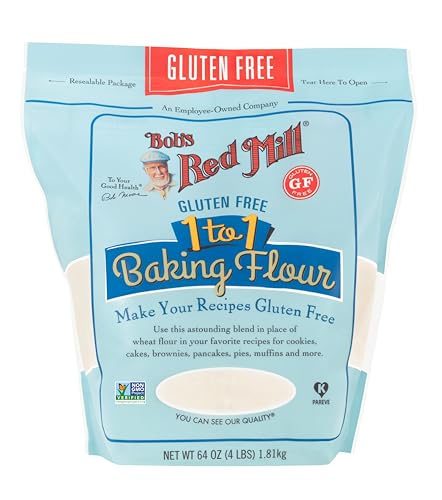
This 64-ounce bag is the workhorse of the category. The blend uses sweet rice flour, brown rice flour, potato starch, sorghum flour, and tapioca flour with xanthan gum already added. Reviewers consistently report that standard cookie and cake recipes work with zero guesswork — the chocolate cake test is passed with flying colors.
The grit level here is noticeably lower than single-ingredient brown rice flours, though it is not entirely “grit-free.” A short rest after mixing the batter helps the starches hydrate, and adding a splash of extra moisture improves the rise. This flour is explicitly not recommended for yeast breads because the xanthan gum interferes with traditional fermentation.
For daily baking, this is the most cost-effective way to keep consistent results without keeping a separate stash of specialty starches. The dedicated gluten-free facility certification reassures celiac households, and the resealable bag keeps the flour fresh between uses.
Why it’s great
- Excellent value for a large 64-ounce bag
- Pre-mixed xanthan gum eliminates guesswork
- Dedicated GF facility tested for celiac safety
Good to know
- Not suitable for yeast bread recipes
- Slight graininess from brown rice flour
2. Cup4Cup Multipurpose Flour

Developed by a Michelin-starred chef, Cup4Cup was designed to be the first genuinely neutral 1-to-1 GF substitute. Users report that sauces and gravies turn out velvety smooth, with no gelatinous or gritty texture. It handles pizza dough, dumplings, and pastries with a flaky finish that rivals wheat versions.
The critical detail here is the inclusion of milk powder — this blend is not dairy-free. If you are avoiding lactose or casein, cross-reference the ingredient list before purchasing. Recent packaging indicates some reformulation, but the core blend remains consistent: finely milled cornstarch, tapioca flour, and rice flour create an almost imperceptible switch for picky family members.
This flour is not formulated for yeast-risen bread, but it performs exceptionally well for quick breads, scones, and batters. The price per ounce is noticeably higher than bulk options, but households that value a completely neutral profile often consider it their non-negotiable pantry staple.
Why it’s great
- Finely milled — virtually undetectable grit
- Perfect for sauces with no gelatinous texture
- 1-to-1 substitution no extra binder needed
Good to know
- Contains milk powder, not dairy-free
- Not recommended for yeast breads
3. gfJules Certified Gluten Free All Purpose Flour

gfJules is the eight-time winner of the Gluten Free Awards’ consumer-voted “Best Flour” category, and its cult following is built on a simple value: no grit. The blend is formulated without brown rice flour, which eliminates the primary source of that dry, sandy mouthfeel. Users describe a light, white flour texture that yields fluffy pancakes and tender biscuits.
This is the safest choice for multi-allergen households. It is certified top-9 allergen-free, meaning zero wheat, milk, eggs, peanuts, tree nuts, soy, fish, shellfish, or sesame. The pouch is smaller — 1.5 pounds — so serious bakers will need to stock multiple bags. Some bakers found the dough for drop biscuits was too stiff unless they measured by weight rather than volume.
It contains xanthan gum, so it is ready for cup-for-cup substitution in most recipes. The higher price per ounce is the main barrier, but for families managing celiac disease plus additional allergies, the peace of mind and performance justify the investment.
Why it’s great
- No gritty brown rice flour in the blend
- Certified top-9 allergen-free facility
- Consistent light, fluffy results in cakes and muffins
Good to know
- Small pouch size for the price
- May require weight-based measuring for best results
4. Anthony’s Premium White Rice Flour
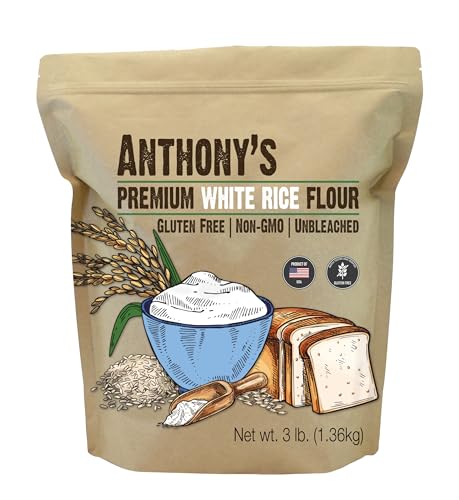
This is not a blended flour — it is a single-ingredient white rice flour ground to a fine powder. That makes it a versatile building block for DIY blend builders or for thickening soups, gravies, and batters without introducing starches you may not want. Users with MCAS (Mast Cell Activation Syndrome) particularly value it for its simple, traceable ingredient.
As a stand-alone flour, it produces waffles and cookies that are less fluffy than a multi-starch blend. The fine grind is noticeably smoother than standard white rice flour, but it lacks the binding power that xanthan gum or potato starch provide. For muffins and cakes, it works best when mixed with brown rice flour, protein powder, and a leavening agent.
The 3-pound bag is a generous size for the price, though some buyers note that similarly sized bags of brown rice flour cost less per ounce. This is an entry-level ingredient for those who want full control of their blend rather than a plug-and-play solution.
Why it’s great
- Single-ingredient traceability for sensitive diets
- Fine powder suitable for sauces and gravies
- Large bag for blending custom mixes
Good to know
- No binder — must combine with other flours for baking
- Less fluffy than multi-starch blends
5. freee Plain White Flour Blend
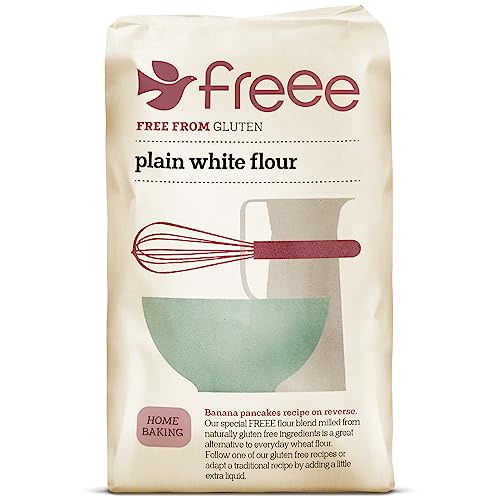
Produced by Doves Farm in the UK, freee is a milled blend of rice, potato, tapioca, maize, and buckwheat. It has no added xanthan gum, making it a favorite among bakers who want to control their own binder — the Loopy Whisk, a well-known GF baking blog, recommends it specifically for its flexibility. Reviewers report almost no graininess in Yorkshire pudding, pancakes, and lemon soufflé.
The blend is labeled vegan, Kosher, and Halal, and does not contain dairy. The lack of gum means you can use psyllium husk for yeast breads or skip the binder entirely for thin crepes. Some buyers have reported receiving bags with short expiration dates, so check the best-by date immediately upon arrival.
When baking with this flour, expect a slightly denser crumb than a gum-heavy blend unless you add your own binder. But for those who want to build a precise dough structure — especially for bread machine recipes — the clean ingredient deck offers the best control.
Why it’s great
- No xanthan gum for custom binder control
- Very fine mill with minimal graininess
- Vegan, Kosher, and Halal certified
Good to know
- Import shipping may affect freshness dates
- Requires added binder for yeast-risen breads
FAQ
Can I substitute GF flour 1-to-1 for wheat flour in any recipe?
Why does my GF bake turn out gritty or sandy?
Which GF flour works best for making yeast bread?
Is there a gluten-free flour that is also dairy-free and nut-free?
Final Thoughts: The Verdict
For most users, the gf flour winner is the Bob’s Red Mill 1 to 1 Baking Flour because it balances reliable performance, a large 64-ounce bag, and affordable cost per cup for everyday baking. If you want a completely neutral flavor and silky sauces, grab the Cup4Cup Multipurpose Flour. And for top-9 allergen-free assurance with zero gritty texture, nothing beats the gfJules All Purpose Flour.