
That butter-smooth 165Hz refresh rate you paid for? A mismatched GPU will never deliver it. Pairing a high-refresh 1440p monitor with a card that can’t sustain those frame rates is the single most expensive bottleneck in modern PC gaming. You need a GPU engineered to pump out well over 100 frames per second at 2560×1440, consistently, without thermal throttling.
I’m Mohammad Maruf — the founder and writer behind Drink4Good. My buying guides are built on weeks of cross-referencing real-world benchmarks, thermal reports, and customer longevity data across the GPU landscape to separate marketing claims from actual 1440p performance.
Whether you favor Team Green’s DLSS ecosystem or Team Red’s raw rasterization value, this guide to the gpu for 1440p 165hz gaming breaks down the current generation’s best options from budget-friendly upgrades to premium flagships that justify their price with genuine frame-rate consistency.
How To Choose The Best GPU For 1440p 165Hz
Buying a GPU for high-refresh 1440p means balancing three factors: raw frame rate, visual fidelity settings, and thermal/acoustic behavior. The wrong choice leaves you either GPU-bound below 100 FPS or paying for VRAM you don’t need.
Prioritize VRAM Over Hype
At 2560×1440, modern AAA titles easily consume 8GB of VRAM when textures are turned up. Cards with 12GB or 16GB provide breathing room for ray tracing, high-res texture packs, and future releases. An 8GB card can work, but it means compromising texture quality sooner than you’d like.
Understand the Upscaling Ecosystem
To hit 165 FPS consistently in demanding titles, upscaling is almost mandatory. NVIDIA’s DLSS 3.5 and DLSS 4 (on RTX 50 series) provide high-quality frame generation and temporal upscaling. AMD’s FSR 4 and Radeon Anti-Lag offer similar functionality, though image quality edges slightly toward DLSS in side-by-side comparisons. Choose your ecosystem based on which visual artifacts you find less objectionable.
Cooling Is Not Optional
Sustaining 165 FPS pushes GPU power draw above 250W for extended periods. A triple-fan cooler or a dual-fan design with a large heatsink is essential. Cards with 0dB fan-stop technology are nice for desktop use but ensure the thermal solution can keep the card under 75°C during a two-hour gaming session to avoid throttling.
Quick Comparison
On smaller screens, swipe sideways to see the full table.
| Model | Category | Best For | Key Spec | Amazon |
|---|---|---|---|---|
| GIGABYTE RX 9070 XT Gaming OC | RDNA 4 | 1440p max settings | 3060 MHz Boost Clock | Amazon |
| PNY RTX 5070 Epic-X ARGB OC | Blackwell | DLSS 4 & ray tracing | 2685 MHz Boost / GDDR7 | Amazon |
| ASUS Prime RTX 5070 | Blackwell | SFF builds / quiet cooling | 2542 MHz Boost / 2.5-slot | Amazon |
| MSI RTX 5070 Gaming Trio OC | Blackwell | Sustained 1440p high FPS | 2625 MHz Boost / Tri Frozr 4 | Amazon |
| GIGABYTE RTX 5070 Windforce OC | Blackwell | Value-focused 1440p | 12GB GDDR7 / SFF | Amazon |
| ASRock RX 9070 XT Challenger | RDNA 4 | 1440p ultra / content creation | 2970 MHz Boost / 16GB | Amazon |
| PowerColor Reaper RX 9070 XT | RDNA 4 | Silent 2-slot operation | True 2-slot / 2x 8-pin | Amazon |
| ASUS Prime RX 9070 XT OC | RDNA 4 | Dual BIOS / Linux | OC Edition / 16GB GDDR6 | Amazon |
| Sapphire Nitro+ RX 9070 XT | RDNA 4 | Premium build / 4K capable | 3060 MHz / 3-slot cooler | Amazon |
| XFX Swift RX 9060 XT OC | RDNA 4 | Entry-level 1440p | 3320 MHz Boost / 16GB | Amazon |
| EVGA GTX 1080 FTW | Pascal | Older system upgrade | 8GB GDDR5X / 1860 MHz | Amazon |
In‑Depth Reviews
1. GIGABYTE Radeon RX 9070 XT Gaming OC 16G

The GIGABYTE RX 9070 XT Gaming OC strikes the near-perfect balance of raw rasterization power, 16GB VRAM, and efficient cooling for sustained 1440p 165Hz gaming. Its 3060 MHz boost clock, paired with a robust Windforce triple-fan cooler and server-grade thermal gel, keeps core temps under 65°C even during extended sessions, as multiple verified buyers report. Hawk fans generate high static pressure without the whine typical of mid-range coolers, and the card draws just enough power to stay below the 300W threshold, making it compatible with a quality 750W PSU.
Real-world performance data from owners confirms this card delivers well over 300 FPS in competitive titles like Call of Duty when paired with a strong CPU, and 150+ FPS in Cyberpunk 2077 at max settings. The 16GB GDDR6 buffer ensures that texture streaming at 1440p high settings remains smooth, even in modded games. Overclocking headroom is solid, but the factory OC is aggressive enough that most gamers won’t need to tweak. The dual BIOS switch offers a safety net for those who do push further.
For its price point, the RX 9070 XT Gaming OC offers the highest raw frame rate per dollar of any 1440p 165Hz GPU currently available. AMD’s FSR 4 provides competitive upscaling, and the card’s ray tracing performance has closed the gap significantly with NVIDIA’s RTX 40-series. The only real drawback is the card’s size — it extends 11.34 inches and occupies almost three slots, so case compatibility must be verified before purchase.
Why it’s great
- Excellent 1440p high-refresh performance out of the box
- 16GB VRAM future-proofs texture-heavy titles
- Cool and quiet under sustained load
Good to know
- Requires 3x 8-pin PCIe power connectors
- Runs slightly hotter than premium models
- Large footprint may not fit compact cases
2. PNY NVIDIA GeForce RTX 5070 Epic-X ARGB OC Triple Fan
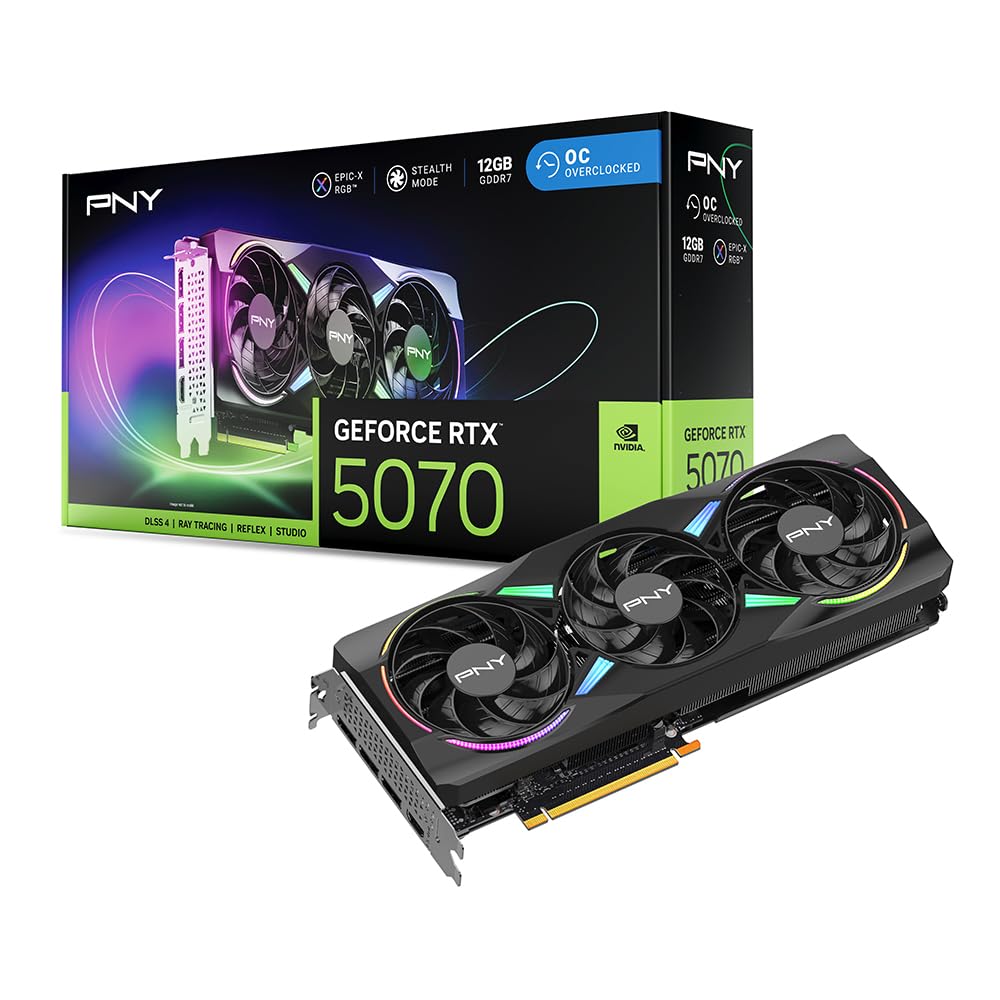
The PNY RTX 5070 Epic-X brings NVIDIA’s Blackwell architecture and GDDR7 memory to the 1440p 165Hz arena with a compelling focus on AI-assisted performance. Its 2685 MHz boost clock is backed by fifth-gen Tensor Cores and fourth-gen Ray Tracing Cores, enabling DLSS 4 frame generation that can push frame rates well past what raw silicon alone achieves. Verified buyers confirm it outperforms the RTX 4070 Super in native gaming benchmarks, with one owner reporting excellent cooling and quiet operation even under max load in a compact HP Z4 G4 mini tower.
The 12GB GDDR7 memory runs at 28 Gbps across a 192-bit bus, delivering up to 672 GB/s of bandwidth — enough for high-resolution textures and ray tracing workloads at 1440p. The triple-fan Epic-X cooler handles the 250W TDP comfortably, with owners reporting case temperatures dropping after swapping from older cards. The 2.4-slot design is SFF-ready, and the included 16-pin to dual 8-pin adapter ensures compatibility with most 750W PSUs.
This card is the sweet spot for users who want DLSS 4’s visual quality, NVIDIA Reflex for competitive latency reduction, and the ability to run demanding path-traced titles at high frame rates. The factory OC of approximately 8% provides extra headroom via the NVIDIA app. Availability can be inconsistent, and the card’s price fluctuates, but when found near MSRP it represents the most advanced feature set for 1440p high-refresh gaming.
Why it’s great
- DLSS 4 and frame gen for demanding titles
- Excellent raw raster over 4070 Super
- Cool and quiet triple-fan cooler
Good to know
- 12GB VRAM, not 16GB
- Price can spike above MSRP
- Requires 750W PSU with 16-pin adapter
3. ASUS SFF-Ready Prime NVIDIA GeForce RTX 5070

The ASUS Prime RTX 5070 is engineered specifically for small-form-factor builds without sacrificing the performance required for 1440p 165Hz gaming. Its 2.5-slot width and compact length fit standard SFF cases while housing Axial-tech fans with a smaller hub and barrier ring that increases downward air pressure. Verified owners report excellent results when paired with CPUs like the 7800X3D, achieving smooth 1440p competitive gaming with all the benefits of DLSS 4 and NVIDIA Reflex.
The phase-change GPU thermal pad is a standout feature — it liquifies above 45°C to fill microscopic gaps, improving heat transfer to the heatsink. Owners report load temperatures of 60-67°C with Performance BIOS engaged, and the 0dB technology stops fans entirely during light desktop use. The Dual BIOS switch lets users toggle between a quiet profile and a performance profile, offering flexibility for different use cases. The card scales well up to 4K, though 1440p 165Hz is clearly its optimum operating zone.
At its price point, the ASUS Prime RTX 5070 delivers the best combination of small size, effective cooling, and modern feature support for 1440p. The clean black aesthetic and lack of RGB appeal to builders who prefer subtlety. The only compromise is that the card’s compact cooler, while effective, may not sustain the same peak overclocks as larger triple-fan models. It requires two 8-pin PCIe power connections via the included adapter.
Why it’s great
- Fits true SFF and ITX cases
- Phase-change thermal pad improves temps
- Dual BIOS for flexibility
Good to know
- Not silent under full load
- OC headroom limited by compact cooler
- Needs 16-pin adapter from PSU
4. MSI RTX 5070 12G Gaming Trio OC

MSI’s Gaming Trio OC takes the RTX 5070 foundation and adds a premium cooling solution that keeps noise levels impressively low while sustaining high boost clocks. The Tri Frozr 4 thermal design features Stormforce fans with claw-textured seven-blade designs, a nickel-plated copper baseplate, and square-shaped Core Pipes that maximize contact area. Verified buyers consistently praise the card’s ability to stay cool and quiet under 1440p loads, with one owner noting it runs all desired games at 4K settings without upscaling.
The 2625 MHz boost clock is the highest factory OC among the RTX 5070 models reviewed, and the card maintains this speed consistently thanks to the large heatsink. GDDR7 memory provides the bandwidth needed for ray tracing workloads, and the 12GB buffer is sufficient for current 1440p titles at ultra settings. Owners report easy installation and premium build quality that justifies the slightly higher cost over base models.
This card excels in scenarios where visual fidelity and consistent frame times matter more than saving money. The cooling headroom allows for manual overclocking, and the card’s thermal performance means fans rarely spin at audible levels. The main consideration is the price premium over the Windforce model — you’re paying for the cooler and build quality more than raw performance gains.
Why it’s great
- Very quiet under load
- Premium nickel-plated copper baseplate
- Sustains high boost clocks consistently
Good to know
- Costs more than base 5070 models
- 12GB VRAM may limit future ultra settings
- Large footprint
5. GIGABYTE GeForce RTX 5070 WINDFORCE OC SFF 12G

The GIGABYTE RTX 5070 Windforce OC is the minimalist’s choice for 1440p 165Hz gaming — no RGB, no fuss, just reliable performance delivered quietly. Its Windforce triple-fan cooling system keeps the 12GB GDDR7 card running at low temperatures, with verified owners reporting it runs quieter and smaller than previous generation cards like the RTX 3070 Master. The SFF-ready design means it fits comfortably in compact cases while still pushing high frame rates at 1440p.
Real-world feedback from buyers highlights the card’s reliability and ease of setup. One user running a Ryzen 9 9950X reports flawless operation with excellent build quality and low temperatures. The card is designed to be an efficient upgrade path from RTX 30-series GPUs, offering significant performance improvements without a massive power draw increase. The 2600 MHz boost clock ensures consistent frame times in competitive shooters.
The Windforce OC is ideal for gamers who prioritize function over aesthetics and want a quiet, efficient 1440p card. The lack of RGB keeps the price lower than flashier models, and the cooling performance is more than adequate for the 250W TDP. The main compromise is the absence of any thermal headroom for aggressive overclocking — this card is best used at stock settings.
Why it’s great
- Quiet and efficient Windforce cooling
- Clean aesthetics — no RGB
- SFF-ready for compact builds
Good to know
- Limited manual overclocking headroom
- 12GB VRAM is the minimum for future 1440p
- Basic packaging, no accessories
6. ASRock Radeon RX 9070 XT Challenger 16GB OC
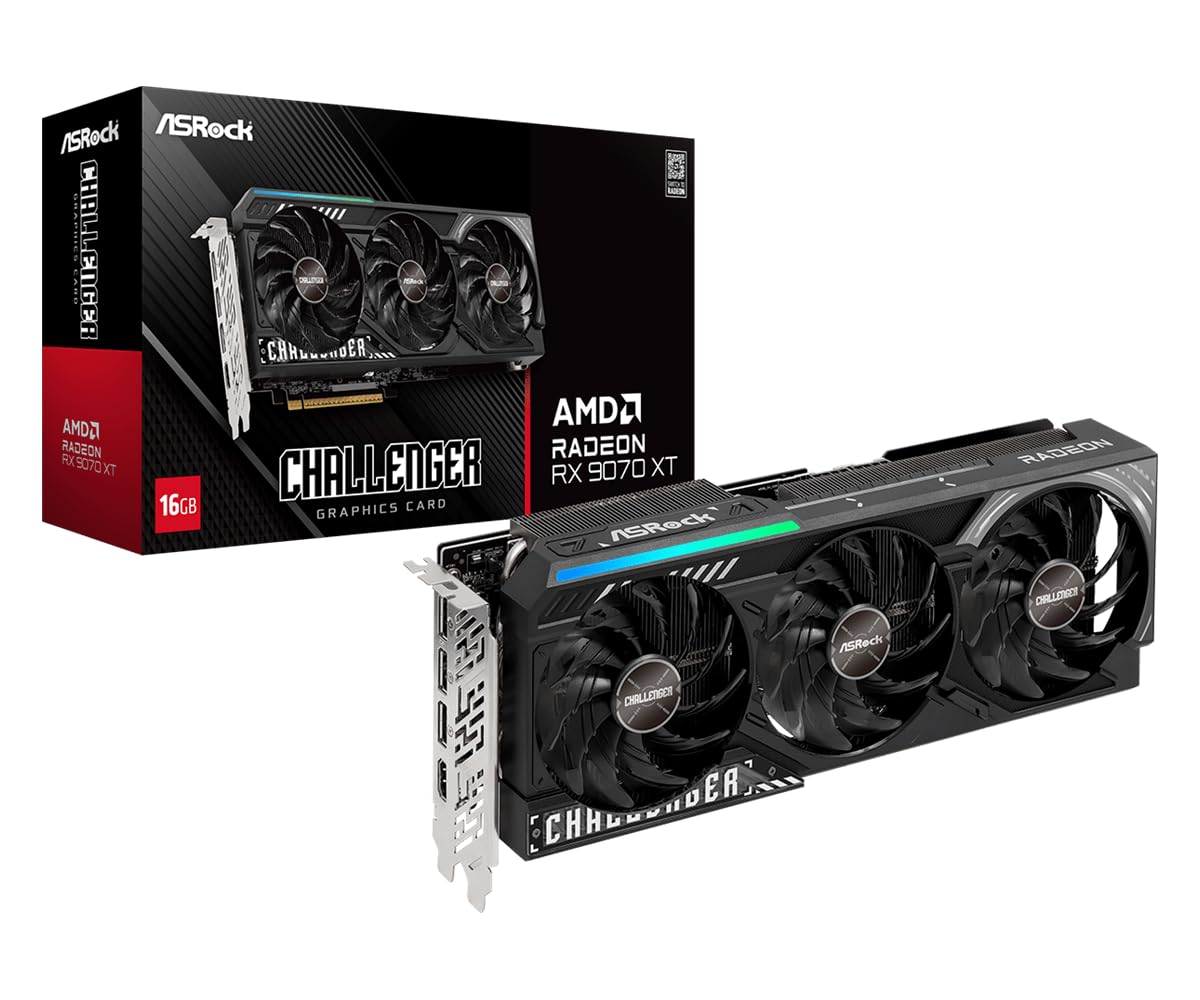
The ASRock RX 9070 XT Challenger brings RDNA 4 architecture to the 1440p 165Hz market with a 2970 MHz boost clock that pushes frame rates to the limit. Its triple-fan cooler with Striped Axial Fan technology and 0dB silent cooling provides excellent thermal management, with verified owners reporting stable and cool operation even during extended gaming sessions. The card is a popular choice for white-themed builds due to its clean aesthetic, though the RGB control software has been noted as buggy by some buyers.
With 16GB of GDDR6 memory on a 256-bit bus, this card handles ultra settings at 1440p with ease. Owners pairing it with a 7600X3D report it as a massive upgrade from previous generation cards, running all games at maximum settings without issue. The PCIe 5.0 interface ensures future compatibility with next-generation motherboards, and the three DisplayPort 2.1a outputs support high-refresh 4K displays.
The Challenger series represents ASRock’s value-oriented offering, and this card delivers strong performance at a competitive price. The dual BIOS feature and physical lighting switch offer flexibility, but the primary value proposition is raw 1440p performance per dollar. The card runs hotter than some premium models, but within acceptable margins, and the cooling solution is effective enough to prevent throttling.
Why it’s great
- High 2970 MHz boost clock for 1440p
- 16GB VRAM future-proofs
- PCIe 5.0 ready
Good to know
- RGB software can be unreliable
- Runs warmer than premium models
- No physical lighting control mod
7. PowerColor Reaper AMD Radeon RX 9070 XT 16GB GDDR6
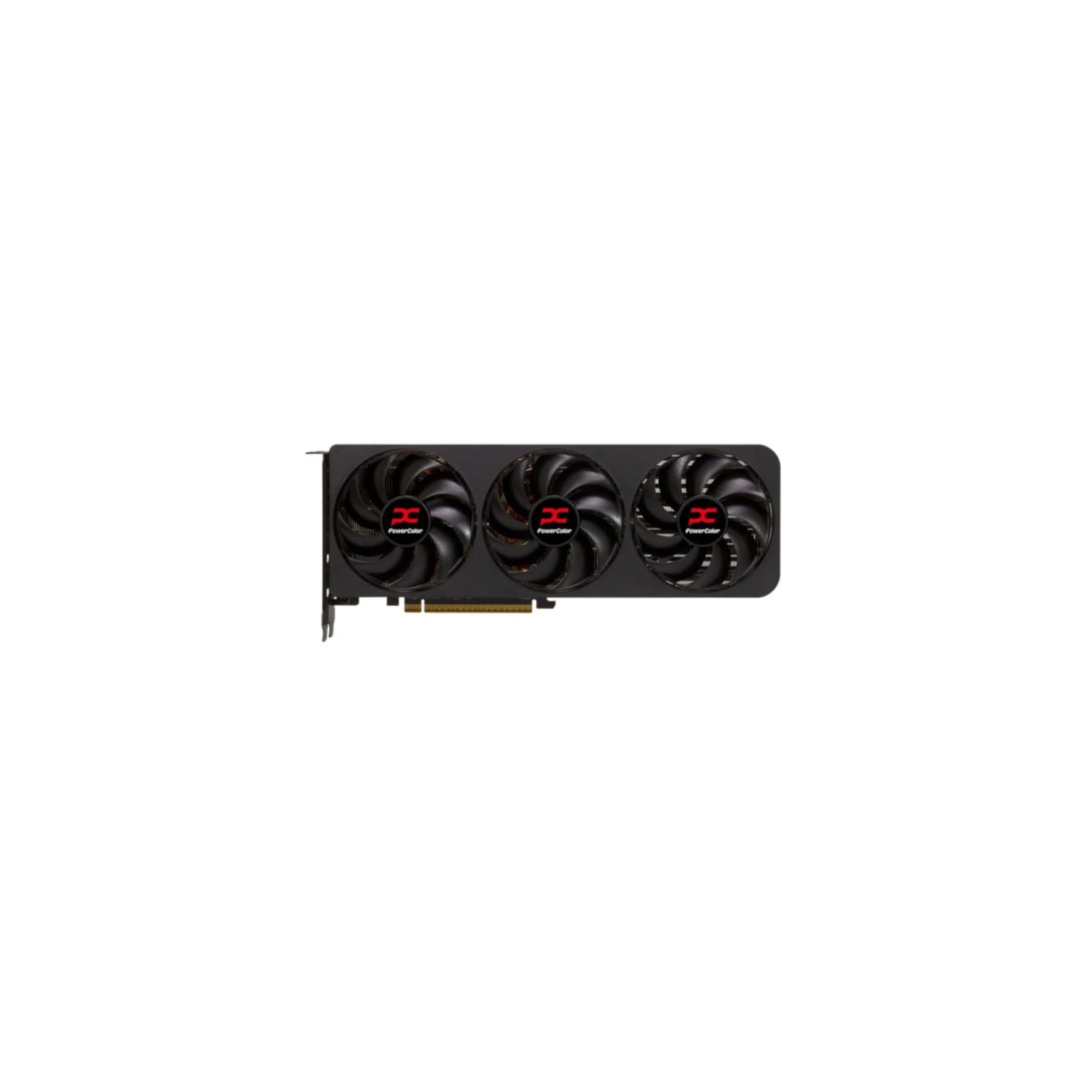
The PowerColor Reaper RX 9070 XT is an anomaly in the current GPU landscape — a genuine 2-slot card with standard 2x 8-pin power connectors that delivers premium 1440p 165Hz performance without the bulk. Multiple verified buyers who switched from NVIDIA are impressed by its dead-silent operation and stable performance. One reviewer detailed experiencing display issues with an ASUS Prime RTX 5070 Ti before swapping to this card and finding it ran perfectly with lower temperatures and no coil whine.
The 16GB GDDR6 buffer and 2400 MHz base clock provide ample headroom for 1440p games. Owners report excellent ray tracing performance and the ability to run local LLM models thanks to the generous VRAM allocation. The card undervolts well, with one user reporting stable operation at -50mV and a 12% power limit reduction while maintaining high frame rates in demanding titles. The 289mm length makes it one of the more compact RX 9070 XT options, fitting comfortably in mid-tower cases.
The Reaper is the ideal choice for builders who want a straightforward, reliable, and efficient 1440p card that doesn’t demand proprietary power connectors or an oversized case. Its simplicity is its strength — no RGB, no gimmicks, just solid performance with excellent acoustics. The trade-off is slightly lower peak boost clocks compared to factory OC models, but the thermal and noise performance more than compensates for the minor frame rate difference.
Why it’s great
- True 2-slot design, easy case fit
- Dead silent operation
- Standard 2x 8-pin power — no adapters
Good to know
- Lower stock boost than OC models
- Basic design, no RGB
- Spare power connector clearance
8. ASUS Prime AMD Radeon RX 9070 XT 16GB GDDR6 OC Edition

The ASUS Prime RX 9070 XT OC Edition combines dual-ball bearing fans that last twice as long as sleeve bearing designs with a phase-change GPU thermal pad for optimized heat transfer. This engineering focus on longevity and thermal management makes it a compelling choice for users who plan to keep their 1440p 165Hz GPU for several generations. Verified Linux users report excellent out-of-box performance on Fedora, with idle temperatures of 28-32°C and stressed temperatures of only 55-59°C.
Performance at 1440p is exceptional, with owners reporting 170-190 FPS in Red Dead Redemption 2 at medium settings (a massive upgrade over previous generation cards), and 100-110 FPS at ultra. The 2.5-slot design and 311mm length mean it requires a spacious case, but the three PCIe power connectors are standard and easy to manage. The Dual BIOS feature lets users switch between a quiet profile and a performance profile via a physical switch.
This card is best suited for users who value reliability and consistent performance over flashy RGB or extreme overclocking. The dual-ball bearing fans significantly reduce the risk of fan failure over the card’s lifespan, and the 0dB technology keeps the system silent during light use. The only significant concern is ASUS’s warranty support, which some owners have reported as poor. The card feels slightly plasticky compared to premium models, but this doesn’t affect performance.
Why it’s great
- Dual-ball bearing fans for longevity
- Excellent thermal performance (55-59C stressed)
- Dual BIOS for flexibility
Good to know
- Large card, ensure case compatibility
- Build feels slightly plasticky
- Warranty support reputation
9. Sapphire 11348-01-20G Nitro+ AMD Radeon RX 9070 XT Gaming OC

The Sapphire Nitro+ RX 9070 XT Gaming OC represents the pinnacle of AMD’s partner card engineering for the 1440p 165Hz segment. Its massive 3-slot cooler, dual HDMI and dual DisplayPort outputs, and 3060 MHz boost clock deliver performance that rivals or exceeds NVIDIA’s mid-range offerings while maintaining whisper-quiet operation. Verified owners consistently describe it as an “absolute monster,” with one noting a 60-90% performance uplift over a 6750 XT at both 1440p and 4K.
The build quality is exceptional — the card features a clean cable routing system under the backplate and no coil whine, according to multiple reports. The high boost clocks around 3.0 GHz are sustained thanks to the enormous heatsink, and the 16GB GDDR6 buffer handles the most demanding texture packs without stuttering. One owner reported being completely satisfied after returning other brands, praising the Nitro+’s combination of premium materials and effective thermal solution.
The Nitro+ is the obvious choice for users who want the best possible 1440p experience from the AMD ecosystem and are willing to accommodate a large card. Its noise levels are among the lowest in its class, and the dual HDMI outputs are useful for multi-display setups. The main considerations are the physical size (over 300mm long and 3+ slots thick), the need for an 850W PSU, and the price premium. The included support bracket is reportedly insufficient, so a separate GPU support is recommended.
Why it’s great
- Exceptional build quality and materials
- Very quiet and cool under load
- Sustains ~3.0 GHz boost clocks
Good to know
- Very large — verify case and PSU
- Requires 850W power supply
- Included brace insufficient, need support
10. XFX Swift AMD Radeon RX 9060 XT OC Gaming Edition 16GB
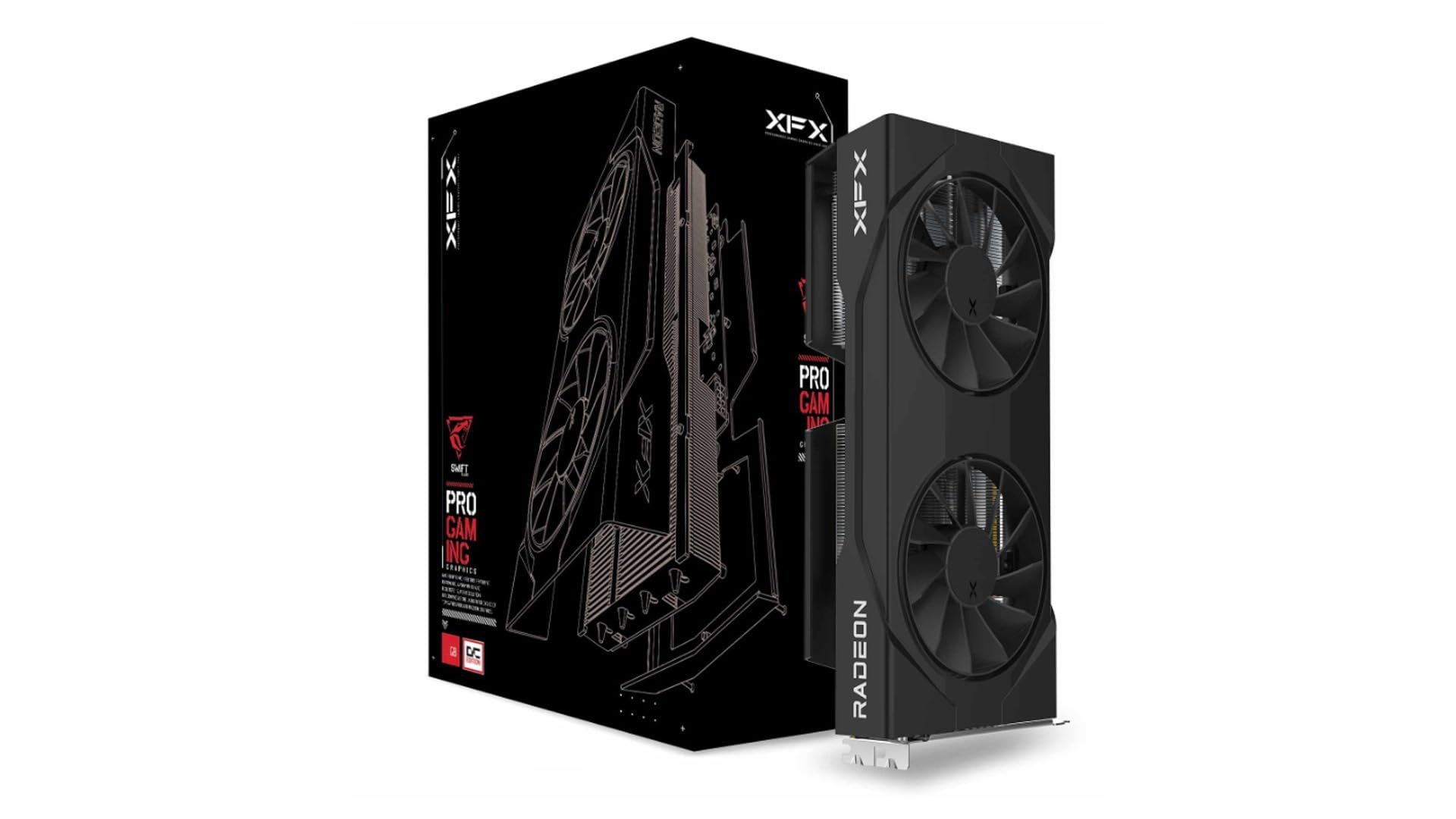
The XFX Swift RX 9060 XT OC Gaming Edition is a budget-friendly entry point into 1440p 165Hz gaming that doesn’t compromise on VRAM. Its 16GB GDDR6 buffer is generous at this price tier, and the 3320 MHz boost clock provides solid raw performance that buyers describe as a “budget beast.” Verified owners report Time Spy scores around 17,000 and stable temperatures around 60°C, with one user confirming it handles 1440p easily across their game library.
The dual-fan Swift cooling solution is effective for the card’s 1900 MHz base frequency, and the XFX build quality is reliable with buyers praising its power efficiency and clean graphics output. The 3840×2160 display resolution maximum means it can also serve as a capable 4K card for less demanding games. The PCI-Express x16 interface ensures broad compatibility with existing systems.
This card is the best option for users on a tighter budget who want to experience high-refresh 1440p gaming without sacrificing modern features like hardware-accelerated ray tracing and AI upscaling. The 16GB VRAM ensures that texture detail levels won’t need to be compromised in current and near-future titles. The trade-off is lower peak performance in the most demanding AAA titles, meaning you may need to adjust settings from ultra to high to maintain 165 FPS consistently.
Why it’s great
- Excellent value — high VRAM at low cost
- Cool and quiet operation
- Solid 1440p high-refresh performance
Good to know
- Not enough for max settings in all AAA games
- Only 2 display ports and 1 HDMI
- Lower base clock than higher-tier cards
11. EVGA GeForce GTX 1080 FTW GAMING ACX 3.0
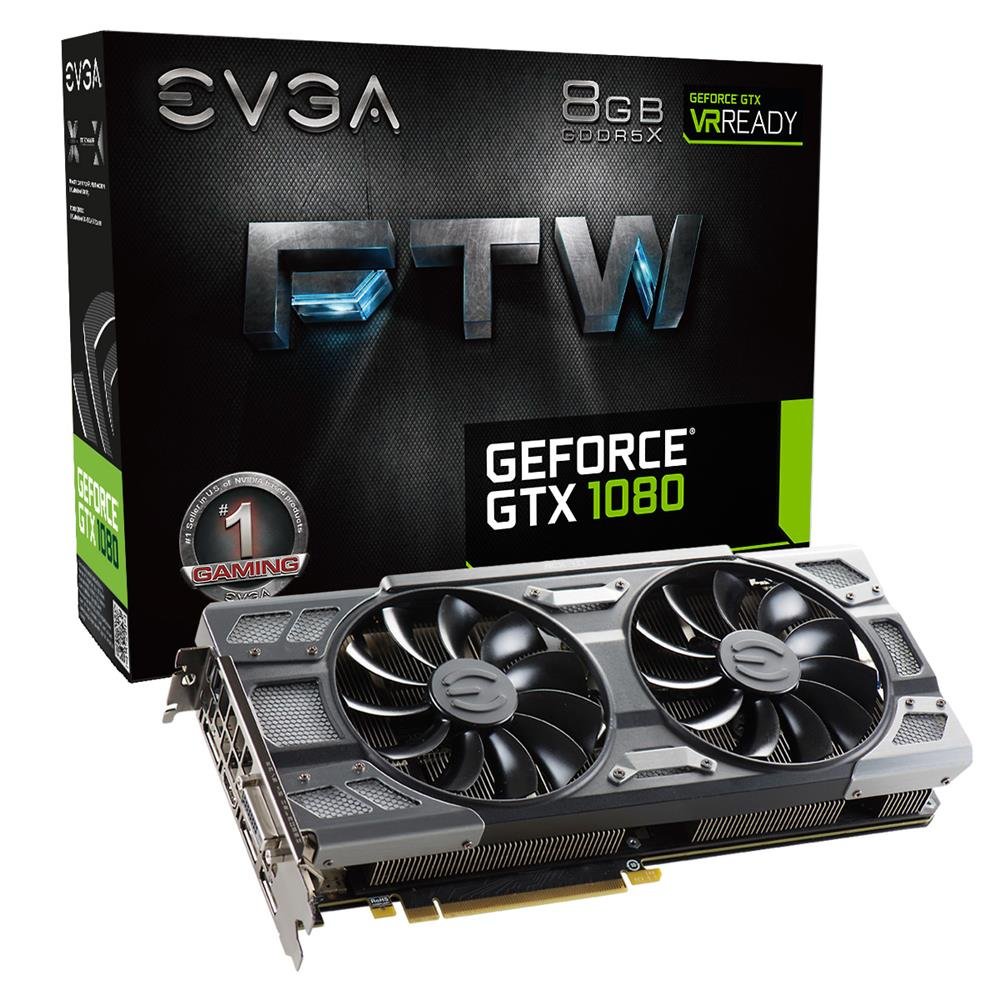
The EVGA GTX 1080 FTW is a legacy Pascal-era card that still holds relevance for budget-conscious 1440p 165Hz setups. Its 1860 MHz boost clock and 8GB GDDR5X memory provide playable frame rates in older and esports titles, with verified owners reporting 100-144 FPS in games like Battlefield 1 and Star Wars Battlefront at ultra settings. The ACX 3.0 cooler with 0dB fan-stop technology keeps idle temperatures as low as 19-23°C with a custom fan curve, and the Dual BIOS feature offers a safety net for overclocking experiments.
ETVGA’s legendary customer support is a significant advantage for this card, with owners praising the 24/7 support and easy RMA process. The included accessories like the poster and stickers add perceived value. The FTW version’s 10-phase power delivery and 10cm fan provide strong build quality that has aged well, with many owners reporting several years of reliable service.
The GTX 1080 FTW is only recommended for users who are building on a very tight budget and primarily play competitive esports titles or older AAA games at 1440p. It lacks modern features like hardware-accelerated ray tracing, DLSS, and FSR support beyond basic upscaling. For newer AAA games, it will struggle to maintain 165 FPS at native 1440p, requiring significant graphical compromises. It’s a capable stopgap, not a long-term 1440p 165Hz solution.
Why it’s great
- Excellent build quality and EVGA support
- Dual BIOS for overclocking safety
- Very cool idle temps with fan stop
Good to know
- No hardware ray tracing or DLSS
- Struggles with modern AAA at 1440p
- 8GB VRAM is a bottleneck for new titles
FAQ
Do I need a 16GB GPU for 1440p 165Hz gaming?
Is DLSS or FSR more important for hitting 165 FPS at 1440p?
Final Thoughts: The Verdict
For most users, the gpu for 1440p 165hz winner is the GIGABYTE Radeon RX 9070 XT Gaming OC because it delivers the best balance of raw frame rate, 16GB VRAM, and efficient triple-fan cooling at its price point. If you want DLSS 4’s superior upscaling and frame generation, grab the PNY RTX 5070 Epic-X ARGB OC. And for a compact SFF build that doesn’t sacrifice 1440p 165Hz performance, nothing beats the ASUS Prime RTX 5070.