
That flaking black goo under your truck isn’t just ugly — it’s the first sign of a rust infection that can turn a solid frame into Swiss cheese within two winters. The wrong undercoating traps moisture against the metal, accelerating the very corrosion you’re trying to stop. Choosing a proper formulation means understanding how each product bonds, cures, and seals against road salt, brine, and gravel impacts.
I’m Mohammad Maruf — the founder and writer behind Drink4Good. I analyze aerosol chemistry, dry-film thickness, and salt-spray resistance data to separate true frame protectants from glorified cosmetic coatings.
After comparing seven top-selling formulations spanning rubberized seals, lanolin-based barriers, and internal cavity wands, the best frame undercoating choices break down by your specific rust-fighting strategy, not a one-size-fits-all promise.
How To Choose The Best Frame Undercoating
Frame undercoating isn’t paint — it’s a sacrificial barrier that must flex with the metal, resist stone chips, and never become brittle. The three factors below determine whether your coating lasts the winter or peels off by spring.
Film Chemistry: Rubberized vs. Wax vs. Lanolin
Rubberized coatings form a thick, flexible skin that deadens sound and blocks moisture, but they can delaminate if applied over loose rust. Wax-based coatings self-heal small scratches and creep into crevices, though they stay tacky. Lanolin formulas creep into seams and resist wash-off but remain oily, attracting dirt.
Application Method: Aerosol vs. Roll-On vs. Internal Wand
Aerosol cans offer precise control for wheel wells and exposed frame rails, while roll-on kits like Durabak build thicker films for high-impact areas. Internal cavity coatings require a wand attachment to reach inside closed frame sections — the most common spot where rust starts unseen.
Coverage and Dry-Film Thickness
A single heavy coat delivering at least 8–10 mils dry film thickness provides real protection. Check each product’s coverage per can: lightweight sprays may require three coats to match one coat of a thicker formula. Budget-friendly options often sacrifice build per pass, increasing labor time.
Quick Comparison
On smaller screens, swipe sideways to see the full table.
| Model | Category | Best For | Key Spec | Amazon |
|---|---|---|---|---|
| Rust-Oleum Black Undercoating 12-Pack | Rubberized Aerosol | Volume coverage for full undercarriage | 12 x 15 oz cans | Amazon |
| 3M 3584 Professional Grade Rubberized | Rubberized Aerosol | Professional-grade sound deadening | 240-300 sq ft coverage per pack | Amazon |
| Durabak 18 Bed Liner Kit | Roll-On Coating | Thick impact-resistant barrier | Quart, textured rubber grit | Amazon |
| Eastwood Internal Frame Coating | Internal Aerosol | Inside closed frame rails | 14 oz with 360° wand | Amazon |
| Blaster Surface Shield 6-Pack | Lanolin Aerosol | Long-term salt-belt protection | 12 oz, low-VOC lanolin | Amazon |
| POR-15 Rubberized Undercoating | Rubberized Aerosol | Rust-preventive system compatibility | 22 oz, satin finish | Amazon |
| Eastwood 2k Aerosol Clear Coat | Clear Topcoat | Sealing over base paint/coating | 11.8 oz, high-gloss | Amazon |
In‑Depth Reviews
1. Rust-Oleum Black Undercoating 15 oz. (12 Pack)

This 12-can bundle delivers the highest total coverage in this lineup at a per-can cost that makes full-frame jobs practical. Each 15-ounce can sprays a rubberized matte film that bonds aggressively to clean bare metal and seals out moisture, road salt, and gravel impact. The matte finish hides surface imperfections better than gloss alternatives.
Users restoring work trucks and off-road rigs report excellent adhesion on prepped surfaces, though the coating remains somewhat soft — it will self-heal minor stone nicks over time. The 12-pack provides enough material to coat an entire SUV undercarriage plus wheel wells, making it the most cost-efficient option for a full-vehicle project.
Be aware that overspray from rubberized coatings is notoriously difficult to remove from painted body panels. Masking vulnerable areas before application is mandatory. The can design lacks a directional straw extension, so internal frame cavities require a separate product like Eastwood’s Internal Frame Coating.
Why it’s great
- 12-can bundle covers an entire vehicle undercarriage
- Aggressive adhesion to properly prepped metal
- Self-healing soft film resists stone chipping
Good to know
- Overspray is extremely difficult to remove from paint
- Lacks a wand for internal cavity spraying
- Film stays tacky longer in humid conditions
2. 3M 3584 Professional Grade Rubberized Undercoating 6 16oz Cans

The 3M 3584 is the aerosol standard for professional shops that need consistent film build and reliable sound dampening. Each 16-ounce can delivers a textured rubber coating that reduces road noise transmission through wheel wells and floor pans significantly — a meaningful upgrade for daily drivers and overland vehicles. The six-can pack covers roughly 240-300 square feet total.
Users in salt-belt states like upstate New York report annual refresh applications maintain rust-free frames year after year. The textured finish hides surface irregularities and provides a slightly grippy surface that reduces stone impact damage compared to smooth coatings. Spray pattern uniformity is excellent, requiring fewer passes to achieve full coverage.
The 24-hour full cure time means the vehicle must remain stationary overnight. Wet-film thickness builds well on vertical surfaces without sagging, but applied thickness is lower per pass than roll-on options like Durabak. For full-vehicle coverage, budget for six-plus cans depending on frame size.
Why it’s great
- Exceptional sound deadening for road noise reduction
- Consistent spray pattern with minimal runs
- Proven annual rust prevention in harsh salt belts
Good to know
- Full 24-hour cure requires down time
- Lower film thickness per pass than roll-on coatings
- No internal cavity wand included
3. Durabak 18 Bed Liner KIT – Roll On Paint Coating (Quart)
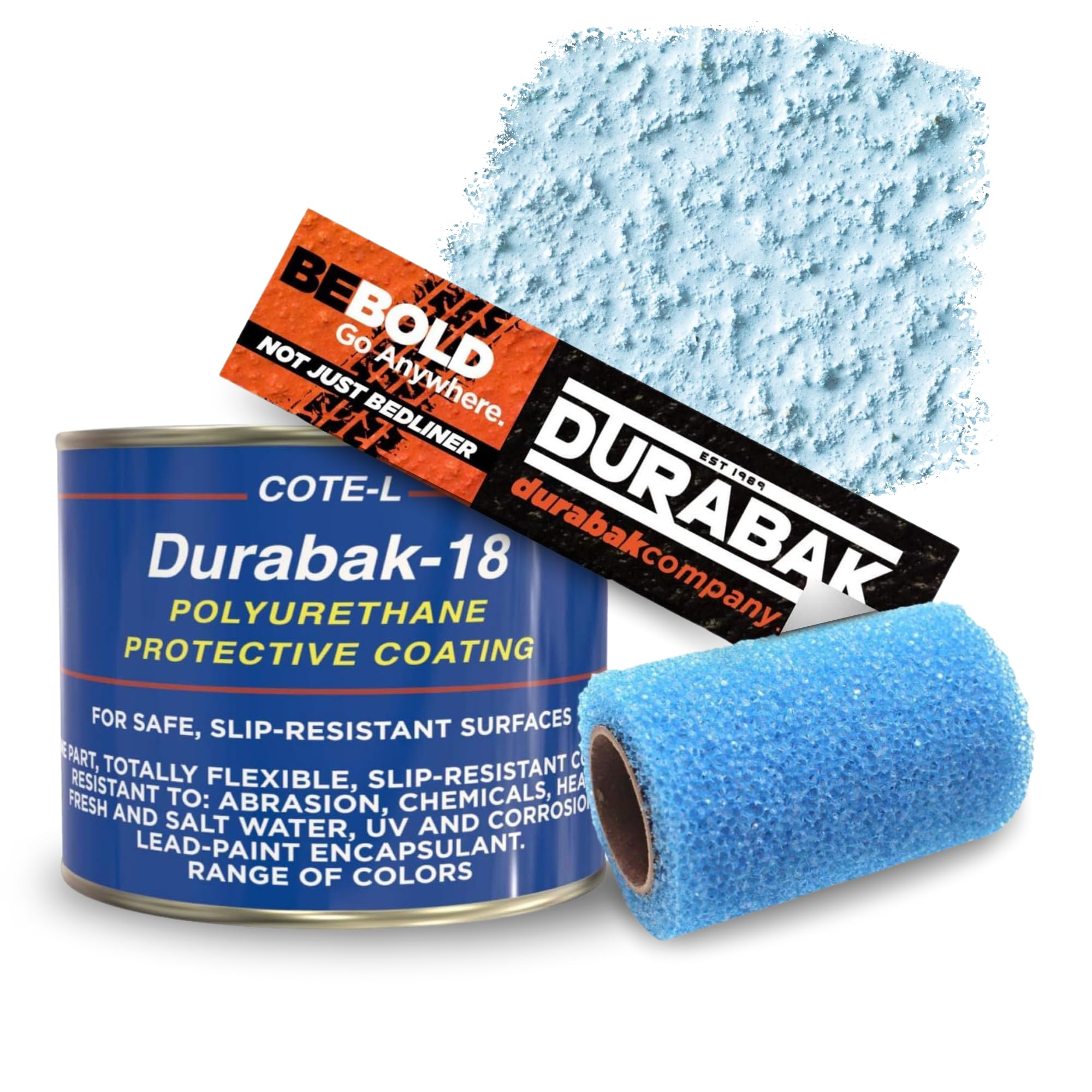
Durabak is a heavy-duty roll-on coating that builds much thicker dry-film layers than any aerosol — typically 15-20 mils per coat compared to 3-5 mils from spray cans. The textured rubber granule formulation creates a tough, slip-resistant surface that stands up to gravel impacts, salt spray, and physical abrasion on frame rails and underbody panels. A single quart covers roughly 8-10 square feet with two coats.
Unlike aerosol coatings that require multiple passes, Durabak achieves protective thickness in two roller applications. Users report excellent durability on truck beds, running boards, and boat trailers with no chipping or peeling after two years. The coating remains flexible, so it won’t crack as the frame flexes under load. Available in 16 colors for cosmetic customization.
The biggest challenge is the strong solvent smell — application requires excellent ventilation and a respirator. The consistency is thick, and mixing must remove any settled solids before rolling. Foam rollers cannot be reused between days, so plan for disposable applicators. Not suitable for internal cavity treatment.
Why it’s great
- Extremely thick film for maximum impact protection
- Flexible coating does not crack with frame movement
- 16 color options for cosmetic matching
Good to know
- Strong solvent fumes require respirator use
- Rollers are single-use for multi-day projects
- Thick consistency requires thorough mixing
4. Eastwood Internal Frame Coating Aerosol 14 Oz

This is the only product in this lineup specifically designed for inside closed frame rails — the hidden zone where rust eats frames from the inside out. The 14-ounce aerosol includes a 360-degree spray wand that reaches deep into boxed frame sections, bolt holes, and drain slots. The formula acts as both a rust converter and a protective barrier, chemically neutralizing minor surface rust before sealing it.
Users working on Jeep JKUs and GM A-body doors report the wand provides full coverage along five-foot lengths when properly maneuvered. The gloss black finish dries to a hard shell that won’t wash out with cavity drainage. The converter action eliminates the need for complete rust removal inside tubes, saving hours of wire-brush work.
The wand lacks rigidity — tapping it to a straightened coat hanger improves control deep inside frames. Fumes are extremely potent, requiring a respirator and open-air application. Each can covers about 50 square feet of internal surface, making 2-3 cans typical for a full truck frame project.
Why it’s great
- 360-degree wand reaches internal frame cavities
- Chemically converts light rust before sealing
- Saves hours compared to manual internal brushing
Good to know
- Wand is flimsy — needs DIY reinforcement
- Extremely strong fumes require full PPE
- 2-3 cans needed for a full truck frame
5. Blaster Surface Shield Complete Corrosion Protection 12 oz 6-Pack
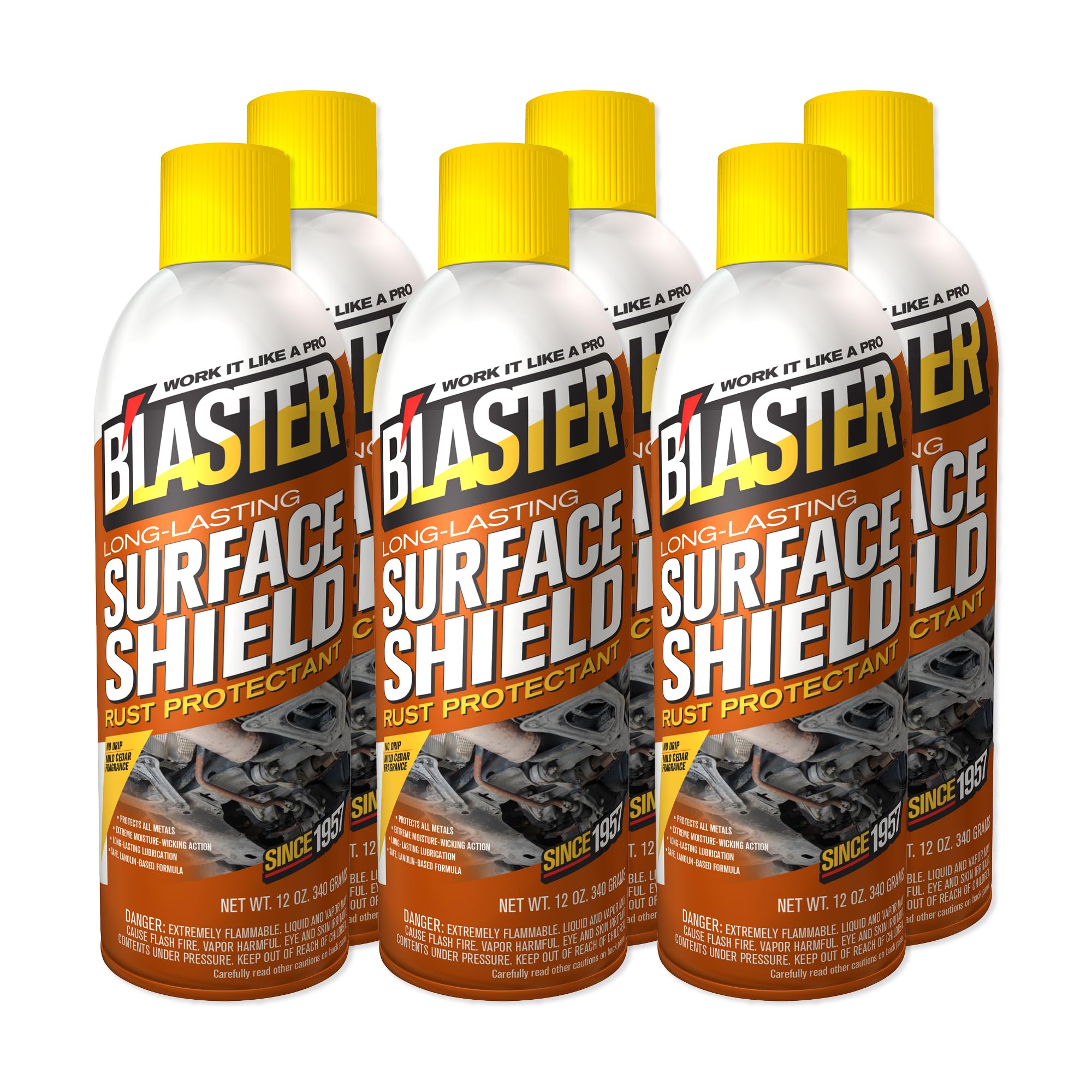
Blaster Surface Shield uses lanolin-based technology — a completely different chemistry from rubberized coatings. The clear yellowish fluid never dries hard; instead it stays waxy, self-healing any scratches or gaps by creeping back together. This “living coating” is ideal for salt-belt drivers because it won’t trap moisture like rubberized films can. The low-VOC, low-odor formula is safe on plastic, rubber, and wiring.
The six-pack provides excellent value for spring and fall seasonal applications. Users report great protection on fifth-wheel plates, ratchet binders, and underbodies against brine spray. The uniform spray pattern minimizes overspray, and the product’s ability to creep into seams provides coverage even where direct spray misses. One user noted 7-month durability tests from online reviewers held up well.
The coating never fully hardens, so it attracts road dust and stays wet to the touch. The cans lack extension wands for internal cavity spraying, requiring DIY modifications if you need to treat inside frames. Some users found the spray nozzles prone to leaking, making the cans slippery during application.
Why it’s great
- Self-healing lanolin creeps into scratches
- Low odor and safe on non-metal surfaces
- Won’t trap moisture against metal like rubber coatings
Good to know
- Stays wet/tacky, attracting road dust
- No internal cavity wand included
- Nozzles can leak during use
6. POR-15 Rubberized Undercoating 22 Fluid Ounces

POR-15’s rubberized undercoating is the topcoat in their four-step rust-preventive system — apply after their Rust Preventive Coating for maximum corrosion resistance. The 22-ounce can delivers satin black coverage over 20-25 square feet per coat, with good sound-deadening properties for wheel wells and floor pans. The satin sheen offers a cleaner look than matte undercoatings while still hiding surface texture.
Users restoring classic trucks and patching rusted floorboards report that the rubberized coating bonds aggressively to POR-15 base layers, creating a moisture-tight seal that outlasts single-coat alternatives. The one-hour dry-to-touch time allows for quick recoating, and the 22-ounce capacity means fewer cans per project than smaller aerosol formats.
The coating is not waterproof and requires a clean, rust-free substrate for proper bonding — applying over even light rust without POR-15 base coating risks delamination. The can sprays thickly and can drip easily on vertical surfaces if applied too heavily. Spraying upside down is difficult, requiring careful can orientation for overhead wheel well work.
Why it’s great
- Integrates perfectly with POR-15 rust preventive system
- Good sound-deadening for wheel wells and floor pans
- Quick 1-hour recoat time
Good to know
- Not waterproof without POR-15 base coat
- Sprays thick — drips easily on vertical surfaces
- Hard to spray upside down for overhead work
7. Eastwood 2k Aerosol Spray Clear Coat 11.8 Oz

This 2K urethane clear coat is a specialty product for sealing and protecting painted surfaces — not a traditional frame undercoating, but essential when you need a UV-resistant topcoat over a base coating on exposed frame sections or painted components. The 11.8-ounce can delivers a high-gloss automotive-grade finish that resists fading and yellowing far better than 1K clear coats.
Users repairing bumper scratches and polished aluminum components report OEM-level gloss and durability, with the coating resisting orange peel when applied in light passes. The 48-hour pot life after activation means you can use the same can for multiple sessions, though the catalyst requires pressing a button inside the can base to activate — a one-time process. The 12-hour full cure at 68°F produces a hard shell that withstands UV exposure and minor abrasion.
This is not a replacement for rubberized undercoating or cavity treatment — it’s specifically for cosmetic sealing over paint work on visible frame sections, engine bays, or suspension components where gloss and UV resistance matter. The high cost per can makes it prohibitive for full undercarriage coverage, and it lacks any rust-inhibiting properties of its own.
Why it’s great
- True 2K urethane for factory-level gloss
- 48-hour pot life for multi-session use
- Resists yellowing and UV degradation
Good to know
- Not designed for frame undercoating use
- Very expensive per square foot
- No inherent rust-inhibiting properties
FAQ
Should I apply rubberized undercoating over existing rust?
How long does frame undercoating last before needing reapplication?
Can I use aerosol undercoating inside closed frame rails?
What is the difference between undercoating and bed liner for a frame?
Final Thoughts: The Verdict
For most users, the best frame undercoating winner is the Rust-Oleum Black Undercoating 12-Pack because it provides the best balance of coverage volume, adhesion quality, and cost efficiency for full-vehicle frame and undercarriage protection. If you need internal cavity protection against hidden rust, grab the Eastwood Internal Frame Coating Aerosol for its 360-degree wand and rust converter properties. And for the toughest impact resistance on exposed frame rails, nothing beats the Durabak 18 Bed Liner Kit with its thick, textured roll-on film.