
A fiberglass door offers excellent insulation and durability, but staining it requires a product that can cling to a slick, vertical surface without running. Standard liquid stains drip and pool, while the thick, thixotropic body of a gel stain grabs hold and deposits pigment evenly, letting you achieve a rich wood-like finish without sanding through the factory gel-coat.
I’m Mohammad Maruf — the founder and writer behind Drink4Good. My research focuses on comparing chemical formulations, evaluating color consistency across batches, and analyzing real user application methods for home improvement coatings.
This guide reviews five purpose-built finishes to help you find the right gel stain for fiberglass door projects, comparing their viscosity, coverage, color richness, and durability so you can make a confident choice.
How To Choose The Best Gel Stain For Fiberglass Door
Selecting a gel stain for a fiberglass door is different from picking a wood stain. The door’s surface is a non-porous gel-coat finish that standard stains cannot penetrate. A quality gel stain relies on adhesion and a thick body to avoid peeling and chipping on exterior doors exposed to sun, rain, and temperature swings.
Viscosity and Vertical Cling
The stain must be thick enough to stay put on a vertical door face without forming drips or runs. Look for a “thixotropic” gel that softens under brush pressure and resolidifies immediately on the surface. Thin or runny formulas create uneven color bands and require constant wiping.
Base Type: Oil vs Water
Oil-based gel stains bond aggressively to factory gel-coats and offer longer open time for blending. They produce stronger fumes and require mineral spirits for cleanup. Water-based options dry faster, clean up with soap and water, and are low-VOC, but may need a bonding primer on slick fiberglass surfaces.
UV Resistance and Durability
An exterior fiberglass door takes direct sunlight. A stain with built-in UV absorbers or a compatible topcoat prevents fading and chalking over three to five years. Check the manufacturer’s specification for exterior-rated UV protection — many furniture stains lack this and will fail within a single season on a door.
Quick Comparison
On smaller screens, swipe sideways to see the full table.
| Model | Category | Best For | Key Spec | Amazon |
|---|---|---|---|---|
| Old Masters 80604 | Oil-Based Gel | Large fiberglass garage doors | 32 fl oz, oil-based gel | Amazon |
| General Finishes Exterior 450 | Water-Based | UV-exposed entry doors | UV absorbers included | Amazon |
| Heirloom Traditions All-in-ONE | Oil-Based Gel | No-sand door makeovers | 16 fl oz, no sanding | Amazon |
| Davis Instruments 790 | Gel Remover | Stain removal before refinishing | 16 oz, biodegradable | Amazon |
| Glidden Grab-N-Go | Latex Paint | Full opaque color change | 1 gallon, scratch resistant | Amazon |
In‑Depth Reviews
1. Old Masters 80604 Gel Stain, Early American
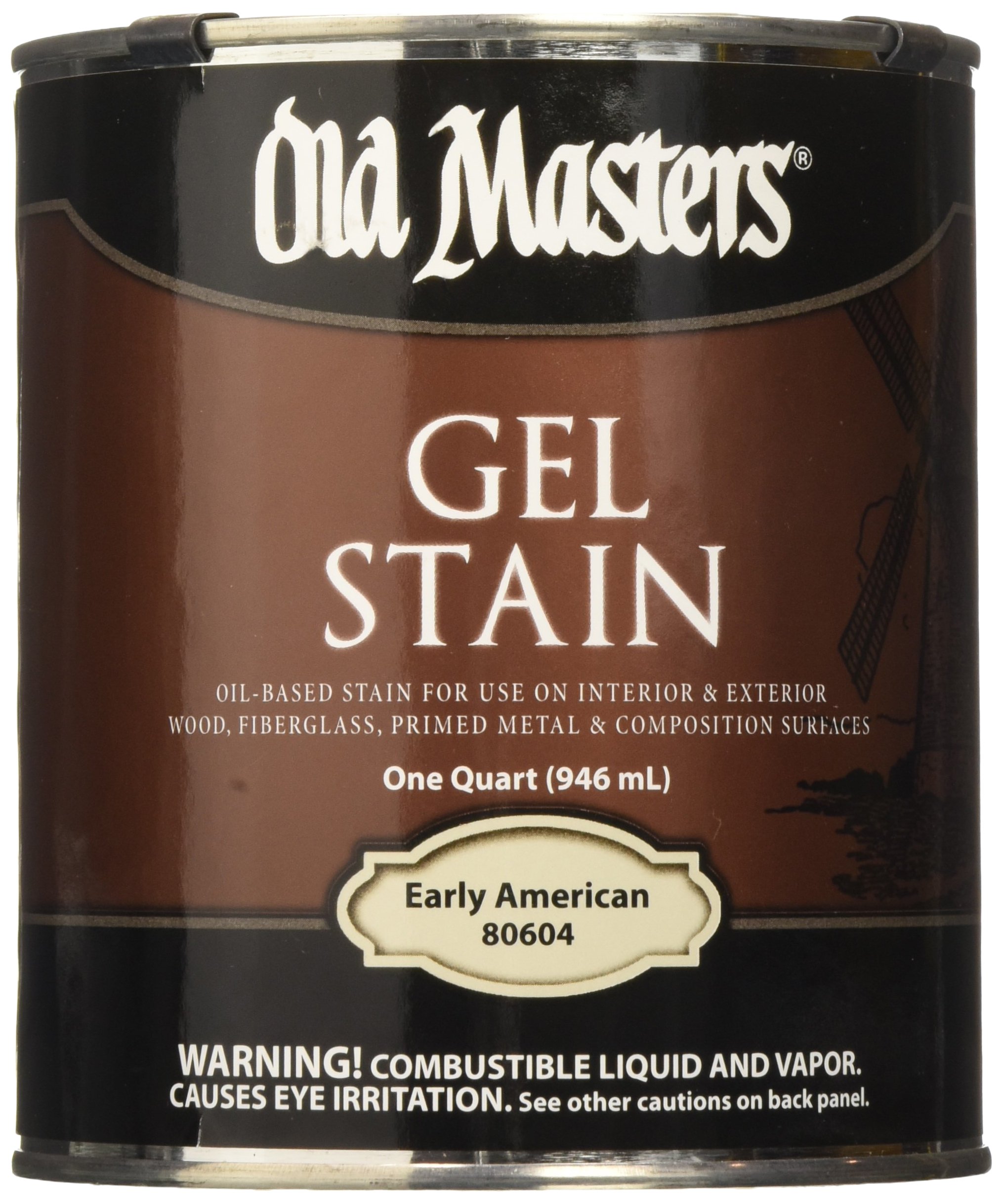
Old Masters 80604 is formulated specifically for fiberglass and primed metal, making it a top-tier pick for door refinishing. The oil-based gel has a thick, buttery consistency that stays put on vertical panels without running, even during warmer weather. Users report that one quart finishes two single garage doors and one double door, demonstrating excellent spread rate for the 32-ounce container.
The Early American color delivers a rich, warm brown that mimics natural wood grain without looking muddy. Reviewers consistently note that the color remains true after drying and that the gel levels smoothly without brush marks. The open time is generous enough to work large sections, but the stain sets quickly when sunlight hits the surface — plan to work in shade or on overcast days.
This stain requires a topcoat sealer for full exterior durability, but the adhesion to factory gel-coat is outstanding when the surface is properly cleaned and lightly scuffed. The oil base provides deep color penetration into any microscopic pores, ensuring the finish bonds rather than simply sitting on top of the fiberglass.
Why it’s great
- Thixotropic gel resists drips on vertical door panels
- One quart covers up to three standard garage doors
- Rich Early American color enhances grain without opacity
Good to know
- Requires mineral spirits for cleanup
- Sets fast in direct sunlight — work quickly in sections
2. General Finishes Exterior 450 Water Based Wood Stain
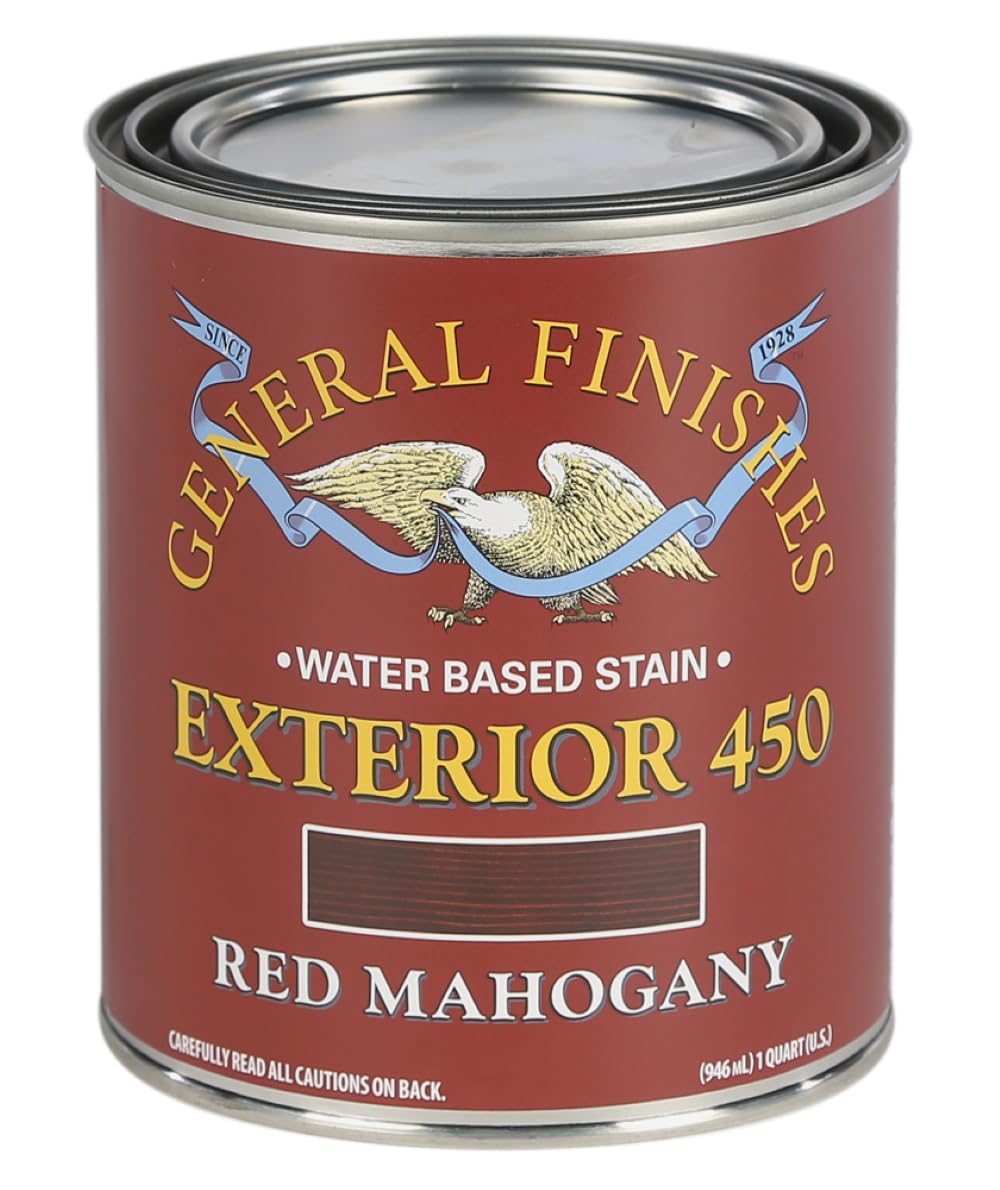
General Finishes Exterior 450 is a water-based stain specifically engineered for exterior vertical surfaces including fiberglass doors. The formula contains UV absorbers that protect the film integrity from sun damage, though the manufacturer notes it will not prevent the underlying material from changing color over time. The Red Mahogany shade offers a deep, rich tone that gives fiberglass doors a high-end wood appearance.
Application is straightforward with a brush, roller, or sprayer, and cleanup requires only soap and water. The fast dry time — roughly two hours at 70°F — allows for multiple coats in a single day. Users report that three coats are necessary to eliminate brush overlap marks, with an additional clear topcoat for maximum gloss and protection. The coverage rate of 62.5 to 75 square feet per quart makes it economical for a single entry door.
Being water-based, this stain produces very low odor compared to oil-based alternatives, making it ideal for occupied homes. It is VOC-compliant in every state and uses renewable plant-based proteins. For fiberglass doors, light scuffing with a fine abrasive pad improves mechanical adhesion, though many users apply it directly over clean factory gel-coat with good results.
Why it’s great
- Built-in UV absorbers protect against fading
- Low odor and soap-and-water cleanup
- Fast two-hour recoat time for multi-coat projects
Good to know
- May need three coats to hide brush marks
- Not recommended for horizontal deck surfaces
3. Heirloom Traditions All-in-ONE Gel Stain Provincial
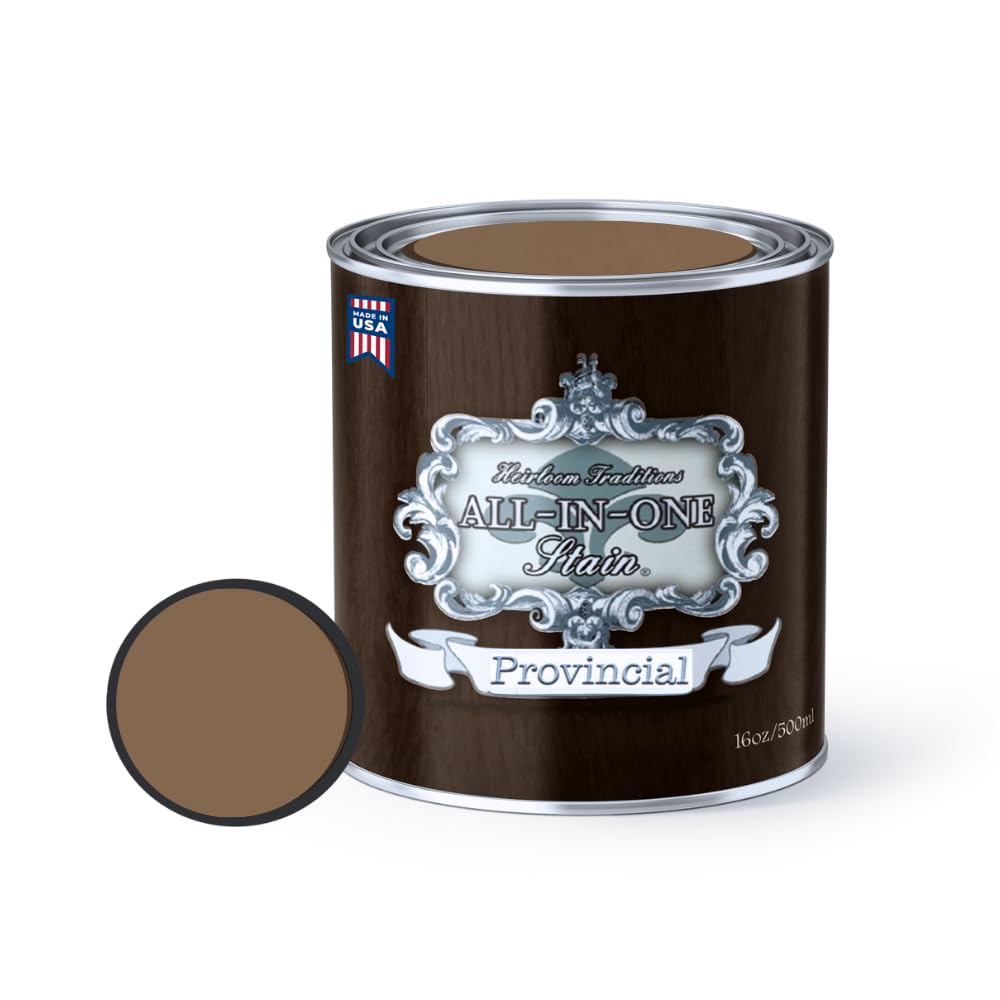
Heirloom Traditions All-in-ONE promises a no-sanding, no-sealer application directly over existing finishes — a compelling offer for fiberglass door makeovers. The oil-based gel is thick and creamy, described by users as having a consistency that prevents drips and runs even on vertical surfaces. The Provincial color delivers a medium brown tone that strikes a balance between light and dark, suitable for traditional and modern door styles alike.
Real-world application reveals that darker colors in the Heirloom Traditions line require faster work to avoid visible lap marks. The gel is semi-transparent in a single coat and reaches full, even coverage with two coats. Users report strong fumes that linger for 24 to 30 hours, so cross-ventilation is essential. The 16-ounce pint covers approximately one standard door with two coats, making it a compact option for single-door projects.
While the brand claims compatibility with wood, metal, and leather, performance on fiberglass is best when the door is thoroughly cleaned of any wax or silicone residue. Some users found the application messy and had to revert to strippers — these cases typically involved insufficient surface prep. For a prepared fiberglass door, the gel deposits rich color in a single pass without obscuring the door’s textured grain pattern.
Why it’s great
- No sanding required on factory gel-coat
- Thick gel consistency resists drips on vertical faces
- Rich pigment load provides full coverage in two coats
Good to know
- Strong fumes require ventilation for 24+ hours
- Must work fast with darker colors to prevent lap marks
4. Davis Instruments 790 FSR Fiberglass Stain Remover
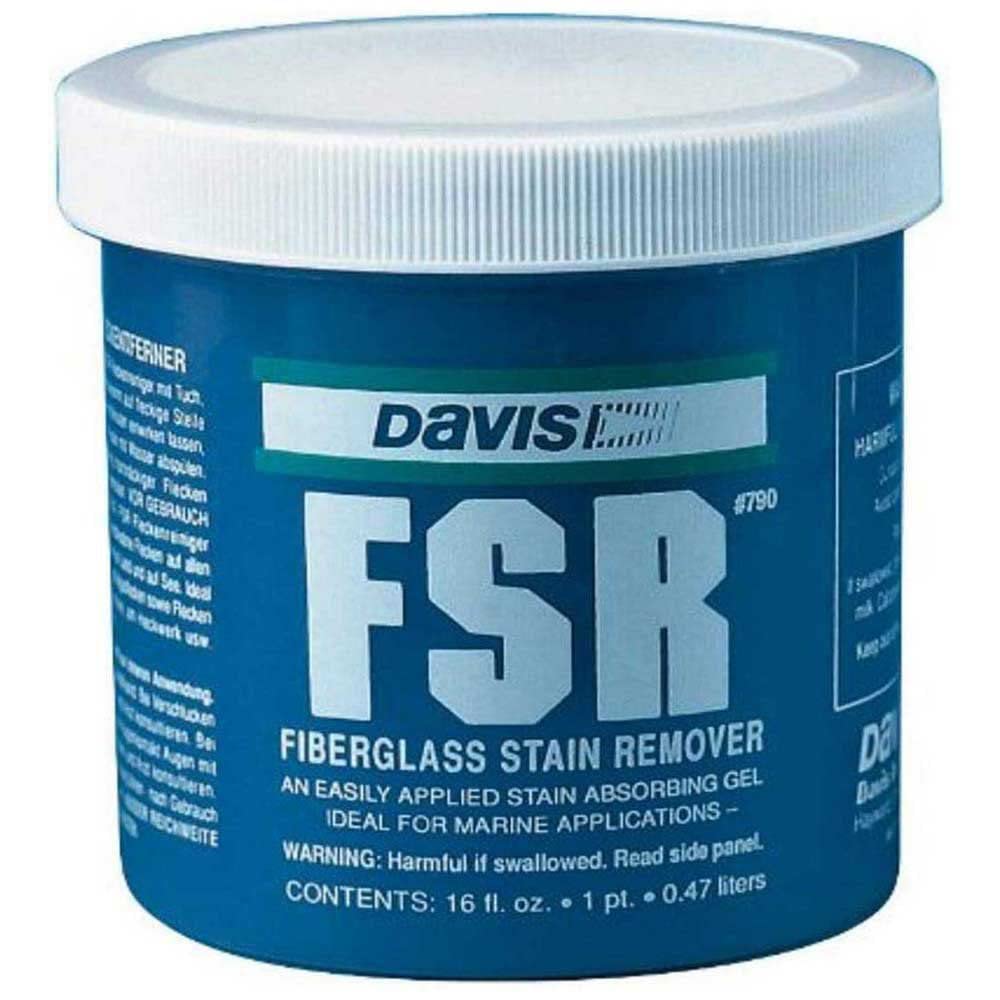
Davis Instruments 790 FSR is a specialized gel stain remover rather than a stain itself, included here because prepping a fiberglass door often requires removing old, failing stain or oxidation before applying fresh color. The thick gel formula clings to vertical boat hulls and doors, dissolving brown water stains, scum, and minor rust deposits without damaging the underlying gel-coat gloss.
Users report that the formula has been improved over earlier versions — where it once failed on tough stains, repeated applications combined with agitation now remove rust spots and bottom grime effectively. The biodegradable composition (manufactured in the United States) is less toxic than heavy-duty chemical strippers, making it safer for residential use near landscaping. It works best when the stained surface is dampened before application.
One limitation is that the gel struggles with oil, gas, and rubber marks, and some users found it less effective on fiberglass tub stains compared to a cheap abrasive cleaner. For door refinishing, use this product as a pre-treatment step to remove existing discoloration and oxidation, then follow with a fresh gel stain. The 16-ounce bottle treats a single door with multiple applications.
Why it’s great
- Gel formula clings to vertical surfaces during dwell time
- Biodegradable and less toxic than chemical strippers
- Removes brown water stains and minor rust effectively
Good to know
- Ineffective on oil, gas, and rubber marks
- May require multiple applications for heavy staining
5. Glidden Grab-N-Go Porch and Floor Paint

Glidden Grab-N-Go is a satin latex porch and floor paint, not a gel stain, but it serves as an alternative for fiberglass doors where a solid, opaque color change is desired rather than a translucent wood-grain effect. The ready-mixed brown color provides full one-coat coverage on properly primed fiberglass, with a durable satin finish that resists scratches, scuffs, and foot traffic.
Users report that the paint dries to the touch in two to four hours and can be recoated in eight hours at 70°F. Coverage is rated up to 400 square feet per gallon, enough for several doors or a full door and frame. The satin sheen gives a subtle luster without being glossy, and the latex formula allows easy cleanup with soap and water. For a door that must match trim or house siding exactly, this latex provides consistent, uniform color without the translucency of a stain.
The main limitation is adhesion to factory fiberglass gel-coat — this paint requires a bonding primer designed for slick surfaces. Without primer, the latex film may peel under direct sun exposure. Additionally, the paint is not a stain and will completely hide the door’s grain texture, so it is only suitable if you want a solid painted look rather than a stained wood aesthetic.
Why it’s great
- Excellent one-coat coverage for solid color changes
- Scratch-resistant finish withstands daily door use
- Large 1-gallon volume covers multiple doors
Good to know
- Requires bonding primer on slick fiberglass surfaces
- Opaque finish hides all wood-grain texture
FAQ
Do I need to sand a fiberglass door before applying gel stain?
Can I use a regular wood gel stain on my fiberglass door?
How long does gel stain last on an exterior fiberglass door?
Final Thoughts: The Verdict
For most users, the gel stain for fiberglass door winner is the Old Masters 80604 because its oil-based thixotropic gel provides excellent vertical cling, rich color, and enough volume to finish multiple doors in one purchase. If you want built-in UV protection and low-odor water-based convenience, grab the General Finishes Exterior 450. And for a no-sanding one-day makeover, nothing beats the Heirloom Traditions All-in-ONE.