
Nothing ruins a powder day faster than numb, useless fingers. You’ve layered your core and legs, but your hands are the first to cry uncle when the chairlift wind hits. That is exactly where a purpose-built layering system for your hands makes or breaks your time on the mountain — and the thin, often-overlooked glove liner is the single most critical piece of that system.
I’m Mohammad Maruf — the founder and writer behind Drink4Good. I’ve spent countless hours cross-referencing merio wool weights, touchscreen thread counts, and seam durability reports to isolate the liners that actually hold up to a full season of freeze-thaw cycles and aggressive pole grips.
This guide breaks down the five best options currently on the market so you can match your preferred fit, insulation type, and budget to the right pair. These are the definitive best glove liners for skiing that deliver tangible warmth without sacrificing dexterity.
How To Choose The Best Glove Liners For Skiing
Selecting a ski glove liner goes far beyond grabbing the thinnest pair you see. The wrong choice leads to cold fingertips, bunching inside your shell, or premature wear at the thumb and index finger where you grip your poles. Focus on material, weight, and fit characteristics that align with the temperatures you actually ski in.
Merino Wool vs. Synthetic Blends
Merino wool is the reigning champion for breathability and warmth retention even when damp. It manages sweat better than any synthetic, making it ideal for high-output days. Synthetic liners, often built around polyester or acrylic blends, dry faster and typically cost less, but they lose insulating value once moisture accumulates. If you ski in wet snow or run warm, merino is worth the premium.
Weight and Bulk for Shell Compatibility
A liner that is too thick will compress your shell’s internal insulation and leave your fingers cramped inside the shell fingers — a direct path to cold hands. The ideal ski liner is between 150 and 200 grams per square meter (GSM) in fabric weight. Compare the liner’s stated thickness against your shell glove’s internal volume before buying. If you cannot wiggle your fingers freely inside the shell, the liner is too heavy.
Touchscreen Conductivity and Durability
Nearly all modern liners claim touchscreen compatibility, but real-world performance varies drastically. Look for liners that use conductive silver or copper threads woven into the index and thumb tips rather than a simple “conductive coating” that flakes off after a few washes. Expect the touchscreen ability to degrade slightly over a season, but a well-stitched conductive pad will outlast a painted-on solution by months.
Quick Comparison
On smaller screens, swipe sideways to see the full table.
| Model | Category | Best For | Key Spec | Amazon |
|---|---|---|---|---|
| Smartwool Liner Glove | Merino Wool | Touchscreen ease & moderate cold | 2.4 oz weight; 150 GSM Merino | Amazon |
| Icebreaker 200 Oasis Liner | Merino Wool | Extreme cold & deep subzero | 200 GSM Merino wool | Amazon |
| Dakine Storm Liner | Synthetic Blend | All-day touchscreen accuracy | Stretch cuffs; conductive pad | Amazon |
| ACUSHLA Merino Liner | Merino Wool | Budget merino & compact fit | Long cuff; 100% merino body | Amazon |
| Seirus Heatwave Liner | Synthetic Fleece | Compression fit under mittens | Compression knit; low bulk | Amazon |
In‑Depth Reviews
1. Smartwool Liner Glove

This Smartwool liner uses a high-density merino knit that strikes the ideal balance between warmth retention and packability under a shell glove. Weighing only 2.4 ounces with minimal seam ridges, it slides into tight ski gloves without bunching at the fingertips. The fabric wicks moisture quickly enough that you can wear it through high-output climbing approaches without feeling clammy.
The touchscreen conductive threads on the index finger and thumb are among the most responsive in this category — reviewers consistently report reliable typing even with thick outer gloves removed. The cuff is long enough to tuck under a jacket sleeve, sealing out snow and drafts. Smartwool uses a no-itch worsted wool process, so people who usually avoid wool for sensory reasons can wear these comfortably.
At roughly 150 GSM weight, the Smartwool liner performs best in temperatures ranging from 15°F to 35°F when layered. Below zero, you will want a heavier base like the Icebreaker 200 Oasis. The snug fit is true to size, but if you are between sizes, the smaller of the two will prevent excess fabric from gathering inside your shell fingers.
Why it’s great
- Excellent touchscreen accuracy out of the box and after multiple washes
- Great quick-dry performance for a natural fiber
- No-itch merino knit suitable for sensitive skin
Good to know
- Not thick enough for true subzero days without a heavy shell
- The tag can be itchy on some wrists — a quick snip solves it
2. Icebreaker Merino 200 Oasis Glove Liners

The Icebreaker 200 Oasis sits at the heavier end of the liner spectrum, employing a 200 GSM merino knit that provides noticeably more insulation than the typical 150 GSM liner. This is the liner you reach for when the thermometer reads -10°F and you are planning a full day on the chairlift. The fabric is dense enough that some skiers wear it as a standalone glove for moderate conditions around 30°F.
Reviewers who use these for fat biking in extreme cold confirm warmth down to -10°F when paired with a windproof shell. The merino construction handles moisture better than any synthetic — you can sweat through a bootpack and still have your fingers warm during the descent. The unisex sizing runs slightly large in the fingers, which is intentional to allow a thin air pocket without compressing insulation.
The trade-off is touchscreen performance. While Icebreaker labels these touchscreen compatible, many users find the conductivity only works for basic swipes and fails for precise typing. This is a warmth-first product, not a tech-accessory liner. The thumb and index tips also tend to develop small holes after several months of heavy use, a common wear pattern for high-density merino at this weight.
Why it’s great
- Thickest merino construction in this lineup for maximum warmth
- Fits easily under snug wrist braces and tight shell gloves
- Zero shrink after washing when following care instructions
Good to know
- Touchscreen usability is limited to basic taps
- Fingertips may wear through faster than synthetic-blend liners
3. Dakine Storm Liner Snow Glove

Dakine built the Storm Liner around a synthetic shell with a dedicated conductive pad at the fingertips, and it shows in the touchscreen accuracy. This is the best liner in the group for skiers who need reliable phone navigation, camera operation, or Apple Watch control without removing their outer gloves. The conductive surface covers the full index and thumb tips, not just a small patch, so the response is consistent even when you angle your finger differently.
The synthetic knit dries fast after getting damp from sweat or unexpected snow exposure, making it a strong choice for resort skiing where conditions fluctuate. The stretch fabric extends into a long wrist cuff that seals out snow without feeling restrictive. Reviewers who use these for winter photography praise the balance of dexterity and warmth — you can adjust camera settings without losing finger feel.
Warmth is adequate for temperatures in the 30s and low 20s, but below that you’ll rely on your shell for insulation. Some users note that the fingers run slightly long, so if you have short fingers you may want to size down rather than up. The synthetic material does not wick moisture as efficiently as merino, but the trade-off in durability and faster drying makes it a solid mid-range workhorse.
Why it’s great
- Best-in-class touchscreen accuracy for iPhone and Apple Watch
- Dries significantly faster than wool after wet conditions
- Stretch wrist cuff seals out snow effectively
Good to know
- Less breathable than merino for high-output skiing
- Fingertips are slightly long, which may cause bunching in some shell gloves
4. ACUSHLA Merino Wool Glove Liner
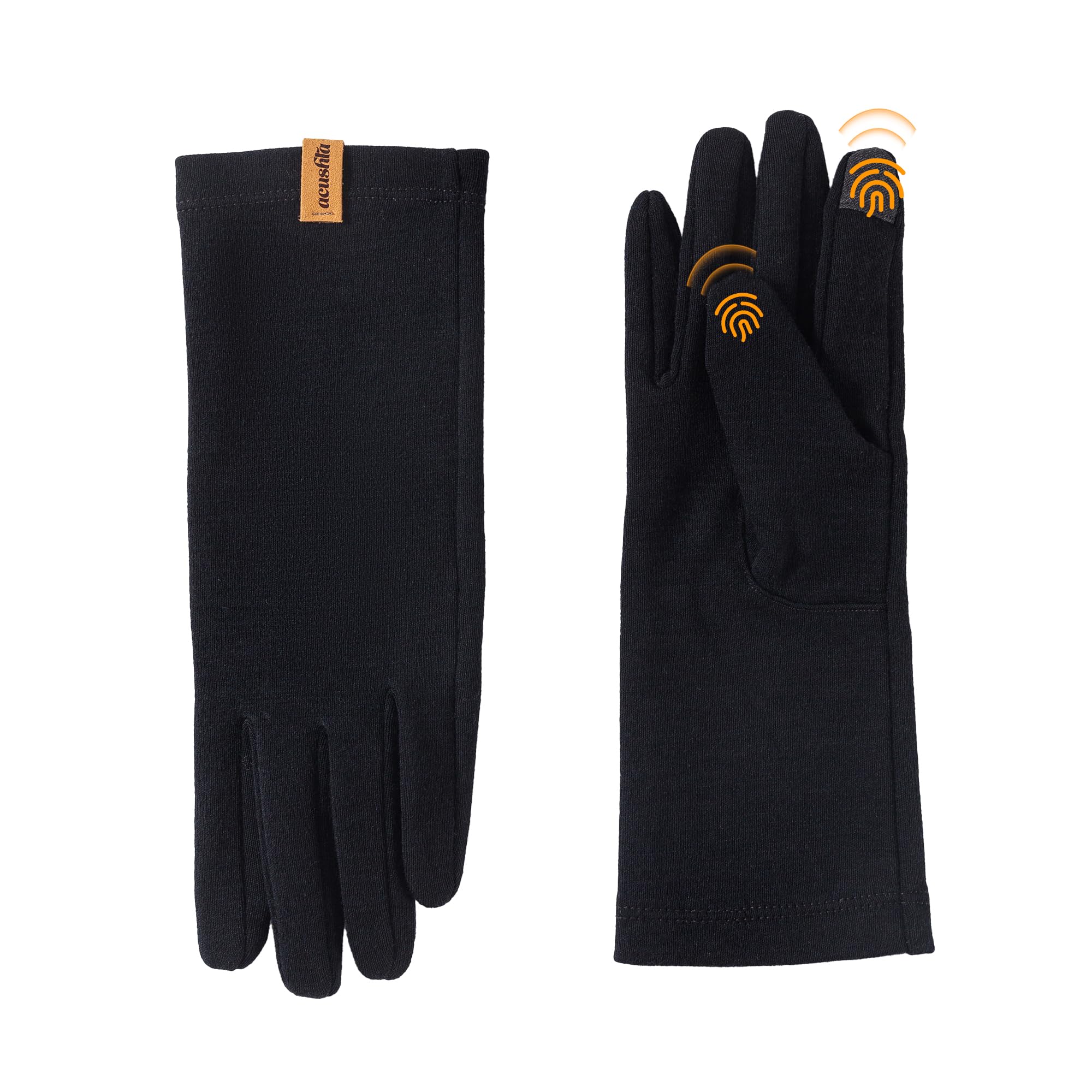
The ACUSHLA liner brings 100% merino wool construction to a budget-friendly price point without cutting corners on the core insulation material. The knit is a true lightweight merino — not a cheaper wool blend — which means it breathes well and retains warmth even when damp. The long cuff extends well past the wrist, making it easy to tuck under a jacket sleeve for a complete seal against wind and snow.
Touchscreen functionality is built into the index finger and thumb using conductive threads rather than a painted coating, which holds up better over multiple washes. Reviewers note that while typing small keys is difficult, tapping and swiping for navigation is reliable. The thin profile makes this an excellent pairing with snug ski gloves that cannot accommodate thicker liners.
At this weight, the ACUSHLA liner is best suited for resort skiing in temperatures from the mid-teens to mid-30s. For sustained subzero days, you will want a heavier liner like the Icebreaker 200 Oasis underneath. Some users found that the cut is slightly generous in the palm, so consider sizing down if you have narrow hands for the best fit inside your shell glove.
Why it’s great
- Genuine 100% merino wool at a very accessible price
- Long cuff design for proper gap coverage between jacket and glove
- Conductive threads hold up better than cheap painted coatings
Good to know
- Not warm enough alone for subzero days without a thick shell
- Palm cut can feel a bit loose for narrower hand shapes
5. Seirus Innovation Heatwave Cold Weather Glove Liner

The Seirus Heatwave uses a synthetic compression fleece knit that prioritizes low bulk and a tight second-skin fit. If you have shell mittens or gloves with very little internal free space, this liner will slide in without complaint. The material is thin enough that you can still comfortably zip and unzip your jacket and adjust your boots with the liners on.
Reviewers consistently describe the Heatwave as an essential winter tool — many own multiple pairs for daily use. The warmth is modest: fine for normal cold days but insufficient against single-digit wind chills unless paired with a proper shell. The synthetic construction dries quickly, which is helpful if your gloves get soaked from a fall in deep snow.
Durability is the main concern with the Seirus. Multiple verified reviews report stitching failures at the thumb and fingertips after only a handful of uses. This pattern suggests the thread tension or seam finishing does not hold up to the repeated friction of being pulled into shell gloves. For light resort days where you baby your gear, the price is unbeatable, but aggressive skiers may want to budget for a replacement mid-season.
Why it’s great
- Tight compression fit slides into the slimmest shell gloves
- Dries very fast after getting wet
- Extremely cost-effective for a multi-pack lifestyle
Good to know
- Seam stitching at fingertips and thumb is prone to early failure
- Minimal insulation requires a thick shell for temperatures below 20°F
FAQ
Should I size up or down when buying ski glove liners?
Can I wear merino wool glove liners alone in spring skiing conditions?
How do I wash glove liners without damaging the touchscreen functionality?
Final Thoughts: The Verdict
For most skiers, the best glove liners for skiing winner is the Smartwool Liner Glove because its 150 GSM merino construction delivers the perfect mix of warmth, dexterity, and touchscreen reliability for the widest range of resort conditions. If you ski exclusively in extreme subzero conditions, grab the Icebreaker 200 Oasis for its unbeaten insulation density. And for skiers who need accurate touchscreen access all day long, nothing beats the Dakine Storm Liner.