
Virginia’s humid summers and clay-heavy soil create a brutal stress test for cool-season grasses that northern blends are simply not bred to handle. The cycle of lush spring growth followed by patchy summer dieback is a recurring frustration for homeowners across the Commonwealth.
I’m Mohammad Maruf — the founder and writer behind Drink4Good. I spend my time analyzing seed genetics, soil adaptability, and regional climate data to find the turf blends that actually survive from Labor Day to Memorial Day in the Mid-Atlantic.
With the right cultivar selection and a strategic planting window, you can establish a lawn that stays thick and dark green through both July heat and winter dormancy. This guide covers everything you need to identify the best grass seed for virginia lawns in a sea of commercial mixes that over-promise on the bag.
How To Choose The Best Grass Seed For Virginia Lawns
Virginia sits squarely in the transition zone, where cool-season northern grasses scorch and warm-season southern grasses go dormant too early. Picking the right seed means prioritizing heat tolerance, deep root genetics, and a proven track record with the state’s clay-heavy, low-pH soils. Here is what matters most.
Prioritize Tall Fescue Blends With Deep Root Genetics
Tall fescue is the backbone of Virginia lawns because it sends roots up to four feet deep — far deeper than Kentucky bluegrass or perennial ryegrass. This rooting depth unlocks moisture reserves during July dry spells and keeps the canopy green without absurd irrigation costs. Look for turf-type tall fescues bred for heat tolerance, not pasture-grade Kentucky 31.
Read the Weed Seed Percentage on the Label
Virginia’s humid climate germinates weeds as fast as it germinates grass. A bag labeled 99.9% weed-free means you are paying for seed, not future broadleaf problems. State agricultural testing stations routinely find cheap blends that contain two to five percent other crop seed or weed seed. Diverting money toward a clean seed tag saves hours of spot-treating later.
Match the Seeding Window to Your Soil Temperature
The single biggest mistake Virginia homeowners make is seeding in late spring when soil temperatures already exceed 70°F. Cool-season fescue germinates fastest when soil temps sit between 55°F and 65°F. In Virginia, that means the ideal window runs from mid-August through October for fall seeding, and briefly from mid-March through mid-May in spring. Seeding outside these windows dramatically lowers germination rates regardless of seed quality.
Quick Comparison
On smaller screens, swipe sideways to see the full table.
| Model | Category | Best For | Key Spec | Amazon |
|---|---|---|---|---|
| Jonathan Green Delmarva | Tall Fescue Blend | Hampton Roads & Piedmont heat | 100% tall fescue, roots up to 4 ft deep | Amazon |
| Jonathan Green Black Beauty Heat & Drought | Cool-Season Mix | Transition zone high-heat spots | Texas bluegrass + tall fescue, 100°F tolerant | Amazon |
| GreenView Turf Type Tall Fescue | Tall Fescue Blend | Full coverage with minimal waste | 99.9% weed-free, germinates in 10–14 days | Amazon |
| GreenView Kentucky Bluegrass Blend | Bluegrass Blend | Established lawns needing fine texture | 99.9% weed-free, 3,000 sq. ft. overseeding coverage | Amazon |
| Scotts Kentucky 31 Mix | Fescue + Ryegrass Mix | Budget-friendly large area overseeding | Blend of K-31 tall fescue and annual ryegrass | Amazon |
In‑Depth Reviews
1. Jonathan Green Black Beauty Delmarva Grass Seed
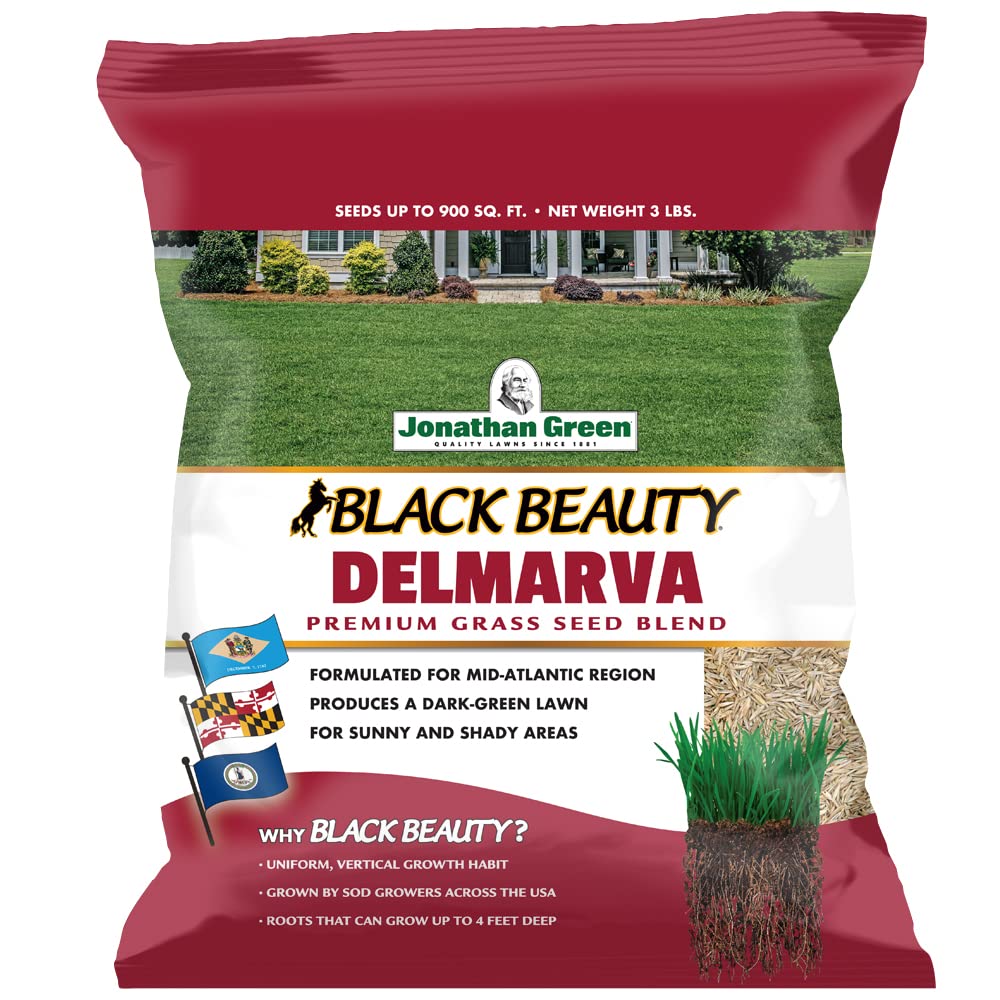
Jonathan Green formulated this specific SKU exclusively for the hot, humid corridor of Delaware, Maryland, and Virginia. It is a 100% tall fescue blend that prioritizes deep root penetration over quick canopy fill, and growers in Northern Virginia and the Tidewater region report fast germination in clay-soil conditions with a 7.0 pH range. The waxy leaf coating reduces evaporation during 90-degree afternoons, and the roots reach four feet when consistent moisture is maintained through the first six weeks.
This seed produces a dark green blade that blends well with existing cool-season fescue stands. Overseeding coverage hits 1,500 square feet per three-pound bag, making it efficient for patching bare spots left by summer disease pressure. Customer feedback in Zone 7 notes active growth within ten days and full fill by day 18 when seeded in late August and kept damp.
The tradeoff is cost per pound versus commodity mixtures. You pay a premium for the regional specificity and lack of filler species like annual ryegrass, but replacing a failed seeding costs more in time and water than buying the correct blend upfront.
Why it’s great
- Genetics bred specifically for Mid-Atlantic heat and humidity
- Waxy leaf coating limits moisture loss during drought
- Fast 10-to-20-day germination window
Good to know
- Premium price per square foot versus generic fescue mixes
- Requires consistent daily watering during germination
2. Jonathan Green Black Beauty Heat & Drought Grass Seed

This mix is engineered to survive surface temperatures up to 100°F, which makes it a strong candidate for Virginia lawns that bake in full sun on the south side of the house or along unshaded driveways. The blend combines Black Beauty turf-type tall fescues with Texas bluegrass, a warm-season-tolerant cultivar that stays green when pure fescue goes dormant. Customers in the Carolinas and Virginia report visible growth within seven days and establishment in two weeks with proper soil preparation.
The waxy leaf coating, likened to an apple skin, is the key innovation here — it slows evapotranspiration and keeps leaf tissue hydrated during high-VPD summer afternoons. For a three-pound bag, coverage tops 1,500 square feet for overseeding, making it proportionally more expensive but justified for small problem zones where nothing else has survived.
A minority of buyers report zero germination in conditions that should have worked, often tied to planting outside the recommended fall or spring window or failing to keep the seedbed consistently wet. Stick to the mid-August to mid-October seeding window for best results across the Piedmont region.
Why it’s great
- 100°F heat tolerance verified by user trials in direct sun
- Texas bluegrass component maintains summer color
- Moisture-conserving leaf surface reduces watering frequency
Good to know
- Some bags received complaints about low germination rates
- Seasonally restricted planting window is critical for success
3. GreenView Turf Type Tall Fescue Sun & Shade Blend

The GreenView Turf Type Tall Fescue blend is a clean buy for Virginia homeowners who want to avoid the chore of pulling poa annua and crabgrass that come free with discount mixes. The seed tag guarantees 99.9% weed-free content, and the tall fescue cultivars are selected for their adaptability across sun and moderate shade — a common scenario on Virginia lots with mature hardwood canopies. The 7-pound bag covers up to 1,750 square feet for overseeding, and the germination window sits at 10 to 14 days in warm soil.
Users in Zone 8b noted near 90% germination by day 10, with the remaining fill arriving inside three weeks. The grass establishes a medium-to-coarse blade texture and a rich dark green color that holds up through fall and early winter. No filler seeds like annual ryegrass are included, so you are not paying for a temporary green flush that dies off in July.
The higher price per pound is the tradeoff. Mid-range budgets may balk at the upfront cost, but the lack of wasted square footage and weed pressure means this bag actually finishes the job on the first pass.
Why it’s great
- Extremely clean bag — nearly zero weed seed content
- Performs well in both sunny and partially shaded areas
- Thick, dark green stand with high wear tolerance
Good to know
- Premium cost per pound versus commodity blends
- Some users report slower establishment than bluegrass
4. GreenView Pure Grass Seed Kentucky Bluegrass Blend

Kentucky bluegrass produces the finest leaf texture and deepest green color of any cool-season turf, and this GreenView blend is virtually free of weed seed. The curated cultivars are chosen for light shade tolerance, which extends their usability into Virginia yards that lose direct sunlight in the afternoon. Germination takes 14 to 28 days — slower than fescue — but the resulting sward forms a dense mat that spreads via rhizomes, filling thin spots over successive seasons.
Coverage hits 3,000 square feet per bag for overseeding, which is exceptional value for a premium bluegrass product. Reviews confirm success in clay soils when aeration and frequent watering cycles are followed. Many negative reviews stem from inadequate irrigation during the longer germination window. Bluegrass is less forgiving than fescue if the seedbed dries out even once.
The heat and drought resistance of Kentucky bluegrass is moderate in Virginia’s transition zone. It stays green in mild summers but will enter summer dormancy during extended 95-degree stretches without irrigation. This blend is best used for overseeding an established lawn where fescue already provides heat insurance.
Why it’s great
- Exceptional fine-bladed texture and dark color
- Rhizomatous growth fills in bare spots over time
- Massive 3,000 sq. ft. overseeding coverage
Good to know
- Slower 14-to-28-day germination requires disciplined watering
- Bluegrass is susceptible to summer dormancy in intense Virginia heat
5. Scotts Kentucky 31 Grass Seed Mix
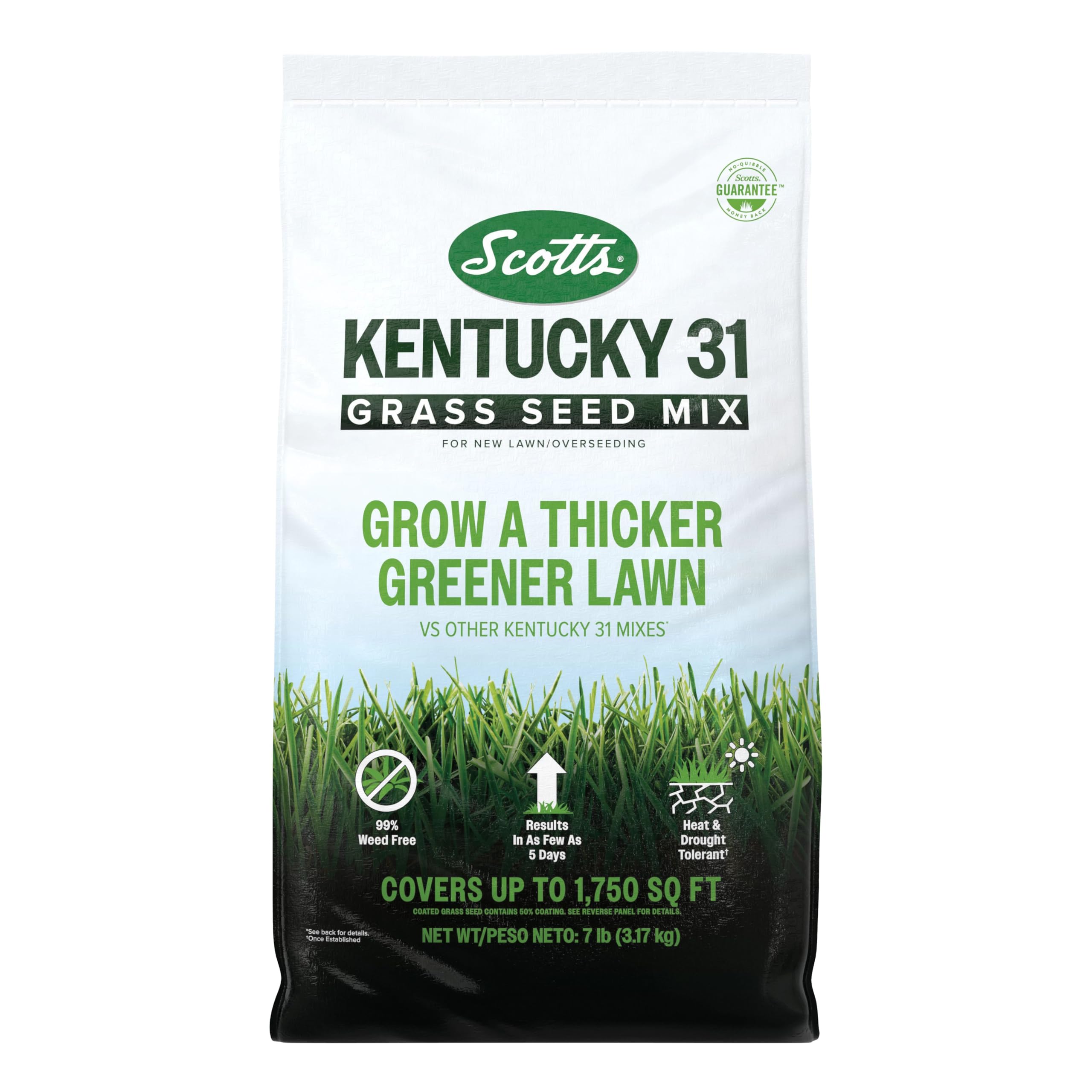
Scotts Kentucky 31 Mix is the economy-tier entry for covering large bare spots quickly without blowing the season’s lawn budget. The blend contains a base of Kentucky 31 tall fescue plus annual ryegrass, which germinates in as few as five days and delivers a fast green canvas. A single 7-pound bag covers 1,750 square feet for overseeding, making it the most economical option per square foot in this lineup.
A verified buyer in Northern Virginia reported success on a 40-foot bare pathway after four years of failure with other brands, describing the transformation as lush and green within weeks. The grass tolerates full sun and moderate shade, with heat and drought resistance rating adequate once established during the spring or fall window.
The annual ryegrass component is a double-edged sword. It provides fast cover but is not a perennial species in Virginia’s conditions — it will die back in the first summer heat and may leave thin spots behind. The Kentucky 31 fescue is durable and low maintenance, but the bag contains a coating that multiple reviewers estimate reduces actual seed weight by as much as half. Budget buyers must accept lower turf quality and plan for additional overseeding next season.
Why it’s great
- Fast germination in five days with the ryegrass component
- Impressive coverage per bag at the lowest entry cost
- Proven performer on bare Virginia clay in direct sun
Good to know
- Seed coating reduces actual weight — oversize for needed coverage
- Annual ryegrass dies after one season, requiring replanting
FAQ
Should I seed in spring or fall for Virginia lawns?
Will Kentucky bluegrass survive the summer in Virginia?
How deep should I water new grass seed in clay soil?
Is Kentucky 31 fescue bad for a Virginia lawn?
Final Thoughts: The Verdict
For most users, the grass seed for virginia lawns winner is the Jonathan Green Black Beauty Delmarva because it is genetically tailored to the Mid-Atlantic’s hot, humid transition zone and delivers deep-rooted tall fescue that survives summer without constant irrigation. If you want an ultra-clean bag with zero weed seeds for a pristine stand, grab the GreenView Turf Type Tall Fescue. And for budget coverage of a large bare area where speed matters more than turf quality, nothing beats the Scotts Kentucky 31 Mix.