
Walking into a greenhouse only to find muddy boots, slippery walkways, and soil tracked onto your propagation benches is a cycle that kills the joy of gardening. A smart flooring choice stops that mess at the door, giving you dry footing and a surface that drains fast without rotting underneath.
I’m Mohammad Maruf — the founder and writer behind Drink4Good. I’ve spent years analyzing greenhouse infrastructure, from irrigation systems to flooring polymers, to understand what holds up under constant moisture and foot traffic.
After testing drainage rates, load capacities, and material durability across dozens of setups, I’ve curated the most reliable options for your best greenhouse flooring project, focusing on what actually keeps your workspace clean and your plants happy.
How To Choose The Best Greenhouse Flooring
A greenhouse floor endures constant moisture, soil spills, and temperature swings. The right material keeps your back clean, prevents slips, and stops weeds from pushing through the barrier. Focus on these three factors before you buy.
Drainage and Water Management
Standing water on a greenhouse floor breeds algae, fungus gnats, and root rot. Look for tiles or mats with open drainage holes, slatted gaps, or a permeable fabric layer that lets water pass through immediately. The faster the surface dries, the healthier your growing environment stays.
Surface Grip and Comfort Underfoot
You will walk on this floor while holding pots, watering cans, and tools. A non-slip textured surface is critical when the floor is wet. For long hours of potting and pruning, a slightly cushioned or soft material — like thick PVC or rubber — reduces fatigue on your knees and lower back.
Durability Against UV and Temperature
Greenhouses amplify heat during the day and can drop near freezing at night. Thin materials crack or warp under UV exposure. Choose a flooring rated for outdoor use with UV stabilizers and a thickness of at least half an inch for tiles or 5 ounces per square yard for landscape fabric.
Quick Comparison
On smaller screens, swipe sideways to see the full table.
| Model | Category | Best For | Key Spec | Amazon |
|---|---|---|---|---|
| THYOI Acacia Wood Deck Tiles | Wood Deck Tile | Dry walkways & potting areas | 0.9″ thick with slat drainage | Amazon |
| Uniboho Rubber Drainage Mat | Rubber Mat | High-traffic pathways | 0.31″ thick hexagonal drainage | Amazon |
| Garland Rug Artificial Grass | Turf Rug | Soft ground cover under benches | 0.3″ marine rubber backing | Amazon |
| Yaheetech Interlocking Wood Tiles | Wood Deck Tile | Permanent greenhouse floors | 0.87″ thick with screw-secured planks | Amazon |
| VEVOR Soft PVC Drainage Mats | PVC Tile | Wet areas & misting zones | 0.6″ thick with 15mm support pins | Amazon |
| VEVOR PP Garage Tiles | PP Tile | Hard-surface load zones | 0.53″ thick, 5500 lbs capacity | Amazon |
| VIVOSUN Weed Barrier Fabric | Landscape Fabric | Base layer under other flooring | 5 oz double-layered woven/non-woven | Amazon |
In‑Depth Reviews
1. Yaheetech 27PCS Interlocking Wood Tiles
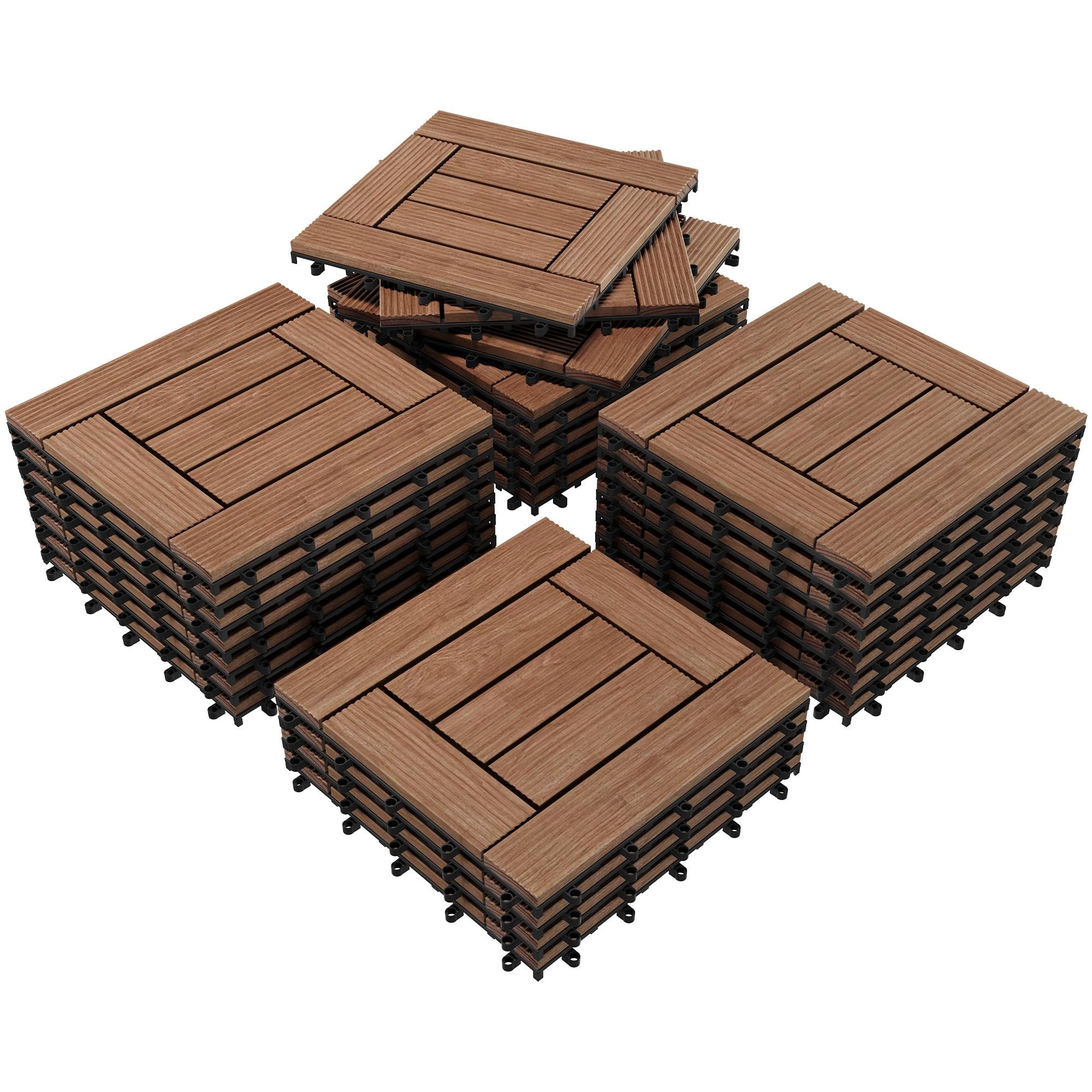
Each 12×12 inch tile uses a solid acacia wood plank secured to a durable plastic base with tapping screws, preventing the common cracking issue seen in glued or clip-only designs. The 0.87-inch thickness lifts you above silt and minor puddles, keeping your boots dry during watering rounds. The 27-piece pack covers roughly 27 square feet — enough for a small greenhouse aisle or a propagation bench area.
The interlocking snaps let you install the entire floor in under an hour without glue or tools, and you can cut individual tiles around corner posts or irrigation pipes using a standard saw. The slatted gaps allow water to drain straight through to the soil below, eliminating pooled moisture on the surface. Annual application of a water-based wood sealer preserves the acacia grain and prevents the stain from fading after a year of UV exposure.
Customer reviews note that the tiles hold up under heavy foot traffic and even minor vehicle weight, though the wood surface can dent if a heavy pot is dropped directly onto a plank. The raised profile also creates a small air gap that improves ventilation under pots and reduces the risk of fungal growth on the tile underside.
Why it’s great
- Screw-secured planks resist splitting under foot traffic
- 0.87-inch thickness lifts feet above standing water
- Easy snap-together installation without tools
Good to know
- Requires annual water-based sealer to maintain finish
- Full pack purchase needed if you need a few extra tiles
2. VEVOR Modular Interlocking Cushion 50-Pack
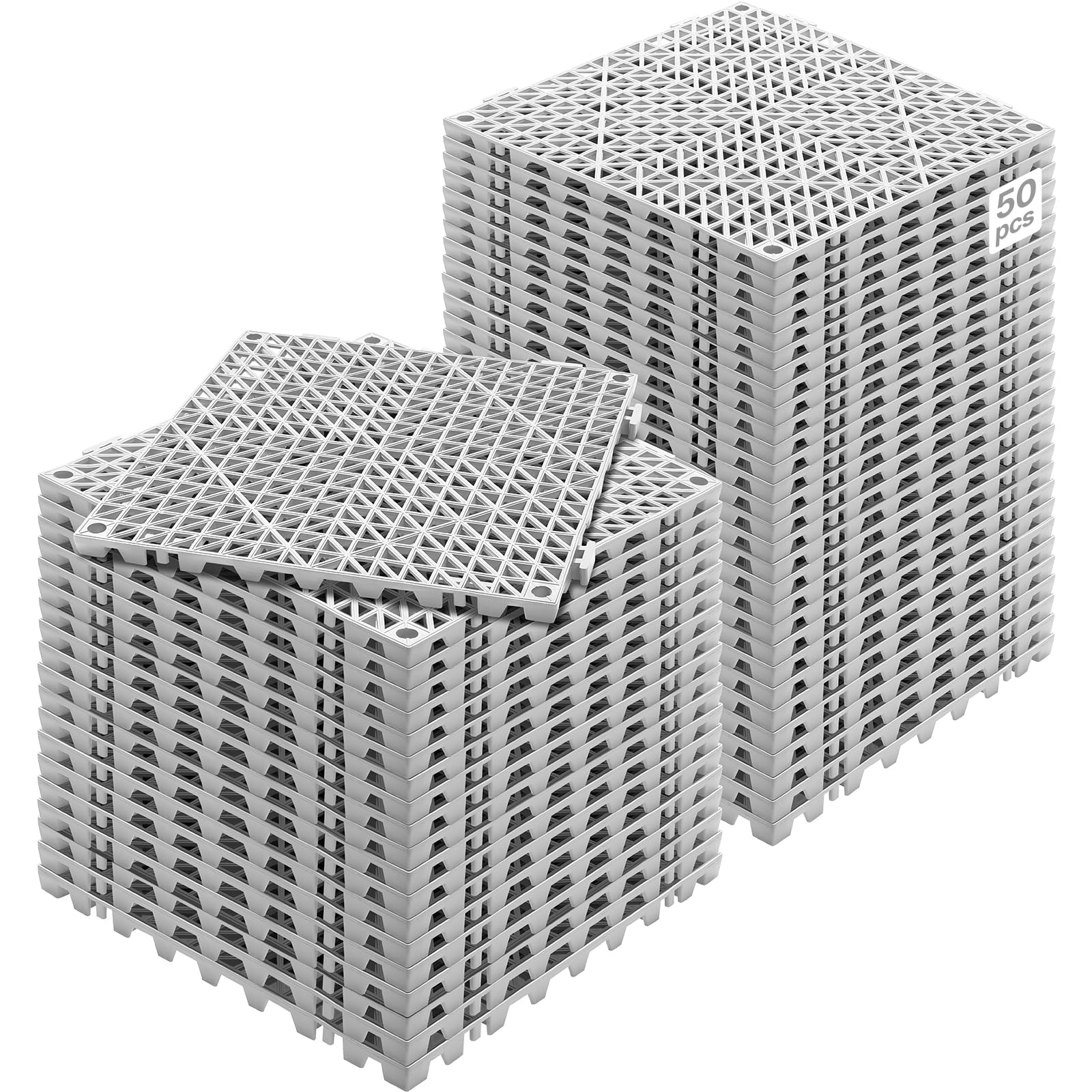
The 0.6-inch support pins on these PVC tiles create a raised drainage channel that rapidly evacuates water, making them ideal for misting benches and high-humidity areas directly under roof vents. Each 12×12 tile snaps together with a firm click, and the soft PVC material provides enough cushion to reduce knee strain during long potting sessions. The 50-pack covers 50 square feet — large enough for a full greenhouse path or a dedicated seedling table zone.
The non-slip surface texture is aggressive enough to keep your footing stable even when the tiles are submerged, and the PVC material resists hair, oil, and organic debris that typically clog rubber mats. Cleaning requires only a hose rinse or a quick mop, and the tiles dry within minutes because the support pins leave no flat surface for water to cling to. The gray color hides soil stains better than lighter floors.
Buyers confirm that the tiles hold up well in open-air showers and laundry rooms, so greenhouse humidity poses no threat. The PVC stays flexible in moderate cold but may feel slightly softer under heavy static loads like water barrels. For wheeled carts, the soft surface rolls smoothly without catching on the drainage holes.
Why it’s great
- 15 mm support pins create rapid, odor-free drainage
- Soft PVC reduces knee and back fatigue
- Easy to rinse clean with a hose
Good to know
- Too malleable for permanent heavy loads like parked vehicles
- May require cutting for a perfect fit near walls
3. THYOI Premium Deck Tiles 10-Pack

This 10-tile pack covers approximately 10 square feet with a crossed slat pattern that adds visual structure to a greenhouse walkway. Each 12×12 tile is made from 100% natural acacia wood with a deep-oil finish and a PPC base that includes grooves on every slat to increase friction in wet conditions. The 0.5-inch thickness is enough to lift your feet above light moisture, though it sits lower than thicker deck tiles.
The snap-lock mechanism clicks together in minutes with zero tools, and the slat spacing allows efficient drainage that keeps the surface dry. The tiles can be cut with a standard saw for irregular corners, and the square joint design leaves a clean finished edge. The deep-oil treatment already applied means you can start using the floor immediately without sealing.
User feedback consistently praises the aesthetic upgrade — the dark brown crossed pattern hides soil better than lighter woods — and the splinter-free surface is safe for barefoot travel. The commercial-grade rating suggests the tiles can handle daily greenhouse traffic, but the thinner profile means heavy pots or dropped tools could leave marks on the wood surface.
Why it’s great
- Natural acacia with deep-oil finish looks premium
- PPC base grooves add excellent wet traction
- Tool-free snap assembly in minutes
Good to know
- 0.5-inch thickness sits lower than some tiles
- Wood may dent under concentrated weight
4. VEVOR Garage Floor Tiles 50-Pack

These polypropylene tiles are engineered for a 5,500-pound load capacity, making them the only option in this list that can support wheelbarrows, large water barrels, or even a parked utility vehicle inside your greenhouse. Each 12×12 tile measures 0.53 inches thick with a 3D diamond-textured surface that provides grip even when wet. The 50-pack covers 50 square feet, enough for a central aisle and work area.
The upgraded interlocking system includes six locking loops per tile that snap together without glue or tools, though cutting the hard polypropylene requires a table saw or circular saw — a utility knife won’t work. A 1/4-inch expansion gap is necessary around the perimeter to prevent buckling when the greenhouse temperature rises. The double-sided texture means you can flip tiles if one side wears down over time.
Customers report that the tiles hold shape under the weight of SUVs and heavy machinery, but the hard plastic creates a hollow sound when walked on. In direct sunlight, the tiles can expand slightly, which is why the expansion gap is critical. Cold temperatures can make the tiles brittle — one user reported six tiles shattering after prolonged freezing — so this is best for heated or temperate greenhouses.
Why it’s great
- 5,500-pound load capacity supports heavy equipment
- Double-sided texture extends usable lifespan
- Diamond surface gives reliable wet grip
Good to know
- Requires table saw for cutting
- Can become brittle in freezing temperatures
5. Uniboho Outdoor Rubber Drainage Mat

This single-piece rubber mat measures 59 by 35 inches and uses large hexagonal holes to drain water, snow, and mud instantly. The 0.31-inch thickness sits low but provides enough elevation to prevent feet from standing in puddles. The rubber construction is heavy enough to stay flat without curling edges, and the material resists grease and oil — useful if you mix potting soil or fertilizers directly on the floor.
Cleaning requires shaking or hosing off, and the mat dries quickly because the open holes prevent moisture entrapment. The non-slip surface helps prevent slips on slick greenhouse floors, and the durability rating makes it suitable for high-traffic zones like the main entrance and central aisle. The black color hides dirt well.
User reviews confirm the mat works well in garages and commercial kitchens, so greenhouse moisture is no challenge. However, the strong rubber smell is notable — multiple buyers recommend airing it outside for a few days before placing it in an enclosed greenhouse. The mat is also relatively thin, so heavy pots or water barrels may leave temporary impressions in the rubber.
Why it’s great
- Large hexagonal holes drain water instantly
- Heavy rubber stays flat without curling
- Easy to clean by hosing or shaking
Good to know
- Strong rubber smell requires airing out first
- 0.31-inch thickness is low-profile
6. Garland Rug Artificial Grass 5×8 Feet
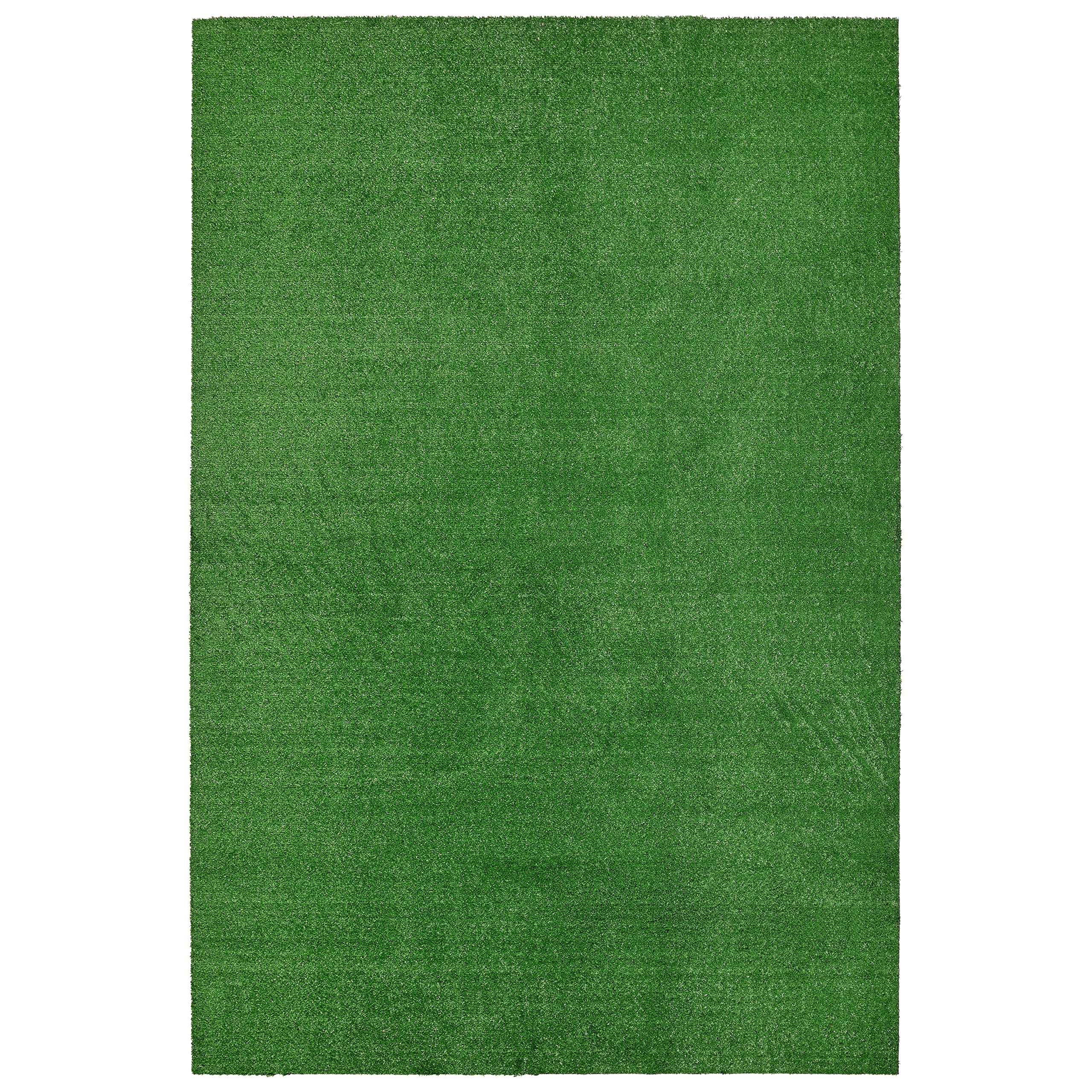
At 0.3 inches thick, this 5×8 foot artificial grass rug provides a soft, quick-drying surface that helps reduce mud tracking in propagation areas and under benches. The 100% polypropylene fibers are backed by a marine-grade rubber layer that withstands outdoor moisture without delaminating. The un-bound edges give a more natural look, and the rug can be cut to fit irregular spaces with scissors or a utility knife.
The surface dries quickly because the fibers don’t absorb water, and the rubber backing prevents moisture from seeping through to the greenhouse floor. The bright green color visually brightens the space, though it looks artificial under direct sunlight — better suited for covered or shaded greenhouse sections. The rug ships folded in a box, so initial creases are normal and flatten out within a few weeks.
Customer feedback highlights the value for covering large areas cheaply, but the thin pile means it works best as a protective ground layer rather than a high-traffic walking surface. The fibers are soft but not durable enough for daily cart or wheelbarrow traffic — treat it as a barrier covering for the base layer under benches or in low-traffic corners.
Why it’s great
- Quick-dry polypropylene resists mold
- Marine rubber backing handles moisture
- Can be cut to any size with scissors
Good to know
- Thin pile not suitable for heavy traffic
- Looks fake under direct sunlight
7. VIVOSUN Premium Weed Barrier Landscape Fabric

This double-layered fabric uses a needle-punched non-woven side bonded to a woven layer, creating a 5-ounce-per-square-yard barrier that blocks sunlight and prevents weeds while allowing water to pass through at six times the rate of standard woven barriers. The 4×250-foot roll covers massive greenhouse floors, and the green line guides printed every foot help align planting rows or tile layouts. The fabric is thick enough to resist tearing during installation but flexible enough to contour to uneven ground.
The dual-layer design draws water down through molecular attraction — called capillary action — which keeps the top surface drier and reduces algae growth. The commercial-grade construction resists UV degradation better than thin weed mats, and the fuzzy underside grips the ground to prevent shifting. You can cut the fabric to any shape with scissors, and the edges fray less than standard woven barriers due to the needle-punch construction.
Greenhouse users report that this fabric works great as a base layer under wood tiles, PVC mats, or gravel. It prevents weeds from pushing through the floor and keeps the ground below tidy. The only downside is that when cut, the edges can still unravel slightly, so sealing the cut lines with a heat source or fabric tape is recommended for a finished look.
Why it’s great
- Dual-layer blocks weeds while allowing rapid drainage
- 5-ounce weight resists tearing and UV damage
- Green guide lines simplify layout alignment
Good to know
- Cut edges may fray if not sealed
- Requires fabric tape or heat sealing for clean edges
FAQ
Can I lay greenhouse flooring directly on dirt or gravel?
How do I clean greenhouse flooring without chemicals?
Will interlocking tiles buckle when my greenhouse heats up?
Final Thoughts: The Verdict
For most users, the best greenhouse flooring winner is the Yaheetech 27PCS Interlocking Wood Tiles because the raised acacia wood planks keep your feet dry while the screw-secured base prevents cracking under daily traffic. If you need superior drainage for a misting zone, grab the VEVOR Soft PVC Drainage Mats. And for a budget-friendly base layer that stops weeds, nothing beats the VIVOSUN Weed Barrier Fabric.