
A gaming microphone that can’t filter out your keyboard clatter or your roommate’s TV is a liability, not an upgrade. The difference between sounding like a pro and being muted mid-raid often comes down to one thing: how well your mic rejects the noise around it while capturing only your voice with clarity.
I’m Mohammad Maruf — the founder and writer behind Drink4Good. I’ve spent years analyzing audio hardware specs, comparing pickup patterns, and testing how real-world noise cancellation performs across different price tiers to help gamers find actual upgrades, not just flashy boxes.
Whether you are tired of your teammates complaining about background noise or you want cleaner vocal capture for streaming, finding the right gaming microphone noise cancelling setup is the single most impactful audio upgrade you can make for your desk.
How To Choose The Best Gaming Microphone Noise Cancelling
Selecting a microphone that actually kills background noise without making your voice sound hollow requires understanding three interconnected specs: pickup pattern, capsule size, and whether the noise cancellation is hardware-driven or software-emulated.
Pickup Pattern: Cardioid vs. Supercardioid
Cardioid patterns capture sound from directly in front while rejecting noise from the sides and rear. Supercardioid narrows that focus even further, sacrificing a bit of side rejection for tighter rear noise suppression. For gaming scenarios with mechanical keyboards or loud PC fans, supercardioid offers the most aggressive physical noise rejection without digital processing.
Capsule Size and Bit Depth
A larger condenser capsule (often 25mm or bigger) captures more vocal detail but also more ambient noise. This makes noise cancellation more critical. Look for 24-bit / 48kHz or higher sampling rates — this gives the noise cancellation algorithm more data to work with, resulting in cleaner voice isolation rather than choppy artifacts.
Hardware vs. Software Noise Cancellation
One-tap ENC (Environmental Noise Cancellation) buttons on the mic body are hardware-level — they apply filtering before the signal reaches your PC. Software solutions like NVIDIA RTX Voice, Sonar, or G HUB process after the fact, introducing slight latency. For real-time team chat, hardware-level cancellation is superior for maintaining zero-lag voice transmission.
Quick Comparison
On smaller screens, swipe sideways to see the full table.
| Model | Category | Best For | Key Spec | Amazon |
|---|---|---|---|---|
| SteelSeries Alias | Premium | Pro streaming & noise rejection | 3x larger capsule, AI noise cancelling | Amazon |
| MAONO PD200W | Premium | Wireless podcasting & dual-mic setup | Dynamic capsule, 60m wireless range | Amazon |
| Razer Seiren V2 X | Premium | Supercardioid focus & digital limiting | 25mm capsule, supercardioid pattern | Amazon |
| Logitech G Yeti Orb | Mid-Range | Streaming with LIGHTSYNC integration | Condenser capsule, G HUB software | Amazon |
| HyperX SoloCast 2 | Mid-Range | Compact plug-and-play with internal shock mount | 24-bit / 96kHz, tap-to-mute | Amazon |
| MAONO DM40 | Mid-Range | Wireless versatility with AI voice changer | 40-hour battery, 3-level noise cancelling | Amazon |
| FEELWORLD VM1 | Budget | Entry-level RGB gaming with ENC | Cardioid, 48kHz / 24-bit | Amazon |
In‑Depth Reviews
1. SteelSeries Alias

The SteelSeries Alias sits at the top of this list for a specific reason: its capsule is three times larger than typical gaming mics, paired with AI-driven noise cancellation that actively filters out ambient sounds up to 70 dB. This isn’t simple EQ cutting — it’s intelligent filtering that preserves vocal warmth while killing mechanical keyboard clatter.
The integrated Sonar software gives you drag-and-drop audio routing, separate game/chat mixing, and a broadcast preset that optimizes voice clarity for live streaming. LED monitoring on the mic body shows green-to-red levels so you never accidentally peak. The shock mount is built into the base, reducing desk-thump noise that plagues cheaper stands.
At a premium price point, this mic justifies its cost with real-world noise rejection that beats every other USB option here. You lose XLR expandability, but for pure plug-and-play with professional-grade background suppression, this is the benchmark.
Why it’s great
- AI noise cancellation actively filters up to 70 dB of ambient sound
- 3x larger capsule captures fuller vocal range
- Sonar software is free and incredibly powerful for streaming
Good to know
- Requires SteelSeries GG software for full feature access
- No XLR output for external interface expansion
2. MAONO PD200W
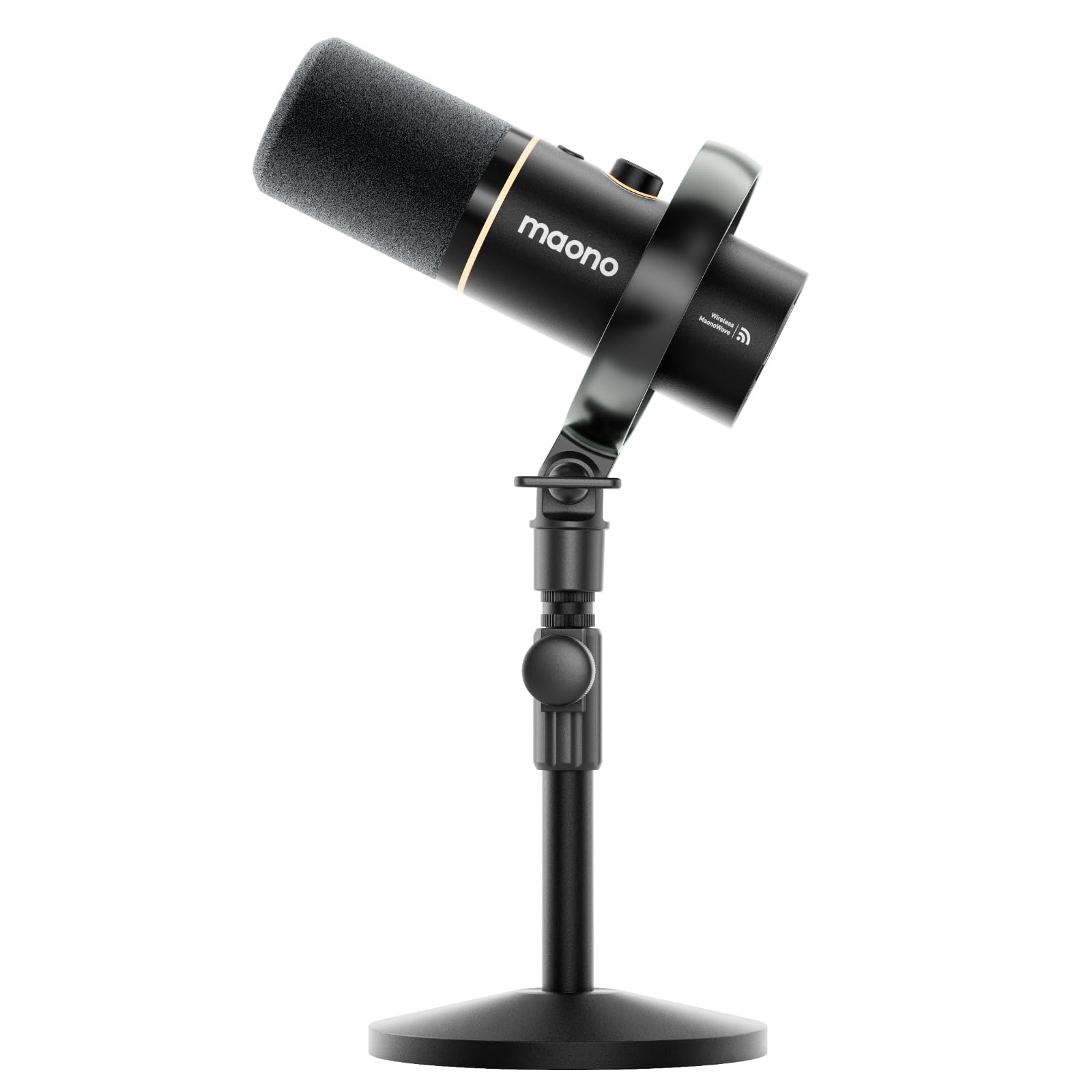
The MAONO PD200W is a hybrid powerhouse: it works as a wireless mic via USB-C receiver, a standard USB desktop mic, or an XLR microphone for interfacing with mixers. Its 30mm dynamic capsule delivers a tighter pickup than most condenser mics at this price, naturally rejecting room reverb and side chatter without needing aggressive digital filters.
Advanced three-stage noise cancellation is accessible through the MaonoLink app, allowing you to dial in suppression intensity per environment. The cardioid pattern combined with the dynamic capsule can handle up to 128 dB SPL without distortion, making it ideal for loud gaming sessions or co-hosted podcasts where two units connect to a single receiver.
The 60-hour battery life (with RGB off) ensures you forget about charging during long sessions. The all-metal housing feels substantial, and the included shock mount further reduces handling noise. It’s the most versatile noise-cancelling gaming microphone for creators who move between setups.
Why it’s great
- Three connection modes — wireless, USB, and XLR — for any setup
- Dynamic capsule naturally rejects background noise without digital artifacts
- 60-hour battery life for untethered gaming sessions
Good to know
- Button functions can be confusing without the app
- RGB shortens battery life significantly
3. Razer Seiren V2 X

Razer’s Seiren V2 X uses a supercardioid pickup pattern — narrower than standard cardioid — to aggressively suppress noise from the sides and rear. This physical rejection is reinforced by a built-in digital limiter that automatically prevents clipping when your voice spikes during intense gameplay. The 25mm condenser capsule is tuned for higher-frequency accuracy, making voice articulation crisp without sounding tinny.
On-mic controls include a mute button, volume knob, and mic gain adjustment, giving you hardware-level control without diving into software. The integrated shock absorber does an impressive job dampening accidental desk bumps. USB-C connectivity ensures modern compatibility, and the overall build feels dense despite the plastic enclosure.
One trade-off: supercardioid patterns pick up more directly behind the mic than cardioid designs, so you need to be mindful of rear-facing noise sources. For gamers who sit centered in front of their monitor with no rear noise source, this is the most focused physical noise rejection available in this roundup.
Why it’s great
- Supercardioid pattern provides the tightest physical noise rejection
- Digital limiter prevents distortion during loud moments
- On-mic gain, mute, and volume controls
Good to know
- Plastic build doesn’t feel as premium as metal competitors
- Needs a pop filter for plosive protection with fans
4. Logitech G Yeti Orb

The Logitech G Yeti Orb brings the well-known Yeti lineage into a compact, RGB-enabled form factor with LIGHTSYNC integration. Its condenser capsule uses a pure cardioid pattern that zeros in on your voice while doing an excellent job ignoring key clicks and mouse noises — several reviewers noted the noise suppression surprised them relative to the compact size.
G HUB software unlocks customizable audio filters, EQ presets, and LIGHTSYNC effects that sync with your game or stream alerts. The USB plug-and-play setup is as easy as it gets, and the weighted base keeps the orb stable during aggressive desk movement. At only 230 grams, it’s light enough to toss in a bag for LAN events.
The absence of a physical mute button is a notable omission — you’ll need to use G HUB or a hotkey to mute. The cardioid pattern is good for background suppression, but it won’t match supercardioid or dedicated ENC mics in extremely noisy environments. For most streamers in a standard room, though, it’s more than capable.
Why it’s great
- Excellent background noise filtering for its compact size
- LIGHTSYNC RGB integrates with games and stream overlays
- True plug-and-play with no driver installation needed
Good to know
- No physical mute button — requires software or hotkey
- Plastic body feels light compared to metal alternatives
5. HyperX SoloCast 2
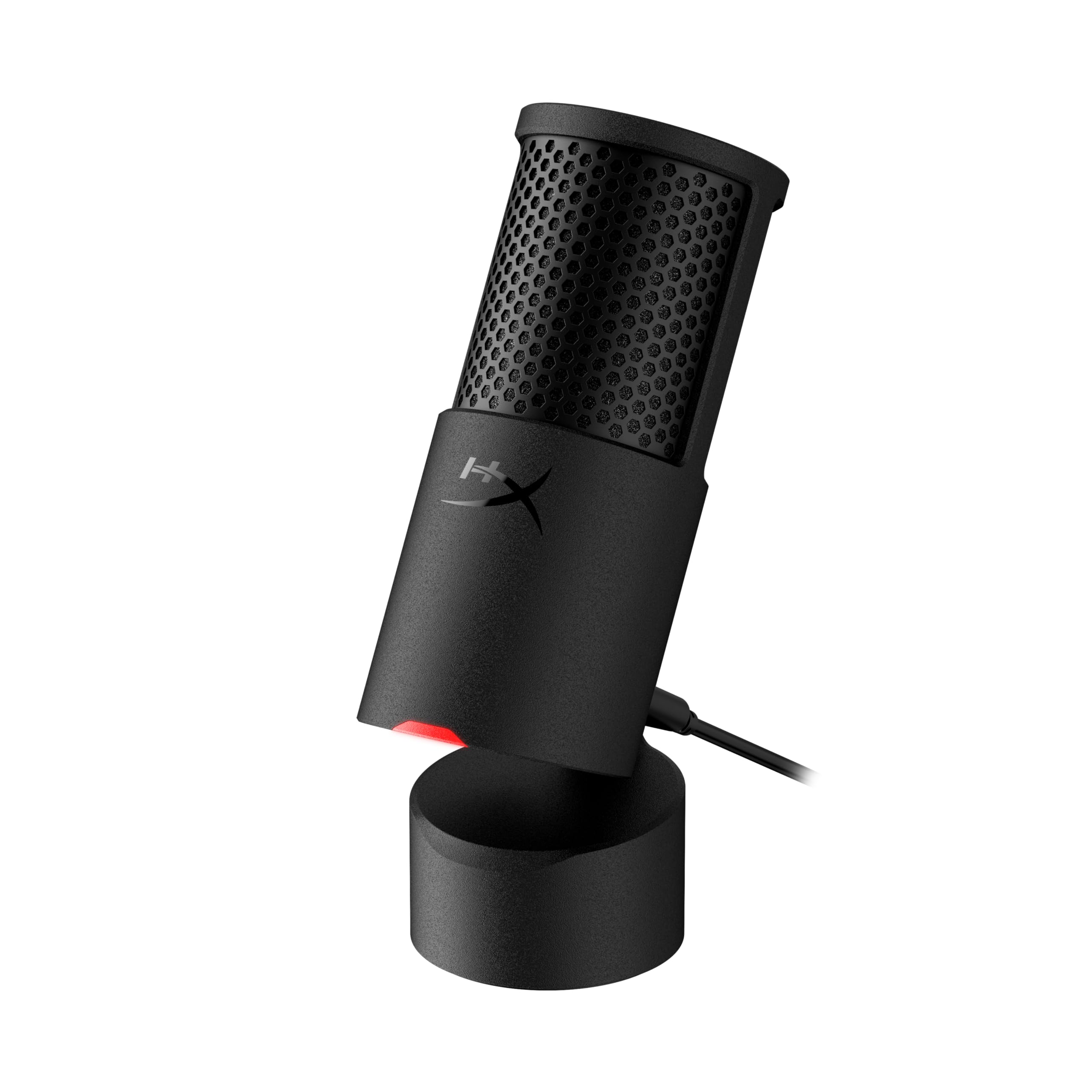
The HyperX SoloCast 2 is engineered around vibration reduction — it uses an internal suspension system that delivers shock mount benefits without the bulky external cage. This design dramatically reduces desk-thump and bump noise, which is often mistaken for “bad noise cancellation” on cheaper mics. The cardioid pattern captures sound cleanly from the front while rejecting side and rear ambient noise.
A standout spec is the 24-bit / 96kHz sampling rate — this exceeds the standard 48kHz found on most gaming mics, giving you higher-resolution audio that preserves more detail when noise cancellation algorithms process the signal. The HyperX NGENUITY software adds high-pass, low-pass, and voice enhancement filters that can be saved directly to the mic for consistent sound across different PCs.
Tap-to-mute with a red LED indicator is intuitive and responsive. The built-in foam pop filter reduces plosives effectively without extra attachments. The only downside is the lack of onboard gain adjustment — you’ll need to control volume from your PC or software. At its price point, the SoloCast 2 offers the best shock isolation of any mic in this roundup.
Why it’s great
- Internal shock mount design eliminates desk vibrations effectively
- 24-bit / 96kHz recording for higher resolution audio
- NGENUITY filters can be saved on the mic for portable settings
Good to know
- No onboard gain adjustment knob
- Low stand height may require a boom arm for ideal positioning
6. MAONO DM40
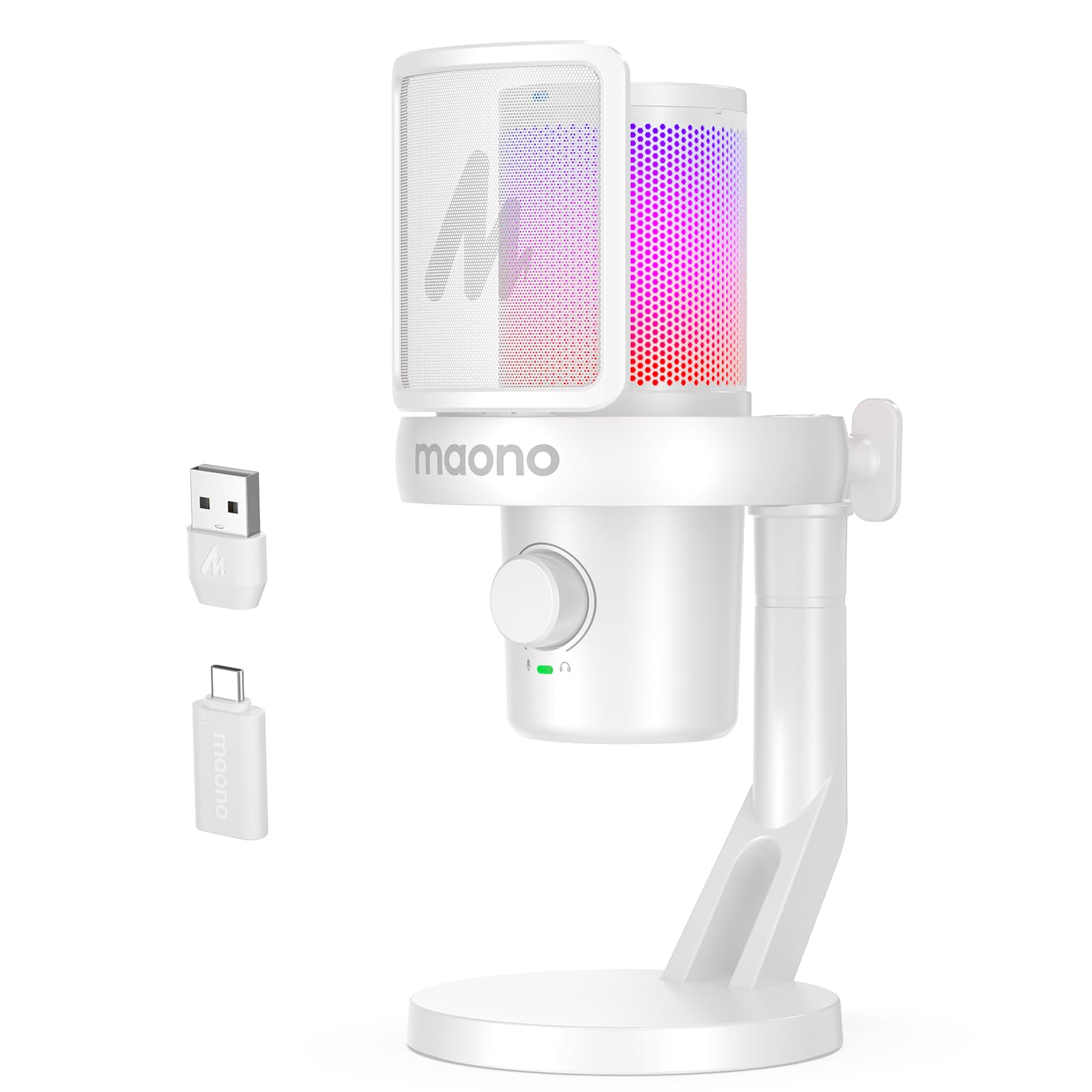
The MAONO DM40 brings wireless freedom to desk gaming with its low-latency USB-C dongle connection, eliminating cable tangling while maintaining stable audio. It features three-level ENC that you can toggle directly on the mic or via the Maono Link app — light, medium, and high — giving you precise control over how aggressively it filters your environment.
What sets the DM40 apart is the built-in AI voice changer with multiple presets, adding a layer of fun for streamers who want to disguise their voice or create character effects. The 24-bit / 48kHz sampling rate ensures the base audio quality remains clean before voice processing. The 40-hour battery life (RGB off) means you can go days without charging.
The DM40 picks up mouse clicks and keyboard sounds at higher gain settings, a common issue with condenser mics in this tier. The wireless range is stable within a room, and the included shock mount and pop filter reduce handling noise. For gamers who value cable-free flexibility and creative voice features, the DM40 is a compelling mid-range option.
Why it’s great
- True wireless USB connection with low latency
- Three-level ENC for adjustable noise suppression
- AI voice changer adds creative stream options
Good to know
- Can pick up mouse clicks and keyboard at high gain
- AI voice changer requires the app to be running actively
7. FEELWORLD VM1
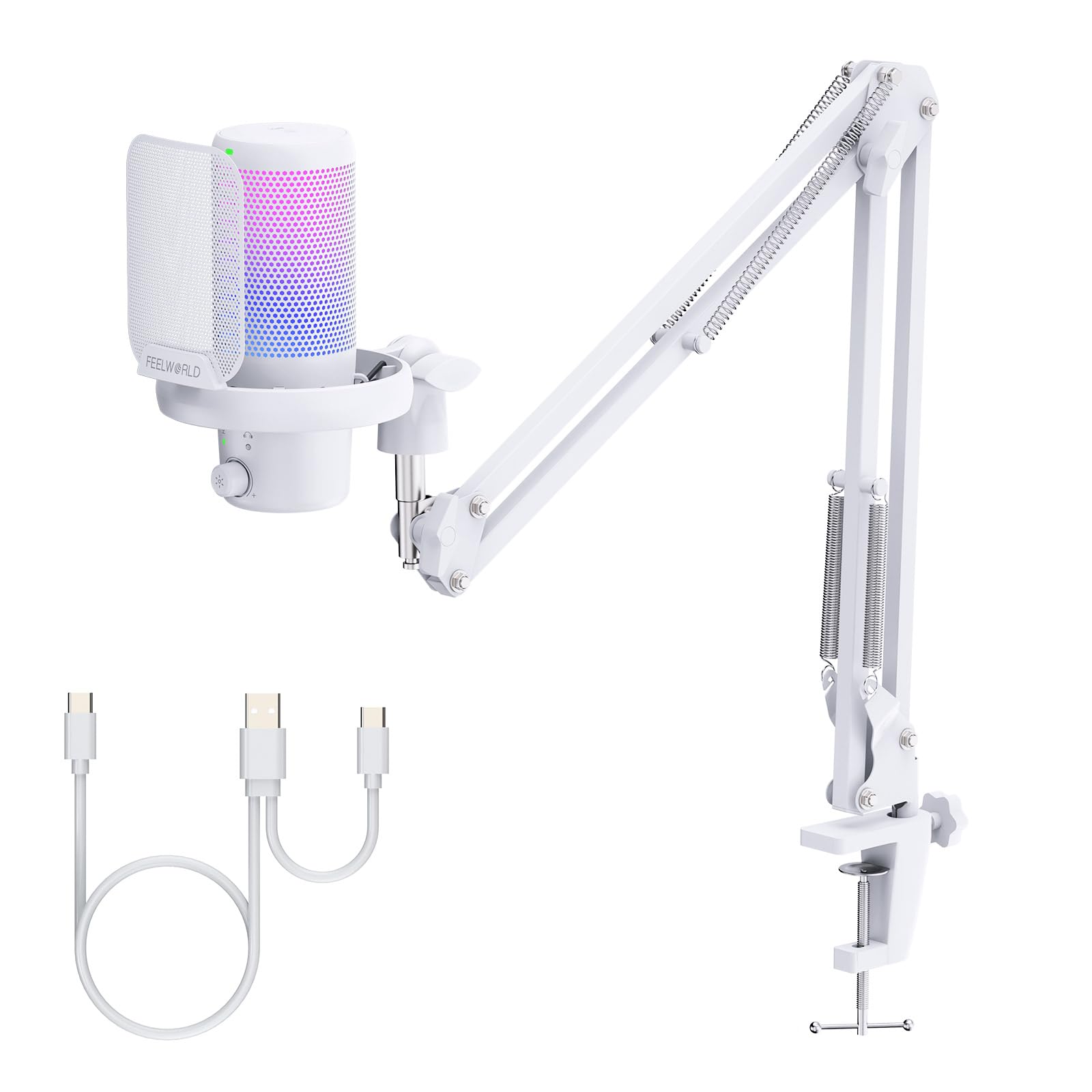
The FEELWORLD VM1 is the entry-level option that still includes dedicated ENC noise cancellation — a one-tap button that activates filtering with a green LED indicator. At its price point, having hardware-level noise suppression rather than relying purely on cardioid rejection is a genuine advantage over basic USB mics in the same bracket.
The cardioid pattern with 48kHz / 24-bit capture delivers surprisingly clear vocal reproduction, especially for Discord, in-game chat, and basic streaming. The touch-sensor mute button turns the RGB red when muted, providing clear visual feedback. The multi-function knob lets you adjust volume and swap lighting modes, though the RGB is the main visual draw with dynamic color settings.
The enclosure is all plastic, and the stand is basic but functional. The 50Hz-16kHz frequency range is narrower than more expensive options, meaning some upper vocal detail is lost. For gamers on a tight budget who need actual noise cancellation — not just cardioid rejection — the VM1 delivers ENC performance that punches above its price tier.
Why it’s great
- Dedicated one-key ENC noise cancellation at an entry-level price
- Touch-sensor mute with clear red LED indicator
- Plug-and-play USB-C works with PC, Mac, and PS4/5
Good to know
- Plastic build feels less durable than metal competitors
- 50Hz-16kHz frequency range lacks top-end vocal detail
FAQ
Does noise cancellation on a gaming mic affect voice quality?
Can I use a noise cancelling gaming microphone for podcasting?
Do I need software installed for noise cancellation to work?
Final Thoughts: The Verdict
For most users, the gaming microphone noise cancelling winner is the SteelSeries Alias because it delivers AI-powered noise rejection that actively filters up to 70 dB of background noise while preserving vocal clarity through a 3x larger capsule. If you need wireless flexibility for content creation, grab the MAONO PD200W with its triple connectivity and dynamic capsule. And for focused physical noise rejection without software, nothing beats the Razer Seiren V2 X and its supercardioid pattern.