
The gap between a silky-smooth 1440p session and a frustrating stutter-fest is often the choice of your graphics card. With ray tracing, AI upscaling, and high-refresh monitors becoming the norm, picking the right GPU today means balancing raw rasterization power, memory bandwidth, and software ecosystem for the games you actually play.
I’m Mohammad Maruf — the founder and writer behind Drink4Good. I’ve spent the last decade analyzing graphics hardware specifications, benchmark data, and market pricing to help gamers make informed decisions on their core PC components.
Whether you are targeting 1080p high-FPS esports or immersive 4K ray-traced worlds, this guide breaks down the top contenders to help you find the best gaming gpu for your specific build and budget.
How To Choose The Best Gaming GPU
Selecting a graphics card is the most critical decision in a gaming PC build. The GPU dictates which resolution you can play at, how many frames per second you can push, and whether you can enable ray tracing or other advanced graphical features. Below are the key specifications to consider before clicking purchase.
Resolution and Target Frame Rate
Your monitor’s resolution and refresh rate are the primary constraints. For 1080p at 144Hz or lower, an entry-level to mid-range card with 8GB of VRAM is sufficient. For 1440p high-refresh gaming (144Hz to 165Hz), a mid-range to premium card with at least 12GB of VRAM is the sweet spot. 4K gaming, especially with ray tracing, demands a high-end card with 16GB of VRAM or more to maintain texture detail and frame pacing.
VRAM Capacity and Memory Bandwidth
Video RAM stores the textures, shaders, and geometry the GPU needs to render frames. Modern AAA titles at 1440p Ultra settings can consume 10GB to 12GB of VRAM. For 4K, 16GB is becoming the baseline for future-proofing. Memory bandwidth, measured in GB/s, is equally important — faster memory (GDDR6 vs GDDR7) and wider memory buses (192-bit vs 256-bit) prevent bottlenecks at higher resolutions.
Quick Comparison
On smaller screens, swipe sideways to see the full table.
| Model | Category | Best For | Key Spec | Amazon |
|---|---|---|---|---|
| GIGABYTE RX 9060 XT 16GB | Mid-Range | Value-focused 1440p gaming | 16GB GDDR6 / 2700 MHz Boost | Amazon |
| PNY RTX 5070 Epic-X OC 12GB | Premium | DLSS 4 enhanced 1440p gaming | 12GB GDDR7 / 2685 MHz Boost | Amazon |
| ASUS SFF-Ready RTX 5070 12GB | Premium | SFF builds + 1440p competitive gaming | 12GB GDDR7 / SFF-Ready Design | Amazon |
| ASRock RX 9070 XT 16GB | Premium | 4K-capable raster performance | 16GB GDDR6 / 2970 MHz Boost | Amazon |
| MSI RTX 5070 Ti 16GB | High-End | 4K gaming with high settings | 16GB GDDR7 / 2497 MHz Boost | Amazon |
| Sapphire RX 7900 XT 20GB | High-End | Future-proofed high-resolution gaming | 20GB GDDR6 / 2450 MHz Boost | Amazon |
| XFX Speedster RX 7600 8GB | Budget | 1080p gaming and VR entry | 8GB GDDR6 / 2655 MHz Boost | Amazon |
In‑Depth Reviews
1. GIGABYTE Radeon RX 9060 XT Gaming OC 16G

The GIGABYTE RX 9060 XT Gaming OC 16G strikes an impressive balance between price and performance for 1440p gaming. Its 16GB of GDDR6 memory on a 128-bit bus provides enough headroom for modern titles at high to ultra settings, while the factory boost clock of 2700 MHz delivers snappy frame rates in games like Cyberpunk 2077 and Hogwarts Legacy without breaking a sweat.
The WINDFORCE cooling system, featuring Hawk fans and a large heatsink, keeps temperatures in check under sustained loads. Users report quiet operation with the zero-RPM fan mode engaging during lighter tasks. The card uses a single 8-pin power connector, making it easy to install in most builds without requiring a PSU upgrade.
While ray tracing performance is decent for its class, it does not match the RTX 5060 in titles that rely heavily on path tracing. However, for pure rasterization and raw frame rates at 1440p, the RX 9060 XT 16GB offers compelling value, especially with AMD’s FSR 4 upscaling improving visual fidelity in supported games.
Why it’s great
- Generous 16GB VRAM for texture-heavy titles
- Quiet and efficient WINDFORCE cooling
- Excellent 1440p rasterization performance
Good to know
- Ray tracing is not as strong as similarly priced Nvidia cards
- Requires a spacious case due to its length
2. PNY NVIDIA GeForce RTX 5070 Epic-X ARGB OC Triple Fan
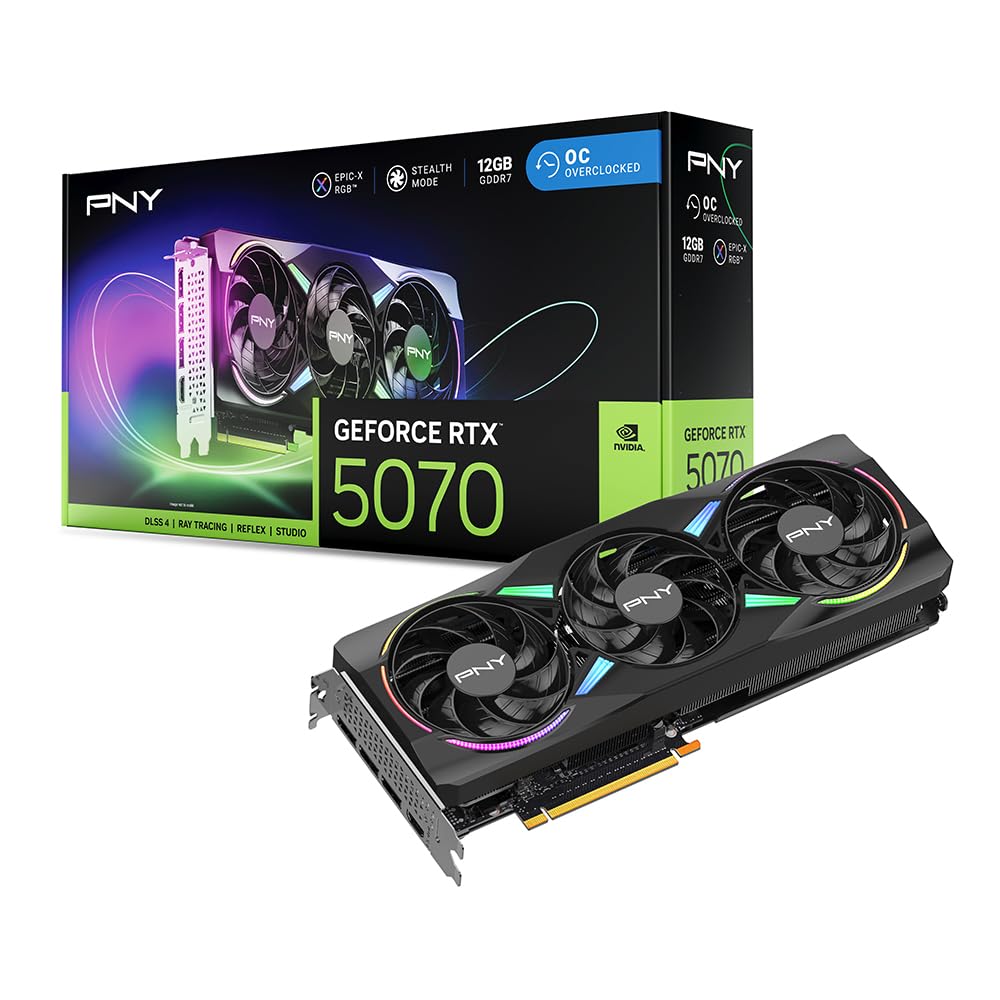
The PNY RTX 5070 Epic-X OC brings the NVIDIA Blackwell architecture to the mid-range, featuring 12GB of GDDR7 memory on a 192-bit bus. The factory overclock pushes the boost speed to 2685 MHz, offering a noticeable lift over the base 4070 Super in non-frame-gen scenarios. Its triple-fan design keeps the card cool and very quiet even under extended gaming sessions.
In real-world use, the card crushes 1440p gaming with high to ultra settings. DLSS 4 and Reflex technologies provide a dramatic advantage in competitive titles, reducing input latency and boosting frame rates. Users report excellent performance with ray tracing enabled in games like Cyberpunk 2077, making it a versatile pick for both competitive and AAA gaming.
The included 16-pin to dual 8-pin power splitter ensures compatibility with 750W PSUs, though the physical length of the card is moderate. It fits most mid-tower cases but check clearance. The ARGB lighting adds a subtle glow that integrates well with other PNY components, and the overall build quality feels solid.
Why it’s great
- Excellent 1440p performance with DLSS 4 and Reflex
- Very quiet triple-fan cooling solution
- Factory overclock provides extra headroom
Good to know
- Stock availability can be limited at release
- 12GB VRAM may become a limitation at 4K Ultra settings
3. ASUS SFF-Ready Prime NVIDIA GeForce RTX 5070 12GB

The ASUS Prime RTX 5070 is engineered specifically for small-form-factor builds without compromising on performance. Its 2.5-slot design with axial-tech fans ensures it fits in compact cases while still offering robust cooling. The phase-change GPU thermal pad further improves heat transfer, keeping temperatures in the 60–67°C range under load in a well-ventilated case.
Paired with a strong CPU like the 7800X3D, this card delivers exceptional frame consistency in 1440p competitive titles. Users have recorded Steel Nomad benchmark scores of 5839 and stable 1440p performance in AAA titles like Cyberpunk 2077 and Elden Ring. The Dual BIOS switch lets you toggle between quiet and performance profiles depending on your priority.
The card requires a 16-pin power connector, so ensure your PSU has a native 12VHPWR port or use the included adapter. At stock, it offers a great balance of power and efficiency. The black aesthetic is clean and understated, making it a strong choice for minimalist builds.
Why it’s great
- Compact 2.5-slot design fits most SFF cases
- Excellent thermal performance with phase-change pad
- Dual BIOS for quiet or performance modes
Good to know
- Requires 16-pin power connector
- May run hot in cases with poor airflow
4. ASRock Radeon RX 9070 XT Steel Legend 16GB

The ASRock RX 9070 XT Steel Legend is a flagship RDNA 4 card built for uncompromising 4K gaming. With 64 Compute Units, 16GB of GDDR6 memory on a 256-bit bus, and a factory boost clock of 2970 MHz, it delivers exceptional raw rasterization performance. Users report it effortlessly handles 1440p max settings in titles like Battlefield 6 and Cyberpunk 2077.
The triple-fan cooling solution with striped ring fans and air-deflecting fins keeps the card cool and quiet. The 0dB Silent Cooling mode stops the fans entirely during light loads. The reinforced metal frame and backplate add structural rigidity, preventing sag in larger builds. The Polychrome SYNC RGB lighting allows for customization.
Ray tracing performance has improved significantly with RDNA 4, making it competitive with Nvidia’s mid-range offerings. The card requires two 8-pin PCIe power connectors and an 800W PSU. Some users have noted the ASRock RGB software can be buggy, but the hardware performance is stellar, making it a top pick for pure frame rates.
Why it’s great
- Exceptional 1440p and capable 4K raster performance
- Advanced triple-fan cooling with 0dB mode
- Sturdy metal frame prevents GPU sag
Good to know
- RGB software can be unreliable
- Requires a large case and 800W PSU minimum
5. MSI Gaming RTX 5070 Ti 16G Shadow 3X OC

The MSI RTX 5070 Ti Shadow 3X OC is a high-end Blackwell card that targets 4K gaming without requiring a flagship budget. Its 16GB of GDDR7 memory on a 256-bit bus provides ample bandwidth for high-resolution textures and ray tracing. The factory boost of 2497 MHz ensures strong performance out of the box, with users reporting smooth 4K high/medium settings in most titles.
The TORX Fan 5.0 design, with linked fan blades, generates high-pressure airflow for superior cooling. The nickel-plated copper baseplate quickly captures heat from the GPU and memory, while the square-shaped core pipes maximize contact for optimal thermal transfer. The card runs quiet even under stress, though some users experienced initial fan noise that diminished after a burn-in period.
DLSS 4 further enhances performance in supported games, making 4K ray tracing more achievable. The card is SFF-Ready, though its size is substantial. It’s a fantastic upgrade from previous-generation cards like the RTX 3060 or A770, offering a massive leap in raw power and efficiency for both gaming and creative workloads.
Why it’s great
- Excellent 4K gaming performance with DLSS 4
- Advanced TORX Fan 5.0 cooling system
- High-quality nickel-plated copper baseplate
Good to know
- Requires a spacious case for installation
- Some units may exhibit temporary fan noise
6. Sapphire Pulse AMD Radeon RX 7900 XT 20GB

The Sapphire Pulse RX 7900 XT is a high-end RDNA 3 card that prioritizes raw rasterization and VRAM capacity. With 20GB of GDDR6 memory on a 320-bit bus, it offers future-proofing for high-resolution textures and demanding mods. It handles 4K gaming at 60fps+ in most titles without upscaling, and it excels at 1440p ultrawide with frame rates exceeding 144fps in esports titles.
The dual-fan Pulse cooler does an admirable job keeping temperatures around 72–78°C under load, with a fan curve that remains reasonably quiet. Some users have noted coil whine at high frame rates in menus, but it becomes inaudible during actual gameplay. The card requires two 8-pin power connectors and fits in most ATX cases with its 2.7-slot design.
AMD’s Adrenalin software provides a robust suite of tuning options, and the card undervolts well, reducing power draw by 25–40% with only a 5–15% performance loss. For pure rasterization and raw frame rates, the 7900 XT remains a formidable contender, especially for users pushing high-resolution displays or VR.
Why it’s great
- Massive 20GB VRAM for high-resolution textures
- Excellent 4K rasterization performance
- Efficient undervolting capability
Good to know
- Ray tracing lags behind Nvidia competitors
- Coil whine can be present at very high FPS
7. GIGABYTE GeForce RTX 5060 WINDFORCE OC 8G

The GIGABYTE RTX 5060 WINDFORCE OC 8G brings the Blackwell architecture and DLSS 4 to the entry-level segment. With 8GB of GDDR7 memory and a PCIe 5.0 interface, it offers a significant performance uplift over previous-generation cards like the RTX 3060. Users report over 250 FPS in competitive titles at 1080p, making it a strong pick for esports gamers.
The WINDFORCE dual-fan cooling system is compact and quiet, fitting easily into smaller builds. The card runs cool under load, with maximum temperatures in the mid-70s Celsius even after extended gaming sessions. It’s compatible with 750W PSUs and integrates seamlessly with mid-range CPUs like the Ryzen 5700.
The 8GB VRAM is the primary limitation; users may need to dial back texture settings in the latest AAA titles or at 1440p. However, for 1080p high-refresh gaming, it’s a fantastic value. The inclusion of DLSS 4 provides a noticeable boost in supported games, helping to bridge the gap between native and upscaled performance.
Why it’s great
- Excellent 1080p high-FPS performance
- Compact and quiet dual-fan design
- DLSS 4 upscaling for better visuals
Good to know
- 8GB VRAM may limit texture settings at 1440p
- Requires driver clean-up (DDU) when swapping from older GPUs
8. ASUS Dual Radeon RX 9060 XT 16GB
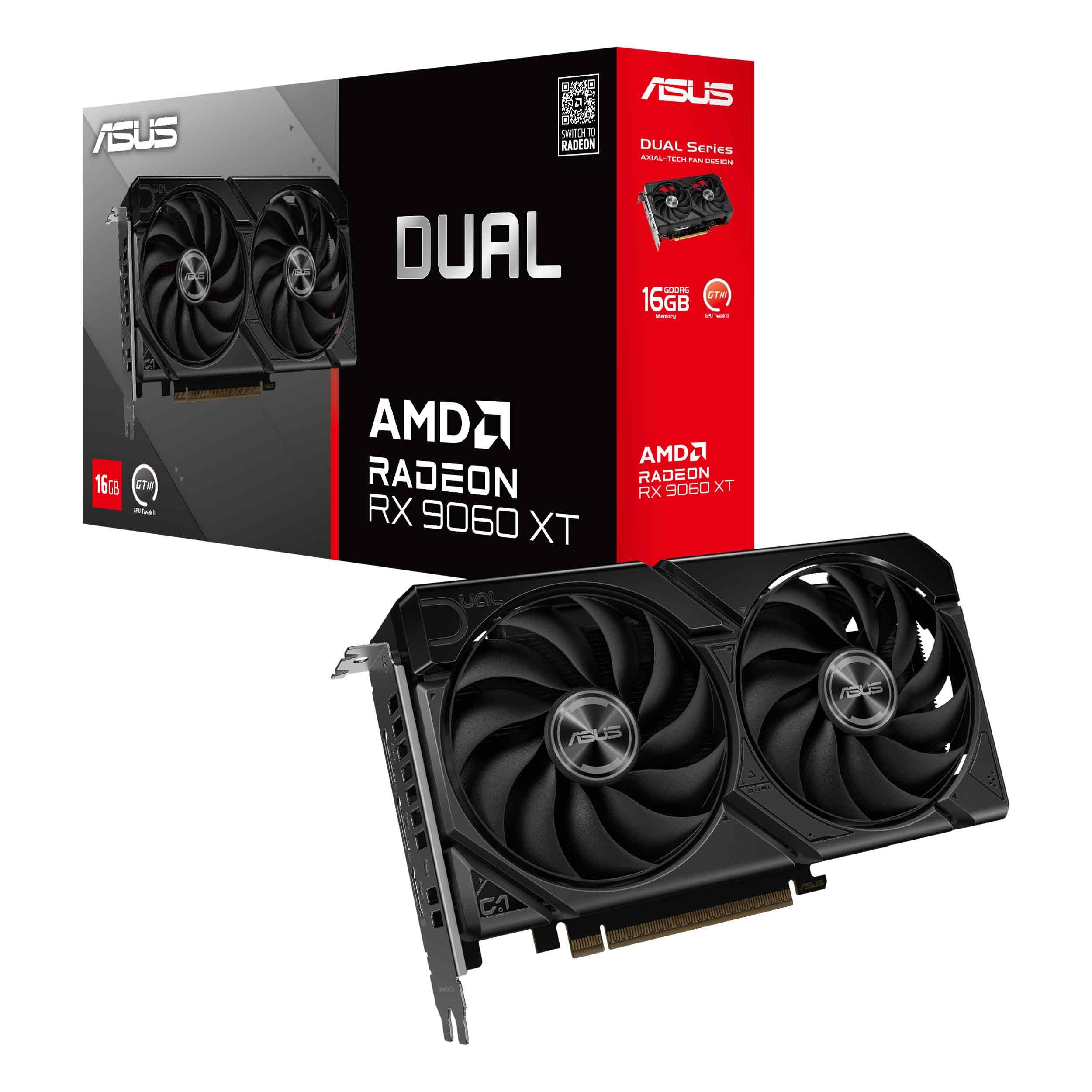
The ASUS Dual RX 9060 XT 16GB is a refined mid-range card focused on quiet operation and build compatibility. Its axial-tech fans with a smaller hub and barrier ring increase downward air pressure, while the 2.5-slot design allows it to fit in a wider range of cases. The dual ball fan bearings are rated for up to twice the lifespan of sleeve-bearing designs.
With 16GB of GDDR6 memory, it offers excellent texture detail for 1440p gaming. The 0dB technology stops the fans entirely during light gaming, making it near-silent in daily use. The Dual BIOS switch lets you toggle between a quiet profile for relaxed gaming and a performance profile for maximum frame rates.
Performance is strong for its class, handling Destiny 2 at 180fps capped at 1440p and running Doom Eternal smoothly. Some users have reported driver-related instability, which may require a clean install. The card is an excellent choice for those who prioritize a quiet, compact build without sacrificing 1440p gaming capability.
Why it’s great
- Very quiet operation with 0dB fan stop
- Compact 2.5-slot design
- 16GB VRAM provides texture headroom
Good to know
- Driver instability reported by some users
- Ray tracing performance is not class-leading
9. MSI Gaming GeForce RTX 3070 LHR 8GB

The MSI RTX 3070 Gaming Z Trio is a last-generation Ampere card that still holds up remarkably well for 1440p gaming. With 8GB of GDDR6 memory on a 256-bit bus, it offers strong bandwidth for high-resolution textures. The boost clock of 1845 MHz ensures smooth frame rates in titles like Half-Life Alyx and Project Cars 2 at high settings.
The TORX Fan 4.0 cooling system is effective, keeping idle temperatures in the mid-30s Celsius and load temperatures in the 70s. The card is physically large and heavy, so it requires an anti-sag bracket (included) for secure mounting. The RGB lighting adds a touch of customization, though it may appear dated compared to newer designs.
Ray tracing performance is functional but not exceptional by modern standards, and the 8GB VRAM can become a bottleneck in the latest AAA titles. However, for users on a tighter budget who still want RTX features and solid 1440p performance, the RTX 3070 remains a capable choice. It is a power-hungry card for its tier, so a quality PSU is recommended.
Why it’s great
- Solid 1440p gaming performance
- Effective triple-fan cooling
- Includes anti-sag bracket
Good to know
- Higher power consumption than newer cards
- 8GB VRAM is a limitation for modern titles
10. XFX Speedster SWFT210 Radeon RX 7600 8GB

The XFX Speedster SWFT210 RX 7600 is a budget-friendly RDNA 3 card that excels at 1080p gaming. With 8GB of GDDR6 memory and a boost clock of 2655 MHz, it delivers excellent frame rates in esports titles and handles VR well. Users have reported smooth experiences in Half-Life Alyx, Kayak VR, and Assetto Corsa at highest settings.
The dual-fan cooling solution is compact and quiet, fitting easily into smaller cases. The card’s small footprint makes it an ideal upgrade for pre-built systems with limited space. It runs cool, with maximum temperatures in the high 70s under full load, and the fans remain relatively inaudible even during extended sessions.
Driver updates are essential for stability; some users initially experienced crashes and high temperatures until updating to the latest Adrenalin software. After that, the card ran flawlessly. For pure 1080p gaming and emulation, the RX 7600 offers strong value, though 1440p performance is limited and ray tracing is not a strength.
Why it’s great
- Excellent 1080p and VR performance
- Compact and quiet dual-fan design
- Good value for budget builds
Good to know
- Requires driver update for stability
- Limited 1440p and ray tracing capability
11. EVGA GeForce RTX 3090 FTW3 Ultra Gaming 24GB

The EVGA RTX 3090 FTW3 Ultra is a last-generation Ampere flagship that remains a powerhouse for 4K gaming and creative workloads. Its 24GB of GDDR6X memory is overkill for gaming but invaluable for 3D rendering, video editing, and AI workloads. It handles 4K gaming maxed out in most titles, with users reporting 100+ FPS in Escape From Tarkov.
The iCX3 cooling technology with triple HDB fans provides excellent thermal performance, though the card runs hot and power-hungry. Users have reported memory junction temperatures exceeding 100°C under stress, necessitating aggressive fan curves or custom water cooling for optimal longevity. The card requires three 8-pin power connectors and a 1000W PSU for stable operation.
Build quality is exceptional, with an all-metal backplate and adjustable ARGB lighting. However, the card is physically enormous and heavy, requiring an anti-sag bracket. For users who need massive VRAM for professional applications and can handle the thermal and power demands, the RTX 3090 remains a beast of a card. It is not an efficient choice for gaming alone.
Why it’s great
- Massive 24GB VRAM for professional workloads
- Excellent 4K gaming performance
- Exceptional build quality
Good to know
- Extremely power hungry and hot-running
- Requires a large case and high-wattage PSU
FAQ
How much VRAM do I need for 1440p gaming in 2025?
Is DLSS or FSR better for competitive gaming?
How do I know if my power supply can support a new GPU?
Final Thoughts: The Verdict
For most users, the best gaming gpu winner is the GIGABYTE Radeon RX 9060 XT Gaming OC 16G because it offers a superb balance of 1440p raster performance, abundant VRAM, and quiet cooling at a compelling price point. If you want the best DLSS 4 features and ray tracing, grab the PNY RTX 5070 Epic-X OC. And for high-end 4K gaming with massive memory bandwidth, nothing beats the Sapphire Pulse RX 7900 XT 20GB.